
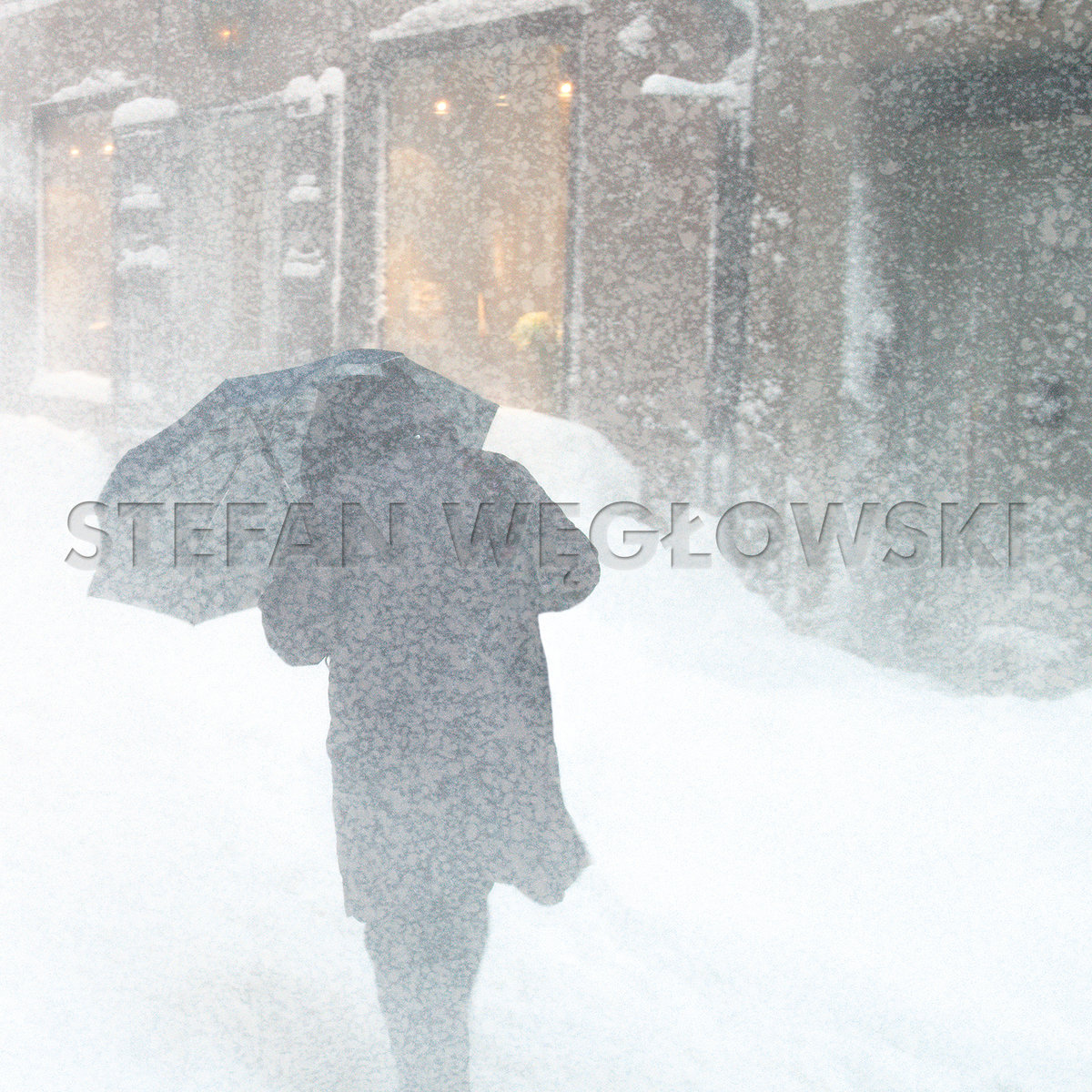
Switched On – Stefan Węgłowski: Smooth Inertia (Glacial Movements)

by Ben Hogwood

What’s the story?

With this new album from Polish composer Stefan Węgłowski, the Italian label Glacial Movements reach a half century of releases, in which time they have cemented a status as one of the go-to labels for deep musical ambience.

In Stefan’s own words, “Smooth inertia is an album that was created in solitude, after the end of a certain period in which I stagnated. I could call it a blank sheet that I had to fill in. For years I had been trying to create an ambient album that I would be happy with, which would transcend me somehow beyond my full understanding.”

To do this, he uses field recordings, manipulated spoken word (Anna Figurska) and an out of tune piano (Adam Kośmieja). Węgłowski also plays the guitar on two tracks, a return to the instrument after a nine-year break.

What’s the music like?

Haunting. Deep Light sets a dark, mysterious tone, effectively a scene setter before Ray Of Night stretches out before the listener. Here the out of tune piano provides an effective counter to the thick sonic clouds behind, while the field recordings – birdsong high in the mix – bring a softer, lighter complexion to the music.

Time Brings Relief is as long as these two pieces combined, with Figurska’s voice set against another musical cloud, this one with consonant harmony that gives it a bright edge. Yet it is Frozen Edge that leaves a lasting impression, its initial ambience compromised by the glint of metallic tones that come to the sonic foreground. These cast a powerful spell, the harmony alternating slowly between two roots in the background. Towards the end a piano chord tolls meaningfully.

As a bonus, Frozen Edge appears in a remix from Michał Wolski, who delves into its mystery and adds a chilling sonic wind blowing across the picture.

Does it all work?

Yes – and though the durations of the tracks suggest the album might be lopsided, it proves to be well structured.

Is it recommended?

It is. There are dark moments here for sure, suggesting strife and loss, but the deeper impression is that of an overriding calm.

Listen

Buy
In concert – Jennifer Johnston, Royal Liverpool Philharmonic Orchestra / Vasily Petrenko – The Divine Poem

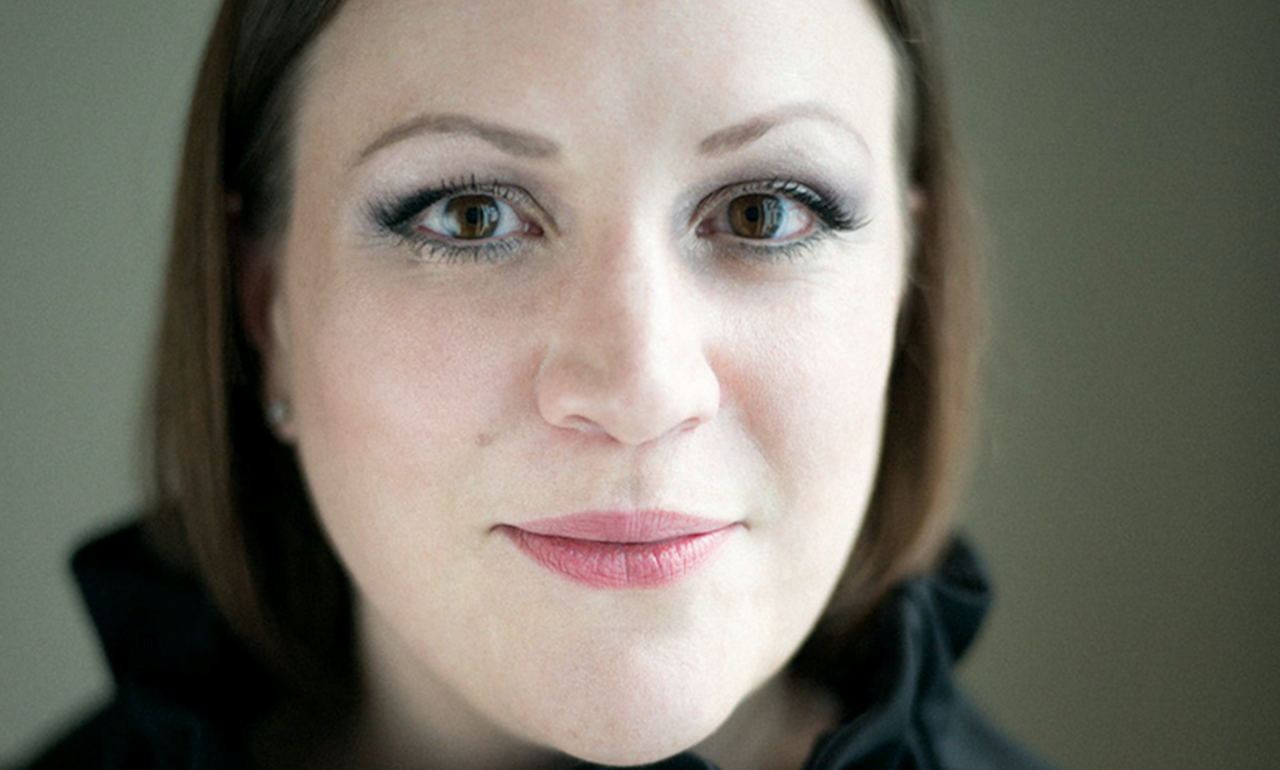
Jennifer Johnston (soprano, above), Royal Liverpool Philharmonic Orchestra / Vasily Petrenko (below)

Deutsch Phantasma (2022) [RLPO co-commission: UK premiere]
Mahler Lieder eines fahrenden Gesellen (1884-5)
Scriabin Symphony no.3 in C minor Op.43 ‘The Divine Poem’ (1902-4)

Philharmonic Hall, London
Thursday 4 May 2023

Reviewed by Richard Whitehouse

He may now be the orchestra’s conductor laureate, but the 15-year partnership between Vasily Petrenko and the Royal Liverpool Philharmonic Orchestra was always tangible in this evening’s concert – its refreshingly different programme summoning the best from both orchestra and conductor.

Co-commissioning music by Bernd Richard Deutsch was an astute move – the Vienna-based composer now in his mid-40s and among the leading composers of his generation. Taking its cue from the Beethoven Frieze which Gustav Klimt devised for the 14th Vienna Secessionist Exhibition in 1902, this 15-minute piece takes a pointedly dialectical route as it evolves from the fractured uncertainty of yearning and suffering, via the cumulative intensity of a struggle against hostile forces, to the attainment of happiness through poetic creation. To what degree this might be a commentary on Beethoven’s Ninth Symphony (as embodied in the three parts of Klimt’s opus) is uncertain, but the motivic ingenuity and orchestral virtuosity of Deutsch’s response can hardly be doubted – not least in a performance as assured and committed as this.

If the indisposition of Adela Zaharia meant the regrettable omission of Strauss’s rarely heard Brentano-Lieder from tonight’s concert (though Petrenko has scheduled them with the Royal Philharmonic next season), hearing Jennifer Johnston in Mahler’s Gesellen-Lieder was by no means a hardship. The four songs, to the composer’s own texts, comprise an overview of his preoccupations (creative and otherwise) in his mid-20s with numerous anticipations of what became his First Symphony. Outlining a delicate interplay of pensiveness and wistfulness in the initial song, Johnston was no less attentive to its successor’s mingling of innocence with experience, and if the surging histrionics of the third song bordered on the melodramatic, the fatalistic procession of the final number felt the more affecting for its restrained eloquence.

Petrenko (above) set down a highly regarded cycle of Scriabin Symphonies over his tenure with the Oslo Philharmonic, and if the RLPO lacked any of that orchestra’s fastidious poise, the sheer verve and energy of its playing more then compensated. Not least in an opening movement whose unfolding can seem longer on ambition than attainment, but which was held together with unforced conviction – the most often prolix development duly emerging with a tautness to make it more than usually emblematic of this work’s metaphysical Struggles as a whole.

Outwardly more compact, the remaining movements require astute and cumulative handling such as these received here. The alternately enchanting and ominous Delights melded into an enfolding yet never amorphous entity, out of which the more animated motion of Divine Play gradually brought together earlier ideas on its way to an apotheosis whose amalgam of the work’s principal themes yielded grandiloquence without undue bathos. Scriabin’s cosmic aspirations thereby seemed the more ‘real’ for being the expression of purely musical forces. An expanded RLPO (its nine horns arrayed across the upper tier of the platform) was heard to advantage in the ambience of Philharmonic Hall, contributions by trumpeter Richard Cowen and leader Thelma Handy enhancing what was an authoritative and memorable performance.

You can read all about the 2022/23 season and book tickets at the Royal Liverpool Philharmonic Orchestra website. Click on the artist names for more on Jennifer Johnston and conductor Vasily Petrenko, and for more on composer Bernd Richard Deutsch – who also has a dedicated page at his publisher Boosey

In appreciation – Menahem Pressler

by Ben Hogwood

Yesterday the sad passing of pianist Menahem Pressler was announced, at the ripe old age of 99.

Pressler was a true great, a founding member and ever-present in the great Beaux Arts Trio. The playlist compiled below can only give a glimpse of his greatness, but it hopefully gives an idea of his musicality, technical ability and awareness. The trio by Haydn included here is a delight – the Beaux Arts recorded all of his trios – but elsewhere there is much to enjoy:

The Coronation album – buy the music from the service

The Coronation of King Charles III and Queen Camilla may only have been yesterday at Westminster Abbey, but you can already purchase the music thanks to Decca.

The official album includes all the pre-ceremonial music, featuring Sir Bryn Terfel and Roderick Williams, and also the 12 new, specially commissioned works from Andrew Lloyd Webber, Patrick Doyle, Iain Farrington, Sarah Class, Nigel Hess, Paul Mealor, Tarik O’Regan, Roxanna Panufnik, Shirley J Thompson, Judith Weir, Roderick Williams and Debbie Wiseman.

For more details, head to the Decca website

Music for the Coronation – Sir William Walton’s Crown Imperial & Coronation Te Deum

A short post of music by Sir William Walton, appropriate to the Coronation today – his Crown Imperial march and Coronation Te Deum: