In concert – Hanna Hipp, Tiffin Boys Choir, Philharmonia Chorus, RPO / Vasily Petrenko – Mahler: Symphony no.3 @ Royal Albert Hall

Hanna Hipp (mezzo-soprano), Tiffin Boys Choir, Philharmonia Chorus, Royal Philharmonic Orchestra / Vasily Petrenko

Mahler Symphony no.3 in D minor (1895-6)

Royal Albert Hall, London
Thursday 27 April 2023

Reviewed by Richard Whitehouse Photo of Vasily Petrenko (c) Ben Wright

The Royal Philharmonic Orchestra series of those Mahler symphonies featuring voices came to its conclusion this evening with the Third Symphony, the longest and most encompassing of his cycle with its trajectory ranging from the awakening of life to its divine transcendence.

The first part, comprising Mahler lengthiest purely orchestral movement, presents a stern test in terms of its overall pacing and characterization. Vasily Petrenko had its measure right from the opening fanfare, as powerfully intoned by eight horns in unison, via graphic depictions of inanimate nature (its trombone recitative balefully rendered by Matthew Gee) and its march-like reawakening, to the forceful expressive contrast Mahler invests into this extended sonata design as it advances to a joyous peroration that was superbly controlled and projected here.

Although the published score makes no mention, Mahler evidently favoured a lengthy pause before going into the second part. By allowing barely a minute to elapse, Petrenko arguably left insufficient breathing-space (for the audience if not the musicians) and so undersold the effect of what ensues. Not that this Tempo di Menuetto lacked for poise or insouciance – its chamber-like orchestration exuded a confiding intimacy, with the lingering regret at its close deftly implied. No less persuasive was the third movement, a scherzo whose capricious outer sections found purposeful accord with episodes where the offstage post-horn solos (elegantly delivered by Toby Street) unfolded without hint of indulgence; Petrenko mindful to inject a degree of danger into the final return of the opening music as this heads to its fractious close.

Once again, a slightly longer pause than Petrenko allowed might have given listeners time to settle before the closing three movements – (rightly) played without a break. Not that Hanna Hipp, in situ at stage-left, was other than assured in her contribution to the setting of (part of) Friedrich Nietzsche’s Mitternachts-Lied with its presentiment of eternal life; such unforced eloquence abetted by the hushed intensity of the RPO’s playing. The brief if pertinent setting of Es sungen drei Engel offered the necessary contrast, Hipp sounding a note of uncertainty or even doubt in the context of animated singing from the combined children’s and women’s voices. Here, too, Petrenko’s decision to use actual rather than tubular bells added greatly to the aura of child-like though never merely coy innocence with which this music is infused.

On to the finale – an adagio drawing on precedents from Beethoven and Bruckner, and which crowned this performance in all respects. If the flowing tempo that Petrenko adopted initially seemed a little passive, the seamlessness with which conflicting elements were drawn into the discourse, together with the preparation for and the shaping of each climax, on the way to its apotheosis left no doubt as to his identity with this movement. Neither was there any hint of bathos as striding timpani underpinned those closing bars with their intimations of sublimity.

A memorable performance, then, which brought out the sheer scale and ambition of Mahler’s conception while underlining the all-round excellence of the RPO near the end of its second season with Petrenko. Hopefully there will be further Mahler to come from this partnership.

You can read all about the 2022/23 season and book tickets at the Royal Philharmonic Orchestra website. Click on the artist names for more on Hanna Hipp, Tiffin Boys Choir, Philharmonia Chorus and conductor Vasily Petrenko

Playlist – Shida Shahabi selecting for Adam Wiltzie’s ‘Introverted but Willing to Discuss Drones’ series

Here is a nod in the direction of a particularly imaginative playlist from Shida Shahabi. Not many collections of music span more than 500 years, but this one does – from Hildegard von Bingen and Josquin to My Bloody Valentine, Popul Vuh, Arthur Russell and Low.

The mix is part of Adam Wiltzie‘s Introverted but Willing to Discuss Drones playlist series.

You can read more about it on the 130701 website, with a short interview with Shahabi – and you can listen to it below.

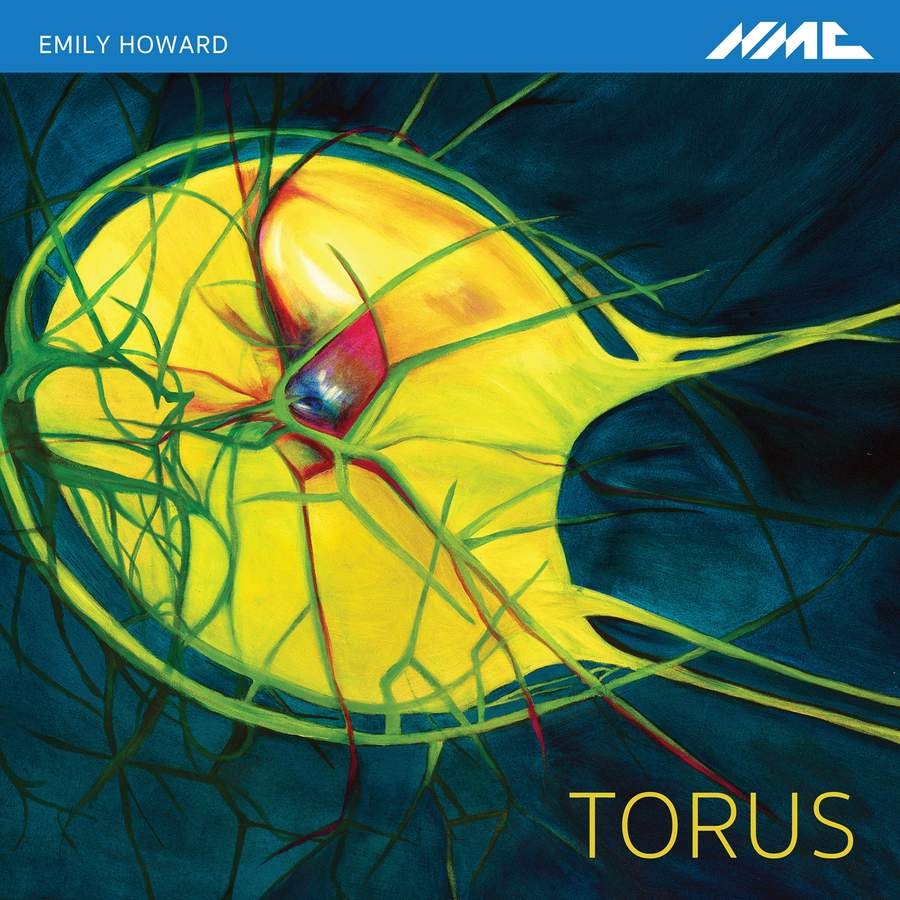
Out today…Emily Howard’s Torus

Emily Howard‘s new album, Torus – as reviewed on Arcana – is released today.

When I spoke to Emily about the piece itself back in 2018, she said, “When I created Torus, I imagined I was on the surface of the shape, travelling around and around in one direction, and encountering different landscapes as I went. Around 14 minutes into the work, there is a significant shift and a complete change of musical soundworld, and this is where I had instead imagined a rotation in the other direction. So considering mathematical shapes in this way does help me to define musical shapes and structure in my compositions”.

You can explore buying options for Torus at the NMC website, and watch a short video about it below:

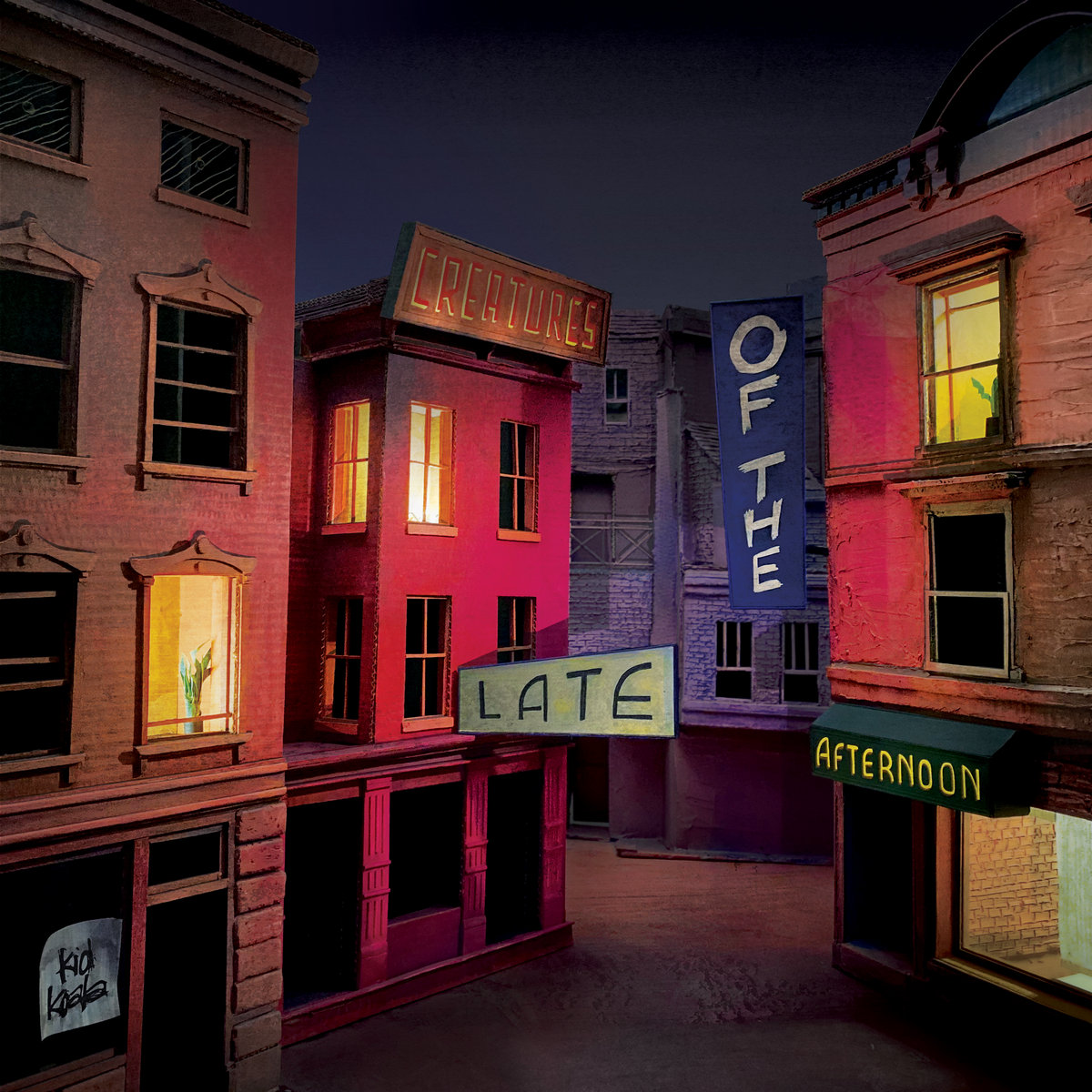
Switched On – Kid Koala: Creatures Of The Late Afternoon (Kid Koala)

by Ben Hogwood

What’s the story?

Kid Koala is truly a one-off. Not content with making inventive hip hop beats infused with scratching, quirky if well chosen samples and catchy hooks, he matches his music with distinctive visual art.

Such is the case with Music For The Late Afternoon, whose LP is accompanied by a board game. Typically for Koala – real name Eric San – the album tells a selection of stories that move quickly between musical sources.

As with a number of established beat makers, he is amassing a considerable body of work, this being his ninth album.

What’s the music like?

Both psychedelic and charming! There is no limit to the imagination here, with a veritable kitchen sink of riffs, beats and speech samples, but it all comes together just like the colourful animations Kid Koala does so well.

Some of the songs here are crowd scenes, children’s voices calling out mottos on the likes of Things Are Gonna Change, supported by walls of guitar and white noise. 1,000 Towns is a slightly macabre waltz, weird but winsome.

The blasts of musical adrenalin are complemented by slower, thoughtful asides where there is touching vulnerability, or charming and often amusing dialogue, in this case a couple of scenes in a robot hotel.

There is more variety here than on previous records, but plenty of scratching prowess throughout, Koala’s turntable work so subtle that you’ll oftem miss it.

Does it all work?

Yes. As ever there is a lot of fun to be had here, with a lot of musical twists and turns that might reflect a short attention span but keep the listener engaged.

Is it recommended?

Yes. An album that proves energising, touching and celebratory in equal parts. Closing track Til We Meet Again provides the ideal final sentiment, as hopefully Kid Koala will continue in this rich vein of form.

Listen and Buy

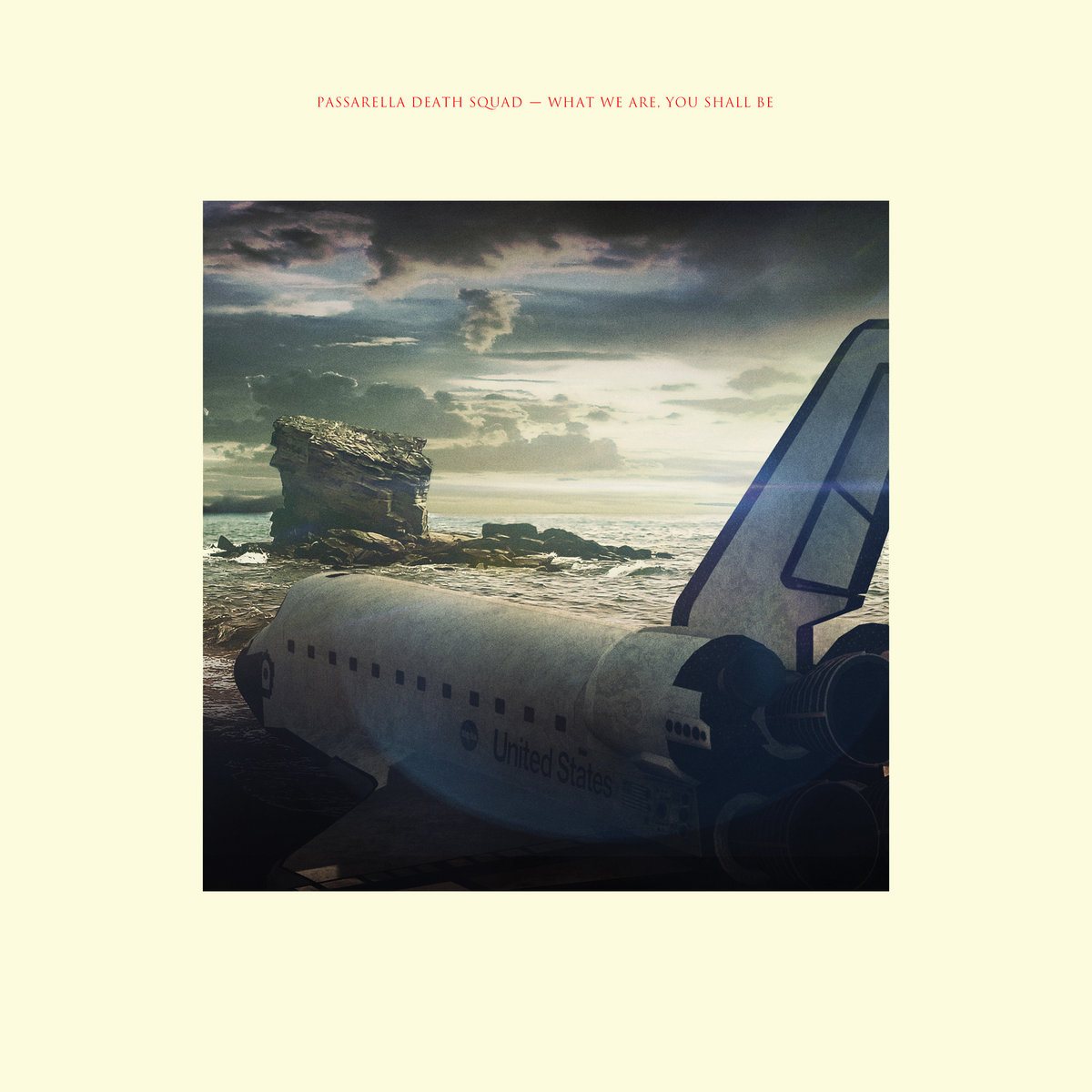
Switched On – Passarella Death Squad: What We Are, You Shall Be (Passarella Records)

by Ben Hogwood

What’s the story?

Thirteen years might seem like an age in music, but Danny Passarella and Emilie Albisser have not been idle since the release of their first album.

As Passarella Death Squad they have established themselves as cutting edge clothing designers in London, following the lead of Andy Warhol’s Factory. Simultaneously they have been busy raising important human rights issues through their RAISE publication.

Though the two have their hands full, music has always been front and centre of their world – and here the duo release their first album since their self-titled opus in 2010.

What’s the music like?

Atmospheric and impressive. Passarella and Albisser make slow burning songs that gradually open out like exotic flowers. Their music crackles with atmosphere, and on cuts like Creatures it sports a strong four to the floor beat to go with a song that grows impressively.

Emilie Albisser’s voice is cool and sometimes deadpan, but it gets the ideal backing with lean, bass-led grooves that bring the work of Gus Gus to mind while maintaining a wholly distinctive voice.

Just Like Sleep is one of the standout songs, a nocturnal lament that is beautifully structured and executed. No Mas has a sharper bass shadowing a semi-operatic vocal, with a recurring theme that gathers momentum as the song kicks into gear.

Often the music sets the scene of a club with very dark corners, exploring ghostly and gothic themes with lyrics that are similarly low in temperature. The title track is a good example of this, Albisser’s voice threatened by a robotic intervention but the music continuing on its coolly detached path.

Does it all work?

Yes. The minimal production gives the songs – and in particular Albisser’s voice – enough room to make a strong impact.

Is it recommended?

It is. A smoky second album to lose yourself in. Make sure you give it several listens to fully cast the spell.

Listen

Buy