Daughter have something of a cult following, and it’s easy to see why. They have the ability to build strong connections with their listeners, through subtle music that can often be interpreted as downward looking but actually turns out to have a positive undercurrent beneath.
Their last album, Not To Disappear, was perhaps too dark especially given its January release in 2016, but seven years on from that the group have released a couple of strong singles with their collective eye firmly on the long playing game.
What’s the music like?
Both elegant and profound. Where Not To Disappear carried a weathered expression, Stereo Mind Games looks upward with more kinetic energy, alternating between urgent thoughts and slow tracks acting as a musical comfort blanket. There is a really pleasing contrast of light and shade, and their songs have an attractive poise this time around.
Be On Your Way is a standout song that hits home a few listens in, flickering with promise for the future while telling the first part of a story to be continued. Dandelion has a crisp urgency that is the ideal foil for the vocal, while Neptune gives the voice free reign, climbing up to emotional heights thanks to Elena Tonra‘s input as a breathy but meaningful vocalist. Swim Back makes a lasting impression, its driving bassline and swirling production complemented by strong vocals and enigmatic lyrics.
Tonra’s voice dominates proceedings, but in the intervening years it has become a more versatile instrument, operating in slightly glacial tones but also capable a more direct approach.
Does it all work?
Yes, it does – because Daughter reach their listeners with subtle, elegant songs and few frills.
Is it recommended?
It is. Give it a few listens and Stereo Mind Game will set up its own corner in your head.
Strings of the City of Birmingham Symphony Orchestra / Eugene Tzikindelean (above)
Schubert arr. Mahler String Quartet no.14 in D minor D810 ‘Der Tod und das Mädchen’ (1824, arr. 1896) Vivaldi Le quattro Stagioni Op.8 nos. 1-4 (1718-20) Piazzolla arr. Desyatnikov Cuatro Estaciones Porteñas (1965-9, arr. 1996-8)
Town Hall, Birmingham Saturday 22 April 2023
Reviewed by Richard Whitehouse
Acoustically transformed following its refurbishment some 15 years ago, a commendably full Town Hall proved to be the ideal venue for this judiciously balanced programme featuring the strings of the City of Birmingham Symphony Orchestra with its leader Eugene Tzikindelean.
Mahler never fully completed his arrangement of Schubert’s Death and the Maiden quartet, but this has enjoyed not a few hearings since its realization by David Matthews with Donald Mitchell four decades ago. Tzikindelean presided over a brisk, incisive opening Allegro (its exposition-repeat not unreasonably omitted), and if the 30-strong ensemble had not quite the tonal depth or dynamic range that Mahler likely envisaged, there was no lack of immediacy – at least until momentum faltered slightly in the later stages of the reprise then into the coda.
No such uncertainty affected the Andante (the only movement elaborated by Mahler), whose variations on Schubert’s earlier song exuded a cumulative intensity up to the theme’s soulful reappearance toward the close. Nor did the Scherzo lack for truculence over its brief yet vital course, assuaged by the trio’s wistful elegance, while the final Presto unfolded as a tarantella as agile as it was malevolent. Tzikindelean kept his players on a tight if never inflexible rein through to a coda that brought this (for the most part) powerful reading to its decisive close.
Tzikindelean having vacated the leader’s chair for centre-stage, the second half consisted of Vivaldi’s The Four Seasons interspersed with Astor Piazzolla’s take on the seasons from the perspective of Buenos Aires. Brought together a quarter-century ago (at the behest of Gidon Kremer for his group Kremerata Baltica) by Leonid Desyatnikov, with numerous references to the Baroque master, the outcome is a provocative amalgam between ‘ancient’ and ‘modern’ which the CBSO strings rendered with alacrity. Among the highlights from the Vivaldi might be mentioned the plaintive eloquence of the Largo from Spring, the coursing impetus of the Presto from Summer, alternation of the robust and poetic in the initial Allegro of Autumn, or that discreetly alluring interplay of legato and pizzicato writing in the Largo from Winter.
Heard in the sequence ‘Summer-Autumn-Winter-Spring’, the tangos by Piazzolla offer any number of anticipations whether melodic or textural. A significant feature of Desyatnikov’s arrangement is the prominence accorded to the leaders from each section which were seized upon gratefully – not least by cellist Eduardo Vassallo, whose Piazzolla recordings with his ensemble El Ultimo Tango are a masterclass in performance from the chamber perspective. While each of the present pieces is more than the sum of its parts, surely the most arresting instance is that towards the close of ‘Spring’ when the harpsichord (ably taken by Masumi Yamamoto) emerges with an allusion to Vivaldi’s opening theme – a coup de théâtre that is seldom less than spellbinding, and duly worked its magic as part of tonight’s performance.
An impressive showing, then, for the CBSO strings and Tzikindelean – who will hopefully be making further appearances both as soloist and director in the coming season. Certainly, the repertoire for string orchestra is one whose exploration should prove well worthwhile.
You can read all about the 2022/23 season and book tickets at the CBSO website. You can read more about Eugene Tzikindelean here, and more about El Ultimo Tango here
Isang Yun Silla (1992) Violin Concerto III (1992) Chamber Symphony I (1987)
Sueye Park (violin), Seoul Philharmonic Orchestra / Osmo Vänskä
BIS 2642SACD [67’13″]
Producer Robert Stiff Engineer Jin Choi
Recorded 30 August-3 September 2021, Lotte Concert Hall, Seoul, South Korea
Reviewed by Richard Whitehouse
What’s the story?
BIS makes a notable contribution to the growing Isang Yun discography with a judiciously chosen collection of orchestral pieces from his last years, performed with commitment and insight by the Seoul Philharmonic Orchestra under its recently departed music director Osmo Vänskä.
What’s the music like?
Most famous for his fractious relationship with the then military dictatorship of South Korea, Yun (1917-95) resided mainly in West Berlin from 1964 and built a sizable catalogue which effected a far-reaching synthesis of European modernist techniques with traditional Korean elements. At the forefront of the Western avant-garde during the 1960s, he latterly embraced more traditional genres – composing numerous symphonies, concertos and ensemble works such as extend and enrich this synthesis with engaging while frequently provocative results.
The First Chamber Symphony premiered in Güttersloh by the Deutsche Kammerphilharmonie Bremen and scored for early-Classical forces with pairs of oboes and horns alongside strings. Its three continuous sections outline an expected fast-slow-fast format – offset by the interplay of string groupings in the first section, then the emphasis on solo or chamber formations and contrasts of motion in those that follow. The final section moves towards a sustained passage of exquisite poise, before a sudden upsurge concludes the whole piece with terse decisiveness.
Premiered in Amsterdam by Vera Beths, the Third Violin Concerto follows a similar formal trajectory whose continuity is largely determined by greater or lesser contrasts in motion and emotion between its constituent episodes. Those of the opening section build to an intensive central climax, subsiding into a restive calm which takes on greater serenity in its successor; before the final section unfolds impulsively and with martial undertones towards the closing series of exchanges between violin and orchestra: the soloist has the conciliatory last word.
Subtitled ‘Legend for Orchestra’, Silla was Yun’s final such piece and premiered in Hanover by the Niedersächsisches Staatsorchester. Its title evokes connotations of home and origin – not least Korean court music from the earlier Medieval era, here alluded to within a context of nocturnal celebration. There are again three sections, though here the follow-through feels all but seamless while the orchestration enables a wide range of timbral and textural nuances – not least in a peroration as suggests an affirmation (understandably) rare in this composer.
Does it all work?
It does. Many of Yun’s latter works evince sufficient connections with the Western classical music of earlier eras to be accessible for mainstream audiences, with the pieces here being no exception. Sueye Park is assured and insightful in the concerto, while Vänskä secures playing that emphasizes the allure and iridescence of Yun’s orchestral writing. Over a quarter-century after the composer’s death and his music remains on the periphery of the modern repertoire, but releases such as this will secure it greater advocacy from younger musicians and listeners.
Is it recommended?
Very much so. The recording is as commendable in its clarity and definition as expected from BIS, as are Walter-Wolfgang Sparrer’s notes. One can only hope a follow-up release, perhaps featuring Konturen, the Oboe Concerto and the Second Chamber Symphony, is forthcoming.
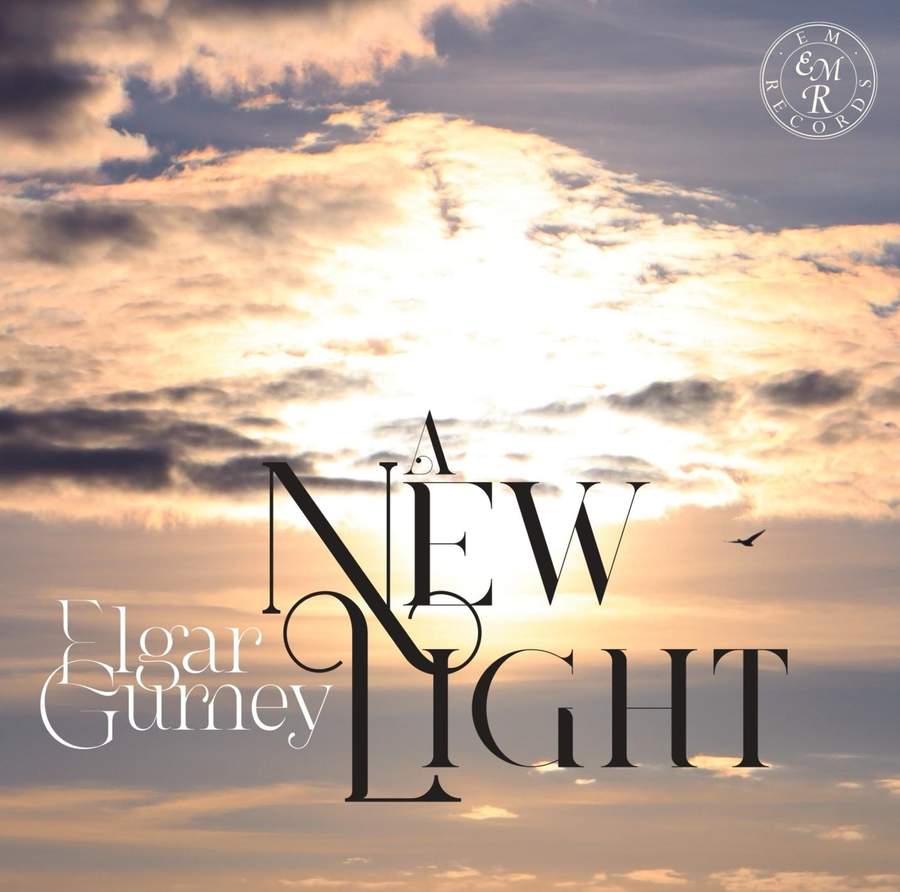
Elgar Violin Sonata in E minor Op.82 (1918) Salut d’Amour Op.12 (1888) Chanson de Nuit Op.15/1 (c1889) Chanson de Matin Op.15/2 (c1890) Gurney ed. Marshall Luck Violin Sonata in D major (c1918-19)
Producer Rupert Marshall-Luck Engineer Oscar Torres
Recorded 29-30 March 2021, Wyastone Concert Hall, Wyastone Leys, Monmouth
Reviewed by Richard Whitehouse
What’s the story?
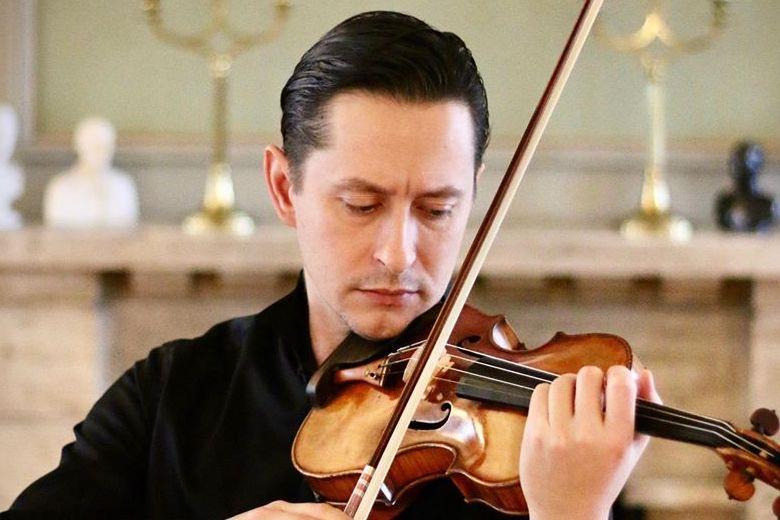
Rupert Marshall-Luck here continues his exploration of British music for violin and piano with this coupling of sonatas by Elgar and Gurney, the former performed in a new critical edition as prepared by the violinist and the latter receiving its first commercial recording.
What’s the music like?
The Violin Sonata was the first of a series of ‘chamber’ pieces Elgar wrote near the close and in the aftermath of the First World War, distilling his musical language while accentuating a pathos seldom far beneath the surface during his maturity. Outwardly traditional in overall design, none of its three movements is yet beholden to formal precedent. Thus, the opening Allegro alternates its subtly differentiated themes to halting and even uncertain effect; the Romance contrasts the flowing eloquence of its middle section with the restrained poignancy of those either side, while the final Allegro centres on an ardently expressive melody as this unfolds with increasing purposefulness toward a tersely decisive close. Marshall-Luck’s edition was published by the Munich firm of Henle in 1919, a century after the work’s first performance.
His Violin Sonata in D marks another stage in the reclamation of Ivor Gurney’s voluminous output. Composed near the start of that period between his discharge from the army and his admittance to a psychiatric hospital, it is less overt in its emotional intensity than the later E flat Sonata but more cohesive formally – due, in part, to Gurney’s advocate Marion Scott in having preserved a near-complete score as has subsequently been realized by Ian Venables. Despite its Allegro marking, the first movement is often understated in its expressive range and motivated more by tonal fluidity than by its rhythmic animation. The Scherzo exudes a capering humour complemented by the winsome poise of its trio, then the largely literal ‘da capo’ ends in teasing ambivalence. The Lento builds from its initial reticence to a climax of acute plangency before subsiding into regretful calm; after which, the Finale sets out with a renewed determination, offset by its elegant second theme and energized by its development, on the way to a coda whose resolution is the greater for its almost offhand sense of closure.
Placed between these sonatas are several of Elgar’s duo miniatures – Salutd’Amour with its effortlessly ingratiating charm, then the Chansons which make for an ideal diptych in terms of their respective pathos and ardency. Marshall-Luck plays all three with unfailing artistry.
Does it all work?
Pretty much. Comparison with his earlier recording of the Elgar (EM Records EMRCD011) finds Marshall-Luck more expansive in each movement, notably a finale that now has greater depth and insight. Here and in the Gurney, Duncan Honeybourne (most recently heard in a deeply impressive account of Frank Bridge’s Sonata on EMRCD070-71) contributes pianism as sensitive yet impulsive as this music requires and which adds much to the persuasiveness of these accounts. Hopefully the Gurney will go on to receive the public hearings it deserves.
Is it recommended?
Yes. The sound has the focus and clarity needed for this difficult medium, while Marshall-Luck contributes detailed overviews on each piece within the extensive booklet notes. As a programme it adds considerably to one’s appreciation of the music – ‘A New Light’ indeed.
The sibling duo Louis and Ben Helliker-Hales, who make up Chaos in the CBD, beam in from New Zealand as the latest contributors to the fabric presents series.
In the process they mark a decade in music, bringing together a set of house music described as ‘creating a tunnel between 1990 and 2007…a timeless listen, condensing the ebbs, flows, gear changes and the feelings that surface during an all-night set experience in 80 minutes.
The idea is to appeal to experienced listeners whose foundations lean heavily on rave music, but also newcomers getting into the genre for the first time.
What’s the music like?
This is a highly enjoyable, fluid mix of music that enjoys a good many twists and turns in its 77 minutes.
Chaos in the CBD are quickly into their stride, setting the scene before hitting a pretty much immediate high with Z-Formation’s Secret Departure. There are some nice lines floated throughout Hanna’s You & Me, where “I can see you in my dreams, you and me”, then some quality nocturnal house from Chris Brann – he of the Wamdue moniker – who contributes the wonderfully chilled Journey To The Centre, complete with airy piano.
We hear the deep Raymond Castoldi cut, into The Jungle, which segues nicely into the quality Tarenah from Psychedelic Research Lab, adding a bit more percussion. By the time Deep Sided‘s Fly You kicks in the vibe is definitely older school rave – and with a riff to match.
The mix roughs up really nicely through the likes of The Element, whose cut Oh You Got Me sounds great in its Deeper Than Deep mix. When Chaos in the CBD themselves surface with Higher Elevation the camera has panned out again, before Dana Kelley and Brothers Of The Underground offer slightly rougher, disco-infused cuts once again.
Musically the mix gets more adventurous the more it moves, and the wandering eye of Blak Beat Niks with Kerri Chandler proves a great listen on I’ll Be There, a Brazilian infused beauty. House music proper reasserts itself for Box Clever and I’ll Eat You (If You Were A Box), then the upfront Raunchy After Dark from Sound Clash Republic. Finally the deepness returns, with the lovely JD Hall and Johnathan Morning effort Into You, by which time the tempo is quite nippy.
Does it all work?
Yes – the brief very much fulfilled, with house music of varying dimensions and depths mixed into a really satisfying whole.
Is it recommended?
It is. Quality deep house is not always easy to find, but there is plenty of it here – and enough to satisfy those whose persuasions head more for the rave or even the jazzy side of things. Recommended!


 Arcana.fm