On Record – Vanessa Wagner: Mirrored (InFiné)

by Ben Hogwood

What’s the story?

Vanessa Wagner has been quick to follow up her March release, Study Of The Invisible, where she thoughtfully compiled an album of modern piano music that might be described as ‘minimal’ but which led to a series of inventive and rewarding compositions, imaginatively sequenced.

Mirrored is a collection of studies for solo piano, largely contemplative spaces that leave plenty of room for meditation and a get-out clause from today’s fast-moving world. Normally a listener might associate piano studies with application of technique; functional pieces rather than emotive; but this collection is very much studies in the form of moods and mental images.

What’s the music like?

Introspective, yet wholly rewarding. Particularly engaging is Wagner’s selection of music by Philip Glass, well-chosen and beautifully played. The Poet Acts is a sombre, thoughtful piece, opening out like an uneasy berceuse. Etude 4 is very different, a turbulent and agitated piece generating a large amount of nervous energy. By contrast Etude 2 is a thoughtful contemplation with a hint of darkness, led as it is by the low left hand, before building to a forceful conclusion.

Ryuichi Sakamoto’s Solitude has a similar profile, though its plaintive right hand melody leads the way. Plaintive is also the word that could be used for Nico Muhly’s Quiet Music, though this has an inner power generated through a soft but meaningful chorale, which makes it sound like a deeply spiritual statement. Melaine Dalibert’s Six + Six has gentle undulations that go on their way in watery figurations, while Sylvain Chauveau adopts a still profile for the simple and meaningful Mineral.

Moondog’s Sea Horses is short but descriptive, an active piece flitting this way and that. A similar freedom is afforded to the right hand in Léo Ferré’s Opus X, where the melody is free to travel up and down in the treble as it wishes.

Does it all work?

It does. Once again Vanessa Wagner has chosen a logical and rewarding sequence of pieces, and her affinity with the music of Philip Glass in particular makes these compelling recordings. She has an unusual and vivid sensitivity for this music, creating many different keyboard colours in the course of the collection.

Is it recommended?

Yes – provided you also have Study Of The Invisible, which is the ideal complement to these pieces.

Listen

Buy

Switched On – Daniel Avery: Ultra Truth (Phantasy Sound)

by Ben Hogwood

What’s the story?

On his albums to date, Daniel Avery has used music as a tool for escapism, dealing as he calls it in ‘misty-eyed euphoria’.

Ultra Truth is the first of his albums to take a completely opposite approach, looking to face the darkness of our times head on. Avery does so with a big production arsenal, aided by Ghost Culture and Manni Dee, while guest vocals are provided by HAAi, Jonnine Standish (HTRK), AK Paul with the voices of Marie Davidson, Kelly Lee Owens, Sherelle and James Massiah.

What’s the music like?

Given the brief outlined above, it comes as no surprise to report that Ultra Truth is a big beast of an album. It’s cover is a remarkably accurate guide to the music contained within, which twists and turns through various forms of discomfort, while also finding broad canvases of dark ambience. These become an effective and alluring backdrop.

The album is full of imaginative rhythms and big, big spaces. No space is bigger than the one found on the deeply mysterious Wall Of Sleep, which has a wall of sound and a thumping good rhythm, not to mention enchanting vocals from HAAi. Higher is equally immersive only with darker colouring, supported by an ominous bass sound. Lone Swordsman, meanwhile, has a fluorescent loop dancing in the middle distance

Sometimes the thick ambience can be oppressive, and Overflowing With Esscape expands so the speakers can barely contain its far reaching tendrils. By contrast, a track such as Collapsing Sky has an empty, remote feel – yet the floated chords still offer a form of consolation.

Avery’s rhythm tracks are often busy, providing a percussive clatter for the likes of Devotion, while thick and intensely ambient figures hang above like musical clouds. Only has more of a shoegaze / Cocteau Twins feel.

Does it all work?

It certainly does. As with his previous long players, Avery shows an effortless ease with structures large and small, meaning the listener can dip into individual tracks or pan out for the whole magnum opus.

Is it recommended?

Without hesitation. This is an artist whose body of work is gaining in stature with each release, as deep emotion and musical sensibilities sit seamlessly together. Another outstanding release.

Listen

Buy

In appreciation – Angelo Badalamenti

by Ben Hogwood

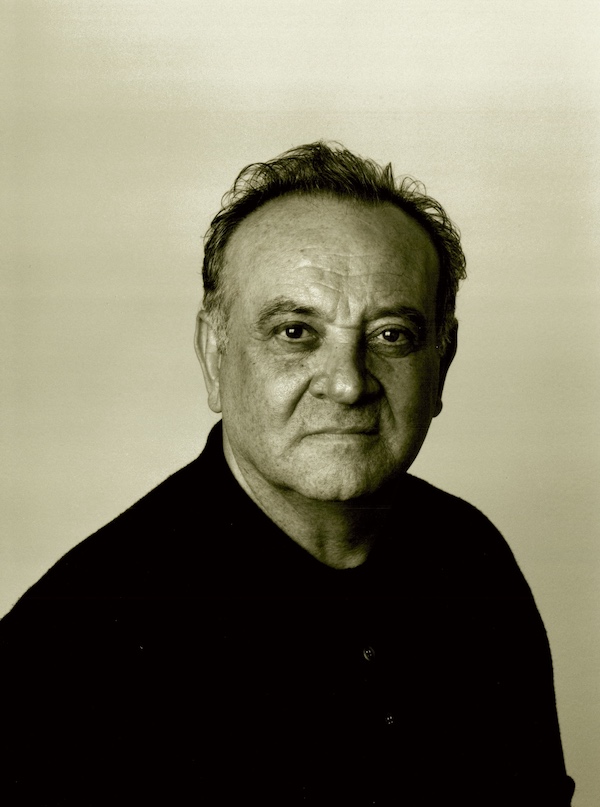
Two days ago we learned of the sad news that composer Angelo Badalamenti had died, aged 85.

There is a very fine tribute to Angelo on the Guardian website from Sian Cain, but I wanted to add to that – simply – by posting the soundtrack to Twin Peaks here for everyone to listen to. Ironically Julee Cruise, the distinctive vocalist who sings three songs on the soundtrack, passed away only six months ago.

What a ground breaking piece of work this is, the standout of many collaborations with director David Lynch. Its deep romanticism is immediately striking, along with latent menace in Laura Palmer’s Theme, but also of note is the space in which the music operates. Badalamenti makes a great deal from what seems to be very little material – the sign, surely, of a great composer. Listen and enjoy:

In appreciation – Manuel Göttsching

by Ben Hogwood

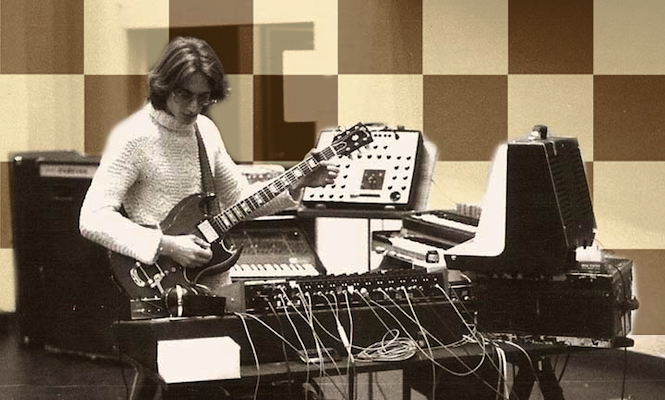
Yesterday we learned the sad news of the passing of the highly influential German musician Manuel Göttsching. He was the leader of two 1970s groups, Ash Ra Tempel and Ashra, but was best known as a solo artist.

In spite of his solo role he managed to sound like a whole ensemble on the remarkable E2-E4, which remains his calling card today. Written between 1981 and 1984, the epic composition predates dance music as we know it by many years, tapping into the minimalism of composers such as Reich and Glass but taking a different, even more hypnotic approach. Little wonder that this beauty found many fans in Ibiza, becoming one of the key early Balearic successes that the likes of Sueno Latino would draw upon.

Here it is in full:

I was fortunate enough to see a two-part Göttsching concert at the Convergence Festival at the Barbican in 2017, which you can read about here

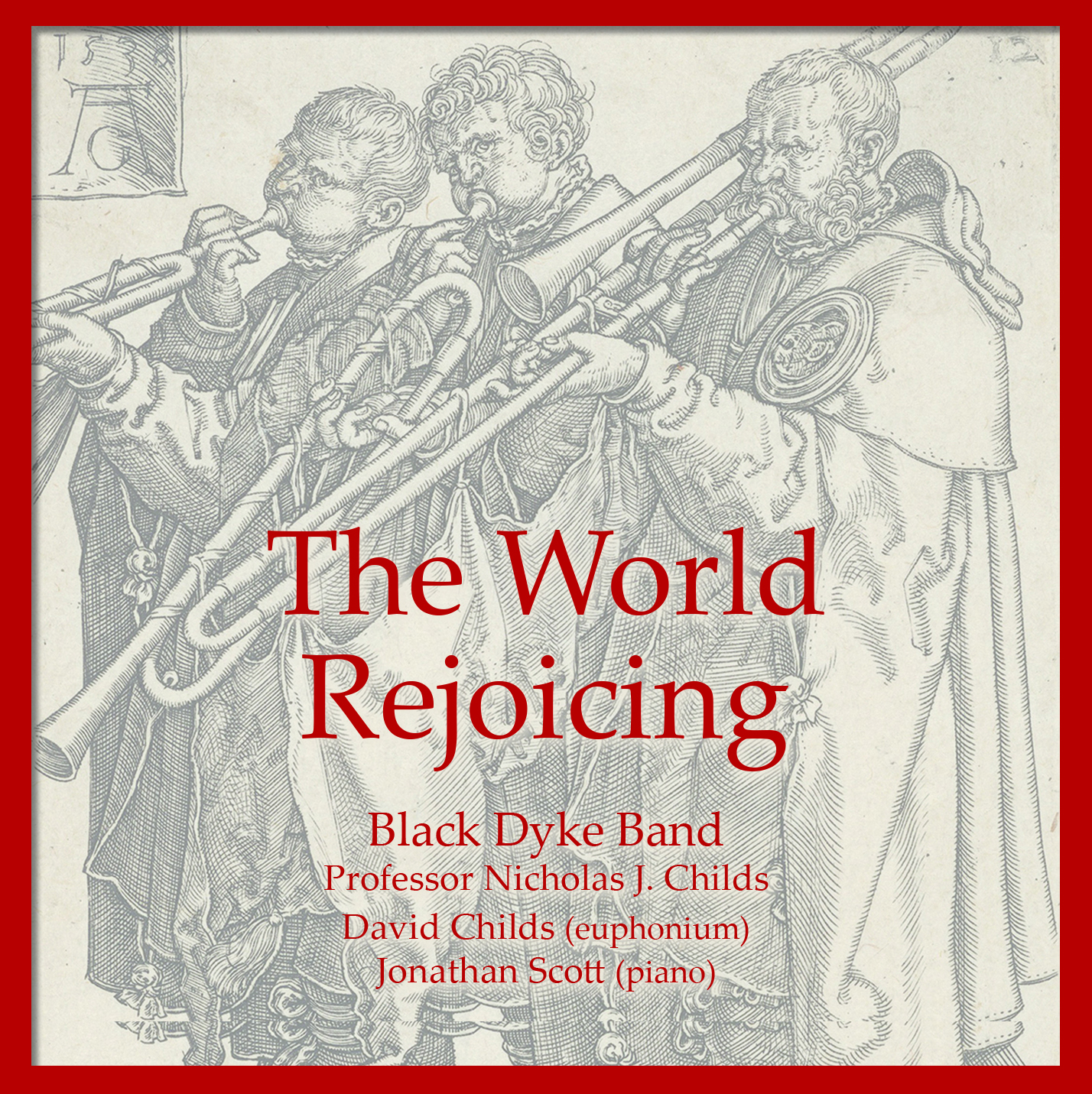
On Record: David Childs, Jonathan Scott, Black Dyke Band / Nicholas J. Childs – The World Rejoicing: The Music of Edward Gregson Volume VII

Gregson
Concertante for Piano and Brass (1966)
Variations on ‘Laudate Dominum’ (1976, rev. 2007)
Fanfare for a New Era (2000, rev. 2017)
Euphonium Concerto (2018)
The World Rejoicing – Symphonic Variations on a Lutheran Chorale (2020)

David Childs (euphonium), Jonathan Scott (piano), Black Dyke Band / Nicholas J. Childs

Doyen DOYCD414 [78’14”]

Producer Adam Goldsmith, Engineer Melissa Dee

Recorded 2021, 2022, Town Hall, Morley and Conservatoire, Leeds

reviewed by Richard Whitehouse

What’s the story?

Doyen releases its seventh volume devoted to the music for brass band by Edward Gregson, featuring two of his numerous concertante works and two sets of variations that confirm his all-round versatility in a medium which has not always been synonymous with innovation.

What’s the music like?

The programme begins with Fanfare for a New Era, written to mark the opening of Stoller Hall at Chetham’s School and filling the sound-space through its antiphonal exchanges. The Concertante for Piano and Band remained unheard for 50 years following its premiere, but the deftness of this combination amply justifies its revival. The Prelude suggests a passing acquaintance with Rachmaninov’s Fourth Concerto, the Nocturne makes affecting use of the hymn Escher and the Rondo alludes to a more famous such tune before its lively close.

Jonathan Scott despatches the solo part with no mean panache, as does David Childs that of the Euphonium Concerto. Among the latest in Gregson’s more than a dozen concertos, this denotes the more angular style of his recent music with its eventful interplay of soloist and ensemble in the initial Dialogues. The B-A-C-H motif underpins a wide-ranging cadenza which makes way for a Song Without Words, whose ruminations are not of an unalloyed tranquillity, before A Celtic Bacchanal sweeps all before it in its unbridled effervescence.

In between these concertos, Variations on ‘Laudate Dominum’ confirms Gregson’s always imaginative approach to this too often predictable form. Merely hinted at in the introduction, Parry’s theme is invoked to varying degrees and from different perspectives during those six variations which follow (the third and fourth were added over three decades later) – taking in an eloquent hymn then a virtuosic fugue whose accrued energy makes possible the return of the underlying theme, for a peroration that rounds off the sequence with fervent affirmation.

Even more impressive is the closing work. Commissioned by a consortium of bands to mark the composer’s 75th birthday, The World Rejoicing is subtitled Symphonic Variations on a Lutheran Chorale which duly confirms its highly integrated structure. A subdued Prelude precedes five continuous sections that play fast and loose with the chorale Nun danket alle Gott, while encompassing the spectrum of compositional devices and technical ingenuity. This is intoned as a powerful apotheosis and subsequently rendered as a decisive Postlude.

Does it all work?

Very much so. Gregson has enjoyed a long association with the brass band movement, such as is evident in the expertise and absence of inhibition of his writing. Nor is there any risk of routine or predictability in music which is almost always as gratifying to listen to as it must be to play. It helps that the performers are so demonstrably attuned to his idiom – the Black Dyke Band, which is evidently on a roll some 167 years after its inauguration, here giving   its collective all in this music under the expert and attentive direction of Nicholas J. Childs.

Is it recommended?

Indeed. The sound could not be bettered for detail and overall presence within a sympathetic ambience, and Paul Hindmarsh has contributed informative notes. Whether or not this is the best of Doyen’s releases devoted to Gregson, it is an ideal place to begin exploring his music.

Listen & Buy

You can listen to clips and get purchase options from the Chandos website