Gedenke mein! WoO130 for voice and piano (1804-5, revised 1819-20. Beethoven aged 33 at time of composition)
Dedication Prince Nikolas Borissovich Galitzin
Text Anonymous Duration 1’30”
Listen
by Ben Hogwood
Background and Critical Reception
Thoughts
This song has quite a gentle, hymn-like profile – especially when the harmonies. The voice and piano move together, step by step, with a nostalgic tone, until what can only be a regretful closing statement.
Spotify playlist and Recordings used
A seldom-recorded song – but when you have versions from the great baritone Dietrich Fischer-Dieskau and tenor Peter Schreier the song is still amply covered.
The below playlist contains those two recordings:
You can chart the Arcana Beethoven playlist as it grows, with one recommended version of each piece we listen to. Catch up here!
Also written in 1805Wölfl Piano Sonata in C minor Op.25
Next upVariations for piano trio on ‘Ich bin der Schneider Kakadu’ Op.121a
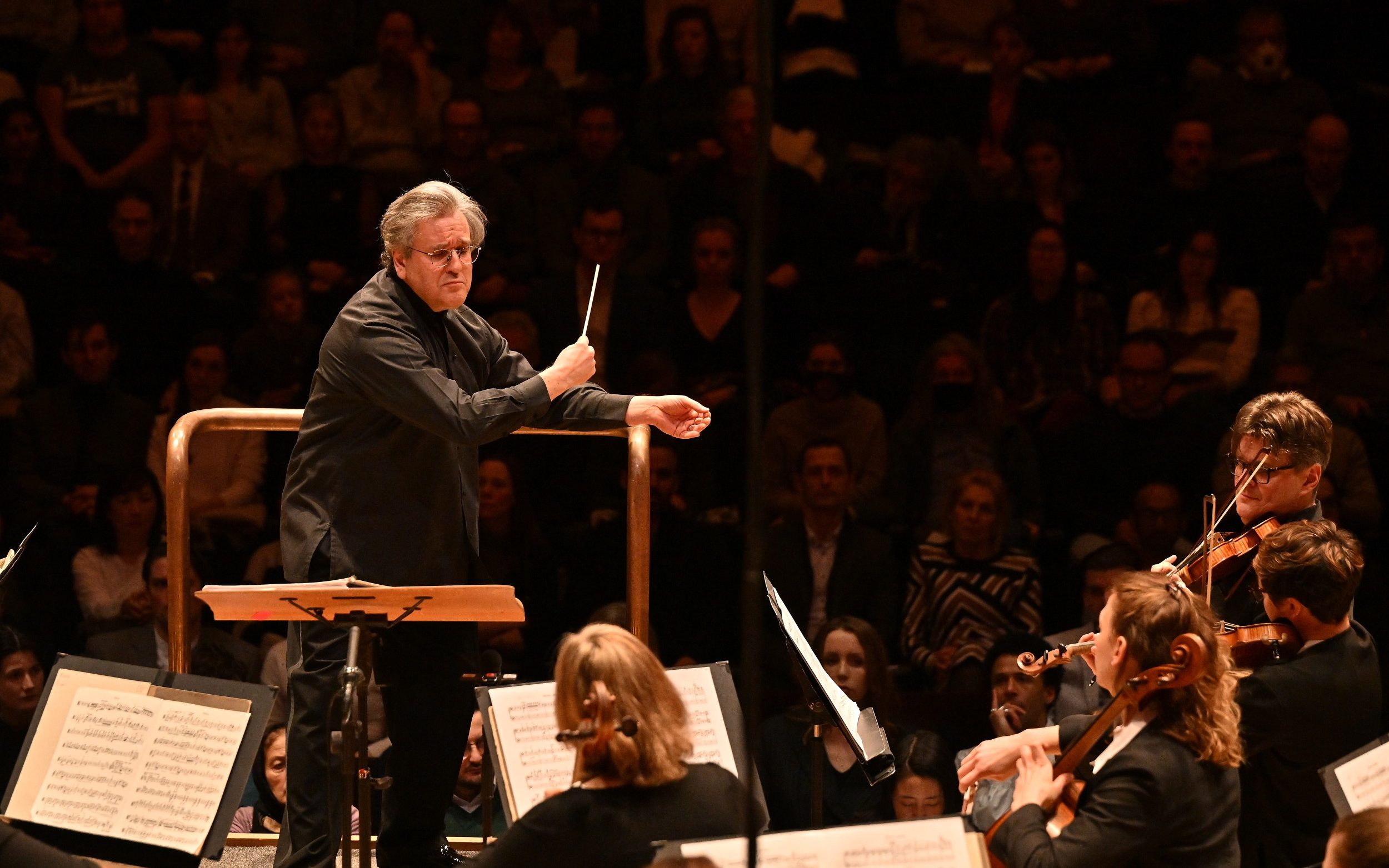
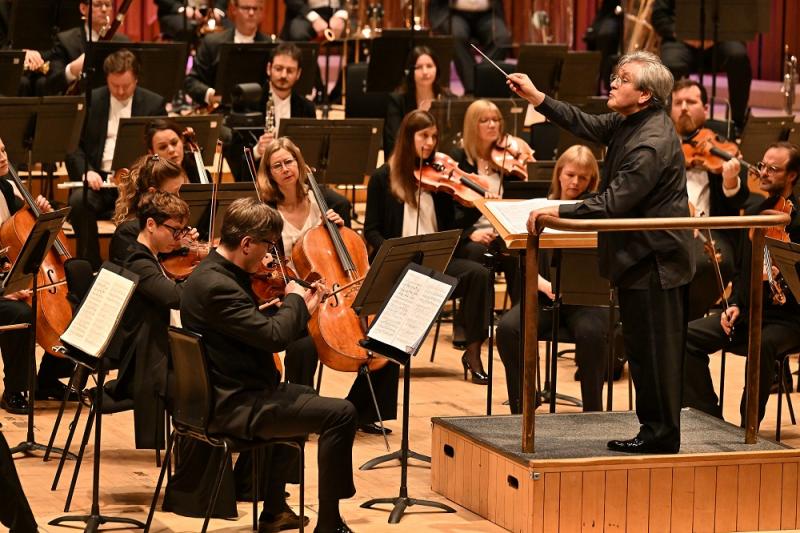
Roman Simovic (violin), London Symphony Orchestra / Sir Antonio Pappano
Coleridge-Taylor Ballade in A minor Op.33 (1898) Liszt Die Ideale S106 (1856-7) Richard Strauss Ein Heldenleben Op. 40 (1898)
Barbican Hall, London Sunday 12 February 2023
Reviewed by Richard Whitehouse
It may have been his only concert this season with the orchestra of which he becomes Chief Conductor next year, but the rapport between Sir Antonio Pappano and the London Symphony Orchestra was audibly sustained through the whole of what proved a judiciously programmed concert.
Whether or not his Ballade (as commissioned for and premiered at a Three Choirs Festival in Gloucester) was inspired by music from a nearby street organist, Samuel Coleridge-Taylor’s work confirms the melodic fecundity and orchestral panache of his maturity. Its languorous slower episodes, framed by swifter sections of mounting energy, might not generate a more cumulative momentum, but the emotional immediacy of this piece overall is never less than appealing – certainly in a performance as vividly and precisely executed as that given tonight.
Pappano gave a memorable account of Liszt’s Eine Faust Symphonie four seasons ago, and it is good to see him exploring the mostly neglected orchestral output of this still misunderstood figure. The 12th of his symphonic poems, Die Ideale was written for the unveiling of a statue of Goethe and Schiller – a poem by the latter furnishing the conceptual basis of a piece which avoids programmatic or psychological excess for mostly lyrical and understated material; one whose deftly modified sonata design may well have been in Wagner’s mind when envisaging the symphony of the future. Pappano steered a cohesive course, building assuredly towards a triumphal if never bombastic apotheosis whose chordal writing for timpani (picked up on by Bruckner in his First Symphony nine years later) is merely its most striking musical attribute.
This conductor has made a fine recording of Richard Strauss’s Ein Heldenleben with Orchestra dell’ Accademia Nazionale di Santa Cecilia, and a similar combination of formal clarity alongside expressive intensity was evident here. Surging forward without indulgence, The Hero found due contrast in the sniping pettiness of The Hero’s Adversaries – consummately rendered by the LSO woodwind – then leader Roman Simovic took centre-stage for an unusually focussed take on The Hero’s Companion as culminated in rapturous euphony. Pappano’s underlying tempo for The Hero at Battle was a little too headlong, though never to the detriment of its textural density in what emerged as a purposeful development of the work’s myriad motifs; heading into a powerfully wrought climax at the beginning of The Hero’s Works of Peace.
It is in this penultimate section that the work’s pivoting between tone poem and symphony is most finely drawn, and Pappano duly underlined the numerous allusions to Strauss’s earlier pieces with due awareness of their place within the intricately conceived whole. Nor was the fateful transition into The Hero’s Resignation and Fulfilment uncharacterized, making this finale a culmination of the overall design and consummation of its intrinsic content. Whether or not the evocation of domestic bliss, there could be little doubt as to the music’s sincerity.
Contrary to latter-day presumptions, moreover, there was no evidence of the work’s revised ending as somehow tacked-on to what went before – Pappano drawing a Nietzschean ‘oneness’ from those closing bars which set the seal on a persuasive reading, and a memorable concert.
Commemorative medal for Ludwig van Beethoven – Bronze medal from the Hungarian Ministry of Culture based on a design by József Reményi (picture courtesy of the Beethovenhaus, Bonn)
Bagatelle in C minor WoO 52 for piano (c1795-7, Beethoven aged 24-6)
Dedication not known Duration 3’45”
Listen
written by Ben Hogwood
Background and Critical Reception
A bagatelle that slipped through the net on Arcana’s Beethoven voyage! This one, which appears to have been finished between 1795 and 1797, is one of a series of such works completed in C minor. It was seemingly on the shortlist to be picked for the set of bagatelles Beethoven published as Op.119 in 1823.
Misha Donat, writing in his notes for the recording by Steven Osborne on Hyperion, suggests the movement was intended for inclusion as part of the Piano Sonata no.5 in C minor Op.10/1, but ‘discarded the scherzo-like piece because its tempo was too similar to that of the finale’. The piece was first published in 1888.
Thoughts
It is easy to see how this piece could be an out-take from the C minor sonata. It has the profile of a scherzo, with a repeated note motif that isn’t too dissimilar to that used in the forthcoming Symphony no.5. Although this ‘riff’ starts in the left hand it transfers to the right as well, and Beethoven enjoys playing with the syncopations it generates.
As a ‘trio’ section Beethoven moves into the major key, with a lighter touch and a warmer outlook to the music. It doesn’t last long, however – and we return to the dogged C minor material for a convincing finish.
Not exactly an easy Bagatelle to play, and much more a sonata fragment – but typically well constructed and memorable in its material.
Recordings used and Spotify playlist
Jenő Jandó (Naxos) Mikhail Pletnev (DG) Ronald Brautigam (BIS) John Lill (Chandos)
Ronald Brautigam provides plenty of energy on his account, and there are tasteful versions from the other three pianists on the list – as well as Steven Osborne on Hyperion.
You can chart the Arcana Beethoven playlist as it grows, with one recommended version of each piece we listen to. Catch up here!
Also written in 1797 Eberl2 Sonatas for Keyboard four hands, Op.7
Christian Poltéra (cello, above), Kathryn Stott (piano, below)
Prokofiev Cello Sonata in C major Op.119 (1949) Chopin Cello Sonata in G minor Op.65 (1845-6)
Wigmore Hall, Monday 13 February 1pm
by Ben Hogwood
Christian Poltéra and Kathryn Stott are a long-established duo who have provided us with a richly rewarding discography including works by Fauré, Saint-Saëns, Barber and Schumann. Their encounters with Russian music appear to have been less frequent to date, and it was good to hear their poised account of one of the form’s most popular works. Ukrainian-born Prokofiev wrote his sonata, a late work, for Mstislav Rostropovich, who had impressed him with his larger than life playing. It is the first of a late burst of works for the instrument, including the Sinfonia Concertante, Solo Cello Sonata and Concertino.
Poltéra began the sonata with a solemn intonation on the lowest register of the cello, emphasising the ‘grave’ aspect of Prokofiev’s tempo marking rather than going for an epic sound. This thoughtful approach bore fruit in the slower sections, and with Stott an attentive partner there was plenty to enjoy in Prokofiev’s baleful writing, and impressive clarity in the more expansive passages.
The second movement danced attractively, tapping into Prokofiev’s ballet credentials, with some enjoyable exchanges between the two, if not always making the most of the composer’s frequently humourous asides. The third movement sang out more, Poltéra projecting further without losing any of his admirable control or intonation, and Stott getting to the heart of Prokofiev’s combination of percussive cut and thrust and soft-centred lyricism.
Chopin’s Cello Sonata came as something of a surprise to his fellow composers in the mid-1840s. Written for the French cellist Auguste Franchomme, it is a substantial work, which unsurprisingly asks a great deal of the pianist in a full-bodied, almost orchestral role.
Poltéra it was who led the first movement most impressively, with a consistently attractive sound singing subtly but meaningfully. Technically he is a superb cellist, with tone unflinching, but praise should be levelled at Stott’s ability to bring beautiful phrasing to even the most congested piano writing. The searching legato theme in the second movement was a case in point for the cellist, beautifully played with flowing piano figures. The lovelorn third movement was tinged with sadness, finishing lost in thought. The last movement showed determination to break from this soul searching, looking outward as it powered through to a major key finish.
This was an excellent performance, ideally balanced and capturing the right balance of regret and resolve – and was balanced by the encore, Saint-Saëns’ Romance in F major Op.42. A Monday lunchtime treat.
For more livestreamed concerts from the Wigmore Hall, click here
теплота is the London-based duo of Grundik Kasyansky & Tom Wheatley. In their biography they are described as ‘half techno, half free jazz’ – and goes into a bit more detail on how they use ‘feedback synthesizer and computer-acoustic bass’, and ‘fuse a spontaneous interplay orthogonally over cyclical structures, with techno as perpetual fulcrum’.
What’s the music like?
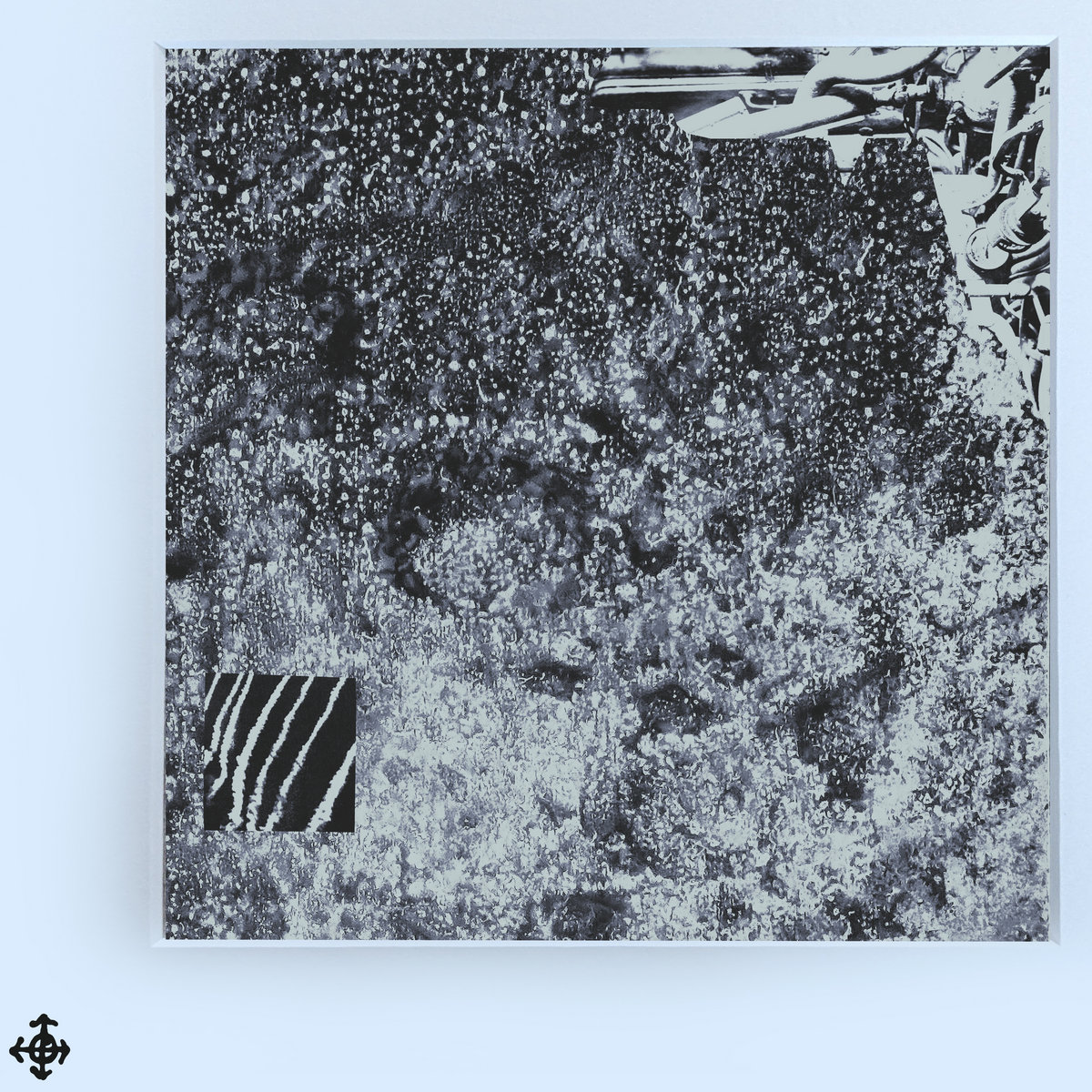
A coiled spring – Skynned has a good deal of energy, but often keeps it confined in tight musical spaces. Often it feels like the musical equivalent of a lithograph drawing in musical form, darkly shaded and executed.
First track Isolator is fidgety, beset by repetitive and glitchy noises, while Motus Haru has a more regular profile. The track Cycle appears in two versions – the first nervy, and a bit unsettled, showing its mechanical workings, while the second carries more dramatic weight. Sling strains at the edges, a treble line trying to break free but ultimately constricted, while there are brief snatches of woozy fairground rides that drift into view in the intriguing and distracted visions of Yagi. Apical, a substantial track, sends transmission codes through bass drum and monotone treble.
Does it all work?
It does – though the moody soundscapes and glitchy musical figures make for claustrophobic listening at times.
Is it recommended?
It is. There are some imaginative and detailed sound pictures here, often presented in the form of fever dreams. Occasionally unsettling, but always intriguing.




 Arcana.fm