
In concert – Vilde Frang, CBSO Chorus and Orchestra / Mirga Gražinytė-Tyla – Elgar: Violin Concerto; The Panufniks & Schumann

Vilde Frang (violin), City of Birmingham Symphony Orchestra / Mirga Gražinytė-Tyla

Elgar Violin Concerto in B minor Op.61 (1909-10)
Andrzej & Roxanna Panufnik Five Polish Folk Songs (1940, rec. 1945, rev, 1959, orch. 2022) [CBSO Centenary Commission: World Premiere]
Schumann Symphony no.1 in B flat major Op.38 ‘Spring’ (1841)

Symphony Hall, Birmingham
Wednesday 8 March 2023

Reviewed by Richard Whitehouse

The relationship between Elgar and Schumann is a fascinating one, aspects of which surfaced in this coupling of the former’s Violin Concerto with the latter’s First Symphony; the City of Birmingham Symphony Orchestra joined by principal guest conductor Mirga Gražinytė-Tyla.

As with Sibelius not long before, Elgar was an able violinist whose solitary concerto for his instrument makes no technical concessions. There is also a symphonic dimension as seemed uppermost in the thoughts of Vilde Frang, her formidable technique (rightly) geared towards the work’s conveying emotions within an expansive while methodical framework. This was evident in the opening Allegro, the impetus of its initial tutti maintained by flexible handling of contrasted themes on to a climactic development whose intricacy was abetted by the clarity of the orchestral playing. Even finer was a central Andante whose main melodies, among the composer’s most affecting, were never indulged across the course of a movement where the expressive profile remains teasingly intangible right through to those soulful concluding bars.

Maybe the balance between display and insight slipped in the final Allegro molto, with Frang losing focus slightly during its more extrovert passages. Once the accompanied cadenza was underway, however, there was no doubting the rapport of soloist and orchestra as earlier ideas are recalled and speculatively transformed in what comes near to being a confession of intent. Nor was the sudden re-emergence of that earlier energy at all underplayed as the coda heads to its affirmative resolution: one whose conviction duly set the seal on a memorable reading.

After the interval, an additional item in the guise of Five Polish Folksongs written by Andrzej Panufnik after the outbreak of war, reconstructed at its close and orchestrated by his daughter Roxanna so the stark originals for children’s or female voices – with pairs of flutes, clarinets and bass clarinet – were cushioned by these richer orchestral textures. The CBSO Youth and Children’s choruses (finely prepared by Julian Wilkins) gave their all in what were appealing yet at times overly diffuse arrangements of settings that are best heard in their original guise.

So to Schumann’s ‘Spring’ Symphony, a piece whose encapsulating mid-Romantic sentiment seemed uppermost in MG-T’s insightful and, for the most part, convincing account. Evocative fanfares launched the opening Allegro in fine style, the often fitful momentum of its lengthy development vividly maintained through to a sparkling coda. Arguably too slow for its ‘song without words’ format, the Larghetto yet exuded undeniable pathos and made a spellbinding transition into the Scherzo. A (too?) leisurely take on its first trio took the listener unawares, but the winsome closing bars prepared well for a final Allegro whose animated progress was enlivened by delectable woodwind and horn playing on the way to its decisive close. Should MG-T return in future seasons, further Schumann symphonies would be more than welcome.

The CBSO returns next week in a rare UK hearing of Weinberg’s First Sinfonietta, alongside Schumann’s Piano Concerto with Kirill Gerstein and an extended selection from Prokofiev’s Romeo and Juliet – this latter and the Elgar also featuring in a Barbican concert the next day.

You can read all about the 2022/23 season and book tickets at the CBSO website, and click here for the Romeo and Juliet concert, repeated at the Barbican here. Click on the artist names for more on Vilde Frang and Mirga Gražinytė-Tyla, or composer Roxanna Panufnik
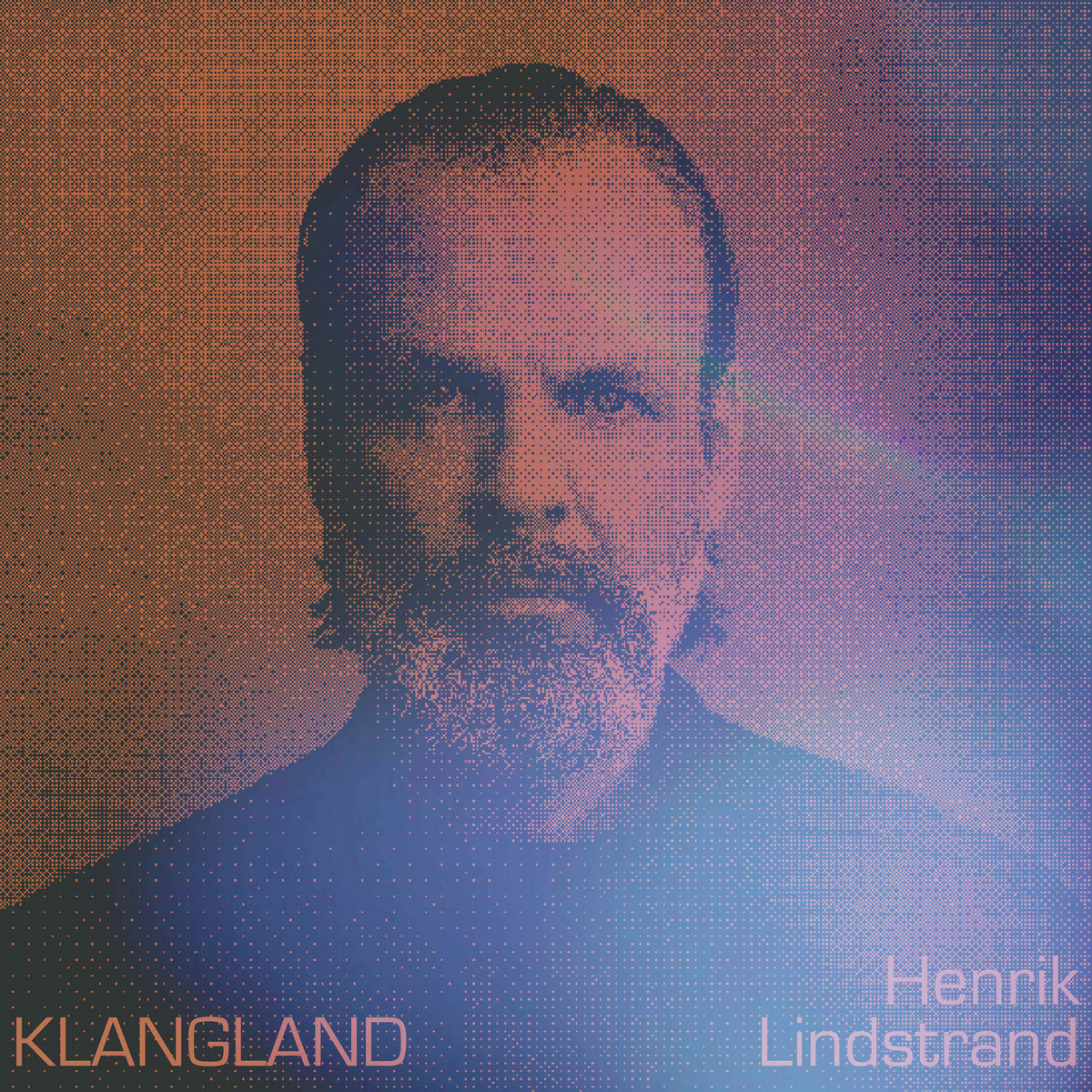
Switched On – Henrik Lindstrand: Klangland (One Little Independent)

by Ben Hogwood

What’s the story?

Having completed a solo piano trilogy, Henrik Lindstrand felt the need to expand his musical horizons. He chose a 16-piece string ensemble, who recorded the material for Klangland in Berlin under the direction of conductor Robert Ames and engineer Francesco Donadello.

Lindstrand’s aim in this music is to work with compressed musical ideas but communicate them in a powerful emotional manner. The title of the album, Klangland (translating as Soundland) suggests this will be done in a series of sonic portraits.

What’s the music like?

Both simple and effective. The ‘simple’ observation is not meant as a sleight, rather an observation that Lindstrand is able to work minimal material into something deeply meaningful. You only have to listen to the first piece, Jord, to see the immediate impact this music can make. The string sound is malleable, the strings often playing without vibrato to secure a sound of glassy clarity. This particular track takes in an airy panorama, with silvery violas, slightly gritty cellos and serene violins – and the timely addition of a piano at the end.

Throughout, Lindstrand’s use of strings is a cut above the ‘standard’ usage, using them economically and effectively. Post finds them almost stock still, using harmonics with no vibrato, before warmer thoughts emerge lower in the range, a solo viola added to the mix. The phrasing in pieces such as Tumlare takes the music deeper, with swooping figures towards the end imitating birds on the wing, having helped contribute to a spacious backdrop with rippling piano.

The piano prompts the internal musings of Gammafly and Tuvstarr, the textures crisp and cold, and with the free thoughts of the cello added to the latter. Cellos are key to the success of Millimeter, where the composer explores a more urgent series of melodic lines, spreading out to the wider extremes of the instruments.

Lindstrand’s cinematic abilities are frequently seen, in the opening out of Leva’s melody, or the instrumental doubling and subtle brush work on the drums that help paint such a vivid picture for CPH-ARN. Klangland itself is the crowning glory, rich in colour and enjoying a modal melody from the piano.

Does it all work?

It does. Lindstrand’s concentrated approach means the subtle intensity of his writing never lets up, and closer listening reveals the attention to detail in the orchestration. You can even here the pedals of the piano in closing track Hvid, for instance!

Is it recommended?

It is. In a crowded field, Henrik Lindstrand has a distinctive voice and music of subtle yet deep meaning.

Listen & Buy

In appreciation – BBC Singers

by Ben Hogwood

Yesterday we learned of the almost incomprehensible decision by the BBC that they were planning to close the BBC Singers. The choir is one of the leading ensembles of its type in the UK – if not the leading example – and have been responsible for many important premieres and landmark concerts over their 99-year existence.

Only in 2020 they were on stage as the Proms concerts returned, with a memorable performance of Eric Whitacre‘s Sleep, while if you want proof of their versatility from this year, watch this video of an arrangement of ABBA‘s Little Things:

The Spotify playlist below celebrates just some of the recordings made by the BBC Singers, in the hope that they will somehow be able to continue their invaluable service to British music. Included are shorter works by John McCabe, Sir Michael Tippett, Elizabeth Maconchy and Diana Burrell, alongside excerpts from Mozart’s Requiem, under Jane Glover, Janáček’s The Excursions Of Mr. Brouček, in a Proms performance under Jiří Bělohlávek, and the same forces at work in Smetana’s large scale opera Dalibor.

Finally the Singers can be heard in the striking Moth Requiem by Sir Harrison Birtwistle, which they premiered at the Proms in 2013.

If you do listen, please also make sure you sign the petition calling for the BBC to reconsider their decision,

Switched On – John Foxx: Avenham (Metamatic)

by Ben Hogwood

What’s the story?

John Foxx is very much back on the radar. His musical activity for 2023 begins with a limited edition, album length release. Avenham is documented as being ‘inspired by a place he knew as a young man but it’s more than a location. It’s less defined, more dispersed and mysterious than that’.

This intriguing text that will draw in fans of the instrumentalist and one-time Ultravox member, who has in his solo career shown himself to be a multi-disciplined musician. Avenham fits into a line of releases including London Overgrown, My Lost City, the revered Drift Music with Harold Budd and the Codex album as part of the Ghost Harmonic trio.

“Avenham is a real place”, says Foxx, “that’s also as mythical as the gates of Eden. So the music is likewise nebulous and impressionistic – a view from here to a time which occurs in almost everyone’s life, when the world becomes a radiant place of infinite mystery and promise – and everything seems possible.”

What’s the music like?

A mixture of serenity and activity. The relatively ambiguous accompanying text is helpful, for it means the listener can create their own Avenham. For this particular listener it feels like a green space, rich in both light and shade, a place of fertile ground but also slow-moving growth – all things that are reflected in the cover image.

Regular Foxx listeners will feel at home in the elegant lines of On Waking, a timeless evocation – unlike Ampurias to Ithaka, which is more obviously a distant relation of 1980s synthesizer music, with a slightly manipulated treble sound complemented by piano. Dream Through Trees is particularly lovely, a string-based composition with dappled textures, while time stands still as the single melodic lines of The Best Of Us spin silvery webs. Avenham itself carries more weight, while A Murmuration provides one of several moments where the influence on Moby’s longer ambient music can be discerned.

Does it all work?

Yes. Avenham is the ideal accompaniment for meditative thoughts and exercises, and is confident enough in its own abilities to often operate completely without a bass part. As a result it offers a uniquely weightless sound.

Is it recommended?

It is. As we eagerly anticipate Foxx’s first ever solo piano album, The Arcades Project, here is a more familiar side to his work. Avenham is a restful place for recharge and reparation.

Listen & Buy

Online Concert: Tine Thing Helseth & Kathryn Stott @ Wigmore Hall

Tine Thing Helseth (trumpet), Kathryn Stott (piano)

Nordheim Den første sommerfugl (1982)
Martinů Sonatina for trumpet and piano (1956)
Shostakovich 4 Romances on Poems by Alexander Pushkin Op. 46 (1936-7)
Piazzolla Café 1930 from Histoire du Tango (1986)
Grieg 6 Songs Op. 48 (1884-8)
Gershwin Prelude No. 2 in C sharp minor (c1923-6); By Strauss (1936)
Weill Youkali (1934)
Kreisler Toy Soldiers March (1917)

Wigmore Hall, Monday 6 March 1pm

by Ben Hogwood

What a joy to see the partnership of trumpeter Tine Thing Helseth and pianist Kathryn Stott renewed at Wigmore Hall, united in an original program of trumpet originals and imaginative arrangements from vocal sources.

Dreamy lines from the piano introduced the concert’s first item, Arne Nordheim’s Den første sommerfugl (The First Butterfly), full of spring promise as the insect’s flight gracefully orbited the hall. Helseth’s trumpet line was a lyrical one, speaking faintly of folk song. From here the pair moved straight into the compact and winsome Sonatina for trumpet and piano, one of the Czech composer Martinů’s miniature gems. Written while experiencing homesickness in New York, the work began with a gruff introduction from the piano, its repeated note figurations taken up by the trumpet in fanfare-like salvos generating a good deal of energy. Gradually this subsided into more poignant thoughts, the composer revealing his softer centre, and by the bittersweet chorale with which the work ends the sense was that of a composer looking for his fortunes to change. Both performers caught that shift of focus.

Next up was an imaginative choice, an arrangement of Shostakovich’s Four Pushkin Songs. The vocal lines transfer to the trumpet with surprising accuracy, both artists playing in such a way that the original spirit of the songs was fully maintained. Regeneration, the first song, was thoughtfully done, held notes on the trumpet carrying above delicate figuration on the piano. Premonition was an easy amble in triple time, but the fourth song, Stanzas, held the cycle’s emotional centre. A substantial song, as long as the other three combined, it began with a stern introduction from Stott before a compelling dialogue unfolded.

Complementing this was a beautifully floated account of Piazzolla’s Café 1930, tastefully augmented by Stott’s rhythmic attention to detail. The melodies really sang from Helseth’s trumpet, any breathing challenges overcome with deceptive ease. As she said at the end, a bit of Piazzolla is never wrong!

Helseth’s announcements between the groups of pieces were nicely done, with an easy charm that also showed how much the two artists were enjoying themselves. This much was clear again in six songs by Grieg, grouped together as Op.48 but once again transcribing with relative ease for the trumpet. Gruss (Greeting) featured a lovely depiction of bells, an outdoor scene, while Lauf der Welt was a rustic march. Helseth’s characterisation of Die verschwiegene Nachtigall (The secretive nightingale) was nicely done. Zur Rosenzeit (Time of roses) presented bright colours, while the final Ein Traum (A dream) was especially full of feeling.

We moved to a stylish Gershwin duo, starting with an account of Prelude no.2 that was especially enjoyable when the main theme returned with the mute in the trumpet. By Strauss was also a highlight, enjoying the Viennese waltz send-up, while Weill’s Youkali was a soave tango. Finally Kreisler’s Toy Soldiers March was a perky account, led off by the piano with crisp fanfares. Topping a highly enjoyable concert was an encore of Piazzolla’s Libertango, led off with a swing by Stott and played with great panache by Helseth, including pitch slides to perfection.

For more livestreamed concerts from the Wigmore Hall, click here