On this day in 1935, Paul Hindemith gave the first performance of his own three-movement concerto for viola and orchestra, Der Schwanendreher (The Swan Turner).
As the website notes, the concerto “is based on medieval German folk songs. While the ‘swan turner’ was literally someone who turned the spit of a roasting swan, metaphorically it referred to an itinerant minstrel whose street organ or hurdy-gurdy was cranked via a swan’s-neck handle. He composed the work between September and October 1935, and it was premiered at the Concertgebouw in Amsterdam, with the composer (a virtuoso violist who did much to elevate the instrument’s status) serving as soloist.”
You can read more about the work – and the new release profiled above – on the Brilliant Classics website, or watch a superb live performance below, with soloist Antoine Tamestit and the Frankfurt Radio Symphony Orchestra, conducted by Paavo Järvi:
HAAi’s second album, as its title implies, is a look at what it means to be human in an increasingly automated age, “as AI threatens to eclipse everything and our screens separate us from each other”.
With that in mind, HAAi – real name Teneil Throssell – returns to her songwriting roots, using her own vocals and further enhancing the human element in a series of carefully chosen collaborations.
These include her friends Jon Hopkins, Alexis Taylor from Hot Chip, singer Obi Franky and rapper KAM-BU, the poet Kaiden Ford, James Massiah and not one but two choirs – TRANS VOICES and a gospel choir led by Wendi Rose.
What’s the music like?
Humanise is as emotive as the story demands it should be. HAAi has a beautiful voice, and lends it to a wide variety of soundscapes that range from harder, beat driven affairs to big, spacious areas for contemplation.
Often both of these elements combine, as they do on the Jon Hopkins collaboration Satellite, the comforting lead vocal boosted by Obi Franky, ILĀ & TRANS VOICES, with glitchy beats and surround sound provided by Hopkins. The same ploy works well for Stitches later on.
There is a sense of melancholy running through the album, to tangible effect on the otherwise anthemic Can’t Stand To Lose and the brilliant New Euphoria, where Alexis Taylor helps lift the music to a higher plane.
Meanwhile Shapeshift carries an impressive weight while Voices is superb, powering through. Go is a really good slow burner, while at the other extreme the nippy Hey! races forwards; both examples of the variety found on Humanise.
Does it all work?
It does – the album is well structured, and there is a satisfying ebb and flow to the tempo choices and peaks of intensity. In spite of the many collaborations, HAAi’s voice shines through.
Is it recommended?
Enthusiastically. This may be an electronic album, but it is one stressing the importance of the human brains behind our automated tools, and what keeps those brains and minds ticking and alive.
Listen / Buy
Published post no.2,717 – Thursday 13 November 2025
by Ben Hogwood photos courtesy of the ABBA Voyage website
An admission: I used to struggle with ABBA.
Although I loved the tunes to the likes of Money, Money, Money and Super Trouper – the first songs I can ever remember, from primary school discos, I started to see them as a bit too cheesy and found they were getting in the way of the house music I was obsessed with on university student nights.
What I have (so far) learned with age is that music tastes can change either subtly or unexpectedly, like a maturing whisky or a flavour that suddenly and unexpectedly hits the spot. And so it has been with ABBA, a feeling exemplified by a visit to the ABBA Voyage show on Saturday 8 November.
I wasn’t quite prepared for the emotional scale of what was about to come. Sure, the atmosphere in the arena beforehand was expectant, everyone with a ready smile and the wish to shake off the horrible parts of the modern world for a couple of hours. In reality, the ABBA show had done that for us in the first minute.
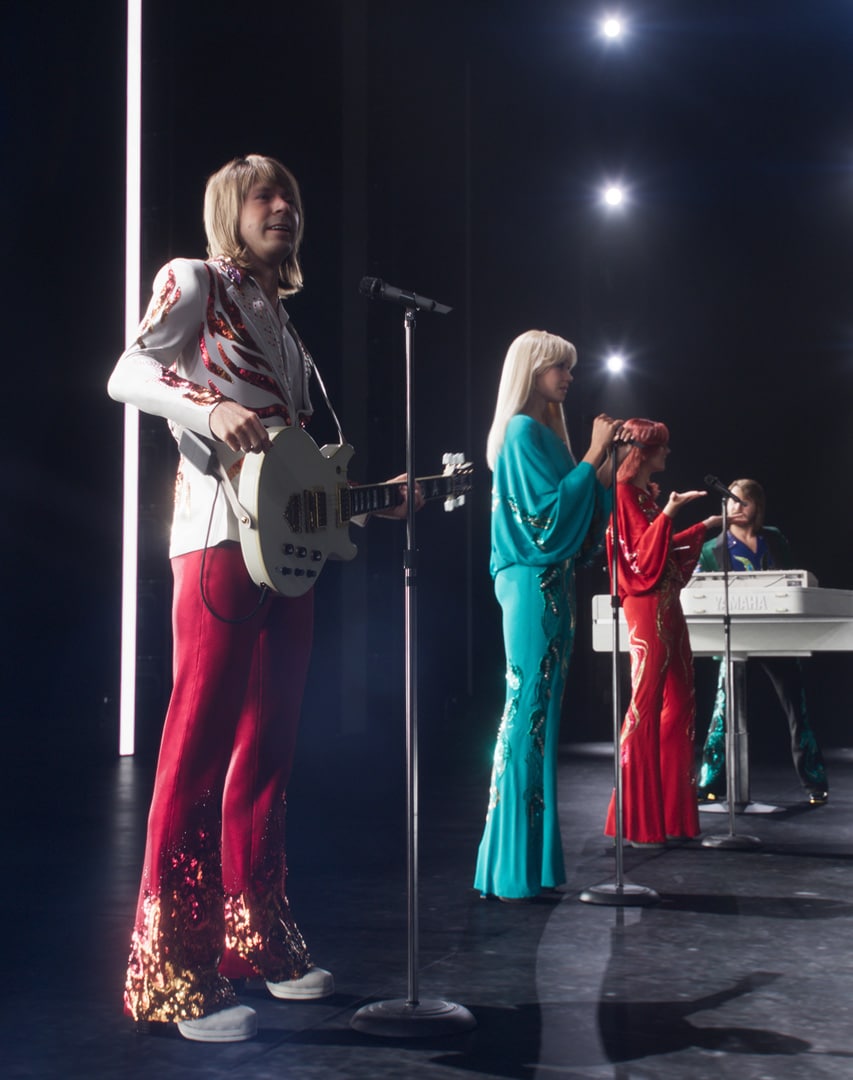
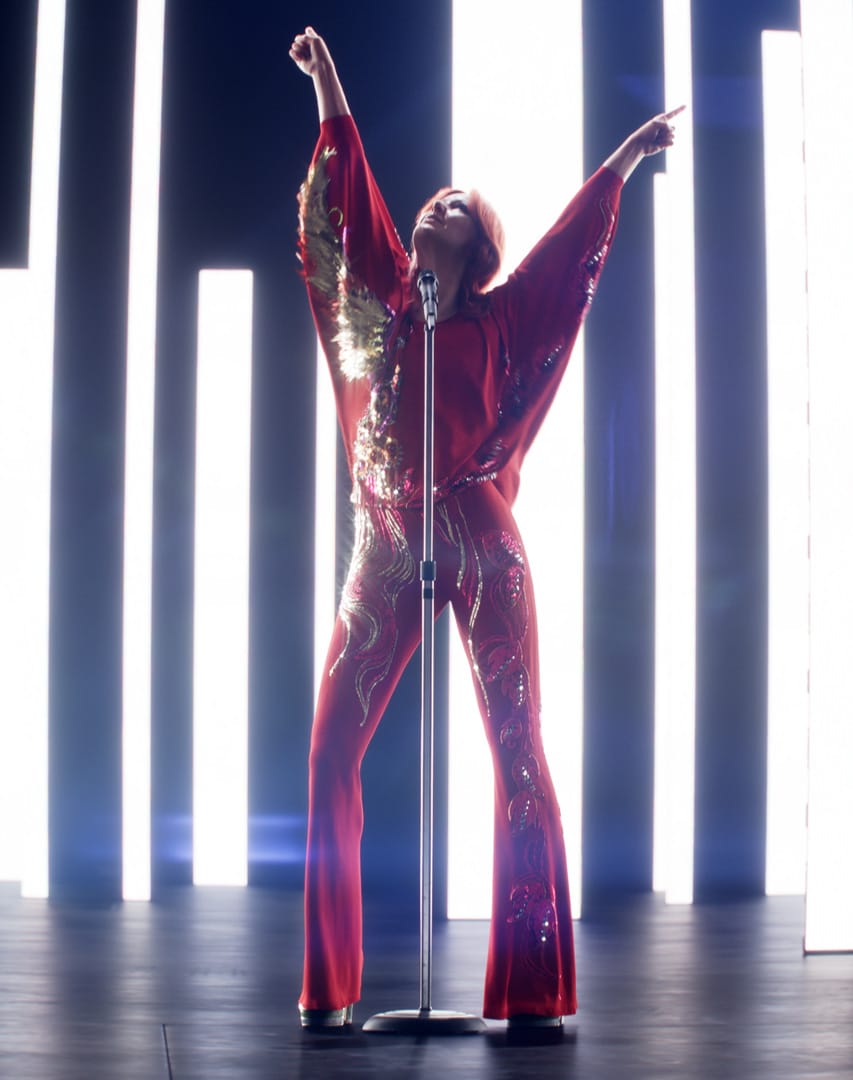
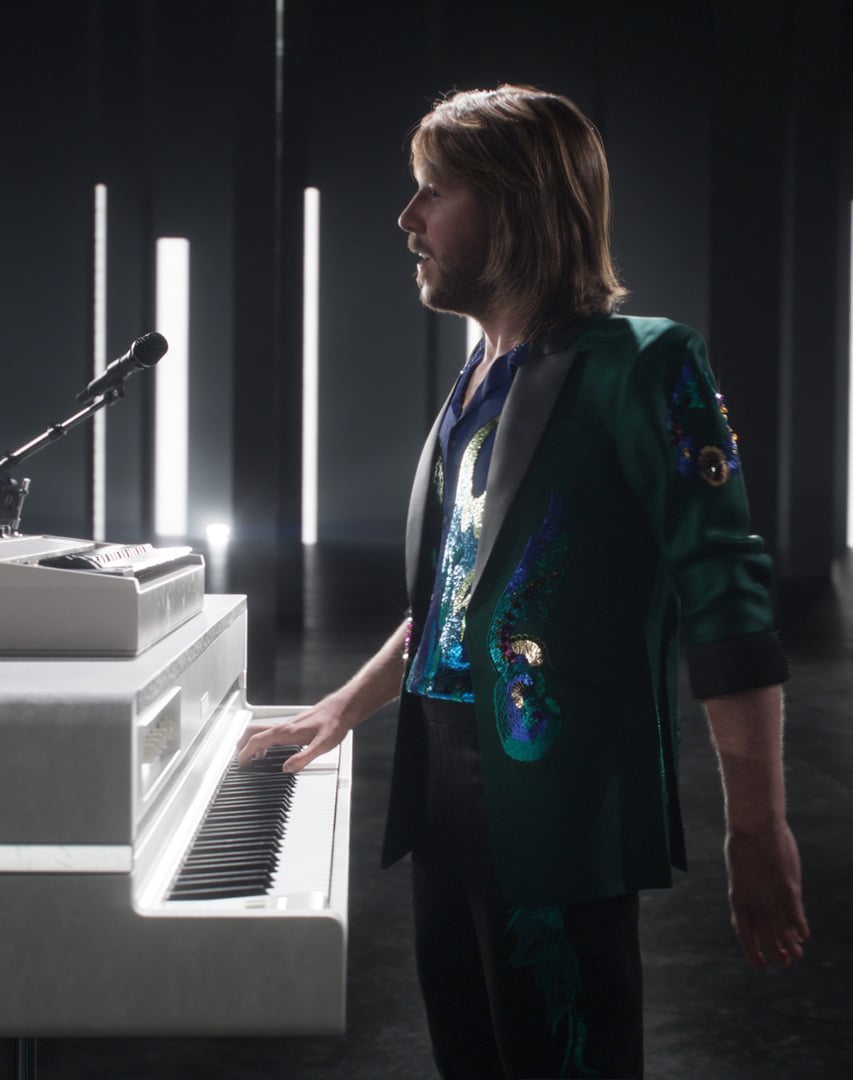
With lighting (from WHITEvoid) and sonics to justify the expensive price tag, this was a show sat squarely between the best cinematic experience you will ever have and the thrill of a live gig. The Hero Band were simply astonishing, not just for their virtuosity but in their clear love of the music, matching the vocals note for note but adding their own personalities at the same time.
But what vocals we had! Initially the idea that they could be connected with the avatars on stage appeared far-fetched, the distant figures surely incapable of such feats. Yet once the figures of Agnetha, Benny, Björn and Anni-frid had appeared on the big screen, it was time to suspend belief and enjoy the run of incredible music stretching before us.
To any radio listener or disco dancer, ABBA are the stuff of life, unwittingly providing us doubters with a soundtrack to our every move. Each song here had years of history on radio, apart from the well-chosen opening pair, The Visitors and Hole In Your Soul, and the ‘newer’ song Don’t Shut Me Down. The Visitors proved beyond doubt that ABBA have formidable strength in depth, that if you look beyond the frontline singles there is still incredible quality beneath. Don’t Shut Me Down gave strong shots of vulnerability, papered over by an exultant chorus.
Emotions ran high as our lives were effectively played out before us. Inevitably, while Super Trouper was missing, Money, Money, Money gave vivid reminders of that disco aged just six. What I wasn’t expecting was the concentrated outpouring of emotion during the likes of Fernando, with a real sense of occasion, or the real life soap opera cliffhanger that is Knowing Me, Knowing You. Casting aside Alan Partridge reminiscences – with a laugh – here was a chance to get to the nub of those lyrics describing a very public break up, remarkable bravery glimpsed throughout the song.
The set evolved with Disney-like surety, with the animations providing unexpected highs. Eagle was especially beautiful, with animations from Shynola backing a heady rush of endorphins as we soared above the earth, but even that was eclipsed by a triumphant Waterloo, shown exactly as performed at the Dome in Brighton, where it became the winning entry of Eurovision 1974. From there we segued into a truly joyous Thank You For The Music, a hymn to my favourite art form, then on our feet to celebrate Dancing Queen, before a majestic account of The Winner Takes It All.
Just occasionally there was a cynical thought of the amount of cash ABBA and their allies must be making from Voyage…but that was quickly overrun by the realisation that the experience is worth every penny, a thousand positive affirmations in a truly heartfelt two hours.
If you haven’t seen it yet, do try and get to East London, where the feelgood vibes are off the scale. As the Voyage website says, it is a concert like no other!
Published post no.2,716 – Wednesday 12 November 2025
To mark Armistice Day, here is a relatively recent piece of memorial from the composer Philip Sawyers (above). When writing about this work in 2022 I noted,
“A recent work, Remembrance for Strings, made an instant impact. This deeply emotive, thought provoking piece has a hint of Elgar in its profoundly elegiac tone and scoring, but unmistakably bears Sawyers’ fingerprints as the theme evolves, gradually creeping upwards. The strings of the ESO were perfectly paced by Woods, giving the theme plenty of room and bringing the important viola and cello lines through the texture. Sawyers finds effective contrasts between notable pain points of discord and an almost complete stillness as the strings collect their thoughts, holding their collective breath in ideally weighted phrasing. This deeply affecting piece deserves to be heard much further afield, its impact comparable (if notably different) to that of Barber’s Adagio for Strings. A note for Emily Davis, the ESO guest leader, who gave a touching final solo.”
Here it is, in those capable hands:
Published post no.2,715 – Tuesday 11 November 2025
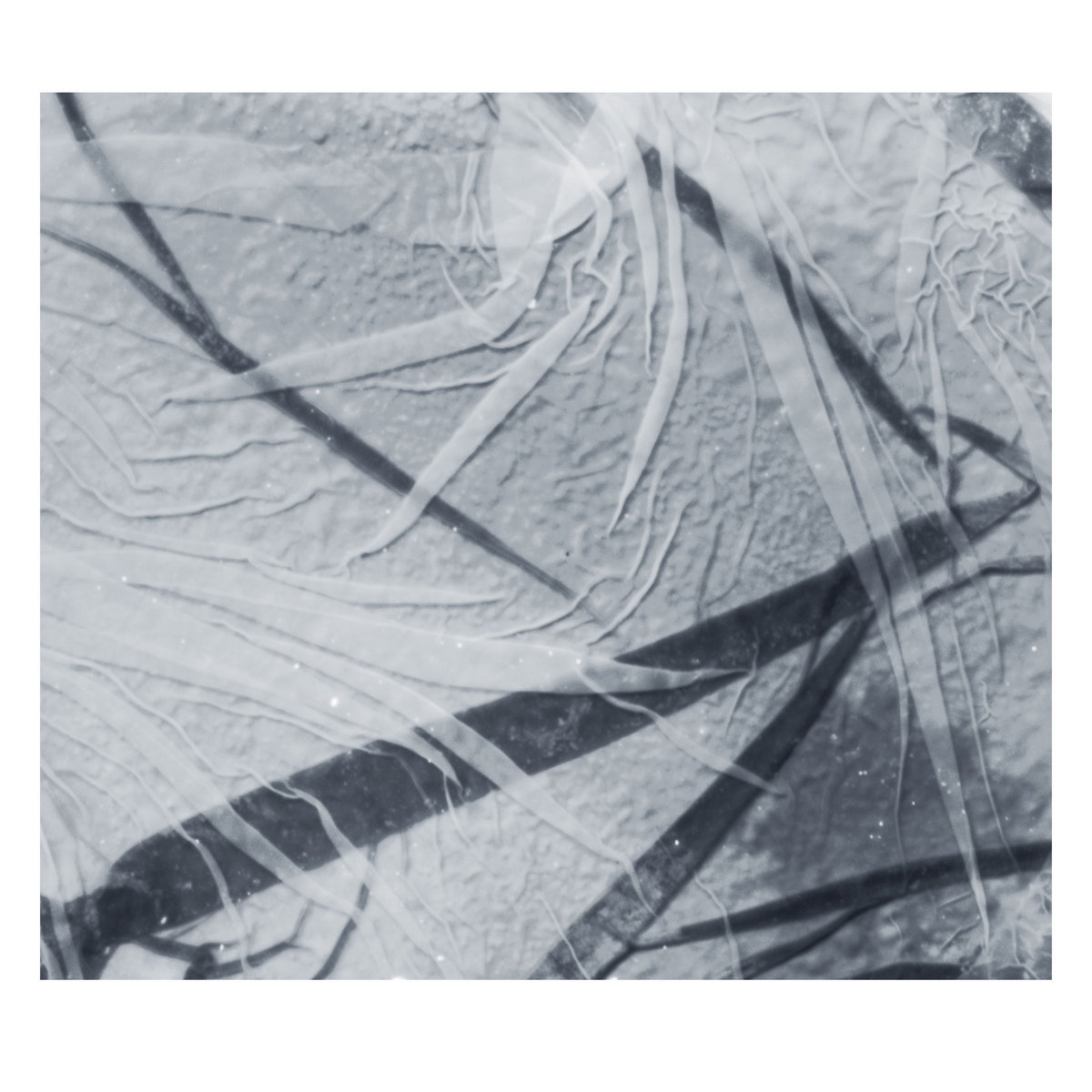
The enterprising quiet details label welcomes Scanner – aka Robin Rimbaud – to deliver the latest in their increasingly impressive series of albums.
For this particular opus, Rimbaud gave himself a brief: “This album is forged entirely from the resonant clangs, echoes, and whispers of a stainless steel staircase at home, transforming everyday architecture into an unexpected orchestra.
By coaxing rhythm, tone, and atmosphere from the metallic body of a staircase, the work reimagines movement between floors as a passage through sound.
No synthesisers were used in the creation, only the natural sound of the staircase using a geophone seismic microphone and the gentle assistance of the occasional resonant filter and sample software.”
What’s the music like?
Darkly comforting. Scanner’s music can be experienced on two levels – one immersive and one with a broader perspective.
The immersive listener will appreciate how each track changes in harmonic content and texture over time, the incremental changes small and gradual but also meaningful.
Meanwhile the listener approaching this music from afar will get a firm appreciation of the space Scanner creates but will more than likely move into an immersive experience due to the intensity of the music. The textures, together with an almost complete lack of percussion, lead to the listener being suspended in thin air.
Start Moment bears out the move from passive to active listening, its thick low range drone punctuated with one of the resonant clangs Scanner talks about. Then the sound begins to fluctuate, the perspective changing to suggest the listener positioned inside an enormous tube.
Riser Beam Connection dresses its persistent central tone with slow moving tones of glassy purity, but Base Plate has more ominous designs and is creepy when powering down at the end. Grain Stress has atonal, avant-garde designs throughout its unpredictable movements, with plucked strings here and gathering clusters of notes there.
Finally the spacious End Moment, Wires is an immersive drone spread across nearly a quarter of an hour, the drone supporting sonorous, bell-like sounds and the scattering of electronic debris in the foreground.
Does it all work?
It does – who would have thought a staircase could provide these moments of drama?! Scanner brings from his source material a remarkably wide range of textural and emotional responses.
Is it recommended?
It is – an inventive five-movement suite that really pushes at the boundaries of its components, making a whole that traverses some weird corners, but which ultimately provides its listener with a reassuring ambience. A fine achievement.





 Arcana.fm