Arcana at the opera: Margot la Rouge & Le Villi @ Opera Holland Park

Margot la Rouge (1902)
Lyric Drama in One Act – music by Frederick Delius; Libretto by Rosenval
Sung in French with English surtitles

Margot – Anne Sophie Duprels (soprano), Sergeant Thibaud – Samuel Sakker (tenor), L’Artiste – Paul Carey Jones (bass-baritone), Lili Béguin – Sarah Minns (soprano), Nini – Laura Lolita Perešivana (soprano), La Patronne – Laura Woods (mezzo-soprano), Totor – David Woloszko (bass)

Le Villi (1883)
Opera-Ballet in Two Acts – music by Giacomo Puccini, Libretto by Ferdinando Fontana
Sung in Italian with English surtitles

Anna – Anne Sophie Duprels (soprano), Roberto – Peter Auty (tenor), Guglielmo – Stephen Gadd (baritone)

Martin Lloyd-Evans (director), takis (designer), Jake Wiltshire (lighting), Jami Read-Quarrel (movement)
Opera Holland Park Chorus, City of London Sinfonia / Francesco Cilluffo

Opera Holland Park, London
Thursday 21st July 2022 [7.30pm]

review by Richard Whitehouse Photos (c) Ali Wright

Delius and Puccini are unlikely operatic bedfellows (as anyone who recalls a near-disastrous ENO staging of Fennimore and Gerda with Gianni Schicchi three decades back will surely concur), but this double-bill by Opera Holland Park has an undeniable logic given both works started out as entries in the competition for one-act operas held on four occasions by Edoardo Sonzogno to encourage young talent (so gaining the upper hand against his established rival Ricordi). That neither proved successful at the time need not detract from the merits of either and if the concept of the one is, with hindsight, as uncharacteristic as that of the other appears immature, both contain more than enough worthwhile music along with arresting stagecraft to vindicate their revival in an imaginative production such as they receive on this occasion.

At the time he finished Margot la Rouge, Delius already had four operas behind him so was hardly unequipped for the task at hand. The challenge lay rather in adapting his increasingly personal, even metaphysical approach to the hard-hitting realism – not abetted by a libretto (written pseudonymously by Berthe Gaston-Danville) which reduces its characterization to stereotypes throughout. Yet the best of Delius’s music rises well above any one-dimensional sordidness – the plaintiveness of its prelude and mounting eloquence of its love scene (both refashioned as the Prelude and Idyll which was the composer’s final collaboration with Eric Fenby) equal to anything from his maturity. Had one or another of those earlier operas been acclaimed, the chances for Margot to reach the stage would have been appreciably greater.

The simple but effective revolving set favoured by Martin Lloyd-Evans presents this drama the more effectively for its unfussiness, enhanced by takis’s set designs and Jake Wiltshire’s resourceful lighting. Casting-wise the stage is dominated, as it needs to be, by Anne Sophie Duprels’s assumption of the title-role – emotionally guarded in its earlier sullenness, before ascending to heights of rapture once her identity becomes known. Samuel Sakker evinces the necessary ardency as Thibault and though Paul Carey Jones is a little too suave to convey the viciousness of The Artist, his commanding presence is never in doubt. Sarah Minns has just the right coquettishness as Lili, while there are telling cameos from Laura Lolita Perešvana, Laura Woods and, especially, David Woloszko among those (too?) numerous smaller roles.

Whereas Delius’s opera had to wait 82 years for its premiere, Puccini’s Le Villi hit the stage within a year of completion then was revived twice before the end of the decade – by which time, this ‘opera-ballet’ had expanded to two acts. Therein lies the problem, as Ferdinando Fontana’s modish libretto seems stretched beyond its effectiveness as drama, the threadbare nature in much of the latter scenario requiring a narrative element merely to hold it together. That said, there are various opportunities for characterizing the three protagonists of which Puccini made the most, with the central symphonic intermezzo L’abbandono e La tregenda (the latter still heard as an encore) confirming a new orchestral sophistication in Italian opera. Theatrically flawed as it may be, Le Villi is an auspicious and undeniable statement of intent.

Here, too, the Lloyd-Evans-takis-Wiltshire staging works to the advantage of this drama, yet without over-egging the supernatural shenanigans; credit, also, to Jami Reid-Quarrell for his utilizing the relatively restricted stage-space such that the dance element seems both alluring and more than compensates for the flailing narrative. Vocally, Anne Sophie Duprels has the measure of Anna as she traverses the gamut of emotions from diffidence, through heartbreak to revenge, with a continuity of expression not to be taken for granted. Peter Auty has made a speciality of high tenor roles, but his Roberto needs greater fervency and warmth to offset its shrillness. Not so Stephen Gadd, whose Guglielmo has a burnished humanity that commands attention on his (too few?) appearances and a clarity ideally suited to delivering the narrative.

The latter opera also gains from a typically lusty contribution by Opera Holland Park Chorus – and, in both works, the City of London Sinfonia responds with commitment to the dynamic direction of Francesco Cilluffo, who teases out the many dramatic nuances with alacrity. The orchestral reductions by Andreas Luca Beraldo have been judiciously gauged in both cases -that for Margot ironically closer to the orchestration undertaken by Eric Fenby in the absence of Delius’s score and which was soon mothballed once the original had been relocated. The relative unfamiliarity of these operas is a coup such as OHP has regularly delivered over the years, and one which is well worth the attention of more than just those drawn to rare opera.

Further performances take place on 29 July, 31 July [2pm], 2, 4 and 6 August. For more information visit the Opera Holland Park website
Switched On – CoastalDives: Next Light (Data Airlines)

reviewed by Ben Hogwood

What’s the story?

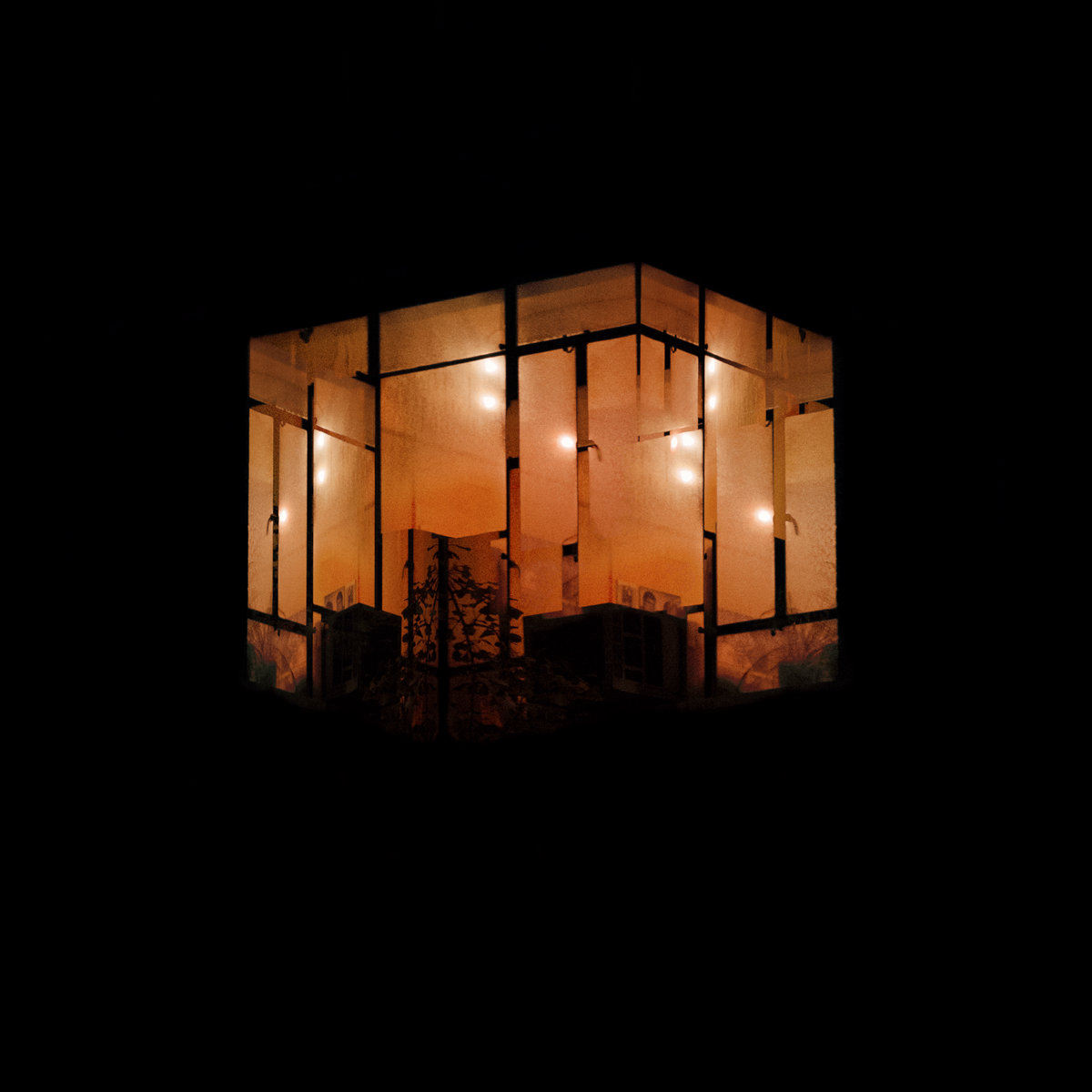
Next Light has a deeply personal resonance for CoastalDives, the pseudonym under which Ohio’s Casey J Cooper operates.

His father had to undergo emergency brain surgery around the time of his 75th birthday, and Cooper wrote wanted to create an ambient work to transport the listener to another place. He does this with the help of field recordings from St. Joseph Cathedral in his home city of Columbus. Placed at the beginning and end of the album, these give an idea of the space in which Cooper will operate, and the natural noise of people coming and going gives a communal feel to proceedings before the music itself gets underway.

What’s the music like?

Consoling. Using analogue synthesizers only, Cooper achieves his aim through music of elegance and poise. The grandeur of the cathedral is immediately evident on Dark Spots, where hints of Vangelis and Angelo Badalamenti can be heard as the stately chord progressions move slowly on their way. Splitter has more movement, taking on the profile of softly ringing bells as crossrhythms are worked in.

The title track is solemn and lost in thought but with an underlying strength, suggesting the power of recovery, while Rewire builds up thick textures, a powerful swell of sound. 75 eases a little, still suggesting the slow progress of an object, while Black Pearls has a majestic profile and an analogue timbre harking back to Jean Michel Jarre. Finally Reservoir has lovely mellow tones, a suitable epilogue arriving at a settled place, the
preceding music having done its job.

Does it all work?

It does. Listening to this when even slightly under the weather has a calming yet strongly uplifting effect, the writing acknowledging nervous tension and anxiety but presenting a clear way forward and out at the end.

Is it recommended?

It is, for all the reasons above – and for the fact that First Light has some very fine writing for keyboard that brings some of the greats of the instrument to the surface. CoastalDives has achieved his aim of strength and resolution from hardship, with plenty to spare.

Listen

Buy


In concert – Elena Urioste, Ben Goldscheider, CBSO / Kazuki Yamada: Glinka, Ethel Smyth & Rachmaninoff

Glinka Ruslan and Lyudmila (1842) – Overture
Smyth Concerto for Violin and Horn (1926-7)
Rachmaninoff Symphony No. 2 in E minor, Op. 27 (1906-7)

Elena Urioste (violin), Ben Goldscheider (horn), City of Birmingham Symphony Orchestra / Kazuki Yamada

Symphony Hall, Birmingham
Sunday 24 July 2022

Written by Richard Whitehouse

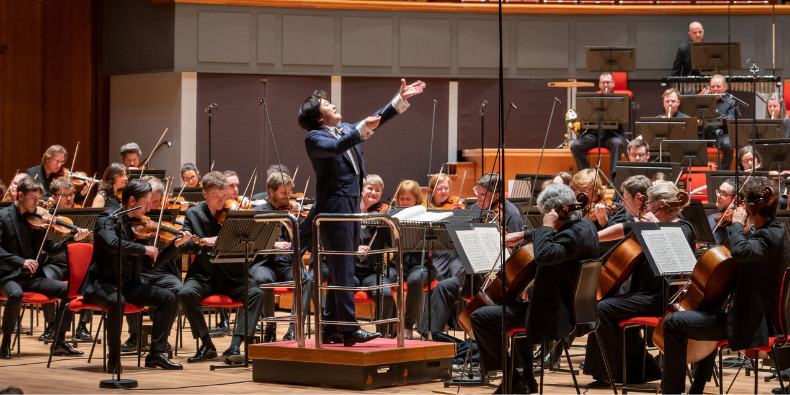
It might have been a ‘warm up’ for tomorrow night’s Proms appearance, but this afternoon’s concert by the City of Birmingham Symphony Orchestra with its Chief Conductor designate Kazuki Yamada gave ample indication of what to expect of this partnership during 2022/23.

On one level, this was an appealingly old-fashioned programme in consisting of an overture, concerto and symphony. The former was that to Glinka’s opera Ruslan and Lyudmila, always an effervescent curtain-raiser which here unfolded at a lively but never headlong tempo that brought out the formal precision of this piece with its deft sonata design. Neither did Yamada under-characterize the amiable second theme, while the strangely ominous atmosphere of the development was made more so through a telling contribution by timpanist Matthew Hardy.

Ethel Smyth is a notable presence at this year’s Proms, the CBSO tackling her Concerto for Violin and Horn. Among her last major works (encroaching deafness saw her write little over the next 18 years), its nominally Classical trajectory belies a formal freedom as extends to an orchestration evoking her French contemporaries as much as her German forebears. Not least the initial Allegro with its trenchant and stealthily imitative writing for the soloists against an orchestral texture at once intricate and luminous. Yamada marshalled his forces accordingly, before giving Elena Urioste and Ben Goldscheider the stage for the ensuing Elegy whose ‘In memoriam’ marking encouraged a response of real eloquence. Robust yet never unyielding, the final Allegro took in a combative cadenza before striding forth to its decisive peroration.

Rachmaninoff’s Second Symphony has moved to the very centre of the repertoire in the four decades since Simon Rattle made it a signature piece with this orchestra. Yamada holds it in equally high esteem – witness the finesse with which he built the first movement introduction to its impassioned apex, before subsiding into an Allegro which drew anxiety and grace into a purposeful accord heightened by the development’s surging inevitability then a coda of terse finality. Unfolding at an animated while not unduly hectic tempo, the scherzo was marginally over-indulged in its lilting second theme, but this did not pre-empt an incisive response in the central fugato – the CBSO strings at their collective best – nor a transition back into the main theme of irresistible verve. The coda exuded a fugitive inwardness that was no less arresting.

Ubiquitous these days as a radio staple, the Adagio needs astute handling if its rapture is not to become cloying and Yamada responded accordingly – not least in his attentive pacing of the main theme with a contribution from clarinettist Oliver Janes of melting poignancy, then a climax whose emotional intensity never became hectoring. The slightly too flaccid tempo for its easeful central span meant that the finale lacked the ultimate in cohesion, but Yamada balanced this elsewhere with an energy which carried through into a scintillating apotheosis.

So, an eminently worthwhile concert beyond merely enabling those who are unable to attend that Royal Albert Hall performance to hear Yamada with the CBSO in a programme such as played to both their strengths. Much to look forward to, then, over the course of next season.

For more information on the CBSO Prom, click on the link on their website. Meanwhile click on the artist names for more on Elena Urioste, Ben Goldscheider and Kazuki Yamada – and for a website dedicated to Dame Ethel Smyth

In concert – CBSO Youth Orchestra Academy: A Fist Full of Fives

cbso-youth

Sutton A Fist Full of Fives (2016)
Mozart
Violin Concerto no.5 in A major K219 ‘Turkish’ (1775)
Skalkottas
Five Greek Dances (1931-6, arr. 1936)
Beethoven
Symphony no.5 in C minor Op.67 (1804-8)

Irène Duval (violin), CBSO Youth Orchestra / Michael Seal

Royal Birmingham Conservatoire
Saturday 23 July 2022

Written by Richard Whitehouse

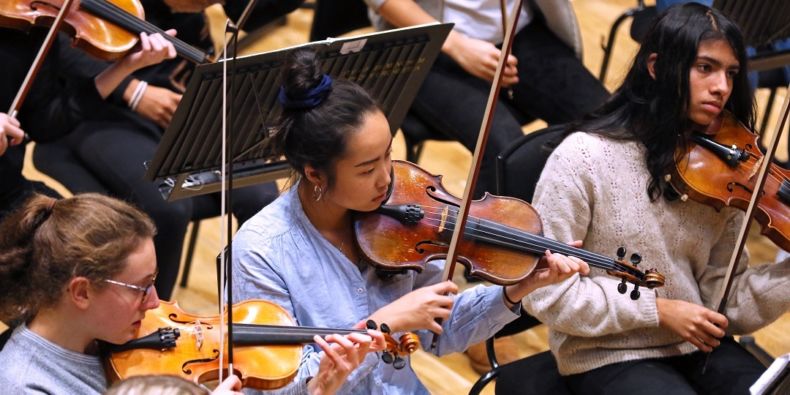
It may be the end of the main season, but that is no reason why the CBSO Youth Orchestra should not have had a concert scheduled for mid-July, with this judiciously contrasted and well-balanced programme assuredly playing to the collective strengths of its present line-up.

Although three of the works had a numerical connection with ‘five’, only the opening piece featured that number in its title. Written for an event featuring Beethoven’s Fifth and scored for similar forces, A Fist Full of Fives finds Adrian Sutton essaying a concert-opener whose interplay of vigorous (even a little martial) and more lyrical ideas evokes a mid-20th century American music evoking Piston or early Carter. Fluent and appealing if far from memorable, it duly put the orchestra through its paces to a degree which the CBSOYO met with alacrity.

Rather more memorable was the Five Greek Dances by Skalkottas which opened the second half. Admittedly the programme note led one to expect a selection from the overall 36 in the versions for full orchestra, rather than the present selection – from a set of seven – for strings. Yet the distinctive character of each dance is hardly diminished in these arrangements by the composer (a proficient violinist), and Michael Seal secured notably characterful playing in a sequence that proceeded from the swaggering Epirotikos, through the stealthy interplay of Kretikos and the bracingly astringent Tsamikos, to the gentle pathos of Arkadikos then the dashing Kleftikos. Fifty years after the CBSO’s world premiere of his First Symphonic Suite, it was good to hear these likely successors tackling Skalkottas with evident enjoyment.

In between those two pieces, Irène Duval gave Mozart’s Fifth Violin Concerto – not exactly underplayed these days, but worth hearing when rendered with such commitment. Not least an opening Allegro whose aperto marking (rightly) encouraged a deftness of phrasing that carried through to the closing bars. The Adagio was ingratiating without any hint of cloying, then the outer sections of the Rondeau an insouciance for which the lively Turkish music at its centre provided a bracing foil. The cadenzas (Duval’s own?) proved unfailingly apposite.

Closing the concert, Beethoven’s Fifth Symphony made a suitably unequivocal impression – not least an opening movement whose rhythmic trenchancy and purposeful rhetoric carried through to a forceful if never hectoring coda. Neither was there any hint of false grandeur in the Andante, its ruminative theme yielding subtlety and not a little humour as it wended its methodical yet never predictable course. Ensemble was a little ragged near the outset of the scherzo, but the transition into the finale had a simmering expectancy that made the latter’s blazing onset more visceral. This music’s familiarity tends to detract from its innovation of form and orchestration, but Seal pointed up such aspects in a reading that never risked losing focus as it headed to a coda whose reiterations of the home key made for a triumphal QED.

A worthwhile programme, then, with performances to match and exactly the sort of concert needed to inject needed impetus into the indolence of summer. The CBSOYO makes its first appearance next season with a programme of Verdi, Bruch and Lutosławski on October 30th.

For more information on the CBSO Youth Orchestra and their next concert, visit the dedicated page on their website. Click on the names for more information on Irène Duval and Michael Seal

BBC Proms #7 – Soloists, La Nuova Musica / David Bates: Purcell Dido and Aeneas

Purcell Dido and Aeneas (c1689)

Dido – Alice Coote (mezzo-soprano)
Aeneas – James Newby (baritone)
Belinda – Gemma Summerfield (soprano)
Sorceress – Madeleine Shaw (mezzo-soprano)
Second Woman – Nardus Williams (soprano)
Sailor – Nicky Spence (tenor)
Spirit – Tim Mead (countertenor)
First Witch – Helen Charleston (mezzo-soprano)
Second Witch – Martha McLorinan (mezzo-soprano)

La Nuova Musica / David Bates (harpsichord)

Royal Albert Hall, London
Tuesday 19 July 2022 (late night)

Reviewed by Richard Whitehouse Photo (c) Chris Christodoulou

After the existential confrontations of Vaughan Williams and Tippett earlier this evening, the more restrained yet no less acute expression of Dido and Aeneas came as a necessary tonic – with Purcell’s only through-composed work for the stage leaving a memorable impression.

The nature of its conception might remain as conjectural as the circumstances of its premiere, but there can be no doubt that this opera’s blazed a trail over the centuries that followed. Not the least of its attributes is a formal economy and a tensile dramatic trajectory whose ‘less is more’ aspect could scarcely be more evident. Neither is there any lack of expressive diversity in a score where elements of levity, even slapstick are aligned with a dramatic acuity which draws the three short but judiciously balanced acts into a cohesive and inevitable continuity.

Tonight’s concert performance manifestly played to these strengths. For the title-roles, Alice Coote brought gravitas and nobility of spirit to that of Dido, with James Newby an impulsive while knowingly fickle Aeneas. It was, however, Gemma Summerfield who stole the show as Belinda in rendering this most dramatically fluid of the opera’s parts with an emotional force, latterly foreboding, that was never less than captivating. Madeleine Shaw was larger than life if never overly parodic as the Sorceress, with Tim Mead a plangent Spirit whose intervention (from the organ console) seals the fate of the main protagonists. Credit, too, to Nicky Spence for an uproarious yet winning cameo as the Sailor in a scene whose Village People campery seemed entirely apposite in context and hence made this opera’s outcome the more affecting.

Directing La Nova Musica from the harpsichord, David Bates never lost sight of the dramatic continuity while ensuring an exemplary balance between chorus and ensemble. The former responded with a judicious combination of eloquence and discipline, whereas the emphasis on a continuo section of theorbos, harps and even guitar opened out but never obliterated the bracing string sonorities. Tempos were almost invariably well chosen, and though the final chorus was undeniably drawn out, this reinforced its postludial function to the work overall.

The past 58 seasons have since Dido and Aeneas given complete on four previous occasions, each time reflecting on how the opera was perceived at the time. Tonight’s performance was such a statement, and one as reaffirmed its greatness some 333 years after the first staging.

For more information on the 2022 BBC Proms season, you can visit the festival website. For more on the artists, click on the names for La Nuova Musica and David Bates.