Listening to Beethoven #129 – Clarinet Trio in B flat major Op.11

clarinet-trio

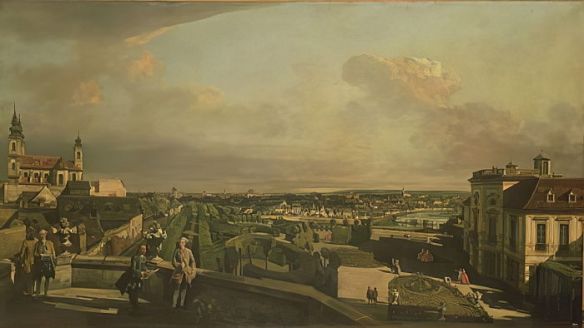
The Kaunitz Palace and Garden, Vienna by Bernardo Bellotto

Trio in B flat major Op.11 for clarinet, cello and piano (1797-8, Beethoven aged 27)

Dedication Countess Maria Wilhelmine von Thun
Duration 22′

1. Allegro con brio
2. Adagio
3. Tema con variazioni ‘Pria ch’io l’impegno’: Allegretto

Listen

Background and Critical Reception

The combination of clarinet, cello and piano was a relatively rare one when Beethoven wrote his trio in 1798. It is thought to have been written for the Viennese clarinettist Joseph Bähr, but was dedicated to Countess Maria Wilhelmine von Thun. Richard Wigmore, writing in his booklet note for Hyperion on the piece, thinks Bähr suggested a theme for the variations Beethoven wrote in the finale – on Josef Weigl’s new comic opera L’amor marinaro which was premiered late in 1797 – and which gives the trio its sometimes-used Gassenhauer nickname.

Daniel Heartz dubs the piece ‘very entertaining’, but Lewis Lockwood is less convinced. ‘Of the lesser works, designed for popularity and little more, the most developed are the Clarinet Trio Op.11 and the Quintet for Piano and Winds Op.16. On its publication in 1798 Beethoven dedicated it to a Countess Thun, presumably the oldest one of several by that title, who a few years earlier had gone on her knees to implore him to play. For her pains she now received a light and flashy reward that moved from a glittering first movement and slow movement to the circus style of its finale, made up of variation on the hit tune Pria ch’io l’impegno from a recent comic opera by Josef Weigl. In once more forcing an inevitable comparison with Mozart, whose E flat major Clarinet Trio, with viola, had been another quiet masterpiece, Beethoven did well to make his piece attractive to audiences and performers, especially cellists, but he was fully aware that instead of attempting a really serious work that could stand up to Mozart’, he was trolling the surface for easy dividends.’

Lockwood’s relative disdain for the piece has not carried over to audiences, nor artists – for as you will read below there are many fine versions of the piece. This in spite of the critic in 1798 who declared that the work was ‘difficult’ and that Beethoven wrote ‘unnaturally’.

Thoughts

What a charming piece this is.

The first theme we hear is an unlikely one. Given that the piece is in B flat major Beethoven seems to want nothing to do with the home key initially, arriving there as though by accident. The second theme is nice, too, given out by the clarinet after a simple and quite dreamy aside in D major. The tone of clarinet, cello and piano is lovely – and while the piano often takes the lead there is plenty for the other two instruments.

The second movement is sublime, a lovely period of reflection with a lyrical theme made for cello. This is also the ideal point to enjoy the colour combination of cello and clarinet in particular which Beethoven clearly relished.

The composer has a great deal of fun with the ‘Gassenhauer’ theme, which has a wide set of variations. The perky theme is taken for a run first by the piano, then through a canon between cello and clarinet, then another upright exchange with brilliant high notes from the clarinet. The fourth variation finds minor key stillness, deep in thought, but is completely swamped by tempestuous scales from the piano, blasted out fortissimo. Variation 7 returns to the minor key, in a mock-stern funeral march, then we hear a glorious high cello and clarinet unison for the eighth. The ninth and final variation goes far and wide, allowing the piano room to roam before a bracing coda.

Recordings used and Spotify links

Sabine Meyer (clarinet), Heinrich Schiff (cello), Rudolf Buchbinder (piano) (EMI)

Gervase de Peyer (clarinet), Jacqueline du Pré (cello), Daniel Barenboim (piano) (EMI)

Karl Leister (clarinet), Pierre Fournier (cello), Wilhelm Kempff (piano) (Deutsche Grammophon)

The Nash Ensemble (Virgin Classics)

Jon Manasse (clarinet), Clive Greensmith (cello), Jon Nakamatsu (piano) (Harmonia Mundi)

Paul Meyer (clarinet), Claudio Bohórquez (cello), Eric Le Sage (piano) (Alpha)

The trio led by Jon Manasse give a sparkling performance, of which you can hear half on Spotify due to time restrictions. Sabine Meyer and her trio are also superb, with Heinrich Schiff excelling in the slow movement. Karl Leister, Pierre Fournier and Wilhelm Kempff had a great rapport, as do Eric Le Sage and his trio – all of them emphasising how much pleasure this work can bring as pure chamber music to be enjoyed together.

You can listen to these versions on the playlist below:

You can chart the Arcana Beethoven playlist as it grows, with one recommended version of each piece we listen to. Catch up here!

Also written in 1798 Eybler Clarinet Concerto in B flat major

Next up String Trio in G major Op.9/1

Listening to Beethoven #128 – Piano Sonata no.7 in D major Op.10/3

friedrich-coastal-landscape
Coastal Landscape by Caspar David Friedrich (c1798)

Piano Sonata no.7 in D major Op.10/3 for piano (1798, Beethoven aged 27)

1 Presto
2 Largo e mesto
3 Menuetto: Allegro
4 Rondo: Allegro

Dedication Countess Anna Margarete von Browne
Duration 25′

Listen

Background and Critical Reception

The third of the sonatas published as Op.10 in September 1798 is, for Lewis Lockwood, ‘the grandest and most powerful of the group’. The word also appears in the praise given to the piece by Beethoven’s contemporary Carl Czerny, who dubbed it ‘a grand and significant piece’.

His label is referred to by Angela Hewitt in her booklet notes for the sonata recordings on Hyperion, though she goes further to call it ‘the first masterpiece in the cycle of sonatas’.

Commentators are united in praise and an awestruck respect for the great slow movement. For Lockwood, it ‘breathes an air of desolation whose only parallel from the time is the great slow movement of the Op.18/1 quartet, a movement we know Beethoven associated with the tomb scene in Romeo and Juliet.’ Hewitt quotes Donald Tovey’s performance advice in full, which states that if you as a pianist ‘simply make sure that you are playing what is written you will go far to realize the tragic power that makes this movement a landmark in musical history.’

The second movement casts a lasting shadow over the third and fourth, though Daniel Heartz enjoys the ‘lyrical and lovely’ third, and the fourth, whose theme ‘never reaches a very firm answer in the way of a thematic-harmonic conclusion until the last moment, when the questions are finally transformed into an answer – a very Haydnesque ploy that is akin to pulling an ace from one’s sleeve to end the game’.

Thoughts

This is indeed the sonata that makes the strongest emotional impression so far – and an awful lot of that is down to the slow movement. Yet the impact of that funereal tribute is even more powerful because it follows on the heels of the first movement’s bravura, with glittering scales as both hands chase each other around the keyboard.

Because of this all energy feels spent when the second movement casts its mood of contemplation and sorrow. Time seems to stop, and though there is a little hope in the central section, where an idea seems to grow from the depths and climb slowly up the piano, a bell-like tolling still runs ominously in the background.

Consolation is sought and almost found in the Menuetto, and its bright and elegant interaction between the hands and cheery trio. The Rondo theme initially feels short changed, but Beethoven pulls out his trick of making a great deal from minimal material. The stop-start nature suggests he may have written it in a single improvisation, moving between tiny melodic cells and big, grand gestures showing off the player’s virtuosity. It is ultimately a hard-fought victory in a piece of highs and lows.

Recordings used and Spotify links

Emil Gilels (Deutsche Grammophon)
Alfred Brendel (Philips)
András Schiff (ECM)
Angela Hewitt (Hyperion)
Paul Badura-Skoda (Arcana)
Stephen Kovacevich (EMI)
Igor Levit (Sony Classical)

Again there are some special performances to treasure of this sonata. Perhaps inevitably Emil Gilels finds the deep tragedy of the slow movement, time seemingly suspended in his traversal of grief. Alfred Brendel offers the ideal mix of elegance and virtuosity, his third movement emerging with a smile after the thoughtful second. A flurry of notes on Paul Badura-Skoda’s dfgd piano threaten to take the first movement out of his reach, but this is an edge of the seat recording that proves to be very enjoyable. Its second movement is on the quick side but the left hand chords are chilling on the fortepiano. András Schiff feels too quick here in comparison to Claudio Arrau, Igor Levit and Stephen Kovacevich, all of whom find a special and profound atmosphere. Angela Hewitt is slowest of all, but balances the tension beautifully with the eventual release of the Menuetto.

You can hear clips of Hewitt’s recording at the Hyperion website

You can chart the Arcana Beethoven playlist as it grows, with one recommended version of each piece we listen to. Catch up here!

Also written in 1798 Haydn Die Schöpfung (The Creation)

Next up Clarinet Trio in B flat major Op.11

Listening to Beethoven #127 – Piano Sonata no.6 in F major Op.10/2

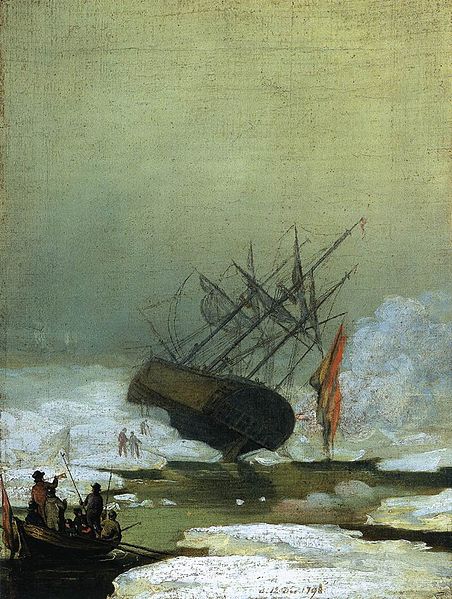
friedrich-wreck-in-the-sea-of-ice
Wreck In The Sea of Ice by Caspar David Friedrich (c1797)

Piano Sonata no.6 in F major Op.10/2 for piano (1798, Beethoven aged 27)

1 Allegro
2 Allegretto
3 Presto

Dedication Countess Anna Margarete von Browne
Duration 19′

Listen

Background and Critical Reception

The three piano sonatas Op.10 were published in 1798, dedicated to Countess Anna Margarete von Browne. As Daniel Heartz notes, ‘women continued to garner most of his dedications of works for keyboard, as was the case with Mozart and Haydn’.

In contrast to the first sonata of the set, in C minor, the F major piece is admired as the joker. Lewis Lockwood says, ‘There is a lot to say about the capacity of the Sonata Opus 10 no.2 in F major to make much from little, a very strong Beethovenian feature. Thus the first two notes of the opening figure suffice to generate much of the later thematic content while always relating back to this germ idea.’

Writing in The Beethoven Companion, Harold Truscott enjoys the composer’s humour in the outer movements and the reflective second, describing the piece as ‘a completely individual masterpiece’. Angela Hewitt, meanwhile, agrees with Daniel Heartz that the second movement ‘minuet’ is…’not very dance-like’, and notes the fusion of Haydn’s wit and Bach’s counterpoint in the finale, ‘but with an exuberance typical of the young Beethoven’.

Thoughts

This is a sonata to put a smile on your face. The playful start introduces the ‘peek-a-boo’ characteristics of the first movement, which is also a great example of Beethoven’s use of silence. It feels like there are several characters playing a game in the first movement. The first comes out in the cheeky and slightly timid opening phrase; the second is more assertive, with many more notes. Beethoven develops his material with freedom, taking it on a tour of several keys, before returning home.

The second movement is deeper in thought, a single stream of consciousness in the minor key that proves a very effective reflection, with some spicy chords. The third movement sounds like it is going to be a fugue, or a Bach invention, but it doesn’t end up that way – and Beethoven returns to playing games, if not quite as mischievously as before.

Recordings used and Spotify links

Emil Gilels (Deutsche Grammophon)
Alfred Brendel (Philips)
András Schiff (ECM)
Angela Hewitt (Hyperion)
Paul Badura-Skoda (Arcana)
Stephen Kovacevich (EMI)
Igor Levit (Sony Classical)

The best accounts of this sonata are (in my opinion) the ones that bring the humour to the front. Angela Hewitt has some lovely characterisation in her first movement, where the timid and detached phrases are countered by rich, flowing episodes. Paul Badura-Skoda’s fortepiano has a crisp attack, particularly in the first movement.

Perhaps the most effective account is that of András Schiff, who successfully combines the humour and Beethoven’s invention from small cells, a reading that keeps the listener hanging.

The playlist below accommodates all the versions described above except that by Angela Hewitt:

You can hear clips of Hewitt’s recording at the Hyperion website

You can chart the Arcana Beethoven playlist as it grows, with one recommended version of each piece we listen to. Catch up here!

Also written in 1798 Haydn Missa in Angustiis (Nelson Mass)

Next up Piano Sonata no.7 in D major Op.10/3

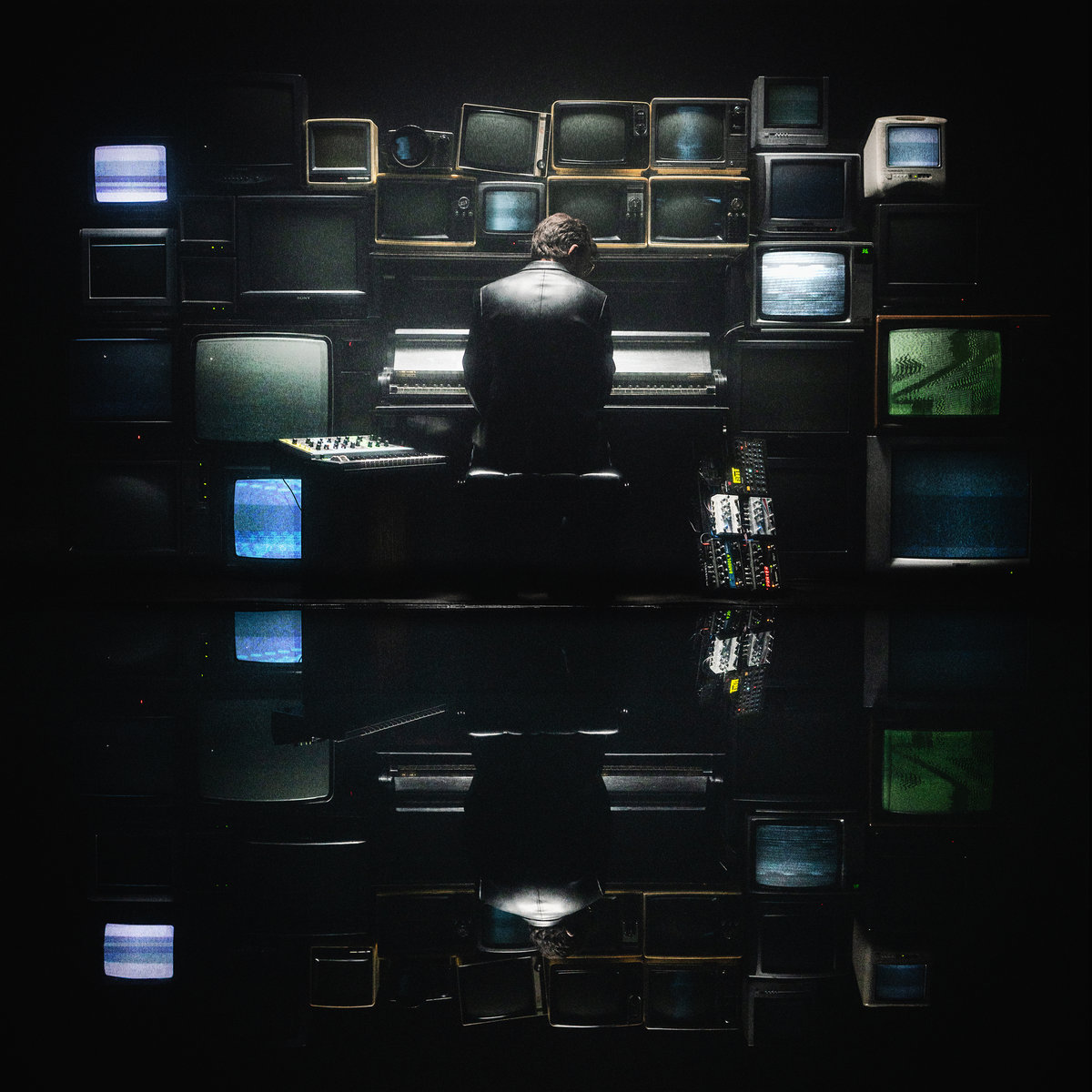
Switched On – Neil Cowley: Hall Of Mirrors (Mote)

neil-cowley

reviewed by Ben Hogwood

What’s the story?

Neil Cowley describes his first solo record as ‘his most personal album yet’. It is perhaps inevitable, given the record is his first going it alone after more than a dozen in the company of others, either as the Neil Cowley Trio or earlier as half of chillout duo Fragile State. Yet while Cowley is fully aware of using the ‘most personal’ cliché, it is wholly true. Hall Of Mirrors is all about his love-hate relationship with the piano, which he places centrestage.

What’s the music like?

Although the piano is at the heart of everything, this is no set of display pieces. In fact Hall Of Mirrors is a very quiet and extremely intimate album, drawing the listener in through its lack of volume but making deeply personal music along the way.

Around the piano sit elements of Cowley’s career to date, so at times that means lush, expansive textures that bring to mind the work of Fragile State, while delicate touches and hints of syncopated rhythms draw links to the Neil Cowley Trio.

Cowley’s piano lines unfold naturally, dressed with atmospheric touches. It only takes a couple of seconds for opening track Prayer to set the scene, with an ambling line unfolding through a cushioned piano sound. The piano timbre is beautifully done, giving a sound both old and new at the same time, which we hear again on She Lives In Golden Sands.

Berlin Nights has a nice perspective, the close up piano more staccato this time but complemented with atmospheric noises around. There are some nice touches like the sticks on the cymbals in Just Above It All, while Suadade is rather special, with chimes and what sounds like a funfair in the distance as Cowley’s contemplative music moves slowly in the foreground.

Perhaps the most personal music lies in the middle, the slow moving and withdrawn Time Interrupted, or the soft heartbeat that runs beneath Stand Amid The Roar. Both are lovely episodes for quality time out on the part of the listener.

Does it all work?

Yes. Hall Of Mirrors is knitted together beautifully, and its blend of intimacy and wider comfort is ideally balanced. The music is simple and from the heart – there are no chillout clichés in evidence and Cowley doesn’t work his source material too much, allowing it to speak for itself.

Is it recommended?

Yes, without hesitation. Cowley’s most personal album to date is certainly that – a heartfelt and inventive biography of his musical exploits to date.

Stream

Buy

Listening to Beethoven #126 – 8 Variations on ‘Une fièvre brûlante’, WoO 72

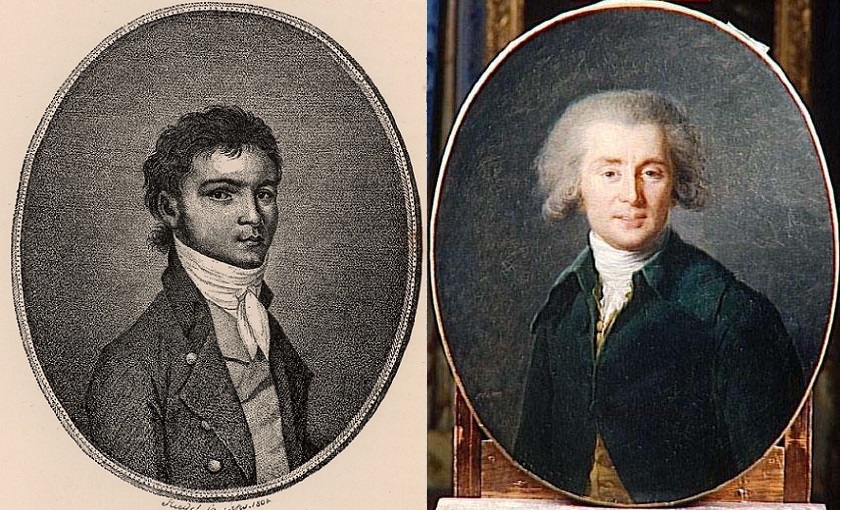
beethoven-gretryLudwig van Beethoven and André Grétry (right)

8 Variations on ‘Une fièvre brûlante’ from Grétry’s Richard Coeur de Lion, WoO 72 for piano (1795-98, Beethoven aged 27)

Dedication Countess Anna Margarete von Browne
Duration 7′

written by Ben Hogwood

Listen

What’s the theme like?

The theme is a duet from André Grétry’s opera Richard Coeur de Lion, and it is an aria for the soprano playing Marguerite. It is sung in this clip – one of the very few available – by a tenor:

Background and Critical Reception

Jean-Charles Hoffelé, writing about Beethoven’s variations in the booklet note for Cécile Ousset’s rather wonderful recordings of many of the variations for Decca France, saw the beginning of a new stylistic phase in the composer’s variations on Wranitzky’s Das Waldmädchen, finished in the year prior to this work and recently covered by our listening.

These variations, on an aria from Grétry’s Richard Coeur de Lion, he says, ‘confirm this trend. Variations? No, more like an opera for piano with harmonies that Schumann would not have disavowed, with characters and a stage, and with a vast range of mood and a sense of Beethoven enjoying creating contrasts all the way to a finale that has the kind of euphoria found again in the denouement of Fidelio. This is a major collection, but one that pianists are unfamiliar with’.

That much is certainly true, for I was unable to find any other notes about the collection, not even in Deutsche Grammophon’s Complete Beethoven edition.

Thoughts

The first variation has an idly wandering right hand, the second even more so as the chromatic approach starts to bear fruit. Variation 3 takes off at quite a lick, the melody dressed with so many ornaments that it is barely recognisable, before the fourth variation straightens the smile and takes us into the minor key.

The sixth variation is a stern march, with extra dressing from the right hand, but Beethoven saves the real surprises and fireworks for the end. A flurry of notes in C major sound like the accompaniment to a comedy silent film before the music suddenly stops and takes a sideways glance into A flat major. A very pensive mood is set, but only briefly, for Beethoven wrenches us back ‘home’ with a quickfire finish.

Recordings used and Spotify links

John Ogdon (piano) (EMI)
Gianluca Cascioli (piano) (Deutsche Grammophon)
Cécile Ousset (piano) (Eloquence)
Ronald Brautigam (fortepiano) (BIS)

The Spotify playlist below includes all of the versions listed above. The Variations may not have been recorded a great deal on disc, but each of these four versions has considerable merit. Brautigam is upfront and full of character, while John Ogdon’s virtuosity is beyond reproach. Ousset brings a touch of elegance to her account, as does Cascioli, whose slightly reserved account of the theme serves him well when the variations really get going.

Also written in 1798 Wranitzky Grande Sinfonie caracteristique in C minor Op.31

Next up Piano Sonata no.6 in F major Op.10/2