
Switched On – Bicep: Isles (Ninja Tune)

reviewed by Ben Hogwood

Isles is the second album from Bicep, the Belfast-born and London based duo of Matt McBriar and Andy Ferguson, who dazzled us with their self-titled album in 2017. On it they showed a love of early rave music and an ability to channel it into futuristic beats and soundscapes. This resulted in a number of high profile advert appearances (BMW especially) but also translates into a brilliant live show.

When live gigs do return, this ‘home listening version’ of their second album will find new impetus in front of an audience, with Bicep always keen to give their fans the biggest show possible.

What’s the music like?

In truth it would be impossible to recreate the primal thrill of Bicep’s debut, which was all about having the maximum possible impact on the dancefloor. Yet Isles runs its predecessor close, retaining the distinctive clipped beats and riffs that make the duo’s music instantly recognisable, and adding some imaginative samples and vocals drawn from international sources.

Second single Apricots is a prime example, powered by a double sample of traditional Malawian singers recorded in 1958 and a song from the Bulgarian State Radio and Television Choir. Along with Atlas it runs close to the sound of their first album, with enjoyable kinetic energy and early house highs. Meanwhile Sundial uses Asha Boshle and Bhupinder Singh’s Jab Andhera Hota Hai, a sublime piece of work catching the dazzling rays of our star.

The clipped beats find an ideal complement in the vocals of Clara La San on Saku, a singer who manages the balance of being quite subdued but capturing an underground garage sound. The two really feed off each other. Vocals of a very different kind inform the beatless Lido, based on a sample of a motet by Italian renaissance composer Carlo Gesualdo.

These examples show just how broad the reach of McBriar and Ferguson can be, a cosmopolitan approach that keeps a healthy edge to the music and gives the album a healthy variety.

Does it all work?

Pretty much everything does. Just on occasion it would be good to see Bicep develop their source material a bit more, as in a track like Rever, with Julia Kent, which has a really good sample but doesn’t push on as much as you might expect. Elsewhere though, when the beats ping around like images on a 1980s video game, Bicep are on great form.

Is it recommended?

Yes. While Isles may not have their immediate thrills and spills of the Bicep debut, it still has plenty going for it. A fine follow-up which shows them to be great beatsmiths on record – and let’s hope it’ not too long before we get to see them live as well.

Stream

Buy
Listening to Beethoven #104 – Andante con variazioni for mandolin and piano in D major WoO 44b


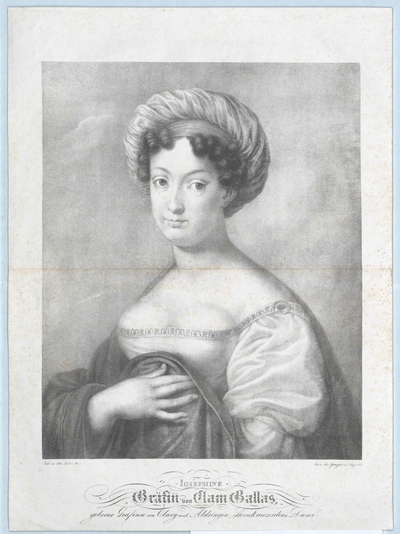
Joséphine de Clary, dedicatee of Beethoven’s music for mandolin and piano. Picture courtesy of the Austrian National Library.

Andante con variazioni in D major for mandolin and piano, WoO 44b (1796, Beethoven aged 25)

Dedication Joséphine de Clary
Duration 9′

Listen

Background and Critical Reception

Beethoven’s second work for mandolin and fortepiano was also intended for Joséphine de Clary, and is a quite substantial set of six variations on a theme of unknown origin. It can also be played – unarranged – for violin and piano, which would suit Wenzel Krumpholz, the mandolin and violin player with whom Beethoven struck up a friendship in Vienna.

The piece is clearly written for some fun to be had between two players in an informal setting, and comfortably achieves its aim.

Thoughts

The theme chugs along in a friendly mood but there are hints of trouble when Beethoven adds a few spicy harmonies in the second half, providing a departure point for the piano. The first variation shows off the mandolin with some nice figurations, then the second goes towards the extremes of the instrument’s range.

Inevitably there is a doleful minor key variation, its sadness exaggerated by the plucking of the mandolin, but it is completely trumped by the following variation which skips merrily towards the end with a broad and slightly mischievous grin. A soft-hearted coda seals the deal.

Recordings used and Spotify links

Anna Torge (mandolin) and Gerald Hambitzer (fortepiano)

Alon Sariel (mandolin) and Michael Tsalka (fortepiano)

Julien Martineau (mandolin) and Vanessa Benelli Mosell (piano)

Alon Sariel and Michael Tsalka have a nice ‘give and take’ to their recording, as do Julien Martineau and Vanessa Benelli Mosell, who are a bit quicker in their version. Anna Torge and Gerald Hambitzer, in a disc from 2018 on CPO, have a lot of fun too – it’s difficult not to in a piece like this!

You can chart the Arcana Beethoven playlist as it grows, with one recommended version of each piece we listen to. Catch up here!

Also written in 1796 GyrowetzString Quartet in C major Op.13/2

Next up Sonatina for Mandolin and Piano in C minor WoO43a

Listening to Beethoven #103 – Sonatina for mandolin and piano in C major WoO 44a


Beethoven’s Milanese mandolin, as hung near the piano at his home

Sonatina in C major for mandolin and piano, WoO 44a (1796, Beethoven aged 25)

Dedication Josephine de Clary
Duration 3′

Listen

Background and Critical Reception

Here is a lesser known corner of Beethoven’s output – the works for mandolin and piano. They have their origins in Beethoven’s travels from Vienna in 1796, and in particular his stayover in Prague, but it is thought the roots for Beethoven’s association with the instrument extend back to Vienna a year earlier when he met Wenzel Krumpholz, who played both violin and mandolin.

Their meeting is said to have taken place around the publication of the Op.1 piano trios, and ultimately yielded a Sonatina and an Adagio, of which more in the near future. This particular Sonatina – also with a complementary Adagio to come – are thought to have been written in the Czech capital for Josephine de Clary. More on her in the next article!

Thoughts

This is a whole new sound world for the Beethoven listening, and it proves to be rather invigorating. The musical language is relatively simple for the piano, letting the mandolin run free with a faintly humourous tune. Perhaps inevitably Beethoven cannot resist a central section of minor key bravado, the music taking a relatively stormy direction before realising its ‘mistake’, returning to the good-natured main theme.

The Sonatina is short but rather quaint, and is guaranteed to raise a smile from its audience.

Recordings used and Spotify links

Anna Torge (mandolin) and Gerald Hambitzer (fortepiano)

Alon Sariel (mandolin) and Michael Tsalka (fortepiano)

Julien Martineau (mandolin) and Vanessa Benelli Mosell (piano)

Anna Torge and Gerald Hambitzer give a bright account, the fortepiano’s friendly tones complementing the nicely phrased mandolin. Alon Sariel and Michael Tsalka are also good if a little sharp-edged with the recorded sound.

You can chart the Arcana Beethoven playlist as it grows, with one recommended version of each piece we listen to. Catch up here!

Also written in 1796 GyrowetzString Quartet in D major Op.13/1

Next up Abschiedsgesang an Wiens Bürger

Perfect Songs – The Bluetones: Slight Return

by Ben Hogwood

The BluetonesSlight Return was released 25 years ago today.

From a personal point I remember it well. I was searching for employment in the backwaters of Norfolk and 1996 was one of the greyest January months you can imagine, thick cloud stretching across the Fens as far as the eye could see, which was not very far.

In the midst of this Britpop had already established a firm footing in the UK singles charts thanks to Blur, Oasis and Pulp, and Radio 1’s Evening Session was providing a lifeline of quality new music, either in thrall to those three or forging new paths on the electronica side of things.

The Bluetones had already established themselves as gifted tunesmiths with Bluetonic in 1995, but Slight Return took them up a level.

Why is it a perfect song?

To get all musical, the harmonies on Slight Return are sublime. Listen to the first two chords strummed by the guitars in the first five seconds of the song. The first (D major) sets a bright picture; the second chord simply adds one note – a C# – which opens up all sorts of new possibilities. Having sung “Where did you go?”, vocalist Mark Morriss has set the scene for his story, and the C# opens the music up to give him the chance to tell it in full.

From here the song is rather wonderful, Morriss’s earnest vocal supported by jangly guitars that take the music round in a couple of exquisite circles. The music stops whenever we come back to those two chords we heard at the beginning – all acting as natural punctuation for the story.

The words of the chorus are radio-friendly gold, too – “You don’t have to have the solution, You’ve got to understand the problem” – with a curious word accent that works really well.

The catchy chorus and verse match each other, with a lovely instrumental break that brings the guitars to the fore. The last chorus is even better, Morriss repeating the joyful refrain “I’m coming home” several times then countering it with “…just for a short while” and a lovely harmonic shift. That sets the scene for a breezy coda, this time using a C# right before the end, which leads to a ‘D’ for perfect closure.

Do you agree? Have a listen here:

Perfect Songs is a new occasional series from Arcana. If you have any suggestions for the series, or would like to contribute to it, get in touch – editor@arcana.fm

Listening to Beethoven #102 – Abschiedsgesang an Wiens Bürger WoO 121


Peanuts comic strip, drawn by Charles M. Schulz (c)PNTS

Abschiedsgesang an Wiens Bürger for voice and piano (1794-6, Beethoven aged 25)

Dedication not known
Text Josef Friedelberg

Duration 2’45”

Listen

Background and Critical Reception

It is interesting and slightly curious that Beethoven should set Josef Friedelberg’s poem Abschiedsgesang an Wiens Bürger (Song of Farewell to the Citizens of Vienna on the Departure of the Flag Division of the Viennese Voluntary Corps) while seemingly away from the city himself. The date of composition is given as November 1796, just as he was on the point of returning from Berlin and the successful premiere of his two Sonatas for cello and piano.

The uncredited booklet for Capriccio’s complete edition of the Beethoven songs puts its composition in context. ‘The Beethoven of the songs for voice and piano is thus less concerned with establishing his own artistic autonomy than with serving music lovers with compositions in accordance with their expectations and possibilities. This explains why he kept the technical requirements for playing the piano movement to a low to moderate standard, and also the fact that he set texts to music as a favour to people, or when commissioned to do so, which explains the choice of many of the poems’.

Thoughts

This song for lower voices and piano is a red-blooded offering, with a fulsome vocal from the male soloist as the piano sets the march tempo. Then there is a brisk intervention from the male chorus as a refrain. The song feels nationalistic, especially with the choir, and is designed as a basic but bracing ensemble piece.

Recording used and Spotify link

Hermann Prey (baritone), Leonard Hokanson (piano), Berlin Heinrich Schütz Choir / Wolfgang Matkowitz

You can chart the Arcana Beethoven playlist as it grows, with one recommended version of each piece we listen to. Catch up here!

Also written in 1796 Cramer Piano Concerto no.2 in D minor Op.16

Next up Ah! Perfido Op.65