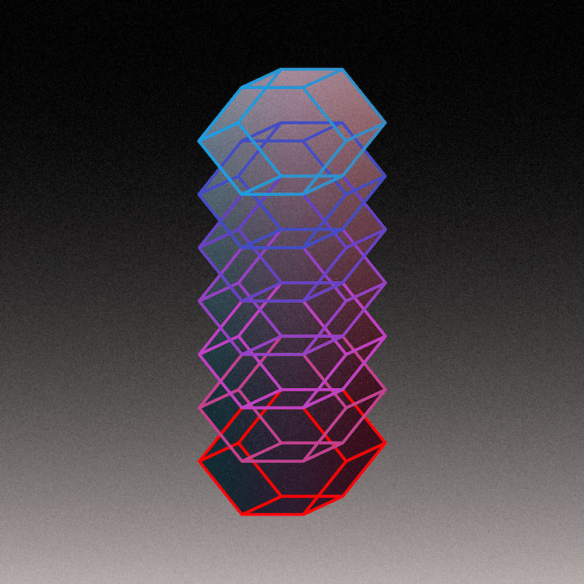
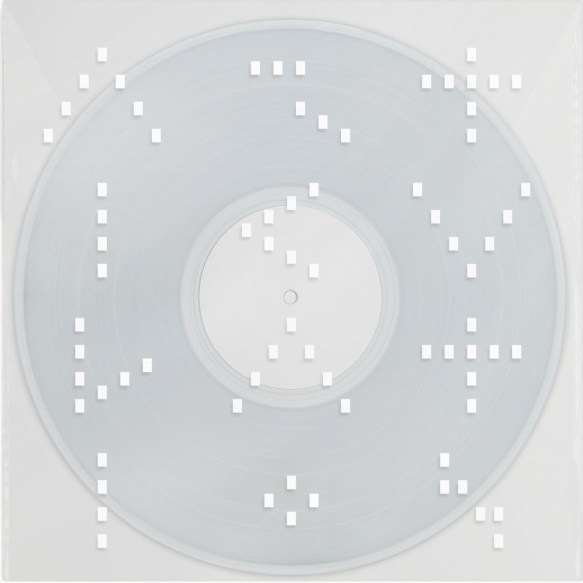
On Record – Dan Michaelson: Colourfield (Village Green Recordings)

reviewed by Ben Hogwood

What’s the story?

Dan Michaelson is known principally for his work as a respected Americana singer, with five albums to his name with the Coastguards, and two as a solo artist. More recently, however, his explorations have taken him towards descriptive instrumental music, with a soundtrack for the film Blowin’ Up in 2018, not to mention three seasons’ worth of music for the three series of underground TV hit Detectorists.

Working under a self-confessed influence from the music of John Adams, Steve Reich, Anna Thorvaldsdottir and Caroline Shaw, Michaelson started work on his own solo album of instrumental music, collaborating with violinist Galya Bisengalieva and Robert Ames, the violist who also conducts the London Contemporary Orchestra.

What’s the music like?

Very accomplished. Michaelson takes the name checked influences and works them really well, creating his own pictures that evolve slowly but very surely. The woodwind and piano colouring in Colourfield II is reminiscent – in a wholly good way – of Steve Reich’s work in his Variations for winds, strings and keyboards.

Coulourfield III has the most memorable theme, a suitably heroic horn line, while by contrast Colourfield IV has lovely dappled shades, with stately strings that gradually pick up more energy. Colourfield IV is atmospheric too, with shimmering harmonics and tremolo, a strong sense of the wood on these stringed instruments actually creaking.

Michaelson is equally at home in smaller and larger structures – and the second and fifth pieces extend beyond ten minutes with ease and control.

Does it all work?

Largely. Michaelson creates some vivid pictures but just on occasion the feeling persists that more melodic elements would raise the profile of the music. The textures are undeniably beautiful, as are the harmonic progressions, but it sometimes needs an extra line, such as a vocal or solo instrument, to elevate it to something truly memorable.

Is it recommended?

Yes. Even with the melodic reservation taken into account, there is some beautiful music here which really holds its own on repeated listening. Michaelson’s scoring is ideally weighted, and any of these numbers would be the ideal foil for visual material. It will be interesting to see where he goes from here.

Stream

Buy

Switched On – Laurence Pike: Prophecy (The Leaf Label)

reviewed by Ben Hogwood

What’s the story?

Laurence Pike is on the crest of a creative wave. After an impressive output as drummer with PVT, he has joined forces with Luke Abbott and Jack Wyllie of Portico Quartet as Szun Waves, releasing their self-titled debut in 2016. Since then he has reeled off three albums as a solo artist, and Prophecy, his latest, shows his love for instinctive working continues.

The record is his response to the deepening global climate emergency but in particular hones in on the destructive wildfires wreaking havoc across Australia. The cover art, Goldens by Australian artist Gemma Smith, reflects his concerns in a striking image.

What’s the music like?

Instinctive. Pike works a very effective blend of pre-prepared material and improvisation, striking a balance between the two that feels just right.

He has close attention to detail with the brushstrokes of his percussive work matching up to broader musical sequences. Death Of Science bubbles with tension, creating quite a foreboding atmosphere. Ember is evocative, with a slightly distorted vocal and a distant but reassuring piano. The title track has a nice ambient backdrop while percussion clicks and whirs around.

New Normal is eerie both musically and in the fact its title was coined before the Covid pandemic, and it features clicks and brushes with a soft but insistent harpsichord motif.
Nocturnal noises continue into Born Under Saturn but with a softly voiced backdrop, before the musical camera pans out further on Rapture, the higher pitches suggesting we have taken to the air.

Pike’s use of percussion is never less than interesting but frequently sets vivid nocturnal pictures. Arguably the best is saved for last, with Echoes Of Earth underpinned by a steady but very sonorous chime, creating a rather beautiful epilogue.

Does it all work?

Yes. Pike’s uses the army of percussion at his disposal with a painter’s touch, and his brush strokes are commendably subtle at times. The way he combines the percussion instruments with subtle melodic loops or atmospheres is very effective, and the album works well both on headphones and surround sound.

Is it recommended?

Very much so. Laurence Pike’s work goes from strength to strength, and this particular episode is both effective and deeply felt.

Stream

Buy

Switched on – Luke Abbott: Kagen Zorn

Today’s scheduled article for Arcana was to be a review of Laurence Pike’s new album Prophecy. Yet in a rather nice coincidence he has been moved politely aside for news of the return of his good friend and Szun Waves teammate, Luke Abbott.

Abbott has revealed news of a first solo record in six years, with Translate due to be released on 30 October by Border Community. Along with the announcement he has shared ‘Kagen Sound’, an intriguing first track from the album. Described – accurately as ‘menacingly driving but punctuated with endearing flourishes’, it is a compelling listen.

Abbott himself says, “Kagen Sound is one of the simpler tracks on the record, it’s based around the Korg Monopoly, which is one of my favourite sounding synths. The track is named after an American puzzle box maker, he makes the most incredibly intricate wooden puzzle boxes. I’ve been interested in puzzle boxes since I saw Hellraiser when I was about 11 years old, maybe I shouldn’t have seen that film so young. To me the track feels like a a huge opening in the earth, like a cosmic doorway, which is why it’s the opening track on the album.”

Translate will be released with the artwork below, a drawing begun by Abbott’s son and finalised by Luke himself.

Switched On – Rival Consoles: Articulation (Erased Tapes)

reviewed by Ben Hogwood

What’s the story?

Articulation is the fifth album for Erased Tapes from Rival Consoles, the name under which Ryan Lee West releases much of his music. The inspiration for this album is György Ligeti, not in an explicitly musical sense but in the art of making music from a graphic score. The idea behind this was to get away from the computer and start with patterns, shapes or structures drawn by hand. This would generate musical solutions. Two of the initial scores sketched out by West are shown below:


Articulation


Sudden Awareness of Now

What’s the music like?

Articulation has less obviously musical content than its predecessor Persona. There are admirable and often striking sounds and textures achieved through this music, which often creates powerful pictures and atmospherics. Yet while the chord progressions are strong there is not so much of a melodic strength in depth.

Opening track Vibrations On A String is a study in tonal colour, moving between distortion and a more consonant sound until a forthright beat kicks in. There is a tension between the energy of the beats and the slow four-note progression of the string itself.

Forwardism and Articulation follow similar paths, with relatively minimal means. The former strips back to beats and jagged atmospherics, while the latter takes a more active broken beat and spins threads around it. Melodica is much warmer, the beats retreating and the music panning out a little, the approach allowing for more improvisation, while Still Here resembles an extended peal of mid-range electronic bells, delivered without beats.

Most impressive and enduring is the final Sudden Awareness of Now. With a dazzling array of textures applied to its central riff it crackles with energy, sending out trance-like pulses but surrounded by a warm haze of sound.

Does it all work?

Yes, in terms of conforming to West’s blueprint, but the shift away from computer towards drawings has not necessarily given the music more emotion. If anything, it sounds more processed, a collection of sounds rather than melodies. It is very effective for mood-setting and creating colours but does not always leave a lasting impression.

Is it recommended?

Articulation is an easy recommendation for Rival Consoles devotees, but it does not yet come across as his strongest album. Time will tell if it has the same staying power as other Erased Tapes releases, but for now Articulation is easier to admire than an album with which to form a strong emotional bond.

Stream

Buy