The RSNO’s Friday Night Club is proving to be a popular series – and tonight’s instalment looks set to provide just the tonic needed to start the weekend. Conducted by Peter Oundjian, the orchestra return to Beethoven in a concert given at their home venue, the Glasgow Royal Concert Hall, in 2016.
The vocal soloists are soprano Marita Sølberg, mezzo-soprano Renata Pokupić, tenor Ben Johnson and bass-baritone Stephan Loges, with the RSNO Chorus joining for the exultant choral finale.
You can watch the on the orchestra’s website here, or join on Facebookhere
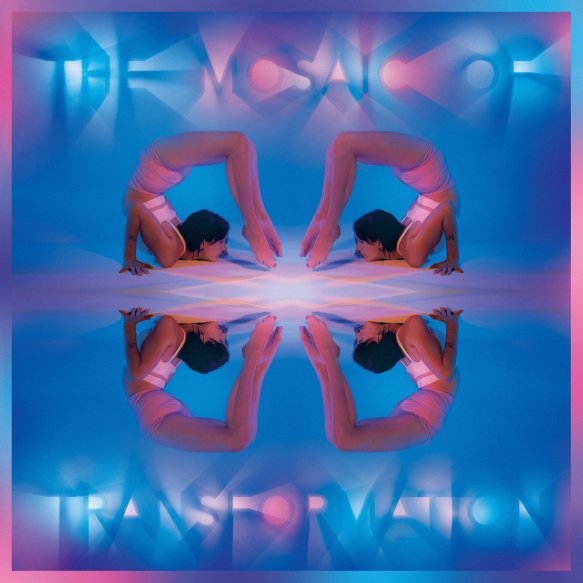
It is tempting to put forward the idea that what the musical world needs right now is a new album from t Kaitlyn Aurelia Smith. That is because the music she has made up until now is not just a comfort for anxious times but it offers real, meaningful positivity from within. Recognising that potential, Ghostly International have proceeded with the album release rather than defer it, meaning that while Smith’s tour with Caribou may be cancelled the album she would be promoting is still with us.
Her previous release, Tides, was free of beats, and much of the rhythmic profile of The Mosaic Of Transformation is constructed without explicit use of bass drums. Yet it is an album of movement, exploring the relationship between sound and colour, and our own physical beings. She has a great wealth of knowledge and experience in this area, making music specifically designed to ‘fit’ our life experiences in a way that enhances them.
What’s the music like?
The Mosaic Of Transformation is light on its feet much of the time, but that does not make it insubstantial. Quite the opposite, for in tracks like Expanding Electricity, the ten and a half minute closing track on the album, Smith has put together sound collages of a deep and lasting beauty and also of a surprising density. If music were colour – which it often is of course – there would be deep blues and purples in this track especially, beginning with sonorous low register strings but curving upwards through the spectrum. When her multitracked voice proclaims, ‘I feel it, can you feel it expanding?’, the celebration of electrical power is wholeheartedly complete.
This love of electricity – without which very little of our music could be heard! – is felt throughout the album, where brighter pastel shades make themselves known. Carrying Gravity is another substantial track that develops instinctively and with a keen structural command. It has a luminous glow, especially as the textures thin out towards the end.
Some of the harmonic language Smith uses has an Oriental feel, which is either implied or more directly referenced – and the busy exchanges of The Steady Heart bring this through to the front. It is subtly apparent as the album gurgles into life through Unbraiding Boundless Energy Within Boundaries, while Remembering uses block chords and Smith’s distinctive layered vocals. After the initial relative stillness Understanding Body Messages stays true to its title with snippets of musical code passing along the line, conveying positive energy.
The beats are more gainfully employed in The Steady Heart, which has multi-layered vocals at its core – but everything is inevitably pointed to the closing, epic ode to electrical power.
Does it all work?
Yes – and the more you listen to The Mosaic Of Transformation, the more it has to offer. Smith’s layering technique is a sonic delight, because each visit to the music reveals previously hidden workings, subtle melodic touches and crossrhythms, all done with a light craftswoman’s touch. As the last sounds of Expanding Electricity subside, a lasting warmth is left behind.
Is it recommended?
Yes – and the more you listen to The Mosaic Of Transformation, the more it has to offer. Smith’s layering technique is a sonic delight, and each visit to the music reveals previously hidden workings, subtle melodic touches and crossrhythms, all done with a light craftswoman’s touch. As the last sounds of Expanding Electricity subside, a lasting warmth is left behind.
Having made a guest appearance on the Houndstooth compilation IDDK in 2018, Hodge joins full-time to release his debut LP on the label. He joins a list of luminaries such as Special Request, Throwing Snow, Aisha Devi and Marquis Hawkes.
Hodge – real name Jacob Martin – says his inspirations for the album come from pleasingly diverse sources such as gardening, science fiction, progressive rock and a penchant for raving.
What’s the music like?
Shadows In Blue feels like an outdoor record, as its inspirations would imply – yet it does occasionally disappear indoors for a heavy session clubbing. Hodge keeps his door open to a number of different styles, working with busy loops and spacious backdrops on the title track, and looking back in time to the mid-1990s for the rave he craves in Cutie.
Ghost Of Akina also feels older with its clattering beats, while Lanes keeps the energy high but takes a more machine-like approach. Meanwhile Lanacut gives a view of a more private side to the producer.
The progressive rock elements are not quite so explicit but are probably better made known in the original structures both of the tracks and the album. There is certainly a psychedelic strand that reveals itself when the busier tracks get going.
Does it all work?
Yes, it’s a very cohesive album and Hodge has a busy state of mind that keeps energy levels high. His may not yet be a wholly distinctive voice but there are a lot of good things to commend Shadows In Blue, which shows how he knows his way round a studio.
Is it recommended?
Yes – as a signpost for the future especially. Shadows In Blue is a strong debut from a producer who joins a crowded field of British techno talent. It will be interesting to see how he progresses and how his individual voice blossoms from here.
Since its beginnings five years back, Arcana has made a big deal of the BBC Radio 3 Lunchtime Concerts at the Wigmore Hall on Mondays, covering the majority of recitals given in that time. The concerts bring a great deal of pleasure to listeners not just in the hall but at home, brightening up a dreary Monday on many occasions. Their availability on catch-up through BBC Sounds only heightens the xpe
Very happily the concerts are to return to our homes. With the Wigmore Hall closed to the public until September, Alan Davey, Controller of BBC Radio 3 and John Gilhooly, Director of Wigmore Hall, have today confirmed the first live classical music broadcasts on BBC Radio 3 from Wigmore Hall, following the nationwide lockdown.
A series of 20 concerts will take place at 1pm every weekday throughout the month of June, starting on Monday 1st. The series will mark Wigmore Hall’s temporary re-opening, as well as BBC Radio 3’s return to live concert broadcasting, part of their Culture in Quarantine initiative.
Programmes are to be confirmed, but rather excitingly the artists confirmed include a wide array of British-based talent, listed alphabetically below:
James Baillieu (piano), Benjamin Baker (violin), Iain Burnside (piano), Allan Clayton (tenor), Michael Collins (clarinet), Imogen Cooper (piano), Lucy Crowe (soprano), Nicholas Daniel (oboe), Iestyn Davies (countertenor), Julius Drake (piano) Benjamin Grosvenor (piano), Angela Hewitt (piano), Stephen Hough (piano), Elizabeth Kenny (lute), Pavel Kolesnikov (piano), Paul Lewis (piano), Michael McHale (piano), Joseph Middleton (piano), Mark Padmore (tenor), Hyeyoon Park (violin), Timothy Ridout (viola), Sean Shibe (guitar), Anna Tilbrook (piano), Samson Tsoy (piano), Ailish Tynan (soprano), Mitsuko Uchida (piano), Adam Walker (flute), Roderick Williams (baritone)
Arcana will be looking to cover a number of these concerts, offering listening guides as we have done for five years. See you in the virtual concert hall!
To hopefully boost your Monday evening Arcana has two recommendations for online music – one recently given and a whole festival of music later in the month to look forward to.
Last night Gramophone magazine held the Gramophone Classical Music Awards Winners Charity Lockdown Gala, a three-hour event whose purpose was ‘to support musicians whose work has dried up due to the Covid-19 crisis, and who are finding themselves in severe financial difficulty’. You can watch on YouTube below, with the concert available until this Sunday 17 May – and you can donate on the links given at the link too:
The program was richly entertaining, from the Zoom-based capers (and brilliant singing) of I Fagiolini performing Monteverdi to a number of sublime excursions into the world of solo Bach, led by Sir Antonio Pappano. There were special performances from guitarist Sean Shibe, in a selection of Scottish lute tunes, pianist Vikingur Ólafsson in Rameau, Beatrice Rana and Boris Giltburg playing Chopin, Ian and Oliver Bostridge performing Beethoven and the Pavel Haas Quartet playing Dvořák.
Meanwhile the enterprising team behind the English Music Festival, scheduled for May and inevitably cancelled, have ensured the event will take place online. They have rustled up a most impressive programme, with concerts featuring recordings from the ‘house’ label EM Records but, most excitingly, with online concerts from violinist Rupert Marshall-Luck, cello and piano team Joseph Spooner and Nicholas Bosworth, Ensemble Hesperi and pianists Paul Guinery and Duncan Honeybourne (above)
For more information and to donate / buy tickets, you can visit the festival’s programme page here



 Since its beginnings five years back, Arcana has made a big deal of the BBC Radio 3 Lunchtime Concerts at the Wigmore Hall on Mondays, covering the majority of recitals given in that time. The concerts bring a great deal of pleasure to listeners not just in the hall but at home, brightening up a dreary Monday on many occasions. Their availability on catch-up through BBC Sounds only heightens the xpe
 Arcana.fm