Routes to Beethoven – C.P.E. Bach

by Ben Hogwood

Our first stop on the route to Beethoven was one of the great fathers of music, Johann Sebastian Bach. Moving on a generation, we arrive at the doorstep of his second surviving son, Carl Philipp Emmanuel.

Comparing the music of the two best known Bachs is like comparing chalk with cheese. Whereas the senior composer Johann Sebastian was notable for the order of his exemplary part writing, meticulously crafted melodies and an incredible economy of expression, Carl Philipp Emmanuel assumes the mantle of a rebellious son. As Steven Isserlis brilliantly describes it, his music is that of ‘divine disorder’.

In his best work, C.P.E. drives forward with terrific energy and unpredictability. Try this Fantasy in C major for starters, played on the fortepiano by Robert Hill:

But what was the extent of his influence on Beethoven? In his recently published biography, Jan Swafford writes how Beethoven began his studies with Christian Gottlob Neefe around 1781. “Central to Neefe’s influence on Beethoven”, he writes, “was Leipzig’s living memory of two towering composers who had lived and worked in the city: J.S. Bach…and his son C.P.E. Bach.”

He goes on to talk of how, “during his later years in Berlin and Hamburg, C.P.E. became the prime musical representative of the aesthetic called Empfindsamkeit, a cult of intimate feeling and sensitivity.” Empfindsamkeit (which can loosely translate as ‘sensitivity’) was associated with C.P.E. and a group of composers working for his employer, Frederick The Great.

Flötenkonzert Friedrichs des Großen in Sanssouci by Adolph Menzel

This approach, also known as Sturm and Drang, gained momentum through the 1760s, thanks to the output of Haydn, Mozart and an influential group of early symphonists operating in Mannheim. C.P.E. Bach was regarded as one of its pioneers, with further assertions made in his important treatise Toward the True Art of Clavier Playing. Here he declared that “moving the heart was the chief aim of music, and to do that one had to play from the heart and soul.”

In the New Oxford History of Music, Philip Radcliffe notes how “C.P.E. Bach’s richly varied range and texture in keyboard writing affected later composers such as Haydn and Beethoven. True to Empfindsamkeit, he preferred extremes, very high and very low ranges, sudden contrasts of thin and full textures or close and distant spacing. The expressiveness at the keyboard strangely did not influence his orchestration, where he showed no particular aptness in either choice or treatment of instruments.”

C.P.E.’s output includes some eye-opening moments. As well as the Fantasy above there are some fine works in the traditional style. The Cello Concerto in A minor, a substantial piece, has terrific drive to its writing in the fast movements, but also a deeply emotive lyrical side:

C P E Bach Cello Concerto A minor from Konserthuset Play on Vimeo.

The keyboard works, of which there are many, strain at conventional writing. The Sonata in D minor, included in the playlist, is the opposite of conventional ‘front loaded’ works. Where the first movement would often be the dominant one, on this occasion the third of three movements is twice as long as the first two – and is a colourful and thoroughly enjoyable set of a theme and variations.

C.P.E.’s Symphonies are striking in their unbuttoned enthusiasm and power, and are on occasion misunderstood as being reckless. The keyboard works operate with a freedom glimpsed much less commonly in the works of his father – which seems to have been Beethoven’s approach too. His choral music is striking, too – the hour long oratorio Die Auferstehung und Himmelfahrt Jesu (The Resurrection and Ascension of Jesus) is a powerful utterance, while shorter pieces such as the motet Helig ist Gott are notable for their vivid responses and word painting.

This musical freedom was shared by Beethoven, so it will be interesting to see how closely the approaches of the two composers align. The respect shown by Beethoven to C.P.E.’s documentation and keyboard works shows his deep and lasting respect for the composer, and will surely extend into a willingness to challenge the norm and push down musical boundaries.

Listen

This Spotify playlist presents just a small proportion of the massive output of C.P.E. Bach. It is intended to give an idea of his fearless approach to composition and his instinctive writing for orchestra, solo keyboard and choir. As you listen you will I’m sure recognise a fierce energy and drive, and also the sense of pushing against the boundaries of much of the music around him:

Next up

Routes to Beethoven moves on to the music of Handel, a composer Beethoven greatly admired.
Switched On – Three Rivers Project: Confluence (Lewis Recordings)

reviewed by Ben Hogwood

What’s the story?

Three Rivers Project is an intriguing collaboration between DJ Yoda and his regular production partner Mark Ross, who records with Roland Faber as Go Atoms. They are named as guests on five of the tracks on debut album Confluence, which as Yoda admits is unlike anything he has worked on before.

The trio describe Confluence as a ‘soundtrack to an imaginary movie, combining the best elements of made-for-VHS electronica, 80s synth/cold wave, against the clock electro house, and the influence of John Carpenter, Jean Michel Jarre and DJ Hell.’ The introductory paragraph on Bandcamp goes on to speak of the album as ‘a classic in future/retro sounds and the accessibility of strange new worlds’. All of which points very heavily indeed towards the influence of cult 1980s throwback hit Stranger Things, the Netflix series notable for its brilliant analogue soundtrack and attention to recent historical detail of electronic music.

What’s the music like?

If you know Yoda as the source of some original, witty and tuneful hip hop, the sound of Confluence will come as a surprise – in a good way.

There is no doubt that the music for Stranger Things has played a big part in the formation of the album, but thankfully Confluence is more than a derivative imitation. The three protagonists are too inventive for that.

As a result we get a richly descriptive album that flows well and is very descriptive, with several tracks of standout musical beauty. Dawn Eclipse provides a wide open sonic panorama from the start, beautifully expansive and more than a bit mysterious. The broad canvas segues into next number Confluence A – Water Leaves, where big reverberant drums cut to a watery backdrop.

The Stranger Things parallels become more apparent as the album progresses. Osmosis could be an offcut from Jean Michel Jarre’s Oxygène, while Dark Neon – which also features Go Atoms – has all the hallmarks of an extraterrestrial 1980s soundtrack, with burbling analogue synths and the weird contours of a main theme. So too does Colony, which pumps more energy into its beats, and Conurbation, a faster and nicely aligned imitation of early techno.

Wolfram accentuates the oddness, the sound of a moaning creature blended into some of Yoda’s typical scratching sounds, while Out Of The Blue is a pure drone.

These different elements provide the essential light and shade of Confluence, which ends with a cavernous beat applied to the resolution of Confluence C – Waters Reach.

Does it all work?

Yes, largely. The concept behind Three Waters Project may be almost wholly based on music from the recent past, but it is well executed and structured. With Yoda already a man of many styles, it follows that with Go Atoms he should be able to blend types of writing which are new to them – and sure enough they do so skillfully.

Is it recommended?

Yes. Confluence sounds great on headphones, and is ironically at its most effective when the drones come out and the atmospheric tracks are in play. Yet even the moments where pastiche is most obvious are full of good, strange, instrumental things.

Stream

Buy

In concert – Kristine Balanas, Royal Philharmonic Orchestra / Andris Poga: Sibelius, Bruch & Rachmaninov

Kristine Balanas (violin), Royal Philharmonic Orchestra / Andris Poga

Cadogan Hall, London
Thursday 5 March 2020

Sibelius Karelia Suite Op.11 (1893)
Bruch Violin Concerto no.1 in G minor Op.26 (1866)
Rachmaninov Symphony no.3 in A minor Op.44 (1936)

Reviewed by Ben Hogwood
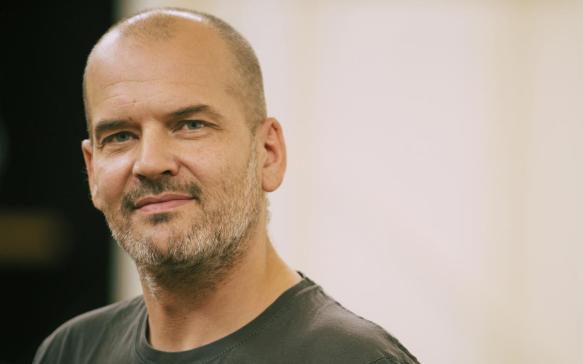
Photo credit (Andris Poga) Jean-Philippe Raibaud

This was a nicely balanced and uplifting concert that balanced the relative misery of the early March weather in London. With the rain hammering down outside the Cadogan Hall, the Royal Philharmonic Orchestra and Latvian conductor Andris Poga got on with ensuring there was plenty of warmth inside.

They began with Sibelius’s charming Karelia Suite, a work full of good tunes and typically attractive and imaginative scoring. It is an ideal ‘curtain up’ piece in the right performance, although this one took a little while to move up through the gears. The first movement Intermezzo felt a little stentorian, and could have had a lighter spring in its step, but the succeeding Ballade was nicely measured, the emotional heart of the performance and given affectionately by Poga. By the time the Alla Marcia third movement had arrived, so too had the bounce in the rhythms, and the deceptively simple string theme was given with a smile.

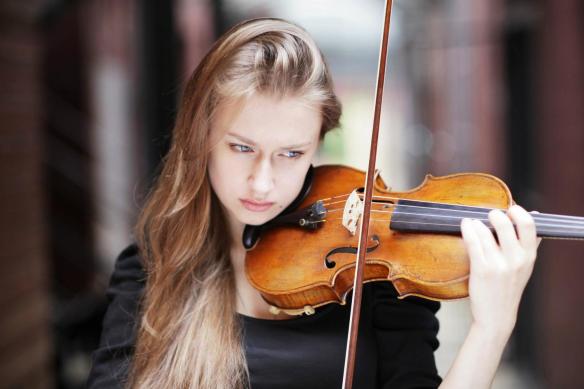
For Bruch’s Violin Concerto no.1 the orchestra were joined by Kristine Balanas (above), who led from the front in an account with passion and flair in strong supply. Yet there was an emotional distance between soloist and orchestra, who rarely interacted, and the opportunity for links through the sharing of Bruch’s wonderful melodies largely overlooked. Balanas played with a strong technical command of her Antonio Gragnani instrument, which made a wonderful sound, and the double stopping with which the finale begins was brilliantly done, the response from the orchestra appropriately breezy. Andris Poga clearly enjoyed the piece, but the distance remained throughout and hampered the work’s emotional impact.

There followed a hugely enjoyable account of Rachmaninov’s Symphony no.3, the first appearance of this work in a Royal Philharmonic Orchestra concert for a good while. Written in Lucerne but premiered by the Philadelphia Orchestra and Leopold Stokowski in 1936, the piece is unique for its successful blend of homesick melancholy and the suggestion of bright lights in America, written at a distance from both. Rachmaninov was effectively taking in the surroundings of both countries, but was ultimately thinking of home.

From the start it was clear the affection Andris Poga holds for the Third, with the carefully shaped and graceful chant theme contrasting with the upward sweep from the orchestra that followed. He was particularly impressive in managing the bracing syncopations in the finale, often tricky for orchestras to nail, and so too for the fugue that Rachmaninov tosses around the different sections towards the end. The slow movement was especially beautiful, with a solo from leader Sulki Yu that melted even the hardest heart. The same could be said for the warmly played slower theme in the first movement, beautifully floated by cellos with subtle prompting from woodwind.

What really impressed in this symphony was the orchestra’s overall sound, richly colourful and depicting vivid pictures of Rachmaninov’s surroundings. Visions of Hollywood could occasionally be discerned, the suitability of the composer’s music for the big screen uncannily made clear, but in the intimate slow movement a softer and more fragile heart was in evidence.

Unfortunately the players of the Royal Philharmonic Orchestra were not named in the programme, a shame as there were several new faces added to the fold this time around. They impressed greatly in a memorable account of a symphony finally getting its due rewards in the concert hall.

Further listening

You can listen to a playlist of the concert programme below – which includes the RPO in previous recordings of the Sibelius and Bruch, plus their conductor-elect Vasily Petrenko leading the Royal Liverpool Philharmonic Orchestra in a fine account of Rachmaninov’s Third Symphony.

Live review – CBSO Chorus and Orchestra / Mirga Gražinytė-Tyla: Brahms’ German Requiem & Mozart Serenade for wind

Camilla Tilling (soprano), Florian Boesch (baritone), CBSO Chorus, City of Birmingham Symphony Orchestra / Mirga Gražinytė-Tyla

Symphony Hall, Birmingham
Wednesday 4 March 2020

Mozart Serenade for wind in C minor K388 (1782-3)
Brahms Ein Deutsches Requiem Op.45 (1865-9)

Written by Richard Whitehouse

The City of Birmingham Symphony Orchestra’s current season features several major choral works that have long been central to this orchestra’s repertoire. While it has received numerous readings (most recently with Andrew Manze), Brahms‘s A German Requiem is not among these – so it was fascinating to hear what Mirga Gražinytė-Tyla might make of a piece that, though it has never fallen from favour since its premiere 152 years ago, remains a stern interpretive test in terms of projecting formal integration and an expressive essence more elusive for its restraint.

In the event the performance was a fine one – not least because this conductor found the right balance between flexibility of motion, without which the textures all too easily risk stolidity, and that seriousness of manner without which the music soon loses any sense of purpose. A balance as evident in the lengthy second movement, the inexorable tread of its outer sections framing an interlude of wistful grace then with the ensuing fugue building animatedly to its serene close, as in the brief fourth movement whose blithe exterior conceals music of artful dexterity. Camilla Tilling (above) summoned a winsome response in the fifth movement, a late but necessary addition in its opening-out the work’s emotional range, while Florian Boesch (below) was suitably if not unduly vehement in his initial contributions to the third and sixth; the former crowned by a fugue of visceral and unflagging energy, though that in the latter movement marginally lost focus as its grandly rhetorical gestures ran their (too?) predictable course.

It is in the first and seventh movements that Brahms’s highly personal concept of redemption through love is at its most explicit, MG-T duly having the measure of their calmly insistent searching towards eventual catharsis – even if the finale’s gradual winding-down resulted in less than the ideal repose. The CBSO Chorus was on fine form throughout – a tribute to the expertise of associate chorus director Julian Wilkins, who also made a pertinent contribution in an organ part no less crucial for its understatement; underpinning and often motivating an orchestration which adds in no small measure to the work’s humane and compassionate spirit.

A relatively short first half gave welcome opportunity for the CBSO’s woodwind to take the stage for an un-conducted reading of Mozart’s Serenade in C minor, last in his trilogy of such pieces which transcended an ostensibly lightweight genre and, in doing so, made possible the emotional substance of the symphonies that followed. Ensemble seemed a shade insecure in the opening Allegro, but its underlying intensity carried over to an Andante whose ineffable rapture was itself contrasted with the textural severity of the Menuetto. Best, though, was the final Allegro – a set of variation on an unassuming theme with the formal outline of a sonata-rondo made explicit with its major-key ending. Overall, a winning account of a piece whose scoring for wind octet has gained it less exposure than Mozart’s comparable orchestral works.

It also made for an unlikely while successful coupling and a similarly thought-provoking one is scheduled for next Tuesday, MG-T making her first foray into Bruckner with the erstwhile elusive Sixth Symphony alongside the deceptive simplicity of Bartók‘s Third Piano Concerto.

Further listening

Here is a Spotify playlist of music from the concert. The CBSO have not recorded either of these works before but these are fine alternatives:

For further information on the current season of CBSO concerts, visit the orchestra’s website

On record: Elizabeth Watts, BBC Symphony Orchestra / Martyn Brabbins – Vaughan Williams: A Pastoral Symphony & Symphony no.4

Elizabeth Watts (soprano)*, David Butt Philip (tenor)**, BBC Symphony Chorus & Orchestra / Martyn Brabbins

Vaughan Williams
A Pastoral Symphony (Symphony no.3)* (1921)
Symphony no.4 in F minor** (1931-4)
Saraband, ‘Helen’ (1913-4)

Hyperion CDA68280 [80’57”]
English text included
Producer Andrew Keener
Engineer Simon Eadon

Recorded 26 & 27 November (Symphonies), 2 December 2018 (Helen), Watford Colosseum, UK

Reviewed by Richard Whitehouse

What’s the story?

Martyn Brabbins and the BBC Symphony Orchestra continue their cycle of the symphonies by Vaughan Williams with the Third and Fourth, two ostensibly very different pieces whose equally equivocal reception at their premieres now seems testament to their expressive reach.

What’s the music like?

No longer the relative rarity it once was, A Pastoral Symphony remains the most elusive of this cycle – its arcadian rapture shot-through with imagery of war and transience.

Brabbins sets a well-nigh ideal tempo for the opening movement, its deceptively passive interplay of landscape and evocation informed by eddying agitation made more explicit in its successor – whose distanced solos for horn and (offstage) trumpet afford concrete recollections of VW’s wartime experience, made the more poignant by being sensed on the edge of consciousness. For all its greater physicality, the third movement is no conventional scherzo in its eliding between moods with an agility finely conveyed here through Brabbins’s judicious pacing – not least that eerily flitting coda which forms an unerring transition to the finale. Its remote outer sections enhanced by Elizabeth Watts‘s yearning vocalise, this unfolds as a necessary culmination; the composer bringing to the fore emotions earlier half-glimpsed on the way to a powerfully wrought climax, leaving in its wake a catharsis more potent for its intangibility.

From here to the seismic eruption of the Fourth Symphony is to set forth on a very different journey, one of absolute expression in combat with force of circumstance. Brabbins keeps a firm yet flexible grip on the initial Allegro, its violent opening balanced by the fugitive calm into which it withdraws. He then finds the right ‘walking’ tempo for the Andante, this sombre if never featureless landscape underpinned by angular harmonic progressions that twice break out in ominous outbursts prior to the flute’s lamenting soliloquy towards its close. Perhaps the Scherzo’s outer sections could have evinced greater sardonic humour, though the overbearing pomposity of its trio is as finely judged as is the pulsating transition into the finale. Brabbins duly brings out its martial swagger and if tension during the earlier stages could be even more acute, the ghostly throwback at its centre yields a wan rapture and how persuasively he draws the thematic elements together in the epilogo fugato for a stretto of mounting tension whose denouement is a return to the work’s fateful opening gesture and a four-letter clinching chord.

As makeweight, Saraband ‘Helen’ proves an enticing discovery. Left unfinished towards the outbreak of the First World War, this setting of lines from Marlowe’s Doctor Faustus may be off-balance in its utilizing tenor and chorus for what surely needed to become a larger entity, though both David Butt Philip and the BBC Symphony Chorus acquit themselves ably, while Brabbins secures playing of real elegance and finesse in orchestral writing that inadvertently yields what emerged as the main theme of Serenade to Music almost a quarter-century later.

Does it all work?

Almost entirely. Those who have acquired the earlier releases in this series (A Sea Symphony and A London Symphony) will be aware of the qualities which Brabbins brings to VW, and so it proves here with what is among the finest recent accounts of the Pastoral. Others have evinced a more visceral response in the Fourth, but there is no lack of impact – allied to a methodical sense of purpose that pays dividends in those densely contrapuntal passages over which the composer laboured before ultimately getting them right.

Is it recommended?

Indeed. Sound has the sense of perspective but also immediacy necessary in this music, with Robert Matthew-Walker once again contributing a detailed and informative note. Hopefully the next instalment, featuring the Fifth (and Sixth?) Symphony, will not be long in coming.

For further information on this release, visit the Hyperion website, or the BBC Symphony Orchestra. You can also read Arcana’s interview with the conductor here