Wigmore Mondays – Louise Alder & Joseph Middleton: Lines written during a sleepless night

Louise Alder (soprano), Joseph Middleton (piano)

Wigmore Hall, Monday 6 January 2020 (lunchtime)

You can listen to this concert on the BBC Sounds app here (opens in a new window)

Review and guide by Ben Hogwood

This was a concert with an especially personal link for soprano Louise Alder. The Russian Connection – subtitle of her first album for Chandos – goes much further than the repertoire chosen. It reflects Alder’s Russian ancestry, with generations of her family, up to and including her grandfather in 1914, born in the country.

In addition to that, Alder and regular recital partner Joseph Middleton have created a captivating program linking Grieg, Medtner, Tchaikovksy, Britten, Rachmaninov and Sibelius through their choice of poets and their use of a language outside of their own. Six composers, four languages (at last count!) and some richly descriptive writing all made for a particularly memorable concert, especially when performed with the passion and musicality on show here.

Alder and Middleton judged their program to perfection, bringing in the new year with a spring in its step as Grieg’s Heine setting Gruß (Greeting) tripped into view (2:33 on the broadcast link). This is the first song in a compact but deeply descriptive cycle of six from the composer, setting German poetry with his typical melodic freshness and flair. Alder shows lovely control on the final ‘Gruß’ word, before applying a slight husk to the deeply felt Dereinst, Gedanke mein (One day, my thoughts) (3:40), which made a striking impact here. Lauf der Welt (The Way of the World) (6:23) has heady urgency, singer and pianist working as one, while the evocative Die verschwiegene Nachtigall (The secretive nightingale) (8:01) is a sultry, sensual setting in these hands, the initial picture beautifully painted by Middleton. Zur Rosenzeit (Time of roses) (11:40) is filled with intense longing, while Alder’s tone in Ein traum (A dream) (14:55) is particularly beautiful, working through to a powerful finish.
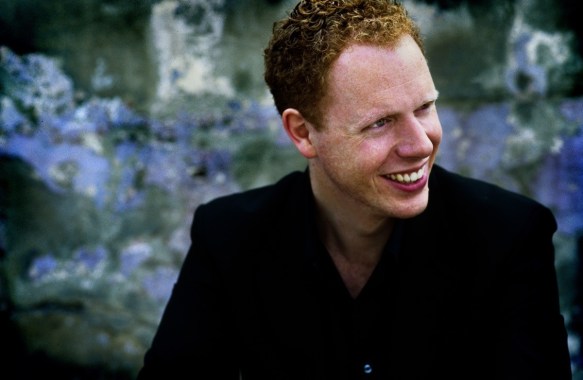
Nikolai Medtner is a Russian composer known for his piano music rather than his songs, so it was gratifying to have Alder and Middleton (above) include two here. They are fine pieces of work, too, with an impressively fulsome piano part that Middleton tackled with deceptive ease and clarity. Mailied (May song) (18:15) holds an intense vocal line over its catchy piano part, while Meeresstille (Calm sea) (20:10) is really well controlled by Alder here.

Tchaikovsky’s numerous songs contain many treasures, and the two French language examples here were no exception. The Sérénade (23:22) dances in the bright light of dawn, with a slightly furtive piano, while Les Larmes (The tears) (25:02) provides much darker soul searching.

Britten’s Russian-language song cycle The Poet’s Echo is a relative rarity in the concert hall, but as Alder and Middleton showed here it contains music of typically fearsome and compressed intensity. The spirit of Musorgsky is evident not just in the choice of poet (Pushkin) but in the bare piano lines, rumbling in the deep for the first song Echo (29:22). Alder’s line is fearlessly delivered, with songs like My heart… (32:17) and Angel (33:48), with its quasi-orchestral piano part, making a powerful impression. The nightingale and the rose (36:20) take powerful flight, the piano gnawing at the heel of the vocal line, while the strange Epigram (40:13) has a striking reverberation achieved through the open piano lid. The final song, Lines written during a sleepless night (41:07) captures the supreme irritation of insomnia through the ‘monotonous tick of the clocks’, with a chilling piano postlude. This work remains a difficult nut to crack, listening-wise, but this is the sort of performance to do it.

We then heard two songs by Rachmaninov, both again setting Pushkin texts. Sing not to me, beautiful maiden (46:44), an early song from the composer’s late teens, receives a fulsome account here with Alder capturing the devastating beauty of the song. The later How fair this spot (51:56), taking the mood from darkness to relative light, is even better, Alder’s top ‘B’ a note of extraordinary clarity.

The generously packed concert concluded with three Sibelius songs, sung in Swedish. Once again these songs are found to be fiercely intense, often expressed through the bare minimum of means. The tempestuous Säv, säv, susa (Sigh, rushes, sigh) (54:02) is heady stuff, while the dynamic range achieved by both performers in Våren flyktar hastigt (Spring is swiftly flying) (56:27) is hugely impressive. Finally Flickan kom ifrån sin älsklings mote (The girl came from her lover’s tryst) (57:49) has a huge, orchestral scope, a reminder that the Second Symphony is not far away in the composer’s output. The song chills to the bone when turning tragically into the minor key for its third verse and the lover’s treason.

This was a simply outstanding concert from Alder and Middleton, deeply intimate yet including the audience in all of their asides. These qualities extended to the wonderful encore, Rachmaninov’s A Dream, where the rippling piano part and exotic harmonies supported Alder’s heavenly soprano line.

If more of the Wigmore Hall Monday lunchtime concerts are as good as this in 2020, we are in for many treats indeed! It only remains for you to listen on BBC Sounds if you haven’t already…and to keep up with the series as it progresses.

Repertoire

This concert contained the following music (with timings on the BBC Sounds broadcast in brackets):

Grieg 6 Songs Op.48 (1884-8) (2:33)
Medtner Mailied Op.6/2 (1901-5) (18:15), Meeresstille Op.15/7 (1905-7) (20:10)
Tchaikovsky Sérénade Op.69/1 (1888) (23:22), Les Larmes Op.69/5 (1888) (25:02)
Britten The Poet’s Echo Op.76 (1965) (29:22)
Rachmaninov Sing not to me, beautiful maiden Op.4/4 (publ.1893) (46:44), How fair this spot Op.21/7 (1902) (51:56)
Sibelius Säv, säv, susa Op.36/4 (1900) (54:02), Våren flyktar hastigt Op.13/4 (1891) (56:27), Flickan kom ifrån sin älsklings möte Op.37/5 (1901) (57:49)
Encore – Rachmaninov A Dream Op.38/5 (not on the broadcast)

Further listening

Most of the music from this concert is part of Louise Alder and Joseph Middleton’s new disc for Chandos, Lines Written During A Sleepless Night: The Russian Connection, with the exception of the two Rachmaninov songs. The full playlist is here:

If you enjoyed Alder and Middleton in this concert – which I’m sure you did! – their previous outing together is a sumptuous collection of songs by Richard Strauss for Orchid Classics which is bound to appeal, and certainly plays to their strengths:

Meanwhile to enjoy the Rachmaninov song output in its entirety there are few better historical guides than soprano Elisabeth Söderström and pianist Vladimir Ashkenazy:

All the trimmings – more musical releases of 2019 that are worth your time

Are you sitting comfortably? Ready to put your feet up for Christmas (or at least some of it?!) Arcana definitely is, but before we go we wanted to share with you some more musical discoveries that have happened across the year. These are the new releases we have not had time to cover properly until now, but which we think deserve a word or 100.
Think of it like the snacks you get out at Christmas once work has finished. So here, in one very varied block of music, are our extra recommendations from the musical year:

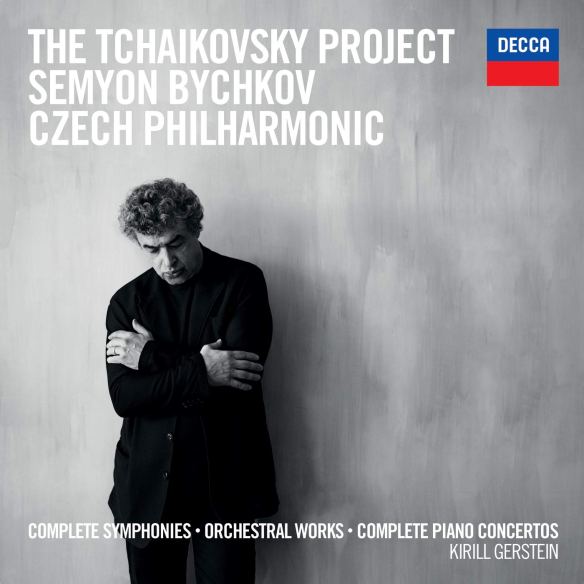
Our first classical port of call is Semyon Bychkov’s Tchaikovsky Project with the Czech Philharmonic. This is a cycle of Tchaikovsky’s seven symphonies (counting Manfred) and the Piano Concertos, with Kirill Gerstein. It is a very attractive set, providing the timely reminder that the early symphonies, while different from the blood and thunder 4-6, carry plenty of musical substance and charm.

In the first, Winter Daydreams, Bychkov gets to the essence of the scherzo by performing it slightly slower than most, but it has a really attractive and graceful lilt. The Second, Little Russian, is a beauty, while the much underrated Polish Symphony (no.3) is a treat, the first movement with a spring in its step as it makes the most of Tchaikovsky’s catchy theme. While repeated a good deal, the freshness of Bychkov’s phrasing helps enormously.

The Fourth is not as high voltage as some performances in the catalogue, but the Fifth Symphony gets a really good performance, from the clarinet solo at the start to the soaring violins at the climax of the slow movement. The Pathétique is excellent too, superbly paced and phrased if perhaps lacking the ultimate tragedy of the final movement.

Manfred, however, is next level, strings as one in the swooning phrase of the first movement, setting up a highly dramatic reading. The closing climax of the first movement is feverish, with a string tone to die for – and this approach encapsulates the whole account of a symphony that now ranks among Tchaikovsky’s finest works.

On a very different plain is a box of Frans Brüggen’s complete recordings of Rameau Suites, made with the Orchestra of the 18th Century on Glossa. These are almost self-recommending, eight beautifully constructed bodies of work from the composer’s stage works that are full of incident and character – and not just local. Rameau, as well as being a keen melodist, was keen on expanding his horizons and the likes of Les Indes Galantes look far afield to Native America for their inspiration. Listen to Air pour les Sauvages towards the end of the suite for an idea of how Brüggen puts a spring in the step of this music, or any of the thrilling overtures, often littered with bracing percussion:

A couple of Khachaturian releases from the enterprising CPO label have caught my eye over the last couple of weeks. They are numbers two and three in a series cataloguing the Armenian composer’s works for solo instrument and orchestra. Last year Stepan Simonian fronted a recording of the Piano Concerto, but this year’s releases see Torleif Thedéen giving the Cello Concerto a terrific reading, and an expansive account of the Concerto Rhapsody.

The Staatsorchester Rheinische Philharmonie are conducted by Daniel Raiskin – as they are on a disc of the Violin Concerto and Concerto Rhapsody, where the soloist is the superb Antje Weithaas. The second movement of the concerto is particularly winsome, a gently rocking triple time movement that becomes the tender heart of the piece.

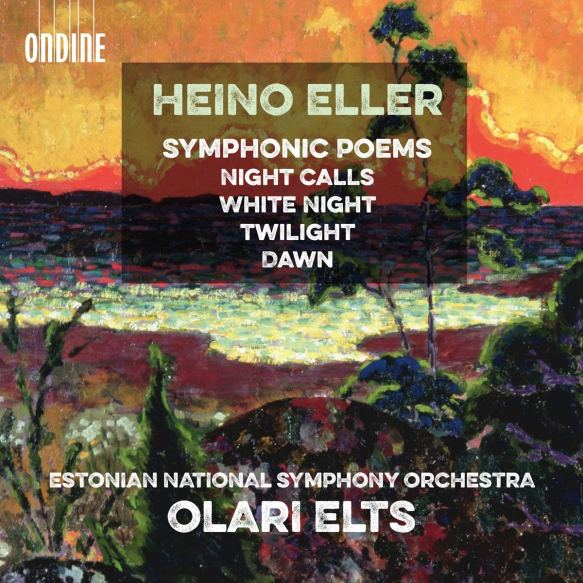
Another recording of Romantic music from the East comes from Ondine, with a really valuable second disc of the orchestral works of Hans Eller. Eller is one of the founding fathers of Estonian classical music, recognised for his huge influence by no less a composer than Arvo Pärt, who he taught. Pärt noted his ‘fine and masterful orchestration, and a highly-defined personal manner. These characteristics place him on the level with the great Nordic composers’. The quartet of symphonic poems on show here is led by strongly characterised portrayals of Twilight and Dawn from the Estonian National Symphony Orchestra under Olari Elts, with the substantial White Night Suite and Night Calls for company.

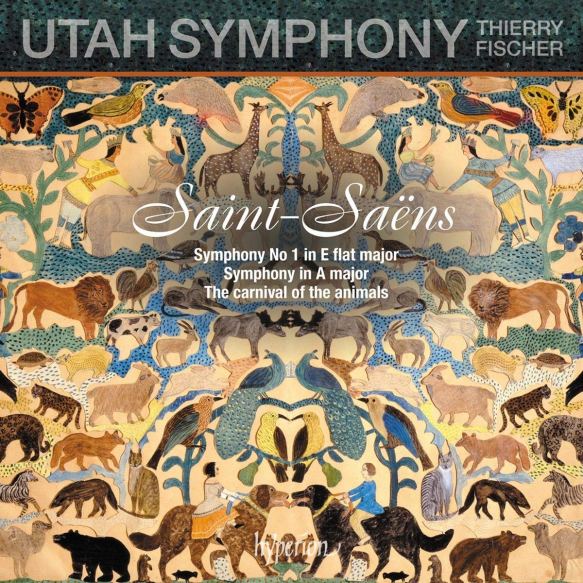
Finally Saint-Saëns, surely one of the most Christmassy of composers. This year the Utah Symphony and Thierry Fischer have been on a voyage through the French composer’s five symphonies for Hyperion, which means welcome airings for the Urbs Roma and excellent First and Second Symphonies, as well as the ubiquitous Organ Symphony. They also find space for the Carnival of the Animals and Danse macabre in superb performances that benefit from Hyperion’s customarily excellent recordings. If you have never heard it before, I highly recommend the disc with the first two symphonies, influenced by Mendelssohn but already showing the French composer’s mastery of melody – or the Carnival of the Animals, for a freshly-minted account:

A couple more electronic recommendations for you now, beginning with a remarkable trilogy of albums from Swedish producer Mr. Tophat. Dusk To Dawn Parts I-III, released on Twilight Enterprise, may be something of a sprawling epic, but within it you will find brilliant collaborations rooted in disco-house, featuring the likes of Robyn, Axel Boman and Kleerup. There is some extraordinary music here, none more so than the quarter-hour epic Tears Of Illuminations. This is the music we wanted Lindstrøm to come out with later in the year!

Meanwhile one of the albums of the year is surely Barker’s Utility, where producer Sam Barker has come up with something really special for Ostgut Ton. All too often electronic albums sound exactly the sum of their parts, processed within an inch of their lives and allowing very little room for the human in them to express itself. Barker is different, and from the opening pulses of this album it is clear something rather special is afoot. Paradise Engineering celebrates the processed nature of this music with warm sounds and syncopated rhythms, the mind actually forgetting the almost complete absence of a kick drum. There is enough movement here for the feet to be sorely tempted. Such treatment continues through to the expansive closing track Die-Hards Of The Darwinian Order.

To say Underworld are in a rich creative streak would be like saying that Manchester City score a lot of goals. We know that it happens, but explaining just how it’s done is not quite as easy.

DRIFT, released on their own Smith Hyde Productions via Universal, is the result of a year-long challenge, where Karl Hyde and Rick Smith vowed to write new music every week. Yet as you listen to each offering it is quite clear that rather than being a hindrance this task brought out the best in both of them. There is nigh on six hours’ music here, and having started off with relatively small units the duo find they are churning out half-hour electronic symphonies like Appleshine Continuum, a remarkable piece of work with The Necks that dips on and off the beat with warm improvisation.

The sheer variety on DRIFT is inspiring, and helps it work as a continuous listen for however you want it to last. Dune, at the start of the third disc, is one of the most relaxed tracks they’ve ever done, soft and ruminative, Hyde in a contented place. Custard Speedtalk feels like it takes place on the great plains, with taillights stretching out as far as the eye can see. Contrast that with Another Silent Way, which has a hammering kick drum over which it progresses to a euphoric piece of layered dance music.

Of the many highlights it is worth picking out Brilliant Yes That Would Be, a really good beatless interlude that has its shredded guitar calmed by cool chords, before switching to stationary piano. The triumvirate of Another Silent Way / Drift Poem / Better Than Diamonds is really strong, Hyde instinctively finding descriptive vignettes over another pounding beat and long, held chord combination that has served Underworld so well, shifting shapes in the way that Pearls Girl did so well.

Molehill is an attractive number that shows if proof were needed that Underworld don’t need beats to create an atmosphere. This is more like a Bibio offcut, drifting through the consciousness like a light meditation. Threat Of Rain gets back on the quick horse though, chugging along at a good pace.

The Underworld horse is one that rewards consistent backing, here more than ever. There is a huge amount of listening on DRIFT, but such is their form that pretty much everything here is a surefire winner.

With all that said, I hope there is something here for you to enjoy if you haven’t already encountered it. Here at Arcana we look forward to bringing you a lot more cross-genre musical talk next year, and hope you will take something from it. Happy Christmas, have a brilliant 2020 and see you for more discoveries!

Ben Hogwood

In concert – David Titterington plays Messiaen’s La Nativité at St John’s Smith Square

David Titterington (organ)

St John’s Smith Square, Thursday 19 December 2019 (lunchtime)

Messiaen La Nativité du Seigneur (The Nativity of the Lord or The Birth of the Saviour)

Review by Ben Hogwood
Photo credits Chris Christodoulou (David Titterington), Ben Hogwood (SJSS organ)

Organ recitals can be curiously awkward affairs. The performer will often sit with their back to the audience, playing from a spot in the venue that is nigh on impossible to access. Taking a bow from their stage is fraught with difficulty – in this case a wrong move could lead to an unexpected descent! – and any heroic page turning deeds are done by an unseen accomplice in the dark, on a wing and a prayer (speaking with the cold sweat of experience!)

That said, this was an organ recital of the highest order from David Titterington. The scene was set in St John’s Smith Square, where just around the corner TV crews were covering the state opening of parliament with a security lockdown in place. Here the mood was different but similarly tense, the dank December gloom ensuring the audience were almost in darkness, save for the minimal light of a chandelier.

Yet these circumstances served to draw strong parallels with the very first Nativity. Political unrest, dark times – and in them the arrival of light, acknowledged in Messiaen’s rapturous response to the Biblical tale. Nothing is ever done by halves with this particular French composer, and his response came in the form of a massive, nine-movement organ suite lasting just over an hour. For Messiaen, contemplation is achieved through massive added-note chords, complex rhythms and large structures. Each section in this 1935 work responds to images from the birth of Jesus, and it is one of the composer’s first works to use birdsong melodies and rhythms from India and Ancient Greece.

Taking up the challenge, Titterington – himself the St John’s organ curator – delivered what could only be described as an heroic performance. So much of this music is about creating an atmosphere, and although the elements had combined helpfully it was his choices of registration and phrasing that took us to the next level, securing both a spectacular and reverent performance.

We began with the mottled chords of La vierge et l’enfant (The Virgin and Child) before clipped upper register notes introduced Les bergers (The Shepherds), their tumbling single lines brilliantly executed. Desseins éternels (Eternal designs) had appropriately rich, blanket chords which aided of contemplation and meditation, the subdued lighting helping the cause.

Meanwhile the massive Le verbe (The Word) was a tour de force, with impressive flourishes in the right hand, the structure easily grasped before the probing lines and eventual harmonic stability of Les enfants de Dieu (The Children of God), which ended in mysterious quiet. Titterington then gave superb definition to the complicated treble parts of Les anges (The Angels), with bell-like peals ringing around the church.

The sounds for Jésus accepte la souffrance (Jesus accepts suffering) were brilliantly secured, with a deep growl from the lower reaches of the organ depicting the trials at hand, which were ultimately overcome in brighter sound at the end.

We then contemplated the slowly circling figures of Les mages (The Magi), with a lovely pipe timbre chosen for the second part of the piece, before Dieu parmi nous (God Among Us) brought the house down, a glorious finale that reached a blazing conclusion.

When experienced in this way close to Christmas La Nativité comes alive, its colourful musical prose and richer than rich harmonies preparing us for the feasting in store – but also contemplating the quiet wonder of the festival, the still, peaceful voices that even now strive to remain as a crucial part of the Christian calendar.

Further listening

You can hear Messiaen’s cycle on Spotify below, in a recent recording for the King’s College Cambridge label by Richard Gowers:

On record – Manuel Barrueco, José Staneck, São Paulo Symphony Orchestra / Giancarlo Guerrero – Villa-Lobos: Guitar & Harmonica Concertos (Naxos)

Manuel Barrueco (guitar), José Staneck (harmonica), São Paulo Symphony Orchestra / Giancarlo Guerrero

Heitor Villa-Lobos
Concerto for Guitar and Small Orchestra (1951)
Sexteto Místico (1917-55)
Concerto for Harmonica and Orchestra (1955)
Quinteto Instrumental (1957)

Sexteto Místico: Cláudia Nascimento (flute), Layla Köhler (oboe), Douglas Braga (alto saxophone), Fábio Zanon (guitar), Rogério Zaghi (celesta), Suélem Sampaio (harp)
Quinteto Instrumental: Cláudia Nascimento (flute), Adrian Petrutiu (violin), Ederson Fernandes (viola), Adriana Holtz (cello), Suélem Sampaio (harp)

Naxos 8.574018 [60’04”]

Producer and Engineer Ulrich Schneider

Recorded 30-31 July (Guitar Concerto), 2-4 August 2017 (Harmonica Concerto), 29 April 2018 (Sexteto & Quintet), 2017 Sala São Paulo, Brazil

Written by Ben Hogwood

What’s the story?

Naxos make a significant addition to their series The Music of Brazil with works from the country’s favourite classical music son, Heitor Villa-Lobos. Villa-Lobos’ instrument was the guitar, and it takes centre stage for the much-loved Concerto, complemented by its cousin for harmonica and orchestra. Two chamber-sized pieces for six and five instrumentalists respectively complete an attractive line-up.

What’s the music like?

Warm and sunny – a perfect counterpart to the gloomy late mornings and early evenings of December!

The Guitar Concerto is especially good, a compact design with the small orchestra complementing the guitar perfectly. The piece has an easy going nature from the beginning but that doesn’t mean it’s insubstantial, as the wistful second theme proves. The slow movement is elegant but also keenly felt, with a thoughtful yet virtuosic cadenza that leads straight into the finale, which is crisp and incisive.

It is still unusual to hear the combination of harmonica and orchestra in a classical context, and the instrument’s piercing tone won’t necessarily appeal to everyone, no matter how good the performance. That said, Villa-Lobos, who wrote the Harmonica Concerto for the skilled American harmonica player John Sebastian, gives the main instrument plenty of good tunes and soulful inflections.

The small-scale works accompanying the concertos are both attractive too. The Sexteto Místico appears to have had a chequered history. Begun in 1917, when composers were exploring alternative sonorities in their chamber music, it was not published until final completion in 1955. It paints attractive colours of pastel shades, the addition of guitar and celesta giving it an exotic air, especially in the unison passages. Meanwhile the bigger Quinteto Instrumental feels more classical in its instrumentation and musical language, again using consonant harmonies that radiate sunshine. With a warm sonic picture the recorded sound is ideal.

Does it all work?

Much of it does. The Guitar Concerto receives an ideal performance that feels wholly authentic with the São Paulo Symphony Orchestra’s accompaniment. Their dialogue with Manuel Barrueco is beautifully observed and lovingly phrased under Giancarlo Guerrero‘s direction, and Barrueco gives an excellent account of a justly popular work.

José Staneck is on brilliant form in the Harmonica Concerto, with impressive virtuosity complemented by lyricism, but even that and a sensitive orchestral accompaniment do not quite win me over on the work. It could just be a case of unfamiliarity with the harmonica in this context though, so don’t let that put you off!

The sextet and quintet are ideal, sunlight streaming in on these affectionate accounts that capture the fluid writing for harp, guitar and celesta round the edges.

Is it recommended?

Yes. It’s great to see Villa-Lobos programmed in this way, and the disc has great warmth and hence enormous appeal. Barrueco’s version of the Guitar Concerto is a great modern complement to those made by John Williams, Julian Bream and Narciso Yepes, and the couplings show off the composer’s versatility and invention.

Listen

Buy

You can listen to clips from this disc and purchase a copy at the Naxos website here

On record – Nash Ensemble – Julian Anderson: Poetry Nearing Silence (NMC)

Nash Ensemble / Martyn Brabbins

Julian Anderson
Ring Dance (1987) Benjamin Nabarro, Michael Gurevich (violins)
The Bearded Lady (1994) Richard Hosford (clarinet), Ian Brown (piano)
The Colour of Pomegranates (1994) Philippa Davies (alto flute), Ian Brown (piano)
Prayer (2009) Lawrence Power (viola)
Poetry Nearing Silence (1997) Benjamin Nabarro (violin, triangle), Michael Gurevich (violin, triangle), Lawrence Power (viola), Adrian Brendel (cello), Philippa Davies (flute, piccolo), Richard Hosford (clarinet, E-flat clarinet), Hugh Webb (harp)
Another Prayer (2012) Benjamin Nabarro (viola)
Van Gogh Blue (2015) Ian Brown (piano), Graham Mitchell (double bass), Marie Lloyd (clarinet, bass clarinet), Lawrence Power (viola), Adrian Brendel (cello), Philippa Davies (flute, piccolo), Richard Hosford (clarinet, E-flat clarinet), Hugh Webb (harp)

Producer and Engineer David Lefeber
Digital Editing Susanne Stanzeleit

Recorded 1-3 April 2019 at Menuhin Hall, Yehudi Menuhin School, Cobham, Kent

Written by Ben Hogwood

What’s the story?

Back in 2007 NMC released a disc called Book of Hours, a highly enjoyable compendium of the work of Julian Anderson, where smaller-scale music rubbed shoulders with ambitious works like the Symphony and the Book of Hours itself, which combined an ensemble and electronics to fascinating effect.

Poetry Nearing Silence is to all intents and purposes a follow-up release to that Gramophone Award winner, and features the Nash Ensemble and their members in short works by Anderson. They range from solo instrumental pieces to suites for ensemble, written from 1987 to 2015.

What’s the music like?

Concentrated, effective and stimulating. It is great to have such variety within a disc the listener can either dip into or experience in full. Either approach brings dividends.

Ring Dance, for two violins, opens the collection with the instruction that it should ‘be played with unimaginable joy!’ The open string drones with which the piece starts give a penetrating sound, and this approach is consistent with the piece. The instruction with some of the bowing is often to dig in hard near the strings, which gives an extra scratchy timbre. The sound is also striking when the open strings shift up a fifth, accentuating the positive if not always obviously joyful.

The Bearded Lady is next, receiving a tour de force account from clarinetist Richard Hosford and pianist Ian Brown. After the bold opening it becomes more lyrical if still high in its register, defiant yet mournful in its regret at how characters such as the bearded lady – in this case, Baba the Turk from Auden’s The Rake’s Progress – have been portrayed on stage. The uncompromising notes from the piano at the end speak plenty here.

It is surprising not more composers write for alto flute, for the instrument has a really appealing sonority. Anderson writes enchantingly on his nocturne The Colour of Pomegranates, aided by a richly coloured performance from Philippa Davies and Ian Brown, which builds to the sound of tolling bells on the piano and sharper, bird like squawks from the flute. This piece sounds a lot further East than England – and indeed is named after an Armenian film.

Another change of sound brings in the husky viola of Lawrence Power for Prayer, a more recent piece in which Anderson enjoys writing for the instrument he learned briefly in his teens. Here is a reminder that the instrument has a much bigger range than composers often use, grainy in its lower register but with a penetrating line higher up where Anderson capitalises for his melodic material. You might expect Prayer to be a contemplation but this one lets its thoughts unravel and regroup.

After four pieces bringing forward solo instruments, the disc moves to the ensemble number that gave its name. Poetry Nearing Silence is for seven players and runs through eight short movements, where Anderson reacts to the unusual drawings and words therein of Tom Phillips. The crisp chords that open Muse in Rocks or Pebbles or Clouds or Foliage are immediately appealing for their watery colours, and the suite continues to deliver keen illustrations of its subject matter. Anderson writes dreamy lines through Know Vienna, while the intriguing buzzing of a ratchet, played by the second violin, adds mystery to the bigger ensemble number My Future as the Star in a Film of My Room. As the suite progresses Anderson makes keen use of his resources in concentrated, expressive music that charms and impresses in equal measure. Shrill clarinet and gritty strings make notable colours, yet when the piece collapses as the bell tolls in Tall Rain Rattled Over Paris, the music subsides into silence. A dramatic piece well worth returning to.

Another Prayer returns us to solo instruments, this time for violin. It is around the same length as its viola counterpart heard earlier on, and shares some melodic material. It shares its restlessness too, forthright from the start and buzzing with nervous energy. Benjamin Nabarro rises to its challenges comfortably, but also creates a rarefied atmosphere with the harmonics of the central section.

Finally the most substantial piece, Van Gogh Blue, based on the painter’s letters that relish ‘the sheer stuff of which his own art is made’. This is the most obviously expressive piece of the collection, with clarinet-rich sonorities and expansive piano teamed to immediate effect in L’Aube, soleil naissant. Second movement Les Vignobles invokes the dance, while Les Alpilles teems with activity and life, the painter seemingly writing faster than his pen will allow. The clarinets dominate here. Eygalieres is a heat haze, with lovely colours emanating from the suspended chords of the ensemble, expanded by the piano. They create fuzzy yet bright sound worlds. Finally la nuit, peindre les étoiles is more playful, pizzicato violin and clarinet often in cahoots. There is a bigger scope to this movement, the recording playing effectively with perspective as some of the group sound detached and distant, almost bickering in the room next door.  The sparring, completed over solemn piano notes, completes an eventful and compelling piece.

Does it all work?

Yes. It is well worth giving the disc several airings so the works make themselves clear. It will be apparent that Julian Anderson is capable of writing concentrated music that sticks, and that he is incredibly versatile in his writing either for alto flute, viola or even the ratchet. Martyn Brabbins conducts superb accounts of the ensemble pieces, technically fault free in the way the Nash Ensemble tend to be – but also finding the sensitive centre of Van Gogh Blue in the beautifully voiced Eygalieres.

Is it recommended?

Yes, very much so. While Anderson’s orchestral works have rightly enjoyed good exposure of late, the chamber music has tended to drift under the radar. What it needed was a collection like this to push it into the spotlight.

Listen

Buy

You can listen to clips from Poetry Nearing Silence and to purchase a copy at the Presto website here