In concert – Martin Fröst & Roland Pöntinen at Wigmore Hall

Martin Fröst (clarinet), Roland Pöntinen (piano)

Wigmore Hall, Monday 16 December 2019

Review and guide by Ben Hogwood

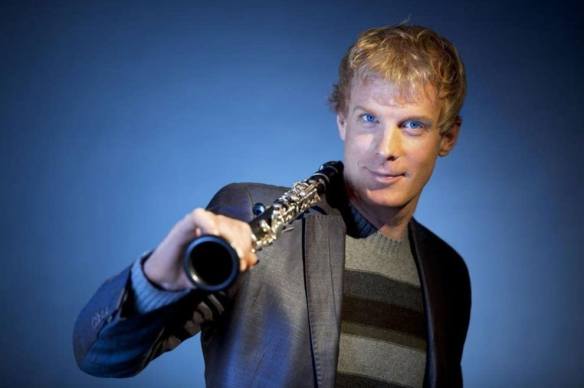
A concert that was relatively short on music but extremely high on musicianship and virtuosity. Martin Fröst is one of the finest clarinettists at work today, and fellow-Swede Roland Pöntinen, with whom he has enjoyed a musical partnership for 25 years, is an extremely highly respected pianist either in a solo capacity or here as a chamber music ally. Both delighted their young Wigmore Hall audience – yes, that can be a thing at this venue’s concerts! – who were on their feet at the end.

The two gave us ‘French Beauties and Swedish Beasts’, a concert based on their first disc for BIS made 25 years ago. The beauties were first, in the shape of Debussy and Poulenc. The former’s Première rapsodie was written as a competition piece for the Paris Conservatoire, and later orchestrated in a form revealing its stylistic parallels with the composer’s ballet Jeux. There was a balletic feel to this interpretation too, Fröst’s languorous tone complemented by the stop-start rhythms of Pöntinen’s piano part. Initially the music was happy to indulge in its warm, lush surroundings but gradually it grew more agitated until Fröst’s final, bluesy solo.

Poulenc’s Clarinet Sonata, a late work, is dedicated to the composer Arthur Honegger and received its first performance in the hands of no less a duo than Benny Goodman and Leonard Bernstein. It is difficult to imagine a better account than here, with Fröst’s tone in the quieter and reflective passages simply sublime, layered with emotion. This was complemented by a sparky finale, where the music flew out of the gate like a horse let into an open field. The performers finished each other’s musical sentences in a performance of wit, charm and sensitivity.

The first of the ‘Swedish Beasts’ followed, a piece from Anders Hillborg written for the partnership before his breakthrough work, the Clarinet Concerto which Fröst recorded some seven years later. This was a piece of two extremes, flitting between reflective slow phrases and sharp retorts where the clarinet used the outer limits of its register. It was effective and a concentrated piece showing off Fröst’s technical prowess.

The second Swedish Beast was much more benign, but Roland Pöntinen’s own Mercury Dream showed an affinity with the blues. Nocturnal New York seemed to be its focus, especially in the easily paced piano introduction and postlude, but when Fröst joined the music became more animated.

Prior to that the pianist (above) gave us two substantial chunks from Ravel’s Miroirs. His account of Une barque sur l’océan was highly pictorial, and his Alborada del gracioso had swagger, even if some of the initial phrases were clipped. Pöntinen has not yet recorded Ravel and it would be interesting to set alongside his many BIS recordings of earlier music.

The partnership finished with Chausson’s Andante and Allegro, a discovery from the composer’s Bayreuth period in his mid-twenties, before Wagner’s spell exerted itself on his music. This was an enjoyable piece, full of melodic grace in the flowing Andante before turning slightly darker for the passionate Allegro.

We had two superb encores from the duo, playing pieces Fröst has previously given with orchestra. BrahmsHungarian Dance no.1 in G minor surged forward passionately, while Göran Fröst, the clarinettist’s brother, contributed the hugely entertaining Klezmer Dance no.2, full of good tunes and musical banter between clarinet and piano. Given the technical expertise on show, the standing ovation that followed was inevitable.

Repertoire

This concert contained the following music:

Debussy Première rapsodie (1909-10)
Poulenc Clarinet Sonata (1962)
Hillborg Tampere Raw (1991)
Ravel Miroirs: Une barque sur l’océan; Alborada del gracioso (1904-5)
Pöntinen Mercury Dream (1994)
Chausson Andante and Allegro (1881)

Encores
Brahms Hungarian Dance no.1 in G minor ()
Göran Fröst Klezmer Dance no.2

Further listening

You can hear the music from this concert on the Spotify playlist below:

You can hear the album French Beauties and Swedish Beasts in its entirety on Spotify below. Alongside the items from this concert it includes the rather wonderful Saint-Saëns Clarinet Sonata:

Meanwhile Anders Hillborg’s Clarinet Concerto Peacock Tales’ written for Fröst, can be heard in its premiere recording here:

On record – Devonté Hynes: Queen & Slim: Original Motion Picture Score (Domino)

Written by Ben Hogwood

What’s the story?

It has been quite a year for Devonté Hynes. While keeping his Blood Orange pop persona very much in the foreground through touring and the new Angel’s Pulse mixtape, he has really furthered his ambitions to be a composer of soundtrack and ultimately classical material. The latter projects have borne fruit with the Third Coast Percussion Ensemble, but the soundtrack ventures have also progressed with this, his second soundtrack commission after Palo Alto, completed for Gia Coppola in 2013.

Directed by Melina Matsoukas to a script from Lena Waithe, Queen & Slim has been well-received, a romantic drama with an undoubtedly tragic overtone. Without giving away too much of the plot, that is the loose blueprint from which Hynes’ score evolves.

What’s the music like?

With 20 tracks spread over little more than 36 minutes, it is perhaps inevitable that Queen & Slim feels a little fragmented at times. Yet as Hynes has already shown us in his pop music that he is capable of setting a scene with very little padding to his structures, and so it proves here.

Kids may be just over a minute but even in that time it shows a tender heart to its string scoring. This cuts to the rather more sombre piano of Hair, but here too Hynes expands the sound with a doleful saxophone. Opening then shows his ease with analogue or digital sources, teasing out threat-ridden music with little more than dissonant drones and a bass drum.

Of the more substantial numbers on the soundtrack most stick in the memory. A Couple Deer has a lovely calming sonority, while Love Theme makes much from little material, not greatly substantial but hitting the right emotional spot.

Slim Calls Home spreads out its perspective to big reverberation but then Uncle’s House reintroduces the ominous drums of Opening, which Get Upstairs and Start The Car take a step further. Hynes has a distinctive way of pointing his strings and the textures bode ill rather than good.

Sneak Out is perhaps the most distinctive and unnerving track of all, and at four minutes has time to develop. It begins with rough tremolos from solo string instruments that provide eerie outlines rather than solid shapes, the uneasy atmosphere not helped by the introduction of a wavering bass line.

A resolution is ultimately found, but despite its initially consonant chords the music of Arrival is bittersweet, with booming percussion and string-based dissonances returning to cloud the picture. The closing track Kissed All Your Scars remains affected by this but provides more respite.

Some of the snippets of music are little more than descriptive postcards in the style of Max Richter, forming briefly sketched portraits but unable to say much more than that in half a minute. They do still show Hynes’ deft way with scoring, however.

Does it all work?

Yes, largely. Some of the promising material is frustratingly short but necessarily so, meaning the listener has to deal with occasionally being sold short when enjoyable scenes or moods move on abruptly.

With that taken in to account, Hynes sets his scenes with very little fuss and plenty of flair. As an orchestrator he is of the ‘less is more’ approach, which gives him plenty of room for manoeuvre.

Is it recommended?

Yes. If you are following Hynes’ work on all fronts then this will be essential listening, and it serves as an exciting pointer to show where he might go next. His is one of the most inquisitive minds in music currently, and the ease with which he moves across genres is rare indeed. It will be interesting to see if he moves on to bigger structures in the future.

Stream

Buy

You can purchase this release from the Domino website

A Silent Night for Trentemøller

It’s the time of year for seasonal covers…and also the time of year for the same old Christmas songs to be wheeled out of hibernation for us to go slowly mad to!

Every year though there are thankfully new additions to the canon and new versions of the old classics to enjoy. On that note, here is something a little different from Trentemøller, whose year has already been considerably starry thanks to the release of his Obsidian album back in October.

He confesses to having wanted to cover a Christmas classic for years – and with this version of Silent Night he goes as far as to add a nugget from the family photo album. Listen and enjoy!

By way of a reminder, Obverse is one of the albums of the year and is sure to feature in Arcana’s round up next week. If you enjoyed Silent Night then you’ll certainly like this, which you can stream on his Bandcamp site below:

Obverse by Trentemøller

Switched On – Balance presents Vivrant mixed by Jeremy Olander

Various Artists: Balance presents Vivrant mixed by Jeremy Olander (Balance)

What’s the story?

‘Melancholic’ and ‘cinematic’ are two of the words closely associated with Jeremy Olander’s music. They are often applied to the Swedish producer’s own work and his DJ sets, which often contain a lot of his own music. Time, then, for him to release one of those commercially – which he does here on the Balance label. Olander confesses to feeling a little intimidated by the prospect, with last year’s epic contribution from James Zabiela casting quite a shadow, but he nonetheless steps up with music from his own studio and those of his Vivrant label artists.

What’s the music like?

Yes. Olander goes for an expansive style in his mixing, and often stays rooted to the same pitch for ten minutes or more. This is a really effective tactic, creating wide open spaces and a pleasant feeling of hypnosis for the listener, who after a while will discover their feet are tapping automatically. The introduction of the first mix bears this out, with three tracks from J.Singh that stay rooted to one pitch before long bass notes move the music on. Marino Canal & Miguel Payda’s Hidden Eyes are excellent, with a moody vocal and soaring line.

The mix is like a single, arching structure, as is the second which has an utterly sublime beginning from Olander’s own track Akzo. This is a lovely, starry piece of music and it cuts to more spacey, beat driven material in Yoyo. Again the continuity here is more important than single standout single tracks, and Olander judges the build of intensity in the mix just right, finishing with his own Life After Death.

Is it recommended?

Yes. Olander’s mixes are in for the long haul and work best when heard in full, creating spaced out and hypnotic atmospheres. They may not always be full of hooks but the late night spell is cast to perfection.

Stream

Buy

You can buy this release on the Balance website

Talking Heads: Ensemble Resonanz – Justin Caulley

Interviewed by Ben Hogwood

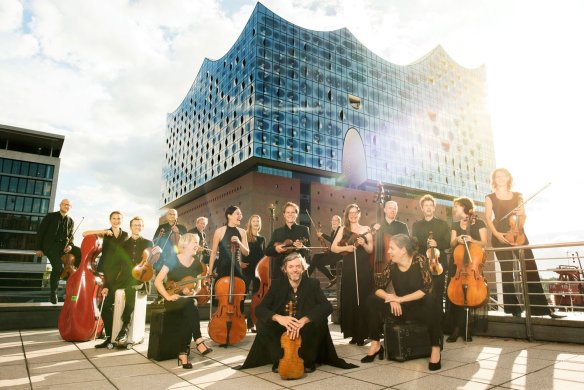
These are exciting times for Ensemble Resonanz. Presenting themselves as an ensemble that functions as a group of soloists as well as a chamber orchestra, the Hamburg-based group are Ensemble in Residence at Germany’s flagship new concert hall, the Elbphilharmonie. From that base they have established themselves as a wide-reaching musical force, capable of interpreting the music of Haydn as naturally as their latest release with Bryce Dessner, composer and guitarist with The National.

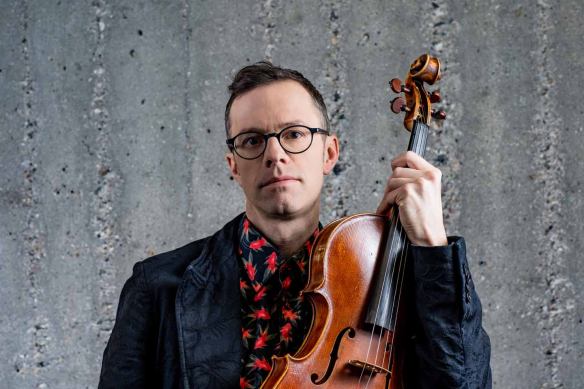
Arcana spoke to one of the ensemble’s lynchpins, viola player Justin Caulley (above), to find out what makes him – and them – tick, and how they achieve their renowned intensity in concert and on record.

As always, we began at the start, and an upbringing that brings both Beethoven and Pearl Jam into the conversation. “I grew up mostly in Kansas”, says Caulley, “and my parents were amateur musicians. My father played piano and a bit of cello, while my mother played the piano. My upbringing was sprinkled with classical CDs that my dad would bring home. I especially remember Richard Strauss’s Also sprach Zarathustra conducted by Herbert von Karajan, and Beethoven’s Symphony no.9 as well. I got started playing the violin in church, then moved to viola. My dad was the preacher there. I played in student concerts in country churches, but like every kid at the time I listened to a lot of rock and grunge music. I was pretty influenced by mixtapes my cousin would make for me, with Pearl Jam, Nirvana and Alice In Chains on them. He was in south Seattle and introduced me to them, as well as bands like Sonic Youth.”

Deciding to pursue music further, Caulley made rapid progress in both his musical attributes and his discoveries. “Having grown up in the United States I was influenced by the idea of crossing genres, or category-less music making. When you grow up in a small town all music is not the same but categories exist as much. Beethoven 9 or Pearl Jam, it’s all there. I was also heavily influenced at the Eastman Rochester School of Music, where I studied. It was there that I first encountered minimal music, and especially quite a few Steve Reich pieces. I was lucky to work with him a couple of times, and with La Monte Young, on the Dream House. We played a version of his String Trio and worked with him on it. This all happened before I came to Europe in 2003, so before Ensemble Resonanz I had a good varied upbringing!”

We move on to discuss the ensemble’s new disc Tenebre, a collection of four pieces by Bryce Dessner. “One of the challenges was to encounter Bryce’s music in the realm outside of categories”, says Caulley, in reference to our earlier points. “He is impossible to put in a box, and the challenge is to approach music with fresh as opposed to tabular thinking. The pieces are great and easy to get to, but each needs its own universe.”

There is a very powerful presence on Aheym, the album’s opening track. Originally written for the Kronos Quartet, it has been expanded by Dessner for the bigger forces of Ensemble Resonanz. “It’s one of those pieces that has such an incredible explosion of ideas and energy”, Justin says enthusiastically. “It’s easy to grab on to. It gets you worked up and very suddenly there is a groove. Some of the changes from section to section in Tenebre itself were astonishing to play, too.”

From previous experience I note Bryce has a really positive presence, softly spoken but fiercely driven. Did that transfer to the recording studio? “I think that’s very well put”, responds Caulley. “Working with him was really nice, and it was interesting to get feedback from him. We were working on this other level outside of the nuts and bolts. What I noticed was this unbelievably broad wisdom outside of the music, in a practiced way but also inside of that practicality there is something bigger going on.”

Dessner was quoted in an interview as being quite taken aback by the intensity of Ensemble Resonanz’s playing, which is surely the ultimate reference for an ensemble. “We were ultimately flattered by that! One of the nice things working with him was us working towards a common goal, our wishes were similar. It was easy to stay intense, with us all in it together.”

Ensemble Resonanz have been recording, too. “I just came from a session of Beethoven’s Piano Concerto no.4 with Gianluca Cascioli, conducted by Riccardo Minasi. We also have a great tour of our version of Bach’s Weihnachts-Oratorium (Christmas Oratorio) coming up, with quite a few concert dates before Christmas. After that we continue with our subscription concerts, with some Shostakovich and Ustvolskaya in January.”

He reflects on the opportunity to play in the Elbphilharmonie. “It’s great, really nice!” he enthuses. “It is totally larger than life, and even though we’ve toured most of our lives it’s not every day such a building opens up.” It must be rewarding moving between music by composers such as Haydn, Schoenberg, Eisler and Dessner, as the ensemble do. “It’s crazy, the breadth of stuff that we do. It’s always a great challenge, and the greatest luxury to have so many opportunities.”

There are moments of creative tension, but Caulley sees these as a sign of healthy artistic dialogue. “As in any group there is a dynamic that can have its moments of tension. One thing I’ve learned of value is the idea that any sort of tension can be resolved, and can also be used towards working for a goal. Where I grew up there was no tension at all, and it could get superficial. Now although sometimes tempers can flare the search for some sort of truth is important to people. They don’t want just to smile and nod and say that’s OK. If that’s tough, just lay it on the table!”

Ensemble Resonanz have a monthly club night, about which Caulley is most enthusiastic. “For me that’s one of the most inspiring things we do, and I’m on the planning committee so am heavily invested. We have our own space, and we do what we want. We don’t necessarily do the most crazy things but we can let our imaginations roll and see what’s possible.”

chamber müzik club night // resonanzraum Festival 2018 from Ensemble Resonanz on Vimeo.

Tenebre, the collaboration between Bryce Dessner and the Ensemble Resonanz, is out now – and can be purchased here

You can listen to Tenebre on Spotify below:

To illustrate the contrast in the repertoire the ensemble records, their previous release was Haydn’s Die sieben letzten Worte unseres Erlösers am Kreuze (The Seven Last Words of our Saviour on the Cross):