
Ask the Audience at the BBC Proms – Roisin Brophy on the BBC SO concert of Elgar, Vaughan Williams & Hugh Wood

For the latest in Arcana’s Ask The Audience series Roisin Brophy (above) gives her thoughts on the BBC Symphony Orchestra and their Prom of English music under Sir Andrew Davis.

Prom 53: Stacey Tappan (soprano) Dame Sarah Connolly (mezzo-soprano), Anthony Gregory (tenor), BBC Symphony Chorus, BBC Symphony Orchestra / Sir Andrew Davis

Vaughan Williams Fantasia on a Theme of Thomas Tallis (1910)
Hugh Wood Scenes from Comus (1965)
Elgar The Music Makers Op.69 (1912)

Royal Albert Hall, Thursday 29 August 2019

You can listen to this Prom on the BBC iPlayer here

ARCANA: Roisin, how would you describe your musical upbringing?

I am from a very heavily Irish catholic family. I grew up on a lot of Irish folk music, and my mum is quite a hippy at heart. My god parents are also hippies at heart, and so I grew up with a lot of Cat Stevens and Joni Mitchell. My mum’s got really good taste in music, so I grew up always loving Led Zeppelin and they continue to be my favourite band.

My dad is quite a musical person, he plays guitar and sings, and therefore I think I was very influenced into doing folk music as a child, and also being a catholic and going to catholic school, and going to church – where I heard choral music. I sang in a choir for our local church, and I stopped when I was about 15 or 16.

I got into drum and bass completely by accident. I don’t even listen to drum and bass! I know a lot of it but because I happen to work in it. I was just picked up by a dubstep producer years ago, and got into drum and bass from that. Folk is my most natural style of music, although I don’t write it professionally.

Could you name three musical acts you love, and why you love them?
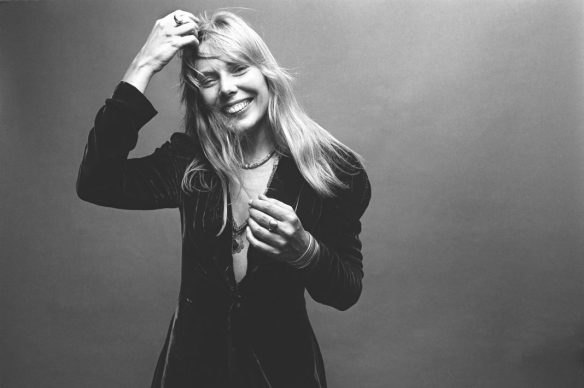
Joni Mitchell (above) – (a) because I grew up on her music, (b) because I think her vocal range and songwriting ability is unreachable by anybody else.
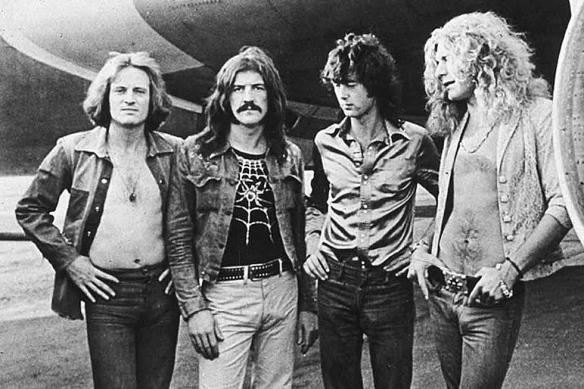
Led Zeppelin (above) Again the vocal range and the guitar and drum skills, for me, and their heavy influence from blues music, which you can really hear going into pop music.

My third would have to be Dolly Parton (above), because she’s a sassy lady, her songs are insanely catchy and again her voice is like no other.

What has been your experience of classical music so far?

I’ve always studied music, and did GCSE and ‘A’ level before studying popular music at university. I’ve always been around people that have been involved in classical music but not been involved personally, as I have always been on the popular or folk side of things. Going to Goldsmiths, which is very renowned for being a classical music education system, I had a lot of friends that were classical musicians and opera singers.

I’ve always loved classical music, and studying it you learn what you like and what you don’t like. I still listen to it most days, it’s more of a morning thing for me. I like piano-based stuff. Vladimir’s Blues by Max Richter is a good example.

How did you rate your first Proms experience?

I absolutely loved it, and I’m actually a bit blown away by how much I did love it. The second half was definitely a lot more emotive than the first, but I think that was because of how the piece (Elgar’s The Music Makers) moved. The crescendos were incredibly moving and the sound in general was such a massive sound with the choir, females on one side and male on the other, a huge orchestra and the percussion in the second piece.

I think it made me appreciate that it was not a piece of classical music I would necessarily listen to on headphones, but now that I’ve seen it live and understand the musicianship behind it, I would very much want to listen to it again as a recording.

What did you think of the Vaughan Williams?

I have a feeling I recognised it. I felt it was light, soft, warming, and dreamy. It was nice to listen to live and I have never seen classical music to that standard live before, so when that piece first opened and the string players were playing it together, how crisp and clear and on point it was! It almost sounded like it was recorded, it was so perfect.

What did you think of the Hugh Wood?

It definitely told the story and was creepy at times. It felt like it was for that purpose, and the emotions that it conveyed was exactly what it was meant to do. It was eerie and scary, and seeing the singers battle against the orchestra with no microphones was pretty amazing. I loved it.

But the Elgar was the one you love the most?

Yes, for sure. It was just a lot more emotive and there was more behind it. The sheer size of it you could tell not only how much went into the writing of it, but I can’t even begin to imagine what it must be like to write for that many musicians and to think about that many parts working together, and for it to come out that perfect. Add to that the hard work and musicianship and understanding the commands of the music itself was amazing.

What did you like about the Proms?

The venue is amazing, a beautiful place to be, and it’s worth a visit on its own regardless of whether there is a concert or not. Going to see classical music you’ve never seen or heard before, for me it opened my ears to listening to classical music I would never necessarily listen to at the moment. Now I’ve seen these pieces live I could now appreciate listening to a recording.

What might you improve about the experience?

I don’t want to change it, because it was as it’s supposed to be. I think because I’m used to going to watch music that requires amplification, seeing music that doesn’t require amplification that is never going to be as loud so you have to wear earplugs as it’s so bloody loud, so maybe I would change the loudness of the sound. But it has a meaning, and that’s the whole point.

Would you go again?

Yes, definitely.

Verdict: SUCCESS

You can listen to the Elgar piece The Music Makers below in this recent release from Dame Sarah Connolly and the BBC Symphony Chorus & Orchestra with Sir Andrew Davis:

Proms at … Cadogan Hall 7: Wojciech Świtała & the Silesian String Quartet play Weinberg & Bacewicz

Silesian String Quartet [(Szymon Krzeszowiec, Arkadiusz Kubica (violins), Łukasz Syrnicki (viola), Piotr Janosik (cello) (above)], Wojciech Świtała (piano, below)

Weinberg String Quartet no.7 (1959) (2:47 – 26:49 on the broadcast link below)

Bacewicz Piano Quintet no.1 (1952) (30:36 – 53:10)

Cadogan Hall, Monday 2 September 2019

Reviewed by Ben Hogwood

Photo credit Magdalena Jodłowska (Silesian String Quartet)

You can listen to this Prom on BBC Sounds here

For this listener at least, it has taken a while for the Proms At…Cadogan Hall theme to catch on this season. However the BBC’s traversal of 800 years of musical history has turned out to be both original and interesting, touching on areas of music not often heard or given top billing. By grouping these two anniversary composers together a cogent and thought provoking program was the result; a concert subdued in delivery but high on musical and emotional substance.

Both Polish composers featured are not thought of as front rank examples of their country’s classical music tradition, but on this evidence both should be brought forward. There are past reasons for that relative neglect, in the relative unavailability of Weinberg’s music to western ears, and the effective suppression of his and Grażyna Bacewicz’s music, but as classical music looks to remove boundaries and stereotypes, these are exactly the type of musical figures that should benefit from such a move.

We heard Weinberg first, and the seventh of his impressive output of seventeen string quartets (from 2:47 on the broadcast link above). It is perhaps the one that sails closest to the style of his friend and protector Shostakovich, especially in the second movement where it quotes from his String Quartet no.3. As the Adagio first movement (2:47 on the broadcast) shows, the two composers have much in common in mood if not execution. Weinberg’s bittersweet lyricism is to the fore here, the radiance of pure C major at the very beginning reminiscent of Shostakovich’s own first string quartet in the same key from 20 years later.

As the music progresses however there are more troubled offshoots and episodes, the players digging deeper and the music lost in thought. Weinberg does still keep his audience in mind of the brighter sound of the opening material, which returns at 8:18.

The second movement (marked Allegretto, 9:24) has shadowy outlines from the cello, the music again wary but prone to quick and nimble outbursts from second violin (the excellent Arkadiusz Kubica) – very much in the vein of a Shostakovich scherzo, but with less bite to its execution.

The third and final movement (15:24), a substantial set of 23 variations on a theme, feels like the emotional crux of the work, and was performed as such here by the Silesians. Passionate solos from first violinist Szymon Krzeszowiec and viola player Łukasz Syrnicki (an extended dialogue from 24:20) took place in the Adagio sections, and were complemented by some really concentrated and increasingly fraught quartet episodes in the Allegro, the melodies compressed and tense. In keeping with the movement’s arch structure this tension built towards the viola solo, which marked the passionate final section and a resolution in C major. The feeling was that of a battle won, but at a cost.

Bacewicz contributed two piano quintets to her sizeable chamber music output, and both are works of originality and style. While many piano-led works such as these go for volume and bluster in the keyboard part there is more poise and reserve here, the piano and strings complementing each other on an equal footing.

There is a light touch to the music too, especially in the dance music of the second movement. Before then the first movement (initially marked Moderato by the composer) sets a relatively austere scene, though the string glints at the edges. A faster central section hints at a dance and certainly gains more energy before falling back to the slower approach, albeit with more depth this time, certainly as performed here.

The second movement (marked Presto, 37:47) takes the Polish oberek dance as its inspiration, the forthright piano melody supported by lilting, syncopated strings before summoning itself for a dramatic finish. The slow movement (Grave, 42:09) is every bit as powerful, though here the steps are very slow and steady to a stern, full-bodied climax.

The finale (48:35) had great purpose and originality of texture, the quartet busying their musical arguments against an increasingly outspoken piano part. A set of quick fire exchanges and bustling figures among the strings were harnessed for a full bodied closing statement.

Both pieces were superbly played in this concert, the commitment of the Silesian String Quartet beyond contention – as was also the case for pianist Wojciech Świtała. If the music itself was a little straight faced, it was a timely reminder that only 80 years ago (to the week) the Second World War had begun. The music therefore served as a warning for lessons that appear not to have been heeded!

Listen

The music in this concert can be heard on Spotify below:

The Silesian String Quartet have also recorded a good deal of Weinberg’s chamber output. Here is a disc of the composer’s String Quartets nos. 9 & 10:

They have also recorded all seven string quartets by Bacewicz, in an award winning double album for Chandos which you can hear below:

On Record – House And Land – Across The Field (Thrill Jockey)

reviewed by Ben Hogwood

What’s the story?

House And Land are from North Carolina, and Across The Field is their second album. The duo – guitarist and instrumentalist Sarah Louise Henson and fiddle / banjo player Sally Anne Morgan – present traditional folk music recast into today’s world.

What’s the music like?

Deceptive. If you listen to the first minute or two of Across The Field it is easy to underestimate the emotions House And Land are capable of conveying, but by the time you get to the rippling guitar of Rainbow Mid Life’s Willows you will have fallen hook, line and sinker for the duo’s fresh faced vocals and imaginative instrumental responses.

That song in particular hits the sweetest spot of emotion, with Morgan’s double-stopped fiddle the perfect foil to Henson’s vocal and 12-string acoustic guitar. It is a rich tapestry of colours, but these orchestrations never get in the way of the song’s message.

House and Land “Across the Field” Album Trailer from Thrill Jockey Records on Vimeo.

The heart of their music is Appalachia, the duo creating their landscape with delicate shades and colours, but some of their music draws from across the Atlantic. Blacksmith shows the duo’s homage to the great Shirley Collins, a close harmony duet over a drone which is then dressed with glockenspiel. There follows a powerful instrumental track Carolina Lady, from past Madison resident Dillard Chandler, which features earthy guitar and Morgan’s fiddle rising through the textures as it takes on an improvised air.

Collins is again the source for the final Ca The Yowes, and here Henson’s alto recorder sets the evocative scene, while Morgan’s banjo shadows the vocals. It is a haunting yet curiously uplifting coda to the album.

Does it all work?

Across The Field is a powerful and deeply personal piece of work. It may be that the voices are on occasion too shrill for headphone listeners, but that’s more a question of the listener acquainting themselves with the tones than the singers needing to compromise. The songs themselves retain their traditional heart but updated for today are very emotive and winningly sung. The inventive and constantly rewarding instrumentation is a treat, always responsive to the substance of each song.

Is it recommended?

Yes, and I speak as very much an occasional listener to folk music. Across The Field inhabits a rarefied space few albums are able to reach.

Stream

Buy

Switched On – Georgia Anne Muldrow – VWETO II (Mello Music Group)

reviewed by Ben Hogwood

What’s the story?

VWETO II is the sequel to Georgia Anne Muldrow’s 2011 album. Like that release it is an instrumental piece of work, an intriguing melting pot of hip hop, jazz, R&B and soul. Its colourful artwork offers clues to the author’s inspiration and the mood of the album, for although it is largely down tempo VWETO II is positive in mood.

What’s the music like?

Subtly inventive. Nothing here is routine, but nor is it too challenging as Muldrow finds a really fertile ground between experimenting and producing really good, solid grooves. Often her rhythms are syncopated and this means they can stumble slightly, a practice used on first track Almost Trendy which actually ends up depicting a natural walk along the street.

This establishes the mood and tempo of the record, which is a lot of fun and always has something of interest. The enjoyable inventions with beats and colours include the wonky bass and general weirdness of Something Fun, the undulating piano and oblique chord progressions of Brokenfolks and the cool vibraphone and piano of Bass Attack Bap.

After the pleasingly brassy CV Jam Number 2, Emo Blues opens up darker hues, nicely led by its acoustic bass, and later on Mary Lou’s Motherboard explores the macabre side of Muldrow’s thinking.

Does it all work?

Yes – VWETO II is consistently rewarding. While it is a shame not to hear Muldrow’s memorable voice in full flow her rate of output means it will surely not be long before that happens again. In the meantime we have this set of irresistible instrumentals, which work as well on the morning after as they do on the night before.

Is it recommended?

Yes, wholeheartedly. The range of beats and colours on VWETO II is very strong and original, turning over stones aplenty in its quest for original voices and memorable grooves. In the course of the album Muldrow hits both of those goals repeatedly and with ease.

Stream

Buy

Switched On – Cocoon Compilation S (Cocoon)

Various Artists: Compilation S (Cocoon)

reviewed by Ben Hogwood

What’s the story?

Each year Cocoon release an additional ‘letter’ in their compilation series, which has incredibly reached its 20th instalment. Once again it is house music with a sound blend of experience and promise, presented in unmixed form. A dozen tracks with both eyes on the dancefloor.

What’s the music like?

As always with this series, consistency is the key, with quality intersections between house and techno – and a few big names delivering the goods.

Talaboman (John Talabot and Axel Boman) present one of the big draws in Big Room Anthemic Groovy Pounding Trance Dub Bomb. Music that delivers exactly what it promises! There is a superb track from Emmanuel Satie, Planet XXX offering a strong breakdown, while Mark Broom offers a lively, retrospective track with Jaded, its bell effects standing out. Edward’s End Days has a metallic edge, as does the more acidic Tering from Egbert, which brings a heady rush, but the one that burns brightest is Keep Changing Basslines from Dino Lenny. This is a brilliant collision of mood swings with the tag line ‘stay on the dancefloor’ the most memorable hook of the twelve.

Does it all work?

Yes, and in their 20th year it offers further proof of why Cocoon are at the top of their particular game. Sven Väth’s label has strength in depth, and a high quality threshold. Business as usual, in effect!

Is it recommended?

Yes – fans will know exactly what is in store here, a dozen tracks that push all the right dancefloor buttons. No need to hesitate for the converted or the new arrival.

Stream

Buy