Ibiza – A symphony of dance music

When you think of Ibiza, what are the visual images generated in your head?

Are they glorious sunsets and heat-soaked villas with sandy beaches…or a bunch of rowdy types ‘on tour’ or on extended stag / hen weekends?

Happily, from first-hand experience, the natural pigeon holing that occurs thanks to reality TV programmes and social media is pretty wide of the mark.

Sure, there are those that go to the White Island to completely lose themselves and their minds, but equally there are those who travel for more soothing mental reasons. There is room for both and more besides in Ibiza.

With the visual images addressed, what are the musical images that come to mind? Because no trip to Ibiza can be complete without dance music – and yet, as with the visuals, there is much more here than at first appears.
During our holiday last month, I reflected on the way Ibiza’s music is structured, like acts in a play or even movements in a symphony.

There is a slow introduction. The day dawns, people rise slowly and amble to the pool, the breakfast bar, the beach – and their soundtrack is chillout music.
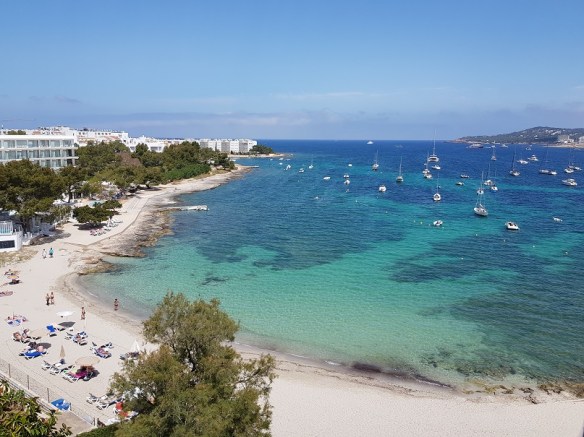
Where we stayed, at the excellent Axelbeach hotel across from San Antonio (view from the balcony above!), blissful poolside vibes slowed the pulse rate and calmed the fevered brow from the previous night. Then, gradually, as the day took hold, so too did the beats – and deep house music became the order of the day. Moody basslines and rich chords were the soundtrack as we flitted in and out of sunkissed reveries. At this point I particularly enjoyed the music of Mark Alow, reflecting the intense heat of the midday sun.

The effortless soundtrack grew ever so slightly faster as the day went on, like an extended warm-up DJ set preparing for the night ahead. As the sun dipped in the sky it was time to head across the bay to San Antonio, and the much-revered sunset strip.

This is one of the most established parts of Ibiza holiday life, though it treads a fine line between keeping the carefree atmosphere of those late 1980s beach parties, where the likes of Danny Rampling, Paul Oakenfold, Nicky Holloway and Johnny Walker discovered the island’s potential, and the commercialism that has inevitably struck more recently.
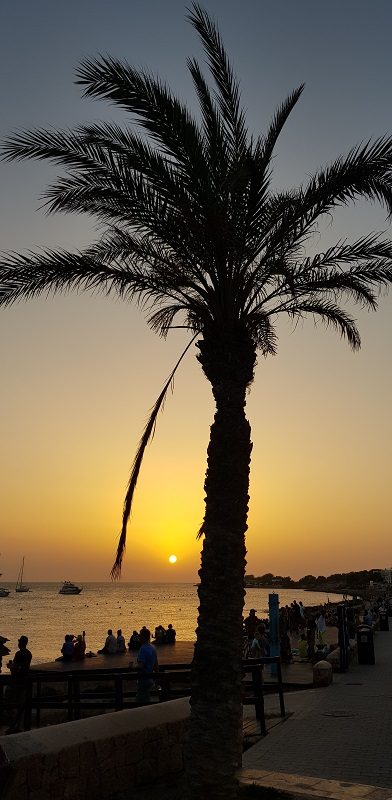
Café Mambo, 25 years old this year, sits squarely between the two. Service is efficient, mostly friendly but occasionally too dismissive. Clearly our looks are important at this point, which was never the issue with Ibiza before I would have thought! Yet as we settle the magic of the area takes hold, and everyone anticipates the sunset moment itself.

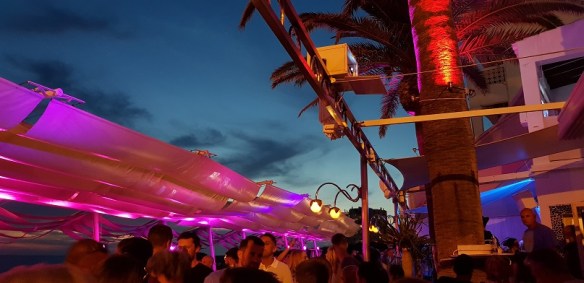
Through the week we were to discover that the Golden Buddha bar just round the corner offers a much more authentic and unfiltered sunset experience, but this was good for now. We were at Cafe Mambo for a night promoting Pacha, and Radio Slave was in the wings with his brand of minimal, stretched out techno.

From the moment the dull red orb of the sun disappeared below the sea line, as we took a breath he sprang into action, delivering a dramatic change in mood and tempo, the onset of darkness bringing with it fresh energy. That he did this with such deceptively simple music was really impressive, his remix of Sasha’s Cut Me Down the calling card as the night opened up again. This would – in symphonic terms – be the start of the big finale.
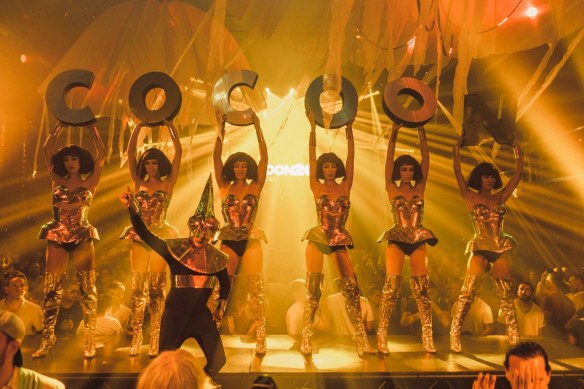
A couple of nights later we found ourselves in Amnesia, where the finale was effectively split into two. Craig Richards and Seth Troxler were the opening DJs for a night with Cocoon, part of the season celebrating 20 years of the club on the island. A club and record label run by Sven Väth, Cocoon has always been about good times and an almost complete lack of pretence, and although prices at Amnesia are not exactly welcoming, everything else was.
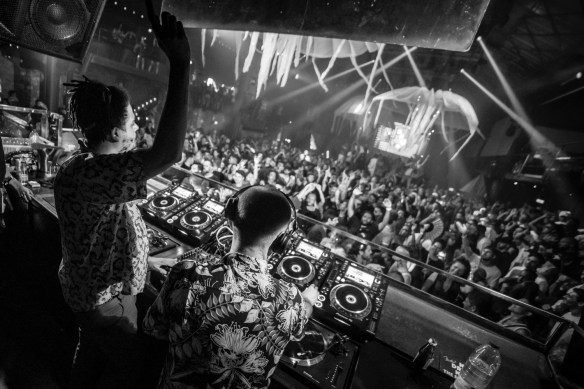
It occurred to me at this point just how similar the roles of DJ and conductor are. Richards and Troxler were back to back, each choosing a tune or two in a relay style, the turntables their orchestra as the music unfolded. The dancefloor, initially empty, began to fill as their hypnotic beats took hold, the ‘less is more’ approach complemented by colourful dancers and two great big jellyfish, suspended above the dancefloor.
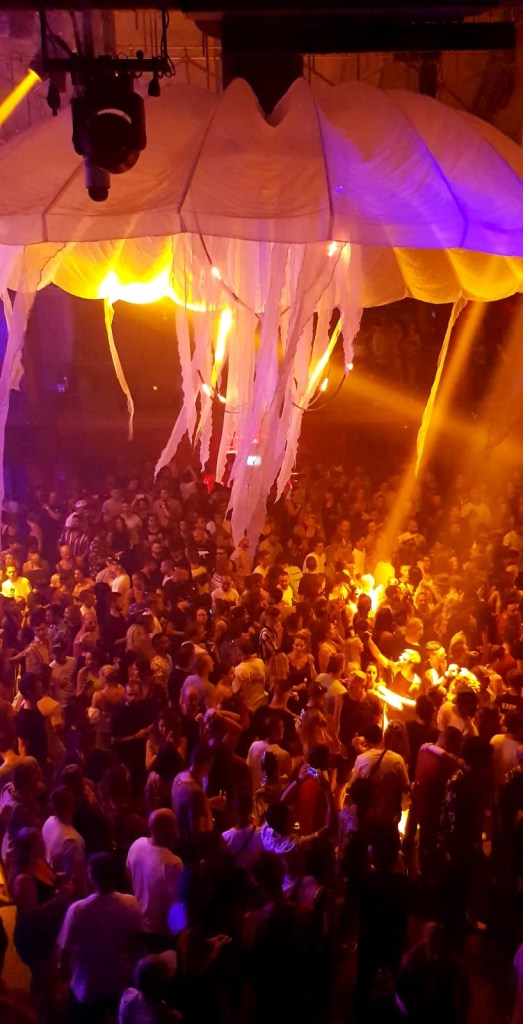
All this was happening on the terrace. In the main room, the beats were faster, the night more advanced, and those who had come to throw themselves around were having a ball. Back at the terrace, all that was about to arrive with Riccardo Villalobos, the Chilean DJ celebrated – like Radio Slave – for minimal yet timeless interpretations of house and techno.
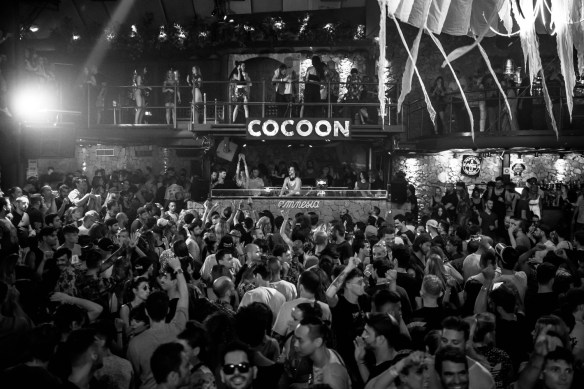
With Villalobos though there is a much more primal instinct at play, which you can see as much from his image as you can hear it in his music. His set is not really about individual tracks, more about the pulsing rhythms as a whole, the DJ himself a ball of nervous energy behind the decks as he flits about impatiently, tweaking levels and ushering new depths of tremor-inducing drums.

It is incredibly effective, and even the relative lack of a melody does not prove a massive problem. The tunes can be found elsewhere of course, with the likes of Defected, Pacha and Soul Heaven serving up incredibly popular seasons of more soulful house in San Antonio itself.

Musically sated, we return to the hotel – and the cycle / symphony begins all over again. Ibiza really is one of a kind, and this trip was a fascinating insight to me of just how much dance and classical music have in common. Their functions can cross over, their structures are similar, yet the inspiration is equally lasting. Classical music might often try to claim the intellectual high ground, but the music can strive for cleverness and lose its immediacy. Dance music is clever in a different way, speaking to its lovers directly as it aims squarely for the feet and heart.

What I’m saying here is that different strokes for different folks is what music is all about. Long may it stay that way!

Here are two playlists from our ten days in Ibiza – ‘poolside’ and ‘club’:

Not surprisingly the ‘club’ one is shorter as a lot of the tracks we heard are not yet available – but hopefully it still catches the essence of our nights!

While we were there the sad news came through that Philippe Zdar, of French duo Cassius (below), had died in a tragic accident. Given his contribution to dance music in the last 20 years it was great to hear some of their tunes woven into DJ sets, especially at Café Mambo – and so this playlist starts with Cassius’ best-known tune as a small tribute. I was fortunate to interview Philippe once and found him a really engaging and mischievous subject. Both those qualities came across in his music and he will be greatly missed.

Prom 1 – BBC Singers, Symphony Chorus and Orchestra / Karina Canellakis – Janáček Glagolitic Mass, Dvořák & Zosha Di Castri


Prom 1: Asmik Grigorian (soprano), Jennifer Johnson (mezzo-soprano), Ladislav Elgr (tenor), Jan Martiník (bass), Peter Holder (organ), BBC Singers, BBC Symphony Chorus, BBC Symphony Orchestra / Karina Canellakis (above)

Di Castri Long Is the Journey, Short Is the Memory (2019) (BBC commission: World premiere)
Dvořák The Golden Spinning Wheel Op.109 (1896)
Janáček Glagolitic Mass (Final version, 1928)

Royal Albert Hall, Friday 19 July 2019

Reviewed by Richard Whitehouse

You can listen to this Prom on the BBC Sounds app here

In its including of a female conductor, a premiere alluding to the 50th anniversary of the first moon-landing and a Henry Wood ‘novelty’, the First Night of this year’s Proms encapsulated the season in almost all essentials while making for an engaging programme in its own right.

The premiere was that of Long Is the Journey, Short Is the Memory from Canadian composer Zosha Di Castri. Now in her early thirties, Di Castri has achieved recognition for the arresting timbres and textures of her music and there was no doubt as to the scintillating sonorities she drew from the orchestra in what, loosely defined, was a cantata where changing conceptions of the Moon were articulated through a text drawn centred on the musings of Chinese-British writer Xiaolu Guo alongside fragments by Sappho and Giacomo Leopardi. A pity, then, that the composer’s rather moribund word-setting and vagaries of the Albert Hall acoustic meant the emotional affect of this text went for relatively little, for all the orchestral component was often spellbinding in its evoking the immensity yet also intimacy of space above and beyond.

Certainly the BBC Singers projected its contribution with audible assurance, while the BBC Symphony Orchestra responded ably to the astute direction of Karina Canellakis both here and in a rare revival of Dvořák‘s symphonic poem The Golden Spinning Wheel. Third of his four late such pieces drawing on the folk-ballads of Jaromir Erben, this is usually heard in the abbreviated version prepared by Josef Suk but tonight brought the full-length original with Erben’s poem set line by line in an uncanny musical embodiment of the text. That said, its sheer repetition of motifs and themes can prove excessive and while Canellakis had the measure of the work’s evocative aspect, she was less successful when trying to infuse the sprawling structure with any cumulative impetus such that the rousing final peroration seemed all too long in arriving.

There could not be a piece less given to longeurs than Janáček‘s Glagolitic Mass, first heard in the UK almost nine decades ago but not at these concerts until 1972. Recent hearings have opted for the conjectural urtext whose sometimes reckless audacity its composer toned down before the premiere, but this evening reinstated the final version that Canellakis directed with verve and sensitivity, if lacking a degree of fervency which turns a fine performance into an indelible embodiment of that pantheist spirituality central to the music of Janáček’s maturity.

Not that there was much to fault in the singing, with Asmik Grigorian more than equal to the demanding tessitura of the soprano part and Ladislav Elgr hardly less attuned to the stentorian tenor role. Jennifer Johnson was a mezzo of no mean eloquence, while bass Jan Martiník was only marginally too impassive. Peter Holder duly put the Albert Hall organ through its paces in an incisive and ultimately thunderous organ solo – after which, it was hardly the BBCSO’s fault if the final Intrada sounded a little underwhelming as its rhythmic elan was undoubted.

Throughout this account, the contributions of both orchestra and BBC Symphony Chorus left little to be desired. Hard to believe the intricacies of Janacek’s writing were once put down to technical inadequacy. In that respect, as with space exploration, progress has been absolute.

Wigmore Mondays – István Várdai & Sunwook Kim play Falla, Schubert & Kodály

István Várdai (cello, above) & Sunwook Kim (piano, below)

Falla Suite populaire espagnole (1914) (2:07 – 16:05 on the broadcast link below)
Schubert Arpeggione Sonata in A minor D821 (1824) (18:00 – 44:40)
Kodály Hungarian Rondo (1917) (46:46 – 56:28)

Wigmore Hall, London
Monday 15 July 2019

To hear the BBC broadcast through BBC Sounds, please follow this link

Commentary and Review by Ben Hogwood

The cello has always been one of the instruments closest to a pure imitation of the voice. Its range and its ability to phrase are both qualities that make it ideal for arrangements of songs.

Spanish composer Manuel de Falla may have collected and published his Siete canciones populares españolas (Seven Spanish Folksongs) for voice and piano, but they were soon arranged for violin and piano, then for cello and piano by Maurice Maréchal. The instrumental arrangements removed the second song and changed the order to make an effective concert suite. In this slightly understated but effective beginning from cellist István Várdai and pianist Sunwook Kim the music is laid bare, just as Falla would no doubt have preferred.

The first song, El paño moruno (The Moorish Cloth) (2:07), is quite restless but nicely ornamented in this performance with a subtle swing to the rhythms. The second, Nana (4:43), is bittersweet, falling on the side of sorrow, while the rustic Cancíon (7:17) makes nice use of the cello’s glassy harmonics. Polo evokes a lovely, summery heat haze with its dreamy thrummed chords (8:48) topped by a really powerful melodic line from Várdai. The quieter, yearning thoughts of Asturiana (10:18) make a more subtle impression afterwards, before the lively and uplifting Jota (12:59) completes the set.

The arpeggione was an instrument from Schubert’s time that did not last for long. With six strings and frets like a guitar, it did not catch on as a repertoire instrument, and so the substantial Arpeggione Sonata Schubert wrote for the instrument was threatened with redundancy, before finally being published in 1867. The work transcribes ideally for the cello or viola with piano accompaniment, its melodies lying under the fingers with deceptive ease.

The first movement (from 18:00) is the largest of all, expanding to make the most of what seems like quite a plaintive initial idea (the first section repeated from 21:15). It is an elegant dialogue between cello and piano, where at times the two feel like dancers in and out of hold. Some more vigorous diversions aside, the music returns to the slightly downcast mood of the opening, pensive rather than outgoing. István Várdai really makes his cello sing in the higher register, while Sunwook Kim shows a delicate touch on the piano.

The slow movement (30:32) is short but meaningful, with a floated melody from the cello threatening to make it as substantial a length as the first movement, but then gliding effortlessly into the finale (35:04) Here Schubert’s dance writing reappears, enjoyably so in the more upbeat minor key diversion (36:37) but returning to the slightly troubled air we became aware of earlier, enjoying itself to an extent but never fully throwing off the melancholic shackles apparently dogging him from the rejection of his opera Alfonso und Estrella.

No such issues in the Kodály Hungarian Rondo, like the Falla celebrating its origins with feeling. This piece, written in 1917 not published until 1976, starts with what seems like an innocuous tune on the cello (46:46) but one that goes on to dominate, reappearing for both instruments and in various guises. Complementing it are a host of other folksy melodies, most with a distinctive Hungarian flavour in their rhythm or melodic profile. As the piece progresses so the energy levels rise, to an impressive set of flourishes near the end, played with great panache by the two soloists.

As a generous encore, cooling the temperature after the Kodály, we had Mendelssohn’s Song Without Words Op.107 – the only one he wrote directly for cello and piano (57:50). Várdai was playing a Stradivarius cello dating from 1673 that used to belong to none other than Jacqueline du Pré – and he brought out the instrument’s gorgeous tone, especially in the midrange, and abundantly in the Kodály. With Kim’s sensitive accompaniment, they made it an extremely enjoyable concert with which to close the Wigmore Hall’s 2018-19 lunchtime season. See you for more in September!

Further reading and listening

The music in this concert can be heard below. István Várdai has recorded the arrangement of the Falla suite, but not the pieces by Schubert or Kodály. The Mendelssohn is played by Jacqueline du Pré – possibly on the cello heard in this very concert! – accompanied by her mother Iris.

Várdai has, however, completed a disc of works for cello by the Hungarian composer that include one of the cellist’s ultimate tests, the Sonata for Solo Cello:

You can watch a video of Várdai playing Kodály’s Duo for Violin and Cello with violinist Gilles Apap, at the HarrisonParrott website:

Kodály’s music is colourful and passionate, staying very close to the composer’s roots. This selection of orchestral works serves as the ideal introduction to his tuneful music, conducted by conductors and fellow countrymen Ádám and Iván Fischer:

Wigmore Mondays – Imogen Cooper plays Brahms & Liszt

Imogen Cooper (piano)

Brahms Intermezzi Op.117 nos.1 & 2 (1892) (1:23 – 11:13)
Liszt Gretchen (Second movement of A Faust Symphony) (1854, arranged 1874) (11:52 – 30:05)
Brahms 7 Fantasien Op.116 (1892) (31:31 – 53:24)

Wigmore Hall, London
Monday 8 July 2019

To hear the BBC broadcast through BBC Sounds, please follow this link

Commentary and Review by Ben Hogwood Photo credit: Sim Canetty-Clarke

Brahms’ late piano music occupies a special place in 19th century repertoire. Rather like late Beethoven he makes use of the piano for some extremely confidential writing that starts to push at the boundaries of tonality and conventional rhythm. While Beethoven complemented his late piano works with a renewed inspiration for the string quartet, Brahms found the clarinet was his ideal ‘other’ vehicle in the early 1890s. Yet in the solo piano writing, here is a level of intimacy rarely found in the music of his time.

Imogen Cooper began her Wigmore Hall recital with two of the three late Brahms Intermezzi Op.117 – an example of where the composer would give a deliberately ambiguous title to a short piece, allowing himself the greatest possible freedom of form and expression. That said, the first – in E flat major – is simplicity itself, a much loved melody that Brahms used as consolation from the recent losses in his life. For this he drew inspiration from the Scottish ballad Lady Anne Bothwell’s Lament, and the piece benefits from Imogen Cooper’s unhurried approach in this performance (from 1:23 on the broadcast). The second piece in B flat minor is more flowing but also more directly troubled as it progresses (from 6:37), finishing in the lower recesses of the piano.

Published adjacently to the Op.117 Intermezzi are seven piano pieces Brahms called Fantasies – separate entities that work best as an overall whole. There are three Capriccio pieces, placed 1, 3 and 7 in the group, complemented with 4 Intermezzi, Brahms again keeping ambiguous labels for artistic freedom. Immediately however there is more heart on sleeve here, the first Capriccio in D minor (31:31) full of power and passion. The second piece, an Intermezzo in A minor, turns inwards, lost in thought (33:54), though there are brief glimpses of light in the central section.

The third piece, a Capriccio in G minor (37:42), has grand designs but still glints with a metallic darkness, using a falling melody whose outline is common to a number of late Brahms piano works, falling in melodic intervals of a third. A solemn central section is more hopeful before this music returns at 40:03. The fourth piece (40:55) is the first of three centred on the pitch of E, which seem to exist between major and minor keys. It is quite ambiguous, with a questioning harmony and uncertain rhythm – but finds calmer acceptance in its brief central section.

The fifth piece – another Intermezzo, now in E minor (45:06) is more mysterious still, its rhythm elusive, as though Brahms is in a dream state. Moving to E major for the sixth piece (47:58) we return towards earth, though the composer – and performer – are still in deep thought. A sudden jolt arrives with the final piece, another Capriccio in D minor (50:59), Brahms suddenly alert and on the front foot, and ending unexpectedly – and exultantly – in the major key. It is an ending hard won, but also slightly false, as it proves difficult to erase the deeply profound thoughts from earlier pieces.

The Liszt piece is a long slow movement taken from the composer’s orchestral / choral epic, A Faust Symphony. This is a portrait of Gretchen that transcribes particularly well for piano, Liszt’s gifts adapting his music and that of others between forms at its very best here. This is after all a composer who thought nothing of transcribing all nine Beethoven symphonies for solo piano.

Gretchen is tender and romantic, unfolding from the very start in a loving and flowing manner as played here by Imogen Cooper. Gradually the music becomes deeply passionate, Liszt building towards a series of weighty climaxes – the first around 19:10 and then again at 23:45. It can be heard as almost one unbroken phrase, and Cooper keeps a very natural feel to her phrasing, until the main theme returns at 24:14, where there is a very natural return to the mood and tenderness of the opening – before more extended dialogue. The period from 27:45 represents the coda, where a settled mood takes hold.

Throughout this concert Imogen Cooper let the music do the talking, as she always has done – not playing to the audience but producing beautifully rendered and carefully thought performances, with very impressive technical command – especially in the big-boned Brahms pieces. Of equal importance was her use of ‘rubato’, which is essentially breathing naturally in a musical sense so the rhythms sound more like phrases of a spoken or sung sentence. Everything came together wonderfully here, as it did in an encore of more Brahms – a beautifully observed account of the Waltz in A flat major Op.39/15, not heard on the broadcast.

Further reading and listening

The music in this concert can be heard below, in leading available versions. Imogen Cooper has yet to record late Brahms, so the playlist includes timeless versions of the pieces from Radu Lupu and Emil Gilels, along with Cooper’s recently recorded Liszt:

Cooper’s Liszt is part of an intriguing disc of piano music by Liszt and his contemporary and close relative Wagner, recorded for Chandos:

Another Imogen Cooper recommendation brings together piano music by Robert and Clara Schumann – a family affair with the former’s stormy Piano Sonata no.1 and Humoreske, nicely complemented with two of Clara’s Pièces caractéristiques:

Wigmore Mondays – Colin Currie Quartet in music by Pereira, Volans, Stockhausen & Reich


Colin Currie Quartet (Colin Currie, Sam Walton, Adrian Spillett, Owen Gunnell (percussion)

Pereira Mallet Quartet (2013 (1:36 – 10:08 on the broadcast link below)
Volans 4 Marimbas (2016) (12:38 – 33:21)
Stockhausen Vibra-Elufa (2003) (35:40 – 41:27)
Reich Drumming Part 1 (1970-71) (44:30 – 59:59)

Wigmore Hall, London
Monday 1 July 2019

To hear the BBC broadcast through BBC Sounds, please follow this link

Commentary and Review by Ben Hogwood

What a refreshing change to have percussion taking centre stage for a Monday lunchtime concert at the Wigmore Hall. Not only that but two of the four pieces had that ‘just off the shelf’ feeling, with the Joseph Pereira and Kevin Volans pieces written for Colin Currie’s ensemble. As an added bonus, South African composer Volans – 70 this year – was in the audience.

Pereira, principal percussionist with the Los Angeles Philharmonic, gave us bright metallic sounds from the start (1:36 on the broadcast). Crisp unison blocks of sound were broken up by quicker figures that gave the Mallet Quartet energy. With a broad range of timbres and pitches, the bursts of activity were often followed by pauses, giving a stop-start feel but ultimately heightening the drama. At 7:30 the quartet converged on a single pitch, D, the high point of the piece at which point the music takes a natural breather. Then the pitches regroup from the depths, returning to a treble pitch from which we tumble down what feels like a waterfall. Pereira’s music pictorial to the close.

Kevin Volans’ 4 Marimbas (from 12:38) exhibited a warmer sound, the players using softer sticks to create a fluid and soothing experience, like running water. As it developed the players negotiated twists and turns skillfully, interpreting the piece an experience of ambient yet positive energy. Around the 19-minute mark the pitch rose, concentrating the mind, but then the sonorous tones of the marimbas’ lower ranges came in again.

Then at 21:45 the performers noticeably reined in the dynamic range, their sticks closer to the instruments as the sound shrunk before our ears. This is a tactic Volans has used on several occasions, working especially well here as percussion is not normally known for quiet performance! The audience subconsciously leant forward in the Wigmore Hall before the reassurance of the full marimba timbre came in again around a minute later. Towards the end it happened again and stayed quiet, proving even more effective second time around.

Stockhausen’s Vibra-Elufa, a short piece (from 35:40), was notable for its intensity and sinuous lines. Performed by Currie alone on marimba, it had moments of tender beauty but also shrill edges, especially when high in the treble range. It left an otherworldly, enchanting impression in the manner of the large-scale stage piece from which it is drawn and arranged, Freitag aus Licht.

Then we were on to Drumming, Steve Reich’s breakthrough masterpiece of 1971 that confirmed minimalism as a community-based musical form (from 44:30). It was a visit to Ghana in 1970 that convinced Reich he was on the right track with what has turned out to be his longest instrumental piece to date. Over time Drumming has evolved, and can even be divided into constituent parts, as here – with Part 1 concentrating on tuned bongos. The technical challenges remain, even over 15 minutes, with improvisational skills and a strong sense of form brought into play. Listen to the broadcast from 44:30 and you will hear how the quartet unite in big strokes of sound but gradually tumble out of phase, picking up kinetic energy as they do so, before aligning again for another commanding statement.

The players were superb, with clear visual communication the secret to a performance notable for its drive, accuracy and flair. Listen to it and lose yourself in the rhythms!
Each of the four pieces in this concert received technically brilliant performances. Currie was the natural leader but Walton, Spillett and Gunnell all stepped forward when required, emphasising the communal approach they have to their music and especially their new commissions. On the way out of the Wigmore Hall I overheard a regular saying it was one of the best lunchtime concerts he had ever been to in the venue, and I am inclined to agree!

Further reading and listening

The music in this concert is not available online, with the exception of Drumming – which exists in a recording made by Steve Reich, Synergy Vocals and the Colin Currie Group. It’s as close to authentic as you could wish for!

Since that recording Currie and Reich have made a live disc from the Foundation Louis Vitton, with a broad range of Reich’s work that includes the classic Clapping Music, the choral piece Proverb, the Mallet Quartet, Pulse and Music for Pieces of Wood. Typically functional titles from the composer there!

There is not a great deal of Kevin Volans’ music on Spotify, but one very good way into his music is via the string quartet – which is where a disc from 1994 from the Balanescu Quartet comes in. Hunting, Gathering, his second string quartet, is particularly evocative: