Talking Heads: Labelle

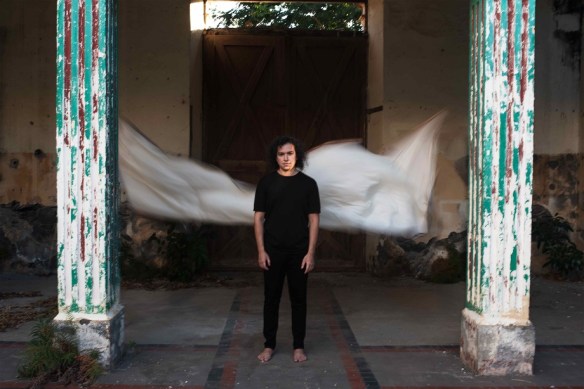
Arcana chats with Jérémy Labelle, the prodigiously talented composer and performer signed to InFiné, about his album Orchestre Univers. This ambitious project looks to bring classical and electronic music together, as well as the musical cultures of Europe and the Indian Ocean. We explore his methods behind that combination, beginning with the inevitable first question…

Can you remember your first encounter with classical music?

Not exactly, it was at primary school. But the first piece that really did stand out for me was Stravinsky’s The Soldier’s Tale:

You say your family home had a wide range of styles – was it important for you to reflect this in your own music?

Yes, it’s very important as this wide range of styles is an expression of the multiculturalism in which I was brought up in and through which I define myself. Actually, these different styles belong to the same world for me. If you look beyond the differences, you can see what links them.

What dance music did you grow up with? The InFiné site makes reference to Derrick May and Jeff Mills.

I discovered Detroit techno when I was around 10/11 in 1995 and 1996, thanks to my older brother. It was the first type of music I played when I was a DJ and from then on it was the base of the music I was composing.

Was it a long (but enjoyable!) process getting the musicians together for ‘Orchestre univers’?

Getting the musicians together was actually pretty fast (a few weeks). It was the writing process that was very long (but enjoyable!)

It is very difficult to place the music of ‘Orchestre univers’, in a good way. Was it important for you to bring these contrasting styles of music together?

Yes it was very important for me as it’s how I see music for ensembles. A music that is capable of integrating instruments from other cultures but more importantly to find space for the body again. It had become too disconnected from the mind in certain contemporary expressions throughout the ’90s and the ’00s. The body and the mind are a whole for me, a single unit with which I try to communicate.

Where did you learn your skills for making colour with orchestral forces?

I learnt to write at university when I was studying music. But what I did really learn was to understand the different schools of thought and genres that have existed in the history of classical and contemporary music and how and when these genres appeared. Practical exercises allowed me to understand and appreciate the mechanics of these music. But beyond learning, I also have teachers that gave me the keys to understanding the space and the dimensions inside a piece as well as contemporary orchestration and time.

How did you arrive at such rhythmically driven music too?

Rhythm is a fundamental part of maloya and how the trance emerges. It’s in this spirit that rhythm expresses itself. I can’t not work with rhythmic instruments 🙂

The track Oublie-voie-espace-dimension brings in some remarkably strong percussion to go with the held chords. What were you describing in this music?

It’s exactly the beginning of the trance! You have to understand the title as a succession of states. Oublie = forget, forget your markers, letting go; Voie = path, the path that appears at that moment ; Espace = space, the feeling of vertigo, of depth that having chosen this path brings to you ; Dimension = a new dimension opens up (the one that expresses itself in O).

You did a concert recently at the Philharmonie in Paris? What was that like

The concert at the Philharmonie was one of the most beautiful concerts of my young career. The feeling of the acoustic space when you’re on stage is incredible. You can really feel how the sound moves in the room, it’s beautiful. Also the energy that the stage catalyses and disperses is out of this world. The stage seems to float in this circular movement with the audience. The room is unique.

What else can we expect from you this year?

Starting from now until the end of the year, I’m going to be working on my next piece, which is written for a string quartet, as well as on my next album. I’ll also be touring my solo electro-maloya act from the end of August till mid September for the promotion of Digital Kabar with my friend BoogzBrown and the Sheitan Brothers! A special night will happen at La Réunion early Octobre (Digital Kabar – Le Club) with many of the artists that appear on the compilation! Finally, for the first time I’m organising a night dedicated to experimental music on the island. It will happen at the end of Septembre.

What does ‘classical’ music mean to you?

The term “classical” is rather distorted actually. Musicologists refer to MOTE (musique occidentale de tradition écrite = western music of written tradition) and it’s in this sense that I understand classical as a traditional music just like other traditional music in the history of humanity.

What other musical plans and ambitions do you have for the future?

Writing pieces for large instrumental ensembles! But also develop the trance and dancing. I want to stay in touch with the club world and the festival world while writing pieces for orchestras that have this unique combination of classical instruments, electronics and the percussion from maloya.

You have contributed to the new InFiné compilation Digital Kabar. What does the word ‘kabar’ mean to you?

Historically, the kabar is the place and time of maloya, but for me it’s also the place and time of all the maloyas: electronic, electric, pop etc…

The track ‘Block Maloya’ has a strong rhythmic drive. How does maloya manifest itself in your writing?

It’s actually in the rhythms but it also manifests itself through other means! The distant pad that introduces the track is an ancestral reminiscence that carries the track through its development. It’s this relation to ancestors and customs that’s particular in maloya. Maloya is also a spiritual music when it’s played in ceremonies.

Could ‘Block Maloya’ become a really substantial track in a live performance?

Yes and that’s exactly what you’ll hear in my solo electro-maloya live act that will be touring for Digital Kabar in August.

If you could recommend one piece of music from this year to Arcana readers, what would it be?

I know I should think about other artists but right now I’m thinking of my piece Playing at the end of the Universe from Orchestre univers 🙂 It’s a song that always surprises me. I wrote it for my previous record Univers-île but it took another dimension on my new record.

Labelle’s third album Orchestre univers is out now on InFiné, who have also just released the Digital Kabar compilation which can be heard below:

Arcana at the Proms – Prom 18: Edward Gardner conducts the BBC Symphony Orchestra in Mahler and Britten

Prom 18: Stuart Skelton (tenor, above), Claudia Mahnke (mezzo-soprano), Leif Ove Andsnes (piano), BBC Symphony Orchestra / Edward Gardner (above)

Britten Piano Concerto Op.13 (1938)
Mahler Das Lied von der Erde (1908-1909)

Royal Albert Hall, Thursday 1 August 2019

Reviewed by Ben Hogwood
Photo credits Chris Christodoulou

You can watch this Prom on the BBC iPlayer here

Mahler’s Das Lied von der Erde (The Song of the Earth) received its Proms premiere in the year 1914, long before the huge upturn his music experienced in the 1960s. It is an example of Sir Henry Wood’s instinct for new music that it reached the Proms so soon, though the programme labelling of the piece as a ‘Henry Wood novelty’ does the work a massive disservice. A certain Benjamin Britten was on to it too, describing in 1937 the impact of its final set of poems, Der Abschied, and how it ‘passes over me like a tidal wave’.

Mahler was one of Britten’s foremost influences, specifically the Fourth Symphony, which you can hear at the Proms later in the season on Sunday 11 August. There is not much Britten this year, but what there was in this concert was brilliantly performed. The Piano Concerto has a youthful spring in its step, treating the instrument equally as a creator of percussion and melody, following in the traditions of Prokofiev and Shostakovich as it does so.

This performance showed it off in full. Leif Ove Andsnes (above), who has lived with the work for 25 years and performed it on his Proms debut in 1992, had its measure. Technically he was superb, leading from the front with an account of targeted bravura, never showing off for the sake of it and always keeping a melodic shape to even the most percussive of chord sequences. Edward Gardner and the BBC Symphony Orchestra offered solid support, if very occasionally falling behind the piano rhythmically – though that could also have been the Royal Albert Hall acoustic playing tricks. The strings were beautifully shaded in the quieter moments of the Impromptu, whose emotional depths hinted at a darker presence behind the technical feats – perhaps the presence of the Second World War, only a few years away.

Andsnes delivered an unexpected encore in the first movement of Mompou’s Suburbis, stylistically close to Ravel and Falla but still evoking its own individual nocturnal scene.

The Mahler followed the interval, lasting just over an hour – but given the quality of the performance the time passed in a flash. To date Edward Gardner’s encounters with Mahler have been relatively minimal, but the natural gravitas he gave to the orchestral writing in Das Lied von der Erde, not to mention the room made for the chamber-like instrumental solos, showed his instincts are ideally suited to the composer. The BBC Symphony Orchestra wind – fully deserving of their curtain call at the end – were on top form, as were the strings, their quiet thoughts during the final song in particular staying rooted in the memory.

Fine as the orchestral playing was, the two singers rightly shared the limelight. Stuart Skelton’s tenor was a thing of wonder, called into high register action at a daringly early stage in proceedings but delivering wholeheartedly from the off. His characterisation of the two drinking songs was spot on, the gestures and body language wholly at one with the words, giving him the creative licence to exaggerate a note or two. Here he had support from BBC Symphony Orchestra leader Igor Yuzefovich, and a suitably inebriated violin solo during Der Trunkene im Frühling (The Drunkard in Spring). Meanwhile in Von der Jugend (Of Youth) some nimble negotiation by Skelton of Mahler’s score gave the song an invigorating freshness. That he was able to project these natural and very human elements of phrasing without ever sounding contrived spoke volumes for the degree to which he has clearly inhabited this piece, as evidenced in his contribution to the Proms Twitter feed a few hours before.


Mezzo-soprano Claudia Mahnke (above) was equally assured in her delivery, the voice and its phrasing again completely comfortable with Mahler’s demands in Der Einsame im Herbst (The Lonely Soul in Autumn) and Von der Schönheit (Of Beauty) before, in the celebrated Der Abschied (The Farewell), time stood still and the music became a thing of wonder. These otherworldly contemplations felt as though they extended from the Arena floor of the Royal Albert Hall right up to the stars, far beyond the dome, and Mahnke’s rapt expression spoke of how she too was experiencing the same transporting effect. Gardner’s operatic instincts stood him in good stead, particularly in the recitative-like sections, where orchestral players held notes like baroque continuo staples, but the overall effect was in aid of the contemplation of life itself.

The rude interjection of a mobile phone did nothing to break the spell, for these two singers, and the 80 or so instrumental singers behind them, had created something very special together.

New music and album from the Penguin Cafe

Photo credit (c) Alex Kozobolis

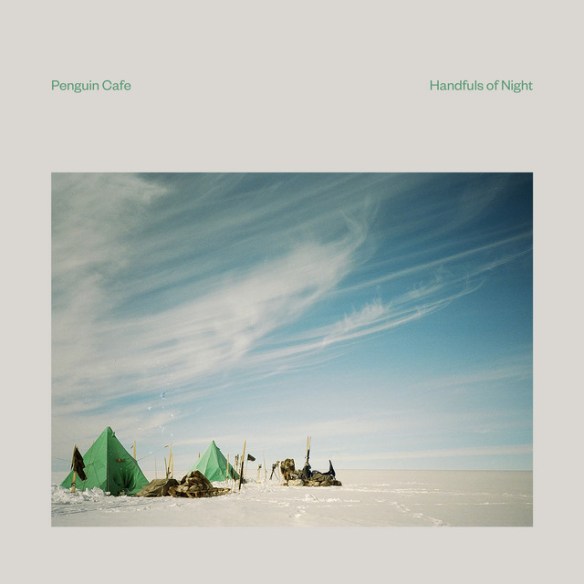
Good news for fans of the Penguin Cafe – the Arthur Jeffes-led ensemble have a new album setting foot on land in October.

For more than 35 years the Penguin Cafe name has stood for music free of constraint that looks to explore and embrace the colours of acoustic instruments around the world, enjoying the influence of classical music as it does so. The Jeffes name has been behind it from 1973, when Simon Jeffes began the group with cellist Helen Liebmann. More recently a second incarnation of the group, led by Simon’s son Arthur, was sealed by the 2017 album The Imperfect Sea.

At the core of the band’s message has been the state of the natural world, and as the press release details the new album Handfuls Of Night ‘began life after Greenpeace commissioned Jeffes to write four pieces of music corresponding to four breeds of penguins, to help raise awareness for the endangered Antarctic seas.

A fundraising evening at EartH in Hackney followed, where Penguin Cafe premiered the four songs named after their feathered counterparts to a sold out audience; the rousing contemporary folk inflected Chinstrap, the mournful and minimalistic Adelie, stoic and rhythmic The Life of an Emperor and the wistful, string-laden Gentoo Origin.

All appear on the new album, which has at its heart the soothing At The Top of the Hill, They Stood…, which you can hear below. Here the piano arpeggios are reassured by soft bass drum and woozy harmonium:

It bodes well for the long player. Handfuls of Night is out on October 4th on Erased Tapes, together with a set of UK live dates, ahead of a world tour in 2020. You can pre-order the album here

On record – Clare Hammond, Swedish Chamber Orchestra / Nicholas McGegan: Mysliveček: Complete Music for Keyboard (BIS)

Clare Hammond (piano), Swedish Chamber Orchestra / Nicholas McGegan

Josef Mysliveček (1737-1781)
Keyboard Concerto no.1 in B flat major (late 1770s)
Six Easy Divertimenti for Harpsichord or Piano-forte (1777)
Keyboard Concerto no.2 in F major (late 1770s)
Six Easy Lessons for the Harpsichord: Sonatas 1-6 (1780)

BIS BIS-2393 [74’22”]

Producer and Engineer Thore Brinkmann

Recorded March 2018 at the Örebro Concert Hall, Sweden

Written by Ben Hogwood

What’s the story?

Not many composers could claim to have influenced one of the greatest composers to have lived, but Il Boemo (The Bohemian) could do just that. Josef Mysliveček, to whom the nickname was applied, was a Czech composer of rare standing and a mentor to Mozart in the 1770s. He had a life of eyebrow-raising but ultimately tragic events, culminating with his death in great poverty in Rome in 1781, having nearly lost his nose a couple of years earlier to a botched operation.

Clare Hammond’s interview for this site puts more musical detail onto his fascinating tale. More importantly this disc for BIS serves notice of Mysliveček’s standing as an important musical figure and prodigiously talented composer. If you like Mozart, his music is a natural but essential step for further exploration.

What’s the music like?

Really enjoyable. The Piano Concerto no.1, where Hammond is joined by the Swedish Chamber Orchestra conducted by Nicholas McGegan, has a sparky personality, with plenty of vigour in its fast outer movements and elegance in the softly voiced central slow movement. There is an economy of thought, too – it finishes quickly with the minimum of fuss.

Clare Hammond clearly loves this music, and she plays with poise but also enjoys the instinctive nature of Mysliveček’s writing. The solo works are notable for their compressed construction, never threatening to outstay their welcome and on occasion producing unexpectedly dark undercurrents.

She is alive to these and handles the technical challenges really well. The Six Easy Divertimenti sound anything but unless they are in her hands! She makes the most of their tendencies to surprise, as in the mysterious pauses on some pretty exotic chords in the fifth piece.

The Piano Concerto no.2 has some notable syncopations in its first movement, as well as some adventurous harmonic diversions, before slipping into the minor key for a profound slow movement. Some of the music is contrary, staying away from big technical displays when you might expect them, but the third movement has a spring in its step nonetheless.

The Six Easy Lessons (again sounding pretty difficult!) bring parallels with the keyboard music of Domenico Scarlatti, and receive crisp and characterful performances. The second movement of the First Lesson reminds of the Czech composer’s tendency to spice up his melodies with chromatic movement, and this is one of many good tunes to be found throughout these spirited pieces.

Does it all work?

Yes. The structure of Mysliveček’s output from Hammond gives an ideally balanced disc, with the concertos complemented by the solo works. The clarity of her performance ensures it can be heard in the best possible light, and recording from the BIS engineering team is ideal.

Is it recommended?

Yes, and it fills a gap in the 18th century discography. Here is an important figure on whom the spotlight so rarely shines – and we are grateful to Hammond and McGegan for directing it to the right place.

Stream

Buy

You can buy this release directly from the BIS website

Switched On – GLOK: Dissident (Bytes)

What’s the story?

Ride’s Andy Bell has pulled together all his solo recordings to date under the GLOK alias. GLOK – the German word for ‘bell’ with a crucial letter missing – has been an undercover enterprise until now, an anonymous project brought to life by Bytes chief Joe Clay, a Ride fan himself.

As this story suggests Bell is modest about his side project, but now he has been ‘outed’ as a one-man band, expect to hear a lot more of this music as the year progresses, even allowing for a new Ride album due in August.

What’s the music like?

Dissident unwittingly taps into the success of recent TV series such as Deutschland 83 and 86, where the pleasures have been as much about the music as they have been the plot. Yet as Bell looks back to the 1980s and further, he brings in the influence of Krautrock luminaries such as Can, Neu! And Bauhaus. He does this without compromising his own skills as a guitarist and his credentials as a much-loved ‘shoegaze’ producer.

Keith Tenniswood has remastered the whole album, which unfolds at a very natural pace. The title track clocks in at nearly 20 minutes, but is one of those productions you can completely lose yourself in, the main riff turning away in the background while running through a series of filters, the drum beats receding and then coming back with extra depth.

Bell expands his outlook with the subtle groove of Kolokoi (the Russian word for ‘bell’) and the airy textures and firm kick drum of Pulsing, which has a tempo suitable for dub-infused house. Cloud Cover adds a reminder of his first known discipline as a guitarist – a nice acoustic meander here – while the closing Exit Through The Skylight introduces chattering beats and a more processed feel.

Does it all work?

Yes. Bell has equal headspace for the past and the present, setting the mood perfectly with tracks that are suitable for both ends of the day. ‘Dissident’ on its own shows he can master big structures with durable ideas, while the shorter tracks teem with melodies, subtle humour and a refreshing lack of pretence. The album repays both foreground and background listening, preferably in a hotter climate!

Is it recommended?

Yes. Ride fans will love it, but the recommendation extends to anyone with a love of instrumental music and synthesizers.

Stream

Buy