Live review – Christopher Maltman & CBSO / Michael Seal perform Mahler, Sibelius & Nielsen

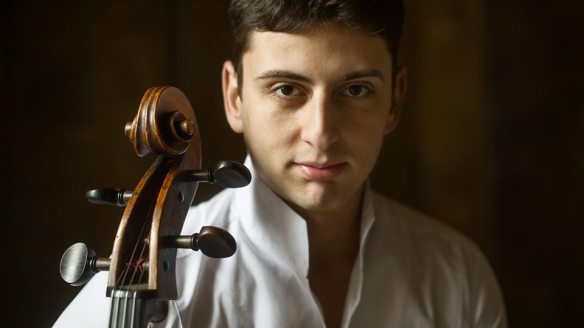
Christopher Maltman (baritone), City of Birmingham Symphony Orchestra / Michael Seal (above)

Symphony Hall, Birmingham
Wednesday 10 April 2019

Sibelius Symphony no.3 in C major Op.52 (1907)
Mahler Songs from Des Knaben Wunderhorn
Nielsen Symphony no.5 FS97 (1922)

Written by Richard Whitehouse

Photo of Christopher Maltman (c) Pia Clodi

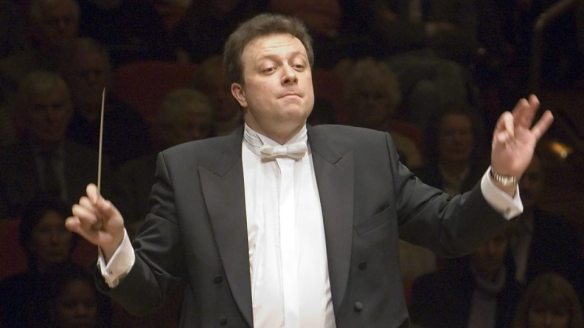
Michael Seal’s concerts as Associate Conductor of the City of Birmingham Symphony are seldom without interest and tonight’s programme featured a typically bold juxtaposition of Nordic symphonies from the early twentieth century, alongside orchestral songs by Mahler.

Time was when Sibelius’s Symphony no.3 was overlooked even by his keenest advocates, but it has long since become a regular fixture and this account doubtless benefited from the CBSO’s lengthy association with the piece under Sir Simon Rattle and Sakari Oramo. That said, Seal had ideas of his own to impart – most evident with the gradually intensifying curve of momentum over the first movement’s development into the reprise, then close alignment of tempo between its successor’s diverse episodes and the lilting main theme so it elided deftly between slow movement and intermezzo. The finale was a slight disappointment – lacking that ominous mystery in its initial ‘scherzo’ phase, with the closing pages a little provisional in their affirmation – though there was no mistaking the unanimity of response on the way.

After the interval, Seal set a notably swift tempo for the first phase in the opening movement of Nielsen’s Fifth Symphony, though this was never at the expense of ongoing incident or the music’s questing ambivalence. The ensuing Adagio was eloquently projected, building to an apotheosis more powerful for Adrian Spillett’s bravura rendering of its side-drum cadenza – subsiding into a rapt though never somnolent coda where the receding presence of offstage side-drum was ideally offset by Oliver Janes’s limpid clarinet solo at the rear of the platform.

There was nothing anticlimactic about the second movement, its four-sections-in-one design itself amounting to a cohesive entity such as Seal recognized in his taut yet flexible handling of the initial Allegro – tapering away seamlessly into a Presto whose surging energy poses a challenge to ensemble that was confidently met here. The yearning polyphony of the Adagio was finely sustained by strings and woodwind, and if the notoriously tricky final pages felt a shade reined-in, their clinching of the tonal and emotional argument could hardly be gainsaid.

Between these imposing symphonies, a selection from Mahler’s song-sequence Des Knaben Wunderhorn. Christopher Maltman was the persuasive guide through their evocations of life in all its manifestations – beginning with the guileless exchanges of soldier and lover in Der Schwildwache Nachtlied (1892), before bringing a suave nonchalance to the ruminations of Rheinlegendchen (1893) then an ominous sense of dread from amid the sombre fanfares of Wo die schönen Trompeten bläsen (1898). A brief though pertinent interlude was provided by the droll moralizing of Lob des hohen Verstandes (1896), then the selection was rounded off by the stark processional of Der Tamboursg’sell (1901) with its anticipations of the Fifth Symphony then in progress. Maltman once again proved a sensitive and insightful exponent.

Throughout the selection, Seal drew playing of refinement and finesse from the CBSO which seems never to have given this sequence as an integral whole. The orchestra will, however, be returning to Mahler with Ilan Volkov when they perform the Ninth Symphony on April 23rd.

For further information on the City of Birmingham Symphony Orchestra’s 2018-19 season click here You can read about the forthcoming Mahler Ninth Symphony concert here

Further listening

Unfortunately the concert was not recorded for broadcast, but you can hear a playlist of the pieces heard on Spotify below on leading versions:

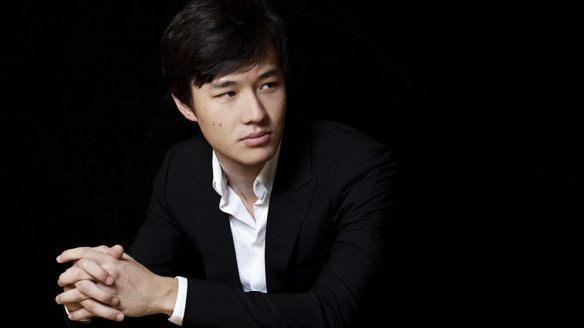
On record: Mark Bebbington, RPO / Jan Latham-Koenig – Grieg & Delius: Piano Concertos (Somm)

Mark Bebbington (piano), Irene Loh (piano duet), Royal Philharmonic Orchestra / Jan Latham-Koenig

Delius
Piano Concerto in C minor (final version) (1907)
3 Preludes (1921)
On Hearing the First Cuckoo in Spring (arr. by Peter Warlock for two pianos, 1913)
Grieg
Piano Concerto in A minor Op.16 (1869)
Sketches for Piano Concerto no.2 in B minor (1881) (edited / orchestrated Robert Matthew-Walker

Avie SOMMCD269 [74’59”]

Recorded 1-2 August 2017 (Grieg) and 22 October (Delius)

Producers Siva Oke (Grieg), Paul Arden-Taylor (Delius)

Reviewed by Richard Whitehouse

What’s the story?

Mark Bebbington continues his recording schedule for Somm with this enterprising coupling of concertos by Grieg and Delius, heard alongside shorter pieces and an unexpected novelty.

What’s the music like?

The novelty is the extant sketches for a ‘second piano concerto’ on which Grieg worked in the early 1880s, and which amount to some 150 bars. Robert Matthew-Walker has put these into performable shape, but it cannot be pretended the outcome is of more than passing interest. Bebbington also renders the sketches as a solo item and this might prove viable in terms of a recital addition or encore.

There are good things in his account of the A minor Concerto, the limpid interplay between soloist and orchestra in the central Adagio or raptness of response to the finale’s central episode with its ineffable flute melody, but the first movement is for the most part earthbound and the work’s apotheosis not free from bathos. Bebbington plays with scrupulous regard for dynamic nuance and timbral subtlety though, as in his recent account of the Gershwin concerto (SOMM260), the performance feels conscientious rather than inspired.

Fortunately. the remainder of this disc is far more persuasive. Heard here in its final version, Delius‘s Piano Concerto is a three-movements-in-one design whose occasional awkwardness of transition and tendency to rhetorical overkill is more than outweighed by the resourceful evolution of its ideas and the allure of its melodic contours. Bebbington duly responds with playing of sensitivity and panache, reinforcing the not inconsiderable claims of this work to a place in the standard repertoire.

Also featured here are the Three Preludes, their rhythmic vitality and improvisatory freedom more than usually in evidence, and a duet transcription by the teenage Peter Warlock (aka Philip Helseltine) of On Hearing the First Cuckoo in Spring that is alone worth the price of the disc: its ruminative vistas deftly and unerringly uncovered.

Does it all work?

For the most part. Bebbington is up against several decades of stiff competition in the Grieg, and his reading does not offer any great revelations. The Delius, however, is arguably a front runner for this final version, while the fill-ups are of similarly high quality.

Is it recommended?

With reservations. The playing of the Royal Philharmonic Orchestra under Jan Latham-Koenig is never less than responsive, with Irene Loh an able partner in the Delius. Sound is spacious if a little too resonant in tutti passages, and Matthew-Walker’s notes are a model of informed insight.

Further listening

You can listen to this new release on Spotify:

Further reading

You can read more about the release on the Somm Recordings website

Wigmore Mondays – Louis Schwizgebel, Benjamin Beilman & Narek Hakhnazaryan: Shostakovich & Mendelssohn

Louis Schwizgebel (piano, above), Benjamin Beilman (violin), Narek Hakhnazaryan (cello, both below)

Shostakovich Piano Trio no.1 Op.8 (1923) (from 2:14 on the broadcast link below)
Rachmaninov arr. Gayane Hakhnazaryan Vocalise Op.34/14 (1915)
Mendelssohn Piano Trio no.1 in D minor Op.49 (1839)

Wigmore Hall, London
Monday 1 April 2019

To hear the BBC broadcast through BBC Sounds, please follow this link

Commentary and Review by Ben Hogwood

A piano trio of exciting soloists gave this memorable concert at the Wigmore Hall as part of BBC Radio 3’s Lunchtime Concert series.

Pianist Louis Schwizgebel, violinist Benjamin Beilman and cellist Narek Hakhnazaryan are all making a name for themselves on their own terms, but by uniting for chamber music performances illustrate the very first principles of why this music was written.

Before their stylish performance of Mendelssohn’s Piano Trio no.1, we heard them in early Shostakovich – his first of two works in the popular form. The Piano Trio no.1 is not a typical work in the context of the composer’s full output, however – but it does show a prodigiously talented 17-year old student making formal innovations and writing heartfelt music, in this case pointing towards the work’s dedicatee, Tatyana Glivenko.

Shostakovich’s teacher Maximilian Steinberg perceived his increased ‘enthusiasm for the grotesque’, documented in Anthony Burton’s excellent notes for this concert, but looking back in the context of the composer’s full output this fascinating work revealed more of a debt to Russian romanticism than could initially be expected.

Beilman and Hakhnazaryan picked up this connection in their ardent melodies, while the steely piano of Schwizgebel gave some clues as to the source of Steinberg’s displeasure. Here though they put the seal on an outstanding account of music full of energy but with its excesses curbed through Shostakovich’s compact design. A captivating performance which is well worth experiencing from 2:14 on the broadcast link.

The inclusion of Rachmaninov’s Vocalise (from 17:50) made good sense in the context of the Shostatkovich. Made by Gayane Hakhnazaryan, mother of Narek, this arrangement illustrated the versatility of Rachmaninov’s original, more familiar to us in orchestral guise or for solo instrument with piano. Violin and cello dovetailed beautifully here, the trio managing the balance with an appropriate blend of nostalgia and poise.

Mendelssohn’s Piano Trio no.1 is perfectly suited to a recital such as this, a piece with virtuoso demands that would appeal to the soloists but also a work whose close integration brings a special intimacy to its more reflective moments. This was a terrific performance, the darker colours of the first movement established immediately in Hakhnazaryan’s heartfelt cello subject (27:02). A doleful second movement Song without words was lighter but also touching (37:04), before the twinkling right hand figures of Louis Schwizgebel led a sparkling account of the Scherzo (44:20).

The finale fused all these qualities, starting in relative seriousness and darkness (48:04) but finding bright light as the music transferred subtly but gloriously to the major key (55:16).

As an encore the Scherzo twinkled again, completing a concert notable for its fresh, enthusiastic and virtuosic qualities. Catch it if you can!

Further reading and listening

The music in this concert can be heard in the best available recordings on Spotify here:

Wigmore Mondays – Novus String Quartet play Respighi & Berg

Novus String Quartet [Jaeyoung Kim, Young-Uk Kim (violins), Kyuhyun Kim (viola), Woongwhee Moon (Violoncello)]

Respighi Quartetto dorico (1924) (2:00 – 23:53 on the broadcast link below)

Berg Lyric Suite (1926) (27:15 – 59:23)

Wigmore Hall, London
Monday 25 March 2019

To hear the BBC broadcast through BBC Sounds, please follow this link

Commentary and Review by Ben Hogwood

Listening to the Quartetto dorico is like taking a big step back in time. The opening salvo of Ottorino Respighi’s quartet from the mid-1920s is certainly arresting for its volume and scoring – only four instruments but a massive sound! – and its musical language feels imported from another age.

The young Korean ensemble capture these qualities, establishing a dream state that is maintained throughout the performance. Respighi’s quartets are rarely performed, so the BBC and Wigmore Hall should be commended for bringing this one in from the cold, adding another dimension to the 20th century string quartet.

There is an otherworldly quality to the high violin writing later on in this single-movement span, lasting over 20 minutes – and the concentration of feeling provides an intense listening experience. From 4:30 on the broadcast link the music retreats to a quieter passage led by the viola, who essentially intones another chart to the soft, restful comments of the other three. A distinctive section starts at 9:27, with an irregular pulse but a strong rhythmic profile established by the plucked cello string, which gives a dance-like feel to the melody.

At 14:15 an important section starts, the Passacaglia – which has six beats in the bar. The music here is slow moving and deeply contemplative, the first violin taking the lead with a lot of the thoughts as the harmonies stay relatively still. Gradually the higher reaches of the instruments come into play, before a dramatic series of unison sweeps bring down the curtain.

If you’re able to read music I would highly recommend following the score with the performance, as it helps you appreciate Respighi’s unique approach to writing for string quartet. The link is here

From the sacred to the profane – and affter heady music to lift us away from earth, Alban Berg’s six-movement Lyric Suite brings us right back to earthly experiences. Though publically dedicated to the composer Alexander von Zemlinsky, as it quotes from his Lyric Symphony, it is in fact a not-so-private account of his doomed affair with Hanna Fuchs-Robettin, who he met on a visit to Prague in the 1920s.

The tempo markings of the six movements are descriptive and tell the story. The first provides a good introduction to Berg’s unique way of using serial (or ‘non tonal’) music in a way that is still highly melodic and richly layered with harmonies. Marked Allegretto gioviale (from 27:15 on the broadcast), it uses all four instruments for thick textures and intense dialogue, telling the story of the start of the couple’s affair.

The second movement, marked Andante amoroso (30:43), is lighter, with more of a spring in its step as Berg profiles Hanna and her two children, with distinct musical motifs for each. The third (Allegro misterioso – Trio estatico (37:24)) gives a musically vivid account of the affair’s consummation, with feather light textures, the instruments’ bows used near the bridge to create a feverish atmosphere.

Then, as the doomed nature of the relationship makes itself evident, the music turns sourer. The fourth movement is a slow one, Adagio appassionato (40:36) – and is passionate and pretty heavy, turning to depths of desolation at the end. The second violin (44:20) quotes from the Zemlinsky Lyric Symphony, but this is eerie and displaced, with the ending at 46:38 still more remote.

The last pair of movements is devastating for Berg. It starts with a febrile affair marked Presto delirando – Tenebroso (47:13) and has crisp, jagged phrases until, as the music slows, the thoughts become more remote and despair-laden, leading to the relatively sudden end at 51:45.

Finally the Largo desolato, which really is the end of everything () These are melodies that speak of despair and desolation, the end of the tether. A brief show of spirit and resolve is made at 56:56 but this is soon overcome by the viola and second violin, before some sweeping, downwards facing melodies on the cello. The music, fully spent, peters out at 59:23, as though Berg can no longer say any more.

Like the Respighi above, there is so much going on in Berg’s Lyric Suite that it may be an advantage to follow the music itself while listening. It can be found here

The Novus String Quartet gave incredibly impressive accounts of both works, taking the physical and mental demands in their stride and keeping a consistently high standard of ensemble. They have a refreshing approach to programming, and these elements should ensure they are a top level string quartet to keep an eye on.

Further reading and listening

The music in this concert can be heard here, with the Novus Quartet’s recently released recording of the Berg Lyric Suite an added draw:

The Quartetto dorico is one of two string quartets completed by Respighi, but he also wrote the celebrated Il tramonto (Sunset) for soprano and string quartet. All three works fit very nicely onto one album, recorded by the Brodsky Quartet and the mezzo-soprano Anne Sofie von Otter:

Meanwhile Berg’s music for string quartet works extremely well in company with his colleague and fellow ‘serial’ composer Anton Webern. Berg’s rich romanticism and Webern’s incredibly concentrated approach complement each other on this Juilliard Quartet album:

One more playlist to end with – a selection of string quartets from the mid-1920s, illustrating the range of styles applied to the idiom at that time. There are some very different responses here from Janáček, Bartók, Martinů and Frank Bridge – very interesting to compare and contrast!

Arcana at the opera: Libuše (first UK staging) – University College Opera @ Bloomsbury Theatre

Smetana Libuše

Libretto by Josef Wenzig, translated by Ervin Špindler. Sung in Czech with English surtitles

Libuše – Kirstin Sharpin (soprano)
Přemysl – Robert Davies (baritone)
Krasava – Eve Daniell (soprano)
Lutobor – John Mackenzie (baritone)
Chrudoš – James Quilligan (baritone)
St’áhlav – Ben Harding (tenor)
Radmilla – Ananya Samuel (mezzo-soprano)
Radovan – William Bennett (baritone)

Chorus and Orchestra of University College London / Charles Peebles

Cecilia Stinton (director),Holly Muir (designer), Alex Forey (lighting designer), Ester Rudhart (choreographer)

Bloomsbury Theatre, London

Monday 18 March 2019

Review by Richard Whitehouse

Back in its home venue following several years’ renovation and what could more appropriate for University College Opera than this first UK staging of Libuše, Smetana‘s ‘festival opera’ whose premiere the composer held back for almost a decade until the opening of Prague’s National Theatre in 1881? Indeed, other than a semi-staged presentation at the Edinburgh Festival two decades ago, this monument to national aspiration had never even been performed in the UK – hence making University College Opera’s production a further feather in the cap of this enterprising organisation.

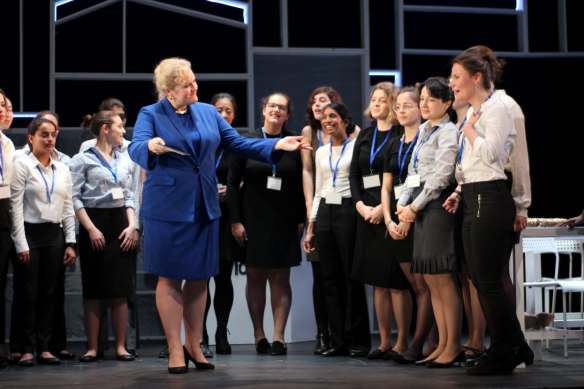
An opera so centred on Czech legend was never likely to ‘translate’ easily in cultural terms. Cecilia Stinton‘s situating of it in a “futuristic City of London” is a plausible concept which rather misfires: the interplay between Medieval myth and post-modern setting rarely seems more than a hopeful compromise; in addition, the functional quality of Holly Muir‘s designs and Alex Forey’s effective if relatively unadventurous lighting tends to reinforced the static nature of Smetana’s music, though Ester Rudhart‘s choreography certainly enlivened the crowd scenes.

The cast, however, could hardly be faulted for insight or commitment. Kirstin Sharpin found imperiousness but also humanity in the title-role; a rounded and empathetic portrayal abetted by her vocal eloquence – not least in the prophecy of fraught yet glorious times ahead for the Czech nation that forms an apotheosis of truly Wagnerian grandeur. As her consort Přemysl, Robert Davies ably conveyed the wisdom and humanity of one whose idyllic rural existence (here made into an anarcho-socialist holiday camp) is unaffected by his sudden regal status.

As Krasava, Eve Daniell gave a magnetic assumption of one whose feminine guile provokes the initial crisis yet also eventually aids reconciliation through her strength of character. John Mackenzie brought real authority to Lutobor, with James Quilligan and Ben Harding equally inside their respectively anguished and bemused roles as the brothers Chrudoš and St’áhlav. Ananya Samuel conveyed the right degree of agitation as their put-upon sister Radmilla, and William Bennett made the most of his brief though strategic cameo as the envoy Radovan.

A further enhancement was the decision to sing this opera in Czech – which may have caused passing uncertainty for the UCL Symphony Chorus, though without detriment to their energy or zeal. A pity the UCL Symphony Orchestra’s playing was sometimes undermined by issues of intonation or ensemble – but this was, after all, the first night and any such failings should hopefully be ironed out over the remaining three performances. Charles Peebles conducted with a tangible conviction right across this opulent and sprawling canvas.

All in all, this was a flawed but capable and, certainly in vocal terms, distinguished rendering of an opera that is unlikely to receive further staging in the UK any time soon. Just over three decades after its memorable production of Smetana’s The Devil’s Wall, University College Opera has once again come to the aid of a composer whose contribution to mid-nineteenth century opera rarely receives its due. In vindicating the viability of Libuše as a theatrical and, above all, musical entity, it could not have launched this new phase of its existence more potently.

There are two more opportunities to see Libuše, on Friday 22 and Saturday 23 March. For more information head to the University College website

The only available recording of Libuše, conducted by František Jílek, can be heard on Spotify below: