Live review – Yulianna Avdeeva, CBSO / Constantinos Carydis – Skalkottas, Tchaikovsky & Beethoven

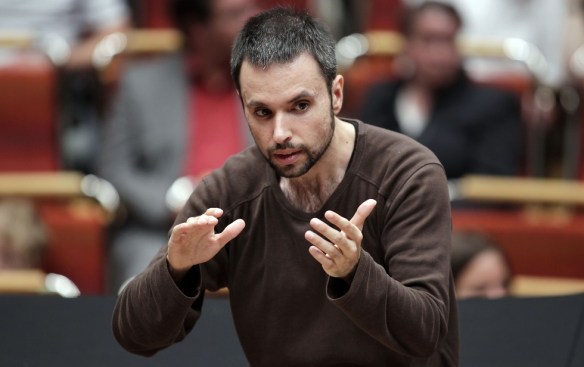
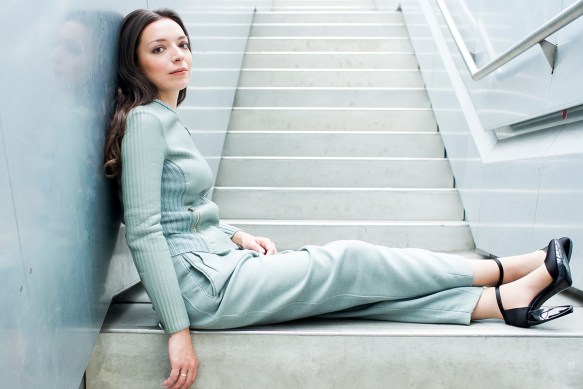
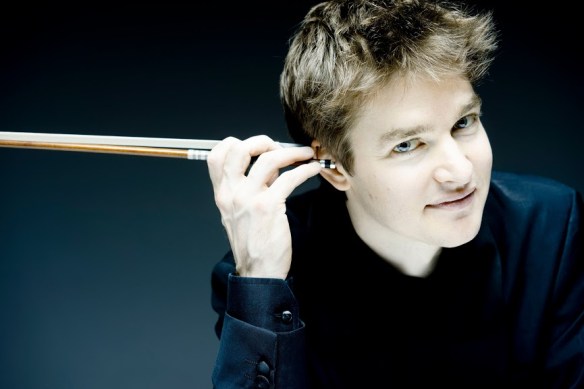
Yulianna Avdeeva (below, piano), City of Birmingham Symphony Orchestra / Constantinos Carydis (above)

Photo credits: Thomas Brill (Constantinos Carydis), C Schneider (Yulianna Avdeeva) 

Symphony Hall, Birmingham. Thursday October, 2018

Skalkottas Four Images (1948)
Tchaikovsky Piano Concerto no.1 in B flat minor Op.23 (1875)
Koukos In Memoriam Y. A. Papaioannou (1989)
Beethoven Symphony no.7 in A major Op.92 (1812)

Written by Richard Whitehouse

Conductors are not obliged to programme their compatriots, though Constantinos Carydis certainly rang the changes by including music by Nikos Skalkottas (1904-49) – who, along with Xenakis, is undoubtedly the leading Greek classical composer from the 20th century.

Nor is the City of Birmingham Symphony unacquainted with his work, having given the first complete performance of his First Symphonic Suite in 1972. That piece typifies the intricate, serially-derived music of his earlier maturity, whereas the Four Images comes from his last years when tonal music predominated. Derived from a longer ballet score for piano, these characterful miniatures amply evoke folk scenes (without using actual folk themes) in a way recalling Bartók’s Dance Suite or, more directly, the dances from Ginastera‘s ballet Estancia.

Carydis accordingly had their measure – whether the forceful rhythms and acerbic harmonies of The Harvest, or wistful pathos of The Sowing with its resplendent, bell-capped climax. After this, The Vintage provides a scherzo of no mean propulsion and Carydis was right to lead directly into The Grape Stomping for a finale of scintillating vigour and impetus. Such were the qualities that the CBSO brought to this music, in what was a captivating account of a piece which could easily become as familiar as those aforementioned given such advocacy.
Tchaikovsky’s First Piano Concerto has never wanted for exponents, so credit to Yulianna Avdeeva for her engaging perspective on music to which the ‘war-horse’ epithet is too often applicable. The indelible opening melody was majestic without being portentous, with the imposing first movement convincingly held together so that the accrued momentum carried through to a searching take on its lengthy cadenza. There was no lack of deftness during the Andantino, replete with woodwind playing of real elegance, while the finale had energy to spare on its way to a surging peroration. This is an impressive interpretation in the making.

As well as his illustrious forebears, Carydis was intent on promoting the music of his Greek contemporaries. Well regarded for his operas, Periklis Koukos (b.1960) is little known in the UK, but the tribute to his teacher In Memoriam Y. A. Papaioannou suggests a composer of no mean eloquence – this threnody for strings not a little redolent of Nino Rota in its restrained sentiment, and a solo violin part that leader Anna-Liisa Bezrodny rendered with ideal poise.

Carydis then headed directly into Beethoven’s Seventh Symphony, here given a reading that was always invigorating and often electrifying. Dynamic contrasts occasionally verged on the contrived, and the repeat of the scherzo’s hymnal trio was almost parodic in its stateliness, but these were outweighed by the power and incisiveness elsewhere. Carydis drove the CBSO hard in the finale, but the players admirably rose to the challenge – antiphonal violins to the fore as the coda reached its visceral culmination. Whatever its inconsistencies, this was a performance to reaffirm the greatness of this music, as an enthusiastic reception testified.

A persuasive programme of the evergreen and unfamiliar. Should Carydis include Skalkottas’ ballet The Maiden and Death in a future engagement with the CBSO, then so much the better.

Tonight’s concert will be repeated at Symphony Hall on Sunday 7th October at 3pm. For more information on future CBSO concerts head to their website
Live review – O/Modernt / Hugo Ticciati at Kings Place: Looping Time

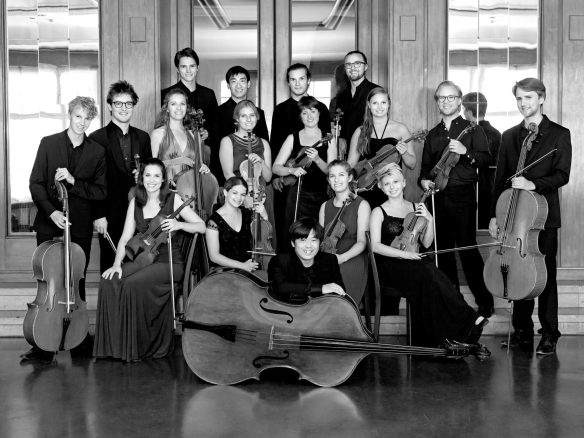
O/Modernt (above) / Hugo Ticciati (below)

Hall One, Kings Place, Friday 21 September 2018

Tüür Violin Concerto no.2 Angel’s Share (2018)
Adams Shaker Loops (1978)
Pérotin arr. Johannes Marmén Viderunt omnes (c1200)
Glass Symphony no.3 (1995)

Written by Ben Hogwood

The Time Unwrapped series at Kings Place has dealt out a number of very interesting concerts. This program from the young Swedish-based but European-sourced O/Modernt chamber orchestra combined established minimalist forebears with new interpretations of working with small musical cells – or waveforms as the program called it.

In a change to the order of the program we began with the Violin Concerto no.2 of Erki-Sven Tüür, premiered in the composer’s native Estonia earlier this year. Tüür has an intriguing past where progressive rock meets classical, and it has furnished him with a very strong sense of dramatic structure and the gift for vivid storytelling. This work, subtitled Angel’s Share, was all about interpreting the gap of air that appears in the barrel during the ageing of whisky, and how that can be applied to the wisdom of an adult as they grow older, ‘letting go of the unpleasant tastes’ in the words of the composer.

Cannily he captured this in musical terms, culminating with the release of the cork at the start of the concerto’s third movement, where the (sadly unnamed) percussionist dealt a striking blow. The start employed the other end of the percussive spectrum, with a high metallic note from which Ticciati’s solo part germinated. The soloist was superb, inhabiting the part and its distinctive figures, while the strings’ counterpoint was consistently absorbing and meaningful, right up to the affirmative finish. It would be great to hear this work again soon, and certainly those present appreciated it – among them violinist Fenella Humphreys.

John Adams’ Shaker Loops followed, a relatively early minimalist classic from 1978 that remains a success in concert. The near-constant tremolos require great stamina and control on the part of the string players, but that was never an issue with the 19-strong orchestra here, who danced and shimmered in tune with a sensitively handled light display. Double bassists Ben Griffiths and Jordi Carrasco Hjelm were the rock on which the three-movement piece stood, but the way the slower lines undulated over the top was particularly affecting, capturing the deep spiritual roots of the piece – which is after all a representation in music of ‘shaking’. Adams is in thrall to Sibelius when he writes for strings in this way, but the harmonic language is an extension and has a distinctly wide-open, American feel. Ticciati and his charges took us out onto that plain.

Johannes Marmén‘s arrangement of Pérotin’s Viderunt omnes opened the second half, a curiousity that showed how even in the 1200s music had minimalist tendencies. On occasion it was difficult to see Perotin’s original thinking, however, as the arrangement took hold, but the final paragraph from the double basses took us back into his world. It showed how ancient and modern can still integrate – we use largely the same notes after all – and how both are still relevant and complement each other. The fly in the ointment, unfortunately, was extraneous but unidentified noise from the roof of Hall One that threatened to disrupt the performance.

Ticciati had to acknowledge it with a rueful smile before moving straight into the jewel of tonight’s crown, Philip Glass’s Symphony no.3. The previous work in his symphonic output is on Brucknerian dimensions, running for nearly an hour, but in the Third Glass compresses his musical argument into an impressive, cohesive whole. O/Modernt got right to the heart of the small cells that are cleverly manipulated here, but also found the deep emotion of the central Chaconne, which has a dark heart but opens out with major key harmonies to find greater optimism – before going back into the minor key again. It is an ebb and flow that proves extremely affecting on repetition, and was the centrepiece of a fine performance, whose outer movements showed the virtuosity of these string players to the highest degree.

This was a very fine concert and an ideal showcase for minimalism as an extremely valid form of composition, showing also that there is a sizable library beyond the works of Steve Reich. By way of an encore we had Rufus Wainwright in the style of John Adams, his song Across the Universe played with beautiful precision and lovingly directed by Ticciati.

Wigmore Mondays: Trio Mediæval

Trio Mediæval [Anna Maria Friman (voice, hardanger fiddle), Linn Fuglseth (voice, melody chimes, shruti box), Jorunn Lovise Husan (voice, melody chimes)]

Anon (Gregorian chant) Salve Regina 1:48
Anon 13th-century English Salve mater Miscericordie 5:33; Salve virgo virginum 7:57-11:10
Trad. Norwegian Solbønn
Trad. Swedish Limu Limu Lima
Trad. Norwegian Lova line; Villemann og Magnhild
Trad. Swedish St. Örjan och draken; Om ödet skulle skicka mig; Jag haver ingen kärare
Anon (Gregorian chant) Benedicta es caelorum regina
Anon 14th-century English Benedicta es caelorum regina; Alma mater / Ante thorum;
Anon 13th-century English Dou way Robyn / Sancta Mater
Trad. Norwegian So ro liten tull; Sulla lulla
Trad. Swedish Du är den första

Wigmore Hall, London; Monday 17 September 2018

You can listen to the BBC Radio 3 broadcast by clicking here

Written by Ben Hogwood

This is a placeholder – review and guide coming soon.

Further listening

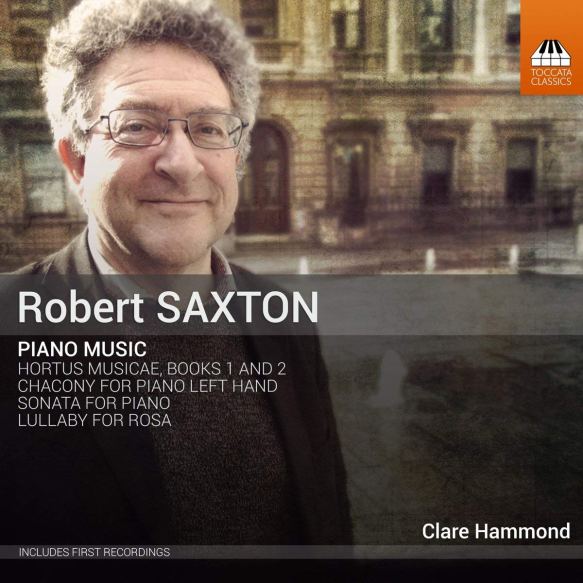
On record: Clare Hammond – Robert Saxton: Piano Music (Toccata Classics)

Saxton Piano Music

Clare Hammond

Saxton
Hortus Musicae, Books One (2013) and Two (2015)
Chacony for the Left Hand (1988)
Sonata (1981)
Lullaby for Rosa (2016)

Toccata Classics TOCC0458 [55’44”]

Producer / EngineerMichael Ponder
Recorded21 & 22 August 2017 at the Church of St John the Evangelist, Oxford

Reviewed by Richard Whitehouse

What’s the story?

A disc collating most of the solo piano output by Robert Saxton (b1953) in performances by Clare Hammond, who has championed his work over recent years and is the dedicatee of two books of shorter pieces comprising Saxton’s most significant music for this instrument so far.

What’s the music like?

Saxton came of age as a composer during the early 1980s, with such pieces as the Sonata for Piano. This was completed in 1981, the centenary of Bartók’s birth and the pivoting of whose mature piano music between stasis and dynamism is evident in the present work’s methodical unfolding towards a coruscating climax; rounded off by a limpid if by no means valedictory chorale. Hammond has the measure of this compact yet eventful piece, not least its unforced and resourceful tonal follow-through as subsequently became a hallmark of Saxton’s thinking.

Such is audible in the Chacony for Piano Left Hand composed in 1988 for Leon Fleischer. Its antecedents in archetypal examples by Purcell and Bach are never hard to detect, but Saxton ‘personalizes’ this form through a tonal framework that facilitates its evolution as a sequence of interrelated variations – as defined harmonically as it is seamless texturally. Concerning the latter aspect, Saxton notes that he was at pains to ensure his music sounded as though written for two hands – a quality that is audibly to the fore in Hammond’s admirably fluent reading.

Both these pieces have been previously recorded, but the two volumes of Hortus Musicae are new to disc and evince piano writing no less idiomatic and arguably more personal than before. The inspiration is that of a ‘musical garden’ in all its allegorical and metaphysical implications, with the five pieces which comprise the First Book (2013) embodying this in ingenious ways – not least the stealthy (Andrew Marvell-inspired) floral clock of Hortus Temporis, or synthesis of formal precision and expressive eloquence in Hortus Infinitatis.

The seven pieces of the Second Book (2015) are even more diverse and contrasted in and between themselves. Here, too, the inspiration is often more concrete – hence the invoking of fondly remembered music in Beech Bank (á la recherche)…, or deft play on meanings which motivates the heady course of Hortus Animae Alis Fugacis; a concluding piece in every sense. The fact these 12 pieces outline a circular tonal trajectory makes further books unlikely, but Saxton will hopefully find a means of extending the sequence up to 24 pieces.

Does it all work?

Indeed. Saxton has long been a composer able to fuse serial and tonal elements without the results seeming at all contrived or inhibited. The two books of Hortus Musicae abound in evocative and arresting musical imagery which Hammond conveys as convincingly as she realizes the not inconsiderable technical challenges. The disc is rounded off by Lullaby for Rosa (2016), a minute-long ‘welcome gift’ for this pianist’s daughter and a further instance of how deftly Saxton integrates technical ingenuity within a context of limpid wistfulness.

Is it recommended?

Very much so. The piano sound is spacious in balance as well as realistic in tone, while the composer contributes an entertaining booklet note that takes in an overview of his ancestry and formative years. Hopefully there will be further releases of his music from this source.

You can read more about this release and listen to clips on the Toccata Classics website, or listen in full on Spotify below:

On record: Málaga Philharmonic Orchestra / Paul Mann – Rodney Newton: Orchestral Music Vol.1 (Toccata)

Newton Orchestral Music, Volume One – Symphony no.1; Symphony no.4 ‘Distant Nebulae’

Málaga Philharmonic Orchestra / Paul Mann

Newton
Symphony no.1 (1969)
Symphony no.4 (1975)
Distant Nebulae (1979)

Toccata Classics TOCC0459 [70’29”]

Producer/Engineer Albert Moraleda
Recorded September 18-22 at Sala Beethoven, Sala de Ensayos de Carranque, Málaga

Reviewed by Richard Whitehouse

What’s the story?

The ever-enterprising Toccata Classics begins another series, devoted to the orchestral output of Rodney Newton (b1945) who, best known for his brass band and film music, has been no less active in the concert domain, with 14 symphonies to date and numerous other pieces.

What’s the music like?

We begin at the start of this symphonic output, with the Symphony no.1 that Newton completed in 1969. He suggests Shostakovich and Vaughan Williams as primary influences, though that of Malcolm Arnold (then the leading British symphonist of the younger generation) is also detectable in the livelier episodes of the opening movement and a finale alternating between jazzy incisiveness and high-flown eloquence. Best, though, is the central Lento – its serenity increasingly undermined by more troubled elements on the way to a radiant close. Had this symphony appeared a decade or so before, it might well have found favour at a Cheltenham Festival of the period; heard today, its wide-eyed naivety – in terms of expression while not technique – appears more a resolute statement of intent for where its composer was headed.

One instance is the Symphony no.4 of 1975, its more forward-looking idiom underpinned by an adept recourse to serial technique and a continuous variation at its most resourceful in the opening Metamorphosis whose seamless and cumulative momentum readily confirms   a symphonist of conviction. There follows an Elegy of overt if not unrelieved sombreness, then a Scherzo malevolo dominated by suitably strident material and climaxing in a ‘break’ for kit-percussion such as leads into the finale. This Passacaglia, Variations and Epilogue builds stealthily, with increasing allusions to earlier ideas, to a powerful culmination whose impact resonates throughout the raptly inward concluding bars. Had Sir Charles Groves been able to secure its premiere, Newton’s symphonic profile would surely have been far greater.

The disc is rounded off by Distant Nebulae (1979), which received two semi-professional performances before this recording. Although inspired by the ‘cosmic landscape’ of Ives’s The Unanswered Question, its interplay of chorale-like melody and modal harmony suggests more Copland and even Barber; the music evoking that ‘’gentle meditation on the night sky and the mysteries of the universe’’, of which the composer speaks, in suitably pensive terms. Just maybe this could be Newton’s means of finding favour with a non-specialist audience?

Does it all work?

Very largely. That the First Symphony is a ‘starting out’ piece does not lesson its undoubted appeal, and it clearly commended itself to the Málaga Philharmonic players who render it with relish. The Fourth presents tougher challenges which are not entirely surmounted here (notably in the extensive outer movements), but this is not to question the commitment of these musicians – presided over by the dependable Paul Mann, whose service to present-day British symphonism (at least as represented by Toccata Classics!) could hardly be gainsaid.

Is it recommended?

Indeed. The sound is spacious and well-focussed (if just a touch overbearing at climaxes), while Newton contributes an informative and personable booklet note. As with Steve Elcock and Matthew Taylor, one looks forward to further symphonic odysseys from this source.

You can read more about this release and listen to clips on the Toccata Classics website, or listen in full on Spotify below: