Edinburgh String Quartet – Intimate Voices

Edinburgh-Quartet

Ben Hogwood visits the Edinburgh String Quartet on their home turf for an inventive program studying the intimacy of the string quartet
Queen’s Hall, Edinburgh, Wednesday 11 November

Schubert String Quartet in E flat major, D87 (1813)

Shostakovich String Quartet no.7 (1960)

Sibelius String Quartet in D minor, Op.56, Voces Intimae (1909)

Intimate Voices was the subtitle of this triptych from the Edinburgh String Quartet, an intriguing look at how the combination of two violins, viola and cello has become one of the main expressive forms in classical music.

To show how composers have approached the medium in different ways they presented a quartet by the teenage Schubert, a mature and compact example by Shostakovich and the only fully published example by Sibelius.

Of the three pieces it was perhaps this one – subtitled Intimate Voices – that carried the most penetrating emotional impact, played with passion and purpose by the quartet, whose dynamic control was especially impressive. The quiet moments, helped by an attentive Queen’s Hall audience, were a real window into Sibelius’ mind, and his string writing, which as the perceptive booklet note pointed out was boosted by his knowledge of stringed instruments through playing the violin, was interpreted with real style.

This piece was equalled in emotional impact by the Shostakovich, arguably the most effective of his fifteen quartets at making its mark in a very short space of time. Just twelve minutes pass in the String Quartet no.7 but in it we get deep into the thoughts of the composer. Shostakovich vividly illustrates his humour in the face of adversity but also the adversity itself, and the Edinburgh Quartet could be found warily treading forward as though worried what might be around the corner. Here again they paid exquisite attention to the quiet writing, so that when the third movement exploded out of the box it did so angrily and with maximum impact.

By complete contrast the first item in the program served notice that the sixteen year old Schubert was capable of going places. While taking obvious leads from Haydn (the second movement) and Mozart (the third) the String Quartet in E flat, published as D87 in the composer’s catalogue, is a beautifully crafted work that is by no means a copy. Schubert writes with confidence and melodic interest, the roots of his work in song already sown and making their most poignant effect in the first and third (slow) movements. The second movement was a blink-and-you-miss-it affair, with first violinist Tristan Gurney and cellist Mark Bailey helping to bring out the humour. Overall the intimacy between the players was as Gurney said in an insightful chat with the audience, essentially being a conversation between friends.

Gurney’s introduction was a key part of the enjoyment of this concert, showing that the theme Intimate Voices need not be restricted to the four players, but that the audience were included as well.

The Edinburgh String Quartet website can be accessed here

Tomasz Lis at Leighton House – Tchaikovsky and Chopin

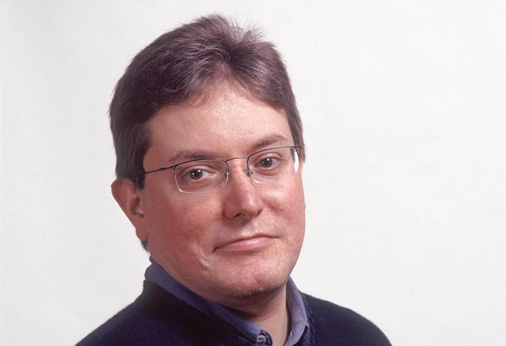
tomasz-lis
Tomasz Lis

Richard Whitehouse on an intriguing recital from the Music at Unique Venues series
Leighton House, London Tuesday 10 November

Tchaikovsky: The Seasons, Op. 37b (1875-6)

Chopin: Preludes, Op. 24 – selection (1835-9)

Tomasz Lis (piano)

This evening’s recital formed part of the series Music at Unique Venues, aiming to combine the appeal of music and art by holding recitals at places not normally associated with live performance or, moreover, that are not often open to the general public. Although Leighton House has been accessible over much of the past century, not least for live music-making, a lengthy period of renovation had effectively taken it out of circulation; making performances such as that given tonight by the Polish pianist Tomasz Lis a much-needed act of redress.

Each half began with Lis placing the music in the context of fine-art from the same period. Thus he prefaced his account of Tchaikovsky’s The Seasons with consideration of those paintings A Rye Field and Winter by Ivan Shishkin (1832-98), whose deftly achieved realism found its complement in the understated and folk-inflected ethos of Tchaikovsky’s cycle; played with a winning combination of grace and eloquence by Lis, who pointed out it might have been titled ‘The Months’ were it not for the commercial acumen of its publisher.

The second half duly opened with Lis considering the paintings Souvenir de Mortefontaine by Jean-Baptiste-Camille Corot (1796-1875) and Fire at Sea by JMW. Turner (1775-1851); their powerful synthesis of feeling with depiction finding direct equivalent in the 24 Preludes of Chopin, 16 of which (Nos. 1-11 and 13-17) were heard here. Two-thirds of such a closely integrated cycle might have been in error, but Lis ensured this selection unfolded with a cohesion such that the A flat prelude rounded-off the sequence with requisite poise.

Add to this visual and musical feast the opportunity to enjoy the surroundings of the house made famous by Frederic, Lord Leighton (1830-96) out of opening hours, and the result was an evening as instructive as it was pleasurable. Tomasz Lis has recently released his debut album – featuring impromptus by Schubert, Chopin and Fauré – via Rondeau Productions (Klanglogo KL1511), which is well recommended. The Music at Unique Venues continues next February at Armourers Hall in the City of London and then in May at the Saville Club.

You can read more about the Music at Unique Venues series here

Meanwhile the website of Tomasz Lis is here

Wigmore Mondays – Barnabás Kelemen

barnabas-kelemen
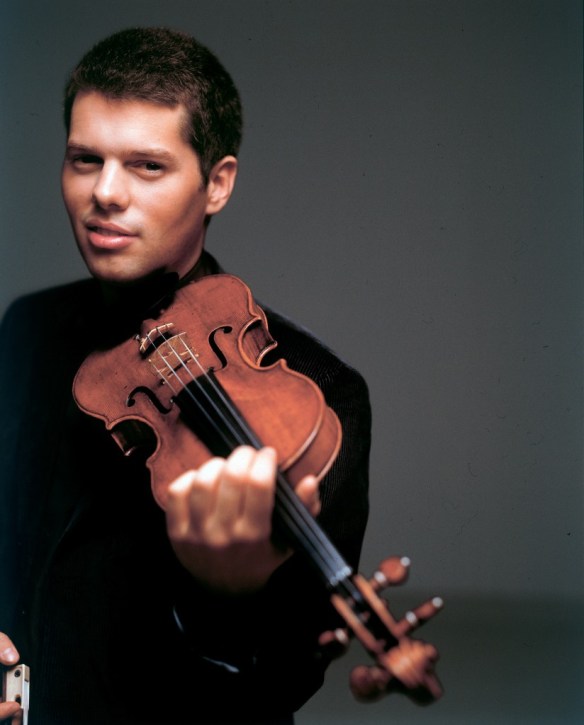
Photo (c) Laszlo Emmer

Barnabás Kelemen (violin) – Wigmore Hall, London, live on BBC Radio 3, 9 November 2015

Listening link (open in a new window):

http://www.bbc.co.uk/programmes/b06nrj16

on the iPlayer until 9 December

Spotify

In case you cannot hear the broadcast, here is a Spotify playlist of the music in this concert, from available versions on Spotify:

https://open.spotify.com/user/arcana.fm/playlist/7hpQWH2e75lnrwx3ibS4LU

What’s the music?

J.S. Bach: Partita No. 2 in D minor (1720) (30 minutes)

Ysaÿe: Violin Sonata No.3, ‘Ballade’ (1923) (6 minutes)

Paganini: 4 Caprices (from the 24 Caprices Op.1) (1802-17) (12 minutes)

Piazzolla: Tango Étude no.1 (1987) (3 minutes)

What about the music?

It’s quite possible to think of the violin as an ancestor of the guitar when you listen to this music. Some of it appears to be purely for show-off, especially when you get to the incredibly testing works by Ysaÿe, Paganini and Piazzolla, but when you look closer they are actually found to be musically proficient as well as technically demanding.

If Paganini was alive today I would imagine him behaving a bit like the guitarist Steve Vai, performing superhuman feats on his instrument but making sure at all times that not a note was wasted. That much is true in each of the famous Caprices, written for solo violin in a way that taxes all kinds of techniques with the performance of the instrument. The four here test the violinist’s ability with rapid string crossing, with playing three or four notes at the same time, and with rapid fingerwork.

Ysaÿe was also a virtuoso violinist, one who enjoyed dedications from Franck (his Violin Sonata) and Debussy (the String Quartet). Not much of his music is heard today, and when it is the Solo Violin Sonatas such as the one in this recital tend to be picked. Ysaÿe also taxes the violin but again ensures it is not just for display purposes. Piazzolla, meanwhile, was not known primarily as a violin composer, and his Tango Studies were originally written for the flute, but they transcribe naturally for the instrument, which can supply the rhythmic ‘snap’, as well as the other nuances that make the tango such an intense method of musical expression.

J.S. Bach’s Partitas for the solo violin come from a very different viewpoint. As in much solo Bach there are moments in these pieces where the listener feels as though they have entered a different time dimension, Bach’s treatment of his musical material so inevitable and so effortlessly calculated that it feels like the passing of time. The Solo Violin Partita no.2 is one of his most famous examples for a solo instrument, partly for the massive Chaconne with which it ends – a series of 64 variations on a small but ever-present loop.

Performance verdict

I wonder how many notes Barnábas Kelemen played in the course of this hour of music? Certainly Paganini ensured there were as many as possible in the selection of Caprices that he played, while Ysaÿe too packed a load into his brief but strikingly intense Solo Sonata.

Brilliantly played though this recital was, it could have done with a little more light and shade in the programming. The shade was to be found in the Bach, which was a really convincing account and was clearly a work close to Kelemen’s heart. He was relatively slow in the Allemande dance, which was an effective tactic as it meant the Gigue carried greater impact – though of course everyone was really waiting to see what he did with the Chaconne. Here Kelemen demonstrated a very firm grasp of the form, making a natural build through the 64 different variations, Bach’s vision growing in power and impact until it carried all before it.

Staying in the same key for the Ysaÿe was a brave but effective move, and this brief piece carried a Romantic intensity. It was good to be reminded of the Belgian composer’s genius, for his is not a voice often heard. Following this with Paganini was perhaps a step too far, like a mixed grill with no vegetables if you’ll pardon the parallel! That said, the Devil’s Laughter was brilliantly evoked in the last of the four caprices. Finally the Piazzolla, while harnessing the rhythms of the tango, was a bit too short to fully appreciate.

Kelemen is clearly a player of great ability – and although this recital might be better experienced in two takes, it demonstrates his technical prowess and keen musicality.

What should I listen out for?

J.S. Bach

1:42 – the Partita begins with a relatively slow dance, the Allemande. Kelemen does not use much vibrato to begin with, and his violin has a penetrating tone. As with much of the best Bach the music appears to unfold in a single, natural phrase.

7:08 – the Courante is much more purposeful, the notes quicker and the tone fuller. Bach drives the music on with a persuasive triple-time rhythm that Kelemen takes quickly. The tone of the instrument is also a bit brighter, the notes in a slightly higher register.

9:49 – the slow dance, the Sarabande­ – where the minor key really comes into its own. Here the violin is asked to do a lot of ‘multiple stopping’, which is playing more than one note at once, effectively making its own chords.

12:28 – the Gigue, another triple time dance that Kelemen takes at quite a lick, but which still has plenty of contrast with the repeats being used in each of the two sections. Bach gathers a lot of energy here, and as often uses the Gigue as the last dance form in his suites, but there is no feeling of finality here because we still have one movement to go…

17:47 – and that final movement is a massive one, the Chaconne, famously performed separately or reinterpreted for other instruments. The violin begins with a grand statement of a chord sequence which it then proceeds to spin out over 64 variations, mostly in the minor key but moving to the major at 24:44. Bach gives an enormous variety of colour, speed, attack, repose and musicality, starting relatively slowly but moving to passages of increasing difficulty and intensity, notably the string-crossing passage from 22:45, but this is also one of his most profound pieces of music when interpreted well. The music turns back to the minor key with impressive dramatic effect at 28:14.

Ysaÿe

33:08 – a slow beginning, acting as an introduction, before the sonata itself begins at 33:27 with a theme that sounds quite oriental. Although set in D minor the music rotates around that centre at quite a distance, and there is a lot of multiple stopping here. Despite the considerable virtuosity required there is a powerful musicality at the heart of this piece, which never uses display for the sake of it.

Paganini

40:37 – the Caprice no.1, almost laughably, is marked Andante (at a walking pace!) It certainly doesn’t begin that way, with a fiendish set of arpeggios facing the violinist. As the bow bounces across the string it is clear however that each of these notes is important, despite the obvious display tactics!

42:07 – the Caprice no.7 is much slower, and presents its theme in octaves – which any string player will know is an invitation for cramp! There is an eerie feel to the presentation of the notes, though soon Paganini can’t resist taking off at a great speed again. At 44:58 the music really goes out the blocks!

45:44 – the Devil’s Laughter of the Caprice no.13 is surely one of the most descriptive things Paganini wrote for the violin, and it crops up at disarming intervals in this piece, in and around the fiendish technical demands of the central section, set in a tempestuous minor key.

48:07 – the famous Caprice no. 24 was the basis of variations written by Rachmaninov and Lutoslawski (not to mention the South Bank Show theme!) but here it is in its original form, for solo violin. This Caprice is in itself a set of variations, and has a wonderful effect of tumbling pizzicato (plucking) at 50:34.

Piazzolla

53:31 – immediately the snappy tango rhythms are evident in the first tango etude, which sounds as though it was written for violin all along. The technical demands are not as extreme as some of the other music on the program, with a grasp of the tango rhythm the most essential part of the performance.

Further listening

https://open.spotify.com/user/arcana.fm/playlist/7hpQWH2e75lnrwx3ibS4LU

Taking Paganini’s Caprice no.24 as a starting point, the Spotify playlist above includes Rachmaninov’s famous Variations on a theme of Paganini for piano and orchestra, as well as Lutoslawski’s Variaions on the same theme for two pianos. Finally, it is a good chance to air one of six substantial concertos that Paganini wrote for violin and orchestra, works that are hardly ever heard in the concert hall these days. The second is one of the best, known as La Campanella because of the tune used in the last movement.



The Nash Ensemble play Julian Anderson at the Wigmore Hall

julian-anderson

Contemporary Music Series: Julian Anderson, Composer in Residence – Wigmore Hall, Saturday 7 November

Stravinsky: Three Pieces
Ravel: Chansons madécasses
Anderson: The Colour of Pomegranates; Seadrift; Ring Dance [UK premiere]
Woolrich: Pluck from the Air [London premiere]
Anderson: Van Gough Blue [World premiere]

Claire Booth (soprano), Nash Ensemble [Philippa Davies (flute/piccolo), Richard Hosford, Marie Lloyd (clarinets), Laura Samuel, David Adams (violins), Laurence Power (viola); Adrian Brendel (cello), Peter Buckoke (double bass), Sally Pryce (harp)]
Alexandre Bloch, conductor

Review by Richard Whitehouse

nash-ensemble
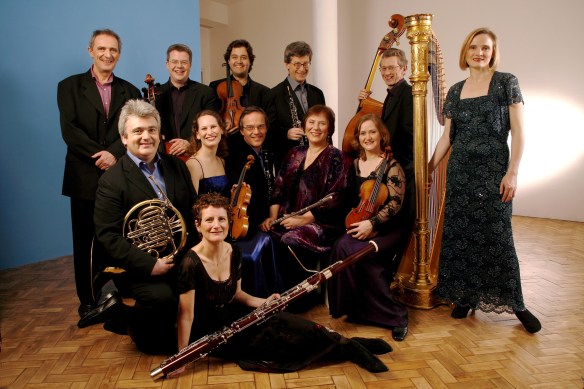
The Nash Ensemble. © Hanya Chlala/ArenaPAL

Julian Anderson’s residency at Wigmore Hall has brought a variety of artists and ensembles in performances of music – notably from the early twentieth century – so often difficult to schedule in recitals. One such opened tonight’s programme: Stravinsky’s Three Pieces for string quartet (1914) – a work no less radical than the ballets preceding it, given with the rhythmic trenchancy, gestural precision and harmonic plangency as characterize each piece.

Quite a contrast with Ravel’s Chansons madécasses (1926), a song-cycle whose singular scoring – soprano with flute, cello and piano – makes it awkward to find the right context. Not that this inhibited Claire Booth, whose unforced eloquence in the sensual ‘Nahandove’ and languorous ‘Il est doux de se coucher’ was balanced by the accusatory wrath of ‘Aoua’.

Anderson was represented in this first half by two pieces from two decades ago. The Colour of Pomegranates (1994) is less the encapsulation of Sergey Paradjanov’s film so much as a recollection of its magical aura, Philippa Davies unfolding the alto flute part with admirable dexterity as partnered by Ian Brown. Seadrift (1993) is a continuous sequence of songs such as renders Walt Whitman’s fabled text from a decidedly fresh perspective – soprano joined by flute (doubling piccolo) clarinet and piano in music that, without downplaying the purely emotional or even sentimental qualities of this poetry, enfolds it within a sonic canvas that underlines the aspects of union and separation at its core. Another fine showing from Booth, with members of the Nash taking its harmonic and rhythmic intricacies decisively in hand.

After the interval, Laura Samuel and David Adams gave the first UK hearing – and the first anywhere in 27 years – of Ring Dance (1987), Anderson’s piece which combines his then fascination for microtonal tuning with harmonic and timbral facets of Norway’s Hardanger fiddle tradition. The result pivots between relative consonance and dissonance in a way that intrigues rather than provokes (though first-night listeners in Stockholm evidently thought otherwise!) and, as with Anderson’s recently revived First String Quartet, a reminder of how early preoccupations have continued along more oblique lines. John Woolrich’s Pluck from the Air (2013) sprang few surprises in comparison, this tensile quintet for piano and strings outlining a longer-term engagement which might have been pursued in a second movement.

All the members of the Nash Ensemble then took the stage for the first hearing of Van Gough Blue (2015), Anderson’s homage to the artist whose preoccupations with colour and shade are embodied over its 20 minutes. Thus ‘l’Aube, soleil naissant’ evokes a tangible awakening, its inwardness duly offset by the pungent rhythmic and melodic interplay of ‘Les Vignobles’ and the ‘coming into focus’ of ‘Les Alpilles’ with its lively apex. The suspenseful harmonic stasis of ‘Eygalières’ then makes way for the culmination of ‘la nuit, peindre les étoiles’: a musical translation of the morning (4:40am on 25th May 1889) when Van Gough sketched his Starry Night painting, heard in terms of a ‘cosmic dance’ as carries all before it to the disintegrative final lament. Alexandre Bloch presided over this assured reading of a significant new work.

Life, the Universe and Music – a conversation with Vasily Petrenko

vasily-petrenko
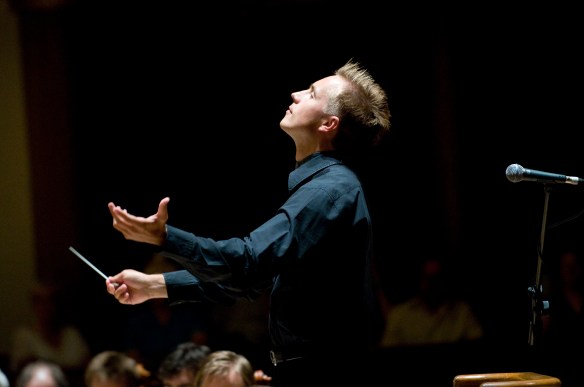
Photo (c) Mark McNulty

Richard Whitehouse talks to conductor Vasily Petrenko about the music of Enescu and Scriabin, his work with two orchestras who have flourished under his direction (the Oslo Philharmonic and the Royal Liverpool Philharmonic) and not confusing your Petrenkos!

Chatting with Vasily Petrenko is precisely that: an informal exchange of ideas and anecdotes with none of the potential divisions between interviewee and interviewer. Not that this in any way belies his commitment as a conductor, having brought the Royal Liverpool Philharmonic Orchestra to the 15th Enescu Festival in Bucharest (they first appeared here four years ago) for two of this event’s most ambitious concerts – the second of which featured the Romanian composer’s lavish and hugely demanding Third Symphony (given its London premiere only last February). Was this a work Petrenko had conducted previously?

“No, and I can’t wait to hear how it comes together this evening [for the record, it was an undoubted highlight of the festival]. Enescu still suffers from being thought of as a composer of folk-inspired music, but there’s far more to his thinking. The Third Symphony is an important stage in the evolution of the genre after Mahler, and only really makes its mark in a large venue such as the Grand Palace here in Bucharest. I doubt whether it could ever become a repertoire piece, yet much the same was said of Mahler’s symphonies up until the 1960s so you can never be sure.”

Hopefully Petrenko will soon bring his other orchestra to the Enescu Festival – the Oslo Philharmonic, of which he has been Chief Conductor since 2013. Having appeared at the Edinburgh Festival last month, and with a UK tour next March, theirs is building into an equally auspicious partnership – underlined by the imminent appearance of Scriabin’s First and Fourth Symphonies on the LAWO Classics label. Although no longer the cult figure he once was, Scriabin is still viewed with a degree of suspicion and his abilities as a symphonist treated with some scepticism.

lawo‘

“I think there are several reasons for this, not least his premature death in 1915 and the advent of the Bolshevik Revolution three years later which meant that Russian music took a very different route from that on which Scriabin was headed. Clearly the piano music – the sonatas in particular – has become part of the twentieth-century repertoire, and I feel that the five symphonies are due the same recognition. You have to remember, too, that Scriabin’s evolution came at a time of immense ferment across all the arts – not least music; indeed, I tend to feel that the history of music from the Renaissance onwards is one of an increasing acceleration, so the early twentieth century was a real explosion of possible ways forward. Only now, perhaps, can we view this era more objectively and get a balanced overview of what was achieved. When this happens, I’m sure that Scriabin’s symphonies will be seen as crucial to their time.”

Was it fortuitous that The Poem of Ecstasy was being designated on this new disc as Symphony no.4? “Not at all, and you can be sure that Prometheus – The Poem of Fire will be given as Symphony no.5 when we record it. Scriabin himself had no doubt these pieces followed on chronologically from his previous symphonies and it’s not difficult to hear why. I think what we might call ‘extra-musical’ factors have tended to draw attention away from their musical content – the formal rigour and especially the thematic economy of which the composer was capable by then.”

Petrenko’s commitment to the Scriabin cause is such that he is keen to perform and, if possible, record Preparation for the Final Mystery that the composer had envisaged prior to his death, and which was realized over the course of three decades by musicologist Alexander Nemtin. “I imagine that the precise nature of Scriabin’s Mysterium [a week-long synaesthetic ‘happening’ in the foothills of the Himalayas, intended to bring about the purification of the human race] can never be known, and maybe even the composer wasn’t too sure beyond the overall concept. Yet the ‘Preparation’ as Nemtin has realized it is more than an indulgence: I feel it stands up as a musical statement in its own right, and would be a great way to crown our work with Scriabin. I’ve little doubt, too, it would come across much more effectively in Oslo’s Konserthus than some remote performance space in the Himalayas!”

Mention of the Konserthus is a reminder that the orchestra finally looks set for a new concert hall – to be situated on the waterfront at Filipstad, with the Oslo Philharmonic as the principal tenant and the project to be financed in conjunction with the building of a congress hotel on the adjacent site. Petrenko remains optimistic, albeit cautiously so, concerning future developments.

“Thirty years on from the initial proposals, and this looks like becoming a reality. Of course, there will always be those who say such a project is taking up resources that could be better used elsewhere, but if you consider the positive impact this is likely to have in terms of infrastructure and employment, then there can be little doubt why it should get the go-ahead. I very much hope it will come about during my tenure with the orchestra.”

Indeed, there seems no reason why Petrenko’s four-year contract in Oslo should not be extended before long. In Liverpool, meanwhile, he has an open-ended contract which only requires him to give three years advance notice of when he wishes it to be concluded.

“This is ideal in that it enables us to plan ahead, with more than enough time in hand when either of us feels the need to move on. I’m proud of what we’ve achieved together so far [not least cycles of Rachmaninov symphonies for Warner and Shostakovich symphonies for Naxos], and there’s no reason why it should end when we’re able to put on concerts such as those at this year’s Enescu Festival. That said, I was more than a little surprised when I received congratulatory emails and tweets about taking on the Berlin Philharmonic Orchestra from 2018 [actually the conductor Kirill Petrenko]. It’s great to be popular, but some people had evidently confused their Petrenkos!”