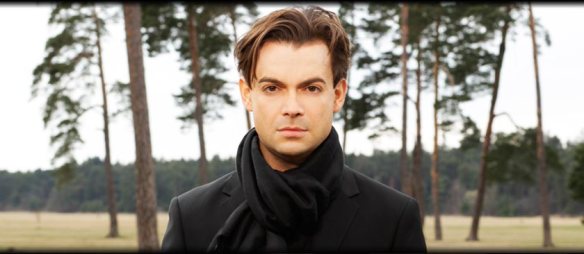
On record: John Cale – M:FANS / Music For A New Society (Domino)

MFANS

Richard Whitehouse considers in detail John Cale’s Music For A New Society, back from its original release in 1982 and now in digital guise.

That John Cale should have chosen to make his 16th studio album the rewriting of his eighth is hardly provocative in itself. Not least as Music For A New Society remains in any case the most provocative of all his releases, coming at a time when Cale – poised on his fifth decade – was not so much reassessing his creative priorities as searching, uncertainly if by no means tentatively, for the way forward. That the way forward only made explicit its fraught genesis explains why Cale should wish to readdress such anxieties and, in doing so, transcend them.

Originally released in September 1982, Music For A New Society came in the midst of what is perhaps Cale’s most challenging creative period. Seemingly caught on the back-foot with the advent of punk rock, this most recalcitrant of singer-songwriters duly stormed the citadel in the visceral guise of 1979’s Sabotage/Live (among a select handful of live albums to consist wholly of new songs), followed by its studio complement in 1981’s waspishly sardonic Honi Soit. Finding himself without a touring back the following year became the catalyst for Cale to pursue a more inward and uncompromising take on those issues personal and social in its successor – the result of live improvisations at New York’s Sky Line Studios – and how like Cale to focus his acute emotional angst through the discipline of a ‘time is money’ schedule.

Warmly while equivocally received on its release, Music For A New Society predictably died a death in commercial terms and soon went out of print. For a 1993 reissue, Cale subjected it to a degree of revision – notably with the inclusion of the track ‘In the Library of Force’ for a close of magisterial despair. Appreciative of if understandably guarded as to the qualities of an album long held in high esteem, he performed it live at the Aarhus Festival in 2013 then refashioned it from scratch into the very different if no less absorbing statement of M:FANS.

This release comprises a remastered Music For A New Society (largely adhering to the 1993 revision), such as renders its claustrophobic intensity with even more unsparing immediacy, along with M:FANS: their differences (not so) paradoxically highlighting their relatedness.

The precise nature of that relationship is clear at the outset – the barbed nostalgia of blurred keyboards and acoustic slide guitars of ‘Taking Your Life in Your Hands’ now an ominous processional of fazed ambience and interpolated voices, while the world weary vocal as set against mindless ostinato patterns of ‘Thoughtless Kind’ yields to an agile vocal line made more tactile by an unwavering rhythmic backdrop as makes possible the heady culmination. ‘Sanctus’ (heard now in a ‘Sanities mix’ as though to acknowledge its history of mistitles) duly swaps a fragmented vocal given context by fugitive percussion and glowering organ for a dehumanized rendition made even more menacing by its remorseless electronic backing.

By the same token, the eloquent vocal as enhanced by a fervent organ contribution of ‘If You Were Still Around’ is accorded greater sonic presence through melding of its keyboards and guitars with a motoric rhythmic undertow. Most lauded among the original tracks, ‘(I Keep A) Close Watch’ (the stripped down reworking of an opulent ballad from 1975 album Helen of Troy) has now acquired a deft lilt to its vocal thanks to the soulful backing voices – while, in ‘Broken Bird’, the formerly haunting combination of imploring vocal with subtly shifting keyboards has taken on heightened expression with piano and electronics sharply separated.

The intimate confession with acoustic guitars and intertwined strings of ‘Chinese Envoy’ gets a complete rhythmic overhaul with syncopated backing vocals over a funky electronic groove – while ‘Changes Made’, with its almost affirmative vocal and full-on rock backing, receives a more circumspect treatment via a whimsical central interlude and narrower sonic ambience. ‘(In the) Library of Force’, its initial incarnation no less fateful despite loss of that slammed piano lid, is more self-contained with its spoken voice foregrounded and an equivocal close.

M:FANS finds no place for ‘Damned Life’, its careworn vocal thrown into relief against the skewed instrumental paraphrase of Beethoven’s Ode to Joy, or the palpably uneasy amalgam of matter-of-fact recitation over an intrusive classical sample that is ‘Risé, Sam and Rimsky-Korsakov’. Music For A New Society is rounded off by out-takes of ‘Chinese Envoy’, heard in a ruminative acoustic version that is an almost perfectly realized demo, and ‘Thoughtless Kind’, which emerges as no less direct in its emphasizing one of Cale’s most revealing lyrics. M:FANS opens with ‘Prelude’, the fragmentary sample of a reticent phone-call between Cale and his mother as heard through a haze of processed ambience, and gains a second version of ‘If You Were Still Around’ whose discreet choral enhancement exudes even greater emotion. It closes with ‘Back to the End’ – a wistfully affecting number not so much abandoned as lost at the original sessions, and that makes for a restrained yet uplifting close wholly in keeping with the underlying affirmation of this ‘new’ album as well as (one presumes) of John Cale.

Make no mistake, such affirmation does not make M:FANS any ‘easier listening’ than was its parent album; rather the raw confessional of 33 years ago takes on a greater musical presence that conceivably serves to obscure or at least make the more oblique its singular perspective. As such, it fits securely into that sequence of albums which began with 2003’s HoboSapiens and then continued via 2005’s blackAcetate to 2012’s Shifty Adventures in Nookie Wood: a sequence in which personal observation has been rendered no less expressively acute for all that its creator has become not so much a primarily emotive force as a teasingly provocative presence. Where Cale goes from here remains to be seen: he evidently has an album of new songs ready for later this year; meanwhile, his realizing of The Velvet Underground & Nico to mark its 50th anniversary of release should be no less timely or relevant than is M:FANS.

Listen

On record: Renaud Capuçon plays the Bruch Violin Concerto no.1 and Lalo’s Symphonie espagnole

Featured recording: Lalo: Symphonie espagnole; Bruch: Violin Concerto no.1; Sarasate – Renaud Capuçon, Paavo Jarvi and the Orchestre de Paris (Erato)
lalo-capuconRenaud Capuçon, Paavo Jarvi and the Orchestre de Paris play arguably the best-loved work for violin and orchestra, Bruch‘s Violin Concerto no.1, and pair it with the sultry Symphonie Espagnole of Lalo. A virtuoso work by Pablo Sarasate makes up the trio.
What’s the music like?

These are two perennials of the repertoire for violin and orchestra, bursting with tunes. Bruch’s Violin Concerto no.1, the first of three he wrote, was dedicated to the Hungarian violinist Joseph Joachim, as was Brahms’ Violin Concerto. This is the work by which Bruch is best known.

It is small wonder really, for it is highly romantic, setting the ideal balance between violin and orchestra, who share some wonderful tunes. The soft hearted Adagio brings a tear to the eye, while the outer movements have an invigorating energy.

Meanwhile the Lalo Symphonie Espagnole, a five-movement piece that is essentially an extended concerto, brings some much-needed warmth. Lalo is a composer who has fallen out of fashion in the last few years, so it is good to have a new recording of this piece, as it has a few spiky and very catchy themes. If you like Bizet’s Carmen you will recognise his use of the Habanera, while the final Rondo has one of those tunes you won’t be able to stop whistling for the rest of the day!

Complementing the two bigger pieces is Sarasate’s Zigeunerweisen (Gypsy Airs). Lalo dedicated the Symphonie espagnole to Sarasate, who was a virtuoso violinist himself – and who also incorporates some memorable tunes in this shorter piece.

Does it all work?

Yes. Renaud Capuçon shares a birthday with Lalo (January 27) and will in fact be 40 this year. He is in great musical health, choosing a program that is definitely youthful in its tuneful profile.

His tone is especially beautiful in the Bruch, initially brooding but with an underlying sunny picture that comes through. The sun is hotter in the Symphonie espagnole, the more successful of the two bigger pieces here, and the one where Capuçon expresses himself with more fire.

The orchestral accompaniment from Paavo Jarvi and the Orchestre de Paris is ideal – clean and fresh, as you would want in a new recording of the often-heard Bruch. The Lalo is the best rendition here though, like a fresh sunny day.

Is it recommended?

Yes. A classical antidote to the January grind!

Listen on Spotify

You can judge for yourself by hearing the album on Spotify here:

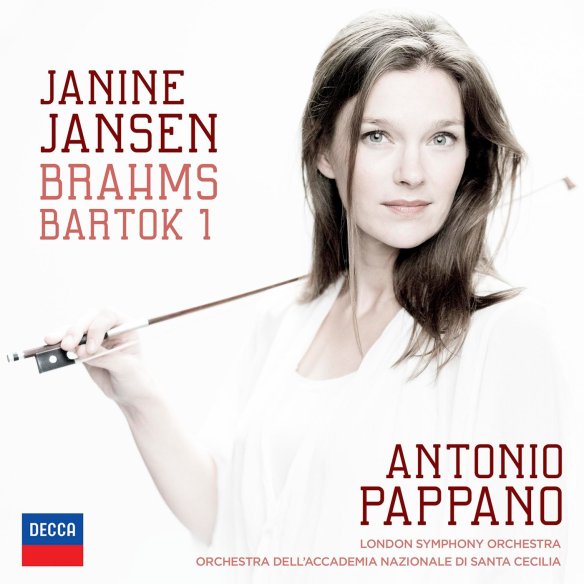
On record: Janine Jansen plays Brahms and Bartók Violin Concertos

Featured recording: Janine Jansen pairs the Brahms Violin Concerto with Bartók’s First
brahms-bartok-jansen

Leading violinist Janine Jansen explores violin concertos by Brahms and Bartók, bringing out the Hungarian connections between them. The accompaniment is from Antonio Pappano and orchestras from the Santa Cecilia Academy and London.

What’s the music like?

This is an unusual pairing that has not been tried on disc before, but it makes perfect sense. Brahms’ Violin Concerto has a finale that makes much of Hungarian gypsy music, so the leap from that to the thoughts of the young Bartók is not as big as you might think.

The Brahms is a big piece, heavily weighted towards its first movement, which at 21 minutes is more than half the length of the work. In this recording Janine Jansen uses cadenzas (the display parts for violin alone) written by Joseph Joachim, Brahms’s friend and the dedicatee of the concerto. Joachim was a long-fingered virtuoso, and because of that the violin part is technically very demanding.

Bartók’s Violin Concerto no.1 is the first of two such published works, and was completed when the composer was in his mid-20s. It also includes traditional Hungarian music but now the language is noticeably more modern, with crunchy harmonies, swaggering cross rhythms and a solo part that sounds more like a duel with the orchestra. In the Brahms the two forces are very much ‘on side’.

Does it all work?

This is an inspired pairing. Jansen plays with a beautiful tone in the Brahms but just as much credit should be levelled at conductor Antonio Pappano and the Santa Cecilia orchestra, for their singing accompaniment that makes the listener want to hum along with the tunes. The Brahms has been recorded a lot of late but in this recording there is a fresh approach, as though the melodies have just been written. The oboe solo in the slow movement is gorgeously played, while the rustic finale is joyous and uninhibited.

The Bartók is similarly fresh, and again the orchestra – this time the London Symphony – cut through all the different textures and crossrhythms to make sense of this occasionally complex music. The rhythmic profile is strong once again, while technically Jansen is right at the top of her game, graceful in the first movement and gritty in the second but without losing any poise.

Is it recommended?

Yes. The two works complement each other in a highly original and brilliantly played pairing.

Listen on Spotify

You can judge for yourself by hearing the album on Spotify here:

Britten Sinfonia At Lunch Two: Anna Clyne’s This Lunar Beauty

britten-sinfonia

Julia Doyle (soprano), Marios Argiros (oboe), Maggie Cole (harpsichord), Jacqueline Shave, Miranda Dale (violins), Clare Finnimore (cello), Caroline Dearnley (cello)

Wigmore Hall, 20 January 2016

Written by Ben Hogwood

If you live in London or the South East of England, and fancy a bit of musical exploration, then the Britten Sinfonia’s At Lunch series comes highly recommended.

Celebrating its tenth anniversary, the enterprise promises a brand new work in every concert – and proceeds to build the whole hour of music around it, often with the shared theme of a particular instrumental or vocal combination. With programme notes for adults or schoolchildren, it is one of the most accessible lunchtime concerts you could wish to enjoy – and as well as having the obvious bonus of professional quality performances, it is completely judgement-free!

This particular concert illustrated just why the formula works so well. Taking as its theme the combination of voice, oboe and strings, the Britten Sinfonia built an intricately weaved concert taking in arias from Bach and Scarlatti cantatas as well as two very different approaches to minimalism from Arvo Pärt and Ligeti. It was fitting, then, that the final piece – the new commission from Anna Clyne, This Lunar Beauty, should bring all these strands together.

anna-clyne

Anna Clyne photo by Javier Oddo

Setting the W.H. Auden poem of the same name, Clyne has written a piece of outstanding beauty. Its calling card is a distinctive melody that seems to be sourced from medieval England, but works it in a way of which the late 1960s British folk pioneers such as Fairport Convention, Steeleye Span or Pentangle would be entirely proud.

The repetitions of the tune, given in soprano Julia Doyle’s clear tones, were subtly varied by additions and subtractions to the instrumental texture, filling up with strings or paring back so the glitter of the harpsichord could be sensed on top. This Lunar Beauty left a strong emotional impression, using its forces sensitively in new music of rare quality and depth.

Before this, Doyle leant her clear tones to three varied arias from Bach Cantatas, with oboist Marios Argiros excelling in the obbligato to the aria Tief gebückt und voller Reue. We also heard Salvatore Sciarrino’s arrangement of two arias by Alessandro Scarlatti, the first of which had a striking accompaniment of muted strings without vibrato.

The two very different approaches to minimalism were fascinating. In Arvo Pärt’s Fratres time stood suspended as the string quartet’s theme, first heard in ghostly harmonics, gradually found body and soul before ebbing away into the distance. Ligeti’s Continuum froze time in a wholly different way, the solo harpsichord – brilliantly played by Maggie Cole – seemingly trapped in rapidly flashing strobes. Somehow, despite the hyperactive energy, this too found its own stillness.

A very fine concert, hopefully to be broadcast on the BBC in the future. In the meantime, have a listen to the audio below – and get yourselves over to listen to vocal works on Anna Clyne’s website, because this is a composer we want to hear a lot more of!

You can also hear her new Violin Concerto The Seamstress on the BBC iPlayer, performed by Jennifer Koh and the BBC Symphony Orchestra conducted by Sakari Oramo. The concert is available until 14 February 2016

Wigmore Mondays – Dejan Lazić plays Haydn, Shostakovich, Schumann and his own work

dejan-lazic

Dejan Lazić (piano) plays a concert of Haydn, Shostakovich, Schumann and his own Istrian Dances

Wigmore Hall, London; Monday, 18 January 2016

written by Ben Hogwood

Audio (open in a new window)

http://www.bbc.co.uk/programmes/b06vrk8d

Available until 17 February

What’s the music?

Haydn – Piano Sonata in E flat major, Hob.XVI:52 (1794) (20 minutes)

Shostakovich – 3 Fantastic Dances Op.5 (1922) (4 minutes)

Schumann – Waldszenen Op.82 (1849) (23 minutes)

Lazić – 3 Istrian Dances Op.15a (2008) (4 minutes)

Spotify

If you cannot hear the broadcast then this attached playlist covers almost all of the repertoire. Dejan Lazić has already recorded the Haydn and Schumann, while the Shostakovich is included in a recording by Vladimir Ashkenazy:

About the music

Haydn’s late Piano Sonata in E flat (given no.52 in the catalogue by the compiler Hoboken) is one of his grandest statements for the keyboard, an imposing piece that is often regarded as having a scope well beyond the solo instrument. It has Haydn’s characteristic wit but also an impressive stature.

By complete contrast the young Shostakovich – just fourteen at the time of writing the 3 Fantastic Dances – was just striking out, and you can sense him champing at the bit in these pieces. All three last under five minutes but are great fun.

Schumann was a great writer of character pieces for the piano, and Waldszenen (Forest Scenes) is one of the finest examples of his ability to paint portraits in relatively short periods of time. A group of nine pieces, these are often played with very little in the way of a break between them, and are often understated but without losing any intensity. Originally they were headed by poetic quotations, but the shadowy set of pieces was instead published without these and were given headings instead.

Finally Lazić himself gets in on the act, his 3 Istrian Dances rather similar to the solo piano works of Bartók in their reworking of national themes. Istria is a peninsula in the Adriatic Sea, shared by Croatia, Italy and Slovenia.

Performance verdict

Arcana was not present at the Wigmore Hall on this occasion, so this appraisal was done via the BBC iPlayer. Even from that it is quite clear not just what an accomplished pianist Lazić is, but that he has a strong sense of national identity in his compositions. In the lively Istrian Dances this takes him close to the sound world of Bartók, and this energetic performance proved an invigorating final number in the concert.

Lazić clearly has affection for the works of Haydn, and although some of his phrasing was quite mannered – nothing wrong with that, but not necessarily to everyone’s taste! – his technical control was superb, and some of the rapid passagework Haydn assigns to the right hand was thrown off with aplomb. Meanwhile the slow movement of the E flat sonata had a real depth of feeling.

His Schumann was excellent, very strongly characterised and recognising the intimacy found in a lot of these short pieces, the comfort of the forest sometimes spilling over into claustrophobia. Meanwhile the impudent Shostakovich was pure fun, the sound of a young composer flexing his muscles.

What should I listen out for?

Haydn

01:54 – a grand theme to start, anticipating Beethoven in its big scale. This is one of Haydn’s most substantial sonata themes. After an elaborate development, the first half of the movement is repeated from 4:06. Then from 6:22 Haydn takes the two main themes for a walk, running through some unexpectedly far-off keys until reaching home at 8:08.

10:12 – the slow movement starts in E major, the last key you would expect Haydn to use. But then this is Haydn, who likes to throw in a surprise or two to what ought to be conventional works! It is a thoughtful, intimate theme, too, one of his more profound slow movements for piano. Then at 13:09 Haydn moves the music into the minor key, and an unpredictable section based on the main tune, but before long we return to the opening material (14:16)

16:14 – a cheeky, stop-start last movement with repeated notes in the main tune. They sound like an over eager woodpecker or something similar! With typical wit Haydn develops these, making great use of silence in between some of his phrases and introducing some really difficult runs in the right hand. Again Haydn is adventurous in the rapid development section (from 18:46) until the witty theme makes a comeback (20:13)

Shostakovich

23:42 March – Allegretto – a thoughtful but quite carefree notion to this piece, and to the right hand especially, which becomes quite frivolous.

25:08 Waltz – Andantino – a relatively gentle start is misleading, as this piece turns out to be reckless and quite impetuous at times, making the listener jump!

26:32 – Polka – Allegretto – Shostakovich shows an early mastery of the piano, and despite pronounced influences from Chopin and Scriabin there is plenty of individuality to his style here too. Cheeky but meaningful.

Schumann

27:39 – Eintritt (Entry) – an endearing privacy immediately descends on Schumann’s music, beautifully written. The harmonies are open, and the melodies subtly restless, wandering for a while.

29:45 – Jäger auf der Lauer (Hunters on the lookout) – a furtive piece, hiding in the shadows initially, then becoming a lot bolder.

31:07 – Einsame Blumen (Lonely Flowers) – quite sparse, bring a melody and relatively economical accompaniment. It is a beautiful melody though, and has a strong yearning.

33:42 – Verrufene Stelle (Haunted Place) – the quietness of the piano is laced with tension, the scene far from comfortable. The music gets more animated but quickly retreats into its shell again, scarred by what it might have seen. There is a happier ending, mind, as the music moves to a major key and peace of mind.

37:51 – Freundliche Landschaft (Friendly Landscape) – a quickfire piece, happy go-lucky in these hands, relieved after the haunting has passed.

38:55 – Herberge (Wayside Inn) – the welcoming inn is a lively place in Schumann’s description, with a warm welcome, carrying on from the happy place above.

40:54 – Vogel als Prophet (Bird as Prophet) – a fascinating, mysterious piece that leaves a mark through its distinctive melodic profile. Its foreboding message hangs on the air.

43:58 – Jagdlied (Hunting Song) – an open air call to arms. Schumann wrote a lot of hunting songs for voice and piano and piano alone, but this one is reminiscent of Beethoven in its profile and the choice of E-flat major.

46:24 – Abschied (Farewell) – initially confident but immediately thoughtful, and the rest of the piece is relatively sombre and quietly moving.

Lazić

51:52 – an arresting call to arms in the first dance, with the notes in the right hand close together, creating crunchy dissonances.

The second dance is underway at 52:40 and is equally spiky, with quickfire shots from the right hand and powerful double notes in the left. At 53:39 a languid dance makes itself known and turns in on itself softly.

The third dance gets underway at 54:39 with highly distinctive rhythms, detached and tumbling down the keyboard at times before finishing suddenly at 55:24.

Encore

56:43 – the encore is the finale of one of Haydn’s best-loved Piano Sonatas, in C major (published as HXVI:50). You can sense the composer thumbing his nose at the audience in his witty asides and false approaches to the ending, which finally arrives at 58:53.

Further listening

Having mentioned Bartók earlier it would be churlish not to include something of his for solo piano, so attached to the bottom of the concert playlist you will find the 3 Rondos, played by Zoltan Kocsis. Alternatively you could try a whole set of Mazurkas by the Polish composer Karel Szymanowski, on the album below: