Anne Quéffelec plays Scarlatti

Featured recording: Scarlatti – Sonatas played by Anne Quéffelec (Mirare)

scarlatti-queffelec

A disc of keyboard sonatas by Domenico Scarlatti, played by the highly respected French pianist Anne Quéffelec. With 550 of these works to choose from, she has made a thoroughly entertaining recital of 18!

What’s the music like?

You could play ten Scarlatti keyboard sonatas a week and still have 35 left over at the end of the year! The pieces are typically around four minutes in length, and often in two sections, each repeated. In that time Scarlatti explores the development of melodic ideas, the best known sonatas having many. In that sense Scarlatti is one of the first composers to have explored the idea of using the sonata as a principal means of expression.

Scarlatti recital discs are relatively common, but the best ones show off the extraordinary variety and inventiveness within these works, programming them so that they don’t become ‘samey’. It helps to have the key choices worked out well, too – twenty works in C major, for instance, will not a good disc make!

Although Scarlatti works well on the harpsichord, I would maintain the sonatas are more suitable for the piano. As Anne Quéffelec writes in the booklet, “to move from the harpsichord to the piano is already to open the doors to the wide-open spaces of liberty”. Quéffelec clearly loves Scarlatti and here, 45 years on from her recording debut, she returns to his music.

Does it all work?

It does so here – emphatically. Anne Quéffelec is a skilful and stylish player, and Scarlatti comes alive in her hands. A lot of this music is played with a smile on the face, and is beautifully clarified and expressed.

There are many examples of this, but the most enjoyable are the playful tumbling figures in the right hand of the G major Sonata (published as K103), the soft and lightly sorrowful D minor work (K54) and the magical, slow K144, also in G major, and seemingly the forerunner of a Mozart slow movement. This is followed by another G major sonata, K260 – a very odd piece, this, going to weird and unexpected harmonic lengths, delaying its sense of a resolution. The perky figures of the B flat major sonata, K551, anticipate Beethoven with their upward ascents.

Meanwhile the Sonata in D major, K145, is notable for its jarring dissonances and is probably the most enjoyable of all with its faux-politeness and then complete disregard for convention. Only just behind this are the bird-like calls of the first on the album, the C major sonata (K420). Even then the examples listed above are just a hint of what the album contains!

Is it recommended?

Without hesitation. It is not an insult to Scarlatti to say his music is great for working to in the right performances, for it inspires clarity of thought but also a few flights of fancy in its sudden tangents and deviations. Quéffelec channels all these and more in performances of obvious affection and flair.

Listen on Quboz

You can get a preview of Anne Quéffelec’s Scarlatti album here

Musorgsky – Pictures at an Exhibition, Songs and Dances of Death / Gergiev

Featured recording: Musorgsky – Pictures at an Exhibition, Night on Bare Mountain, Songs and Dances of Death (Ferruccio Furlanetto (baritone), Mariinsky Orchestra / Valery Gergiev (Mariinsky)

musorgsky-gergiev

A new all-Musorgsky disc by Valery Gergiev and his Russian charges, returning to the composer whose operas Gergiev has recorded with great success.

What’s the music like?

On paper this release is a brilliant way to start a Musorgsky collection, because it contains his two best loved works. Pictures at an Exhibition, appearing in its celebrated orchestration by Ravel, is a wonderful set of character pieces that fully captures an artistic exhibition and the viewer’s response to it. Night on Bare Mountain is equally vivid in its portrayal of a witches’ sabbath, and the right performance can strike genuine fear into the heart. Finally the Songs and Dances of Death for baritone and orchestra (not as depressing as they sound through opportunities taken for gallows humour!) appear in the orchestral version made by Shostakovich.

Does it all work?

It should do – because this is surely a home banker for Valery Gergiev, conducting both the music of his homeland and a composer in whose music he specialises. Yet something is awry, for two of the three live performances feel routine at best.

Pictures lacks spark and feels very polite, taking its time to reveal plenty of things in the score but rarely getting out of second gear, as though the exhibition has only a few days left to run. There is no edge to Gnomus, which should ideally be unhinged, and no sense of culmination in The Great Gate of Kiev, the work’s crowning glory. The Old Castle, while suitably mournful and featuring a lovely saxophone solo, drags its feet, while Bydlo, the old cart whose machinery lumbers down the track, has a disarmingly smooth passage here.

There are a few exceptions. The characterisation of Samuel Goldenberg and Schmuÿle is brilliant, thanks to a sharp trumpet portraying the latter character, while the clucking of The Ballet of Unhatched Chicks in their Shells is winsome. But overall this version lacks real excitement.

Sadly Night on Bare Mountain is little better, and sounds like a version going through the motions, with an incredibly limp final chord. There are moments where the electric charge is more pronounced, especially when the dance music comes in around 1’45”, but otherwise this is disappointing fayre with little sense of terror.

All this is redeemed by Ferruccio Furlanetto, the commanding singer chosen for Songs and Dances of Death. There is an incredibly strong resonance to his voice, effortlessly taking charge of the Lullaby, while hurling his all into the end of the Serenade and the fatal triumphalism of The Field Marshal. Gopak, the third song, starts with threadbare bass sounding appropriately ghoulish, the sentiments of the poem laid as bare as the orchestration. Gergiev is inspired here, completing a version that stands tall alongside any competition.

Is it recommended?

Overall, no – unless you are desperate for a recording of the Songs and Dances of Death. For Pictures, alternative versions include those conducted by Claudio Abbado and Carlo Maria Giulini, with Abbado again the choice for Night on Bare Mountain.

Listen on Spotify

You can judge for yourself by hearing the album on Spotify here

Danish String Quartet – Haydn and Shostakovich

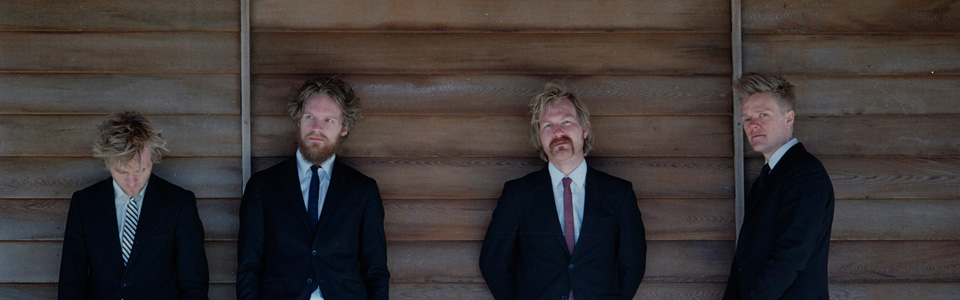
The Danish String Quartet play works by Haydn and Shostakovich at Wigmore Hall

danish-string-quartet
Danish String Quartet (Frederik Øland, Rune Tonsgaard Sørensen (violins), Asbjørn Nørgaard (viola), Fredrik Sjølin (cello)) – Wigmore Hall, live on BBC Radio 3, 23 March 2015.

Listening link (opens in a new window):

http://www.bbc.co.uk/programmes/b05mqmkv

on the iPlayer until 22 April

Spotify

The Danish Quartet are yet to record either of these pieces, so for listeners unable to hear the BBC audio here is a Spotify playlist of the same works from the Lindsay Quartet (Haydn) and the Aviv Quartet (Shostakovich) – two fine versions:

What’s the music?

Haydn – String Quartet in C major Op.54/2 (1788) (20 minutes)

Shostakovich – String Quartet no.9 (1964) (25 minutes)

What about the music?

[PIC]

As my concert-going companion remarked, Haydn string quartets are always used as curtain openers, which can be something of a shame, as they are always performed when the quartet is at its ‘coldest’. This particular work, seemingly written for the violinist Johann Tost in 1788, can not be allowed to fall into that category, for the first violinist has a lot of demands made on him right from the start.

As with many Haydn works this quartet is deceptive, for it has the routine layout – yet tinkers with the overall design of a conventional string quartet. The first movement is a lot faster than it would be normally, while the second movement (the slow movement here) runs straight into the third (a minuet), a tactic very seldom witnessed. Not only that, the last of the four movements is predominantly slow.

Shostakovich’s most private thoughts went into his string quartets, which often convey the intense fear and claustrophobia he felt with the authorities seemingly poised to knock on his door in the middle of the night, ready to remove him forever for his supposedly rebellious musical tendencies. Ultimately he found ways of expressing himself in a private musical code, and the string quartets were especially vivid at using that.

Yet his ninth published string quartet is much more positive in mood than most, seemingly gathering itself to renounce the fear and stand confidently on two feet. As the Wigmore Hall program note states, this may have been due to the composer’s recent marriage – his third – and the slight ‘thaw’ in relations that was allowing him to revive the previously out-of-bounds opera Lady Macbet of the Mtsensk District.

Performance verdict

How refreshing to hear Haydn played with the energy the Danish String Quartet gave it in this performance. All too often these quartets sound too polite, but this account was a good reminder of Haydn’s innovations in the form, and in the way he makes this piece sound a bit like a miniature violin concerto. First violinist Frederik Øland was up to the job.

The Shostakovich was even better, given a depth of feeling and range of colour that suited the piece perfectly. Whereas some of the composer’s quartets are very closed in this felt like a positive, outgoing experience, standing tall in the face of the horrors of the time. Particularly effective was the Rossini-like polka that danced manically, while the slower sections – and in particular the quotes from Musorgsky’s Boris Godunov – were beautifully handled.

The quartet’s ensemble playing was superb, and their togetherness and positivity were two standout features of a superb concert.

What should I listen out for?

Haydn

1:49 – the first movement, unusual in the composer’s output for being marked Vivace (lively). The Danish Quartet enjoy its contours – particularly first violinist Frederik Øland, who has a challenging part!

8:14 – the mood turns sombre (and the key changes from C major to C minor) for the slow movement. Again the first violin starts to take the lead but sounds a bit absentminded against the long, slow chords from the other three instruments. This moves straight into…

11:27 – the Menuetto, an injection of pace and poise, with a typically upbeat theme from the composer. This is in direct contrast to the Trio section, from 13:03, with its discords. The texture is surprisingly full here for four instruments. The Menuetto reappears to put things right at 14:01, as though nothing had happened!

15:06 – a solemn introductory theme, which turns into a thoughtful and deeply felt Adagio. Very unusual for a slow movement to appear last in a typical four-movement quartet structure in the eighteenth century…and yet there is fast music to come, from 19:54 as the music scampers away…only to return to its previous slow tempo, on which it ends at 22:12.

Shostakovich

This quartet runs continuously but is in five distinct sections / movements:

24:48 – an airy beginning, with hints of unease from the inner and lower parts. The second violin is playing a theme associated with Pimen in Musorgsky’s opera Boris Godunov. A light dance is played out and an air of tranquillity takes over. Yet even here, as the upper parts circle, nervy thoughts lurk in the shadows. Then we move to the second ‘movement’…

…at 29:05. A romance in all but name with happier thoughts, possibly inspired by the composer’s recent marriage (his third). The harmonies are lush here, and after some thought the tempo begins to increase…

..to 33:24, where a polka starts up, and the rat-a-tat rat-a-tat rhythm – a quotation from Rossini’s William Tell Overture­ – begins to obsessively take hold.  A furious energy is unleashed, brilliantly captured by the Danish Quartet, who keep an appealing roughness around the edges when the music is most fractious. The instruments converse with some of these melodic figures.

37:13 – the music takes on a mood of deep thought, but is wrenched from its reverie by violent pizzicato (38:09), a tactic used several times to unsettle the listener, before a piercing and unnerving violin cadenza briefly takes centre stage.

40:38 – the substantial final movement starts with a jolt, the music thrown forwards like a car starting suddenly. Having started this mad push forwards Shostakovich has to keep it going, and does to with some emphatic and blustery unison passages for two or more instruments of the quartet. Powerful lines on the cello are compromised by what can only be described as ‘scrubbing’ from the persistent second violin. Shostakovich’s sardonic humour makes itself known through ‘glissandi’ (where a note slides in pitch, mostly upwards in this case!), before an emphatic finish.

Encore – Nielsen – Mit hjerte altid vanker arranged by the Danish String Quartet second violinist Rune Tonsgaard Sørensen

52:40 – Chosen to celebrate 150 years since the Danish composer’s birth, this is a short but sweetly voiced chorale lasting just under two minutes.

Want to hear more?

As the Danish Quartet mentioned, their compatriot Carl Nielsen is in an anniversary year, born 150 years ago – and the foursome have recorded his complete string quartets, not often heard but here on this album on Spotify:

For more concerts click here

Maurizio Pollini plays Schumann and Chopin

maurizio-pollini
© Cosimo Filippini / DG

Maurizio Pollini at Royal Festival Hall, 18 March 2015.

A solo piano recital at the Royal Festival Hall is always a special event, and if you haven’t tried it yet I thoroughly recommend the experience.

The sense of occasion such an event brings is enhanced as the soloist is hemmed in on all sides by the audience, with some on the stage and in the choir stalls behind – which is where I found myself for my first ever encounter with Maurizio Pollini.

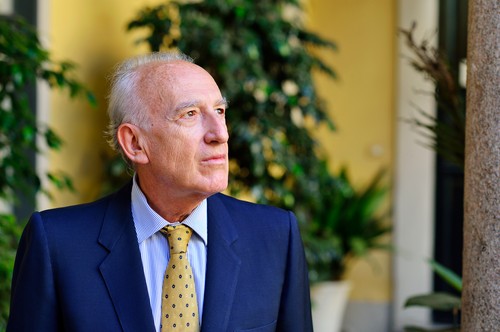
The Italian, now in his seventies, has an illustrious recording and concert-playing career behind him. Two of the composers central to his repertoire are Schumann and Chopin, who formed one half each of this recital.

We heard Schumann first, with the brief but poetic Arabesque. This is a wonderfully romantic piece with a wistful main theme. Pollini was a bit stern with it, leaning more on the two short contrasting sections rather than indulging the main tune.

We moved on to the substantial Kreisleriana, a group of eight fantasy pieces dedicated to Chopin and inspired by the character Kreisler, in the creations of E.T.A. Hoffmann. Here Schumann alternates turbulent minor-key creations with softer, poetic major key ones. In Pollini’s hands the faster numbers threatened to disappear in a whirl of notes, the rhythms occasionally blurred, but there were moments of pure insight in the slower second and fourth pieces especially. The final piece, which to me sounds like a bird flying around in an increasingly irregular circle, was perfectly poised, leaving the audience with a sense of mystery.

For the second half Pollini brought out one of his concert staples, Chopin’s 24 Preludes – written around the same time as Kreisleriana. In just under forty minutes Chopin navigates a piece in each key, cleverly structured so that he effectively follows a ‘circle of fifths’. (In technical terms this means he moves from C major, and its relative key A minor, through G major (and its relative E minor) and so on, until travelling full circle.

This performance felt like one whole piece of 24 sections, brilliantly delivered and suitably dramatic. The centrepiece of the collection, the Raindrop prelude (no.15), epitomised Pollini’s approach by being relatively quick – while the faster preludes became thunderbolts from the blue.

Ending to a hero’s reception, Pollini generously fed us three encores, beginning with the waterfall of notes that is the Etude in C minor, Op.10/12, then moving to the relative calm of the D flat major Nocturne, Op.27/2. Then, as a handsome bonus, we had the Scherzo no.3 in C# minor, with its triumphant, Brahmsian chorale theme. After some nasty words were written about Pollini in the Spectator lately, this was the perfect riposte!

You can hear the music Maurizio Pollini played on a Spotify podcast, available here

Bach and the viola da gamba – Paolo Pandolfo and Markus Hunninger

Bach and the viola da gamba – Paolo Pandolfo and Markus Hunninger explore two of the sonatas Bach wrote for the instrument, along with music by gamba maestro Carl Friedrich Abel

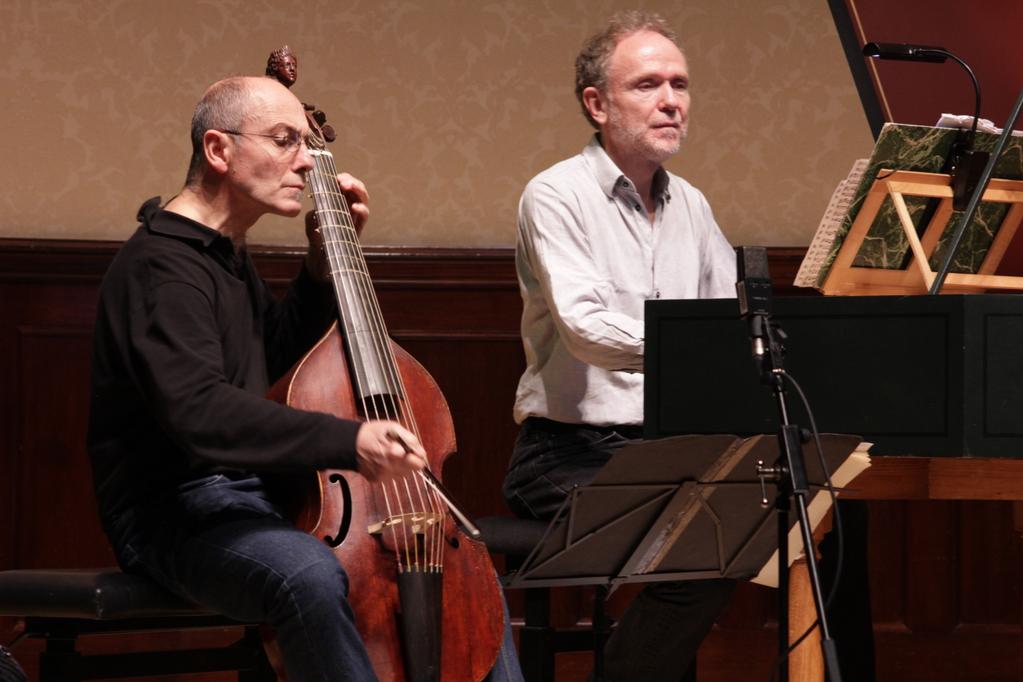
paolo-pandolfoPaolo Pandolfo (viola da gamba) and Markus Hunninger (harpsichord) – Wigmore Hall, live on BBC Radio 3, 16 March 2015. Photo © Ben Collingwood

Listening link (opens in a new window):

http://www.bbc.co.uk/programmes/b052047t

on the iPlayer until 15 April

For non-UK listeners, this Spotify playlist is available:

For those unable to hear the broadcast I have put together a Spotify playlist, containing the Bach sonatas – but not the Abel, which I could not find on the service. Pandolfo and Hunninger have recorded the Bach recently, but their versions are not available – so I have chosen suitable substitutions here

What’s the music?

J.S. Bach – Viola da gamba Sonata no.2 in D major BWV1028 (not later than 1741) (16 minutes) (the ‘BWV’ number gives an indication of the work’s position in the Bach-Werke-Verzeichnis (Bach Works Catalogue)

Abel – 6 Pieces from the Drexel Manuscript for solo viola da gamba (date not known) (20 minutes)

J.S. Bach – Viola da gamba Sonata no.3 in G minor BWV1029 (not later than 1741) (16 minutes)

What about the music?

The first question to answer here is ‘what is a viola da gamba’? It is an ancestor of the cello, gripped between the players knees and played with the bow. Although it was used mostly as an ensemble instrument to begin with, Bach, Abel and other composers began to write for it in more of a solo capacity.

The instrument used by Paolo Pandolfo in this concert has seven strings, and dates from around 1700. There is no ‘spike’ on the instrument, so the player has to grip it with their knees.

Bach wrote three accompanied sonatas for the instrument, though exactly when he wrote them is not clear. Abel is described in the BBC Radio 3 introduction as ‘the link between baroque and classical music’, and headed for London with nothing more than ‘six symphonies in his pocket’. He was a virtuoso viola da gamba player, and while in London wrote a lot of music for the instrument. This surfaced in the 19th century through manuscripts belonging to Joseph Drexel. Paolo Pandolfo stated in the introduction that Abel ‘respected the viol as a true lover respects his beloved’

Pandolfo himself came to this music initially from jazz, bringing with it his own talent for improvisation.

Performance verdict

These are engaging and often stylish performances. Paolo Pandolfo and Markus Hunninger have a long-established chemistry in this repertoire, and their experience allows them to tastefully improvise within the confines of the written music – as the composers would wish them to do.

Pandolfo’s quiet playing in particular is sublime, and I found myself instinctively leaning forward on occasion to catch his insights. The freedom he lent the Abel pieces made them sound like brand new improvisations.

On some occasions I did feel this improvising was a little overdone, and that in the Bach especially the slow movements would have benefited from a ‘less is more’ approach, as the pulse was almost lost at times. In the faster movements however the dialogue between the instruments was a constant joy, their enjoyment of the music clear to see.

What should I listen out for?

Bach Sonata no.2

3:45 – the Bach begins with a thoughtful Adagio. Pandolfo is a model of restraint here, and with Hunninger there are some pronounced variations of the tempo

7:29 – the bright, vivacious second movement begins, using the upper register of the viola da gamba’s range. The crisp harpsichord right hand often trades melodic ideas with the gamba.

11:17 – a thoughtful slow movement, now in a ‘lower’ key (B minor) that brings out the resonance of the instrument’s lower strings. Pandolfo plays with great poise here.

16:14 – a burst of sunshine in the form of a move to D major. The gamba and harpsichord play cat and mouse, all the time shadowing each other’s moves. From 17’30” some tasteful trills added by harpsichordist Hunninger, before the instrument plumbs the depths just over a minute later. Some of Bach’s harmonic daring can be heard here, the music veering off to distant areas. Pandolfo occasionally plays two strings rather than one (‘double stopping’)

Abel

23:29 – the first of Abel’s six pieces has a free, improvisatory feel – which I assume to be Pandolfo’s license with the piece rather than an absence of bar lines. The bow flits between strings and the quiet moments are exquisitely found.

25:36 – Pandolfo secures an extraordinary bit of ‘skating’ here (not a technical term!), the bow rushing across the strings but somehow making all the notes coherent.

27:39 – this piece starts with pizzicato (plucking), which sounds unusual on the gamba, before short pieces of double stopping, culminating in the lovely passage at 31’15”. The performance here feels quite mannered, but on saying that Pandolfo does bring the composer’s thoughts off the page, making them feel fresh.

32:18 – again we hear the higher register of the viola da gamba, and Abel writes for it in such a way that it provides the accompaniment as well as the melody, thanks to lots of double stopping. There is an extraordinary passage of music from 34:12, the music rushing almost out of control, but at no point does Pandolfo lose control.

34:40 – this movement reminds me of Bach’s Sixth Suite for Solo Cello, a really lovely and rather moving slow dance.

39:04 – staying in the same key as the previous five – D major – this has a more improvisatory feel as the piece gradually grows in height of pitch. After this introduction there is a spikier stretch of music, with a distinctive theme, before Pandolfo brings the music to a very soft close at 43:40

An extended tuning episode (almost an improvisation!) before…

Bach Sonata no.3

46:51 – the start of this sonata introduces a melody very similar to the one Bach used in his Brandenburg Concerto no.3 – with a subtle difference as this piece is in a minor rather than a major key, and sounds more serious as a result. Pandolfo and Hunninger energetically navigate the contours of a lively first movement.

52:15 – as slow as the second movement was fast, this Adagio is stretched out almost to its limits by the two performers. This is not an overly indulgent performance though, as they are both trying to extract maximum emotion from the music, often by way of ornaments improvised in both parts. This does lose the rhythmic pulse on occasion.

58:54 – the harpsichord picks out the notes of the main theme, a kind of stuttering melody that the viola da gamba takes up. This is the inspiration for the debate of the rest of the movement. There is a false ending at 1:02:08 where the pair deliberately pause on a ‘wrong’ chord – before finishing more emphatically.

Want to hear more?

The ideal complement to this music can be found in Bach’s Sixth Suite for solo cello – which was written for a form of cello with five strings. Anner Bylsma plays it on Spotify here

For more concerts click here