The Schubert Ensemble – French piano quartets

schubert-ensemble

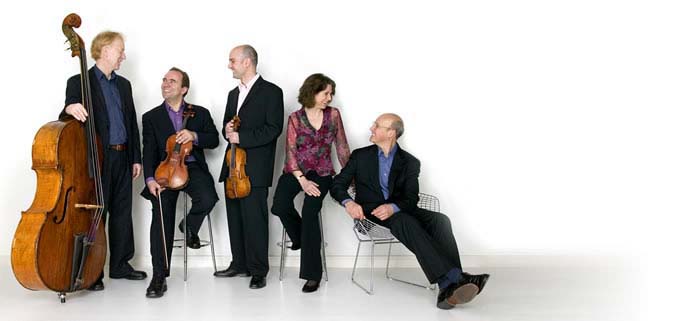
The Schubert Ensemble Milton Court, 11 March 2015.

An evening chamber music concert has the potential to take the sting and stress out of a busy day – as was the case here, with the Schubert Ensemble giving their first recital at the still relatively new Milton Court venue.

As an annex to the Barbican Centre in the City of London the hall is a desirable alternative to its larger cousin – which remains difficult to navigate even after two decades! Milton Court feels fresh and exciting, though it can get a bit claustrophobic around the bar area when the main hall is turning out.
Thankfully the Schubert Ensemble’s music making was airy enough to completely dispel any discomfort, though they had a few problems of their own to contend with in the shape of violinist Simon Blendis, who had fractured his arm.

Blendis, allocated the role of compère, praised his more than able stand-in, Krysia Osostowicz, one of the finest chamber musicians around – and she fitted seamlessly into the group’s music making here. Though unfortunately not credited in the program, William Howard (piano), Osostowicz, Douglas Paterson (viola) and Jane Salmon (cello) were all at the top of their game.

Unfortunately because of the injury we lost the Saint-Saëns Piano Quartet from the program, which was a shame as this not often performed, and the Schubert Ensemble doubtless have the energy and grace from which this work would benefit. Instead of that, however, we had the First Piano Quartet of Fauré – which was not exactly a hardship, for this is a lovely, tuneful work where emotion simmers just below the surface, breaking through in a passionate finale. Led by their superb pianist Howard, the group played with poise and control but clearly felt the music, and the resultant half-hour passed quickly!

After the interval a close musical relation of Fauré, Ernest Chausson, took his chance to shine in the form of a substantial Piano Quartet, a work he completed in 1897. There is an unexpected Eastern flavour to the opening of this piece – of Chinese origin, arguably – and Howard held back a bit on the tempo to give this plenty of air. Douglas Paterson found real depths of emotion in his viola solo from the slow movement, while the third movement waltz swung dolefully.

To begin with we had heard music from the composer after which the Schubert Ensemble are named – a movement for String Trio (violin, viola and cello) from 1816. This musical palette cleanser proved a suitable introduction to the two meatier works on the program.

A Spotify playlist containing the works heard can be accessed below. The Fauré is as recorded by the Schubert Ensemble themselves:

Wigmore Hall Portrait Gallery – Christiane Karg and Gerold Huber

Wigmore Hall Portrait Gallery – Christiane Karg and Gerold Huber perform an intricate sequence of portraits of literary figures by Wolf, Brahms, Richard Strauss, Hahn and Duparc

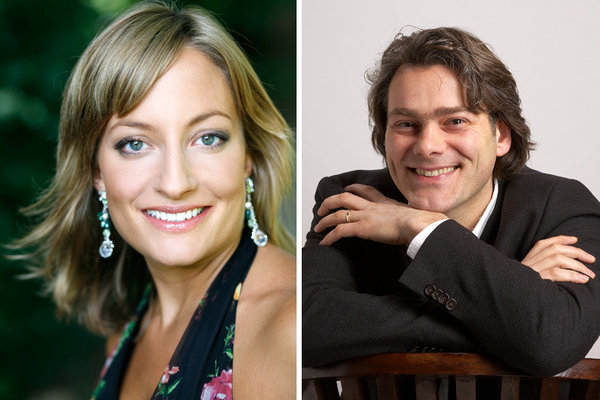
christiane-karg-gerold-huberChristiane Karg and Gerold Huber – Wigmore Hall, live on BBC Radio 3, 9 February 2015. Photos © Steven Haberland / Albert Lindmeier

Listening link (opens in a new window):

http://www.bbc.co.uk/programmes/b051zyhb

on the iPlayer until 8 April

For non-UK listeners, this Spotify playlist is available:

For those unable to hear the broadcast I have put together a Spotify playlist. Christiane has recorded the Strauss songs but nothing else from the program, so I have chosen suitable available versions:

What’s the music?

Wolf – 4 Mignon Lieder (1888) (15 minutes)

Brahms and Richard Strauss – Ophelia Lieder (interspersed – the music is Brahms’ 5 Ophelia-Lieder (1873) and Strauss’s 3 Ophelia Lieder Op.67 (1918) followed by Saint-Saëns – La mort d’Ophélie (1857) (14 minutes in total)

Hahn – 3 songs (Lydé (1900), A Chloris (1916) and Séraphine (1896) (8 minutes)

Duparc – 2 songs (Phidylé (1882), Romance de Mignon (1869) (9 minutes)

What about the music?

wigmore-portraits
Ophelia by John Everett Millais (1852) is part of the Tate Gallery collection. His painting influenced the image in Kenneth Branagh’s Hamlet.

This is a really well chosen program from Karg and Huber, justifying the singer’s burning of the midnight oil (in the announcer’s anecdote!) to come up with some vivid character portraits that draw the casual listener in through the links between the songs. This is surely how a song recital should be structured.

Thanks to their enterprise we get an interesting blend of Romantic Lieder – that is, nineteenth century song writing that is much more obviously expressive. German composers are strongly represented, beginning with Wolf’s four settings of Goethe, and his poems on the tragic figure of Mignon.

Then our gaze turns to Ophelia, by way of five early Brahms Lieder and three late, eccentric interpretations by Richard Strauss – before a French alternative from Saint-Saëns.

Finally the heady fragrance of three sublime songs from Hahn and two more substantial, meaty efforts from Duparc clinch a consistently engaging recital.

Performance verdict

On this evidence – listening on the radio rather than in the hall – Karg and Huber are ideally matched. Their delivery is especially emotive during the Wolf, where the soprano inhabits a lot of the distress and strife handed out to Mignon.

It is a great idea to fuse the portraits of Ophelia in this way, and anyone approaching Brahms songs for the first time would be surprised at the brevity and simplicity of them. They contrast nicely with the Richard Strauss examples, where Karg shows a lot of vocal agility without ever losing control.

The French songs are sumptuous, especially the Hahn, throwing open the doors to let in some Spring light.

What should I listen out for?

Wolf

The words for these songs can be found here

1:55 – Heiss mich nicht reden (Bid me not speak) – the first Mignon setting moves in unexpected harmonic directions, never really sure of itself as Mignon seeks peace ‘in the arms of a friend’. Judging by the piano postlude this is not found.

5:04 – Nur wer die Sehnsucht kennt (Only those who know yearning) – a sombre minor-key opening from the piano.

7:25 – So lasst mich scheinen (Let me seem to be an angel) – a cold piano sound and a distracted vocal. Again the harmonies move restlessly, as does the melody, the song in a dream state but not at rest either.

10:47 – Kennst du das Land (Do you know the land)– a rather more positive outlook in this relatively relaxed song until a sudden outburst from the piano, which on its second appearance follows a particularly fraught passage from the soprano.

Brahms / Richard Strauss

The words for the Brahms can be found here, and for the Richard Strauss here

18:57 – the first of five very brief Brahms songs – this one a thoughtful melody with singer and piano together.

19:42 – the second Brahms song, a mere 20 seconds!

20:06 – the first Strauss song inhabits a weird world of a piano part seemingly cut loose from its moorings, and a melody that doesn’t have an obvious resting point. Mysterious but intriguingly so.

22:37 – the third Brahms song, a much brighter affair.

23:12 – the second Strauss song trips along in a state of high agitation but is perhaps too short to make a sustained impact.

24:44 – the fourth Brahms song, another incredibly brief number – but beautifully delivered here.

25:32 – the fifth Brahms song – even though it is a minute long there is still a distinctive melody here.

26:49 – the third Strauss song, and a deeply mysterious one that casts its spell immediately through the piano line, broken momentarily by outbursts in the middle and at the end.

Saint-Saëns

29:58 – an urgent song from the French composer, with the high soprano voice doubled by the left hand of the piano.

Hahn

The words for the Hahn songs are to be found here

35:04 – Lydé – a much more positive outlook is immediately evident in this song, with an open air texture and bright vocal. There is a grand piano postlude, and what sounds like a wrong note.

37:50 – A Chloris – a twinkling piano introduction has a melodic ornamentation that takes its lead from Bach’s AIr on the G string before the soprano arrives in a lower register. A contemplative song, one of Hahn’s very best, this is beautifully sung by Karg. The interaction with the piano is ideal.

40:33 – Séraphine – a calm and radiant atmosphere runs through the third Hahn song.

Duparc

The words for the Duparc songs can be found here

43:28 – Phidylé – Karg sounds imperious in her control of the fuller melody that makes the second part of this song. The exotic musical language is very much in thrall to Wagner, and reaches its peak with high notes and turbulent, stormy piano writing.

48:15 – Romance de Mignon – another perfumed song, but this is an early song suppressed by the composer. Duparc writes so well for the voice.

Encore

54:00 – Schubert’s Gretchen am Spinnrade – going back to the first composer to write about the ‘mad woman’ Mignon, as Karg describes her. Huber shapes the piano part superbly under Karg’s urgent vocal.

Want to hear more?

It is difficult to suggest another step after such an intriguing and well-thought program, but underneath the songs of on the Spotify link above are further possibilities – including Wolf’s remarkable Prometheus, Brahms’s Four Serious Songs, in a legendary recording from Jessye Norman, and to finish some more Duparc.

For more concerts click here

Britten Sinfonia at Lunch – Reinventing the piano trio

britten-sinfonia

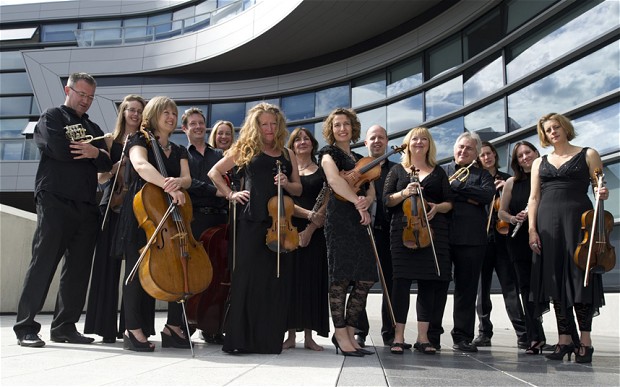
Britten Sinfonia at Lunch – Wigmore Hall, 4 March 2015.

If chamber music is not your forte, then I cannot imagine a better way into it than by the Britten Sinfonia’s ‘At Lunch’ concert series, held in London, Cambridge and Norwich.

Each program explores works written for a particular instrumental combination, but always includes a world premiere from a living composer. The informal atmosphere is both performer and audience friendly, and as a diversion from work or a pause in the middle of the day, the experience is ideal.

This second concert of the 2015 season chose to look at the piano trio, a misleading label since the standard combination of instruments for the trio is piano, violin and cello. Yet, as the program observed, the form is less often used by contemporary composers, and has a heritage of works running from Haydn in the mid-18th century through to 20th century composers such as Shostakovich, who featured here.

What the Britten Sinfonia did really well was to present possible solutions to the form, which here included adding percussion. To begin we heard Lou Harrison’s Varied Trio, for violin, piano and percussion. Harrison, an American composer who lived from 1917-2003, took as his inspiration the music of a number of different countries including China and Indonesia, and his original approach here included a set of rice bowls played with chopsticks. The resultant sounds were often soothing and rather wonderful, drifting as though on the breeze from percussionist Owen Gunnell, but with pianist Huw Watkins also reaching around inside the instrument to produce some unusual sounds. Completing the trio was violinist Thomas Gould, whose sweetly toned Elegy formed the third of the Varied Trio’s five movements and made it the emotional centre.

The new piece was from 22-year old composer Joey Roukens, who described his Lost in a surreal trip as ‘a psychedelic, kaleidoscopic 12-minute piece’. It was vividly coloured and brilliantly realised by the players, adding cellist Caroline Dearnley to their number. Early on the music cast spells of dappled light through harmonics on the strings and intriguing percussion sounds, but then a more mechanical energy took hold as though we were being transported by train to a place without a firm surface. With bags of reverberation and some enchanting sounds from the marimbas, this piece was consistently inventive and will be well worth hearing.

From the conventional piano trio legacy came one of its finest works in the 20th century, the Piano Trio no.2 by Shostakovich. This concentrated wartime work from 1944 is packed full of anguish, marking the death of the composer’s close friend Ivan Sollertinsky but also expressing outright anger at conflict and war. Gould, Dearnley and Watkins had no need for percussion here, not with the rhythmic profile Shostakovich establishes, but theirs was a keenly felt performance that left the listener in no doubt of the composer’s feelings and concerns.

A Spotify playlist containing the Varied trio and the Shostakovich Piano Trio no.2 can be accessed here:

Signum Quartet – Late Beethoven

The Signum Quartet take on Beethoven’s massive B flat major string quartet Op.130, complete with Grosse Fuge

signum-quartet

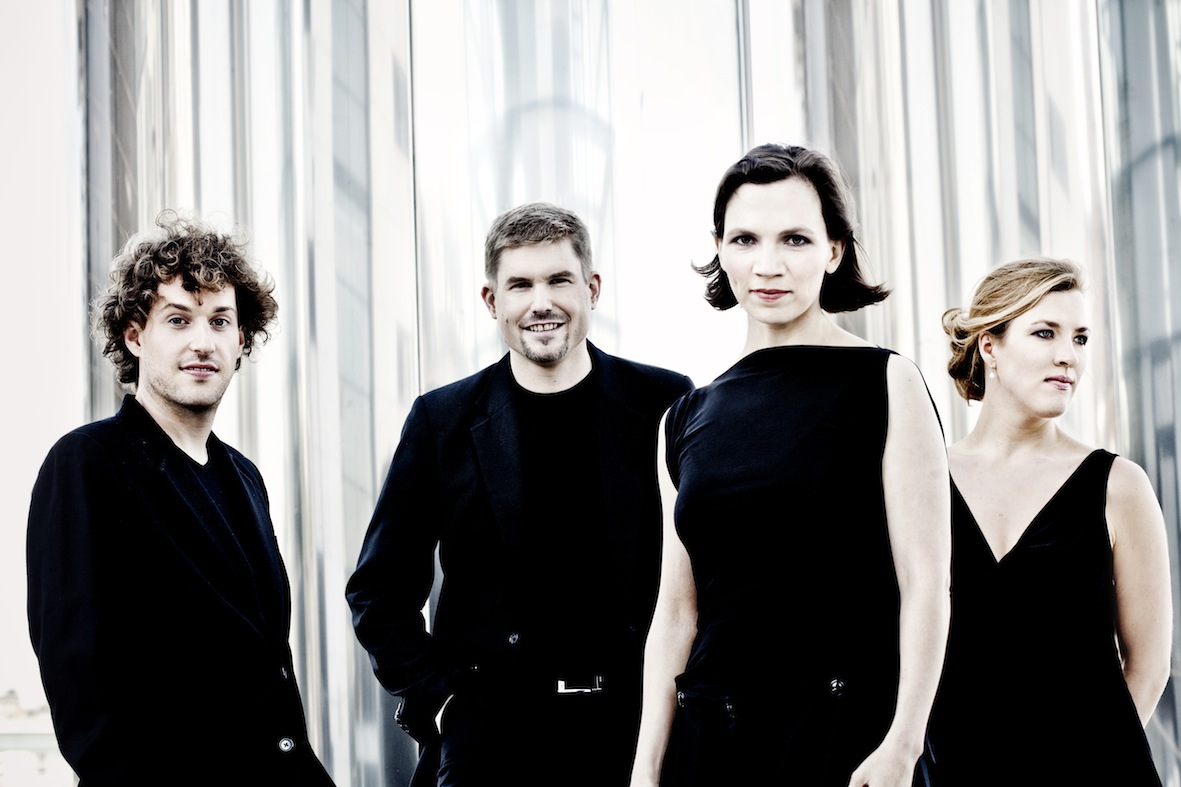
Louis Schwizgebel – Wigmore Hall, live on BBC Radio 3, 23 February 2015

Listening link (opens in a new window):

http://www.bbc.co.uk/programmes/b053zy7y

on the iPlayer until 31 March

Spotify:

For those unable to hear the broadcast I have put together a Spotify playlist. The Signum Quartet have not recorded this repertoire, so I have chosen an alternative version by the Artemis Quartet:

What’s the music?

beethoven
Beethoven – String Quartet in B flat major, Op.130 – including Grosse Fuge (1825) (47 minutes)

What about the music?

If this is your first venture into listening to a Beethoven string quartet, then prepare to be overwhelmed! I mean that in the best possible way, because this is one of Beethoven’s very biggest works, especially when performed with the massive final movement Grosse Fuge at the end.

Even now, nearly 200 years on from when he wrote them, Beethoven’s late string quartets are forward-looking works of wonder. This B flat quartet, one of five such works published towards the end of the composer’s life, is a remarkable work that still gets musicologists hot under the collar with debate, especially when the Grosse Fuge is taken into account.

Beethoven wrote the quartet in 1825 for Prince Nikolai Galitzin of Russia, an amateur cellist. His publisher suggested a slighter finish than the Grosse Fuge, and Beethoven obliged with a shorter and more amicable substitute. This was because the great finale was so substantial and so unusual in its musical language that it inflated the work to a daunting 50 minutes, out of the range of audiences and players alike, and presented them with an incredibly challenging finish. Today’s audiences are different, of course (not necessarily better!) and often warm to the thrill of a work that has not just this at the end, but also the tiny second movement Presto, a helter-skelter piece of music that is done in just over two minutes, and the heart-melting Cavatina, the fifth movement.

This part of string quartet has been sent into space, a recording from the Budapest String Quartet part of a record loaded onto both Voyager space probes. So any alien that happens to possess a record player will be able to hear the Cavatina, presumably as their first experience of Beethoven!

Performance verdict

The Signum Quartet give a keenly thought performance here, though I did wonder on occasion if they could have played a little closer to the edge, sacrificing a little control for out-and-out roughness, so as to catch Beethoven’s invention and daring.

That said there are many fine things here – the Cavatina especially, lovingly played as though it is the slow movement of an early 20th century symphony. The third movement is lovely too, given an affectionate reading. The Grosse Fuge is very clearly played, but arguably needs more rough-hewn passion. That said, nobody attending the Wigmore Hall on this occasion would have been disappointed with the standard of performance!

What should I listen out for?

First movement (marked Adagio, ma non troppo – Allegro (Slow but not too much – fast))

3:24 – a softly voiced slow introduction leads to a stop-start fast movement from 4:24, with some excitable faster passages contrasted by pauses for thought. The music is often busy, Beethoven passing ideas between instruments. The first section is repeated at 7:16.

9:40 – the music alights in the remote key of D flat major, led by the chromatic line of the cello. This is not what is supposed to happen, but Beethoven was never one to follow rules. It sounds so inevitable here!

Second movement (marked Presto (very quick))

16:41 – this is one of Beethoven’s ultra-quick, no-nonsense pieces. A bit too much ‘forward and back’ in this performance, the movement doesn’t quite feel fully formed. There is a remarkable series of motifs from the first violin (beginning at 17:54) which could easily have been written by a composer one hundred years later, so striking is its musical language.

Third movement (Andante con moto, ma non troppo. Poco scherzoso) (At a walking pace, not too fast, with humour)

18:58 – a calmer atmosphere for this movement, with a steadier foundation.

Fourth movement (Alla danza tedesca. Allegro assai)(German dance. Faster)

25:56 – music of grace and poise for the fourth movement, its triple time used by Beethoven as a stately Minuet.

Fifth movement (Cavatina)(a short and simple song)

29:28 – the Cavatina, Beethoven said, moved him more than any other single piece of his own music. It is played here with a reverential hush, and as the concert note from Paul Griffiths says, the music approaches the Romanticism of Mahler in the depth and richness of its harmonic workings. It is beautifully and tenderly played here.

33:04 – the Cavatina moves into a more thoughtful section, the first violin seemingly talking to itself while the other three chug sympathetically in accompaniment. Beethoven quickly moves back from this to the home key, however.

Sixth movement (Grosse Fuge)(Grand fugue)

35:58 – music of remarkable tension and bite to begin the massive Grosse fuge, which starts with an angular introduction from the whole quartet before we hear the music for the fugue itself (36:47). After the serenity of the Cavatina the sheer drama of this music is remarkable.

What is also remarkable is that Beethoven is executing all manner of clever musical tricks, all relating to the main theme and different variants / transcriptions of it – but as a listener you don’t necessarily need to note that, and can appreciate the unfolding drama with the string players pushed to the limit, both technically and emotionally. Towards the end it really feels as though the music is breaking up under its own weight and strain, before Beethoven brings it together to force an ending of togetherness and ultimately conviction.

Want to hear more?

How about some more Beethoven…that isn’t quite so much of an intense experience for the brain?

It can be possible…so here are the Artemis Quartet again in three more Beethoven String Quartets – two early and one very late. The early ones, two of the set of six that were published as the composer’s Op.18, are full of good natured humour and energy, while Beethoven’s last published quartet, Op.135, is also a lighter piece of work. Here they are:

For more concerts click here

The Borrowers – The Orb: Little Fluffy Clouds


What tune does it use?

The third section of Steve Reich’s Electric Counterpoint.

Ask any electronic musician worth their salt who their greatest influences are and the chances are it won’t be long before they come round to mentioning Steve Reich – which our interview with John Tejada has already confirmed!

Reich’s talent for taking pop-friendly melodies and looping them almost to breaking point (a technique often labelled as minimalism) has been one of the single biggest influences on electronic music up to this point, especially in techno, which often uses similar principles of repetition and expansion.

How does it work?

The Orb use a direct sample of the first recording of Reich’s Electronic Counterpoint, a piece written for guitarist Pat Metheny in 1987. He recorded it by setting down seven channels of guitar loops and two of bass guitar, before playing along as a tenth ‘person’. Yet The Orb place this music in context with a beautiful dub bass line and a host of ambient sound effects, most notably a clip of an interview with Rickie Lee Jones. The section of music they lift from Reich comes from the third section of Electric Counterpoint:

The Orb sample it directly here, as the beginning of their ‘chorus’:

and again nearly a minute later:

Here is the whole of the third section from Reich and Metheny, sat in the same key of A major:


What else is new?

Little Fluffy Clouds came to symbolize a lot of what was right about the so-called ‘ambient house’ style of the early 1990s, which acted as a springboard for Aphex Twin and a number of today’s leading electronic producers. Reich himself got involved later on, commissioning a remix album from such electronic luminaries as Coldcut, DJ Spooky and Four Tet. Here’s a remix of a section of Reich’s masterpiece Drumming by Mantronik:

The cross-over between Reich and techno goes back a long way too – and one intriguing spot is that Japanese producer Ken Ishii – now a widely respected techno artist – played cello on the first recording of Music for 18 Musicians, made for ECM in 1978. Now if you haven’t heard that particular piece, I suggest you stop what you’re doing right now and watch this!

Or you can go some way to sharing one of the great live experiences in music in this live performance:

Likewise if this is your first encounter with the music of The Orb, I should direct you towards their Top of the Pops performance of the wonderful, peerless Blue Room, heard in edit form below. Definitely the first band to play chess on the program!