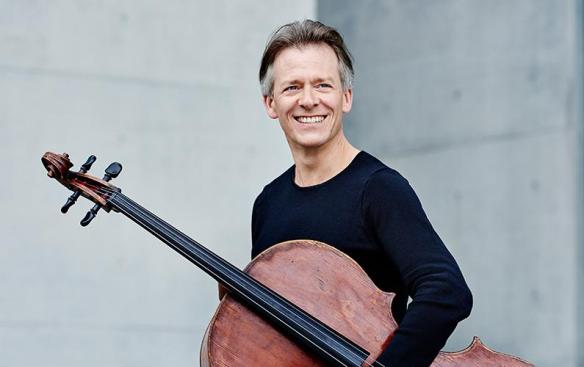
Talking Heads: Unsuk Chin & Alban Gerhardt

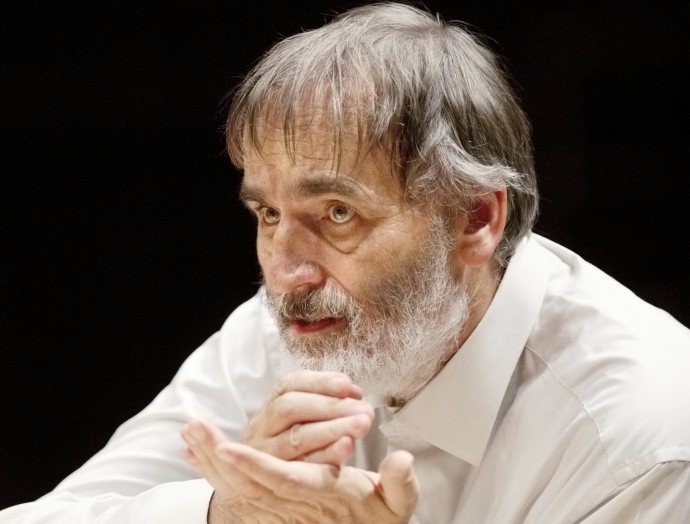
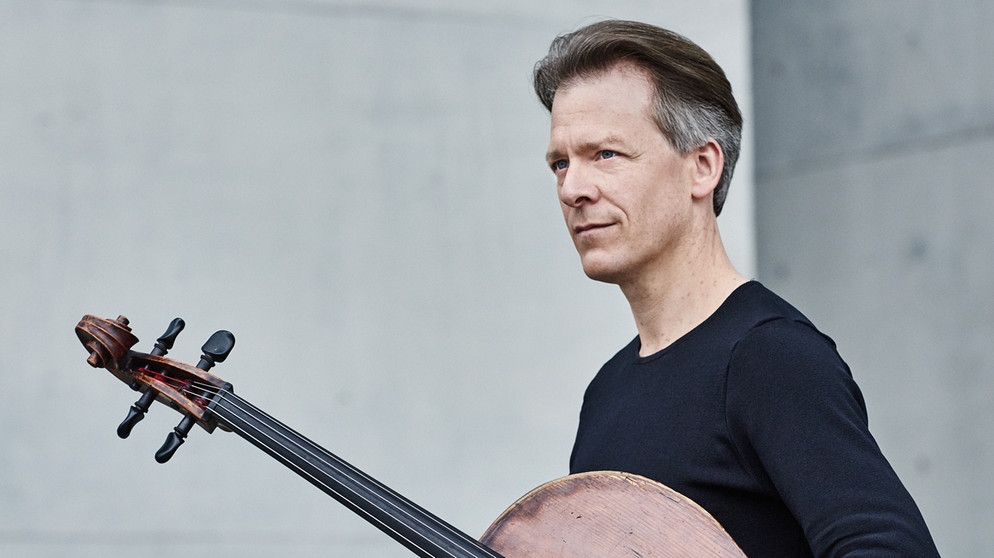
Composer Unsuk Chin and cellist Alban Gerhardt are featured musicians at the 75th Aldeburgh Festival this year. They have been linked in music since 2009, when Alban was the soloist in the premiere of Unsuk’s Cello Concerto at the BBC Proms in 2009. They talk to Arcana about how the piece has evolved and their hopes for this year’s festival.

by Ben Hogwood

The 75th Aldeburgh Festival of Music and the Arts is upon us – and Arcana is in the very fortunate position of talking simultaneously with two of its Featured Musicians, Korean composer Unsuk Chin and German cellist Alban Gerhardt. Unsuk is checking in from her Berlin residence, where she is deeply ensconced in composition work – of which more later. Gerhardt, as is often the case, is touring – and is about to join us from his hotel lobby in Spain, where he played the Lalo concerto the previous night. 

The two have a strong musical bond, cemented by the Cello Concerto Unsuk composed for Gerhardt, first performed at the Proms in 2009 with the BBC Scottish Symphony Orchestra. Gerhardt will bring it to Aldeburgh in 2024 with the same orchestra, under Ryan Wigglesworth, on 20 June.

Firstly, however, we welcome Unsuk to the chat. Her youthful countenance is complemented by an intense focus on her music – which comes to the fore as soon as we begin to discuss Alaraph, a quarter-hour piece for orchestra receiving its first UK performance at Aldeburgh this season. Subtitled Ritus des Herzschlags (Rite of Heartbeat), it is a powerful and dramatic piece, in which Unsuk is drawn to the concept of so called ‘heartbeat stars’, that have a regular pulsation.

“I’m very interested in science”, she says, “and I was very interested in the different types of stars. These heartbeat stars have a certain rhythm of changing the brightness, and immediately I imagined a certain type of rhythm where I could compose a piece with this idea. The second idea in Alaraph came from Korean traditional music. We have very vivid, dynamic folk music, and I was always very impressed by its rhythms and melodies, and I wanted to bring them all into one piece. Lots of percussion instruments will be needed there!”

In spite of the large percussion section, the piece ends quietly, which if anything heightens the drama. “The piece is a kind of ritual,” she explains, “and the six percussionists play a very big role. The sound is moving from left to right and right to left, and at the end of the piece they repeat the cymbal sound. Then they should stand and show the cymbals, as a kind of ritual.”

On a much smaller scale, we will hear a group of Chin’s Piano Etudes, in concerts from Joseph Havlat and Rolf Hind. Talking about the Etudes almost inevitably draws parallels with Unsuk’s teacher György Ligeti, whose own Etudes for piano have proved revelatory in the course of the instrument’s recent development. Were they intimidating when she started to write in the form? “When I studied with Ligeti he had just finished the first cycle of six etudes, and I was at the premiere of those pieces”, she says. “On the other hand, I have played the piano since I was four, so it was for me the main instrument. I certainly got some influence from him in writing piano pieces, but even if he had not written piano etudes, I would have written my etudes for sure!”
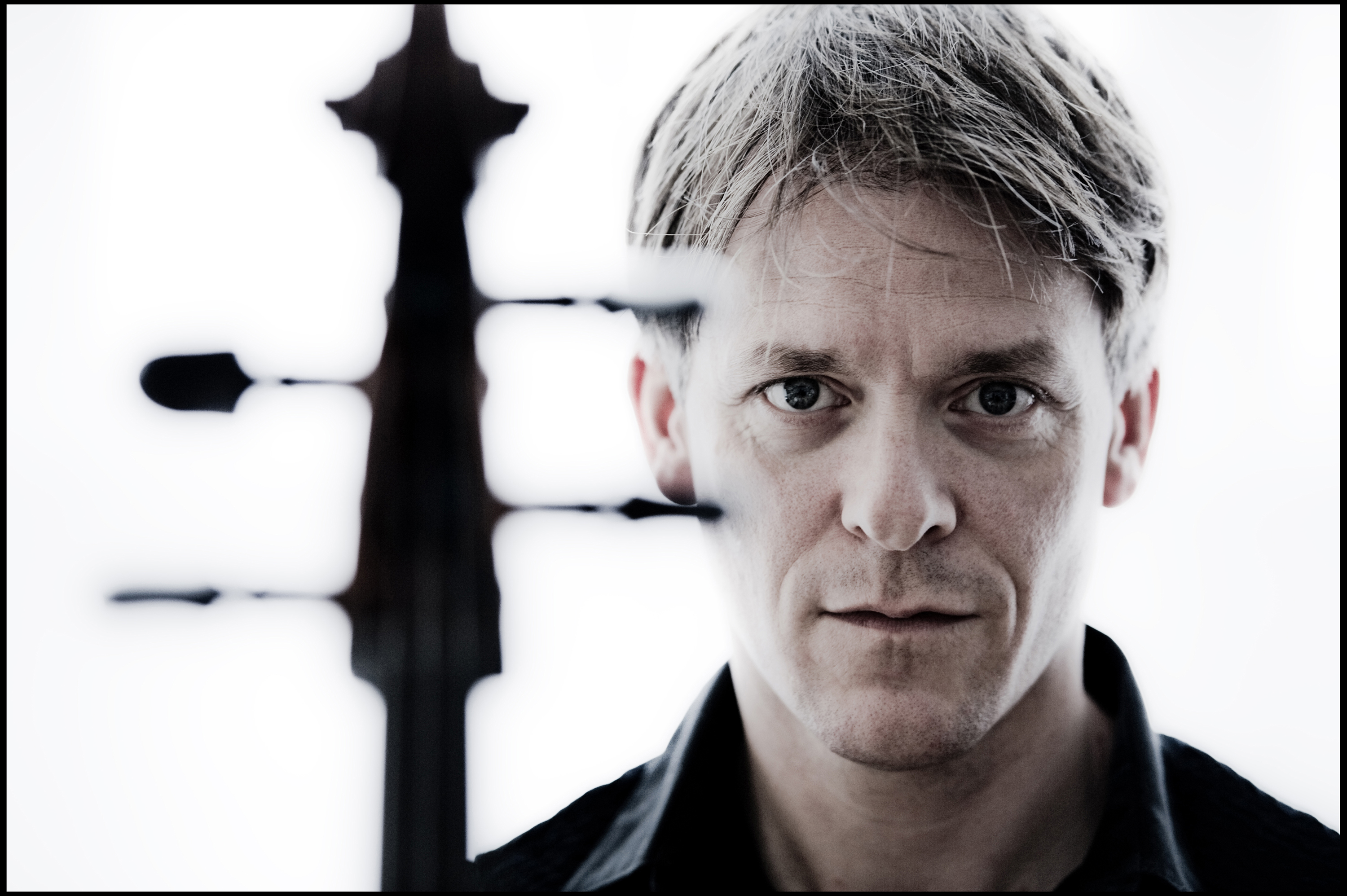
At this point Alban joins the call, and Unsuk greets him enthusiastically. “Your hairstyle is new!”, she exclaims, but he shakes his head. “No, just less hair!”, he says, smiling. Gerhardt is being modest, for he too looks bright-eyed and in good spirits. Talk inevitably turns to the Cello Concerto Unsuk wrote for him, and they recall their first meeting. “We met first in 1999 in Helsinki”, she says. “It took a couple of years, but then I had some idea of how it would be very nice to write a cello concerto for him. That was the beginning, but then he had to wait almost seven years while I got the piece ready!”

Gerhardt was not impatient for the piece, however. “I am glad you mentioned that, because it proved to me that you are not slow or lazy, but very respectful for the genre of the cello concerto. I remember at first that you were very hesitant, and that’s a wonderful quality, because these days it’s like everybody should be writing a cello concerto. One of the most difficult tasks nowadays, with a big orchestra, is that you want to use it as a composer. But if you use it, then you lose the cello. You were aware of that huge challenge, and you took your time. It got postponed a few times, and at the Proms too, but I’m so happy – because this piece works! The truth is that it was performed in Berlin by another cellist, Alisa Weilerstein, which is fantastic. Which other modern cello concerto can you say that about, that it was performed in the same city at 10 years difference by a top-class cellist? I’m very happy about that!”

Chin smiles in gratitude. “You are always supporting me!” she laughs. “The first time we met was through Lisa Batiashvili”, recalls Gerhardt, “and she is a close friend but also grew up together with Unsuk’s husband, Maris Gothóni. I knew about Maris first, and then I met Unsuk and was shocked by her charisma and aura, and then when I heard the Violin Concerto I thought, “she needs to write a cello concerto!”
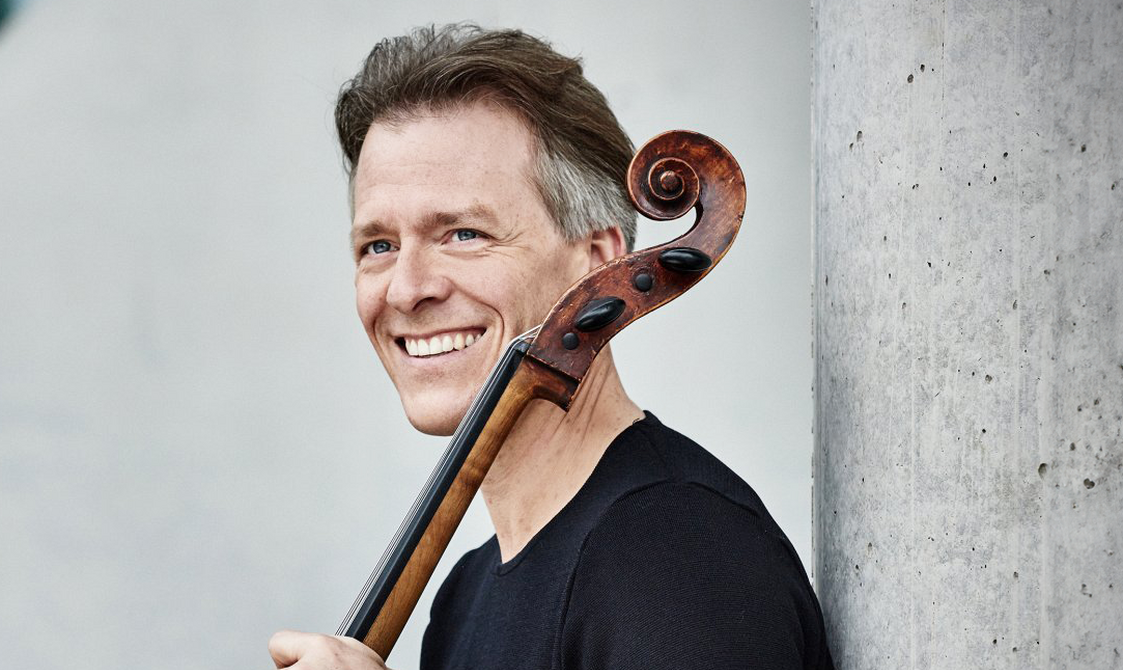
The concerto makes some fearsome technical demands, wasting no time in pitching the soloist right to the core of the action – an aspect that Gerhardt applauds. “Actually, the beginning is among the easiest bits of the whole piece! It’s not easy at all, but compared to what comes later, I’m not afraid of the beginning. I’m happy to start right away because if you sit there forever, you start thinking and getting nervous, which is not a good thing.”

“For me the working process was very interesting”, Chin interjects, “because often the artist and composer will have conversations and contacts, but with us it was not like that. I just wrote the piece to the end, and I delivered, and he delivered his playing. It was extremely professional, and there was not a need to change anything because of his technique. I wrote what I wanted, and he played it at the premiere by memory. I couldn’t believe that a human being could do that!”

At this point, Gerhardt has a confession to make. “This is the biggest shame of my life, because I was big headed, and I got lost three times – I was not happy. The most beautiful and difficult part in the last movement, which is like 80 seconds, is very wittily written and difficult to play. It is probably the 80 seconds I have practised most in my life, and I completely missed them in the world premiere. I’m so grateful that I have had 30, 40 more times now to play it. For me that is the biggest thing. I have not played so many world premieres, but each one is the worst performance – it always gets better. You need to give it a chance to grow – not with the memory slips, but the piece settles. With this piece the more I play it the more beauty and intensity I discover, and the more I understand it. There is so much to understand that you cannot grasp it all at first sight.”

He is relishing bringing the piece to the Aldeburgh Festival. “I am very happy to play it there, after 15 years and having premiered it with the same orchestra. It will be a completely different performance, and I would bet my life it will be a much better one!”
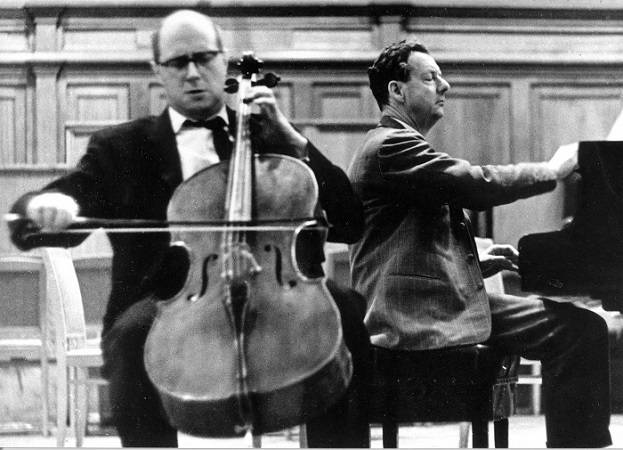
As well as the concerto Alban will be teaming up with regular recital partner, pianist Steven Osborne, in a recreation of a legendary recital given by Mstislav Rostropovich and festival founder Benjamin Britten (both above) in July 1961, where the world premiere of Britten’s Cello Sonata took place. Gerhardt considers the rapport both performers have in that recital. “Britten was a fantastic pianist and a wonderful musician, besides being a great composer. I wouldn’t say Steven and I have the same rapport because none of us is as creative as these two guys. Rostropovich was a composer himself, not a great composer, but he wrote some quite witty pieces, and conducted and played the piano. He was really a complete musician, although I don’t agree with everything he did interpretation-wise – which is perhaps bad taste on my part – but they were two giants of music! I think Steven and I understand each other well because we are closer in age and Western, whereas the Russian and the Brit – that’s quite a mix!”

He considers the concert further. “You have no idea how brave I actually am because two nights before I am playing Dvořák in Chicago, and I arrive in the middle of the night at 1am the day of the recital. I’m already very scared of that day!” We agree that Rostropovich would probably be in favour. “Yes, he would approve of doing something stupid like that!”

Both Unsuk and Alban are intensely honoured by their roles this year. “I heard lots of things about Aldeburgh and Benjamin Britten, who I really admire as a composer”, says Chin, “and it’s a really great honour to be played at the festival”. Sadly she won’t be attending in person, due to the composition of her opera Die dunkle Seite des Mondes (The Dark Side of the Moon) getting to the stage where it can’t be left. “It should be finished by the end of this year!” she confirms. “I’m not coming to Aldeburgh, then!” jokes Alban on hearing the news. “For me it’s an honour, but it is also an honour for the festival to have Unsuk, because she is one of the two or three best living composers. Anybody should be honoured to play her music.”

He recalls his first visit to the Suffolk town. “I think I was first there 20 years ago. A few months ago I went to the Red House for the first time, and saw the manuscript of Britten’s Cello Suite no.1, and it was beautiful to see the handwriting. It had a lot of the fingerings and bowings of Rostropovich on it, and I didn’t like that because I wanted to know what Britten actually said.”

He applies the same argument to the newer commission. “That’s why when we made an edition of Unsuk’s concerto I was very hesitant of putting too much of me in there, because I want the next performer to come up with their own ideas. For example, some of the metronome markings of Unsuk I cannot play, but I like that! The question is – should we change them to what I could do? I said no, because it’s good to know that she had that in mind, and the next player should try to get to it. Metronome markings are not the rule of law, but it gives us an idea of what the composer had at some point in their mind. I would hate if people came and took my interpretation as the one to do. The one to do is in the score, and what was in Unsuk’s head. I don’t think it helps much to ask her how to play it!”

Unsuk nods in agreement. “I think you said once it’s like a child you give birth to”, says Gerhardt, “but then it grows, maybe in a direction you’re not happy with!” The only few things you told me”, he recalls, “were about some slides in the first movement, which happened by accident. The great thing is that we have these scores, which are like a protocol, which give us an idea of what to do and then we do it. Every interpretation should by definition be different, if each one is the same then something went wrong. We become in a way an assistant to the composer ourselves, and if the interpretation is always presented the same then that is a job badly done. We have to be different!”

Playing solo Britten at Aldeburgh, as Gerhardt will do with the Cello Suite no.1, presents a special challenge. “It was scary when I did it the first time”, he admits. “but now the scary part is out I’m just going to enjoy it. András Schiff told me once that the older he gets the more nervous he gets. I find the older I get, the less I care about other people and what they think. I want to transmit what I feel about the music, and the older I get the more I dare to really do what I want, and not follow rules or guidelines. I take Gustav Mahler as an example, and where he reduced the Adagietto of his Fifth Symphony from nine minutes to seven minutes when conducting. Less is more!” As a listener, it is good to hear of artistic development in this way. “As a listener, I don’t want to be bored”, says Gerhardt. I hate it when people celebrate something where there is nothing to celebrate, like a dog stopping at every tree!”

Unsuk, meanwhile, will be totally immersed in competing her new opera. “I am writing the libretto myself as well”, she says, “because I created the story. It is based on the relationship between an Austrian physician Wolfgang Pauli and Karl Gustav Jung. It is a very complex story, and I can’t digest it in pure texts. It is about a man who is a genius but who has a very complicated private life and very interesting, wonderful dream every night. He is suffering, and therefore wants to be helped – so goes to Karl Gustav Jung and they start analysing Pauli’s dream. I took this biography as the base and put some fiction in there to write a story like a new version of Faust. I’m writing the music and the libretto myself, in German.”

The opera is due to be premiered in May 2025, at Hamburg State Opera, conducted by Kent Nagano, and staged by the English / Irish team Dead Centre. In the meantime a much smaller piece, Nulla est finis, will act as a companion to Thomas Tallis’ great 40-part motet Spem in alium, in a festival performance from Tenebrae at Ely Cathedral. “It is very small”, she says modestly. “It is not a piece, more a small prelude to the Tallis piece.” Has she listened to much of his music previously? “Not much, but I knew this piece. The commission came from Sweden, and they wanted a small prelude to Spem in alium, so I thought it would be nice to compose a kind of entrance where the choir are whispering, and slowly the tones come in and it goes to Spem in alium.”

Beyond the festival, Gerhardt has a typically busy year – but first a holiday. “I only think up to June”, he says, “and then I think I have three weeks free!” There are recording plans afoot with Hyperion, which remain under wraps for now. The Dvořák concerto, which he is performing in Chicago, would be a wonderful contender. “My view of it has changed, because I had a look at the facsimile of the piece and a lot of new ideas popped out, so it will be quite different. I think it’s more like what Dvořák had in mind, and I have to tell conductors off sometimes now! I find the same with Brahms symphonies, where people do these same, silly rubatos, and they are lacking in inspiration, because they cannot come up with their own!”

Finally, the question has to be asked – might there be a Cello Concerto no.2 from Unsuk Chin? She laughs, a little nervously! “At the moment there is no plan, but you never say never!” she says. “I would never push for a second one,” says Alban, “because the first one is so great, and I’ve never played it that I’m 100% happy with myself. If any other cellist was to ask for a second one, I would urge them to play the first one five or ten times, and then we can talk! For me that is one of the reasons why there are so few concertos added to the repertoire since Dutilleux. There is so much one can do with this piece, so much fine tuning one can do. We as performers should strive for higher, not for perfection necessarily but for musical expression. I don’t think the world needs number two, we should be very happy and blessed that there is a number one!”

Published post no.2,201 – Thursday 6 June 2024

In concert – Alban Gerhardt, CBSO / Roderick Cox: Ravel, Saint-Saëns & Bartók

Alban Gerhardt (cello), City of Birmingham Symphony Orchestra / Roderick Cox

Ravel Ma mère l’Oye – suite (1910, orch. 1911)
Saint-Saëns Cello Concerto no.1 in A minor Op.33 (1872)
Bartók Concerto for Orchestra BB123 (1943, rev. 1945)

Symphony Hall, Birmingham
Thursday 16 February 2023 (2.15pm)

Reviewed by Richard Whitehouse

This afternoon’s concert by the City of Birmingham Symphony Orchestra brought a judicious programme that not only looked effective on paper but worked well in practice, juxtaposing characteristic works by Ravel and Bartók alongside a favourite concerto from Saint-Saëns.

Although the extended ballet was championed by Simon Rattle during his CBSO tenure, the original five items constituting Ravel’s Mother Goose suite (the Prelude was included on the programme but (rightly) not in this performance) constitutes an attractive sequence and one that played to the orchestra’s strengths. Roderick Cox brought out the serene poignancy of Sleeping Beauty’s Pavane as fully as the winsome poise of Hop-o’-My-Thumb, with its delectable playing from woodwind. Neither was the piquant humour in Laideronnette, Empress of the Pagodas undersold, nor the stealthy interplay of gentility and earthiness in Dialogue of Beauty and the Beast. Initially a little muted in its rapture, The Fairy Garden built towards a finely sustained apotheosis whose unforced ecstasy was much in evidence.

Saint-Saëns has long enjoyed a following in Birmingham – not least his First Cello Concerto, which this reviewer first heard played by CBSO with the redoubtable Paul Tortelier almost a half-century ago. Evidently no stranger to this piece, Alban Gerhardt launched into the first of its three continuous movements with due purposefulness; pointing up the formal ingenuity as the composer interposes between what are nominally the exposition and development of a sonata design a ‘minuetto’ where soloist and muted strings render the principal themes at an oblique remove. The relatively extended final section can risk feeling diffuse, but Gerhardt’s focus brought a natural sense of intensification then resolution prior to the decisive close. The soulful opening Dialogo from Ligeti’s early Solo Cello Sonata provided an apposite encore.

A staple of the modern repertoire in almost as short a time as it took to be composed, Bartók’s Concerto for Orchestra is a sure test for any such ensemble and one that the CBSO met with alacrity on this occasion. Setting a steady if never inflexible tempo for the Introduzione, Cox drew its contrasts of musing uncertainty and impulsive dynamism into a tensile and cohesive whole. Hardly less effective was the genial succession of duets in Giuoco delle coppie, set in relief by a brass chorale which makes for one of its composer’s most affecting inspirations.

Its sombreness marginally underplayed in its opening stages, the Elegia lacked nothing in eloquence at its climaxes or in its regretful closing bars, then a juxtaposing of folksong with Léhar and/or Shostakovich in the Intermezzo interrotto made for a heady while meaningful amalgam. It might not have followed-on attacca, but the Finale was otherwise the highlight of the reading – Cox as attentive to the music’s energetic and lyrical elements as to a central fugato whose initial fanfares return to cap the work, and this performance, in joyous abandon.

Born in Macon (Georgia) and currently based in Berlin, Cox is a fluent and assured presence such as helped make this an auspicious debut. The CBSO returns next week for an appealing programme with Ilan Volkov, featuring Isata Kanneh-Mason in Prokofiev’s Third Concerto.

You can read all about the 2022/23 season and book tickets at the CBSO website. Click on the artist names for more on Roderick Cox and Alban Gerhardt.

Talking Heads: Brett Dean

interview by Ben Hogwood

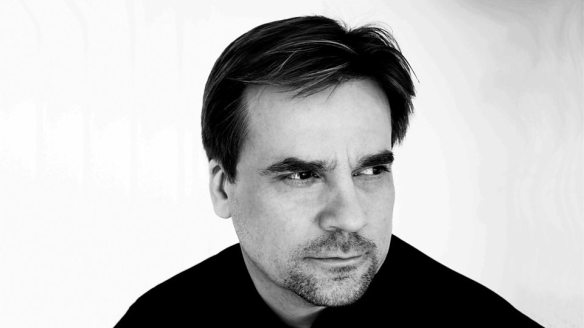
Brett Dean is enjoying a productive start to 2022 in London musical life this year. Late January saw the UK premiere of his Piano Concerto, with Jonathan Biss and the BBC Symphony Orchestra, while the following month Lawrence Power gave a performance of the Viola Concerto with the London Philharmonic Orchestra. The viola is Dean’s ‘home’ instrument, but more recently he has cast his eye further down the stringed instrument range to write for the cello. This work – the Cello Concerto – has had a number of high-profile performances around the world with its dedicatee Alban Gerhardt as soloist. Gerhardt now brings it to the UK for the first time, completing a date originally scheduled during the pandemic.

Australian composer Dean lives in the UK, and Arcana join him on a Zoom call from his home in a village near Newbury. We start by talking about the concerto’s genesis, which runs right back to when composer and soloist met for the first time. “I have known Alban for a long, long time,” he reveals. “His father, Axel, was a colleague of mine when I was playing in the viola section of the Berlin Philharmonic. They all have musician’s names – Alban, Cosima, Pamina – all quite quirky but very definitely music related names. I first encountered Alban when he was a teacher, and I taught his elder sister Manon the viola. For quite some years she has played in the viola section of the Deutsche Oper in Berlin. I’ve known the family and known Alban since he was 16 or 17, and I played in the Berlin Philharmonic when he gave his debut, which would have been in the early 90s. He played the Tchaikovsky Rococo Variations and so it was coming full circle to write not only the Cello Concerto but prior to that I’d written him a piece for cello and piano, which he premiered with Steven Osborne. We’ve been collaborators for quite some time, and in recent years we have played in a string quintet which tours occasionally. It’s been a very special time, and great to unpack this piece with him.

Gerhardt is a fierce advocate of contemporary music. “With even the brand new pieces, he plays them all from memory”, reveals Dean. “He has an extraordinary dedication. He would play that down and say simply that he plays better from memory, but that’s underestimating what must go into that because it’s not easy to commit brand new pieces to memory.” Committing this new piece must have been a labour of love, given the distinctly shaded cello part? “It’s hard for me to judge, but it does have motifs and things you can remember. I do think my instrumental writing does allow and certainly uses motifs that you can remember. At the same time there is plenty of variation and modification and manipulation of those motifs such that it must be easy to end up going down the wrong path! That can happen in standard repertoire, having played quite a few viola concertos from memory – it is a very particular skill. It is liberating, I remember – although it’s been a while since I’ve played any of the big concertos from memory – but it is a great feeling when you get to that point.”

Was Brett writing the Cello Concerto as much for Alban the player as he was for the cello as an instrument? “Certainly”, he says emphatically. “The piece actually started life as a piece for solo cello, which strictly speaking I didn’t write for Alban. It was actually a competition piece for the Feuermann competition in Berlin, back in 2014 or 2015. It was called 11 Oblique Strategies, which was inspired by Brian Eno and Peter Schmidt‘s pack of cards. It is a pack of cards that they put together, and you pull out a card. It was meant for creative artists, in Eno’s case in a studio and stuck for an idea. You go to the pack, pull out a card and it will have some sort of aphorism on it, like building bridges, burning bridges, or “You are sitting in a very large room and it’s very quiet” – things that get the mind ticking over. It became quite a thing back in the ‘70s. Famously David Bowie used these strategies when he was in his Berlin phase, writing Low and Heroes.”

Dean’s approach differed slightly. “With this piece it doesn’t have the spontaneity that Brian Eno built into the idea, because I actually chose eleven cards beforehand and ordered them. I was fascinated by the concept though and given that it was a competition piece for young cellists it seemed an appropriate thing to write a piece that somehow was about the creative and the recreative process. Alban was part of it, because he was the first cellist I ever showed the piece to, and he would run through it for me and with me. That meant I had a profound cellist’s approval. It seemed somehow fitting then when the concerto commission came up to take these ideas, because I was really happy with how the solo piece turned out, as it seemed to be one of those solo pieces that was opening multiple windows for me. He explains further. “Some pieces lead you further than other pieces do, and this piece cracked a few hard nuts for me compositionally. It seemed appropriate to use it as the basis of a piece for Alban, given he’d been part of its early stages. It is for Alban, and also for the cello.”

Dean has a confession to make. “The cello is the instrument I probably would have liked to have been playing. I love the viola, it has been good to me, but there is something about the whole gesture of cello playing that is quite stupendous and grand, and all the mastery and the range it has, I have always enjoyed writing for it. Even with chamber pieces of mine that feature the cello, it ends up having a good time! My quartets have a full prominent part, while I’ve written for the twelve cellos of my former colleagues in Berlin, the piece Twelve Angry Men. So, it was a wonderful and pleasing opportunity to write a concerto and above all for Alban, who I’ve known so long.”

The Cello Concerto has a long, continuous span across its single movement, so while there are some distinct divisions it is very much one broad section. Dean considers his answer. “I mentioned the cracking of difficult nuts with that solo piece, and I think the thing I was able to unify in that piece, in its many short movements, was the first time I felt I’d been able to approach something in the manner of a composer like György Kurtág, who I admire greatly. The Kafka Fragments are a good case in point. They are around 60 minutes long but are made up of so many small components, and yet it somehow is this single statement. I’ve always been fascinated by how he does that. With the solo cello piece I felt I got somewhere along that path. I had these very contrasting and different eleven sections that somehow hung together in a way that I found pleasing, and that was somehow more than the sum of its parts. It was building on that to come up with this big span in the Cello Concerto, and I’m really pleased that comes across because that’s not a given by any means.”

Another feature of the concerto is its striking orchestral colours, which prompts the question – does he find it advantageous writing for the orchestra having been part of one? “I’m sure”, he says emphatically. “I can’t imagine writing for orchestra without having had the background I’ve had. I’ve always felt it’s a bit like a home game writing for orchestra, because I go back into my orchestral mindset. I do still get a printout of the viola part and play through it, to see what it feels like. Even when I finished writing Hamlet, I got the viola part and slogged through it over a couple of days. It was bloody hard! It doesn’t necessarily make all that much sense. Just the viola part of an opera, but you know, the viola part of something like a cello concerto, given the action in in the divided strings, it gives you an indication of whether the energy is working correctly. It’s incredibly valuable in orchestrating contemporary music to know how to gauge energy. I find it really important to write parts that are challenging for orchestral players, but in that challenge it needs to be achievable, not too complex. That’s what I really liked about pieces in my own time in a professional orchestra. In the early years of the Berlin Philharmonic, it didn’t include that much really contemporary music, but I also did a lot of chamber music, and that included a lot of contemporary music with like-minded younger members of the Philharmonic. Yet as Claudio Abbado took over from Herbert von Karajan, and then Simon Rattle took over from Abbado, the repertoire changed significantly anyway.”

In writing for orchestra, Dean drew inspiration from one of his contemporary composers, Helmut Lachenmann (above). “As he said, an orchestra is an incredible kind of fascinating machine. It’s got 100 moving parts, and they all have a human brain, but getting them all to move in the same direction at the same time is another matter altogether! I met him a few times, and never had lessons with him, but we did talk a bit about those sorts of things. It was fascinating to also see the very different and quite extraordinary sound world that he creates. It’s much more about particular sounds and noises that you can get out of instruments. He could tell a brass player exactly where to put the embouchure to get exactly the sound he needs, which is why he’s been so convincing when he steps in front of an orchestra. On the page they look daunting, but he knows it’s achievable, and I learned a lot from that, to make it somehow a really positive challenge for each and every member of the orchestra rather than giving them a page load of black, notes everywhere! You won’t get the orchestra on side that way.”

The concerto is a collaboration of forces, rather than a contest between them. “That was something I was pleased about. The solo piece had a title Oblique Strategies, but it was about the creative process. It’s not necessarily trying to tell a story in the way quite a few of my pieces, including a couple of the concertante pieces, do. The first movement in my Trumpet Concerto, which I wrote for Håkan Hardenberger (below), is called Fall Of A Superhero. It is about pushing this trumpet to the max, so that actually the trumpet conks out at the end of the first movement. My Clarinet Concerto is called Ariel’s Music, and is a requiem for Elisabeth Glaser who was one of the first but one of the most prominent early campaigners in the AIDS era. She had been infected with HIV in a blood transfusion, and possibly because she was not from the gay community but from a straight community she had traction with the Reagan administration at the time, which was doggedly blaming it on lifestyle choices. That is also very much a ‘one pitted against many’ scenario. In the Cello Concerto I was pleased to try writing a concerto that was more about a collaboration. It is about the cello initiating ideas that get picked up by the orchestra, then sometimes the other way around, and about finding colours of the solo cellist with the orchestra rather than being in competition with them.”

Dean agrees that it is gratifying having the concerto performed several times as part of major orchestral programmes, each time with Gerhardt as soloist. “It’s obviously thrilling for me as a composer, even despite quite a few performances getting ‘Corona’d’! The performance in London was going to happen in 2020 but got rescheduled. That’s the big advantage of having a soloist like Alban, who is such a genuine champion of new music. There are many soloists who, dare I say it, feel it is a good move to commission a new concerto every now and then, but Alban is very committed to the idea in itself. Again, as in Håkan’s case as a trumpeter, you’ve got to build the repertoire. Yes, you can play Haydn and Hummel all your life, but that’s what his guiding principle has been, to create repertoire for the trumpet as a solo instrument. In the cello’s case, there are plenty of great pieces you can rely on, but not as many as the violinists or pianists. Alban’s dedication to really forging new repertoire is extremely genuine, and the other advantage is co-commissioning to get several guaranteed performances, because you’ve got various stakeholders in in the game, which is a blessing. It really makes a huge difference for me as a composer.”

Dean’s mention of Brian Eno earlier in the interview deserves to be revisited, as it implies the composer has been very open in his musical education and what he takes on as a composer. It wasn’t always that way. “The irony is that my education, my practical upbringing, was very much classical. I learned violin as a kid and progressed to the viola and chamber music. Then I went through the conservatory, and it was all classical music. However, the person that really got me fired up as a budding composer, and who awoke the latent, ambitious composer in me was a rock musician, a guy called Simon Hunt from Sydney.”

The two struck up a firm friendship and musical relationship. “We discovered a likeminded need to explore territory other than where we were, other than our day job. I was enjoying hugely my time at the Berlin Philharmonic, and yet I was aware of its limitations. The late von Karajan era was Richard Strauss and Bruckner, Beethoven and Brahms, and not a lot else. He was getting sick of I-IV-V chord progressions, if you like! He was the ‘interesting sounds’ person in this otherwise not especially enterprising rock band, and we started improvising together. It was through that, with close mic-ing of the viola and a piano frame and an early sampler, I was learning as much from being in a studio with Simon as I was playing in the Berlin Philharmonic. Somehow the ambition to compose came as much from retracking sessions in divey studios in inner city Sydney when I was back on holidays, or this little studio we had near Checkpoint Charlie, in the days before the Berlin wall came down. It was very enterprising and kind of pioneering, and I found it was a great complement to donning the tails and playing Bruckner, to be in alternative music cafes playing this new music. I still need the electronic geek to find my way around the studio! I’ve never really learned to operate the studio myself, but it liberated my ear to musical potential, even if it was a recording of shattering glass. Those sorts of things became part of the pieces that Simon and I were making, often for short films. They became part of the vernacular or the vocabulary of sound that I was only too keen to expand. Quite a few pieces of mine, particularly early on, included electronics.”

The appeal of his first discipline is clear, however. “Increasingly, whilst I will still have a kind of an extra few sounds created electronically, I do like to get as much variety of colour as I can out of the orchestra itself. In the Cello Concerto I have written for Hammond Organ for the first time, for example! I couldn’t say why, but there was something about it that was the sound I was after. I like the bizarre aspects of it, the oddness that it brings.”

On a more sombre note, our talk turns to the influence of the recently departed Harrison Birtwistle (above), who Dean has checked as a reference point even in the notes for the concerto. The two did meet, it turns out. “The first time we met was at a concert at the Wigmore Hall in mid-2019. It was a feature of his own music with the Nash Ensemble, including a premiere of a new piece for viola and cello, Duet for Eight Strings, which was performed by Lawrence Power and Adrian Brendel. We chatted together afterwards in the downstairs bar, having been introduced, and as it turned out Harry was staying the night in the Garrick Club. We ended up sharing a taxi together, and I had to pinch myself! Here I was chatting away in the back of a taxi with one of my all-time heroes. I must say that I’m working on a new opera at the moment, and I’m happy to admit I have a vocal score of The Minotaur on my desk. I have to say there are scores of his that I turn to as much as anybody else and more than most. There is a strange arch of clockwork in his music, and yet I find it just so liberating. It frees up the imagination just to listen to it, let alone how he goes about it. It’s like a refresher course for your brain, and emotionally so engaging. I can’t say I knew him well, but I feel very connected to him through some of his pieces – in particular Pulse Shadows, one of my favourite Birtwistle pieces. It is a miracle of invention.”

Dean confirms the opera he is working on, for Bavarian State Opera, is called Two Queens. “It examines the relationship between Mary Stuart and Elizabeth I, but it does so not through Schiller / Donizetti but uses their own words, which have been beautifully put together and distilled by Matthew Jocelyn, who I worked with on Hamlet. It is due to be premiered in two short years, so I’ve got to get my skates on! It is progressing though, and I’m having fun with it.”

With that our allocated time is up – but Dean has shown in that time a keen and alert grasp of the music he is working on and its place in time, with reference to his time with the Berlin Philharmonic, his work within rock music and his vocation as a composer. Go to watch the Cello Concerto in its first London performance and you will get an idea of what he is all about.

Alban Gerhardt is the soloist, with the London Philharmonic Orchestra conducted by Edward Gardner, in Brett Dean’s Cello Concerto at the Royal Festival Hall on Wednesday 27 April. The concerto will be complemented by Britten’s Sinfonia da Requiem and Vaughan Williams’ Symphony no.5. For more information on tickets, click here

In concert – Alban Gerhardt, CBSO / Kazuki Yamada: Straight from the Heart

kazuki-yamada

Alban Gerhardt (cello, below), City of Birmingham Symphony Orchestra / Kazuki Yamada (above)

Anderson Litanies (2018-19) [CBSO Centenary Commission: UK premiere]
Dvořák Symphony no.7 in D minor Op.70 (1884-5)

Symphony Hall, Birmingham
Wednesday 30 June 2021 (6.30pm)

Written by Richard Whitehouse Photo of Alban Gerhardt courtesy of Kaupo Kikkias

Losing the greater part of the City of Birmingham Symphony Orchestra’s schedule across the past two seasons has meant postponing many of its ‘Centenary Commissions’, but of those which have been rescheduled, none was more keenly anticipated than that of Julian Anderson’s Litanies.

Anderson produced four works during his tenure as the CBSO’s Composer-in-Residence over 2001-5, this new piece renewing its formal and expressive archetypes by fresh and intriguing means. The first of three continuous sections presents cello and orchestra – its modest forces including double wind, harp and piano, their pitches modified by a quarter-tone – as sparring partners in propulsive, toccata-like music. This gradually mutates into a central slow section, whose fraught lyricism intensifies (with unexpected if effective assistance from the orchestra) towards a chorale in memory of Oliver Knussen. From here an increasingly animated cadenza leads to a capricious, dance-like final section that culminates in a splenetic orchestral outburst; the soloist then resuming for a soulful postlude which brings about a calmly equivocal close.

Alban Gerhardt (below) made the most of some finely gauged technical challenges, as he overcame passing vagaries of sound-balance (and what appeared to be a leg injury) to give a confident realization of a piece already heard in Paris, Örebro and Lausanne. The CBSO was no less assured under Kazuki Yamada; if balance between strings and wind occasionally lost focus (second violins placed further to the rear of the platform than would normally be the case), this did little to offset the attractions of a notable addition to the contemporary repertoire.

During a break for platform rearrangement, the CBSO’s Principal Guest Conductor spoke of his gratitude that audiences were again able to attend live concerts. Something of this evident pleasure came through the ensuing performance of Dvořák’s Seventh Symphony – not least an opening Allegro that, despite a few tentative string entries, undoubtedly had the measure of its stoic defiance and underlying seriousness of purpose. Best was a coda whose dramatic initial stages subsided effortlessly and inevitably into sombre rumination towards the close.

The highlight, however, was a slow movement whose Poco adagio marking was studiously observed – Yamada infusing the emotional ebb and flow of a movement whose formal follow -through can seem fitful with unfailing poise, the CBSO wind eloquent in their contribution. Nor was anything amiss in the Scherzo, its ‘furiant’ rhythm audible not just in the trenchant outer sections but also the trio where its simmering presence ensured no let-up in tension on route to a subtly modified reprise then explosive coda. The final Allegro capped the reading accordingly – Yamada never rushing its stealthy alternation between starkness and lyricism, while ably negotiating several testing changes in tempo as the composer ratchets up tension going into an apotheosis whose inherent fatalism was enhanced by the resplendent playing.

A gripping performance, then, as was met with a suitably enthusiastic response. The CBSO is back this Friday with altogether lighter fare for a programme of Summer Classics (including The Lark Ascending), which is conducted by Michael Seal and presented by Andrew Collins.

You can find information on the CBSO’s Summer Classics concert at their website. For more information on composer Julian Anderson, click here – and for more on cellist Alban Gerhardt, visit his website here

BBC Proms 2017 – John Storgårds conducts the BBC Philharmonic Orchestra in Sibelius, Grieg, Schumann & Hindemith

Prom 33: Lise Davidsen (soprano), Alban Gerhardt (cello), BBC Philharmonic Orchestra / John Storgårds

Grieg Peer Gynt Op.23 (excerpts) (1876)

Sibelius Luonnotar Op.70 (1913); Karelia Suite Op.11 (1893)

Schumann Cello Concerto in A minor Op.129 (1850)

Hindemith Symphony, Mathis der Maler (1934)

Royal Albert Hall, Thursday 10 August, 2017

You can listen to this Prom by clicking here

John Storgårds has been making his mark on the BBC Proms in his appearances as Chief Guest Conductor of the BBC Philharmonic. Tonight’s tale of two geographical halves commenced with excerpts from Grieg’s music to Peer Gynt; starting with the lively Overture (hardanger fiddles in evidence thanks to the violas), then continuing with a vehement Ingrid’s Lament, a deftly propelled Morning and a pensive Solveig’s Song undermined by Lise Davidsen’s fluttery vocal; finishing with the suitably quirky Dance of the Mountain King’s Daughter.

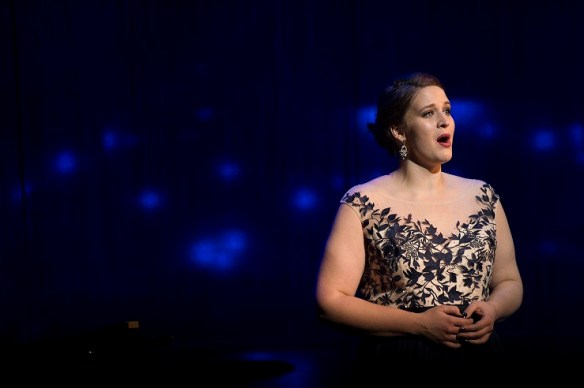
Davidsen (above) was then heard to better advantage in Sibelius’s tone-poem Luonnotar, coping ably with the stratospheric range of this singular creation myth – not the least of whose fascinations was having been premiered at the Three Choirs Festival in Gloucester Cathedral. There have been some memorable accounts of this piece over recent years, and if Davidsen did not efface memories of such as Mattila and Komsi, she duly pointed up its drama and mystery in what was, for the greater part, a sympathetic account. The Proms audience was suitably attentive.

Sibelius’s comparatively mellifluous Karelia Suite brought this Nordic first half to its close. Storgårds’s widely contrasted tempi for the Intermezzo left a rather disjointed impression, and while the Alla Marcia sounded rumbustious enough, a certain coarseness of playing rather limited one’s enjoyment. Best by far was the Ballade, one of the composer’s most arresting earlier pieces in its enfolding modal harmonies and given a notably rapt reading with such aspects as the wistful cor anglais melody towards its close eloquently phrased.

The Germanic second half began in more restrained mood with Schumann’s Cello Concerto. Rarely performed for decades (and more often in the transcription for violin), this deceptively genial piece is among its composer’s most ingenious in terms of form and motivic continuity. Alban Gerhardt (above) maintained a determined while never merely inflexible course across its three continuous movements, the BBC Philharmonic providing support as attentive yet unobtrusive as the music required. Interesting to hear that the soloist thought the finale musically the least successful, as this emerged as arguably the most successful part – not least with its engaging dialogue kept on its toes and with no sense of dourness or grittiness as regarded the orchestral texture. Overall, a perceptive and convincing account of a work still too easily overlooked.

Storgårds then rounded-off the programme with a taut and tensile reading of the symphony that Hindemith derived from his opera Mathis der Maler. This retelling of cultural meltdown and social antagonism during the Thirty Years War proved too ‘contemporary’ for the Nazi regime to stomach, and it was no surprise that the premiere of the complete opera took place in Zurich. Storgårds had the measure of the Angelic Concert with its austere chorales and angular though never impersonal polyphony. The Entombment of Christ was affecting for all its brevity, while the climactic Temptation of St Anthony built surely and impulsively from its stark introduction, through a central interlude of tangible pathos, to a culmination such as blazed forth in affirmation. All credit to Storgårds for ensuring so cathartic an impact.

Richard Whitehouse (photo of Lise Davidsen (c) Ole-Jørgen-Bratland)