In concert – Alina Ibragimova, CBSO / Dinis Sousa: Sibelius, Dvořák & Arvo Pärt

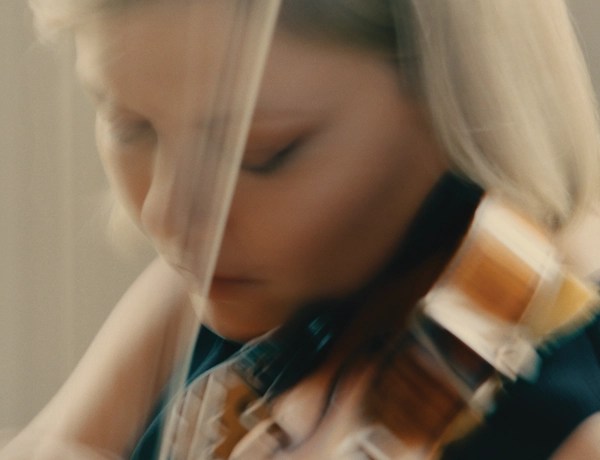
Alina Ibragimova (violin, above), City of Birmingham Symphony Orchestra / Dinis Sousa (below)

Pärt Our Garden (1959, rev. 2003)
Sibelius Violin Concerto in D minor Op.47 (1903-04, rev. 1905)
Dvořák Symphony no.8 in G major Op.88/B163 (1889)

Symphony Hall, Birmingham
Thursday 3 April 2025

Reviewed by Richard Whitehouse Picture of Alina Ibragimova (c) Joss McKinley; Dinis Sousa (c)

In what was an auspicious first appearance with the City of Birmingham Symphony Orchestra, Dinis Sousa presided over an appealing programme that featured repertoire staples by Sibelius and Dvořák alongside welcome revival of an uncharacteristic early choral piece by Arvo Pärt.

Uncharacteristic but highly enjoyable, Our Garden seems relatively untypical of the Estonian composer even in his mid-twenties – its winning an award at a Soviet-sponsored competition in 1962 bringing plaudits at a time when Pärt’s was very much an ‘unofficial’ presence on the new-music scene. Six decades on this can be enjoyed simply for what it is – an unpretentious celebration of youthful endeavour whose unaffected setting of four not overly polemical texts is as cohesive as it is sincere. Certainly, the CBSO Youth Chorus did justice to writing whose rhythmic unison was offset with some deft harmonic twists and enhanced by the resourceful contribution of a sizable orchestra. An obvious candidate for inclusion in music quizzes, Our Garden is never less than effective on its own terms and made for an attractive curtain-raiser.

Geographical proximity aside, there was little connection between Pärt’s cantata or Sibelius’s Violin Concerto, and while a performance of the latter rarely fails to impress it rarely catches fire as it did here. Alina Ibragimova has given some memorable performances in Birmingham over recent seasons, but this account got to the heart of a piece that, for all its indebtedness to Romantic-era virtuosity, is no less original in form or content than its composer’s symphonies and tone poems of this period. Most notable were Ibragimova’s fusing of the first movement’s central cadenza with developmental impetus, her building of cumulative momentum over the course of the Adagio or a final Allegro which, though this may all but have eschewed the ‘ma non tanto’ marking, exuded a drive and panache maintained through to the scintillating close.

A first-rate accompanist, Sousa (above) brought out much of interest from the orchestral texture – not least its writing for low woodwind and horns which frequently underpins the soloist in a way that could only be Sibelius. Such attention to detail was equally evident in his performance of Dvořák’s Eighth Symphony – music easy to take for granted in its warmth and affability, yet whose opening Allegro is a masterclass in formal innovation as benefitted from the incisive if never overdriven energy Sousa brought to this movement as a whole and its coda in particular.

Even finer was the Adagio, its pathos shot through with an ominous import which came to the surface at its brief if forceful climaxes and so confirmed this as music of rare eloquence. The intermezzo’s twin themes unfolded with an ideal lilt that made its boisterous pay-off the more fitting, while the finale made the most of Dvořák’s putting his trenchant folk-dance through a set of variations whose rapidly growing excitement could always be sensed even as the music subsided towards virtual stasis, from where the peroration made for a truly uproarious QED.

Those expecting Finlandia at the start of the second half (as indicated in this season’s guide) were disappointed, but Sousa did offer the second (in G) of Dvořák’s Legends as an apposite encore – its fluid interplay of poise and humour the ideal way to end this memorable concert.

For details on the 2024-25 season A Season of Joy, head to the City of Birmingham Symphony Orchestra website. Click on the names to read more about conductor Dinis Sousa, violinist Alina Ibragimova and the CBSO Youth Chorus

Published post no.2,496 – Sunday 6 April 2025
In Concert – Alina Ibragimova & Cédric Tiberghien @ Wigmore Hall: Janáček, Enescu, Barry & Beethoven

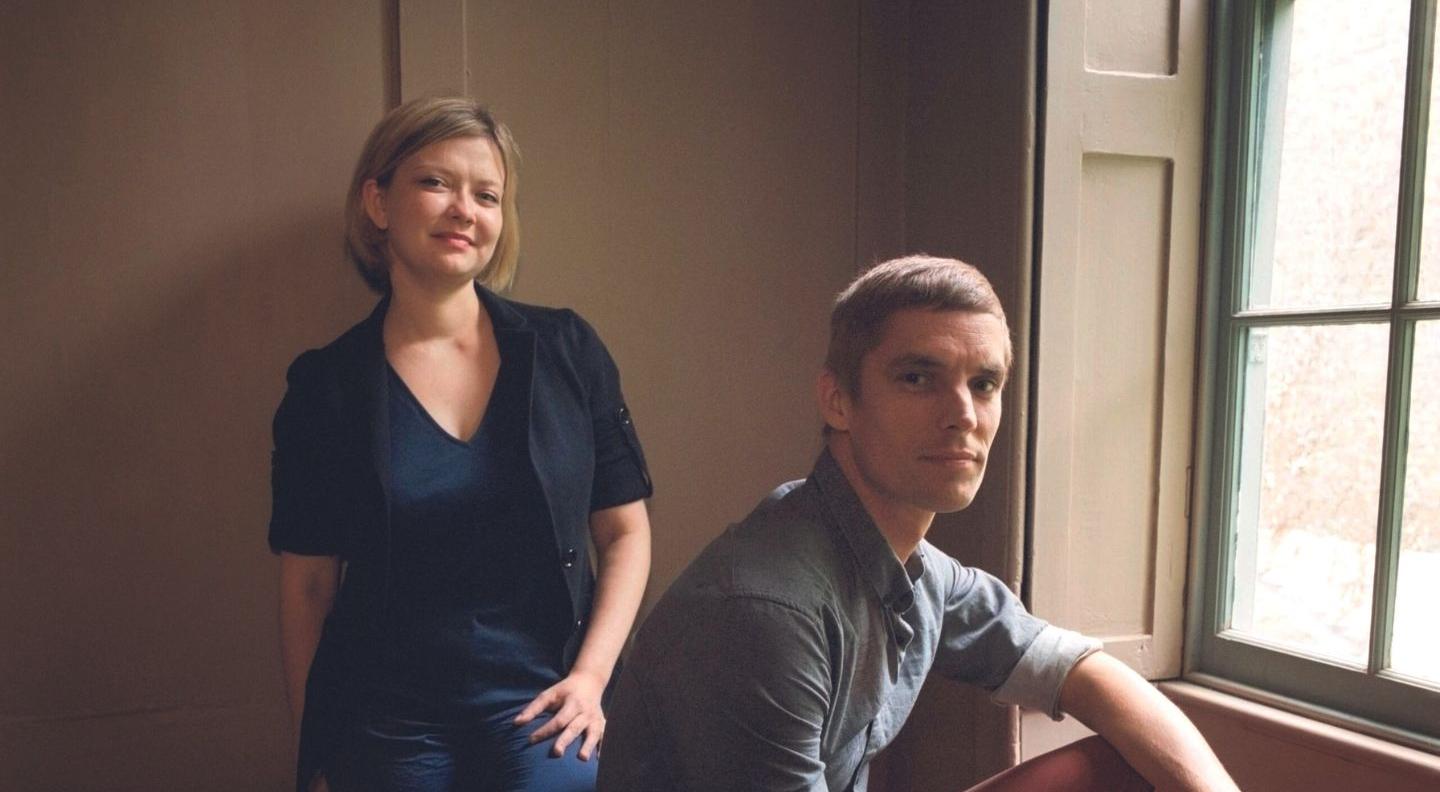
Alina Ibragimova (violin), Cédric Tiberghien (piano)

Janáček Violin Sonata in G sharp minor JW VII/7 (1913-15, rev. 1916-22)
Enescu Violin Sonata no.3 in A minor Op.25 ‘Dans le caractère populaire roumain’ (1926)
Barry Triorchic Blues (1990, rev. 1992)
Beethoven Violin Sonata no.9 in A major Op.47 ‘Kreutzer’ (1802-03)

Wigmore Hall, London
Saturday 28 September 2024

Reviewed by Richard Whitehouse

The duo of Alina Ibragimova and Cédric Tiberghien has offered some memorable recitals at Wigmore Hall during the past few seasons, with this evening’s typically diverse programme ranging over almost two centuries of compositions for the combination of violin and piano.

A first half of complementary opposites began with the Violin Sonata by Janáček. Ensuring cohesion across its four highly contrasted movements is no easy task, but the present artists succeeded admirably in this respect. Thus, the opening Con moto had an edgy ambivalence which was allayed in the Ballada – its relative repose and expressive warmth infused with a nostalgia as likely reflects the composer’s youth (and may indeed derive from one of those long-lost sonatas written while studying in Leipzig and Vienna 35 years earlier). Despite its marking, the Allegretto is a tensile scherzo whose frequently combative interplay was much in evidence here; the final Adagio then pivoting between stark plangency and a heightened eloquence which subsided into an ending whose muted regret was unmistakably to the fore.

Whatever the conceptual or aesthetic gulf between them, Enescu’s Third Sonata followed on with some inevitability. This was inspired by and recreates without quoting traditional music, as its subtitle duly indicates, and Ibragimova was alive to the musing inwardness of an initial Moderato whose ‘malinconico’ consistently undercuts any formal or expressive resolution up to a close where the songful and dance-like themes disperse into silence. The highlight was a central Andante of sustained though unforced intensity, its improvisatory aspect a stern test of coordination violinist and pianist met head-on. Almost as compelling, the final Allegro lacked a degree of inevitability in its unfolding – Tiberghien’s superbly articulated pianism less than implacable at the close, for all that Ibragimova conveyed its ominous ecstasy in full measure.

Beginning life as a test-piece for solo piano and adapted for numerous media, Triorchic Blues is Gerald Barry at his most uninhibited and would have made an ideal encore in this context – but its ever more scintillating opposition of instruments was not out of place after the interval.

This second half ended with the grandest of Beethoven’s violin sonatas, its ‘Kreutzer’ subtitle misleading yet indicative of this music’s inherent virtuosity. Ibragimova and Tiberghien made an impressive cycle of these works for the Wigmore’s own label, so it was surprising to find them at slightly below their best here. Not in the central Andante con variazioni, its judicious fusion of slow movement and scherzo rendered with unfailing poise and an acute sense of the profundity drawn out of so unassuming a theme. Yet, after its suitably arresting introduction, the first movement lacked drama – the duo playing down its rhetoric not least in a less than impulsive coda. The relentless tarantella-rhythm that underpins the finale felt similarly reined in with, again, too little of an emotional frisson as this music vividly reinforces the home-key.

What was never in doubt was their quality of playing individually and collectively, making one anticipate future recitals by these artists which will hopefully find them exploring more of that extraordinary corpus of music for violin and piano of the early and mid-20th century.

For more on the Autumn season visit the Wigmore Hall website. For more on the artists, click on the names Alina Ibragimova (violin), Cédric Tiberghien (piano), and click here for more on composer Gerald Barry

Published post no.2,316 – Sunday 22 September 2024

Online Concert: Alina Ibragimova & Cédric Tiberghien at Wigmore Hall – Schumann: Violin Sonatas 1 & 2

Alina Ibragimova (violin), Cédric Tiberghien (piano)

Schumann
Violin Sonata no.1 in A minor Op.105 (1851)
Violin Sonata no.2 in D minor Op.121 (1853)

Wigmore Hall, Monday 15 May 2023 1pm

by Ben Hogwood

It is only in relatively recent years that the violin sonatas of Robert Schumann have begun to get their proper dues. Schumann wrote three such works, sitting at the mature end of his output, and each is shot through with concentrated feeling.

The Violin Sonata no.1 was written in an unfortunate climate, Schumann admitting that it was reflecting a period when he was ‘very angry with certain people’. Certainly its beginning here, with Alina Ibragimova deep in concentration, had a furrowed brow and a darker mood. Yet it was not long in this performance when shafts of sunlight appeared, especially when the harmony moved into the major key. A period of intense reflection was followed by a drive to the finish, propelled by Cédric Tiberghien‘s flowing piano.

The second movement, effectively a slow movement and a scherzo combined, had an appreciably lighter mood with which to begin but cut to a more agitated frame of mind for the scherzo, its contours ideally negotiated by these two fine performers.

The relatively short sonata finished with a busy and determined third movement, digging in but also drawing back to reveal lighter colours and moods. Schumann’s dispute, it seems, was resolved.

The Violin Sonata no.2 is almost twice the length of its predecessor, and is perhaps beginning to reach the status its musical content deserves. To begin with it is an imposing proposition, and Ibragimova brought a granite-like surety to the double stopping, revealing hints of Bach in the responding recitative. In spite of the first movement’s substantial dimensions, it was consistently compelling in this performance, with passionate violin and flowing piano responding really well to each other and maintaining a really satisfying balance. The opening theme coarsed with drama but the broad phrases of the later theme became assertive and ultimately dominant.

The scherzo showed typically energetic Schumann figure, but remained anxious around the edges until its final acclamation. Meanwhile the third movement presented an opportunity for reflection in the plaintive but highly expressive pizzicato with which it began, both performers enjoying the hymn-like nature of the theme even in its loosely strummed form. Gradually the substance of the theme revealed itself, beautifully expressed in natural phrasing, especially in the second variation, with double stopping from the violin.

The finale pushed forward with great urgency, Ibragimova pushing the relentless theme forward while Tiberghien gave a substantial and weighty supporting voice. The two finished each other’s sentences as Schumann’s motifs passed between the instruments, before an emphatic and rapturous finish in the major key.

The musicians were not quite finished, treating us to a beautifully weighted account of Schumann’s song Abendlied as an encore.

For more livestreamed concerts from the Wigmore Hall, click here

In concert – Gramophone 100th Anniversary Concert @ Wigmore Hall

Reviewed by Ben Hogwood

There is a famous, unattributed quote that ‘writing about music is like dancing about architecture’. How, then, to interpret a concert in celebration of a magazine? The conclusion, when that magazine is 100 years old, is that surely its writers are doing something right!

The magazine is the esteemed Gramophone, formed in 1923 and reaching its centenary without a break, not even an issue missed during the Second World War. Gramophone has reflected the growth of the classical record industry, proving something of a bible for classical music listeners and buyers, with its recommendations of recordings and interviews / thought pieces to put them in context. Music old and new is covered, and not all of it classical – indeed, as we found out during James Jolly’s revealing and entertaining narration, the magazine reviewed pop music in the 1960s.

Jolly is the magazine’s Editor in Chief, and has been with the magazine since starting as editorial assistant in 1985. He gave a debt of gratitude to the Gramophone founder Sir Compton Mackenzie and the Pollard family, where the large part of the night’s story lay. Modestly, the magazine did not dwell on their current state, which would have been easy – for Gramophone is one of those rare things, a publication where subscription is done without the bat of an eyelid, and each issue read cover to cover – either physically or online, where you can enjoy the entirety of its archive in digital form.

How to celebrate such a publication in a concert? Choosing the Wigmore Hall was a smart move, honing resources and ensuring the celebrations were done with quality as well as quantity. The move did of course eliminate larger scale forms – opera and orchestral – but it retained the magazine’s sense of musical exploration through five centuries of music.

Violinist Alina Ibragimova and pianist Cédric Tiberghien began with a concentrated performance of Debussy’s Violin Sonata, completed just six years before the magazine’s first edition. This was a thoughtful and virtuosic performance, Ibragimova fully inhabiting each phrase while Tiberghien successfully harnessed Debussy’s coloristic effects and sleights of harmony. The spectre of war was close at hand – as it was in Gramophone’s early years.

Next up was countertenor Iestyn Davies, a late replacement for soprano Fatma Said. It was a privilege to hear his Purcell, refracted through the eyes of modern composers, showing how access to the composer’s music has boomed since Gramophone started. Davies had a particularly arresting delivery for Britten’s Lord, what is man, before a deeply passionate vocal in the Thomas Adès setting By beauteous softness, Malcolm Martineau phrasing its postlude with exquisite shaping. Britten reappeared for a jubilant I’ll sail upon the Dog Star.

In Gramophone’s tenure the guitar has established itself as a central part of the classical repertoire. We heard two very different soloists – Milos in Mathias Duplessy’s bluesy Amor Fati, which though originating in France seemed to be looking over the Spanish border on occasion. Its full bodied chords were brilliantly declaimed. Sean Shibe, meanwhile, cast his eyes further east as partner for tenor Karim Sulayman in three songs of Arabic origins. Here was a striking alliance, Shibe’s exquisitely quiet playing a match for the tenor’s husky delivery. The two finished each other’s sentences, reflecting a musical chemistry of unusual quality found on their recent album Broken Branches.

We also heard three very different pianists, dazzling with virtuosity but also showing impeccable control. Nearest to the edge was Jean-Efflam Bavouzet, whose compelling excerpts from Ravel‘s suite Miroirs revealed rougher contours. These suited the storm of Une barque sur l’océan, while Alborada del gracioso was rustic and danced at quite a pace, the pianist relishing its whirling figurations.

Martin James Bartlett showed a painter’s touch to a pair of Liszt arrangements – the composer’s keyboard paraphrase of his son-in-law Wagner’s Liebestod especially fine. Bartlett’s phrasing was immaculate, each tune clear as a bell in spite of the myriad accompanying colours. The Schumann transcription Widmung also retained a songful air, powerful at its climactic passages.

Bisecting the keyboard soloists was soprano Carolyn Sampson and regular partner Joseph Middleton. Sampson will shortly reach her 100th album release, a remarkable achievement in a discography adorned with Gramophone accolades. We heard a well-chosen and varied selection taking us from Purcell and Britten to Saariaho via Poulenc and Régine Poldowski, the latter composer indicative of record companies’ efforts to include more female composers at last. Daughter of Polish composer Henryk Wieniawski, Poldowski made a very strong impression with L’heure exquise, while Sampson gave a ringing endorsement for Saariaho’s Parfum de l’instant, due in a future recording. Here she was aided by a fountain of cascading treble notes from Middleton.

Finally we heard Bernard Chamayou in a tour de force account of Liszt’s Venezia e Napoli, an apt choice in its inclusion of the city of Naples, looking out to a former home of Sir Compton Mackenzie on the island of Capri. Liszt added the Venezia e Napoli triptych as a footnote to the second book of his cycle Années de Pèlerinage, reflecting the impact of his travels around Europe as a virtuoso pianist. Its music is far from trivial and Chamayou, who recorded the complete cycle in 2010 brought unusually clear definition to the undulating figures of Gondoleria. The Rossini-themed Canzone was deeply intoned, majestically voiced with a sense of wonder projecting right to the back of the hall. Finally the Tarantella was a virtuoso affair, but Chamayou never lost sight of the thematic material in the tempestuous surroundings.   

It was the ideal way to conclude a high-quality concert, though an encore saw the assembled artists sing ‘Happy birthday’ to the publication that has served them so well. Here’s to another 100 years, Gramophone!

List of repertoire

Debussy Violin Sonata in G minor (1917)

Alina Ibragimova (violin), Cédric Tiberghien (piano)

Purcell, realised Britten Lord, what is man (1945); Purcell, realised Adès By beauteous softness (2017); Purcell, realised Britten I’ll sail upon the Dog Star (1943)

Iestyn Davies (countertenor), Malcolm Martineau (piano)

Duplessy Amor Fatí (2022)

Miloš (guitar)

Ravel Miroirs: Une barque sur l’océan; Alborada del gracioso (1904-5)

Jean-Efflam Bavouzet (piano)

Trad arr. Sulayman & Shibe La prima vez; Arab-Andalusian Muwashsha arr. Shibe Lamma Bada Yatathanna; Sayed Darwish arr. Shibe & Sulayman after Ronnie Malley El helwa di

Karim Sulayman (tenor), Sean Shibe (guitar)

Wagner arr. Liszt Isoldens Liebestod (1867); Schumann arr. Liszt Widmung (1848)

Martin James Bartlett (piano)

Purcell realised Britten Sweeter than roses (c1945); Britten Fancie (1965); Poulenc Fancy (1959); Régine Poldowski L’heure exquise (1917); Saariaho Parfum de l’instant (from Quatre Instants) (2002)

Carolyn Sampson (soprano), Joseph Middleton (piano)

Liszt Venezia e Napoli S162 (1859)

Bertrand Chamayou (piano)

In concert – Alina Ibragimova, CBSO / Joshua Weilerstein: Weir, Prokofiev & Beethoven

Joshua Weilerstein 58_credit Sim Canetty-Clark

Alina Ibragimova (violin, below), City of Birmingham Symphony Orchestra / Joshua Weilerstein

Weir Heroic Strokes of the Bow (1992)
Prokofiev
Violin Concerto no.1 in D major Op.19 (1915-17)
Beethoven
Symphony no.7 in A major Op.92 (1811-12)

Symphony Hall, Birmingham
Wednesday 7 July 2021 (6.30pm)

Written by Richard Whitehouse Photo of Joshua Weilerstein courtesy of Sim Canetty-Clark; Alina Ibragimova courtesy of Giorgia Bertazzi

While not the centenary season as had been anticipated, the City of Birmingham Symphony Orchestra’s current run of live concerts has nevertheless found the orchestra in great shape, reinforced by the final event that marked an equally unexpected if auspicious debut for Joshua Weilerstein.

He may have substituted the planned account of Schubert’s Fourth Symphony, but Weilerstein retained Judith Weir’s Heroic Strokes of the Bow to begin the programme. Although written before her spell as the CBSO’s Composer-in-Residence (1995-8), the present piece is among her most characteristic larger works – taking its cue from Paul Klee’s similarly titled painting for a 15-minute study in frustrated momentum, whereby violins pursue an eventful trajectory constantly undermined by rhythmic discontinuity. A belated coming to the fore of woodwind propels this music towards a peroration which never quite materializes prior to its subsiding then terse pay-off. Not a straightforward or necessarily rewarding piece to tackle, the CBSO strings still sounded engaged throughout a piece typical in its sense of ultimate anti-climax.

Alina Ibragimova then joined the orchestra for Prokofiev’s First Violin Concerto, its modest scale and prevailing inwardness only partly belying technical demands that were confidently surmounted here. The partnership with Weilerstein, moreover, was a good one – whether in the first movement’s gradual expressive opening-out from, then retreating-back to sustained lyricism, or the Scherzo’s cavorting high-jinx and playful nonchalance. Ibragimova’s tempo for the finale seemed initially a little too deliberate, but the panache of those brief orchestral tuttis then stealthy intensification to the rapturous return of the opening theme left no doubt as to either soloist’s or conductor’s sense of exactly where the music was going – the violin’s airy arabesques melding into the deftest of orchestral textures for the spellbinding final bars.

The inclusion of Beethoven’s Seventh Symphony made for a near full-length concert which, being given twice, says much for the CBSO’s collective stamina. Ensemble faltered slightly in the first movement’s introduction, relatively weighty as Weilerstein heard it, but the main Vivace proved unanimous in response as it was trenchant in conception – highlights being an uninhibited transition to the reprise, then inexorable build-up toward a coda whose clinching of the overall design felt more potent through a slight if perceptible acceleration at the close.

Weilerstein (rightly) went directly into the Allegretto, its alternation of pathos and sanguinity ideally gauged, then the scherzo exuded a joyous animation and its trio an eloquence which was no less apposite. The finale may have lacked its exposition repeat, but the seamlessness with which this movement unfolded left no feeling of its being sold short – not least through an astute judging of dynamic contrasts then a final peroration which, if it lacked for a degree of visceral excitement, none the less concluded this symphony with unwavering affirmation. Hopefully, Weilerstein will soon be returning to this orchestra. Next month, though, the CBSO heads to the Proms for a programme featuring Ruth Gipps’s Second Symphony and Brahms’s Third, along with a delayed premiere for Thomas Adès’s The Exterminating Angel Symphony.

You can find information on the CBSO’s appearance at the Proms at the festival’s website.