Online Concerts – The Cardinall’s Musick / Andrew Carwood: Byrd 400th anniversary

William Byrd
Masses for 4, 3 and 5 voices

The Cardinall’s Musick / Andrew Carwood

Wigmore Hall, London
Tuesday 4 July 2023

Reviewed by Ben Hogwood Photos (c) Benjamin Ealovega

This week we have been marking the 400th anniversary of the death of William Byrd, one of the founding fathers of English classical music as we know it today.

One of the key events on Tuesday, the day itself, was a trio of concerts at the Wigmore Hall from the Cardinall’s Musick choir and their conductor Andrew Carwood. Together they have recorded all of Byrd’s choral music for the Gaudeamus and Hyperion labels, but on this occasion the focus was the composer’s three Mass settings.

Context for these unique works is vital, and it was given by an extremely helpful and thorough note from Katherine Butler, bolstered by musical insight, and also from Carwood himself in well-chosen asides to the audience. Both illustrated vividly how perilous Byrd’s own position as a composer was, for as a Catholic he was compelled to write settings of the mass, despite knowing public airings of the music would be against the demands of his monarch, Elizabeth I, for whom he was royal composer. If discovered, these performances could bring about imprisonment and even death. Because of this, the works lay undiscovered in their largely anonymous packaging, used for very private occasions presided over by a priest who would even have his own bolthole, should the ceremony be discovered.

Byrd
Mass for 4 voices (c1592-3), with the Propers for the Feast of Easter Day

The Cardinall’s Musick [Patrick Craig, Matthew Venner (altos), William Balkwill, Mark Dobell (tenors), Richard Bannan, Robert Rice (baritones), Edward Grint, Nathan Harrison (basses)] / Andrew Carwood

The three Cardinall’s Musick concerts began with a lunchtime account of the Mass for Four Voices, dating from around 1592-3, and given context by in performance by Byrd’s settings of the Propers for Easter, completed in 1607. These began with a celebratory Introit, with its busy acclamation of the resurrection, with the mood changing for a solemn, weighty Kyrie from the Mass. This was given plenty of room by Carwood, with superb control from the singers in their sustaining of the notes. A fulsome Gloria followed, notable for its clarity of line and rhythm. Carwood was judicious in harnessing the ten voices available to him, reducing the forces to five for the Gradual & Alleluia. Here, the portrayal of ‘Mors et vita duello conflixere mirando’ (death and life have fought a huge battle)’ was vividly conveyed, before ‘et gloriam vidi resurgentis’ (‘and I saw the glory of the rising’) reached impressive heights.

The substantial Credo was paced just right, with a holding back from the ‘descendit’, with controlled lower notes to complement. A busy Offertory and graceful Sanctus were beautifully sung, the music gradually unfolding. The Communion (Pascha nostrum) was slow, appropriately reverent and pure, before the moving Agnus Dei had as its end a final chant and response telling us the Mass had finished.

Byrd
Mass for 3 voices (c1593-4), with the Propers for the Feast of Corpus Christi

The Cardinall’s Musick [Julie Cooper, Laura Oldfield (sopranos), Patrick Craig, Matthew Venner (altos), William Balkwill, Mark Dobell (tenors), Nathan Harrison (bass)] / Andrew Carwood

As Andrew Carwood explained, we heard some of the richest music in the first concert, then some of the most intimate in the second. This was music of the recusant house rather than the big church or cathedral, and Carwood invited us to imagine we were in a building no bigger than a sitting room. With Catholics shrouded in secrecy, he gave an idea of just how risky this music making was.

We heard the Mass For Three Voices, with a noticeable reduction in texture from the lunchtime concert, as well as less movement within the parts. That said, there was an air of restrained celebration all the same. A quick Kyrie & more florid Gloria was sung with two to a part, and while the single parts could be left exposed they were very secure in these hands, notably the tricky entries from on high. The Propers on this occasion were for the feast of Corpus Christi and were published in 1605. They featured a ‘risky’ Gradual, before a six-piece Credo found a lovely peak on the words ‘Et ascendit in caelum (and ascended into heaven)’ and a beautiful confluence at the end. There was a suitably thoughtful start to the Sanctus, which became more florid in its ‘Hosanna’ exultations. The Communion was outwardly expressive, retreating to a sombre Agnus Dei and a solemn final chant.

Byrd
Mass for 5 voices (c1594-5), with the Propers for the Feast of All Saints

The Cardinall’s Musick [Julie Cooper, Laura Oldfield (sopranos), Patrick Craig, Matthew Venner (altos), Ben Alden, William Balkwill, Mark Dobell (tenors), Edward Grint, Robert Rice (bass)] / Andrew Carwood

Finally the evening concert gave the Mass for Five voices with the Propers for the Feast of All Saints of 1605 – an effervescent celebration but becoming more meditative as the music proceeded. Carwood, revelling in the occasion, conducted with great sensitivity once again, presiding over a busy Introit with the rejoicing angels. The layered Kyrie of the Mass itself was ideally weighted, making the most of the chromatic possibilities, before a relatively restrained Gloria. The five voices, with increasingly complex writing, were nonetheless easy to follow, their rhythmic lightness suggesting a dance at the end of the Gradual – Carwood referring to the repartee between the voices.

He then referenced the intensity of Byrd’s writing, the declamation in the Credo and its extraordinary harmony, fusing of madrigal techniques into the mass. It was helpful to have these insights on top of the booklet notes, for Carwood setting Byrd apart as a composer even from the likes of Palestrina. The full ten-voice Credo explored deeply felt power and resonance, an incredibly expressive movement, while the purity of the sopranos shone through in the Offertory. A slow Sanctus gradually gathered pace with more complex writing, before the Communion – making explicit reference to the persecution Byrd felt, gave an appropriate stress to the words ‘propter iustitiam (for righteousness’ sake)’ and showed some well-handled dissonances. Finally an Agnus Dei of solemn, minor key angst found peace at last, capped by the closing sentence.

The choir and their conductor received a deservedly rapturous reception, for their beautiful and controlled singing had given Byrd the best possible remembrance, marking the death of this musical martyr in appropriate style. The Cardinall’s Musick and the Wigmore Hall should be applauded for such a well-conceived and executed trio of concerts, which are highly recommended for online viewing!

You can listen to the Cardinall’s Musick recordings of the Byrd Masses, dating from 2000, on the Spotify link below:

Wigmore Mondays – The Cardinall’s Musick / Andrew Carwood: The Gunpowder plot

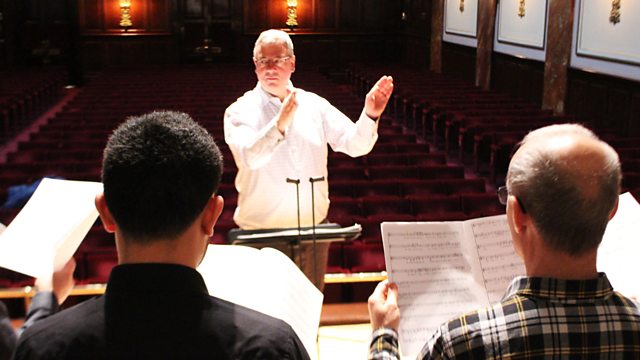
The Cardinall’s Musick (above) / Andrew Carwood (below)

Wigmore Hall, Monday 4 November 2019 (lunchtime)

You can listen to this concert on the BBC Sounds app here (opens in a new window)

Review and guide by Ben Hogwood

The year is 2420. London’s concert hall in the City is celebrating its 200th anniversary with a concert of music devoted to Brexit. There are songs and instrumental pieces looking to recreate the chaos of the time.

Sound fanciful? Not entirely – especially when you cast an eye over this fascinating concert from the Cardinall’s Musick and Andrew Carwood, which was all about the attempt to end the reign of King James I by Guy Fawkes and his associates in 1605.

Carwood assembled an intriguing programme of music from well-known composers of the day – Gibbons, Byrd, Tomkins and Weelkes – and those not so well known in Thomas Greaves, John Hilton, Michael East and Richard Allison. The ensemble performed groups of sacred and secular music from the time by the composers, ranging from big eight-part masterpieces by Byrd and Gibbons to miniature odes to tobacco from Michael East.

There were some unexpectedly poignant moments as the concert progressed, and funny ones too, but the group began with one of the best-known anthems from the era in Orlando GibbonsO clap your hands (2:20). The interweaving parts were beautifully realised under Carwood’s clear direction.

The conductor (above) then gave the first of several informative and entertaining guides to both the historical period and the repertoire. Thomas Greaves’ five-part welcome song in honour of James, England receive the rightful king (9:55) led to Thomas Tomkins’ thoughtful O God, the proud are risen against me (11:59). Written in eight parts, this was a barely concealed railing against the leaders of the plot to overthrow the king and government, with some spicy dissonances clearly inflected by the sopranos.
John Hilton’s As there be three blue beans (15:39) was unexpectedly mischievous, a three-part round brilliantly sung by altos Patrick Craig and David Gould, and tenor Benjamin Durrant. It finished by marking the existence of three universities in England – Cambridge, Oxford and James.

Also in this group was William Byrd’s majestic The eagle’s force (17:44), which benefited from the clarity of the altos’ singing, and Michael East’s ode O metaphysical tobacco (20:07). King James I hated tobacco – and eventually had its ambassador Sir Walter Raleigh executed to appease Spain – but many in society loved this new discovery (as they do 415 years on!) There was no evidence of gravelly voices in this performance!

A piece of really impressive heft followed, Byrd’s anthem Deus venerunt gentes (24:03), described by Carwood as ‘symphonic’. A setting of Psalm 78, it is said to be the psalm martyrs would say on their approach to death, to receive forgiveness – and was used by the composer here as a lament for his fellow composer Thomas Campion. By nature it is a serious piece, and its stately progression was ideally paced by the group here, offering time for reflection during its 13 minutes. The lower registers of Byrd’s writing, especially around the 30:25 mark, were immaculately observed and set the downbeat mood, which followed the text impeccably.


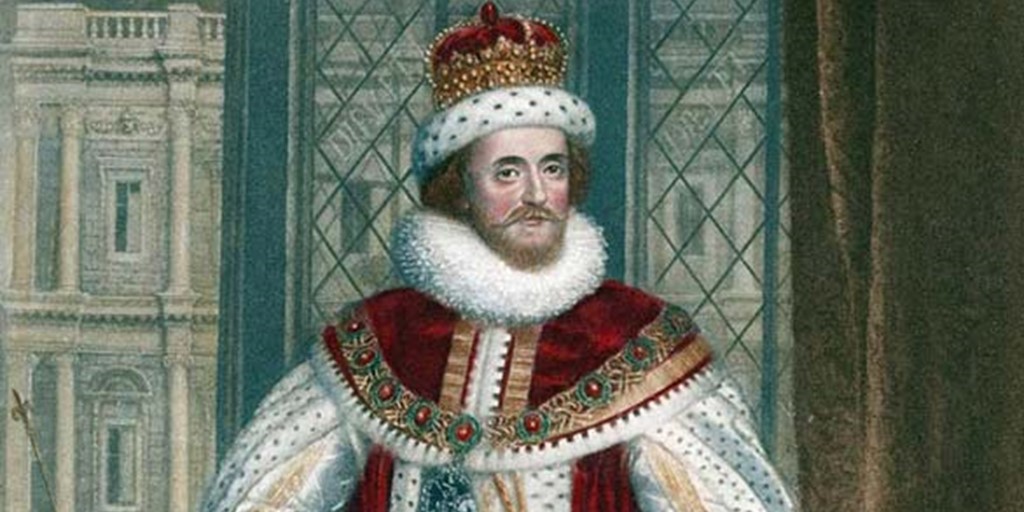
King James I

The next selection of music looked at England in the aftermath of the Guy Fawkes plot. After another helpful introduction from Carwood we heard a prayer for the posterity of the king, Richard Allison’s O Lord bow down, a reverential number (39:37), followed by Thomas Tomkins’ request to the Lord for protection, The hills stand about Jerusalem (43:43), where the two sopranos and tenor dovetailed exquisitely. Following the same theme, Thomas Weelkes’ sobering O Lord God Almighty had explicit mentions for the royal family and their security (46:08), once again showing how little has changed in the preceding 400 years.

Finally another great Byrd piece in the shape of the eight-part wonder Ad Dominum cum tribularer (50:36), one with a stark message not just for the country post-gunpowder plot but for the world today: “I speak peace to them and they clamour for war”. A setting of Psalm 120, it is unsurprisingly a work of sombre beginnings, with a couple of spicy dissonances, but it grew in strength and conviction in this performance, which was ideally paced and realised.

Repertoire

The Cardinall’s Musick are the following singers, conducted by Andrew Carwood:

Laura Oldfield, Cecilia Osmond (sopranos), Patrick Craig, David Gould (altos), Benjamin Durrant, Nicholas Todd (tenors), Robert Evans, James Birchall (basses)

This concert contained the following music (with timings on the BBC Sounds broadcast in brackets):

Gibbons O clap your hands (2:20)
Greaves England receive the rightful king (9:55)
Tomkins O God, the proud are risen against me (11:59)
Hilton As there be three blue beans (15:39)
Byrd The eagle’s force (17:44)
East O metaphysical tobacco (20:07)
Byrd Deus venerunt gentes (24:03)
Allison O Lord bow down (39:37)
Tomkins The hills stand about Jerusalem (43:43)
Weelkes O Lord God Almighty (46:08)
Byrd Ad Dominum cum tribularer (50:36)

Further listening

Unfortunately some of the music heard in this concert is not available on Spotify, but the below playlist contains the music that could be found in available versions:

The Cardinall’s Musick have made a number of highly acclaimed recordings of the music of William Byrd. Two are available to hear on Spotify, recorded in the 1990s for the ASV label and featuring the eight part works heard in the concert. They are the Cantiones Sacrae

…and the Propers for the Nativity

On a completely different tip is this playlist of music suitable for fireworks! It includes works by Stravinsky and Debussy, but begins with the perennial Handel favourite Music for the Royal Fireworks, conducted by the recently departed Raymond Leppard:

Proms premiere – Cheryl Frances-Hoad

cheryl-frances-hoad

The Beginning of the World by Cheryl Frances-Hoad

The Cardinall’s Musick / Andrew Carwood (Proms Chamber Music 1)

Duration: 10 minutes

BBC iPlayer link

http://www.bbc.co.uk/programmes/p02xll6r/player

What’s the story behind the piece?

Talking in an interview for this site, Cheryl Frances-Hoad explains:

“The Cardinall’s Musick wanted a piece for eight voices (double SATB choir) (soprano-alto-tenor-bass) that was a homage to Tallis, and about 7 minutes long (I ended up writing a piece that’s closer to 9 minutes). They suggested some words (I eventually selected my own) but were otherwise completely free about how I should approach the commission.

Tallis lived in Greenwich towards the end of his life, which lead me on to reading about the refinements of timekeeping and the calendar during his lifetime, which then lead on to discovering that there was a major astrological event that happened whilst he was alive…which came to symbolize (to me) the massive changes that occurred during Tallis’s lifetime (including for instance the Reformation)…which lead to discovering Tycho Brahe’s (A Danish astronomer) ‘Treatise on the Great Comet of 1577’….

Read the full interview here

Did you know?

Cheryl was chosen as a featured composer on BBC Radio 3’s Composer of the Week (‘Five under 35, March 2015)

Initial verdict

The first and immediately striking thing about From the Beginning of the World was the relevance of the words to today’s climate. In a week where NASA received ground breaking pictures of Pluto and Charon this tale of an earlier astronomical event – the ‘comet with a very long tail’ resonated strongly, especially with its talk of ‘Mighty and destructive wind storms’, ‘Poisonings of the air’ and ‘Terrible earthquakes’.

Cheryl Frances-Hoad’s music only enhanced the dramatic impact. Written as a homage to Tallis its acappella setting carried the same freedom through the air – but here the harmonies were daring, rich with added notes, the most distinctive melodies tending to use wide leaps and drops. This heightened the feeling of unease – especially when the tritone was used to highlight the ‘great wars and bloodsheddings’.

The end of the text is curious, the author questioning suddenly that the comet might not destroy the earth after all – but the damage has been done in all the worrying beforehand, and it was on this that Frances-Hoad’s music really made its mark.

The performance, subtly directed by Andrew Carwood, was one of clarity and pure intensity.

Second hearing

tbc!

Where can I hear more?

Cheryl has a Soundcloud site, where you can hear another of her works for choir, This is A Blessing:

Proms Interview: Cheryl Frances-Hoad – From the Beginning of the World

cheryl-frances-hoad
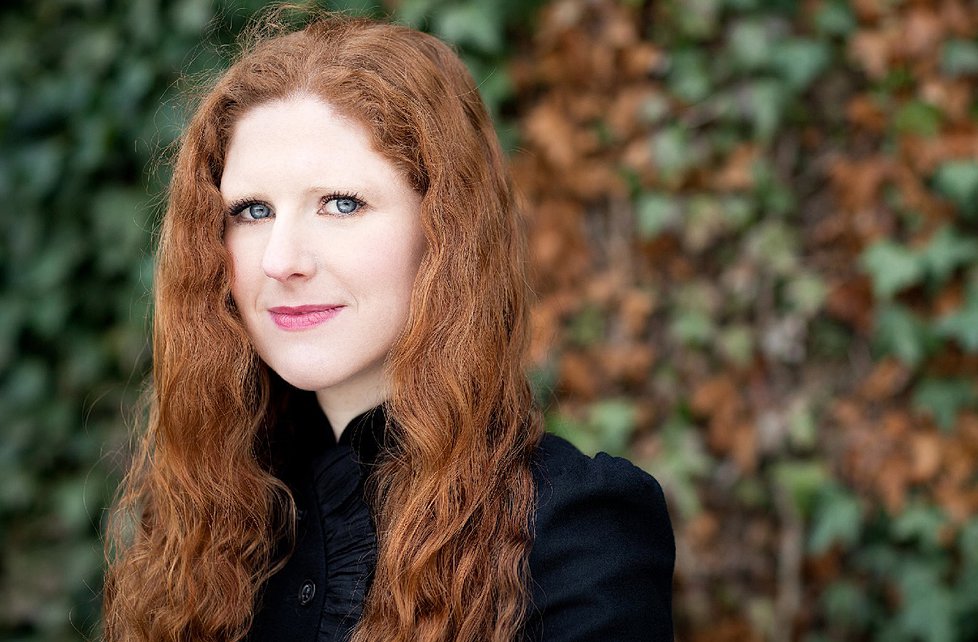
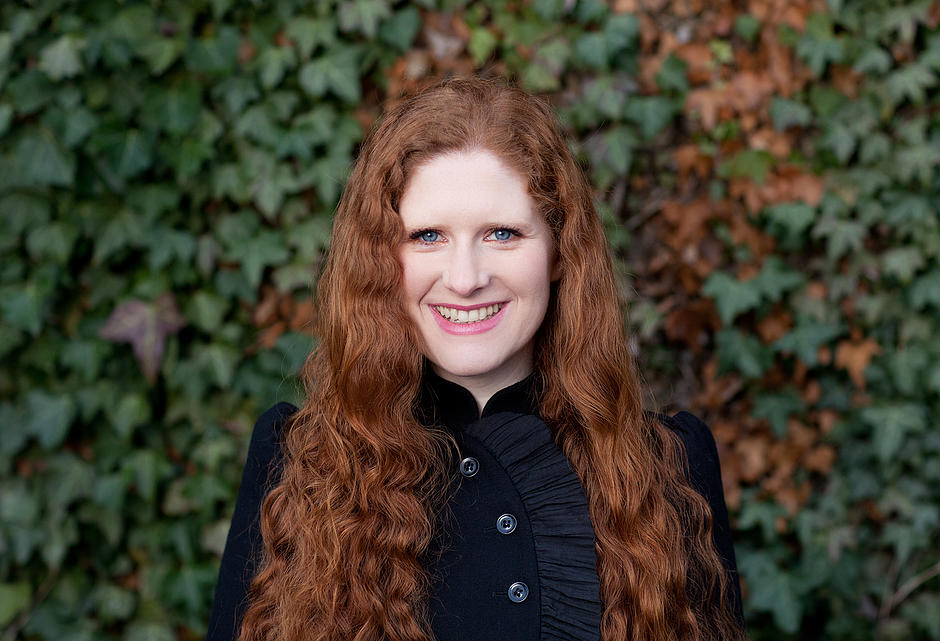
Cheryl Frances-Hoad Photography by Mat Smith Photography

Ahead of an appraisal of her new piece on this site, here is an interview with composer Cheryl Frances-Hoad about The Beginning of the World, a commission for the BBC Proms – to be performed in the company of the music of Thomas Tallis. Cheryl talked with Arcana about rubbing shoulders with one of the greats of English music – and the thrill of writing for the BBC Proms:

When did the BBC approach you with this commission?

Actually it was the Cardinall’s Musick who approached me, in March of last year (my piece isn’t an official BBC commission, although it is a Prom Premiere. Originally my new work was supposed to be premiered in Leeds, but the timings didn’t work out, so, it was decided that it would be premiered at the Proms instead. Leeds is a wonderful city, but in this case I’m glad the original premiere date didn’t work out! 🙂

Was there a particular brief?

Yes, the Cardinall’s Musick wanted a piece for eight voices (double SATB choir) (soprano-alto-tenor-bass) that was a homage to Tallis, and about 7 minutes long (I ended up writing a piece that’s closer to 9 minutes). They suggested some words (I eventually selected my own) but were otherwise completely free about how I should approach the commission.

In the Proms guide the working title for your new work was ‘Homage to Tallis’. At what point did it become ‘From the Beginning of the World’?

At the time we had to list the piece in the Proms brochure, I still had absolutely no idea what the piece was going to be called (or, I think, what text I was going to use – I only finished the piece on the 20th June!)

I got a bit stuck when I began to think about this piece – Tallis is such a wonderful composer but I found a lots of the texts he set, well, a bit boring (mostly because a large amount were in Latin). I wanted to find an exciting text that was somehow relevant to Tallis and contemporary times, but for about a month I was utterly stuck.

I plodded through a two foot high pile of books about Tallis but got nowhere. But, little by little (and at this stage with quite a lot of help from Google) I started connecting things – Tallis lived in Greenwich towards the end of his life, which lead me on to reading about the refinements of timekeeping and the calender during his lifetime, which then lead on to discovering that there was a major astrological event that happened whilst he was alive…which came to symbolize (to me) the massive changes that occurred during Tallis’s lifetime (including for instance the Reformation)…which lead to discovering Tycho Brahe’s (A Danish astronomer) ‘Treatise on the Great Comet of 1577’….

Where does the text come from?

Tycho Brahe‘s German Treatise on the Great Comet of 1577.  I spent several weeks in libraries attempting to find a suitable text. Whether Tallis knew about the comet is unknown of course, but this seismic event, to me, seemed emblematic of all the great changes that occurred during his lifetime, in areas such as religion, the calendar, and time-keeping (finding out that Tallis lived out his last days in Greenwich was an extra bonus).

The text also seems to speak to contemporary times: whilst Brahe may have thought the comet’s birth would cause the sun to ‘bring unnatural heat’, nowadays we know that its ‘venom [will be] spewed over the lands’ due to mankind’s continued pillaging of the earth’s natural resources, a fact which our political ‘pseudo-prophets’ seem to deem less important than saving us from a false austerity.

The full text of From the Beginning of the World

Then it comes to pass that something new is born in the heavens

Contrary to the custom of nature
And all mankind holds it to be a great wonder.

Videte Miraculum  (Behold the miracle)
A miracle of the heavens.

From the beginning of the world
From the uppermost sphere of the fixed stars
This new birth reveals itself
A comet with a very long tail.
Something new can be generated in the heavens.

Gloria Patri et Filio et Spiritui Sancto (Glory to the Father, and to the Son, and to the Holy Ghost)

But what do such unnatural births mean?

Creator caeli et terrae! (Creator of Heaven and Earth),
Respice humilitatem nostram (Be mindful of our lowliness)
Peccavi (Have mercy)

Great mortality among mankind.
Mighty and destructive wind storms
Peccavi
Poisonings of the air
Peccavi
Terrible earthquakes
Great harm by fire.

Great mortality among mankind.
The sun will bring unnatural heat
The sun will bring harmful, unnatural heat
It will spew its venom over the lands

Great mortality among mankind
Gruesome pestilence
Incurable pains
(Pestilential)

Those who deal with political regimes
Will be much stifled
(Creator caeli et terrae)
Those who seek their own honour as pseudo prophets
(Respice humilitatem nostram)
Will be punished, punished.

Great wars and bloodsheddings.
Peccavi
Miserere Nostri  (Have mercy on us)

However, there are actually no reliable grounds
For predicting the end of the world from this comet.
It thus behooves us to use well our short life here on earth,
So that we may praise him for all eternity.
Our short life here on earth…
Amen.

The music itself is very influenced by Tallis, and canons and imitation abound. During my time as a ‘cellist at the Yehudi Menuhin School, I performed Ralph Vaughan Williams’s Fantasia on a Theme of Thomas Tallis many times, and so From the Beginning of the World, which also uses Tallis’s Third Mode Melody from the English Hymnal, is really a homage to both composers.

How would you describe the piece?

At this point of interview I haven’t heard the piece yet (I have to wait until Saturday 18th to hear it for the first time!) But, I hope it is a tremendously dramatic piece, perhaps a bit melodramatic! (also see paragraph above this question…)

Is it daunting knowing the work will be performed around such a well-loved work as Spem in alium, or does that become an inspiration as it is a homage to Tallis himself?

It was inspiring when I was composing, but now it’s daunting. It’s silly, I’ve written far bigger pieces than the one that’s to be premiered on the 20th, but I have to say I’m getting incredibly nervous for this premiere! I really hope I haven’t gone and written a dud! However! I’ve consciously both based this piece closely on Tallis, AND tried to do some things that are very different in style – so, at the very least, my piece will stand out hopefully!

How does it feel to be writing a piece for the Proms?

Really exciting!

Does it help that the concert is available on the iPlayer afterwards, for people to get a chance to properly get to know the piece?

Absolutely! And this year, all the Proms are also downloadable which is wonderful! Particularly as my piece is being performed at lunchtime, I imagine many people won’t be able to listen live, so it’s so wonderful to be able to nag people to listen to it on iPlayer for 30 days after the premiere!

The BBC are actively encouraging new music with programs like ‘Five Under 35’ – do you feel the corporation is stronger than ever in its support for current composers at the Proms?

I’m not really sure to be honest – I’ve been exceptionally lucky to have been chosen as one of the Five under 35 (as part of the International Women’s Day celebrations) and feature in the Proms – but I’m not sure how connected the two are.

You can listen to the world premiere of Cheryl Frances-Hoad’s FromThe Beginning of the World as part of the first Proms Chamber Music concert of the season, given by the Cardinall’s Musick and Andrew Carwood, by clicking here

You will shortly be able to hear Cheryl’s thoughts on how it went – and an Arcana appraisal – on the site in the next few days.

For more information on Cheryl you can visit her website – and as a taster here is a recent YouTube post of her Mazurka for violin and piano: