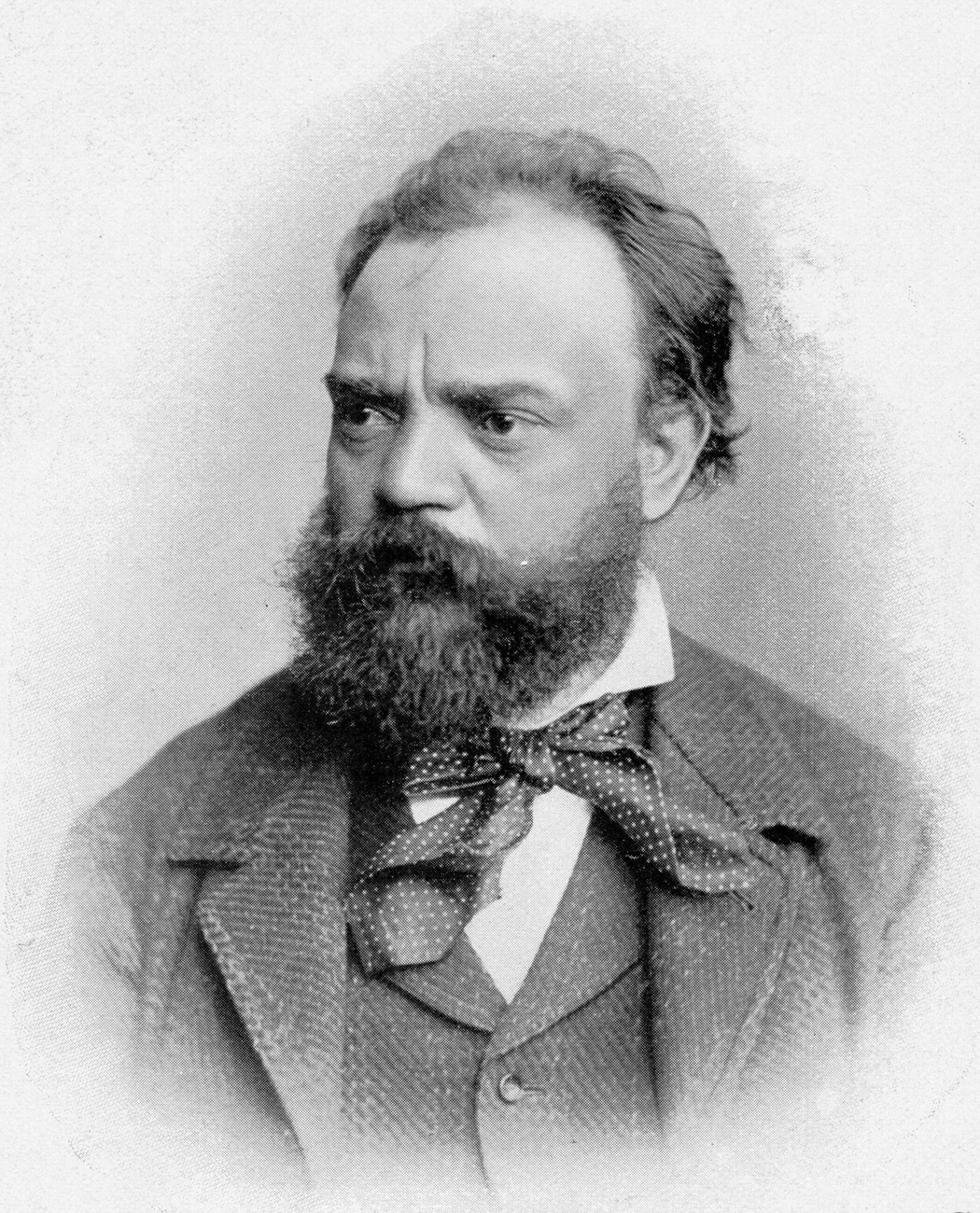
On this day in 1876, 150 years ago, the premiere took place of Dvořák’s String Quartet in G major.
As with many of the Czech composer’s works, it has a complicated history. Dvořák marked it as Op.18, but when it was revised in 1888 his publisher Simrock decided to label it as Op.77. Although the original work was scored in five movements, Dvořák later withdrew the Intermezzo second movement, which was reworked and became the Nocturne for strings in B major, a popular work published as Op.40
This enormously likeable work was made more unique by the scoring, with Dvořák writing for a conventional string quartet bolstered by a double bass. This gives a wonderful depth to the sound, and the ample bass writing supports a plethora of typically wonderful melodic material. You can watch the four-movement revised version below, with a starry ensemble of Baiba Skride and Andrés Gabetta (violins), Veronika Hagen (viola), Sol Gabetta (cello) and double bassist Roberto Di Ronza:
Meanwhile here too is the Intermezzo included from an early recording made by the Boston Symphony Chamber Players:
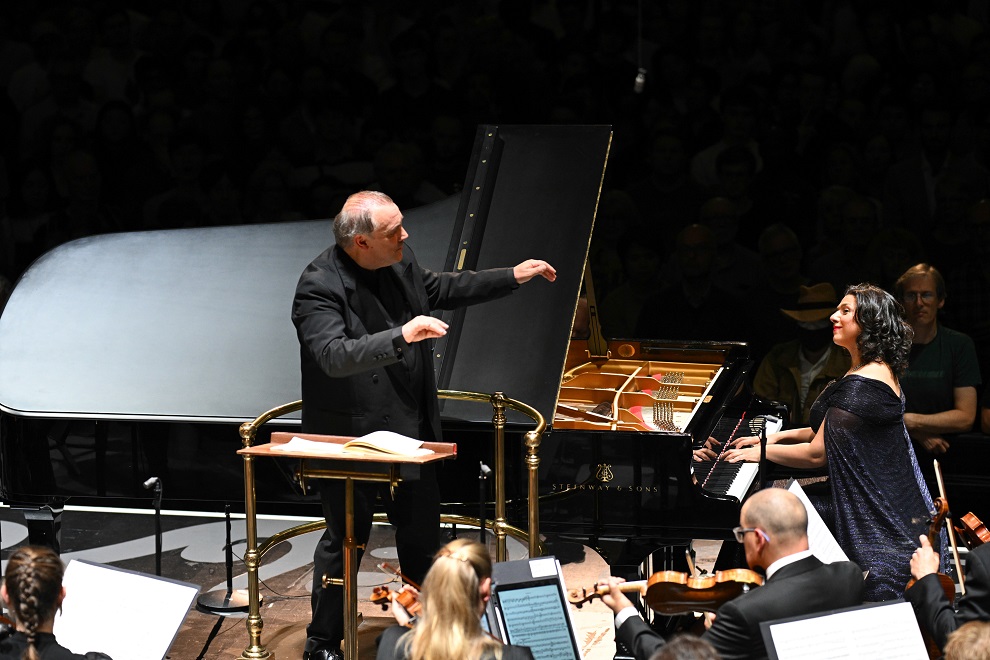
Khatia Buniatishvili (piano), Melbourne Symphony Orchestra / Jaime Martin
Sutherland Haunted Hills (1950) [Proms premiere] Tchaikovsky Piano Concerto no.1 in B flat minor Op.23 (1874-5) Dvořák Symphony no.6 in D major Op.60 (1880)
Royal Albert Hall, London Friday 29 August 2025
Reviewed by Richard Whitehouse Photos (c) BBC / Chris Christodoulou
Eleven years after its well-received debut at these concerts under the late Sir Andrew Davis, the Melbourne Symphony Orchestra made its unintentionally eventful return with current chief conductor Jaime Martin and a programme which, for the most part, played to this orchestra’s strengths.
A significant presence in Australian music throughout the mid-twentieth century, Margaret Sutherland has yet to receive her due in live or recorded terms; making this performance of Haunted Hills the more timely. Inspired by the Dandenong Ranges, just outside Melbourne, her symphonic poem evokes the timelessness of its environment as surely as the fate of the Aboriginals who came there. Its starkly dissonant opening then granitic opening paragraph recall that Vaughan Williams’ Sixth Symphony had been unleashed barely two years earlier, and while much of what follows is notable more for its judicious orchestration than formal cohesion, the musical persona that finally emerges is distinctive enough to warrant further hearings of this piece within the context of Sutherland’s not inconsiderable output overall.
Logistical factors necessitated a reordering such that Dvořák’s Sixth Symphony came before the interval. Not a stranger to these concerts (tonight’s being its ninth hearing in 72 years), it responded well to Martin’s interventionist if rarely intrusive approach – not least an opening Allegro (its non tanto duly observed albeit with no exposition repeat) at its most persuasive in a development whose seeming discursiveness was purposefully reined in, and on to a coda whose heightened sense of arrival was mitigated only by those slightly tentative closing bars.
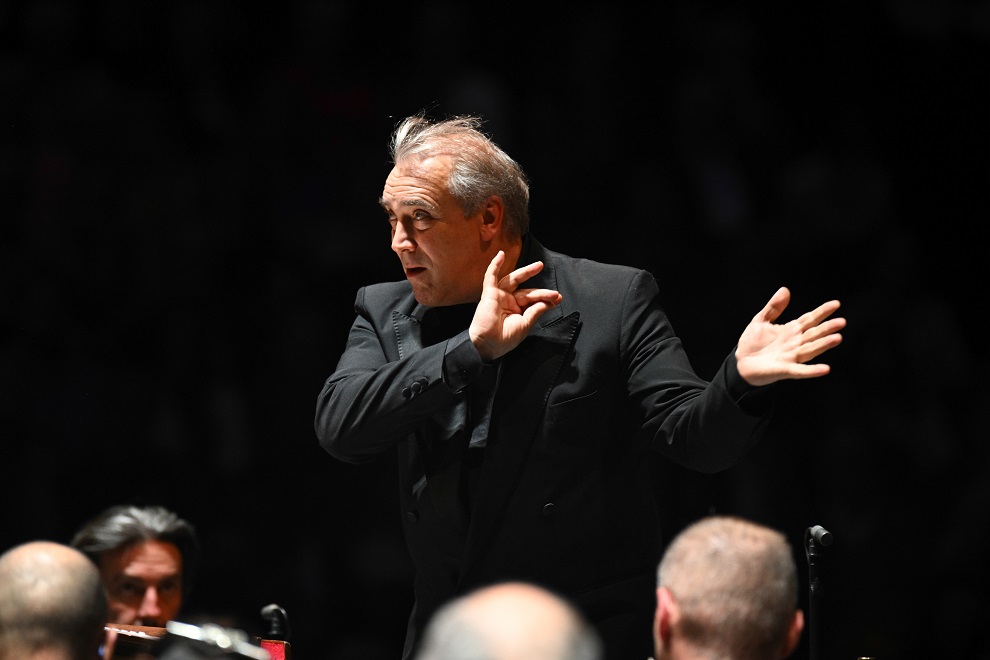
Not the deepest among Dvořák’s symphonic slow movements, the Adagio is surely his most felicitous in its expressive shadings and emotional understatement. Martin made the most of these, as too the contrast between the Scherzo’s impetuous outer sections and its ingratiating trio. The surging acceleration at its close prepared unerringly, moreover, for a Finale as finds Dvořák at his most Brahmsian though, here again, Martin (above), steered a forthright course through its overly rhetorical development before he infused its coda with an exhilarating affirmation.
Tchaikovsky’s First Piano Concerto cannot often have occupied the second half of a concert, though Khatia Buniatishvili made the most of her delayed appearance. Most striking was the amount of hushed playing during a lengthy opening movement whose indelible introduction was kept well within emotional limits. If coordination between soloist and orchestra was not all it might have been, the latter’s entry after a suitably dextrous cadenza was an undoubted highpoint, though not a rather blowsy coda. A melting take on the Andantino was enhanced with poetic contributions from flautist Prudence Davis and cellist David Berlin – while if, in the final Allegro, Buniatishvili’s passagework could seem unnecessarily skittish, she and the Melbourne players came together admirably in a surging but not unduly bathetic peroration.
As to extra-musical occurrences at this concert (for a full BBC account, read here), these artists responded simply by focussing on the music. As an envoi, Buniatishvili’s elegant rendering of the Adagio from Alessandro Marcello’s Oboe Concerto in D minor, arranged by Johann Sebastian Bach, could not have been more fitting.
A personal post for today, which marks the 10th anniversary of the passing of my mother Coralie. If you’ve been reading Arcana for a while you might know that I have a lot to thank my mum for, not least in terms of musical inspiration! Here is a post I wrote nearly ten years ago, detailing her influence.
Here, though, I would like to leave one of her favourite classical pieces, Dvořák‘s Symphony no.8 in G major – not least because it’s a beautiful spring day in the UK, which she would have loved! Keep resting peacefully, Mum.
Alina Ibragimova (violin, above), City of Birmingham Symphony Orchestra / Dinis Sousa (below)
Pärt Our Garden (1959, rev. 2003) Sibelius Violin Concerto in D minor Op.47 (1903-04, rev. 1905) Dvořák Symphony no.8 in G major Op.88/B163 (1889)
Symphony Hall, Birmingham Thursday 3 April 2025
Reviewed by Richard Whitehouse Picture of Alina Ibragimova (c) Joss McKinley; Dinis Sousa (c)
In what was an auspicious first appearance with the City of Birmingham Symphony Orchestra, Dinis Sousa presided over an appealing programme that featured repertoire staples by Sibelius and Dvořák alongside welcome revival of an uncharacteristic early choral piece by Arvo Pärt.
Uncharacteristic but highly enjoyable, Our Garden seems relatively untypical of the Estonian composer even in his mid-twenties – its winning an award at a Soviet-sponsored competition in 1962 bringing plaudits at a time when Pärt’s was very much an ‘unofficial’ presence on the new-music scene. Six decades on this can be enjoyed simply for what it is – an unpretentious celebration of youthful endeavour whose unaffected setting of four not overly polemical texts is as cohesive as it is sincere. Certainly, the CBSO Youth Chorus did justice to writing whose rhythmic unison was offset with some deft harmonic twists and enhanced by the resourceful contribution of a sizable orchestra. An obvious candidate for inclusion in music quizzes, Our Garden is never less than effective on its own terms and made for an attractive curtain-raiser.
Geographical proximity aside, there was little connection between Pärt’s cantata or Sibelius’s Violin Concerto, and while a performance of the latter rarely fails to impress it rarely catches fire as it did here. Alina Ibragimova has given some memorable performances in Birmingham over recent seasons, but this account got to the heart of a piece that, for all its indebtedness to Romantic-era virtuosity, is no less original in form or content than its composer’s symphonies and tone poems of this period. Most notable were Ibragimova’s fusing of the first movement’s central cadenza with developmental impetus, her building of cumulative momentum over the course of the Adagio or a final Allegro which, though this may all but have eschewed the ‘ma non tanto’ marking, exuded a drive and panache maintained through to the scintillating close.
A first-rate accompanist, Sousa (above) brought out much of interest from the orchestral texture – not least its writing for low woodwind and horns which frequently underpins the soloist in a way that could only be Sibelius. Such attention to detail was equally evident in his performance of Dvořák’s Eighth Symphony – music easy to take for granted in its warmth and affability, yet whose opening Allegro is a masterclass in formal innovation as benefitted from the incisive if never overdriven energy Sousa brought to this movement as a whole and its coda in particular.
Even finer was the Adagio, its pathos shot through with an ominous import which came to the surface at its brief if forceful climaxes and so confirmed this as music of rare eloquence. The intermezzo’s twin themes unfolded with an ideal lilt that made its boisterous pay-off the more fitting, while the finale made the most of Dvořák’s putting his trenchant folk-dance through a set of variations whose rapidly growing excitement could always be sensed even as the music subsided towards virtual stasis, from where the peroration made for a truly uproarious QED.
Those expecting Finlandia at the start of the second half (as indicated in this season’s guide) were disappointed, but Sousa did offer the second (in G) of Dvořák’s Legends as an apposite encore – its fluid interplay of poise and humour the ideal way to end this memorable concert.
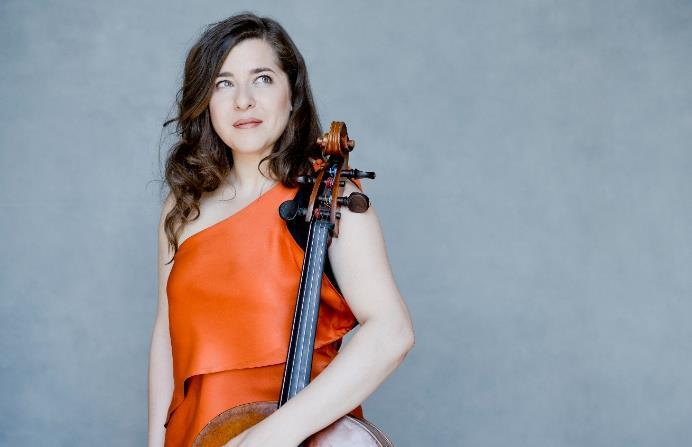
Alisa Weilerstein (cello, below), City of Birmingham Symphony Orchestra / Joshua Weilerstein (above)
Still Poem for Orchestra (1944) Dvořák Cello Concerto in B minor, B191 (1894) Rachmaninoff Symphonic Dances, Op. 45 (1940)
Symphony Hall, Birmingham Wednesday 12 March 2025 (2:15pm)
Reviewed by Richard Whitehouse Picture of Joshua Weilerstein (c) Beki Smith
Joshua Weilerstein is always a welcome returning artist to the City of Birmingham Symphony Orchestra, invariably with artful programmes such as this afternoon’s interplay of American music with that by European composers finding themselves in temporary or permanent exile.
The music of William Grant Still has made a tentative re-emergence over recent years, Poem for Orchestra being typical of that from his maturity in its galvanizing a late-Romantic idiom with an emotional range of almost cinematic immediacy. Weilerstein steered a secure course through a piece whose darkness-to-light trajectory mirrors that of an accompanying poem by the composer’s wife Verna Avery, in which the foreseeable end of world war might yet bring a new unity and compassion as is reflected through the enfolding euphony of its final pages.
Joshua and his sister Alisa (above) have both appeared often with the CBSO, though Dvořák’s Cello Concerto seems to have been their first Symphony Hall collaboration. Hopefully not the last, their rapport manifest as soon as the opening Allegro’s orchestral tutti has run its purposeful course. Any marginal falling-off of momentum over the latter stages of the development was more than offset by the soloist’s thrilling ascent into the reprise of the easeful second theme, with the coda’s treacherous passagework assuredly negotiated prior to an affirmative ending.
The ensuing Adagio is the work’s emotional heard in all respects, but these siblings rightly refrained from milking the pathos of its ruminative main theme at all times, so throwing the drama of the central episodes then especially the confiding intimacy at its close into greater relief. Lunched directly, the Finale exuded an impetus as sustained this movement through to its extended coda which, more than usually, seemed to warrant a raptly inward outcome – though there was nothing contrived about the heady arrival of those exhilarating final bars.
Rachmaninoff’s Symphonic Dances is hardly a stranger to concert programmes these days, the CBSO having given several memorable accounts in recent seasons. That by Weilerstein was certainly among them, above all with an opening dance whose trenchant outer sections elided perfectly into then out of the central span characterized by Kyle Horch’s soulful alto saxophone. Nor did the Tempo di valse disappoint in its mingled stealth and malevolence, even if the closing pages perhaps dispersed their ominous aura just a little too temperately.
Much the most difficult movement to hold together, the final dance left a potent impression. Its outer sections never rushed and superbly articulated, Weilerstein made the most of that spellbinding transition into a central section where (uniquely with this composer) harmony or texture predominate over melody in defining this music’s expressive persona. From here he ratcheted up tension heading to a seismic confrontation of competing plainchants, then a denouement almost choreographed in its stillness as that final tam-tam echoed into silence.
Directing without a score, this is definitely a work with which Weilerstein feels an especial identity, and the CBSO was unstinting in its collective response. One can only look forward to further concerts between this orchestra and conductor, and hopefully in the coming season.




 Arcana.fm