In concert – Raphael Wallfisch, BBC Concert Orchestra / Martin Yates: English Music Festival opening concert – A Night of Bliss

Raphael Wallfisch (cello), BBC Concert Orchestra / Martin Yates

Alwyn The Innumerable Dance – An English Overture (1933)
Delius ed. Beecham A Village Romeo and Juliet – The Walk to the Paradise Garden (1907)
Bliss Cello Concerto F107 (1969-70)
Vaughan Williams Heroic Elegy and Triumphal Epilogue (1901 rev. 1902)
Bate Symphony no.2, Op.20 (1937-39) [World Premiere]

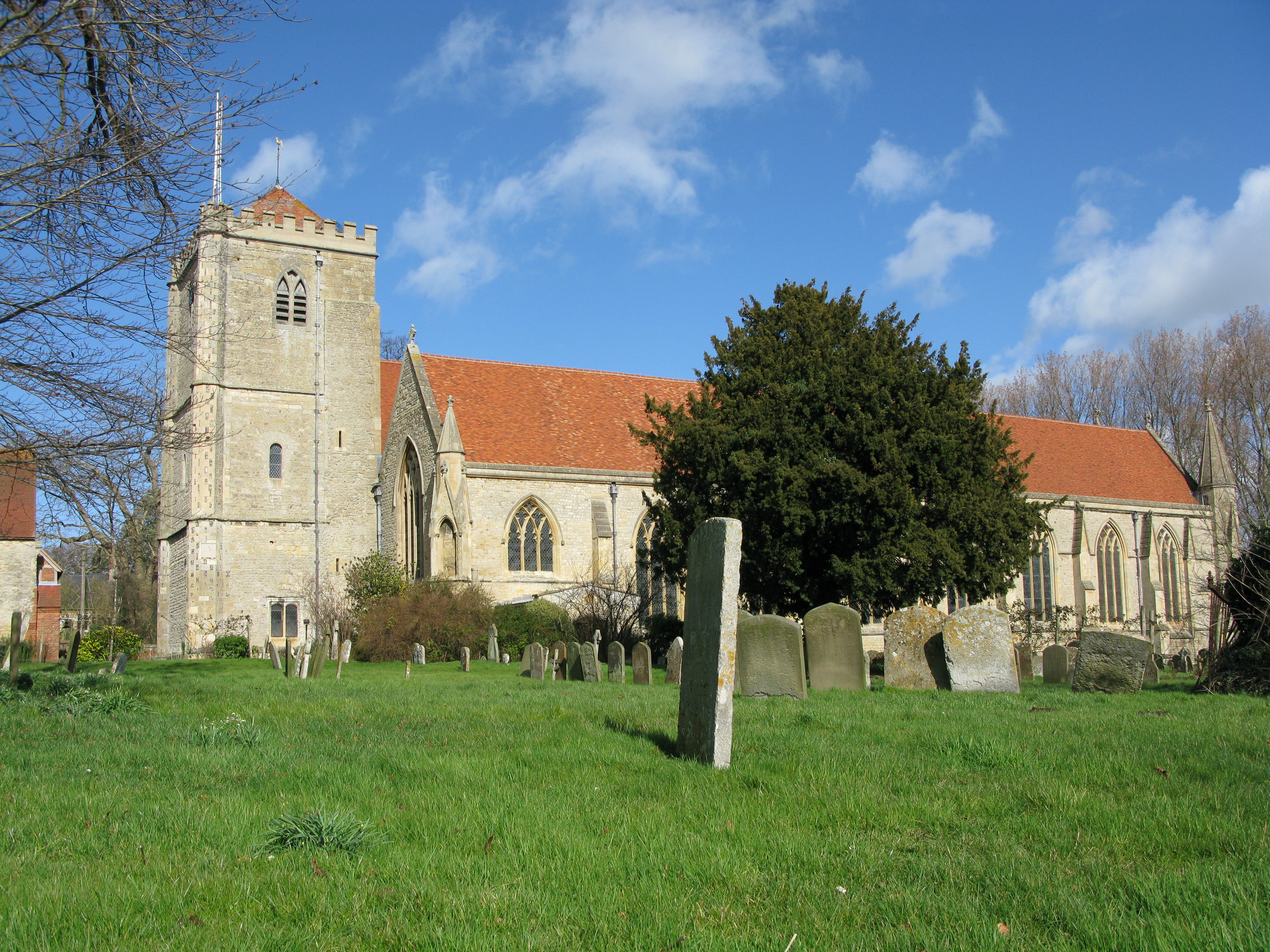
Dorchester Abbey, Dorchester-on- Thames
Friday 24 May 2025

Reviewed by Richard Whitehouse Photos (c) John Francis

The Walk to the Paradise Garden’s filling the expanse of Dorchester Abbey can only mean the English Music festival was again underway, Martin Yates drawing a response from the BBC Concert Orchestra that exquisitely conveyed the acute pathos of Delius’s operatic interlude.

This opening concert had begun with another reclamation from William Alwyn’s early output. Offshoot of his early fascination with William Blake, The Innumerable Dance is more a tone poem than overture – ‘English’ or otherwise. Its initial phase crescendos in a potent evocation of sunrise, and if the livelier music that follows sounds comparatively anodyne, its finesse of instrumentation (with harp and celesta much in evidence) and its formal deftness made for a welcome revival. How about including Alwyn’s Second or Fifth Symphonies at a future EMF?
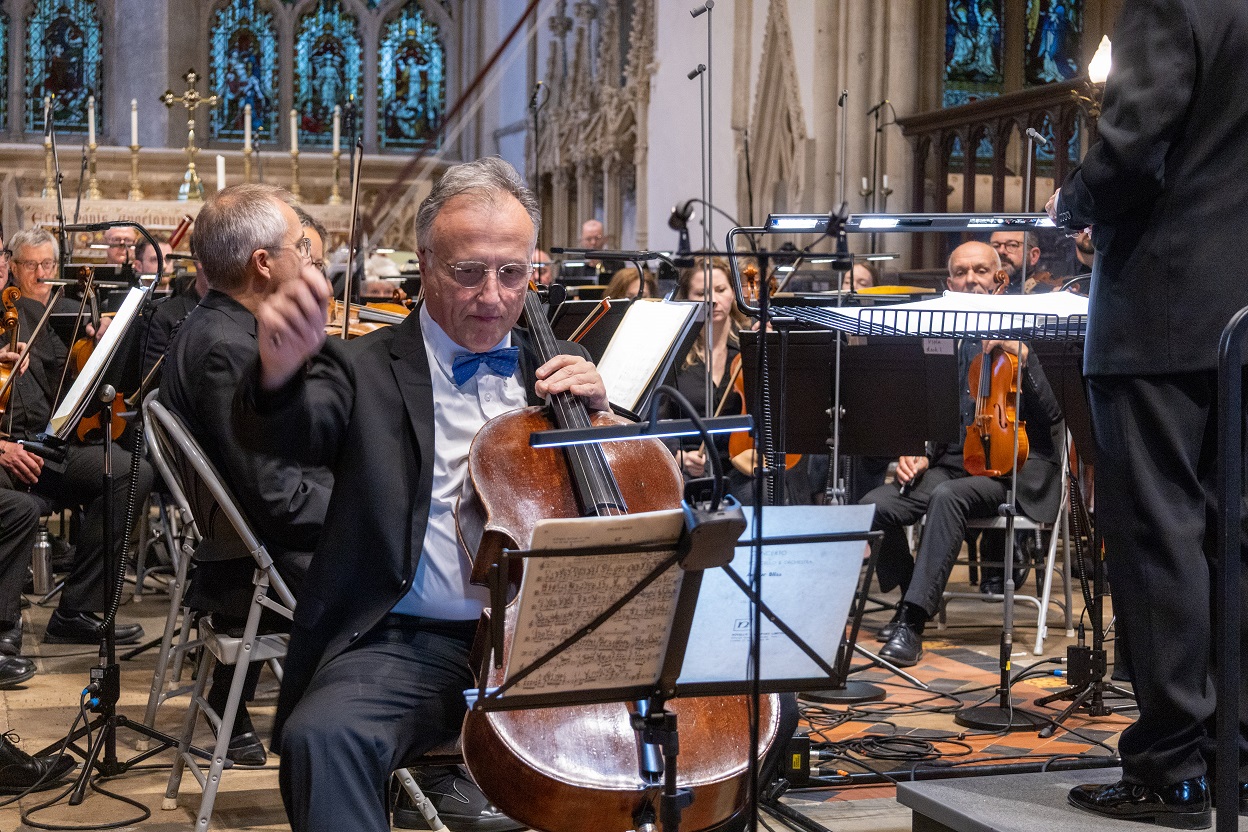
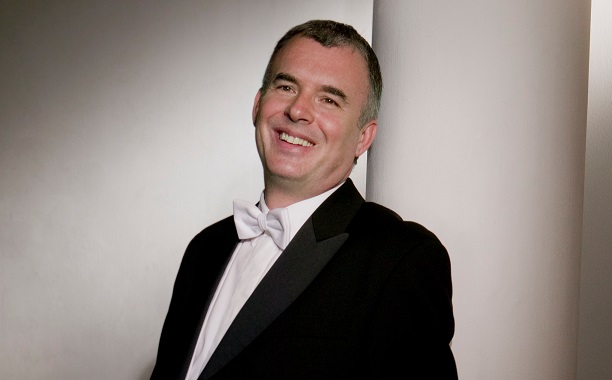
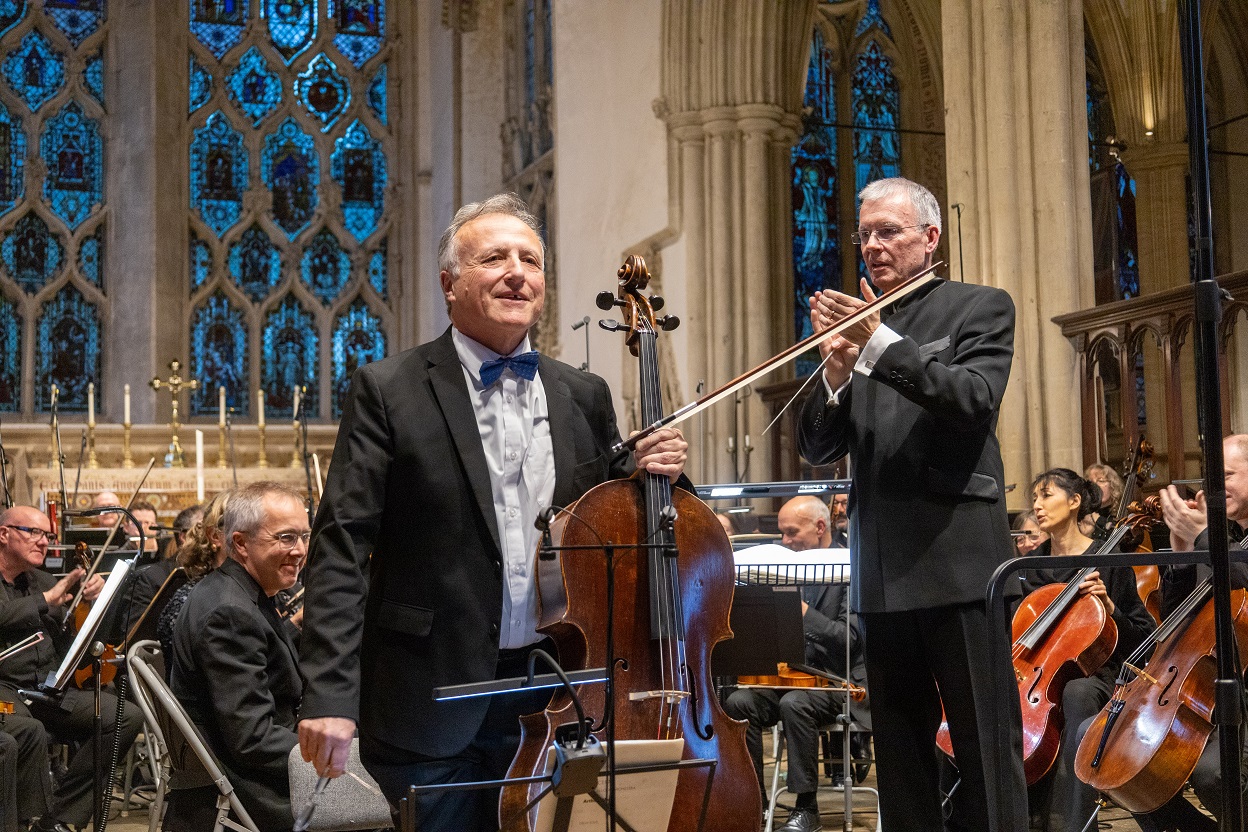
Arthur Bliss has enjoyed a veritable upsurge of performances in this 50th anniversary of his death, with his Cello Concerto among the finest works from that creative Indian Summer of his last decade. Compared with those for piano and violin before it, it eschews Romantic-era trappings in favour of Classical lucidity and proportion; its initial Allegro as much impulsive as decisive in its unfolding, with a semi-accompanied cadenza for its development in which Raphael Wallfisch (above) dovetailed effortlessly with orchestra. Subdued and poignant, the central Larghetto doubtless draws on the distant past in its heartfelt rumination, and while the final Allegro seems to dispel such memories, its progress is shot through with an ambivalence as makes the closing exchanges less than conclusive. Not least in this persuasive performance.

After the interval, another worthwhile revival in Heroic Elegy and Triumphal Epilogue with which Vaughan Williams, then in his late twenties, sought eminence among his peers. Only the first part, its fatalistic tread underpinning an eloquent theme on horns, was played at the time – the composer likely unsure if those episodic build-ups and rhetorical overkill of what follows were justified. Thanks to Yates’s assured direction, this music sustained itself up to a fervent apotheosis presaging the first movement from Sinfonia Antarctica half a century on.
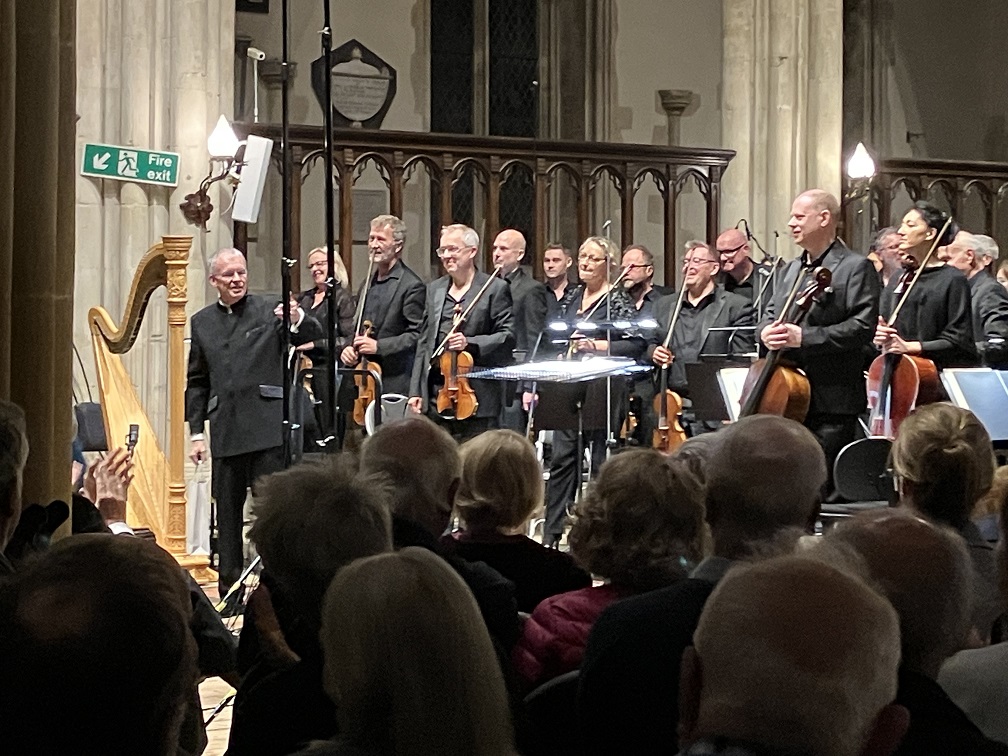
Yates has always sought to include a world premiere in his EMF concerts and tonight saw that of Stanley Bate’s Second Symphony. A composer who rather snatched defeat from the jaws of victory, he doubtless had high hopes for a piece written in Paris and London but not accepted (if indeed it was ever put forward) for performance. Shostakovich’s Fifth has been suggested as precursor but a more likely precedent is VW’s Fourth, not least with the fractious progress of an Allegro whose starkly contrasted themes build towards a combative development then resigned coda. Sombre and fatalistic with a powerfully wrought culmination, the Andante is its highlight and the ensuing Scherzo puts the rhythmic syncopation of that in Walton’s First to very different if hardly less effective ends (which have been even more so placed second).

If it fails to clinch the whole, the finale’s alternately baleful expression and propulsive motion secures a rousing peroration then a coda which, if its serenity is borne out of exhaustion rather than affirmation, fittingly ends a work whose motto might well be that of ‘travelling in hope’.

Published post no.2,544 – Sunday 25 May 2025
English Music Festival – Opening concert on 23 May 2025, with world premiere of Stanley Bate’s Symphony no.2

From the official press release:

There have been many significant first performances at the English Music Festival’s opening concert over the years and this year sees the BBC Concert Orchestra give the much-anticipated World Première of the Symphony no.2 by Stanley Bate (1911-1959); another outstanding student from the Royal College of Music, whose teachers included Ralph Vaughan Williams, R.O. Morris, Gordon Jacob, and Arthur Benjamin.
 
Stanley Bate’s prolific but vastly neglected output is overdue for re-evaluation and his works although being gradually recorded have yet to find a place in the concert hall. Symphony no.2 op.20 was completed in the spring of 1939, but the work appears to have been withdrawn by the composer without ever having achieved a performance.
 
Bate’s wife and fellow-composer, Peggy Glanville-Hicks, claimed her husband wrote a dozen or more symphonies and thirty or so piano sonatas. Often writing ‘en voyage’, Bate’s idiom can be dramatic and turbulent contrasting with interludes of exuberance, beauty and lyricism.

Anyone who knows Martin Yates’ recordings for Dutton will be familiar with the composer’s work. “Stanley Bate’s Symphony no.2 is, I think, going to be a revelation”, says Martin Yates. “He clearly was influenced by other composers working at the time, but he really did achieve something remarkable and individual with some of his works including this symphony. From the opening it explodes with tension. It is going to be incredible to hear it for the first time as it bursts into the world!”
 
Dedicated “To Mstislav Rostropovich with admiration and gratitude”, Arthur Bliss’ Cello Concerto is scored for small orchestra with the addition of harp and celesta. Heroic in character with ‘Quixotic’ flourishes and a soulful slow movement; according to Bliss, “There are no problems for the listener – only for the soloist!”
 
“The Arthur Bliss Cello Concerto is the most wonderfully crafted work, and I can’t understand its neglect”, says Martin Yates. “I know there is a lot of music that one could say that about, but Bliss really was a consummate musician and this concerto, written very late in his life, has a real lightness, yet depth that is utterly captivating and profound. It has a devastatingly difficult solo part with beautifully balanced orchestrations for a Mozart sized orchestras with the addition of a Celeste.”
 
The two works are performed alongside Ralph Vaughan Williams’ ‘trombone piece’, his Heroic Elegy and Triumphal Epilogue; a student work dating from 1901, which drew praise from his teacher Stanford who, according to the composer’s wife Adeline, chose the title for the piece. It remained unheard until a revival by the recording label, Dutton. Works by Delius and Alwyn complete the programme.

FURTHER INFORMATION AND HOW TO BOOK
 
Tickets are on sale from the website and by means of a postal booking form. Tickets for individual concerts will also be available at the door, subject to availability. Full Festival and Day Passes are also available. Programme and booking information is available on the EMF website

Dorchester Abbey (above) is the venue for the duration of the long weekend with talks taking place in the Village Hall as well as a Festival Lunch (pre-booking required). A dedicated mini-bus shuttle operates to/from Didcot Parkway rail station – bookings should be made via the website on publication of the timetable.

FRIDAY 23 MAY 2025
19:30 Dorchester Abbey, Oxfordshire
ENGLISH MUSIC FESTIVAL OPENING CONCERT
William Alwyn: The Innumerable Dance: An English Overture
Frederick Delius: The Walk to the Paradise Garden
Sir Arthur Bliss: Cello Concerto
Ralph Vaughan Williams: Heroic Elegy and Triumphal Epilogue
Stanley Bate: Symphony no.2 (World Premiere)
BBC Concert Orchestra
Martin Yates (conductor)
Raphael Wallfisch (cello)

Published post no.2,524 – Tuesday 6 May 2025

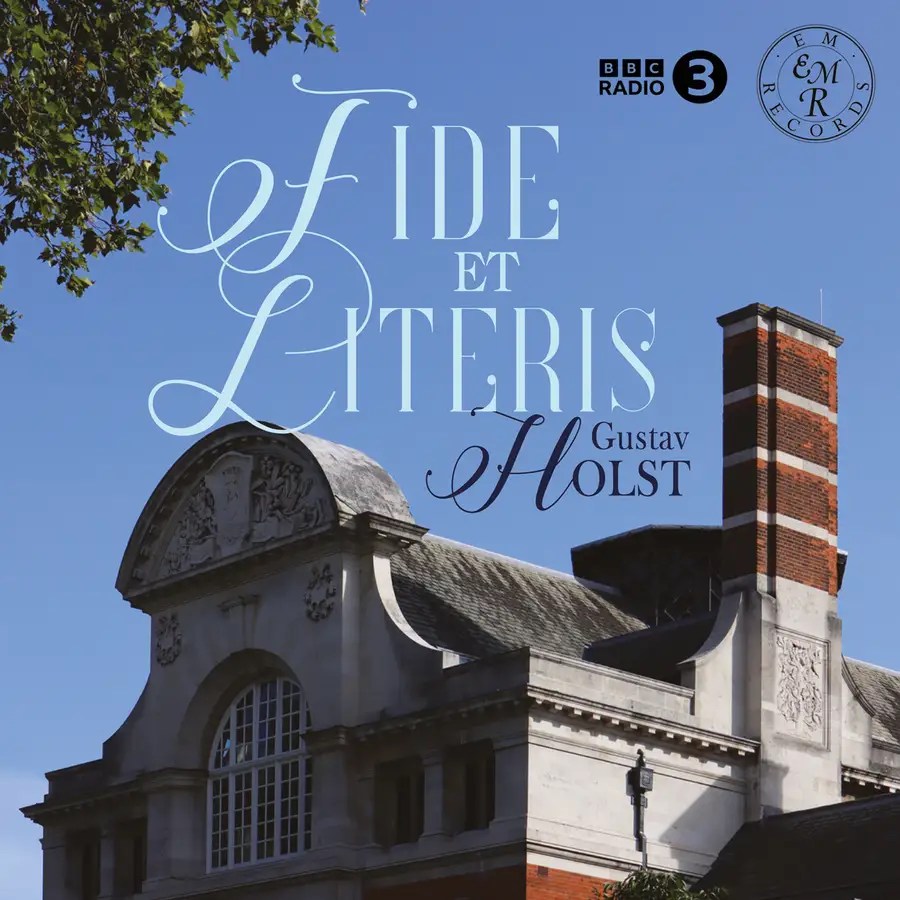
On Record – Em Marshall-Luck, Paulina Voices, BBC Concert Orchestra / Leigh O’Hara: Fide et Literis – Gustav Holst

Holst
St Paul’s Suite H118 (1912-13)
Brook Green Suite H190 (1933)
Gavotte H190a (1933)
Seven Choruses from the Alcestis of Euripides, H146 (1920)
Playground Song H118a (1911)
The Vision of Dame Christian, H101 (1909)

Em Marshall-Luck (reciter), Paulina Voices / Heidi Pegler, BBC Concert Orchestra / Leigh O’Hara

EM Records EMRCD090 [69’48”]
Producer Neil Varley Engineer Christopher Rouse

Recorded 4-5 November 2023 in the Great Hall, St. Paul’s Girls’ School, Brook Green, London

Reviewed by Richard Whitehouse

What’s the story?

EM Records further extends the Holst discography in the 150th anniversary year of his birth (and 90th anniversary year of his death) with this collection of works written at and intended for pupils of St Paul’s Girls’ School, where the composer taught for 29 years until his death.

What’s the music like?

For all his interest in matters spiritual and arcane, Gustav Holst was an eminently practical musician whose educational pieces were tailored to the situation at hand. Not least his Seven Choruses from the Alcestis of Euripides, written for a production of this drama at St Paul’s. Its scoring for unison female voices, three flutes and harp recalls those diaphanous settings in the Third Group of Choral Hymns from the Rig Veda – not least its sixth chorus ‘I have sojourned in the Muse’s Land’ that, in its fusion of yearning with sensuousness, is ideal for such a text as this.

Most substantial here is The Vision of Dame Christian – aka The Masque – written for the play by Frances Gray, who was the first headmistress (then High Mistress) at St Paul’s. The ‘Dame Christian’ in question is Christian Colet, mother of John Colet who had founded the original St Paul’s School 400 years before. Set in 1523, the sequence comprises three choruses with a prelude, interlude and finale – the scoring, for female voices with small orchestra, conveying a pathos devoid of sentimentality which is typical of Holst’s music for this school. Revived at decade-long intervals until 1958, it was heard again in 1973 (and issued privately on LP) then given a full production in 2013, but this first professional recording captures its deftness and eloquence in ample measure. Perhaps future performances would be feasible in other venues?

The two suites for strings long ago took their place within a lineage of compositions for this medium to which British artists have contributed so extensively throughout some 150 years. Certainly, the St Paul’s Suite is a classic of its genre – what with its rumbustious initial Jig, its animated Ostinato, its alternately soulful then playful Intermezzo, or a Finale which revisits Holst’s Second Suite for Military Band by combining traditional tunes The Dargason and Greensleeves in a fantasia ingenious and affecting. The Brook Green Suite is simpler in design – which is not to deny the appeal of its homely Prelude, its wistful Air or its lively Dance. Recorded for the first time is the Gavotte which Holst omitted at the premiere, its brusque charm enhancing the whole when heard in its original context as second movement.

Does it all work?

It does. This project was evidently a labour of love for St Paul’s Girls’ School, whose Paulina Voices duly rise to the challenge of continuing their venerable tradition under the admirable direction of Heidi Pegler, not least in the Playground Song with its ‘Henry Newbolt meets St Trinian’s’ text. The passages of recitation are rendered with clarity and elegance by Em Marshall-Luck (herself a Paulinian), while Leigh O’Hara secures a spirited response from the BBC Concert Orchestra in music whose sheer directness and accessibility are never for a moment naïve or simplistic.

Is it recommended?

It is. The presentation is well up to EMR’s customary standards, with detailed annotations by Em Marshall-Luck and school archivist Howard Bailes. Clearly the Great Hall of St Pauls’ Girls’ School is as ideal for recording as ‘Mr Holst’s Room’ in the Music Wing proved to be for his composing.

Listen & Buy

For further information visit the EM Records website, and for purchase information visit the Presto website. Click on the names for more on conductor Leigh O’Hara, Paulina Voices, the BBC Concert Orchestra and for more on The Holst Society

Published post no.2,382 – Wednesday 4 December 2024

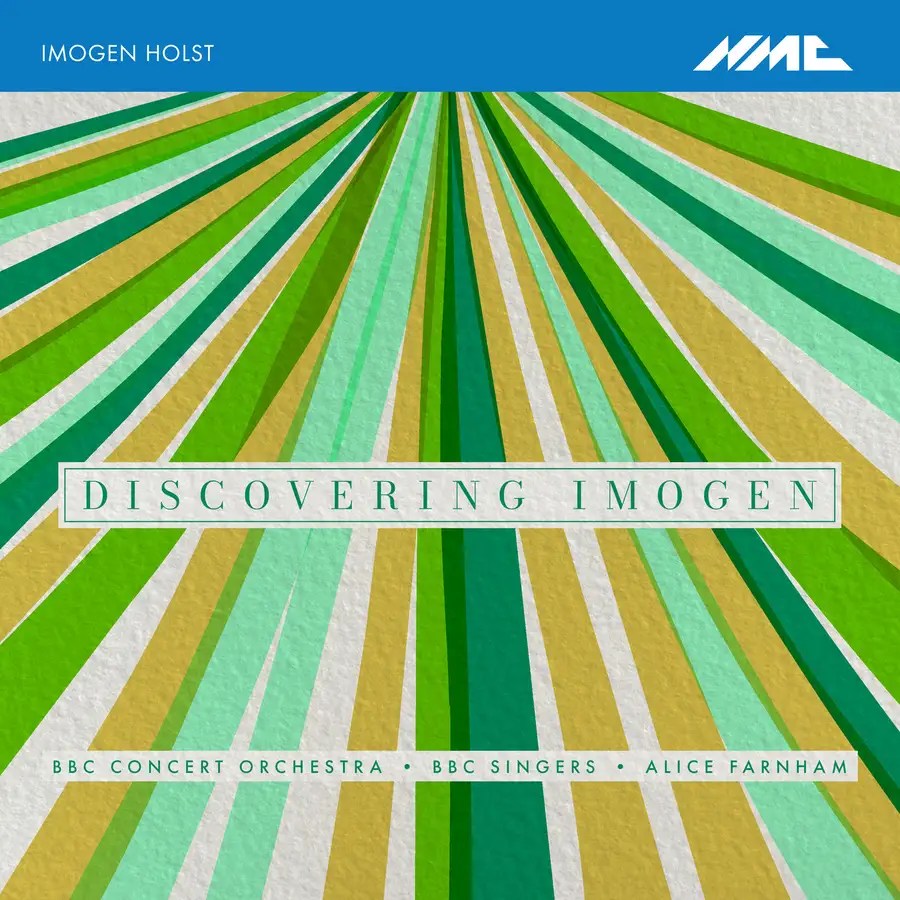
On Record – Imogen Holst: Discovering Imogen (NMC)

BBC Singers (What Man Is He?, Festival Anthem), BBC Concert Orchestra / Alice Farnham

Imogen Holst
Persephone (1929)
Variations on ‘Lorth to Depart’ (1962)
What Man is He? (c1940)
Allegro Assai (1927)
On Westhall Hill (1935)
Suite for String Orchestra (1943)
Festival Anthem (1946)

NMC Recordings NMCD280 [75’01”] English texts included
Producer Colin Matthews Engineers Marvin Ware, Robert Winter, Callum Lawrence
Recorded 27-29 January 2024 at Maida Vale Studio One, London

Reviewed by Richard Whitehouse

What’s the story?

As its executive producer Colin Matthews notes in his introduction, NMC would likely not exist had it not been for Imogen Holst (1907-84) setting up the Holst Foundation prior to her death – so making this release of her larger-scale works the more appropriate, and welcome.

What’s the music like?

The present anthology affords what seems a plausible overview of its composer’s output. The earliest piece here is Allegro Assai, evidently planned as the opening movement of a suite for strings that progressed no further, but which proves characterful and assured on its own terms. Such potential feels well on the way to being realized in Persephone, an overture (albeit more akin to a tone poem) given in rehearsal by Malcolm Sargent, with the influence of Ravel (and indirectly of Vaughan Williams) balanced by the dextrous handling of motifs across a formal evolution such as relates the myth in immediate and individual terms. That this went unheard until the present recording was likely as much a loss to the musical public as to Holst herself.

Underlining its composer’s skill in writing for amateurs, On Westhall Hill is an atmospheric piece the more appealing through its brevity and modesty of scoring. Deriving its text from the Book of Wisdom, What Man Is He? traverses a range of emotions from the sombre, via the introspective, to the affirmative in a setting as searching as it is fervent. Most impressive, however, is the Suite for String Orchestra composed for a ‘portrait’ concert at Wigmore Hall. The four movements unfold from a diaphanous Prelude, via a fluid and astringent Fugue then an Intermezzo whose ruminative warmth hints at qualities rather more fatalistic, to a Jig which convincingly rounds off the whole work with its mounting energy and resolve.

Written in the wake of the Second World War, Festival Anthem went unheard at this time but could be thought a ‘song of thanksgiving’. Adapted from Psalm 104 (‘Praise the Lord, O my soul’), it seamlessly integrates soloistic with choral passages prior to a calmly fulfilled close. The latest work here, Variations on ‘Loth to Depart’ takes a 17th-century tune as harmonized by Giles Farnaby as basis for five variations – the initial four respectively trenchant, eloquent, wistful and incisive; prior to a relatively extended chaconne as distils a pathos the more acute for its understatement. A string quartet is combined resourcefully with double string orchestra in music which can at least hold its own in the context of a distinctive genre in British music.

Does it all work?

It does indeed. It is all too easy to think of Imogen Holst as one who never fully realized her potential in the face of life-long teaching and administrative commitments, but the range of what is heard amply indicates her creative legacy to be one worth exploring in depth. The recordings, moreover, could hardly be bettered in terms of their overall conviction – Alice Farnham securing a laudable response form the BBC Concert Orchestra and, in the choral pieces, BBC Singers. Hopefully other ensembles, professional or amateur, will follow suit.

Is it recommended?

It is indeed. Sound is unexceptionally fine, with informative notes from Christopher Tinker. Alongside the NMC release of her chamber music for strings (D236), and that on Harmonia Mundi of choral music (HMU907576), this is a fine demonstration of Imogen Holst’s legacy.

Listen & Buy

You can listen to samples and explore purchase options on the NMC Recordings website. For more information on the artists, click on the names to visit the websites of the BBC Singers, BBC Concert Orchestra and conductor Alice Farnham, while a dedicated resource can be found for Imogen Holst herself

Published post no.2,374 – Tuesday 26 November 2024

Arcana at the Proms – Prom 57 – Ultra Lounge: Henry Mancini and Beyond

For full repertoire list, see the bottom of this article

Monica Mancini, Rachel John, Oliver Tompsett (vocals), Freddie Benedict, Kevin Fox, Johanna Marshall, Liz Swain (backing vocals), BBC Concert Orchestra / Edwin Outwater

Royal Albert Hall, London
Monday 2 September 2024

reviewed by Richard Whitehouse Photo (c) Andy Paradise

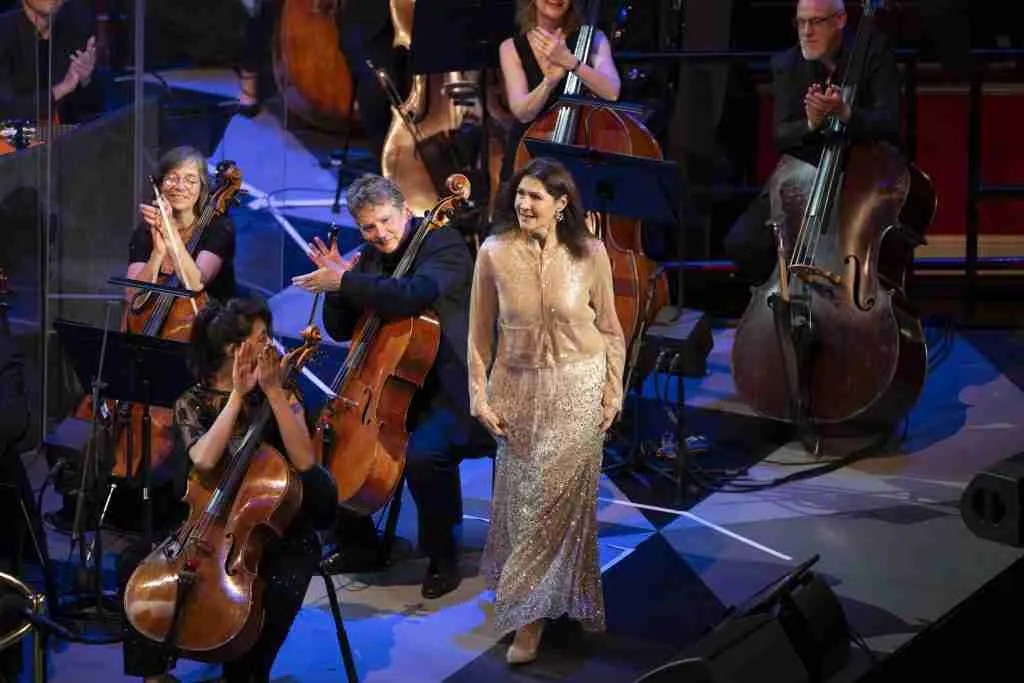
Among a plethora of centenary commemorations for composers classical or otherwise, it was good to see that of Henry Mancini marked with a Prom that featured a decent selection of his music next to that of relative contemporaries in this programme of unalloyed ‘easy listening’. The period 1955-75 was an era when such music not only flourished but was taken seriously by moguls in the music industry, witnessed by the sheer number of in-house orchestras with ‘their’ conductors who secured reputations comparable to those of their pop contemporaries.

The BBC Concert Orchestra has long flown the flag for this music, as has its principal guest conductor Edwin Outwater. They launched this evening in fine style with the main title from Mancini’s Charade, its ominous allure complemented by the panache of the theme from Peter Gunn then the slinky humour of Baby Elephant Walk; a mellifluous Days of Wine and Roses bringing the first appearance from tonight’s quartet of backing vocalists. The evergreen Moon River had an elegant cameo by the composer’s daughter Monica Mancini (above), its pathos set in relief by the enigmatic theme from The Pink Panther then irresistible sleaziness of Harold Arlen’s Blues in the Night. More Mancini followed with the driven percussive of Rain Drops in Rio then sultry Lujon with its eponymous percussion instrument. Quincy Jones hit an early high with his ricocheting Soul Bossa Nova, as also Juan García Esquivel with his catchy Mucha Muchacha and Les Baxter in his stealthy Quiet Village. Burt Bacharach’s bittersweet Alfie was graced with an eloquent vocal by Rachel John, then Nicholas RoubanisMisirlou evocatively brought up the interval.

The late Laurie Johnson created TV gold with the suave tones of The Shake, theme from The Avengers, as did Morton Stevens with his high-octane Hawaii Five-O. Rachel John sounded a shade coy in Bacharach’s The Look of Love (memorably covered by Scott Walker), his genial Casino Royale hitting the spot as did Julius Wechter’s breezy Spanish Flea. The vocal quartet added ambivalence to Bobby Scott / Ric Marlow co-write A Taste of Honey then ethereality to Michel Legrand’s The Windmills of Your Mind or a neat line in scat to Mancini’s Party Poop. If Oliver Tompsett undersold the sassiness of Sid Ramin’s Music to Watch Girls By, there was no mistaking the faux-chinoiserie of Mancini’s Hong Kong Fireworks and suavity of Baxter’s Shooting Star. Rachel John made Bacharach’s This Guy’s in Love With You a candidate for the most perfect pop-song, with Baxter’s Saturday Night on Saturn more inane in context. Not so Esquivel’s Whatchamacallit with its quirky Ondioline (more stylophone then theremin), then Oliver Tompsett pointed the double-entendre of Bacharach’s What’s New Pussycat? before a gyrating take on Les Reed’s / Gordon Mills’ It’s Not Unusual, indelibly linked with Tom Jones.

It would have been perfectly feasible to assemble a evening devoted to Mancini by taking in his edgier film-scores to such 1950s classics as The Creature of the Black Lagoon and Touch of Evil, but making this a nostalgia-fest doubtless commended itself to a near-capacity house – not that you had to be over a certain age to enjoy what was on offer or to have seen the TV series Animal Magic whose theme-tune, Johnson’s Las Vegas, made an effervescent encore.

List of repertoire performed:

Mancini (arr. Stanley Black): Charade – Main Title (1963)
Mancini: Peter Gunn – Theme (1958)
Mancini (arr. Black): Baby Elephant Walk (1961)
Mancini: Days of Wine and Roses (1962)*d
Mancini: Moon River (1961)a
Mancini (arr. Gavin Sutherland): The Pink Panther – Theme (1963)*
Arlen (arr. Fiona Brice): Blues in the Night (1941)*
Mancini (arr. George Moore): Rain Drops in Rio (1961)
Mancini: Lujon (1961)
Jones (arr. Alasdair Malloy): Soul Bossa Nova (1962)*
Esquivel (arr. Sam Gale): Mucha Muchacha (1962)d
Baxter (arr. Moore): Quiet Village (1951)
Bacharach (arr. Les Reed): Alfie (1966)b
Roubanis (arr. Callum Au): Misirlou (1941)

Johnson (arr. Mike Townend): The Shake (1965)
Stevens (arr. Malloy): Hawaii Five-O (1968)
Bacharach (arr. Richard Balcombe): The Look of Love (1967)b
Bacharach (arr. Balcome): Casino Royale (1967)
Wechter (arr. Malloy): Spanish Flea (1965)
Scott/Marlow (arr. Brice): A Taste of Honey (1960)d
Legrand (arr. Balcombe): The Windmills of Your Mind (1968)d
Ramin (arr. Balcombe): Music to Watch Girls By (1967)c
Mancini (arr. Moore): Party Poop (1968)d
Mancini (arr. Black): Hong Kong Fireworks (1978)
Baxter (arr. Moore): Shooting Star (1968)
Bacharach (arr. Balcombe): This Guy’s in Love With You (1968)b
Baxter (arr. Moore): Saturday Night on Saturn (1957)
Esquivel (arr. Gale): Whatchamacallit (1959)
Bacharach (arr. Balcombe): What’s New Pussycat (1965)c
Reed/Mills (arr. Balcombe): It’s Not Unusual (1965)c

(All titles Proms premieres except *)

aMonica Mancini, bRachel John, cOliver Tompsett (vocals), dFreddie Benedict, Kevin Fox, Johanna Marshall, Liz Swain (backing vocals), BBC Concert Orchestra / Edwin Outwater

You can get details about this year’s season at the BBC Proms website – and you can click on the names to read more about the BBC Concert Orchestra and conductor Edwin Outwater

Published post no.2,292 – Thursday 5 September 2024