In concert – BBC Philharmonic Orchestra / Michael Seal: Discovering Bliss

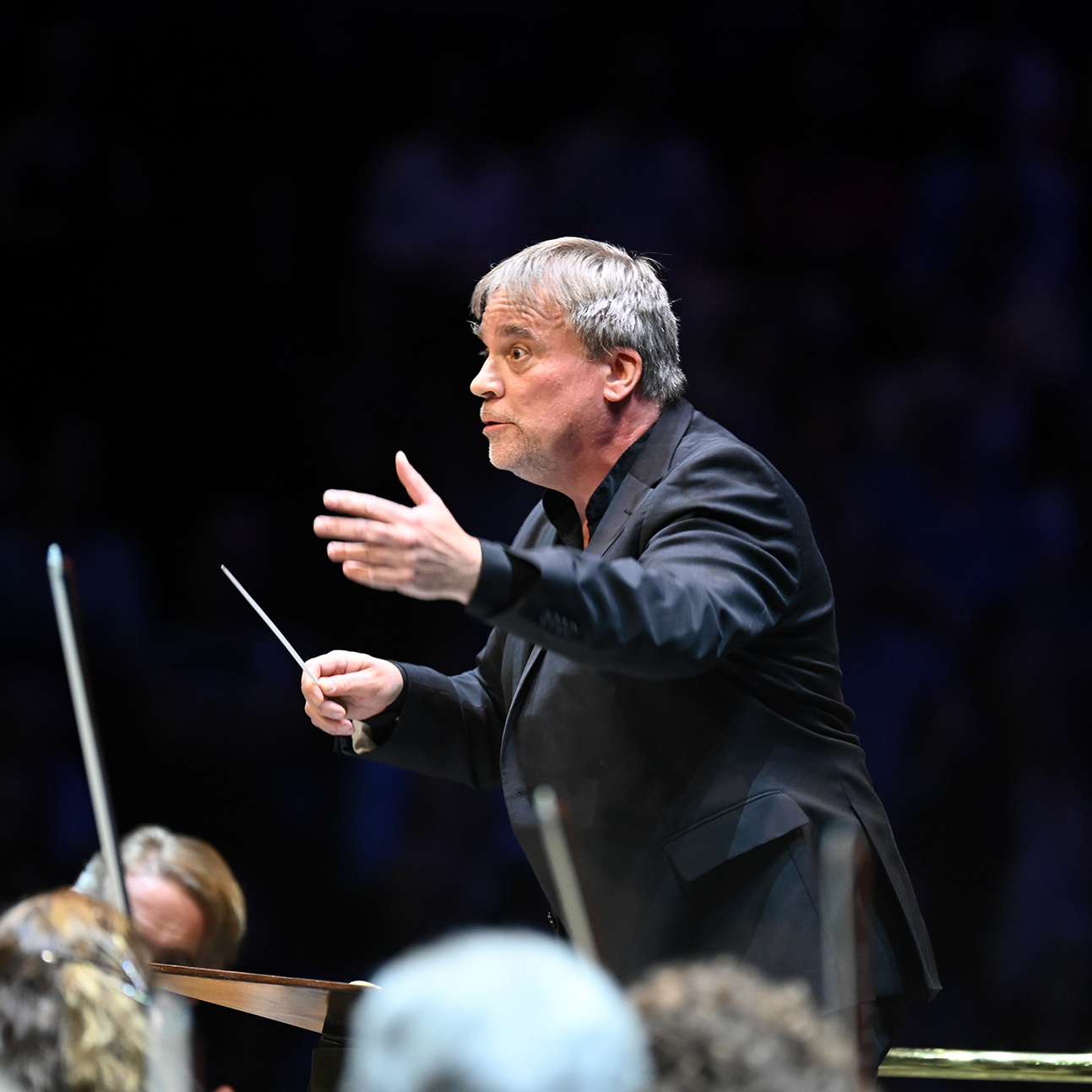
BBC Philharmonic Orchestra / Michael Seal (above)

Sir Arthur Bliss
Miracle in the Gorbals (1944) – Overture
Things to Come (1934) – March
Metamorphic Variations (1972)

Royal Concert Hall, Nottingham
Wednesday 26 February 2025

Reviewed by Richard Whitehouse

2025 promises no mean retrospective of Arthur Bliss’s music in this 50th anniversary year of his death but no more significant revival than that of Metamorphic Variations, the composer’s late masterpiece that was heard live this evening for the first time in more than three decades.

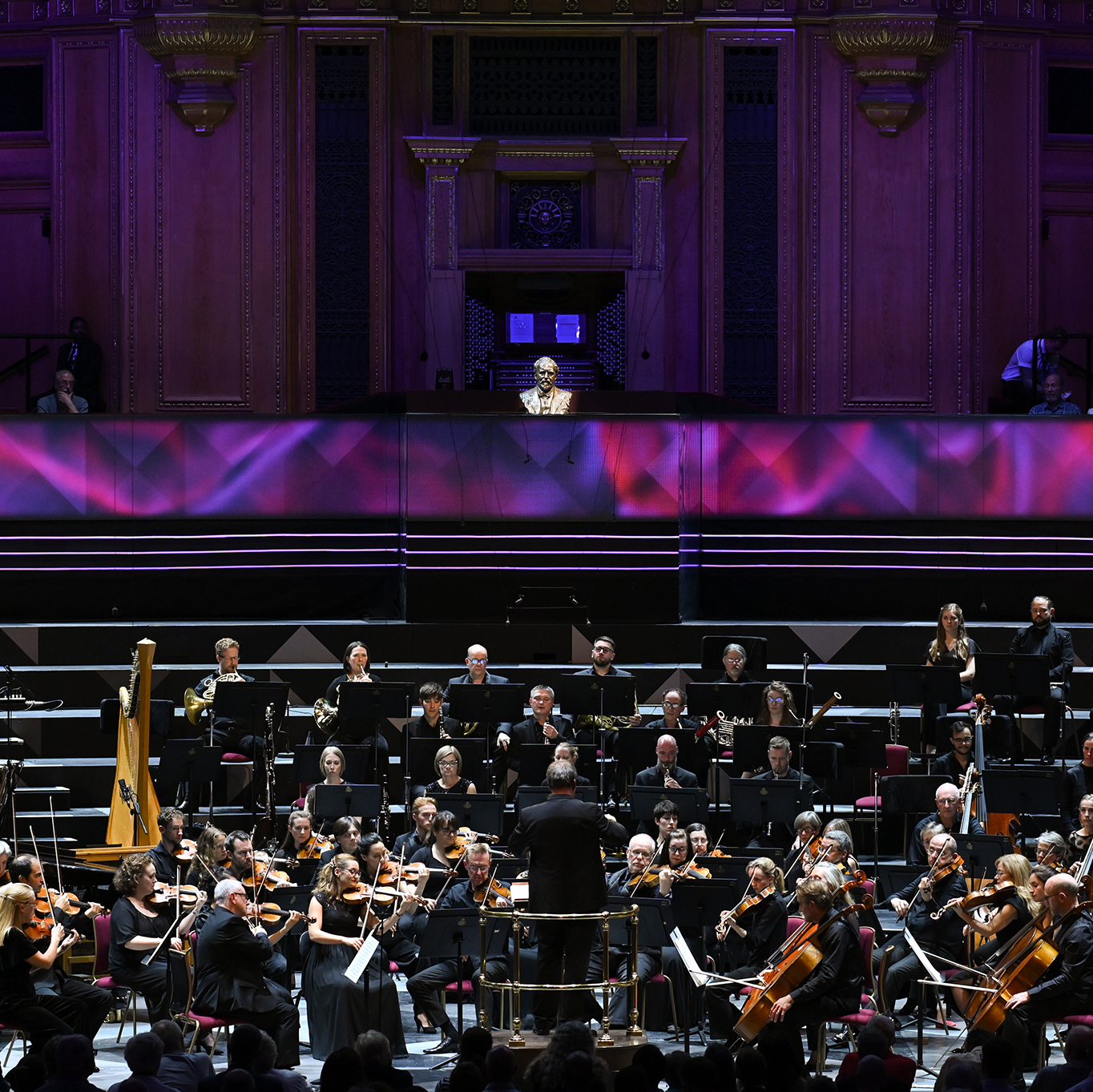
Completed in December 1972 and premiered at Croydon’s Fairfield Halls the following April, Metamorphic Variations was the last while also the longest of Bliss’s purely orchestral works. Shorter than might have been, even so, as two of its sections were omitted at that first hearing (Leopold Stokowski having requested more rehearsal time for Tchaikovsky’s Pathétique after the interval) and given as an appendix in the published score; being excluded at later hearings as on the two commercial recordings. Tonight brought their reinstatement almost 52 years on.

First performed as ‘Variations for Orchestra’, this work only acquired its definitive title after considerable soul-searching on the composer’s part, though Metamorphic Variations is more accurate in terms of those ideas outlined in the initial Elements: an oboe cantilena, a phrase for horns then strings, and a cluster on woodwind – thereby setting up melodic, rhythmic and harmonic possibilities to be explored intensively over the ensuing 15 sections. The first five comprise a lively Ballet, a brusque Assertion and atmospheric Contrasts whose absence hitherto has been to the detriment of overall balance. Less crucial formally, Children’s March is of considerable fascination for its deft pivoting between innocence and experience, while Speculation marks a crucial expressive juncture through its renewed sense of anticipation.

Such anticipation is fulfilled by the starkness of Interjections then incisiveness of Scherzo I, before Contemplation yields further repose. Next come the two most elaborate sections – an increasingly energetic Polonaise being followed by Funeral Processions which builds to a wrenching, even anguished culmination. A lighter sequence moves from the dextrous Cool Interlude, via the angular Scherzo II, to the ingratiating Duet – an intermezzo prior to the final two sections. A brief yet potent Dedication makes explicit the work’s inscription to the artist George Dannatt and his wide Ann, then Affirmation draws each of the main elements into a sustained peroration thrown into relief through its ultimate subsiding into a return of the oboe cantilena from the opening and which, in its turn, brings a withdrawal into silence.

Scored with real virtuosity for sizable forces, Metamorphic Variations proves no less testing for the players as it is conceptually for the listener, though the BBC Philharmonic responded with assurance to Michael Seal who (given the unavailability of John Wilson) had not merely learnt the score in around 10 days but ensured an interpretation that was distinctively his own. Hopefully a recording from this source (how about it, Chandos?) will follow before too long: meanwhile, however, this performance is being broadcast by BBC Radio 3 in the near future.

Having provided the musical illustrations in Stephen Johnson’s introductory talk, Seal and the BBCPO had framed the first half with the fateful ‘Overture’ to Bliss’s wartime ballet Miracle in the Gorbals then the rousing ‘March’ from his inter-war score to the film Things to Come.

For more information on the orchestra’s 2024-25 season, head to the BBC Philharmonic Orchestra website Click on the names to read more about conductor Michael Seal, and about Sir Arthur Bliss himself. You can also find out more about The Bliss Trust

Published post no.2,463 – Tuesday 4 March 2025
BBC Proms 2023 – Dame Sarah Connolly, BBC Philharmonic Orchestra / John Storgårds – Weber, Pejačević, Alma Mahler-Werfel & Rachmaninoff

Prom 33 – Dame Sarah Connolly (mezzo-soprano), BBC Philharmonic Orchestra / John Storgårds

Weber Oberon – Overture (1825-6)
Pejačević Zwei Schmetterlingslieder Op.52 (1920); Verwandlung Op.37b (1915); Liebeslied Op.39 (1915). [Proms premieres]
Mahler-Werfel orch. Colin & David Matthews Die stille Stadt (pub. 1915); Licht in der Nacht (pub. 1915); Bei dir ist es traut (pub. 1910)
Rachmaninoff Symphony no.1 in D minor Op.13 (1895)

Royal Albert Hall, London
Wednesday 9 August 2023

by Richard Whitehouse photos by Chris Christodoulou / BBC

This evening’s Prom brought a welcome appearance by the BBC Philharmonic with its chief conductor John Storgårds, in what was a typically enterprising programme that continued this season’s emphasis on the music of Dora Pejačević in the centenary (last March) of her death.

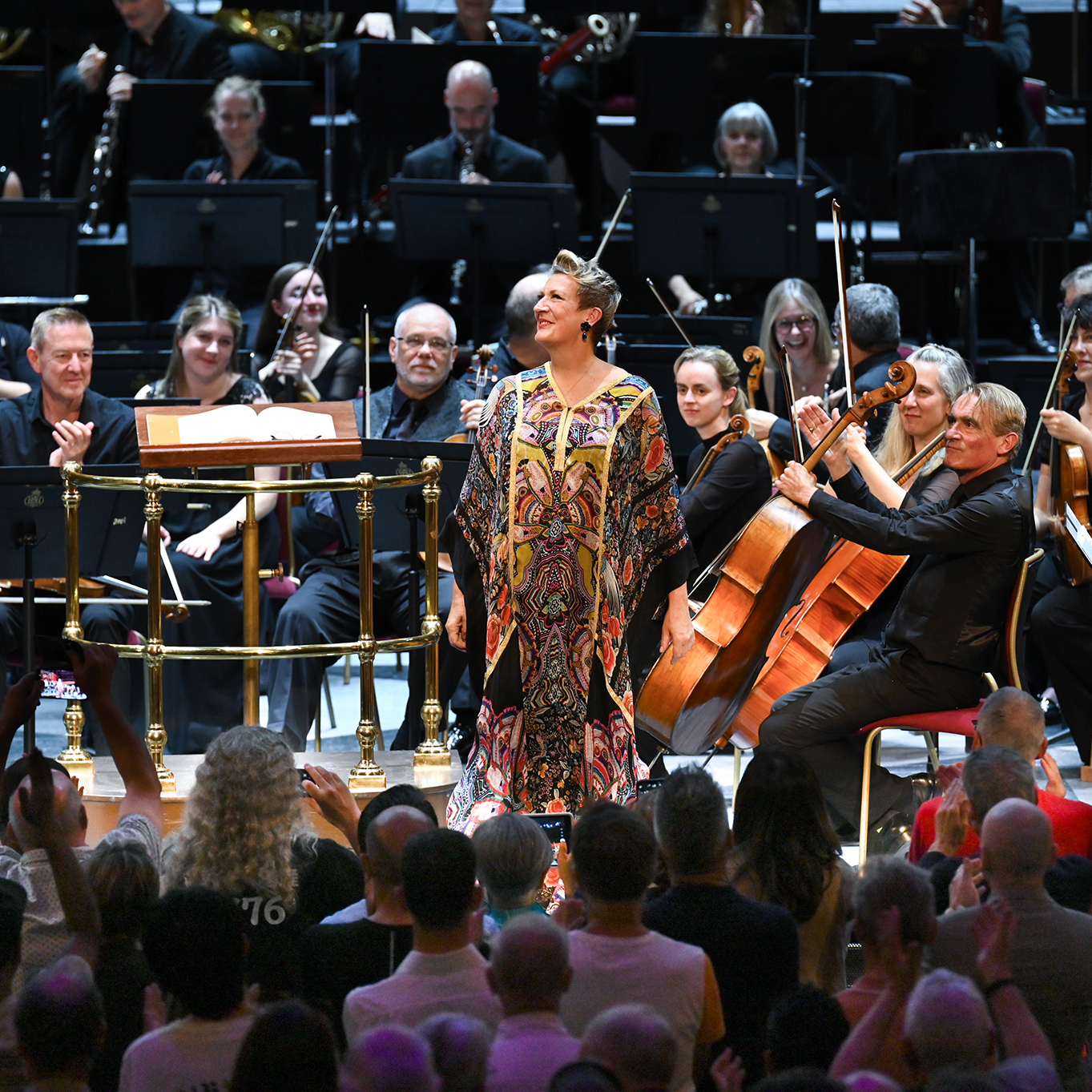
Among Pejačević’s sizable output of songs are four with orchestra, making a viable sequence in its own right. Dame Sarah Connolly (above) brought out the searching whimsicality from Karl Henckell’s Butterfly Songs, whether the fanciful imaginings of ‘Golden stars, little bluebells’ or the more concrete thoughts of ‘Flutter, o butterfly’ with delicate contributions by flute and glockenspiel. The setting of Kael Kraus’s Transformation taps deeper emotion, not least with those ecstatic violin solos between stanzas (eloquently rendered by Yuri Torchinsky), whereas that of Rainer Maria Rilke’s Love Song is notable less for the gently undulating phrases of its vocal writing than for the soaring ecstasy of its central interlude which only double one’s regret that neither composer nor poet lived long enough to collaborate on an opera project as had been mooted.

Making up this sequence were three songs by Alma Mahler-Werfel, taken from sets published in 1910 and 1915. Neither those contrived sentiments of Richard Dehemel’s The Silent Town or self-conscious emoting of Otto Julius Birbaum’s Light in the Night summons an especially personal response; only the winsome poise of Rilke’s I feel warm and close with you implies any individuality. The orchestrations by Colin and David Matthews are sensitive and apposite, but the latter might reasonably have expected more from the Proms in his 80th birthday-year.

Opening this concert was a beautifully judged reading of the overture to Weber’s final opera Oberon – less often heard now that overtures are no longer the automatic curtain-raisers they once were but which, in its deft interplay of evocative and energetic, still casts a potent spell.

By contrast, Rachmaninoff’s First Symphony has come much more into its own now that the composer’s orchestral output has moved to the centre of the repertoire. Unheard for 48 years after its disastrous premiere in 1897, it remains a testament to the young composer’s ambition – not least in an opening Allegro whose implacable ‘motto’ sets the course for this movement overall. Storgårds had its measure, not least in the mounting fervency of its development, then delivered a probing account of a scherzo the more ingenious for its pervasive understatement.

Although it will never supplant that of its successor in audience affection, the slow movement is a minor miracle of thematic subtlety and emotional restraint as came through via felicitous playing by the BBC Philharmonic woodwind. Launching the finale in suitably visceral fashion, Storgårds (rightly) made the most of its contrasts between the celebratory and the speculative – any remaining ambivalence not so much resolved as forced into submission through a coda which renders the fatalism of Tchaikovsky’s Pathétique from a distinctly personal vantage.

So, an unlikely programme which worked well as a concert – the more so given it proceeded without an interval. Those in the audience surreptitiously eating or drinking between pieces might have preferred otherwise, but for both music and performances it was nothing but gain.

For more on the 2023 BBC Proms, visit the festival’s website at the BBC. Meanwhile click on the names for more information on artists Dame Sarah Connolly, John Storgårds and the BBC Philharmonic Orchestra – and for information on the composers Dora Pejačević and Alma Mahler-Werfel

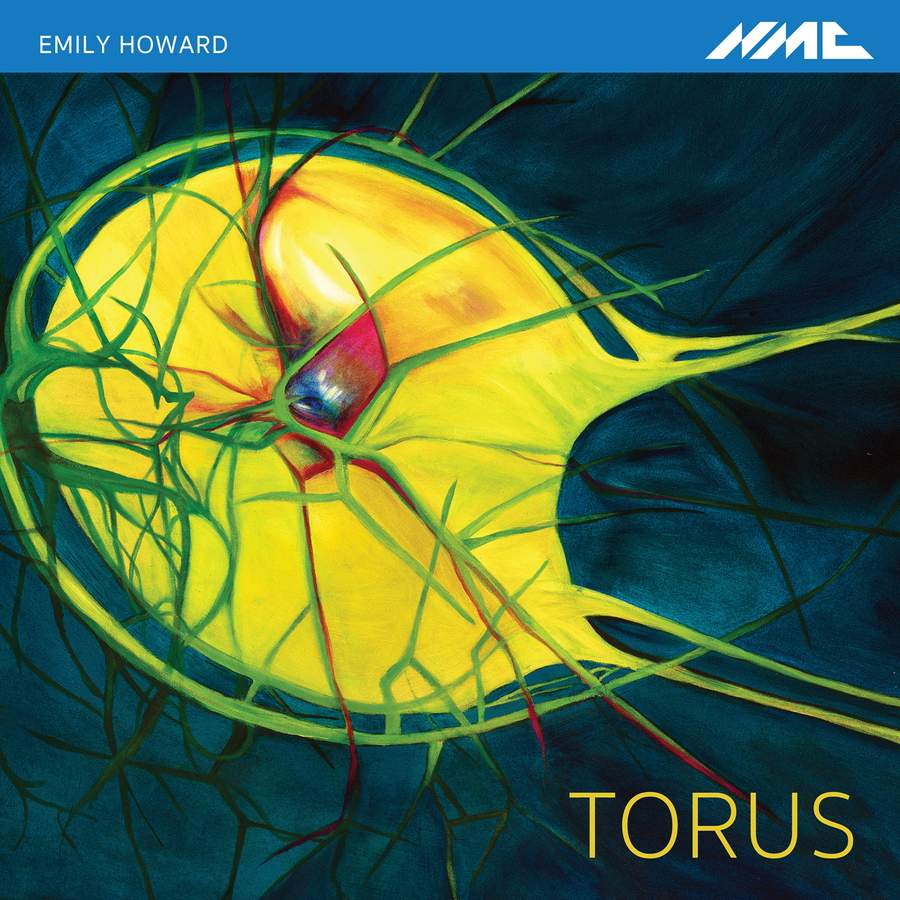
On Record: Emily Howard: Torus (NMC Recordings)

Emily Howard

Antisphere (BBC Philharmonic Orchestra / Vimbayi Kaziboni)
Producer Matthew Bennett, Engineer Stephen Rinker
Recorded 29 November 2022, Bridgewater Hall, Manchester

sphere (BBC National Orchestra of Wales / Mark Wigglesworth)
Producer Dean Craven, Engineer Stephen Rinker
Recorded at the Aldeburgh Festival, 23 June 2018, The Maltings, Snape

Compass (Julian Warburton (percussion), Birmingham Contemporary Music Group / Gabrielle Taychenné)
Producer & Engineer David Lefeber
Recorded 4 December 2022, Royal Northern College of Music, Manchester

Torus (BBC Symphony Orchestra / Martyn Brabbins)
Producer Ann McKay, Engineer Christopher Rouse
Recorded 11 November 2019, Barbican Hall, London

NMC Recordings D274 [68’58″]

Reviewed by Richard Whitehouse

What’s the story?

NMC releases a second collection of music by Emily Howard – now in her early forties and established among the most distinctive while forward-looking composers of her generation, heard in scrupulous performances by a notable line-up of British orchestras and ensembles.

What’s the music like?

Few world premieres from recent years have left an impression comparable to that of Taurus at the Proms in 2016. Its appearance, moreover, marked a further stage in an evolution which had commenced just over a decade earlier and has continued apace, with major commissions from British and European organizations. This has been paralleled by Howard’s commitment into researching the intrinsic properties of sound, most recently via the Centre for Practice & Research in Science and Music (PRiSM) at Manchester’s Royal Northern College of Music.

As it now stands, Torus is the first part in an informal trilogy of pieces collectively entitled Orchestral Geometries. It evolves along the perceived trajectory of a doughnut-shaped ball whose central void is crucial to music evoking absence as much as presence. Not that a work subtitled Concerto for Orchestra could be found lacking in either immediacy of content or virtuosity of gesture, which qualities come demonstrably to the fore as it unfolds and make for a composition involving in its expressive profile and fascinating in its formal process.

By contrast, Sphere is a succinct yet eventful journey through and around the global shape in question and which, in this context, might reasonably be thought an extra-terrestrial interlude – its ideas pithy while exuding enough potential for their development in subsequent pieces.

This is what happens in Antisphere which forms its conceptual opposite though also its aural continuation, the piece gradually encompassing the ‘sound-space’ through an engrossing and imaginative demonstration of orchestral prowess. Evident too is an increased focus upon the visceral nature of the musical content, likely reflecting a form which can precisely be defined in mathematical terms but remains all but intangible as regards human perception. Fortunate, then, that Howard has been able to render this concept as an emotional and affective whole.

Hardly less absorbing is Compass, the most recent of these pieces. This takes the spatial and nautical connotations of its title as the basis for music which unfolds as a cohesive dialogue between string septet and percussion that complements it and offers contrasts at every turn.

Does it all work?

It does, not least for providing an arresting take on that interplay of ‘heart and brain’ that has been a mainstay of Western music. The cerebral basis of all these pieces may be undeniable, though equally so is the precision of their forms and, above all, the allure of their expression judged intrinsically as sound. Much the same could be said of the music of Iannis Xenakis, the centenary of whose birth was commemorated last year, and whose thinking is continued by Howard from a vantage that is inherently personal while being decisively of the present.

Is it recommended?

It is, not least for its excellent performances by three of the BBC orchestras and Birmingham Contemporary Music Group, with booklet notes by Paul Griffiths and mathematician Marcus du Sautoy. This impressive release reinforces Howard’s significance in no uncertain terms.

Listen & Buy

Torus is released on Friday 28 April. You can explore buying options at the NMC Recordings website, and listen to clips from the album at the Presto Music site. You can read Arcana’s interview with Emily Howard by clicking on the link, and click on the names for more on the composer Emily Howard, plus performers Vimbayi Kaziboni, Mark Wigglesworth, Julian Warburton, Gabrielle Teychenné and Martyn Brabbins

On Record – Michael Collins, BBC Philharmonic Orchestra / Rumon Gamba – Arnold: Clarinet Concerto no.1, Philharmonic Concerto etc (Chandos)

Arnold
Commonwealth Christmas Overture Op.64 (1957)
Clarinet Concerto no.1 Op.20 (1948)
Divertimento no.2 Op.24 / Op.75 (1950)
Larch Trees Op.3 (1943)
Philharmonic Concerto Op.120 (1976)
The Padstow Lifeboat Op.94a (arranged for orchestra by Philip Lane)

BBC Philharmonic Orchestra / Rumon Gamba

Chandos CHAN20152 [68’50″’]
Producers Brian Pidgeon and Mike George Engineers Stephen Rinker, Richard Hannaford and John Cole
Recorded 5 & 6 December 2019, 29 July at MediaCity UK, Salford

Reviewed by Ben Hogwood

What’s the story?

This collection of six pieces from Sir Malcolm Arnold’s composing career stretches from one of his first published pieces, Larch Trees, to one of his last, the Philharmonic Concerto. Both were written for the London Philharmonic Orchestra, for whom he played trumpet from 1941 until 1948, and with whom he maintained a close association as a composer.

In between these pieces Chandos have chosen a satisfying mix of styles to reveal Arnold as a multi-faceted composer, not just the humourous one of which we hear most. That side of his writing is happily celebrated through The Padstow Lifeboat and the Divertimento no.2 for orchestra reveals the happiness he found through writing for children and young people, being young at heart himself.

The Commonwealth Christmas Overture finds Arnold in commission mode, called upon to write the music for Royal Prologue: Crown and Commonwealth, a programme narrated by Sir Laurence Oliver to preface the 25th Christmas speech by a ruling monarch. Completing the collection is the first of many concertos from Arnold’s pen, and the first of two for clarinet.

What’s the music like?

Chandos have already presented us with a good deal of Sir Malcolm Arnold’s music, and this is further enhanced by a programme giving us first recordings and revealing each side of the composer’s personality.

The Commonwealth Christmas Overture gets proceedings off to a suitably ceremonial start, with plenty of bluster and high jinks, all buoyed by colourful percussion. The influence of William Walton is immediately evident, for the main theme has more than a little in common with his own ceremonial march Crown Imperial, but Arnold goes on to develop it in his own inimitable way.

The Clarinet Concerto is a compact piece, deft and slightly bluesy in the outer movements but pausing for meaningful reflection in the Andante, the emotional centre of the work.

The Second Divertimento, long thought lost, is a fun piece where a lot happens in nine minutes! Using a traditional-sounding structure, Arnold has a lot of fun with the bracing Fanfare, atmospheric Nocturne and grand Chaconne, harnessing the power of the large orchestra.

The two pieces for the London Philharmonic are next, and are vividly contrasting pieces of work. Larch Trees is an evocative musical sketch, reminiscent of Moeran in the way it pans out over the rugged terrain of northern England, while also confiding intimately in its listeners through the woodwind. The Philharmonic Concerto is more obviously noisy and confrontational, this late work utilising the dissonance which will be noted by those familiar with Arnold’s later symphonies. This is not comfortable music but it is brilliantly written, challenging the orchestra to throw off their shackles. The probing violin lines of the Aria offer a chance for deeper reflection.

Finally The Padstow Lifeboat, one of Arnold’s brass band treasures, with its persistent ‘wrong note’ which warns all shipping. It makes for the ideal sign-off.

Does it all work?

Yes, and wonderfully so. Rumon Gamba has enjoyed a long and fruitful association with Arnold’s music and comes up trumps here, leading the BBC Philharmonic Orchestra in some characterful and personal accounts. Arnold could hardly wish for better advocacy and understanding, the conductor charting his youthful prowess in Larch Trees, whose softer contours benefit from excellent recording by the Chandos engineers.

The Clarinet Concerto no.1 is brilliantly played by Michael Collins, negotiating the wide leaps of the solo part with aplomb, while responding with grace in the soulful slower sections. The strings of the BBC Philharmonic exploit the depths of the darker slow movement, its temperature appreciably colder by the end.

Is it recommended?

Enthusiastically. This is an anthology that will appeal to seasoned Arnold listeners, for its mix of the familiar and a curio or two, while it is also the ideal place for those new to the composer. If you are after some music to combat the onset of January, you have come to the right place!

Listen

Buy

For more information and purchasing options on this release, visit the Chandos website

BBC Proms #25 – Carolina Eyck, BBC Philharmonic Orchestra / John Storgårds: Kalevi Aho Theremin Concerto, Saariaho & Shostakovich

Prom 25 – Carolina Eyck (theremin), BBC Philharmonic Orchestra / John Storgårds

Aho Eight Seasons (Concerto for Theremin & Chamber Orchestra) (2011) (London premiere)
Saariaho Vista (2019) (Proms premiere)
Shostakovich Symphony no.15 in A major Op.141 (1971)

Royal Albert Hall, London
Thursday 4 August 2022

Reviewed by Richard Whitehouse Photo (c) Chris Christodoulou

John Storgårds has given some memorable Proms with the BBC Philharmonic in the decade since he became this orchestra’s guest conductor, and tonight was no exception for featuring a theremin concerto by Finnish composer Kalevi Aho. Its title Eight Seasons should be taken advisedly – the eight continuous sections encompassing a period from autumn to spring, as is reflected in the mostly restrained yet constantly changing textures which define a progression from the richness of Harvest to Midnight Sun with its serenity informed by new potential.

An instrument as fascinating to watch being played as it is to hear, the theremin has become the victim of its own ubiquity as an enhancer of atmosphere in film-scores and for musicians from Brian Wilson to Jonny Greenwood. Carolina Eyck was a dedicated exponent (evident in her encore-demonstration) – not least in the latter stages when her vocalise proved an enticing extension of her instrumental prowess, and the myriad timbral shifts more than compensated for the intermittent blandness of Aho’s acutely fastidious if not consistently involving music.

The layout of this piece (wind quintet and percussion alongside reduced strings) necessitated an early interval to prepare for those relatively lavish forces of Vista, Kaija Saariaho’s latest return to the orchestra and inspired by traversing the Californian coast from Los Angeles to San Diego. This is embodied over two cumulative movements – the expectancy of Horizons duly fulfilled with the mounting activity of Targets which itself subsides into an intensified recollection of the opening, now sounding as expansive as that ‘vista’ envisaged by the title.

Music so complex needs a sure hand to maintain its focus, the BBC Philharmonic responding with alacrity to Storgård’s attentive direction while he steered a convincing trajectory through what is likely Saariaho’s finest large-scale work for years – the intricacy and translucency of her writing having a panache which ensured this was manifestly a showpiece with substance. In particular, the sense of ideas being tentatively anticipated then vividly recalled added much to the evocative quality of music as formally substantial as it sounded expressively involving.

From recent Finnish orchestral works to Shostakovich’s last and most equivocal symphony is a fair step aesthetically, but Storgårds ensured the succession was a meaningful one. If it did not evince the ultimate in ominous irony, those laughs elicited from the opening movement’s stealthy activity and allusive inanity were for real – as, more regrettably, were those hesitant coughs denoting uneasy response to the slow movement’s emotional intensity as heightened by its sparseness of gesture, while not forgetting an eloquent response by cellist Peter Dixon.

Nor was the percussion found wanting in its almost concertante role, to the fore in a scherzo where the whimsical and sardonic found an unlikely accord. From its sombre initial gestures, Storgårds then had the measure of a finale whose central passacaglia built toward a powerful climax, and while tension dropped with the resumption of earlier ideas, the spectral transition into the coda was judiciously handled with the latter mesmeric in its deft profundity. Should the BBC Philharmonic need a new chief conductor, Storgårds might be worth approaching.

For more information, click on the names of composers Kalevi Aho and Kaija Saariaho – and for more on the artists, click on the names of Carolina Eyck, John Storgårds and the BBC Philharmonic Orchestra