Proms interview – David Lang (Bang On A Can)

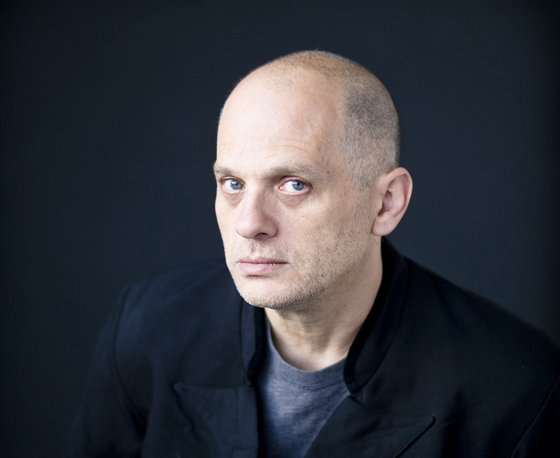
This year the pioneering ensemble Bang On A Can reaches the grand old age of 30. Directed by three composer-performers – Michael Gordon, Julia Wolfe and David Lang (above) – the ensemble are to celebrate the occasion with a late night Prom. In it they will pay tribute to Philip Glass, but typically the concert will include a world premiere in Gordon’s Big Space, a London premiere in Wolfe’s Big Beautiful Dark and Scary, an established work by Louis Andriessen (Workers Union) and Lang’s own Sunray, written for his father. In this interview he tells Arcana about the challenges and rewards of running an ensemble regarded as one of the very best in contemporary music making.

Can you remember your first encounters with classical music?

My parents weren’t music people and there was no classical music in my house growing up.  My first real spark of interest came from seeing a film of Leonard Bernstein leading the New York Philharmonic in Shostakovich‘s 1st Symphony – it was raining in my school when I was 9 years old and they played this movie during lunch, to keep us quiet.  Everyone was throwing food and making noise, but I was mesmerized, and after that, hooked.

You’ve described yourself as a ‘deep classical music nerd’. Does that mean you need to study classical music a lot more closely to get maximum enjoyment from it?

I wouldn’t say that what I get from the study of classical music is maximum enjoyment.  Music is a means of communicating things between people and many of the things people need to communicate aren’t enjoyable!  But I am really interested in the messages that underlie classical music and getting deeper into the music lets me find out more about what the music can mean.

If you could somehow sum up what you learnt from studying with Andriessen, what would you say has left a lasting impact?

I never studied directly with Louis, although when I was a young composer I spent many many hours talking to him about music.  I learned many things just from watching him – about how to be an active musical citizen, how to be generous to other musicians, how to be supportive of young composers, how to be engaged with the larger culture that surrounds us.  Those are all very important.  In his music he always has tried to push his curiosity as far as it will go, in the most honest and direct way possible.  Those are also very useful lessons.

Congratulations on 30 years of Bang On A Can. What has been the biggest challenge to the ensemble in that time?

Michael Gordon and Julia Wolfe and I started Bang on a Can 30 years ago, because we were passionate about ways we thought the world needed to change, in order for experimental music to take its rightful place in our culture.  The biggest challenge for me personally has been setting aside the time to make sure I keep my focus on all the things I am passionate about.

Is the ensemble all about ensuring there are no boundaries between classical music and all the forms around it?

The ensemble was built to be flexible – just the instrumentation itself is hybridized between musical genres, and the players have backgrounds in different kinds of music as well.  We didn’t start the All-Stars so that the band could have no boundaries between it and the world, but so that it would be maximally useful to the widest assortment of composers who might want to work with it.

How do you keep Bang On A Can fresh and innovative?

Again, Bang on a Can exists to do the things we are all passionate about – playing new music, building new audiences, educating young composers and performers, commissioning new and stranger musics.  It is the kind of challenge for ourselves that keeps us going.

Do yourself, Michael and Julia have specific skills to bring to Bang On A Can, and what is the dynamic between the three of you?

The three of us have different strengths and weaknesses, and we complement each other pretty well.  Most of all we are close friends, which made it all possible.  I think in the first years of Bang on a Can we would sometimes get exhausted and might have quit if we were doing this alone, but because we were friends we didn’t want to let the others down, and so we persevered.

The Proms program looks to be a very personal one for you. Could you offer a short description of each piece and how or why you chose it?

I don’t know what Michael’s piece is about, so I can’t say how personal that is, but Julia’s piece is an intense examination of an inner terror, mine is a birthday present for my dad, in which I try to made solid a wispy ray of sunlight, and we have pieces by two of our mentors, Philip Glass and Louis Andriessen.  So I guess it is personal!

Does the program reflect how the ensemble has progressed in its 30 years?

I am not sure this program reflects any kind of progression – just challenging music by living composers, played fiercely and really well.  We have been doing that for a long while…

You are performing music by Philip Glass. Do you think minimalism is now a very established part of the classical music canon?

Philip Glass is one of the most successful and influential composers, ever.  And when the question asks if he is now an ‘established part of the classical music canon’ it reveals how odd the idea of that canon really is.  Philip Glass was already the most performed composer on the planet before the classical music world felt comfortable inviting him in.  Isn’t that backwards from the way the world should work?  Shouldn’t classical music be actively refreshing itself, all the time?

Do people look to you to set standards with performances of new music?

I hope so!  The idea of creating an amplified group that is part classical ensemble and part rock band, and that can play lots of kinds of music, including music that is technically really difficult, has been influential in New York and we are starting to see more musicians with a wider range of experiences and abilities.  I wouldn’t claim that we started that trend but we certainly have been a big part of it.

Is it difficult to say ‘no’ to things when new music is involved?

Why would you ever want to say no to anything?  Not just in music, but in life?

What piece of music have you heard recently that you would encourage others to hear?

Me personally, Dysnomia by Dawn of Midi.  I know it is a few years old already but I listen to it all the time.  Layer upon layer of mind-blowing polyrhythms, all played live, built up inexorably over time.  Check it out.
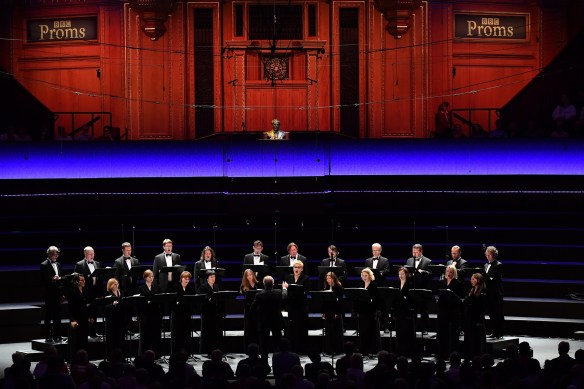
BBC Proms 2017 – Rachmaninov’s All Night Vigil with the Latvian Radio Choir

Latvian Radio Choir / Sigvards Kļava (above)

Rachmaninov All Night Vigil (Vespers), Op.37 (1915)

Royal Albert Hall, Sunday 13 August 2017 (late night)

You can listen to this Prom here

Once in a while it is good to be reminded that some of the most moving music does not have to rely on volume to make its point.

Rachmaninov’s All Night Vigil is a case in point, sung here by the Latvian Radio Choir in a highly atmospheric late night Prom. This notoriously self-critical and doubting of composers believed in it as one of his very best compositions, and even wanted the central Nunc Dimittis sung at his funeral. Though designed to be performed in the course of a Russian orthodox day (beginning and ending at sunset) it lasts for just over an hour if performed in an unbroken span, and here it created a wonderful spell.

The work has been sung at the Proms three times before, in the Late Night slot each time, and its blend of music for the spirit and the soul is ideal for late night contemplation. That state of mind was easily reached here, in a clean and relatively understated way. Recordings of great Russian choirs performing this music show how great depth and volume can be achieved, but with six singers to each part the Latvian Radio Choir were daringly exposed, and their relative lack of heft encouraged the audience to listen more attentively.

That they did so was an indication of just how well observed this performance was. Delicately controlled by Sigvards Kļava, each section merged almost seamlessly into the next, and yet there was room for each hymn or anthem to breathe. The refrains of the third anthem, Blessed Is The Man, were beautifully observed, by now the reduced forces acclimatised to the cavernous Royal Albert Hall acoustic.

The pacing felt ideal too, so that when the bigger numbers – the Glorifying song of the Resurrection and the Great Doxology – arrived, they did not flag, and the high points of each were unfailingly hit. The longer melodic threads were beautifully phrased, unexpectedly drawing the parallels between this music and some of the big tunes elsewhere in Rachmaninov’s output, such as the opening of the Third Piano Concerto, heard earlier in the evening.

The standard of performance was high throughout, with a level of control and ensemble that never dipped below excellent. The sopranos were relatively bright in sound, and the basses controlled their notes down to the depths beautifully, not least the Nunc dimittis, where the audience were visibly straining to hear their descent. Earlier in this number the tenors showed restraint, but there was emotion in their voices nonetheless.

All these elements contributed to a night that frequently stopped the heart with its subtle but lasting beauty. The text, and Rachmaninov’s response, had a timeless feel that transcended this single concert experience, which will last long in the memory.

Ben Hogwood

You can hear the Latvian Radio Choir’s recording of the Rachmaninov All Night Vigil on the Spotify link below:

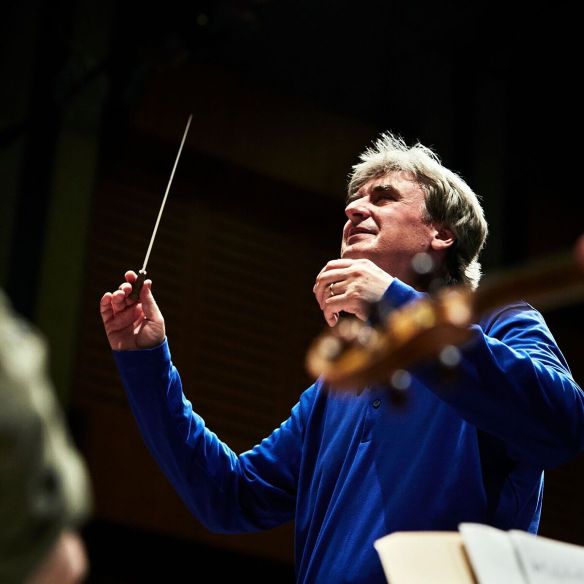
BBC Proms 2017 – BBC Scottish Symphony Orchestra with Thomas Dausgaard: Mahler & Schubert ‘Unfinished’

Prom 36: BBC Scottish Symphony Orchestra, Thomas Dausgaard (above)

Schubert Symphony No. 8 in B minor, D759, ‘Unfinished’ (1822)

Mahler Symphony No. 10 in F sharp, realized Deryck Cooke (1910; 1959-76)

Royal Albert Hall, Saturday 12 August, 2017

You can listen to this Prom by clicking here

Having made an auspicious start to his tenure with the BBC Scottish Symphony Orchestra, Thomas Dausgaard tonight brought the orchestra to the BBC Proms for its most ambitious concert this season – Mahler’s I, given in the ‘performing edition’ by Deryck Cooke.

Left unfinished at Mahler’s death in 1911, the work was partially premiered in 1924 though it was not for another four decades that a complete rendering was heard – Berthold Goldschmidt conducting the London Symphony Orchestra at the Proms in Cooke’s realization. Since when his (subsequently revised) edition has become the preferred option for those tackling Mahler’s last symphony in its entirety. Dausgaard recently won praise for his recording with the Seattle Symphony, and his account this evening proved no less successful as an overall interpretation.

Other than the notably deliberate tempo for the violas’ initial theme, such as made it almost an epigraph to the movement overall, the opening Adagio was flexibly paced; the wrenching theme heard on massed strings finding contrast with the sardonic, waltz-like music as passed between solo woodwind. The development’s polyphonic intricacy was eventfully unfolded, then the climactic dissonance – with its piercing trumpet note – was pointedly drawn into the whole so that the lingering coda evinced a serenity whose fulfilment was at best provisional.

The first Scherzo emerged even more impressively. Texturally the least cohesive movement as Mahler left it, its contrapuntal density allied to elliptical harmonic progressions make it the most radical (the earlier music of Hindemith and Weill tangibly within reach) and Dausgaard expertly integrated its increasingly close-knit sections into a stretto of mounting excitement. The brief, fulcrum-like Purgatorio which follows was a little matter-of-fact for its glancing irony wholly to come through, and Dausgaard ought to have made an attacca into the second Scherzo (the three movements of this second part ideally form a continuous whole). Not that there was much to fault in this latter as it pivoted between anguish and appeasement, before vanishing into that ‘tunnel’ of darkness whose nihilistic overtones were palpably to the fore.

Come the Finale and Dausgaard might ideally have deleted the opening drum stroke, while the climax of the central Allegro really needed underpinning from drums for its intensified reprise of the first movement’s dissonance to make its fullest impact. But these were minor flaws in a perceptive rendering overall – sepulchral opening brass making way for the most eloquent flute melody in the symphonic literature (not least as played by Charlotte Ashton), transformed into a radiant string threnody which brings about this work’s cathartic ending.

An impressive reading was fittingly programmed within the context of Schubert’s Unfinished, of which Dausgaard has made a fine account with the Swedish Chamber Orchestra. While his rapid take on the first movement (little ‘moderato’ about this Allegro) did not transfer ideally onto full orchestra (at least in the resonance of the Albert Hall acoustic), the ensuing Andante had no lack of poise: the hushed dynamics of its coda no less arresting than the blissful final cadence in which Mahler’s transcendent leave-taking, 88 years on, was not hard to perceive.

Richard Whitehouse (photo of Thomas Dausgaard (c) Thomas Grøndahl)

You can listen to Dausgaard’s recordings of these pieces on the Spotify playlist below:

BBC Proms 2017 – Edgar Moreau and Il Pomo d’Oro at the Cadogan Hall

Edgar Moreau (cello), Il Pomo d’Oro / Maxim Emelyanychev (harpsichord)

Hasse Grave and Fugue in G minor (c1735)

Platti Cello Concerto in D major (c1724)

Vivaldi Cello Concerto in A minor, RV419 (c1725)

Telemann Divertimento in B flat major (c1763-6)

Boccherini Cello Concerto in D major, G479 (c1760)

Cadogan Hall, Monday 7 August 2017

Listen to this concert on the BBC iPlayer

Fresh performances of seldom-heard repertoire. That sums up the fourth of the BBC Proms’ weekly visits to Cadogan Hall, downsizing as they do on a Monday lunchtime.

This was an invigorating hour, documenting the emergence of the cello as a solo instrument in the 1700s. Until then it was largely used as part of the ‘continuo’ – that is, the small section of instruments responsible for providing the harmonic base of the music – but thanks to composers such as Platti, Vivaldi and Boccherini the instrument’s own melodic potential began to be fully realised.

The first item in the concert provided some helpful context, a lean performance of the stern Grave by Johann Adolf Hasse, followed immediately by a Fugue rooted in dance forms. The authorship of this remains in doubt – Hasse is a contender, but a more likely composer was Franz Xaver Richter, a fellow Mannheimer. Whatever the outcome, the two pieces dovetailed nicely, setting the scene for the much brighter Cello Concerto in D major by the Italian composer Giovanni Benedetto Platti, employed in the German city of Würzburg.

His bright and breezy work showed off the cello’s new capabilities, if not quite raising it above the level of the surrounding violins. Edgar Moreau brought plenty of energy and pizzazz to the performance, however, with brilliant technique and studious interaction with the finely honed instrumental sextet Il Pomo d’Oro, and their charismatic leader Maxim Emelyanychev. His contribution on the harpsichord was a constant delight, punctuating the music and cajoling his players.

Vivaldi was next, one of the 20+ concertos he completed with the cello centre stage. This one, in A minor, had some tricks up its sleeve in the outer movements that Moreau enjoyed showing off, but the serene and rather beautiful melody in the central Andante stole the show.

Il Pomo d’Oro then took over for some forward looking music by Telemann. The German master’s Divertimento in B flat major contains glimpses of classical practice with its use of five light hearted ‘scherzo’ movements out of the six in total. There was plenty of variety within them however, and the poise and dexterity of the ensemble was a joy to watch.

Finally the cello got its best workout in one of Italian composer Luigi Boccherini’s 12 concerti. This one, the Cello Concerto in D major G479, sparked into life immediately, helped by Moreau’s immaculate control in the higher register, where most of the writing for cello could be found. This was a striking change in comparison to the Platti, the cello now much more dominant, and the duet with Zefira Valova’s violin in the slow movement felt more like a ballet score. Boccherini relocated to Spain, and the last movement betrayed this somewhat in its Fandango flavouring, where Moreau enjoyed the rapid dancing and energetic conclusion.

To bring us back to earth there was an encore of solo Bach, the Sarabande from the Solo Cello Suite no.3 in C. If Boccherini and co raised the cello to the heights in the concerto, then it was Bach who revolutionised the instrument in a solo capacity – and it was a nice touch to include that point here.

Ben Hogwood

Ask the Audience at the BBC Proms – Steve Hodges on the Philharmonia Orchestra playing John Adams

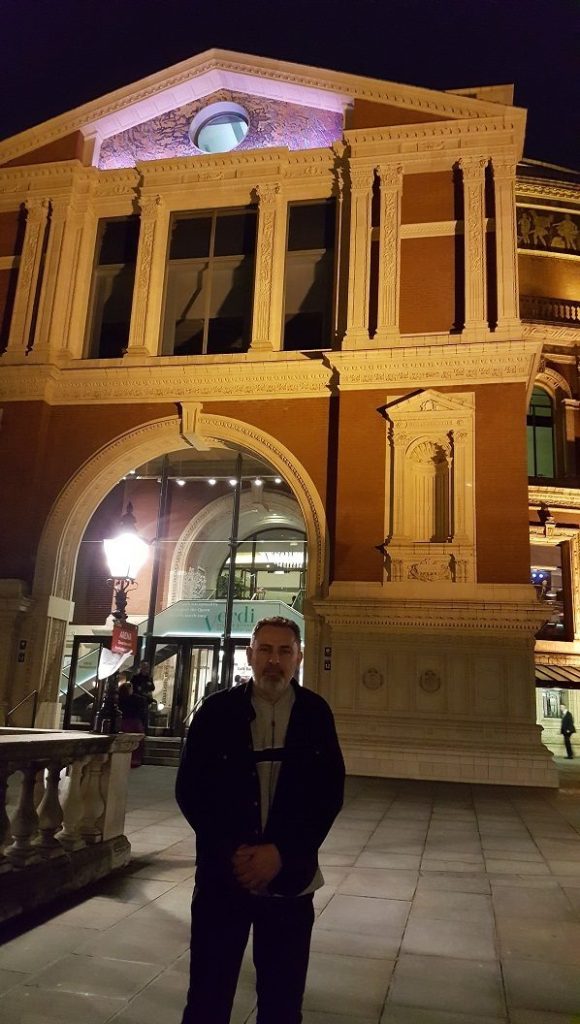
Arcana returns to the BBC Proms in the company of friends – and for our second visit this season we are dipping into one of the festival’s themes, the music of John Adams. Offering his thoughts was Steve Hodges (above)

Marianna Crebassa (mezzo-soprano), Philharmonia Orchestra / Esa-Pekka Salonen

J.S. Bach arr. Stravinsky Canonic Variations on Vom Himmel hoch, da komm, ich her (1956)

Ravel Shéhérazade (1904)

Adams Naive and Sentimental Music (1999)

You can listen to this Prom on the BBC iPlayer here

Arcana: Steve, what was your musical upbringing?

Personally, I would say it was broad. It started with The Beatles, The Monkees and The Rolling Stones. I grew up through the 1970s and enjoyed glam, and Sparks, and Elton John. Then after meeting people who had some really broad taste, I lapped up everything through electronica, David Bowie and punk.

I’ve gone on from there really, and gone sideways as much as I possibly could. I like to reflect on music and on what was going on at the time, socially, and what it actually represents. I think that’s an important factor about music. I really enjoyed the punk ideals that said anybody could do it, it made a new wave of music that was enormously important. Just because people could make a record didn’t mean they necessarily should, because some of them were awful, but there was so much choice and so many good things in the 1980s. Since then we’ve been through house and drum ‘n’ bass as well. My classical representation is a bit smaller, but I enjoy what I enjoy!

Could you name three musical acts you love, and why you love them?

Starting with an old one, The Beatles – that was through my father’s record collection, which was a great influence as a young person. I appreciated them as they were. Then The Human League, as a lot of the Sheffield music was important to me, because at the time I was fortunate to be dabbling in music myself. It really crossed over, and Manchester music was a reference as well – so I would put Ultravox! in there as well. Those were the things that mattered really.

Turning to the concert, what did you think of the Bach / Stravinsky?

I thought there were subtler things here, I was surprised at the quiet volume, there were not so many people on stage I suppose. I was fascinated by the people playing, and the movement between the sections. I was watching for the technical side as much as the musical side. It was a nice ‘warmer-upper’ for the rest of it.

What about the Ravel?

I was much more in to this, and felt reflections of 1960s TV in the music, there were flurries that I kind of recognised. I really liked it. For the singer to remember the words was good, and being able to follow along in the book was interesting. I liked the shape of the music.

And the John Adams?

There was much more to think about with that one! I think the first movement built up, and we had the pleasure of seeing the orchestra and the punctuation, the offset rhythms, the bouncing around of the parts. There was a lot more percussive use here and the intricacies of the first piece were astonishing. He was definitely testing the technical abilities of the musicians. The crescendo at the end was almost human madness in my mind, it was almost too much to bear. The build up at the end, it went from the crossrhythms going on that were clear and observed, you could feel the pulses, and then that broke down at the end and it was completely consuming. You almost wanted to put your hands over your head.

The second movement was really nice at the start, I really liked that one. Because I’ve worked with sequencing a lot you could feel the repetition, the softness of the play, again testing the musicians in a different way at the limits of musicality. The lightness of touch stood out, and it was mostly driven by the harps to start with, and that was the bass, the pulse that drove it along to start with. I liked the guitar in there, I hadn’t spotted him and wondered where that was coming from.

What I liked about it most was where he was getting the strings to crescendo, it was like reversing an attack, and it was going round and round in a really interesting way. It was powerful and really interesting to hear that executed. I enjoyed that one most of all for sure. The arpeggios on the strings were really good, it was so delicate and ambient in its way. Even though it was gentle it was really strong.

How did you find the Proms as an experience?

Very nice. The reverence for the music was striking, and full marks for the quality of what you saw. The audience were obviously there to enjoy it, and treated it with the respect it duly deserved. It was a beautiful environment to hear such things. I’m almost a little disappointed it was quieter at the beginning but I guess we should have stood closer at the start. After a while though, you tune your ears into it. Everybody shut up so that we could all hear.

Having said that, the volume at the end of was enormous! The variety of the use of the instruments, like bowing the percussive instruments in the last piece, that was a softer element. It wasn’t orchestral techno by any means but there was a lot of crossover. It really was a testing thing for the musicians, and it really resonated how much was being put on them.

Is there anything you would change about the experience?

I did browse the catalogue and felt it was something I would like to do. I don’t think there is anything I would particularly change about it, and I’d be inclined to come again. I heard a few things on the TV last week, and I think I shall be listening out for more!

Verdict: SUCCESS