
Under the Surface at the Proms – Nielsen: Wind Quintet

Proms Chamber Music 2, 27 July 2015 – Royal Northern Sinfonia Winds at the Cadogan Hall

royal-northern-sinfonia-winds

Three of the five Royal Northern Sinfonia Winds taking part in the Cadogan Hall concert – Timothy Orpen (clarinet), Juliette Bausor (flute) and Steven Hudson (oboe). They were joined by Peter Francomb (horn) and Stephen Reay (bassoon)

Nielsen Wind Quintet (1922)

Composers and their anniversaries have long been a prominent feature of the BBC Proms, and this year is no exception.

Happily the BBC have taken the opportunity to celebrate the 150th anniversary of the birth of Carl Nielsen with both hands. The seeds were sown with Sakari Oramo and the BBC Symphony Orchestra, and their cycle of the composer’s six symphonies that fitted snugly into their 2015-16 Barbican Season.

Now at the Royal Albert Hall we have the chance to enjoy the composer’s three concertos, for clarinet, flute and violin respectively – and here, in the second Proms Chamber Music concert of the season at Cadogan Hall, the opportunity to hear the composer’s most popular chamber work.

Audio

http://www.bbc.co.uk/events/ez3zc8#b063dgkd

(Nielsen from 2:25)

The Wind Quintet is a charmer. Written in 1922 after Nielsen was captivated by the Copenhagen Wind Quintet, it celebrates the sonorities a combination of flute, oboe, clarinet, horn and bassoon can offer – and Nielsen cheats a bit by alternating between oboe and its very close relative, the slightly deeper cor anglais (English horn).

The first movement celebrates the sound of the five instruments together and also on their own – while the second spins a lovely melody from the clarinet and uses it as the base for a sunlit movement. The third starts with improvisatory bursts from solo instruments – oboe and clarinet – before a solemn hymn deceives us into thinking the composer has gone all serious – before he enjoys a set of variations on that theme, pairing instruments off and exploring different combinations.

It is a lovely piece to listen to, and the Royal Northern Sinfonia Winds did it full justice, clearly enjoying the interplay. They were equally good with Mozart’s Quintet for piano and wind, where they were joined by the stylish piano playing of Christian Blackshaw, who led what is effectively a concerto reduction.

It was Mozart that Nielsen heard the Copenhagen ensemble playing – and the Wind Quintet in turn led to the Clarinet and Flute Concertos. So Nielsen, in the final decade of his life, proved an accomplished writer for wind instruments – and the Proms’ exploration of his achievements is already proving an enjoyable aspect of the festival.

There will be more Under the Surface features as the Proms progress, exploring lesser known pieces and composers at the festival
Proms premiere – HK Gruber: into the open…

hk gruber

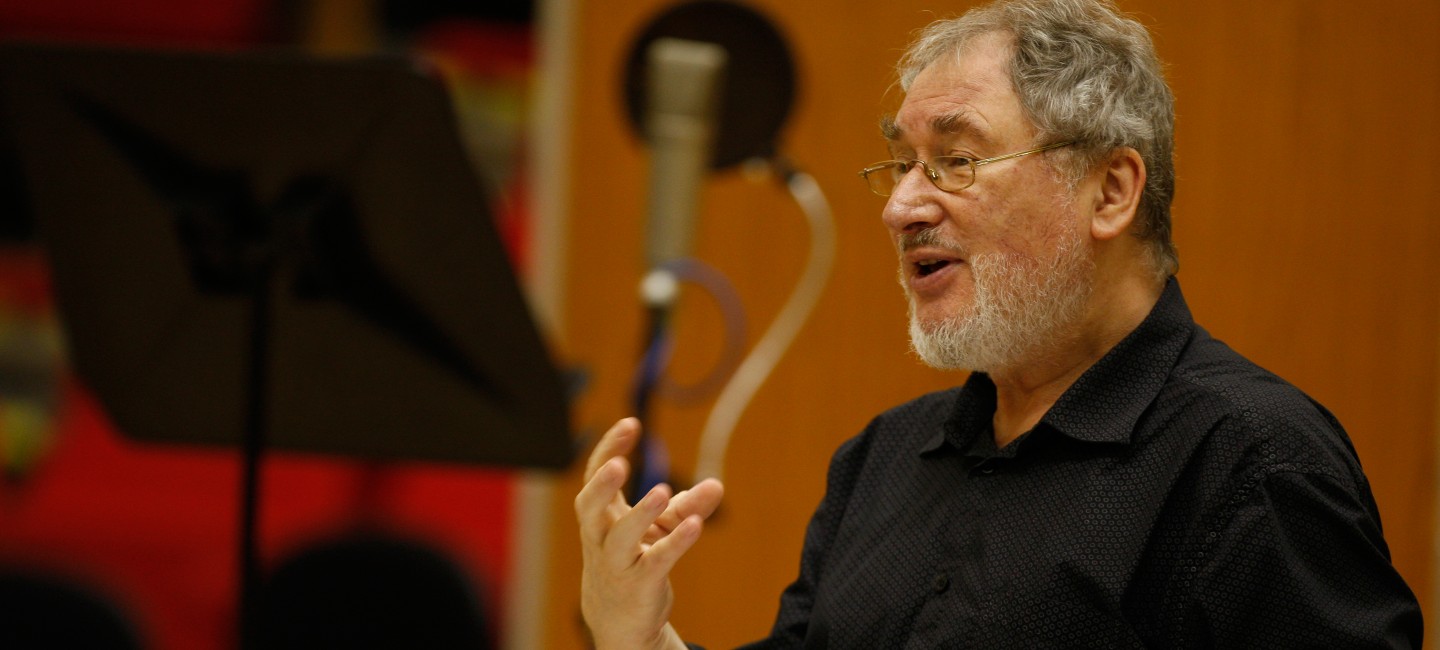
HK Gruber photo by Jon Super

Colin Currie (percussion), BBC Philharmonic Orchestra / John Storgårds (Prom 5)

Duration: 28 minutes

BBC iPlayer link

http://www.bbc.co.uk/programmes/b062jn0t/player

The Gruber starts at 3:46 on the programme, with commentary beforehand

What’s the story behind the piece?

In an interview with Arcana, Colin Currie revealed the piece to be a memorial to David Drew, who in 1976 was appointed director of publications at the leading music publisher Boosey & Hawkes. Drew became known principally for his work revitalising the output and reputation of the composer Kurt Weill. In his obituary of the director, composer Alexander Goehr wrote for the Guardian how “he prepared scores, travelled Europe and America promoting the works, was instrumental in forming the Weill Foundation (1973) and not only changed, if not created, the public perception of the composer, but contributed to a sea-change in the development of composition in the second half of the 20th century.”

These works included Die Sieben Todsünden (The Seven Deadly Sins). Weill is a composer close to HK Gruber’s heart – and Gruber became an established composer on the Boosey roster.

Currie told Arcana about how, “The piece itself is about thwarted feelings of desperation and loss. It confronts bereavement in an angry and passionate way. It is a violent piece, and an unhappy one too – but it is also extremely lyrical and tender. The person, the subject, is clearly missed – but it is not easy to put into words.”

The Radio 3 broadcast talks of how the performance parts ‘verge on the impossible’ – and not just for the soloist!

Did you know?

Gruber sang with the Vienna Boys’ Choir as a child – and went on to play double bass in the Vienna Radio Symphony Orchestra.

Initial verdict

The immediate reaction to this piece is that it will need more than two hearings to fully come to terms with the music within! It is a substantial piece of work, a work of many colours – using the multitude of percussion to the limits of its potential.

A cold emptiness is immediately evident at the beginning, the marimbas in prominence early on, as the size of the structure becomes clear. This is a slow building piece, in keeping with Gruber’s concept of it as a procession – and there are a few signposts that became clear on the first hearing.

At 8’40” in the program link there is a notable change as softly oscillating woodwind offer some consolation, then the brass have more thoughts about 11’32”, the orchestra gathering itself for a powerful onslaught towards the end of the piece – but the end is quiet.

To be honest I did rather lose the thread of the piece from halfway but I suspect that is a ‘listener fault’ rather than anything Gruber has done! Hence the need for more than one further listen.

It should be pointed out the performance standard seems to be incredibly high, despite what Currie was saying about the difficulty!

Second hearing

tbc!

Where can I hear more?

A good next port of call is BBC Radio 3 program CD Review, who explore recordings of Gruber’s music here – which gives you the ideal opportunity to hear snapshots of his music along with the thoughts of others.

Proms premiere – Cheryl Frances-Hoad

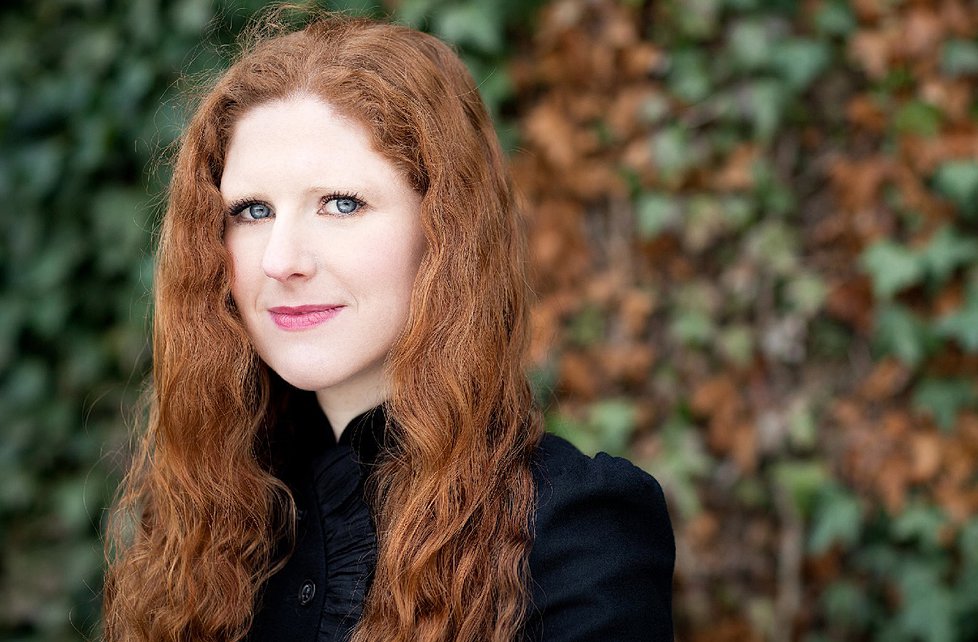
cheryl-frances-hoad

The Beginning of the World by Cheryl Frances-Hoad

The Cardinall’s Musick / Andrew Carwood (Proms Chamber Music 1)

Duration: 10 minutes

BBC iPlayer link

http://www.bbc.co.uk/programmes/p02xll6r/player

What’s the story behind the piece?

Talking in an interview for this site, Cheryl Frances-Hoad explains:

“The Cardinall’s Musick wanted a piece for eight voices (double SATB choir) (soprano-alto-tenor-bass) that was a homage to Tallis, and about 7 minutes long (I ended up writing a piece that’s closer to 9 minutes). They suggested some words (I eventually selected my own) but were otherwise completely free about how I should approach the commission.

Tallis lived in Greenwich towards the end of his life, which lead me on to reading about the refinements of timekeeping and the calendar during his lifetime, which then lead on to discovering that there was a major astrological event that happened whilst he was alive…which came to symbolize (to me) the massive changes that occurred during Tallis’s lifetime (including for instance the Reformation)…which lead to discovering Tycho Brahe’s (A Danish astronomer) ‘Treatise on the Great Comet of 1577’….

Read the full interview here

Did you know?

Cheryl was chosen as a featured composer on BBC Radio 3’s Composer of the Week (‘Five under 35, March 2015)

Initial verdict

The first and immediately striking thing about From the Beginning of the World was the relevance of the words to today’s climate. In a week where NASA received ground breaking pictures of Pluto and Charon this tale of an earlier astronomical event – the ‘comet with a very long tail’ resonated strongly, especially with its talk of ‘Mighty and destructive wind storms’, ‘Poisonings of the air’ and ‘Terrible earthquakes’.

Cheryl Frances-Hoad’s music only enhanced the dramatic impact. Written as a homage to Tallis its acappella setting carried the same freedom through the air – but here the harmonies were daring, rich with added notes, the most distinctive melodies tending to use wide leaps and drops. This heightened the feeling of unease – especially when the tritone was used to highlight the ‘great wars and bloodsheddings’.

The end of the text is curious, the author questioning suddenly that the comet might not destroy the earth after all – but the damage has been done in all the worrying beforehand, and it was on this that Frances-Hoad’s music really made its mark.

The performance, subtly directed by Andrew Carwood, was one of clarity and pure intensity.

Second hearing

tbc!

Where can I hear more?

Cheryl has a Soundcloud site, where you can hear another of her works for choir, This is A Blessing:

Proms premiere – John Woolrich: Falling Down (London premiere)

john-woolrich

John Woolrich photo by Maurice Foxhall

Margaret Cookhorn (contrabassoon), City of Birmingham Symphony Orchestra / Andris Nelsons (Prom 4)

Duration: 15 minutes

BBC iPlayer link

http://www.bbc.co.uk/programmes/p02xpm1z/player

What’s the story behind the piece?

There are very few concerto pieces written for the lowest voices in the orchestra – hardly any for double bass and fewer still for the contrabassoon. This is mostly down to the trouble composers have making the instruments heard at such a low pitch.

As the publisher’s notes for the piece say, “The title explains itself: the piece begins and ends with music that tumbles from the top of the orchestra down to the depths where the contra lives”

Woolrich, who celebrated his sixtieth birthday last year, wrote Falling Down in response to a commission from the City of Birmingham Symphony Orchestra – and he dedicated it to their contrabassoon player, Margaret Cookhorn.

Did you know?

Woolrich founded the Composers Ensemble in 1991, founded the Hoxton New Music Days festival and has been an associate Artistic Director at the Aldeburgh Festival since 2005.

Initial verdict

Woolrich succeeds in his biggest challenge in this piece – making the contrabassoon heard above the orchestra!

The piece starts with a bright and brash orchestral introduction, initially up in the treble register but gradually falling from its great height until the contrabassoon comes in with an incredibly fruity note, sounding as though it is beneath the floor!

Some of the sounds are incredibly raspy and distinctive, with a full throated bellow on occasion. Woolrich uses a lot of percussion in his orchestra, with volleys of drums around the 2 and 15 minute mark that make a powerful, kinetic impact on the music. The piece ends effectively with a door slamming shut in the shape of a big bass drum.

Second hearing

tbc!

Where can I hear more?

A good place to head next is an NMC disc devoted to the composer, The Ghost in the Machine. Soundclips and biographical information present a very interesting variety of music

Under the Surface at the Proms – Delius and Nielsen

Prom 7, 22 July 2015 – BBC Symphony Orchestra / Sir Andrew Davis at the Royal Albert Hall

in-a-summer-garden

Delius’ garden in Grez-Sur-Loing, France Picture part of a collection at the website

Delius In a Summer Garden (1908)

http://www.bbc.co.uk/programmes/p02xv4kx/player

Is there a less fashionable British composer than Delius?

Not where the BBC Proms are concerned, it would seem – as right from the start the composer’s music has not done particularly well at the festival in the last 50 years. That poor form is exemplified by In a Summer Garden, written about Delius’ garden in Grez-Sur-Loing, France. The piece, receiving its first performance at the Proms since Sir Charles Groves brought it to the festival in 1977, was revived here under Delian specialist Sir Andrew Davis.

Delius’ mastery lies in his orchestration and harmony, with sultry added notes and hazy, impressionistic textures that evoke the laziness of a summer day. Woodwind add bird calls, and lazy melodies flit around the orchestra, before rising to an apex. This performance is as good as any you could wish for, and Davis conducted it with great affection.

Nielsen Clarinet Concerto (1928) with soloist Mark Simpson

http://www.bbc.co.uk/programmes/p02xv6cj/player

Not surprisingly, Nielsen’s Clarinet Concerto is a very different animal to the Delius. One of the composer’s last published works, it was the second in a sequence he was planning to write for members of the Copenhagen Wind Quintet – but sadly due to ill health he did not get as far as oboe, horn or bassoon.

Cast in three movements, the piece takes on a very private demeanour at times, the clarinet asked to play very quietly. This was where Mark Simpson came into his own, with exemplary control and poise that he held right up to the end, despite the necessities of breathing!

In the faster music Nielsen often brings to mind the music of Shostakovich, and the snare drum assumes a prominent role, frequently interrupting the soloist with its own thoughts. David Hockings, the resident BBC Symphony Orchestra percussionist, was on superb form here, and his rat-a-tat traded blows with the clarinet as the outer movements zipped along. On occasion, especially at the start, Simpson could have been louder still – but in his defence the Royal Albert Hall is not the easiest acoustic to work with for such a piece!

There will be more Under the Surface features as the Proms progress, exploring lesser known pieces and composers at the festival