Wigmore Mondays: Apollon Musagète Quartet play Grieg, Puccini & Sibelius

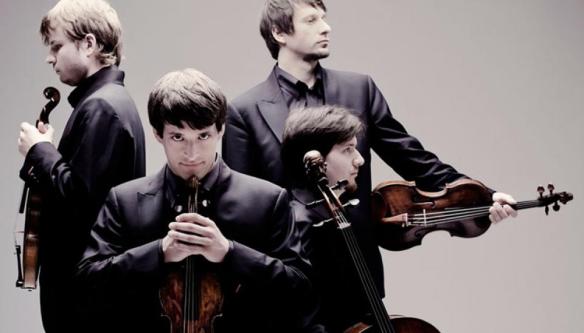
Apollon Musagète Quartet [Paweł Zalejski, Bartosz Zachłod (violins), Piotr Szumieł (viola), Piotr Skweres (cello)]

Sibelius Andante Festivo (1922) (1:55 – 6:00 on the broadcast link below)
Puccini I Crisantemi (1890) (6:25 – 13:45)
Grieg String Quartet in G minor Op.27 (1877) (16:00 – 52:46)

Wigmore Hall, London; Monday 29 January 2018

You can listen to the BBC Radio 3 broadcast by clicking here

Written by Ben Hogwood

This was a well thought out and brilliantly played concert from the Apollon Musagète Quartet, bringing together three composers not normally associated with the idiom of the string quartet, and making a very strong case for their efforts.

The Andante Festivo dates from a period when Sibelius was struggling, inspiration arriving at the Finnish composer’s house only fitfully. This piece was written on one such day, with the same luminous scoring that would characterise the Sixth Symphony. Here it was given an appropriate, ceremonial air – apt given that it was written for the 25th anniversary of the Säynätsalo sawmills. The full chords were deeply resonant here, hinting at a suitability realised by the composer’s later arrangement for string orchestra.

Puccini‘s I crisantemi is if anything more familiar in the composer’s arrangement for larger forces, but it was also very affecting here. The recurring harmonies have a strong, nostalgic tug at the heart strings, and again the Apollon Musagète were as one, skilfully putting deep feeling over sentimentality.

Grieg’s String Quartet in G minor is, in my opinion, a neglected masterpiece. That is a phrase you will of course read all too often in reviews, but in my defence I have no less a figure than the composer Franz Liszt to back me up!

“It is a long time since I have encountered a new composition, especially a string quartet, which has intrigued me as greatly as this distinctive and admirable work by Grieg.”

In this performance (from 16:00) on the broadcast link) the bold, solemn introduction quickly yielded to a fast movement that meant business and was already digging deep. Frequently the string writing is beefed up, and the impressive volume of this performance was balanced by a cleanliness of ensemble and attack. At 23:44, a brief pause between a big, sweeping statement and a very small response felt like the start of a new movement, so pronounced were the four players in their response.

From 28:56 the charming second movement Romanze made great appeal, with a lovely warm solo from cellist Piotr Skweres. The third movement Intermezzo (36:45) returned to the bold, assertive outlines of the first movement, resolutely sticking to a minor key – until, that is, its rustic second theme gave a jaunty alternative. This introduced a tension to the performance, as though Grieg himself was flitting between the two moods and unable to settle.

This battle of wills continued into the finale (from 43:59), the twisting lines of its brief introduction led by first violinist Paweł Zalejski until a nervy fast theme took hold. The quartet made much of Grieg’s daring harmonies, with some surprisingly bold dissonances, until finally the refuge of a major key was reached (from 51:46) Now the struggle – for performers as well as composer! – was more emphatically won, putting the seal on a really fine account of a piece that should be heard far more often.

As an encore the Apollon Musagète gave us a string quartet arrangement of Osvaldo Fresedo’s Vida mía (from 54:39), one of the Argentinian composer’s best-loved tangos.

Further listening

You can listen to recordings of the music from this concert on the Spotify playlist below:

Grieg’s String Quartet had a profound influence on Debussy, when he came to write his only work in the form sixteen years later. It is paired in a playlist here with Sibelius’ best known work in the form, his quartet known as Voces intimae:

Wigmore Mondays: Inon Barnatan plays Bach, Franck & Barber

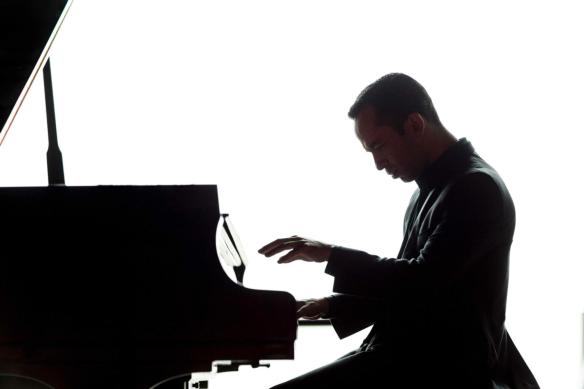
Inon Barnatan (piano, above)

J.S. Bach Toccata in E minor BWV914 (c1710) (6 minutes)
Franck Prelude, Choral et Fugue (1885) (18 minutes)
Barber Piano Sonata in E flat minor Op.26 (1949) (20 minutes)

Wigmore Hall, London; Monday 15 January 2018

Written by Ben Hogwood

The broadcast can be heard on the BBC iPlayer by clicking here

This was a fascinating hour in the company of American-Israeli pianist Inon Barnatan, exploring the role of the fugue in piano music while showing off considerable artistry and technical control of his instrument.

He began with Bach, and one of the lesser heard Toccatas for keyboard. This fell into three parts (starting at 4:06 on the broadcast) and initially took on quite a serious tone before relaxing for the fugue (which begins at 5:04). Barnatan signed off expansively, in a sense preparing for what was to come.

This proved to be Franck’s three-movement Prélude, Choral et Fugue, surely written in homage to organ pieces such as Bach’s Toccata, Adagio and Fugue, but working particularly well on the piano. Barnatan gave a performance of impressive stature, really getting to the nub of the deep and almost religious expression the Belgian composer achieves.

An expansive Prélude (from 12:40) was followed by a reverent statement of the Chorale in hushed tones (at 18:18), before this grew inexorably in stature, leading to a superbly controlled peak at 21:10. The Fugue was confidently delivered, gaining intensity from its initial statement (23:50) until the final peal of bells signalled its triumphant switch from B minor to B major (30:11).

The Barber Sonata was simply superb, and a timely reminder that this is a composer worth so much more than simply the Adagio for Strings. Good though that piece is, the Sonata explores much more aggressive and twisted musical thoughts, perhaps a surprising response to a commission from Irving Berlin and Richard Rodgers, in honour of the League of Composers’ twenty-fifth anniversary. As announcer Clemency Burton-Hill says in the radio introduction it is a formidable work, perhaps not surprisingly given its dedicatee, Vladimir Horowitz.

It is difficult to imagine a better performance than Barnatan gave here, setting the tone immediately with the jagged outlines of the first movement’s main material (marked Allegro energico, from 32:40). There was considerable drama as this tumultuous piece of music unfolded, with bits of occasional lyrical repose but ultimately big outbursts in the form of the inspiration behind the piece, Beethoven’s Hammerklavier Piano Sonata.

All were given with the utmost clarity by Barnatan, who softened the mood for the second movement Scherzo (40:39), then the intimate slow movement (Adagio mesto, from 42:52) which nonetheless reached a hair raising climax some three minutes or so later. Barnatan was totally inside the music, this passage described by Barber’s biographer as ‘the most tragic’ of the composer’s slow movements. Finally a terrific final movement Fuga, brilliantly played and with some complex figurations made to look easy!

The encore (from 54:00) was wholly appropriate, Busoni’s transcription for piano of the J.S. Bach choral prelude Nun Komm der Heiden Heiland, in which a sense of stillness returned.

Further listening

The music from this concert can be heard on the Spotify playlist below. Inon Barnatan has not recorded any of this repertoire to date, so the versions chosen here are by established pianists Glenn Gould, Jorge Bolet and Joanna MacGregor:

You can also see for yourself what the fuss is about by watching Inon Barnatan playing the first movement of Schubert’s C minor Piano Sonata below:

Meanwhile if you want an introduction to the music of Samuel Barber, starting with the Adagio for Strings, look no further!

Wigmore Mondays: Fatma Said sings Schumann, Mendelssohn, Poulenc & Sherif Mohie El Din with James Vaughan

Fatma Said (soprano, above), James Vaughan (piano, below)

Schumann 6 Gesänge Op. 89 (1850); Singet nicht in Trauertönen Op.98a/7, Liebeslied Op.51/5 (both 1849), Requiem Op.90/7 (1850)
Mendelssohn Die Liebende schreibt Op.86/3 (1831), Ach, um deine feuchten Schwinge (Suleika) Op.34/4 (1837), Hexenlied Op.8/8 (1827)
Poulenc Les chemins de l’amour, from Léocadia (1940), 2 poèmes de Louis Aragon (1943)
Sherif Mohie El Din Three Poems by Amal Donqul (1989)

Wigmore Hall, London; Monday 15 January 2018

Written by Ben Hogwood

The broadcast can be heard on the BBC iPlayer by clicking here

As a demonstration of artistry, this was quite some Wigmore Hall debut for soprano Fatma Said, a BBC Radio 3 New Generation Artist. The Egyptian singer used four languages in the course of an hour, and showed an aptitude for contrasting musical styles in a cleverly constructed programme.

It was good to hear less familiar Schumann songs as a starting group (from 1:32 on the broadcast) The set of six, published as Op.89, were written in the composer’s second ‘year of song’, the productive 1850. They set words by Wilfriend von der Nenn (a pseudonym for Wilhelm Schöpf), and show off an economy and intensity of word setting, with none lasting more than two minutes.

Said caught the agitation running through Es stürmet am Abendhimmel (There are storms in the evening sky) (1:32), set up by a wonderfully turbulent introduction from the excellent James Vaughan. A flowing Heimliches Verschwinden (Stealthy departure) (3:07) led to the yearning harmonies of Herbstlied (Autumn song) (5:12), then the softer hearted Abschied vom Walde (Farewell to the forest) (7:38). Both performers threw wide the curtains for a bracing Ins Freie (Out in the open) (9:45), before Röselein, Röselein! (Rose, little rose) (11:54) began with a striking solo, setting its dreamy mood.

A group of three more Schumann songs followed, the bright and carefree Singet nicht in Trauertönen (Do not sing in mournful tones) (15:20) leading to Liebeslied (Love Song), where there was a nice rapport from both performers in the song’s ebb and flow (17:38). Requiem (19:46) had a restrained and respectful air.

Mendelssohn’s songs are less-often heard, but carry melodic invention along with often incredibly challenging piano parts! A thoughtful Die Liebende schreibt (The beloved writes) (24:55) and the more urgent Ach, um deine feuchten Schwingen (Ah, West Wind, how I envy you) (27:51) were nicely done, but the Hexenlied (Witches’ song) (30:34) was something else, the high notes nailed impressively by Said while Vaughan handled the flurry of notes with apparent ease.

The pair then turned to Poulenc, whose songs are the jewel in the crown of his musical output. We heard three brief but meaningful numbers, Les chemins de l’amour (The paths of love) (34:44) caught the efforts to stay cheerful despite the approach of World War II in 1940, while C (38:51) dealt with the immediate and horrific aftermath. Fêtes galantes (41:40) was a bit too breathless, but maybe that was the point as it raised a laugh!

Said then turned to ‘home away from home’, introducing three songs by Egyptian composer Sherif Mohie El Din, a welcome move that introduced a new sound world to the Wigmore Hall as well as showing the soprano’s clear passion for music and words of her first language.

The musical depiction of The Rain (from 44:22) was vivid and featured well-placed silences, the piano part enhancing the effect of raindrops. Could the river flow forever (46:50) had darker shading, while the final Against whom?  (49:57) was a tortuous and anguished study of feelings felt during surgery.

The performers generously gave us two encores – a further Egyptian song, Daughter of the Sultan by Gamal Abdel-Rahim (54:41) and then, after the radio went off air, Old Sir Faulk by Sir William Walton, with accompanying gestures from the soprano.

This emphasised how at home she is on the stage, and capped an extremely impressive and enjoyable recital, where a blend of musicianship and communication of the messages behind the text was always the primary goal. Both performers succeeded comfortably.

Further listening

You can listen to recorded versions of the repertoire in this concert on this Spotify playlist, apart from the Sherif Mohie Eldin songs which are not on the streaming service:

Meanwhile here is a link to the Sherif Mohie Eldin official YouTube page, including the three poems performed in the concert:

Wigmore Mondays: Isabelle van Keulen & Ronald Brautigam play Beethoven, Fauré & Szymanowski

Isabelle van Keulen (violin), Ronald Brautigam (piano)

Beethoven Sonata for piano and violin in G major Op.30/3 (1801-2) (from 1:37 on the broadcast)
Szymanowski The Fountain of Arethusa from Myths Op.30 (1915) (from 19:51)
Fauré Violin Sonata no.1 in A major Op.13 (1875-6) (from 26:34)

Wigmore Hall, London; Monday 8 January 2018

Written by Ben Hogwood

The broadcast can be heard on the BBC iPlayer by clicking here

Full marks to the Wigmore Hall for their choice of established recital partners and an invigorating program to start the 2018 BBC Radio 3 Lunchtime Concert series. Isabelle van Keulen and Ronald Brautigam were clearly brought in to blow away the January blues and dispel any ‘back to school’ feelings among the audience, and they did so with freshly minted interpretations of Beethoven, Szymanowski and Fauré.

Beethoven’s eighth published Sonata for piano and violin, the third of his Op.30 set, began the concert (from 1:37 on the broadcast link). This spring-like work flew off its perch with a flourish, and once a few minor tuning issues at the outset were settled van Keulen and Brautigam enjoyed the close-knit ensemble playing in the first movement.

The second movement, a slow Minuet (from 8:00), was delivered as a passionate song and dance, a little quicker than expected, while the third movement (from 15:00) threw open the doors once again, van Keulen enjoying its folk dance associations.

The first of Polish composer Karel Szymanowski’s 3 Myths, also Op.30, had added electricity. Heralding a new sound world for the composer, The Fountain of Arethusa began with a watery cascade of notes from Brautigam (from 19:51), matched by tensile high register playing from van Keulen, both vividly portraying the fountain but also exploiting the sensual harmonies and rich textures. Hopefully van Keulen will go on to record the composer’s works for violin and piano.

The concert finished with one of the sunniest of works for the combination. Fauré’s Violin Sonata no.1, his first work in the form, surged forwards from the outset (from 26:34), the longer melodic phrases beautifully measured on the violin, while Brautigam’s sensitivity in balancing a busy piano part was a notable achievement.

The second movement (from 35:35) introduced darker, shaded thoughts and grew to a passionate climax of real stature. The third movement Scherzo (from 41:55) was a delight, showing off the qualities that secured an encore at the work’s first performance in Paris in 1877. The finale (45:45), initially elusive, brought all these elements and more together, and finished with an impressive sweep.

There was room at the end for an appropriate encore, giving homage to centenary composer Lili Boulanger. She died in 1918, aged just 24, and her Nocturne (from 52:13 on the broadcast), beautifully shaded here, was an atmospheric example of her unfulfilled potential.

Further listening

You can listen to recorded versions of the repertoire in this concert on this Spotify playlist. Meanwhile if you enjoyed the Fauré and Szymanowski in particular, this lovely disc from Augustin Dumay and Maria João Pires shows the depth of European repertoire from the 20th century for violin and piano.

Wigmore Mondays: Céline Moinet & Florian Uhlig – Schumann Romances for oboe and piano

Céline Moinet (oboe, above – picture Francois Sechet), Florian Uhlig (piano, below)

Schumann 3 Romances Op.94 (1849)
Nielsen 2 Fantasy Pieces Op.2 (1889)
Clara Schumann 3 Romances Op.22 (1853)
Robert Schumann 12 vierhändige Clavierstücke für kleine und grosse Kinder Op.85/12 – Abendlied (1849)
Pasculli Concerto on ‘La Favorita’ by Donizetti ()

Wigmore Hall, London; Monday 4 December 2017

Written by Ben Hogwood

The broadcast can be heard on the BBC iPlayer by clicking here

Robert Schumann was a composer equally at home in short musical forms as he was in longer constructions – but it seems his most intimate thoughts can be found in the shorter pieces, either his songs or his chamber music. Schumann’s lyrical style of writing means that pieces like the 3 Romances, written for Clara as a gift, transfer effortlessly between treble instruments such as the violin, clarinet or horn. These three, however, work best on the oboe, its tone perfectly suited to the reflective and slightly mournful outer pieces.

The two Nielsen pieces are early works, written by the composer shortly after his graduation from the Copenhagen conservatoire – a Romance and an Intermezzo in the form of a Humoreske.

Returning to Schumann, we hear an arrangement of a piano piece for children, and then three Romances by Schumann’s wife Clara. These were originally written for the violinist Joseph Joachim, but like her husband’s music they transcribe for oboe and piano with ease.

Finally a piece by Antonio Pasculli, regarded as the best oboist of his time – and one who enjoyed arranging operatic themes for the oboe in highly virtuosic pieces with piano accompaniment.

Follow the music

The times used relate to the broadcast link above.

Schumann 3 Romances Op.94 (1:34) (12 minutes)

The first piece (1:34) is lyrical but slightly downcast in its musical though, a time for reflection. The mood becomes more upward looking for the second piece (4:55), Schumann switching towards the major key for a gentle tune that he contrasts with an energetic central section (from 6:04). The third piece (8:54) begins with the bare bones of a melody, played by the oboe and piano together, with darker shades to the texture and harmony that never fully leave the music.

Nielsen 2 Fantasy Pieces Op. 2 (from 15:13) (6 minutes)

Nielsen gives the oboe a sweet melody for the first fantasy piece, a Romance (15:13) but characteristically alters the harmonic setting to throw it just a little out of kilter.

For the Intermezzo – a Humoreske – from 18:32, an impish and slightly mischievous approach makes for a charming piece, especially when the harmony moves into the major key.

Clara Schumann 3 Romances Op.22 (from 22:36) (10 minutes)

The first Romance is a genial piece that goes on to test the oboist’s control of the upper register. There is fluid interplay between the oboe and piano before the piece softens at the close. From 25:34 the second piece moves into a minor key, and once again a darker outlook. The third Romance, from 28:22, is the most expansive of the three, with flowing piano and a long legato oboe line, before Clara introduces a more playful aspect to the oboe’s lines.

Schumann Abendlied Op.85/12 (from 32:56) (2 minutes)

A short but sweet lullaby from Schumann’s Music for Children (Large and Small!), Abendlied (An Evening Song) is beautifully played.

Pasculli Concerto on La Favorita by Donizetti (36:44) (12 minutes)

A carefully considered piano introduction sets the scene, in the spirit of the best concertos, with the oboe following 40 seconds later. The slower introduction includes some extremely tricky passagework for the oboe, but also some broader melodies from Donizetti’s opera. Then after a cadenza from the oboe, the pace quickens (41:45) in a march. Now the oboe line is incredibly demanding, twisting and turning in rapid figurations in what feels like a thorough test of stamina rather than anything more musically meaningful!

Thoughts on the concert

This was quite a short recital for the Wigmore Hall lunchtime, but was beautifully played by Céline Moinet, who showed off technical prowess but more than anything a keen ear for and aptitude with the music. She inhabited Schumann’s world easily, finding the thoughtful intimacy that he pours into his shorter works, not to mention the darker side they inevitably hint at.

For the Pasculli she was really able to cast off the shadows, but here Florian Uhlig’s virtuosity and prompting were just as important, the pianist mastering some tricky runs in response to Moinet’s ever greater athletic feats. That she managed to bring across Donizetti’s operatic melodies was no mean feat, and the end was thrilling in its bravura.

Further listening and reading

You can listen to Céline Moinet and Florian Uhlig in their new album Schumann Romances, available here on Spotify:

Meanwhile Moinet’s previous disc, Meditations, brings together a lovely combination of French, Italian and German works – some original, some arranged: