BBC Proms 2016 – Bluebeard’s Castle & Dvořák Cello Concerto with Alban Gerhardt

gerhardt

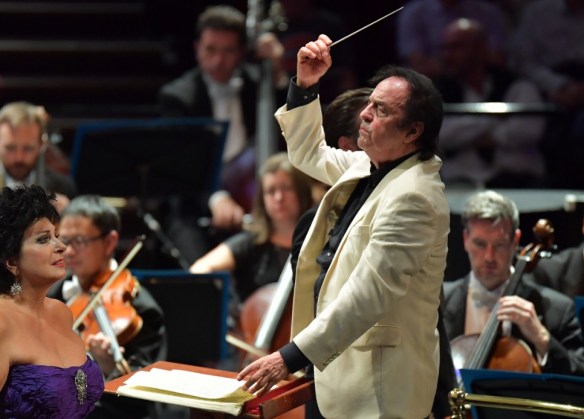
Alban Gerhardt pictured during his performance of the Dvořák Cello Concerto, with the Royal Philharmonic Orchestra conducted by Charles Dutoit (c) Chris Christodoulou

Prom 25; Royal Albert Hall, 3 August 2016

You can listen to the Prom on the BBC iPlayer

The course of this Prom ran true to the plot of the psychological drama that unfolded in the second half. Bluebeard’s Castle was a darkly lit tour de force, but before that we had the small matter of Dvořák’s Cello Concerto to attend to.

The best-loved of all cello concertos, this is a piece where the cello really sings, but has to come from within the orchestral sound to do so. Alban Gerhardt was the ideal vehicle, with probing insights and a wonderful, song-like delivery that brought out the best of Dvořák’s bittersweet lyricism. His duet with the Royal Philharmonic Orchestra woodwind and brass, subtly but expertly managed by the seemingly ageless Charles Dutoit (now 80!) was sublime.

bluebeardThings took a much darker tone after the interval as Bartók’s first stage work exerted a chilling grip on the Royal Albert Hall. There was little to no coughing here, all eyes focused on the sonorous John Ralyea (Duke Bluebeard) and his latest ill-fated lover Judit (Ildikó Komlósi). Their exploration of the seven doors of Bluebeard’s Castle were vividly brought to life by Dutoit, using all his expertise with French orchestral music to bring out the parallels in the Hungarian Bartók’s own writing, but also finding the darkness beneath that really drives the work.

Komlósi was superb, every sleight of her eyes telling a thousand words, while harps, strings, horns, woodwind and brass all told the silvery tale in turn. Ralyea, meanwhile, brought his incredibly sonorous tones to the spoken introduction, setting the scene perfectly. Unsettling through the drama was – perhaps unwittingly anticipating The Shining, and the use of Bartók’s music in one of its crucial scenes – this was a performance holding the audience captive from the first dark note to the last.

Ben Hogwood

Wigmore Mondays – Ensemble Marsyas and Kristian Bezuidenhout

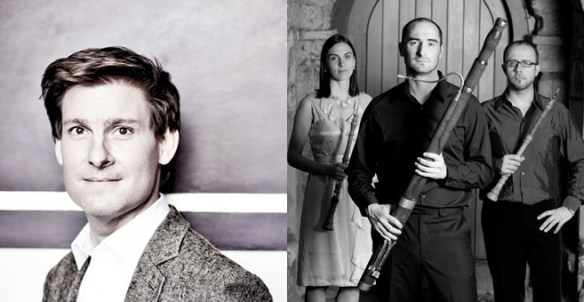
Ensemble Marsyas, Kristian Bezuidenhout (left)

Ensemble Marsyas (Josep Domènech Lafont (oboe), Nicola Boud (clarinet), Alec Frank-Gemmill (horn), Peter Whelan (bassoon), Kristian Bezuidenhout (fortepiano)

Wigmore Hall, London, 11 July 2016

written by Ben Hogwood

Audio (open in a new window)

http://www.bbc.co.uk/programmes/b07jhwk7

Available until 10 August

What’s the music?

Mozart Quintet for piano and wind in E flat major, K451 (1784) (23 minutes)

Beethoven Quintet for piano and wind in E flat major, Op.16 (1796) (24 minutes)

Spotify

Kristian Bezuidenhout and the Ensemble Marsyas have not recorded this music, but in case the broadcast link does not work the Spotify playlist below gives alternative versions from pianist Stephen Hough and the Berlin Philharmonic Wind Quintet, available on BIS:

About the music

Mozart held his quintet in extremely high regard in comparison with the rest of his output. Its first performance was part of a marathon concert that also featured the Linz and Haffner symphonies, but all the composer could talk about was his satisfaction with the new quintet. It does mark something of a departure, being the first work for the combination of piano and wind quartet, and the writing for both is superb.

In some of his early works Beethoven was consciously using instrumental combinations already mastered by Mozart, and applying his own stamp to them. The early string trios, piano trios and this quintet for piano and wind are all examples. Typically he does things his way in all of them, and in the quintet the piano really does take the lead, perhaps betraying the fact that Beethoven was about to publish his first two piano concertos.

It is an ambitious work, with a particularly sizeable first movement, and in the second Beethoven allows each of the wind instruments a chance to shine in a solo capacity.

Performance verdict

There is something about the sonic combination of piano and wind that is enormously comforting, either as late night / early morning listening or in a concert experience. To say it was invented by Mozart may be stretching things a little far, but it is seemingly the earliest work to put the combined forces together, followed by Beethoven in his early ‘if you can’t beat them, join them’ mode.

The two make a good concert coupling, especially when the performances are as good as these. Kristian Bezuidenhout is a musician who easily dispels the fears among some concert goers that the fortepiano is a tinny instrument of little sound quality. He gets his phrases to really sing, especially in quiet moments, and throughout the more graceful parts of both pieces he played several melting passages of music.

The wind players were every bit as good, led more obviously in the Mozart by oboist dfgd or in the Beethoven by the bright timbre of clarinettist Nicola Loud. Alec Frank-Gemmill wrestled manfully with the difficulties of natural horn to produce a lovely sound, while on occasion the bassoon of Peter Whelan had a timbre resembling a baritone saxophone. When all four played together it was a beautiful sound, sometimes rough around the edges in a most appealing way, reminding us that there is such a thing as over-polished performance!

One of the most enjoyable Wigmore concerts of the 2015-16 season, closing the series with a flourish and well worth hearing. As a postscript, it is worth noting Ensemble Marsyas were formed as a result of relationships formed in the European Union Baroque Orchestra. Would such a thing be possible after the UK leaves the union? Very unlikely!

What should I listen out for?

Mozart

2:02 – a slow introduction, where the tonality of E flat is established – but where the sonorities of the wind instruments are also made clear, as though Mozart were introducing the new idea to his audience. Then at 4:08 we hear the start of the allegro, introduced by the piano then passed over to the winds. This is a genial piece of music, like listening to a conversation between musical friends, and Mozart develops his ideas comprehensively, a good example occurring at 8:44.

12:05 the slow movement, a beautifully restrained introduction followed by solos for clarinet, oboe and then horn, Mozart giving each of the treble instruments their chance to shine. The fortepiano – reclaiming melody at 13:28 – is very much part of the ensemble. The horn gets a bigger solo at 16:08, part of a central section deeper on feeling.

19:37 – the fortepiano begins the finale with a detached and relatively simple theme that gains more colour when the woodwind repeat it. This tune becomes more of an earworm as the piece progresses.

Beethoven

28:15 – a subdued fanfare signals the beginning of the quintet from the wind, answered by a profound statement on the piano. This is a slow introduction, and a grand one at that, before the fast movement proper gets underway at 30:51, with some lively exchanges between the instruments and a number of tricky runs on the piano.

41:02 – a gentle start to the first movement, the fortepiano playing a figure that sounds like a lullaby. The sonorous tones of the wind instruments are soon in play with the same material, before solos from all four. The piano returns to the lullaby material at 45:12.

47:17 – the finale starts with a tune on the piano that you know is going to be whistled by the end of the concert! It is a perky and optimistic melody, often assigned to the bright clarinet timbre. When piecked up by the wind its dance character comes through, and for the rest of the movement it is developed and repeated.

Further listening

Not too long after the pieces in this concert were composed and performed, Rossini wrote six sonatas for string ensemble, published in 1804. Around twenty years later, Frédéric Berr thought these would be suitable when arranged for wind quartet – and so it proved. They make a very enjoyable hour’s music, making absolutely no demands on the listener!

Wigmore Mondays – Florian Boesch & Malcolm Martineau in Schumann & Wolf

boesch-martineau

Florian Boesch (baritone), Malcolm Martineau (piano)

Wigmore Hall, London, 4 July 2016

written by Ben Hogwood

Audio (open in a new window)

http://www.bbc.co.uk/programmes/b07j3vm5

Available until 3 August

What’s the music?

Schumann Die beiden Grenadiere Op.49/1; Abends am Strand Op.45/3; Die feindlichen Brüder Op.49/2

Märzveilchen Op.40/1; Muttertraum Op.40/2; Der Soldat Op.40/3; Der Spielmann Op.40/4 (all 1840) (20 minutes)

Wolf Goethe Lieder: Der Schäfer; Phänomen; Wandrers Nachtlied; Anakreons Grab; Harfenspieler I – III (18 minutes)

Schumann Belsatzar Op.57 (1840) (5 minutes)

Spotify

Florian Boesch has recorded a disc of Schumann but only one of the songs in this concert (Belsatzar). Here is a playlist containing all of the songs, using recordings made by the great baritone Dietrich Fischer-Dieskau:

About the music

1840 was an extraordinary year for Robert Schumann’s musical productivity. His so-called ‘year of song’, it saw him write 138 songs in total – including the eight in this recital program. Among the choice are four settings of Heine, which certainly preyed on the composer’s dark side.

In a similar vein, the year 1888 was a hugely productive one for the song composer Hugo Wolf. The tenor Ian Bostridge wrote this very fine introduction to the songs of Wolf for the Guardian in 2006. He wrote a whole songbook setting some of Goethe’s poetry, collected in 22 songs through 1888 and 1889, in the composer’s late twenties. The seven we hear are illustrations of the composer’s ability to combine melodic originality and a piano part that helps set the words in context, including the three songs of the downtrodden harpist.

Performance verdict

Florian Boesch’s baritone is an extraordinary instrument, and it is perfectly suited to the darker recesses of these Schumann settings, especially the Heine songs. Here is some of the composer’s most descriptive vocal music, and it is incredibly effective in this performance, not just for Boesch’s insights but for Malcolm Martineau’s ever colourful piano pictures. Here the colours are predominantly grey and black, but the steely edge to his lower register tone is crucial to the impact of the text and makes the moments of lighter relief – for there are a few! – ever more telling.

Similar forces are at work in the music of Wolf, which Boesch brings to thoughtful life. He is particularly effective in the slower songs such as Wandrers Nachtlied, where he and Martineau exhibit wonderful control of the drawn out phrases.

What should I listen out for?

Schumann

1:48 Die beiden Grenadiere (The two grenadiers) text

The piano’s terse introduction is quickly picked up by the baritone, who sings of the battle in dark tones. At 4:18 the song breaks into the melody of La Marseillaise, as the French grenadier expresses his wish to be buried on home soil should he die.

5:13 Abends am Strand text

A chilling song.

8:47 Die feindlichen Brüder (The hostile brothers) text

The singer and piano are closely aligned here. Initially the mood is a brooding one in preparation for the brothers’ fight, but then hostilities break out and the tempo quickens considerably, the piano stooping ever lower, well below the range of the singer.

11:20 Märzveilchen Op.40/1 (March violets) text

The mood lightens a little for Schumann’s celebration of the flowers, described by the poet as ‘a pair of laughing blue eyes’.

12:54 Muttertraum Op.40/2 (A Mother’s Dream) (Adelbert von Chamisso) text

The piano part is characteristically intimate for this soft reverie – but the peace does not last long, for there is a dark side in the form of a raven outside the window (from 14:10) at which point the singer’s tone gets progressively darker, to the depths of the end.

15:26 Der Soldat Op.40/3 (The Soldier) (Adelbert von Chamisso) text

There is a military air from the start of the piano introduction, with fanfares and ceremony, but again the mood is steely dark, right through to the drama of the bullets fired in the last verse, where the poet ‘shot him through the heart’.

18:20 Der Spielmann Op.40/4 (The Fiddler) (Adelbert von Chamisso) text

There are bright festivities at the start of this song, but again it is not long until darker thoughts emerge, the baritone sinking lower in his range as he sings of the bride of the story, who ‘looks like whitewashed death’.

Wolf

23:29 Der Schäfer (The Shephard) text

A darkly humourous song about a lazy shepherd, set by Wolf with some far-reaching harmonies and lazily decorated piano lines.

24:57 Phänomen (Phenomenon) text

A slow song, offering consolation at its end.

26:52 Wandrers Nachtlied (Wanderer’s Night Song) text

A slow and deeply sorrowful song, with long, drawn-out phrases – completed by Martineau’s soft postlude, lost in thought.

30:06 Anakreons Grab (Anakreon’s Grave) text

The contemplation at Anacreon’s Grave is not as sorrowful as one might think, ‘beautifully graced with verdant life’ in Goethe’s words. The song speaks of rest rather than torment.

32:45 Harfenspieler I text

Not surprisingly the piano imitates the harp beautifully at the start, though the vocal line that follows is quite stern, the singer imploring ‘leave me to my torment’!

36:25 Harfenspieler II text

Another predominantly slow setting, portraying a wretched man with dark tone in the singer’s voice and a reserved piano part.

38:49 Harfenspieler III text

The most dramatic of the three Harfenspieler settings, a tormented singer, in ringing tones, lamenting how the heavenly powers ‘let the wretched man feel guilt’.

Schumann

43:26 Belsatzar (Belshazzar) text

This extraordinary song runs through a whole gamut of moods and emotions. It begins with the Babylonian king singing with great bravado, his boasting and the piano’s tumbling figures adding to the sense of giddiness. At 45:24 he proclaims, ‘I am the king of Babylon!’ After this the song turns, the king fearful, until the famous writing on the wall passage, which sends a chill through the spine from 46:17. There is no coming back from here for the king, murdered by the end.

Encore

49:45 Described as ‘Twitter of the nineteenth century’ by Florian Boesch, this is Schumann’s Verratene Liebe Op 40/5 – another von Chamisso text – and it’s over in 45 seconds!

Further listening

Florian Boesch is a remarkable talent – and has forged a formidable partnership with Malcolm Martineau. Here they are in a complete album of Schumann, including the first of the composer’s Liederkreis cycles:

Wigmore Mondays – Daniel Ottensamer & Christoph Traxler

daniel-ottensamer

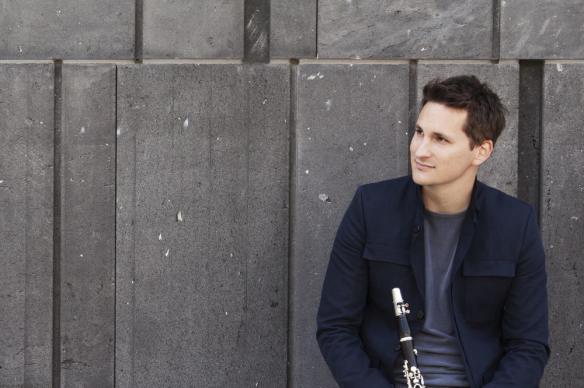
Daniel Ottensamer (clarinet, above), Christoph Traxler (piano)

Wigmore Hall, London, 27 June 2016

written by Ben Hogwood

Audio (open in a new window)

http://www.bbc.co.uk/programmes/b07h6cn8

Available until 27 July

What’s the music?

Luigi Bassi Concert Fantasia on themes from Verdi’s Rigoletto (1901) (13 minutes)

Zemlinsky arr. James Breed 2 Fantasies on Poems of Richard Dehmel Op. 9 (1990) (6 minutes)

Poulenc Clarinet Sonata (1962) (13 minutes)

Horovitz Clarinet Sonatina (1981) (13 minutes)

Spotify

Daniel Ottensamer and Cristoph Traxler have not recorded this music, but the Spotify playlist below gives a guide to other versions in the event you are unable to access the broadcast link:

About the music

A range of music for clarinet and piano, most of which lies slightly off the beaten track compared to repertoire staples.

We begin in Italy, with the clarinettist and composer Luigi Bassi (1833-1871), whose concert fantasia on themes from Rigoletto is arguably his most popular work. We then move to Vienna and Alexander Zemlinsky, a composer who for a long time was better known as teacher to Arnold Schoenberg. In more recent times his music has taken on greater prominence, for it sits between the romantic approach of Brahms and Mahler and the music of his pupil, which eventually left tonality behind altogether.

The Richard Dehmel fantasies were written for piano, but James Breed discerned suitable lines for clarinet and arranged them with the instrument in mind.

Poulenc’s Clarinet Sonata is his last piece of chamber music, written in the summer before his death in 1962. Dedicated to Arthur Honegger, it was written for the clarinettist Benny Goodman.

Joseph Horovitz has been a prolific English composer, particularly for woodwind, and at the age of 90 still cuts a sprightly figure – he was in the audience for this concert! Born in Vienna, Horovitz emigrated to England at the start of the Second World War, and studied music in London. His sonatina for clarinet and piano, a short work with jazzy inflections, was completed in 1981.

Performance verdict

A fine and varied program of music for clarinet and piano, given with some panache by Daniel Ottensamer and Christoph Traxler. The Poulenc was an especially fine performance, with the faster movements taken at a daring pace. This meant a little bit of phrasing on the melodies was compromised, but the overall effect was thrilling.

This was also the case with Bassi’s Concert Fantasia, a real crowd-pleaser of a performance, which was nicely complemented by the heady romanticism of the Zemlinsky, effectively transcribing for clarinet and piano in James Breed’s sensitive arrangement.

The Horovitz was great to watch, especially with the composer’s enthusiastic reaction at the end. There were some persuasive rhythms here, some of which seemed to have been directly imported from the West Indies, and Ottensamer moved around the stage as he played, fully immersed in the music.

Another special moment was to follow in Popov’s arrangement of a late Brahms Intermezzo, bringing pure contemplation to the hall and some incredibly sensitive, quiet playing from both clarinet and pianist Christoph Traxler, who expertly shaded his lines throughout.

What should I listen out for?

Bassi

1:20 – the piano begins with a fanfare to make the audience sit up, preparing the way for the clarinet in a manner that suggests a grand orchestral piece. The clarinet arrives at 2:07, almost imperceptibly but then showing off through music of great athleticism. Once arrived it settles into a graceful theme. Then after another grand passage the clarinet showcases one of Verdi’s main themes at 4:23. The music becomes light and agile.

There is some very enjoyable back and forward between the clarinet and piano as they play Verdi’s themes and their variants, as though they are dancing on the stage themselves. The theatrical performance tricked the audience (including me!) at 10:10, where we thought the two had finished – but instead there were more athletics to come, finishing with a flourish at 14:00.

Zemlinsky / Breed

15:38 – Voice of the evening – as you might expect for music of the evening the mood is languid, the clarinet murmuring above the hazy piano. The harmonic language is rich with added notes, adding to the enchanted atmosphere.

18:45 – Forest rapture – this piece is more outwardly expressive in the clarinet part, but still carries a humid atmosphere, the trees close at hand. The arrangement for clarinet is a natural one.

Poulenc

23:28 – a bright, staccato start soon leads to one of the main themes of the sonata’s first movement, given on the clarinet at 23:43. Poulenc utilises the instrument’s capacity for bittersweet emotions, with music that alternates between charm and mischief. At 25:40 the music takes on a slow, thoughtful mood which the clarinet tops with a melody of great beauty. Then the music of the opening reappears, in a more sombre form.

28:49 – the second movement is a deeply felt Romanza, led by the clarinet with a lyrical opening, before another gem of a quiet melody at 29:36. This is countered by a higher, more raucous thought.

33:33 – after some introspection both clarinet and piano burst out of the blocks with an exuberant finale. It’s hard to resist the bright and breezy clarinet theme!

Horovitz

37:43 – a settled and fluid start from both clarinet and piano, quite lyrical in its delivery, though the music becomes livelier and has an undercurrent of angst in the exchanges between the two instruments. Then we return to the more convivial mood of the opening.

42:56 – a shadow falls across the start of the slow movement, with both instruments quiet and reserved.

47:14 – this is the most distinctive movement of the three, with a swaying rhythm immediately given out from the piano. This is a license for the clarinet to roam free, and it does so with persuasive good spirits.

Encore

51:30 – an arrangement of a Brahms piano piece – the Intermezzo, Op.118 no.2, made by Nicolai Popov. It is a lovely, autumnal piece of music.

Further listening / viewing

The clarinet was a very important instrument for one of this year’s anniversary composers, Max Reger. Reger is an undervalued composer, and some of his most expressive music was written for clarinet and piano, as this album from Eduard Brunner and Gerhard Oppitz reveals:


Wigmore Mondays – Les Ambassadeurs

les-ambassadeurs

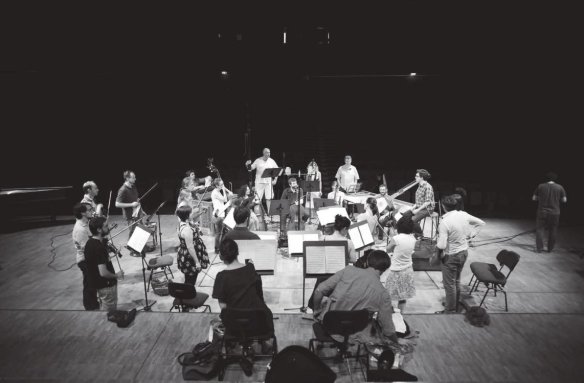
Les Ambassadeurs / Alexis Kossenko (above)

Les Ambassadeurs (Lina Tur Bonet, Stefano Rossi (violins), Tormod Dalen (cello), Allan Rasmussen (harpsichord) / Alexis Kossenko (flute, director)

Wigmore Hall, London, 20 June 2016

written by Ben Hogwood

Audio (open in a new window)

http://www.bbc.co.uk/programmes/b07gnc3g

Available until 20 July

What’s the music?

Blavet Flute Concerto in A minor (1745) (14 minutes)

Pisendel Sonata in D for violin and basso continuo (c1717) (11 minutes)

Leo Flute Concerto in G (unknown) (8 minutes)

Leclair Ouverture No 3 in A major, Op 13 No 5 (1746) (4 minutes)

Vivaldi Recorder Concerto in A minor, RV108 (1724) (7 minutes)

Spotify

Les Ambassadeurs have not recorded this music, but the Spotify playlist below gives a guide to other versions in the event you are unable to get the broadcast link to work:

About the music

It is more than possible that you will only have heard of one of the five composers in this concert, which also presented Les Ambassadeurs in their first visit to the Wigmore Hall. The ensemble is normally around fifteen strong, though to fit the confines of the venue here it was scaled down to five.

Les Ambassadeurs is modelled on the Dresden Hofkapelle, an orchestra in Bach’s time that was regarded as one of the best in Europe. The music they choose comes from the 18th century, naturally, but here presents contemporaries who are not often heard.
Michel Blavet (1700-1768) was a French flautist and composer, and a prominent part of Les Concerts Spirituel in Paris. His Flute Concerto of 1745 was rediscovered in 1954.

Meanwhile the Italian composer Leonardo Leo (1694-1744) was a prolific composer for the stage, but wrote in particular for cello and flute. This concerto appears to be a recent discovery.

Composer-violinist Leclair (1697-1764) appears with an overture intended for his only opera Scylla et Glaucus, while Johann Georg Pisendel (1687-1755), an employee of the Saxon court in Dresden, wrote his Violin Sonata in an Italian style, bringing to mind the compositions of Vivaldi.

Speaking of which, the concert concludes with one of Vivaldi’s many concerti for flute / recorder and strings. This one was composed at a time when the composer was often away from Venice, but sent scores by post for his pupils to play.

Performance verdict

A series of excellent performances gave a valuable insight into a corner of the eighteenth century not often visited in concert.

Alexis Kossenko led his charges with great enthusiasm, and the planning of the concert was ideal to give a contrast between the works for flute and recorder and those smaller scale pieces for violin – brilliantly played by Lina Tur Bonet.

The works of Blavet, Pisendel and Leo stood up well in comparison to their more illustrious contemporaries, with lively introductions from the strings in the flute concertos, setting the tone for some considerable virtuosity from Kossenko.

What should I listen out for?

Blavet

5:46 – the strings begin with a purposeful tune, the start of a lively Allegro. They are joined by the flute at 6:32. The flute is then the dominant character in proceedings, which includes quite a substantial development of the first tune. At 10:43 we hear the flute alone in a showy cadenza, over a single held note from the other players, before they wrap up the movement.

11:39 – Blavet stays in the key of A minor for his slow movement, a solemn piece of music – but then there is a switch to A major at 13:07, and a lighter outlook. Then at 14:16 the harmonies turn once more to the minor key, though there is now a more positive feel to the music.

15:07 – the strings begin with some brisk music, and you might hear the slap of bow on string as they strive for maximum thrust. The flute joins at 15:49 with a similar sense of purpose. At 16:35 there is a flashy cadenza, but then at 18:12 and 19:02 we hear it in some very difficult music, taking the solo role to extremes.

Pisendel

20:45 – the ‘basso continuo’ (cello and harpsichord) set out a bright opening to which the violin quickly responds, before taking the lead in light hearted dialogue. Then at 22:00 the harmonies open out into more complex areas and the solo violin is given a really testing workout. Eventually Pisendel works his way back to the original key.

24:19 – a slow second movement, still in the original key of D major, but making moves towards the minor key a lot, giving the harmonies more colour in music of greater strife.

27:40 – back to the major key for the third movement, where the violin has a free standing part over the continuo, which anchors the music. From 30:30 Pisendel makes greater demands on his soloist, with rapid string crossing. There is a false end at 31:42, then a proper finish a couple of seconds later.

Leo

33:16 – the strings start off with a perky theme, setting out the main melodies and figures before the flute joins them at 33:57. Before long Leo is asking a lot of the flute, with some breathless phrases before we hear the strings’ theme again at 35:28, now in the key of E minor – the closest ‘relative’ to the work’s home key of G.

37:21 – for the slow movement Leo moves back to the ‘relative’ minor for a slow dance, gracefully introduced by the violins before handing over to the flute at 38:01.

41:23 – after the relative anguish of the slow movement the breezy finale is a nice contrast, the violins flourishing with their tunes, complemented by the flute from 41:58.

Leclair

45:54 – a series of rapidly ascending scales on the cello and violin form the basis of the musical material for this characterful overture. It is a lively, bright piece of music.

Vivaldi

51:16 – Vivaldi gets straight down to business in this piece, with no way of introduction – the strings and recorder are straight in together with some quick exchanges. From 53:30 the recorder has a tricky, virtuosic passage.

54:17 – slow, chugging violins over spread chords from the harpsichord set the scene, after which the recorder comes in with longer phrases.

56:44 – a triple time dance, led by the recorder with enthusiastic support from the strings.

Further listening

As a complement to this concert, here is a link to Les Ambassadeurs in accompaniment to the soprano Sabine Devieilhe, in an enticing album of vocal works by Rameau: