On Record – Helsinki Philharmonic Orchestra / Pekka Kuusisto; BBC Scottish SO / Martyn Brabbins – Jaakko Kuusisto: Symphony (BIS)

BBC Scottish Symphony Orchestra / Martyn Brabbins (Birthday Variations); Helsinki Philharmonic Orchestra / Pekka Kuusisto (Symphony)

Various Pictured Within: Birthday Variations for M.C.B. (2019)
Jaakko Kuusisto (comp. Pekka Kuusisto & Eskola) Symphony Op.39 (2020-21)

BIS 2747 [66’32”]
Producers Andrew Trinick (Variations), Robert Suff (Symphony) Engineers Graeme Taylor (Variations), Enno Mäemets (Symphony)
Live recordings, 13 August 2019 at Royal Albert Hall, London (Variations); 8 December 2022 at Music Centre, Helsinki

Reviewed by Richard Whitehouse

What’s the story?

The BIS label issues one of the most fascinating among recent releases, one that juxtaposes a latter-day equivalent to Elgar’s Enigma Variations with a posthumously completed symphony by one of Finland’s leading conductors which now becomes a tribute to his untimely passing.

What’s the music like?

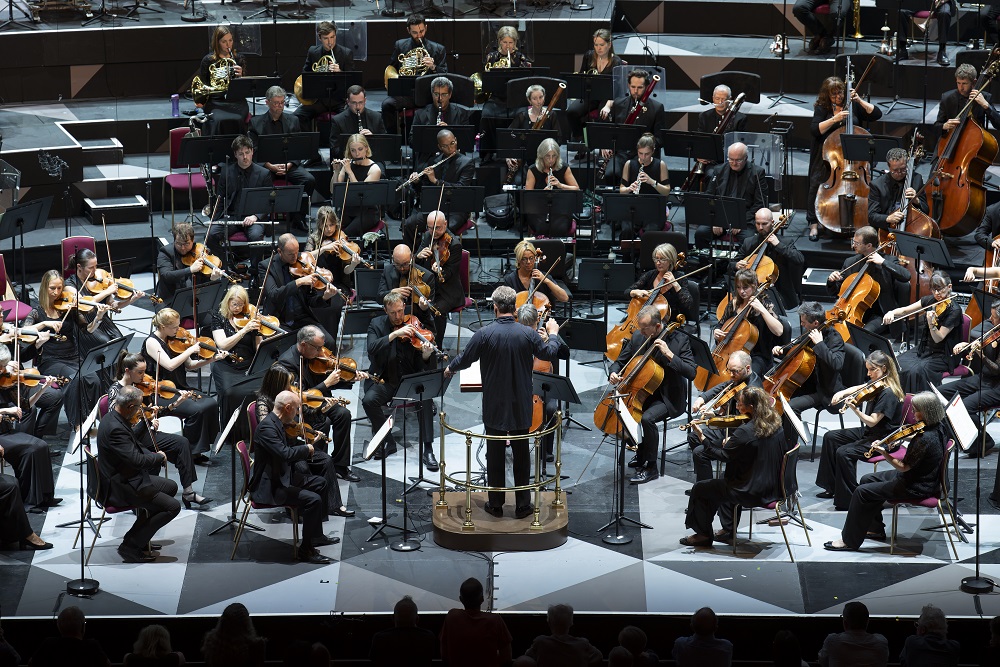
It was clearly a great idea that the BBC commission a piece to mark Martyn Brabbins’s 60th birthday, featuring 14 composers with whom this stylistically most wide-ranging of current British conductors has been associated. The outcome is Pictured Within: Birthday Variations for M.C.B. – each composer having provided a variation on the ‘anonymous’ theme for what here becomes an inverse take on Elgarian procedure in the latter’s Variations on an Original Theme; a work whose ground-plan also furnishes the formal framework of the present piece.

It is worth considering the ways in which these composers seem either inhibited or liberated by their placing (determined beforehand by Brabbins) within the overall scheme. Given this theme – understated to a fault – yields its potential more from the harmonic then melodic or rhythmic angle, the most successful tend to make a virtue of such constraints: thus the ‘Tact 60’ of Variation I finds Dai Fujikura hinting guardedly at ‘C.A.E.’. David Sawer capriciously conjures ‘H.D.S-P.’, while Sally Beamish offers a deftly ironic parallel to ‘R.B.T’ and Colin Matthews rumbustiously complements ‘W.M.B.’ Iris ter Schiphorst captures the pensiveness if not the geniality of ‘R.P.A.’, whereas violist-turned-composer Brett Dean proves a natural fit for the undulating poise of ‘Ysobel’ and Win Henderickx evokes ‘Troyte’ with real gusto.

His ruminative Variation VII finds Richard Blackford emulating more the connection with a country house than ‘W.N.’, while Harrison Birtwistle throws caution to the wind in a darkly inward contrast to ‘Nimrod’, and ‘Sixty Salutations’ finds Judith Weir in an engaging take on the halting charms of ‘Dorabella’. Gavin Bryars rouses himself to unexpected activity in his reading of ‘G.R.S.’, whereas Kalevi Aho is more suited to the sombre eloquence of ‘B.G.N.’ and Anthony Payne ably plumbs the inherent mysteries of ‘***’. John Pickard then takes on the daunting challenge of ‘E.D.U.’ in The Art of Beginning – the mingling of portentousness and humour appearing to make light of its Longfellow association, but whose organ-capped apotheosis confirms real appreciation of the ‘right ending’ as constituting an art unto itself.

The coupling is as unexpected as it proves apposite. Remembered as a notable violinist and a versatile conductor, Jaakko Kuusisto (1974-2022) turned increasingly to composition and, at his untimely death through brain cancer, had planned a symphony for Osmo Vänskä and the Minnesota Orchestra. Acting on behalf of his widow, his younger brother Pekka and copyist Jari Eskola realized this piece from several minutes of extant fragments such that Kuusisto’s Symphony takes its place as the last statement by one who ostensibly had much more to give.

Playing just over 25 minutes, the work falls into two separate movements. Shorter and more outwardly cohesive, the first of these emerges as imperceptibly as it evanesces – taking in a tersely rhythmic central episode, then a warmly expressive melody with more than a hint of American post-Minimalism. Almost twice as long, the Lento seems more discursive but no less absorbing – picking up where its predecessor left off as it builds to impulsive climaxes, separated by an eloquent span derived from a chorale-like theme. Nothing, though, prepares one for the ending – a sequence of quietly interlocking ostinato patterns, evidently inspired by light signals beamed in the Gulf of Finland and underpinned by undulating timpani. The effect is haunting and unworldly but, for these very qualities, wholly fitting as a conclusion.

Does it all work?

Pretty much always. Those expecting an Elgarian ‘re-run’ may be disconcerted by Pictured Within, but this only serves to reinforce the stylistic autonomy and variety of the composers involved (three of whom sadly no longer with us) in what is a tribute to Brabbins’s acumen for involving them in the first instance. Quirky and compelling, the Kuusisto is appreciably more than a labour of love on behalf of those who brought about its completion: both works deserving revival for their intrinsic merits rather than commemorating a particular occasion.

Is it recommended?

Absolutely. These live performances (that of Pictures Within being that of the premiere) have come up well as presented here, while there are detailed notes on each piece by John Pickard and Jaani Länsiö. This fascinating release more than justifies itself musically and artistically.

Buy

For purchasing options, and to listen to audio clips, visit the Presto website. For more information on the artists, click on the names for more on Martyn Brabbins, Pekka Kuusisto, the BBC Scottish Symphony Orchestra and the Helsinki Philharmonic Orchestra For dedicated resources on the composer, you can visit a website dedicated to Jaakko Kuusisto

Published post no.2,265 – Friday 9 August 2024
Arcana at the Proms – Prom 10: Laura van der Heijden, BBC Scottish Symphony Orchestra & Ryan Wigglesworth – Britten, Frances-Hoad & Elgar

Britten Gloriana – Symphonic Suite Op.53a (1953)
Frances-Hoad Cello Concerto ‘Earth, Sea, Air’ (2022) [Proms Premiere]
Elgar Symphony no.2 in E flat major Op.63 (1909-11)

Laura van der Heijden (cello), BBC Scottish Symphony Orchestra / Ryan Wigglesworth

Royal Albert Hall, London
Friday 26 July 2024

reviewed by Richard Whitehouse

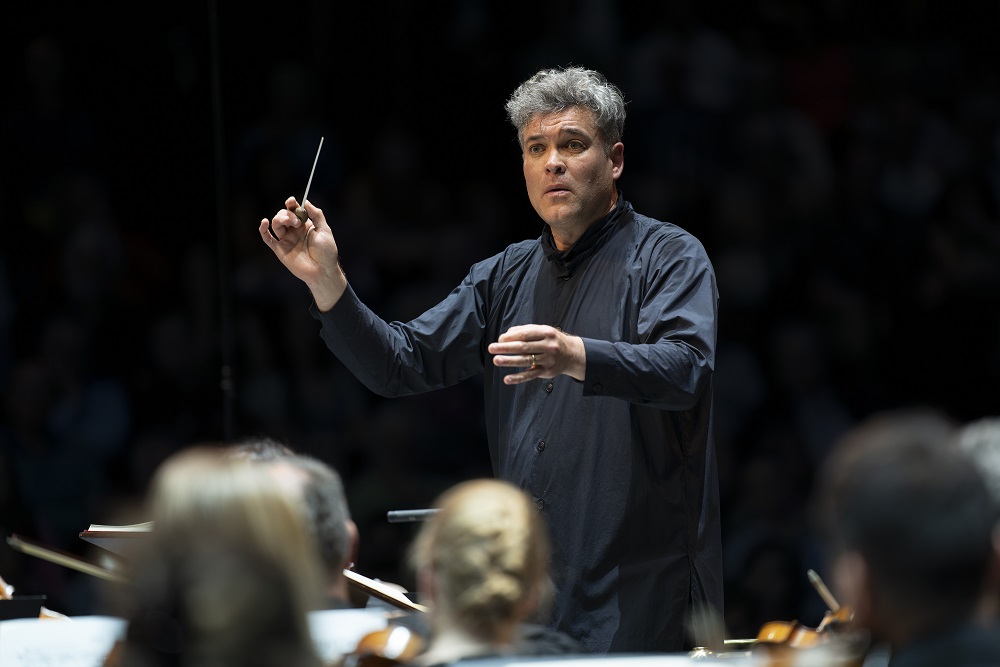
He might not be the only composer-conductor of his generation, but Ryan Wigglesworth has rapidly established himself among the best – as this concert with the BBC Scottish Symphony Orchestra, whose chief conductor he has been over these past two seasons, amply confirmed.

Other than Peter Grimes, the coolly received Gloriana was his only opera from which Britten extracted a concert suite. The vaunting syncopation of Tournament then wrenching fatalism of Gloriana moritura make for a telling framework, with this account at its most perceptive in the wistful poise of the Lute Song – the oboe being an eloquent replacement for the tenor thanks to Stella McCracken – then the evocative sequence of Courtly Dances where Britten effortlessly bridges the historical and the aesthetic divide between the eras of two Elizabeths.

Next a first Proms hearing (just over a year after its Glasgow premiere) for the Cello Concerto by Cheryl Frances-Hoad. Drawing inspiration from recent research into diverse aspects of the natural world, the three continuous movements provide an arresting vantage on an outwardly traditional form. Hence the trajectory of swifts in flight, carbon-absorbing algae over oceanic expanses and gravitational force of volcanic activity each influencing the musical content of a rhythmically impulsive Allegro, harmonically diaphanous Larghetto and melodically soaring Presto giocoso; the whole afforded unity through its composer’s motivic resourcefulness and the engaging commitment of Laura van der Heijden (above) in her realizing of its solo part. She then responded to deserved applause with a limpid reading of Pablo Casals’ The Song of the Birds.

Elgar is a composer evidently close to Wigglesworth’s heart and this evening’s account of his Second Symphony did not disappoint. Launched a little too circumspectly, the initial Allegro duly found a persuasive balance between bounding energy and that musing uncertainty to the fore in the otherworldly processional near its centre. Its overall extroversion was countered by the Larghetto – circumstantial association with the death of Edward VII having tempted many into a funereal pacing but not Wigglesworth, whose handling of its cumulative halves brought sustained emotional intensity framed by the stark lamentation with which it begins and ends.

One of Elgar’s most formally subtle and expressively audacious movements, the scherzo had the requisite impetuousness and nonchalance, thrown into relief by the mechanistic violence towards its core and unnerving energy at its close. Moderate in tempo and not overly majestic in outlook the finale might have been thought anti-climactic, but Wigglesworth’s keen sense of its long-term unfolding emerged in the searching ambivalence of its development and the understated grandeur of a peroration which did not require reinforcing with an organ pedal. Those closing pages could have yielded even greater pathos, but their suffused fatalism was wholly in accord with the conductor’s conception of this movement, as of the work overall.

Just over a year before, Wigglesworth presided over an inspirational account in Birmingham of The Dream of Gerontius. Tonight’s performance of the Second Symphony might not have been quite its equal, but it more than confirmed him as an Elgar interpreter of genuine stature.

For more on this year’s festival, visit the BBC Proms website – and for more on the artists involved, click on the names to read more about Laura van der Heijden, the BBC Scottish Symphony Orchestra and conductor Ryan Wigglesworth, and composer Cheryl Frances-Hoad

Published post no.2,253 – Sunday 28 July 2024

BBC Proms 2023 – Soloists, BBC Scottish Symphony Orchestra / Ryan Wigglesworth – György Kurtág’s ‘Endgame’

Prom 43

Endgame (2011-18) [UK Premiere]

Scenes and monologues; opera in one act by György Kurtág; Libretto by the composer after Samuel Beckett’s Fin de partie

Semi-staged performance; sung in French with English surtitles

Hamm – Fred Olsen (bass), Clov – Morgan Moody (bass-baritone), Nell – Hilary Summers (contralto), Nagg – Leonardo Cortellazzi (tenor), Victoria Newlyn (stage director)

BBC Scottish Symphony Orchestra / Ryan Wigglesworth

Royal Albert Hall, London

Thursday 17th August 2023

Royal Albert Hall, London
Friday 11 August 2023

by Richard Whitehouse photos by Sisi Burn / BBC

It may have had to wait three years since being postponed from the 2020 season, but tonight’s Prom brought a first hearing in this country for György Kurtág’s opera Endgame after Samuel Beckett and a performance such as, in the event, delivered at least as much as it had promised.

Although seeing Fin de partie on his first visit to Paris in 1957, it took several decades before Kurtág felt able to tackle a full-length opera and only in 2010 was a formal commission made by La Scala – presaging seven years of sustained (and evidently torturous) activity prior to its Milan premiere in November 2018. The subtitle is ‘Scenes and monologues; opera in one act’ and, having set 60% of the original French text, Kurtág still intends to add further scenes but, now in his 98th year, it would not be surprising were this opera to remain in its present form.

Unfolding continuously (and with no interval) across almost two hours, Endgame consists of 14 scenes which hone Beckett’s already sparse drama down to an unremitting focus on its four characters in their undoubted hopelessness and seeming helplessness. Vocally the predominant idiom is a speech-inflected arioso conveying its text with acute clarity against the backdrop of an orchestra which, despite – perhaps because of – its size and diversity, is almost always used sparingly. Stylistically the music invokes those traits familiar from its composer’s work across six decades which are not diluted as rendered in new and unlikely contexts; one notable aspect is the oblique while always audible allusion to those earlier composers who have accompanied Kurtág over his life’s work, and that here emerge as ‘figures’ all but tangible in their presence.

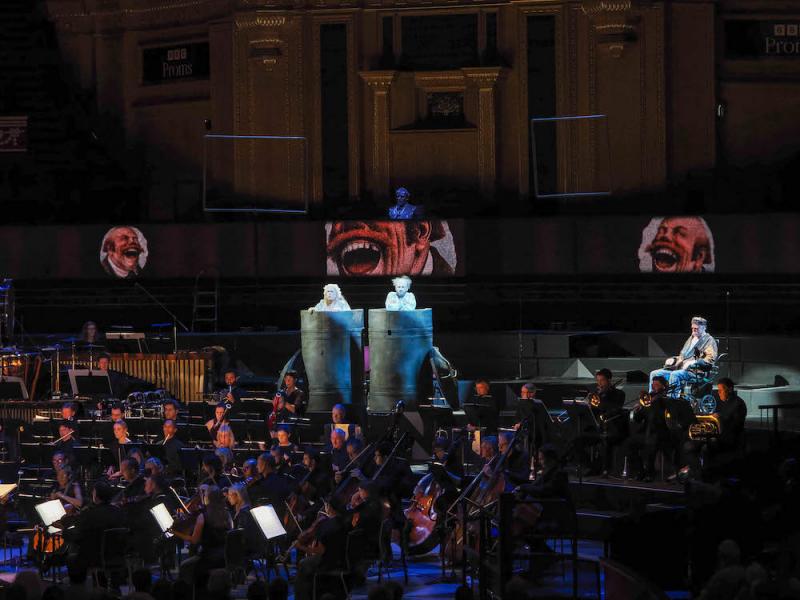
Utilizing three of the four singers from the Milan production, the cast could hardly have been stronger in commitment or insight. His being even more the defining role than with Beckett’s play, Frode Olsen here conveyed the predicament of Hamm with an authority the greater for its restrained vulnerability. He was abetted in this by Morgan Moody, whose Clov was poised between servant and protégé for a portrayal always empathetic however great its exasperation. Leonardo Cortellazzi summoned deftly whimsical humour as Nagg, reconciled to his dustbin-clad fate in contrast to the bittersweet recollections of Nell as taken by Hilary Summers – her eloquence extended by a later Beckett poem in a touching prologue. Victoria Newlyn brought the stark stasis of the drama and expanse of the Albert Hall’s acoustic into persuasive accord.

A versatile and perceptive conductor (and no mean opera composer, witness his ENO drama The Winter’s Tale six years previously), Ryan Wigglesworth duly had the measure of Kurtág’s elusive if inimitable idiom and drew a fastidious response from the BBC Scottish Symphony Orchestra; its playing as attentive to the score’s many subtleties as to its emotional highpoints – not least the closing bars, whose wrenching dissonance speaks of catharsis at least as much as of tragedy. The composer will hopefully have had an opportunity to hear this performance.

One looks forward to an eventual staging of this opera in the UK (following those subsequent productions in Amsterdam and Paris). Whatever else, Endgame is the summative work which Kurtág had to write and as confirmed tonight, the effort in its realization has not been in vain.

For more on the 2023 BBC Proms, visit the festival’s website at the BBC. Meanwhile click on the names for resources relating to György Kurtág and Samuel Beckett – and on the artist names Ryan Wigglesworth, Frode Olsen, Morgan Moody, Hilary Summers, Leonardo Cortellazzi, Victoria Newlyn and the BBC Scottish Symphony Orchestra

BBC Proms #42 – Jan Lisiecki, BBC Scottish Symphony Orchestra / Thomas Dausgaard: Nielsen, Beethoven & Sibelius

Prom 42 – Jan Lisiecki (piano), BBC Scottish Symphony Orchestra / Thomas Dausgaard

Sibelius Symphony no.7 in C major Op.105 (1924)
Beethoven Piano Concerto no.4 in G major Op.58 (1804-6)
Nielsen Symphony no.4 FS76 ‘The Inextinguishable’ (1914-16)

Royal Albert Hall, London
Thursday 18 August 2022

Reviewed by Richard Whitehouse Photos (c) Chris Christodoulou

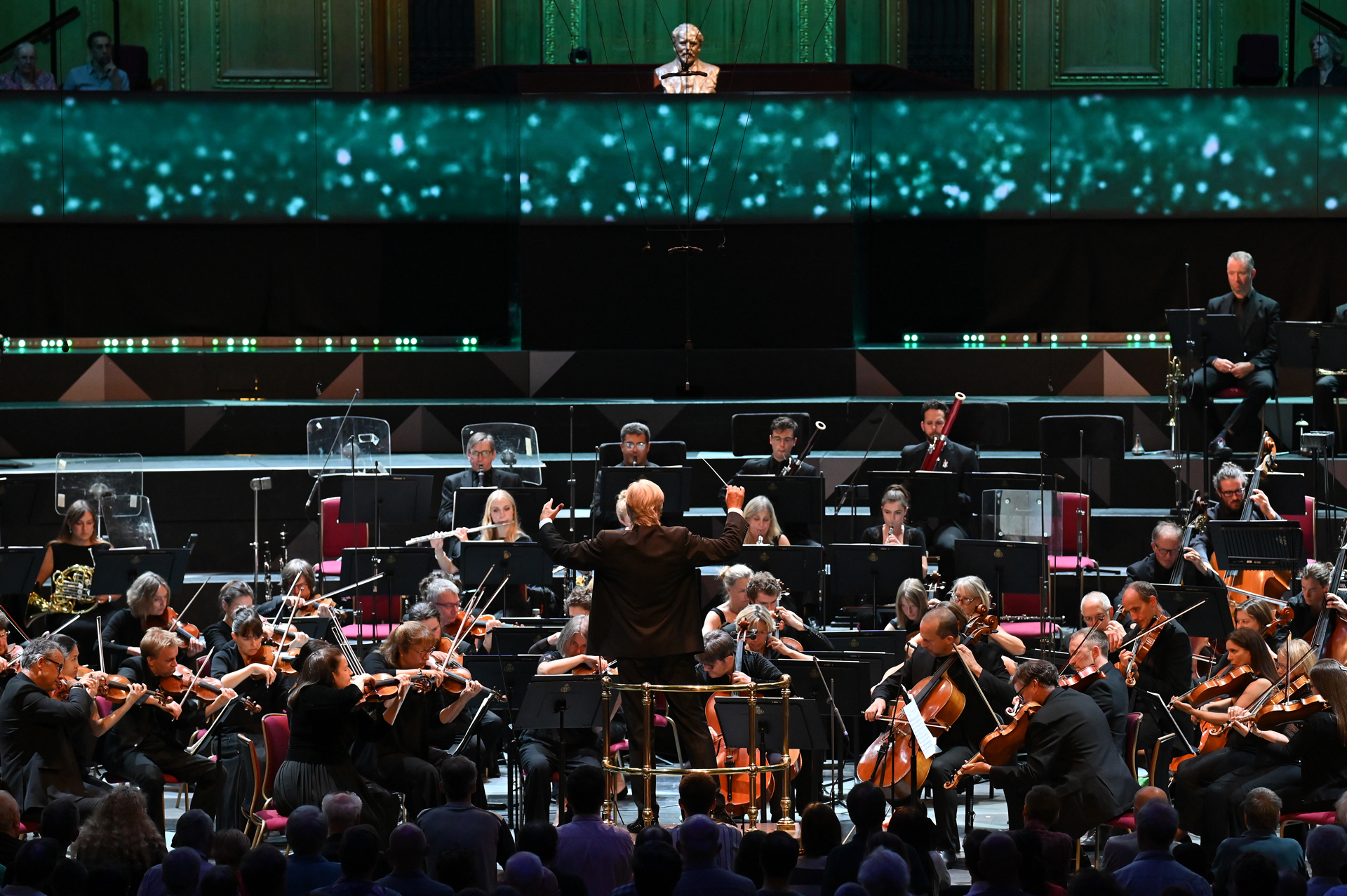
Ending his tenure as Chief Conductor of the BBC Scottish Symphony Orchestra, Thomas Dausgaard directed this programme which once again played to both his and the orchestra’s strengths – in the process underlining just what they have achieved together over the past six seasons.

He might not have scheduled Sibelius quite so assiduously as his one-time predecessor Osmo Vänskä, but Dausgaard is hardly less perceptive in this composer as was proven with his take on the Seventh Symphony. If not a tale of two parts, the first half that resonated more deeply – an introduction shot through with expectancy that preceded a powerful build-up to the first emergence of the trombone theme, and an effortlessly accelerating ‘scherzo’ as made feasible a central climax of rare intensity. From here tension dropped a little over the course of a lucid yet (in this context) over-extended ‘intermezzo’, and if the approach to the final return of the trombone theme had the right inexorability, the strings’ climactic response was a little reined-in emotionally. Nor did the fraught cadence into the home-key have the desired inevitability.

Whether or not the Sibelius should open a concert, Beethoven’s Fourth Piano Concerto made for an ideal continuation. Stepping in at the eleventh hour, Jan Lisiecki is no stranger to this music such that his lightly articulated if rarely insubstantial tone complemented Dausgaard’s incisive but never headlong accompaniment. Just occasionally in the opening movement this jewel-like pianism felt a little self-defeating, though not with a lucid rendering of the (more familiar) cadenza or transition from the Andante into the finale of heart-stopping eloquence. The latter movement had the necessary vigour but also an appealing intimacy, as in the lower strings’ transition towards the final return of the rondo theme or those ruminative woodwind asides before the decisive coda. Chopin’s C minor Nocturne (1838) made for a limpid encore.

Keen to get on with proceedings, Dausgaard launched Nielsen’s Fourth Symphony after the interval before applause had subsided. Often a conductor willing to modify his approach, he might have steered the opening Allegro less forcefully given the textural detail that was lost in the Albert Hall’s ample expanse, but the twofold appearances of the ‘motto’ theme were magisterially rendered – the shocked transition into the intermezzo proving as mesmeric as this latter movement was affecting through its deft combination of winsomeness and pathos.

Equally memorable was Dausgaard’s handling of the slow movement, here exuding fervency without undue histrionics both in the searching string threnodies and the confiding passages either side – the latter of which provided a stealthy transition into the final Allegro. Here the placing of a second timpani set front-left in the arena made stretched the antiphonal contrast a little too obviously, but the music’s overall intent came across unscathed as the ‘motto’ made its climactic final appearance then those closing bars hit the ground as they should – running. Whether or not Dausgaard intended ‘Inextinguishable’ to sum up his music-making with the BBCSSO, or whether anything might be read into his wearing a Covid mask throughout, this concert was a worthy leave-taking. Hopefully he will not be absent from the UK for too long.

Click on the artist names for more information on Jan Lisiecki and Thomas Dausgaard, and for more information on the BBC Scottish Symphony Orchestra head to their website

BBC Proms #41 – Behzod Abduraimov, Elizabeth Watts, Benjamin Appl, BBC Scottish Symphony Orchestra / Thomas Dausgaard: Nielsen ‘Sinfonia espansiva’, Beethoven & Ravel

Prom 41 – Behzod Abduraimov (piano), Elizabeth Watts (soprano), Benjamin Appl (baritone), BBC Scottish Symphony Orchestra / Thomas Dausgaard

Ravel La Valse (1919-20)
Beethoven Piano Concerto no.1 in C major Op.15 (1795, rev. 1800)
Nielsen Symphony no.3 ‘Sinfonia espansiva’ (1910-11)

Royal Albert Hall, London
Wednesday 17 August 2022

Reviewed by Ben Hogwood Photos (c) Mark Allan

There is a changing of the guard in Glasgow. On his way in as chief conductor of the BBC Scottish Symphony Orchestra is the conductor, composer and pianist Ryan Wigglesworth, an exciting and evolving artist. He will replace Thomas Dausgaard, who leaves City Halls after six years and is signing off with two consecutive Proms of symphonies by his Danish compatriot, Carl Nielsen.

We began this concert in Paris, however, with a distinctly chilly account of Ravel’s La Valse. The horrors of the First World War encroach into Ravel’s writing, and were all too audible around the edges in this performance, which was brilliantly played and lucidly controlled. The feather-light strings of the opening bars ensured the dynamic contrasts were extreme, and when the full orchestra cut loose towards the end the effect was both exhilarating and terrifying, the ‘fatal whirring motion’ of Ravel’s inspiration collapsing in the final bars.

Dynamic contrasts were a feature, too, in a fine performance of Beethoven’s Piano Concerto no.1, with soloist Behzod Abduraimov. The Uzbek pianist was the ideal foil for the clarity of the reduced forces of the BBC SSO, giving an affectionate performance notable for its dance-like qualities. There were occasional rhythmic indulgences in the solo party, but these were both tasteful and well-managed, with Dausgaard alive to his flights of fancy. The dialogue with the orchestra was often exquisite, especially when piano and clarinet (Yann Ghiro) linked in the slow movement. Time stood still for an early example of one of Beethoven’s heavenly silences, before the Rondo danced its way into the minds of the audience for the interval. Stylishly played and with some attractive, witty touches, this was an endearing account of high technical quality. Abduraimov’s encore was slightly at odds with the feather-light touches displayed in the Beethoven, being a heavyweight performance of Mercutio from Prokofiev’s Romeo & Juliet transcriptions for piano. There were fireworks and great virtuosity, though the significance of choosing a Ukrainian-born composer should not be overlooked.

Dausgaard returned after the interval to conduct his compatriot’s ‘most Danish’ symphony. David Gutman’s ever-helpful Proms notes revealed that Nielsen’s Sinfonia espansiva was somehow not performed at the Proms until 1990, and even this was its first Royal Albert Hall performance in 23 years. It was a memorable encounter, the high voltage first movement immediately into gear with its repeated notes surging forward, bursting through the dam. The exultant first movement was complemented by the radiance of the second, with wordless vocals from on high in the gallery supplied by soprano Elizabeth Watts and baritone Benjamin Appl. The combination, over hushed strings, enchanted the hall and made the best possible use of its spatial options. Surrounding their contributions were winsome cadenzas from the BBC Scottish woodwind, portraying the great Danish outdoors with crisp outlines.

The third movement built its energy cumulatively, all the while pointing towards the finale, where we heard the Danish ‘ode to joy’ in luxurious tones from assembled strings and horns. This was music of wide-eyed optimism, galvanizing orchestra, audience and conductor alike to an emphatic signing off. With contributions from golden brass and thundering timpani, this performance was truly expansive – and served to emphasise what the Proms audiences have been missing with this symphony all these years!

For more information, click on the names to discover more on the BBC Scottish Symphony Orchestra and their new chief conductor Ryan Wigglesworth