by Ben Hogwood Picture of György Kurtág (c) Filarmonia Hungaria
This is a post in honour of the remarkable composer György Kurtág, celebrating his 99th birthday today.
You can read about his work with baritone Benjamin Appl in an interview published on Arcana last week, but to get some appreciation of Kurtág’s remarkable music, here are a few pointers:
It is perhaps a bit restrictive trying to listen to Kurtág’s music via a YouTube link, so if you can find a widescreen system to play Grabstein für Stephan on then I fully recommend it. Following the score will show just how imaginative his orchestration is, and how compressed and concentrated the music becomes.
Meanwhile the Microludes, for string quartet, encapsulate Kurtág’s economical and pinpoint style, pieces whose every move and aside is critical to the whole.
One of my favourite live experiences was watching Kurtág and his now late wife Márta play exquisite duets at the Wigmore Hall for the composer’s 80th birthday. It was like eavesdropping on a private conversation between two intimately connected souls, no more so than when they were playing Kurtág’s own arrangements of J.S. Bach:
Published post no.2,450 – Wednesday 19 February 2025
by Ben Hogwood. Photo credits (c) Uwe Arens (above), Filarmonia Hungaria (Kurtág), Jean-Regis Rouston/Getty (Dietrich Fischer-Dieskau)
Seven years on from his firstinterview with Arcana, Benjamin Appl is in town. In that time a great deal has happened in the career of the Regensburg-born baritone. He has received worldwide acclaim not just for his beautiful voice but for the invention and style with which he has been creating concert programs and recording projects.
These projects form the core of our interview, principally Lines of Life – a newly released album complementing the music of Schubert and György Kurtág, with whom he has become firm friends. We will also discuss a carefully planned and fascinating tribute to Appl’s mentor, the great Dietrich Fischer-Dieskau.
Before that, however, we have the small matter of Handel’s Messiah to contemplate. Appl has just completed a performance with the Royal Liverpool Philharmonic Orchestra, not as a baritone soloist, but as a conductor. This bold step has made a lasting impact. “It was actually one of the greatest experiences of my life!” he says. “It’s interesting to be a singer, but also being able to communicate a lot with the audience through your eyes and facial expressions. You try to give a lot towards the singers in the choir, and then hope they mirror your intention back into the hall. It was very rewarding moment, musically and emotionally, and I was very happy and grateful that I got this chance, starting with a great orchestra. Let us see where this journey will lead!”
Had it always been an ambition, to conduct? “I always wanted to, from an early age”, he confirms. “I was conducting a lot of operas when I was six or seven, learning them off copy later on. I always conducted in the living room off recordings, with a baton my parents gave me for Christmas. It’s not just the beating time, it’s the psychology behind, leading people through a rehearsal and trying to get everyone in one direction – that I find the most interesting part. You have to make decisions in every second count. “With Messiah, you have 45 different numbers, and the hardest bit of conducting is starting and ending a piece, so after we agreed on Messiah I started to doubt if it was the right piece! But it was a wonderful experience, and everyone in Liverpool was incredibly supportive.”
Conducting the piece after Christmas made a refreshing change. “It was really uplifting, and as you know the story is much more than just Christmas. I also did Haydn’s Creation on January 1st in Budapest. I think that’s a wonderful piece for New Year’s Day, to be grateful about the creation of the world.”
He confesses to feeling odd with the audience behind instead of facing. “That felt very strange – and also even arriving in the concert hall. On both sides of my green room I could hear the soloists warming up, and I also started warming up! But somehow I wasn’t nervous at all. It felt very natural.” Will there be more as a conductor? “It’s something I’m interested in, particularly vocal music where I feel more familiar, and where I’m able to work with other singers and choirs.”
Appl’s mentor, Dietrich Fischer Dieskau, conducted near to the end of his life also, but he is keen to stress that is not the reason for taking up conducting at this point in his career. “It was something I wanted to do earlier on”, explains Appl, “whereas with Dietrich he started quite late.”
More of Fischer-Dieskau anon, as talk turns to 98-year old Hungarian composer György Kurtág (above), with whom Appl is now firm friends. They met in 2019. “The Konzerthaus in Dortmund decided to do a Kurtág festival”, he explains, “and the director of the hall went to Budapest to meet with Kurtág to discuss the repertoire for this festival. For Kurtág it was incredibly important to included a song cycle of six songs with poetry by Hölderlin, because that is a piece he sees as a significant one in his career. They looked into the option of who should sing it, and they selected ten baritones from around the world, who could send a recording to Kurtág. He is known for being very tricky and demanding, and the way he works with musicians, what he asks musicians to do, so he needed some months to really listen to the recordings and make up his mind.”
Gradually a shortlist emerged. “There were five left”, recounts Appl, “and then a few weeks later we were supposed to sing or record the low register of our voice. Then there were only three or four left, and then we had to record again, another page out of this song cycle. Finally I made it – and arrived in Budapest a few months later, to prepare the music for the cycle. I was incredibly nervous, because it is known that after a few minutes he might lose his interest, or that musicians really can’t cope with the intensity and the detailed work he asks to do. At the time his wife Marta was still alive, and after a few minutes she said something in Hungarian to him. He turned to me and said, “Marta says, “You are our person”.” From that moment on, we started a wonderful partnership, and I was in Budapest every few months, still working on these six songs. I understood that I would never be able to learn them at a level where he would be pleased or would respect these songs fully, and we often work just on one bar for three, four hours. My brain was absolutely exploding! In the afternoon, I came back and looked forward to focusing on bar two – but he said to me, “Let’s start from the beginning!” It’s a piece I’ve worked on for five, six years now on, and it will never be finished.”
This level of focus is truly unusual, and as Appl notes, “The wonderful thing is he is so far away from our music industry, with its budgets, timing, short rehearsals, and where it’s about finding the right piece for a small orchestra, where we can’t have 15 brass. That’s very refreshing.”
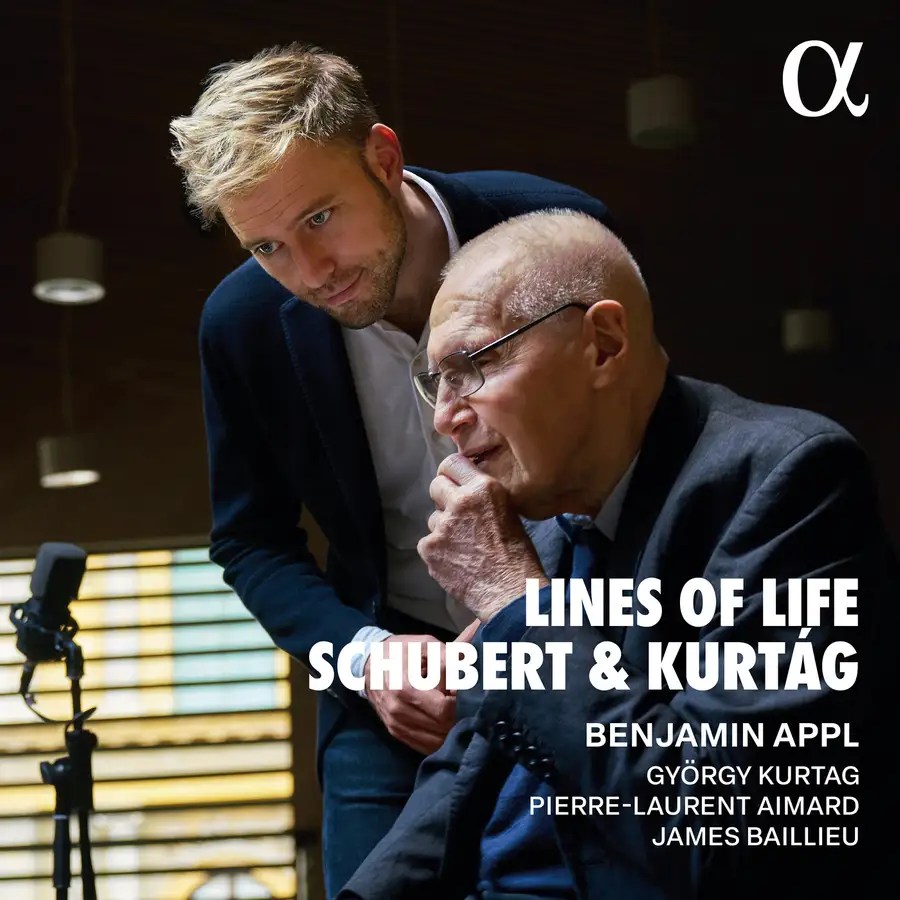
The recording process was highly unusual, with 1,300 takes required over 12 days for the finished article (above). Part of the reason for this was the sheer compression of Kurtág’s music, where he says so much in such a short space of time. “It’s a weird phenomenon, because you would think a very complicated, huge piece with thousands of interwoven lines, but when you look at the page, there is hardly anything written. It’s very bare. Nevertheless it has an ocean behind it, a very deep sea, where there’s so much to discover and to question. That’s what I find so fascinating, a paradox – but a most attractive one.”
Appl was witness to the remarkable chemistry between Kurtág and Marta when they played piano together, privately. “He has no awareness that he’s on stage. It is almost helpless, but in a way that is so real and honest, and touching.”
The new album explores more the connection Kurtág has with composers such as Schumann and, in this case, Schubert. “When I learn his music, it is like learning intervals, and you go along from one note to the next. When I worked with him for the first time, suddenly he put some harmonies underneath which completely made sense, and very often they were Schubertian harmonies. His music is close to Schubert’s, because Schubert also wrote reduced music in the score, there is not a lot. You feel very naked when you perform it. With the littlest impact he tried to have the biggest outcome. This is also music he played a lot with Marta, and she sang along, so this is a very personal connection between Kurtág and his music. He also selected the songs which we recorded, and it was wonderful to put an order together where some of these Schubert songs are like a meditation after his own short songs, while others are a break in mood and harmonics. It was a learning curve for me to work on the order.”
The learning process has been immense. “It is a question all the time. His favourite word is “Maybe?” He is someone who doubts all the time, with questions – there is such insecurity in him, and that’s the most confusing thing in the beginning. The composer should tell me how it has to be done, but actually he is always searching for the right performance, and that is something I find so fascinating, together with the composer. His understanding of the music of the world, bringing quotes from Russian literature or Chinese techniques in porcelain or Beckett, or whatever – his knowledge of the world is so incredible, and he brings parallels from different parts of the world and different art forms. It’s very, very inspiring.”
Does he use modern technology much? “No. He composes with paper, though he does use DVD and CD players. In rehearsals I brought my iPad, and it was interesting to see with a 97-year-old man, how immediately he understood how to tap and turn the pages. He’s a very open-minded person and has just started to learn Chinese. He has a super brain.”
The compositional process is very involved for Kurtág. “When he has to put a staccato dot on top of a note, you think he goes through hell – he starts shaking, and the pen goes closer to the page, and then he goes back and forward. His entire body is twisted, like Orpheus going through hell, and it’s nerve-wracking. It’s a real inner battle to compose. And that’s very inspirational.”
Appl regards him with affection, as a dear friend. “Mr Kurtág is someone you can’t have small talk with”, he observes. “To finish a sentence takes ages, because as he does in his music, he wants to use every word in the perfect way with perfect meaning. Expressing something is real work, but he shows affection, admiration, friendship in very little gestures. He leaves his house very rarely, but whenever I perform in Budapest the honour for him to come to my concerts is huge. When he appears in a concert hall all the people stand up because he’s a national hero. When you talk to a taxi driver from the airport and tell him you go to a composer called Kurtág, everyone knows him. It’s extraordinary how people appreciate him.”
Talk turns to another musical behemoth, Dietrich Fischer-Dieskau. Appl’s tribute album to him, To Dieter: The Past and Future, is due for release on 23 May. It prompts the question – how has it been possible to focus on two musical figures of such renown? “I feel incredibly grateful”, Appl says, “because those two encounters in my life are probably the most rewarding and special musical relationships, mentors I have had in my life. It’s just coincidence that their birthdays or where they stood in their life is close together.”
He talks about meeting the great German baritone. “It was really very special, as he was my absolute hero before meeting him. The first time was in a master class in Austria in 2009, where we were supposed to send suggestions of ten Schubert songs with our recording. I heard he could be quite tricky and demanding as well, so I sent a list of 30 Schubert songs. A few weeks later, back came a list of four Schubert songs, and all four were not part of my list. That was the first impression I got from him. After this masterclass, he offered me to work with him privately, and we worked regularly in his house in Berlin and Bavaria. It was an absolute gift to be together with him for six hours a day, just the two of us and a pianist.”
The repertoire choices for To Dieter are a true musical biography, with songs from Fischer-Dieskau’s father Albert and brother Klaus. “Honouring such a hero and such an incredible singer is a very tricky thing”, he explains, “because if you do his best-selling songs, he has already done them so well, so it’s hard for the next generation to do an album such as that. For me it was more important to give an insight more into who he was. I had the big pleasure of being able to go through most of his private correspondence, his love letters, contracts, diaries – all of that. While respecting privacy I wanted to give an insight into who he was, a person who had a lot of challenges in his life, a lot of things people are not so much aware of.”
He elaborates. “For me, the most important and interesting years are really his childhood in Berlin, growing up in a family where the father was a headmaster, and always wanted to become a composer. He did some singspiel, some small operas, while his brother wrote some music from an early age onwards. We also have a piece where Fischer-Dieskau appears as a poet, and some translations. There are the years in the beginning where he was as a soldier in Russia, then the years as a prisoner of war in Italy, where he was in an American prisoner of war camp, where he automatically learned most of his repertoire, and where he performed Winterreise a capella in front of 6,000 soldiers, then in 1945-46 where he was singing Russian, French and German songs all together in a recital for Germans in an American camp. These years shaped him so much, then coming to England and working with Gerald Moore, making a new export of German culture after a time of war. That, for me, is more interesting than the years we know him best, when he travelled around the world, and amazed people in the concert hall.”
There is his fascination with languages, too – which must have been hard to learn? “Absolutely. It was a good learning curve for him being in Italy for two and a half years as a prisoner of war, where he learned Italian, and where he had to communicate with the American soldiers. Generally he was just very good phonetically, singing different languages.”
Was it intimidating taking on such a program? “Absolutely! The album is not created to challenge him at all – but I know certain critics will compare the singing with him, which is always tricky. That is not my intention. There are many things that have changed – the attention of an audience, the tools and technology you have for live – so much around us has changed. Comparing musicians from different centuries is therefore a very tricky thing to do.”
It is tempting to consider how Fischer-Dieskau (above) would approach recording in today’s climate, with more bite-size musical consumption. Does Appl have to wrestle with that when performing, sticking to his principles? “I think you have to, because then you’re authentic. At the same time, I think artists have never been more challenged to be flexible, to adjust to new themes, forms of presenting, allowing cameras in hall, appearing on social media immediately. You can control certain things in our industry, but not as much as in the times of Karajan. Those times are gone and our influence and power is in other hands. You have to be flexible, but not at the price of losing authenticity.”
Is there a certain give and take, allowing projects for other people so that more personal aims can be achieved? “Absolutely, and more and more I realise – in politics or the world generally – that compromise has been, for many years, a negative. But I realise more in every field of who we are, that compromise is the only way of living together, of coexistence, of working together, of creating a career, of creating art. It’s always about compromise.”
We agree on the importance of music in these times, and our fortunate position in being able to work in and talk about it. “I hope that many people understand this and also come to this realization. If I may speak as a German during the times of the two big wars, that was a time where the concert halls were full, where people listened to music, and craved something beautiful, a world they can dive into where they are away from, from the misery they experience. People are searching for inner meaning, for peace, for being ‘careless’. Classical music is a wonderful solution for these things.”
Appl’s research and interest in the history of Germany runs deep. “I had a project with Éva Fahidi (above), a wonderful lady who unfortunately passed away one and a half years ago. She was a prisoner in Auschwitz, Jewish but also from Hungary. She wanted to become a pianist, but the Nazis broke her back in Auschwitz, so she never was able to become a musician. Nevertheless, we travelled around, and I performed while she talked about her life. It’s a topic for me as a German, particularly moving to the UK, being grateful. It’s about understanding differences, but also appreciating the things we have in common, in a time where half of the country decided to move out of the European Union. It is a time to really understand where you sit historically, how you fit into these societies, who you are and where you belong to. I think that is only possible if you think a lot about the past, and meet the older generation, to understand their point of view.”
In the time since we last met, Appl has graduated from the BBC New Generation scheme, and his career has blossomed. Has the voice changed in that time? “I think so, particularly in the last year. Normally, as a baritone, you have the big years between 40 and 50. As our physique and intellect changes, and the world around you, everything is connected, they are all influences. You want to improve your technique, but the way you see music and life influences your way of singing.”
Appl has complementary pianists, too, principally dfgd and dfgd. “I’m someone who likes working with different musical challenges. I understand other musicians who need the security and the bond working with one pianist for a long period or for the lifetime. But for me, it is like a master class, listening to what another pianist offers differently. I find there is a danger when you work always with the same people, that trust becomes comfort.”
That will never be a danger with Kurtág, presumably! “No. Artistically it is very, very difficult at times, with a level of exhaustion I’ve never experienced otherwise in my life. It’s a very unique experience.” A real balance to Messiah? “Yes. It is a wonderful thing being a musician, where every week you can focus on another wonderful experience. It’s hard to really say what music you love most, because everything has its face, and with this learning curve, with human encounters, they shape you as an artist and human being and that’s a wonderful thing. I’m very grateful.”
Lines of Life, the album of Schubert and György Kurtág, is out now on Alpha and is available on Presto Music Appl will celebrate his mentor Dietrich Fischer-Dieskau with a series of concerts with pianist James Baillieu, beginning at the Queen Elizabeth Hall on Sunday 2 March. For details of the tour, visit the Benjamin Appl website.
Benjamin Appl (baritone, above), Kristian Bezuidenhout (fortepiano, below)
Wigmore Hall, Monday 16 September 2019 (lunchtime)
You can listen to this concert on the BBC Sounds app here
Review and guide by Ben Hogwood
Lieder can be downright miserable sometimes, as Benjamin Appl acknowledged when thanking us for attending this recital of ‘jolly German music’, with which the Wigmore Hall opened their 2019-20 season of BBC Radio 3 Lunchtime Concerts.
Appl, a baritone of ever-growing reputation, was performing with Kristian Bezuidenhout, who played a Blüthner fortepiano dating back to Leipzig in 1856 – the year of Schumann’s death. The instrument, an attractive rosewood colour, proved the ideal foil for an interesting programme looking at the Lied in Germany around the first half of the 19th century. In an hour we covered some little known ground from the output of Schumann himself, complemented by settings by Mendelssohn, Zelter and Loewe.
The pairing began with three later Robert Schumann songs, all based around the character Harper, from Goethe’s novel Wilhelm Meister’s Apprenticeship. Schumann set the songs in 1849, the centenary of the poet’s birth. Appl stood tall and upright in front of the piano, communicating directly with the audience through his eyes as well as his voice. Wer nie sein Brot mit Tränen ass (Who never ate his bread in tears) was a sombre note on which to start, though the pain eased a little before the end, Bezuidenhout’s spread chords giving an indication of the fortepiano’s rounded sound. Wer sich der Einsamkeit ergibt (Who gives himself to loneliness) had a penetrating delivery from the singer, with a dark and unsettled postlude from the piano, while An die Türen will ich schleichen (From door to door will I steal) had a slightly lighter touch.
There followed three songs by Mendelssohn setting the poetry of Nikolaus Lenau. The short song An die Entfernte (To the distant beloved) danced lightly and was nicely phrased, before the nocturnal Schilflied (Reed song) was distracted and occasionally lost in thought. Frühlingslied (Spring song) emphatically blew away the cobwebs, the positive energy of the new season blowing the dark thoughts away.
The music of Carl Friedrich Zelter, a good friend of Goethe, is not often heard in the concert hall these days. He had his friend’s blessing however, the author approving of his direct methods of word setting, without too much in the way of musical dressing. His three Harfenspieler are bold settings and Appl sung them with clarity here, hitting the high notes of the second song with impressive intensity. Bezuidenhout was subtle in his complementary melodic lines on the fortepiano.
Contrasting with these were the dramatic songs of Carl Loewe. Herr Oluf is a self-contained Danish legend against the dangers of meeting Elves, and was performed with no quarter given, a terrific introduction from Bezuidenhout setting the energy level high. On occasion the singer has quite an unusual melodic profile, but this was straightforward for Appl’s vivid interpretation. The mischievous Hinkende Jamben was gone in an instant, with its mannerisms and lisps, before an expansive introduction to Tom der Reimer brought a grand tone from the singer. In a legend comparable in profile to Herr Oluf, it finished with brightly ringing bells, courtesy of Bezuidenhout’s picture painting.
When Schumann made his six settings of Lenau’s verse, he added a short Requiem in the mistaken knowledge that the poet had died. However when the day of the first performance arrived in 1850, news reached the gathering that Lenau had only just passed away, making the composer’s tribute strangely prophetic.
It is a dark cycle, reflecting perhaps the struggles of both men with mental illness – but illustrating at the same time the inner strength that music and poetry gave them. The steely Lied eines Schmiedes (Blacksmith’s Song) found Appl gathering himself with impressive projection, before the mood and heart softened a little for a languid account of Meine Rose (My Rose). Meanwhile Kommen und Scheiden (Meeting and Parting) had a devastating pay-off in the form of the emphasised last word, where the ‘last dream of my youth was taking leave of me’
Die Sennin (The Cowgirl) began with flowing piano, which led to Appl’s ringing delivery of ‘spring’s first song in the trees’, one of the recital’s most memorable moments. From there the cycle took a darker tone, Bezuidenhout breeding anxiety with the restless fortepiano line of Einsamkeit (Solitude), where Appl’s vocal was bold, and then to Der schwere Abend (The Sultry Evening) which was darker still, with a cold final line ‘to wish us both dead’. Thankfully the Requiem itself – a short Latin text – offered consolation and rest, as well as a rousing central section looking to the heavens.
This was a magnificent recital, with grace and power in equal measure from both performers, and the sound of the fortepiano a real treat in complement to Appl’s caramel tone. As a bonus we heard Mendelssohn’s Auf Flügeln des Gesanges (On Wings of Song), finishing in celebratory mood.
Repertoire
Benjamin Appl and Kristian Bezuidenhout performed the following songs (with timings on the BBC Sounds broadcast in brackets):
Schumann Wer sich der Einsamkeit ergibt Op.98a/6 (1:54); Wer nie sein Brot mit Tränen ass Op.98a/4 (4:55); An die Türen will ich schleichen Op.98a/8 (all 1849) Mendelssohn An die Entfernte Op.71/3 (1842) (9:56); Schilflied Op.71/4 (1832 (11:17); Frühlingslied Op.47/3 (14:08) 1839) Zelter Harfenspieler I-III (18:03) Loewe Herr Oluf Op.2/2 (24:18) Hinkende Jamben (29:51); Tom der Reimer (30:35) Schumann 6 Gedichte von Nikolaus Lenau & Requiem, Op.90 (37:53). Individual songs: Lied eines Schmiedes (37:53), Meine Rose (39:05), Kommen und Scheiden (42:52), Die Sennin Schöne (44:00), Einsamkeit (46:08), Der schwere Abend (49:11), Requiem (50:49)
Encore – Mendelssohn Auf Flügeln des Gesanges Op.34/2 (56:07)
Further listening
Benjamin Appl has not yet recorded any of the repertoire in this concert, save the encore, but suitable recorded versions can be heard on this Spotify playlist:
Of the many fine young singers coming through in classical music currently, few have a voice quite as memorable as Benjamin Appl (above). The German baritone, a BBC New Generation Artists performer, has been making quite an impact on audiences worldwide, and more recently wowed the Gramophone awards with a rendition of Carl Millöcker’s aria Dunkelrote Rosen from Gasparone. In this chat with Arcana, which took place a few months back, he talked about his first album for Sony Classical, Heimat, and the influence of legendary singer Dietrich Fischer-Dieskau on his work. But first…
Can you remember your first encounters with classical music?
I grew up in Regensburg in Bavaria. I don’t remember my very first encounters but my mum is musical, and played guitar. I grew up with folk music, lullabies, classical music and the church. My older brother, six years older than me, was banned from attending the boys’ choir in our home town (the Regensburger Domspatzen). My parents were against it completely but he won the battle after six or seven years. My second brother followed, then as a natural process it was me. I sang a lot of church music and choral music – some of it in German but a lot of Latin.
When did you start to take singing lessons, and realise that singing was going to be a career?
The system is a bit different to that in England. When your voice breaks, you continue as part of a boys’ choir, and start as a young male voice. At the age of 15-16 I started as a young baritone, and had a very supportive teacher who introduced me to a lot of new repertoire. I worked in a bank for two years, then in business administration, and while I was doing that I started studying singing for fun. More and more I changed my direction, and around the beginning of 2009 I did my business administration diploma. Then I moved to London to study at the Guildhall. It was not an overnight decision but was a shift in my thinking.
What have you learned from working with someone as well established as Graham Johnson?
It’s a wonderful collaboration. When I met him he was on the panel of a singing competition in Germany. He was the professor of song at the Guildhall when I was there. He had a wonderful ability to change the student-teacher dynamic to an equal partnership of colleagues on the stage. For songs he is definitely ‘Mr Lied’, and his knowledge of this is like nobody else. He knows where the texts are and has been incredibly helpful in putting texts together for this release.
The idea for Heimat was one that had been in my mind for some time, and generally before I worked with Graham Johnson I was working with Dietrich Fischer-Dieskau. He taught me that song recitals should be either for one composer or in groups so the audience could get into one composer. I saw that Graham Johnson had created a concept of recital programmes with the Songmaker’s Almanac, and I was inspired by him and his art of putting songs together for this album.
I took this as a topic so I went to the library and made a list of songs that were related to Heimat or speaking about it, then others that were not so related but related to my personal Heimat or experiences. I had a huge list, so it was challenging to cut it down to 65 minutes or so of music. It is always difficult to translate or explain Heimat, to get a sense of what it means in the UK, so some sections take in the place I was born, children’s songs I relate to, and then the idea of space or locations where people belong to – the country or a house. It also looks at the people I connect to, and feel comfortable with. There are a lot of different aspects to the program, so I wanted to explain it in a personal sense.
I also thought it should be in both German and English, so it might look like a complete mess but when you listen it works rather nicely. That said, the world of song is such a bubble within the bubble of classical music, but it is a small bubble that people will hopefully discover. I hope one or the other person will be attracted to it. Songs will always belong to a smaller audience, as they are such an intimate art form, but I am hoping there are people who will react and get an audience for song.
Who do you particularly admire in the form of song?
As a German baritone I think Dietrich Fischer-Dieskau will always be the first, but I also admire Felicity Lott, who I found to be so kind and modest after such a wonderful career. I would also say Thomas Allen, and Thomas Hampson too. These are all people who have done all the three genres so well – song, solo singing with orchestra and opera.
What have you learned from working with someone as fresh and talented as James Baillieu?
I find working with both Graham Johnson and James very different of course. With James it is more like a journey of exploring things and trying things out, starting from a sheet of white paper from where you can write things out. With Graham Johnson, with his experience, you have a discussion but always realise he is absolutely right! In every part of life you explore these things and they bring you a greater learning experience. I really like the mixture of both collaborations; it’s inspirational to work with different people, like playing tennis with someone who has a different style. It brings out different sides of your character.
I first saw you sing in the Wigmore Hall. Do you think it is the ideal venue for singers – and what other venues have you enjoyed singing in?
Absolutely. There is no place in the world that compares to it. It also helps greatly that the chairman John Gilhooly is supporting song as an art form so much, with people who believe in it. It’s the perfect venue, the acoustic and the audience, like a temple for the form. In Germany people go to the string quartet, and it is often difficult to get them to go to a song recital as people think they’re old fashioned. They think that because the songs use words we don’t use anymore, or they think all the songs are about death! Yet even when we don’t know all the words the emotions of love, losing someone, rejection, pain, are all feelings we belong to. I would like to explore and show this art form should not always be given on an intellectual platform. The texts are so important we often lose the emotional connection. That’s how we can belong and relate to the song.
Did Sony give you confidence for promoting song as an art form?
This was one of the reasons I signed. They gave me complete freedom in what I wanted and helped me to be brave to do a song disc. It is a challenge, and it gives me the chance to present myself in an art form like song. It’s great to have this level of support from a major label, one that looks after singers like Christian Gerhaher and Jonas Kaufmann, who are two of the major players.
Are you also working with bigger forces than piano?
Absolutely, I love to sing in the oratorio tradition, and also in orchestral songs. I have sung Schubert orchestrated by Brahms, Mahler songs, and in the Bach oratorios. I’m doing a lot and the next album I do will be with an orchestra. When I was a New Generations Artist I did a lot of that. It is important to do two or three genres of singing – and for me the main three are opera, concert and lied. They enrich each other vocally and mentally.
Some of our Arcana readers will not be very familiar with Lieder. Would you recommend Schubert as the best way in, or a mixture of composers perhaps?
It is always difficult as taste is a very individual thing, but generally it depends on your background. There is some wonderful English song on the Heimat disc, like Vaughan Williams songs or Britten folksong arrangements. It’s very individual how you connect to music, so even if there is just one piece from that moment you can discover more. There is more Schubert, but then he is the father of song so hopefully you can find one song you like!
Schumann (1810-1856): Frühlingsfahrt Op.45/2 (1840); Der Einsiedler Op.83/3 (1850; Der frohe Wandersmann Op.77/1 (1840)
Mendelssohn (1809-1847): Pagenlied (1832); Nachtlied Op.71/6 (1847); Wanderlied Op.57/6 (1841)
Brahms (1833-1897): In der Fremde Op.3/5; Mondnacht; Parole Op.7/2; Anklänge Op.7/3 (all 1852-1853)
Pfitzner (1869-1949): In Danzig Op.22/1 (1907); Der Gärtner Op.9/1 (1888-9); Zum Abschied meiner Tochter Op.10/3 (1901)
Wolf (1860-1903): Nachruf (1880); Das Ständchen; Der Musikant; Der Scholar; Der Freund (all 1888)
Spotify
Benjamin Appl has not yet recorded any of this repertoire, but a reproduction of his program using available versions can be accessed below, for listeners who cannot hear the BBC broadcast. Where possible I have used recordings made by Appl’s mentor, Dietrich Fischer-Dieskau:
About the music
Joseph von Eichendorff (picture used courtesy of Wikipedia)
With around 5,000 song settings of Joseph von Eichendorff’s poetry from the 19th century alone – with thanks to BBC Radio 3 announcer Sara Mohr-Pietsch for the info! – Benjamin Appl and Graham Johnson had no trouble making up a concert of 18 ‘lieder’ for the first Wigmore Hall lunchtime concert of the year.
Their choice gives an intriguing insight into different approaches to the poet. Broadly speaking, Schumann ranges from love-laden to thoughtful and a little morose (though his selection comprises three prayers), Mendelssohn is either forthright or reflective in his three songs; the youthful Brahms is surprisingly relaxed, while Pfitzner emerges as an inventive painter. Perhaps the most striking examples here come from Hugo Wolf, who wanted to focus on the ‘comparatively unknown humourously and robustly sensual side’ of von Eichendorff’s poetry.
Performance verdict
A slightly downbeat return for the WIgmore Hall in 2016, but a concert that was beautifully performed. The pairing of an incredibly experienced pair of hands in Graham Johnson and a singer starting out on his artistic voyage in Benjamin Appl was a good match and yielded many rewards.
Several songs left lasting impressions from the program, among them two from Brahms, with Appl’s control throughout Mondnacht and the picture painting from Johnson in Parole especially notable.
It was good to hear some rarely-sung lieder of Hans Pfitzner, whose use of the piano’s lowest end brought a wholly new texture to In Danzig, while the Wolf selection reminded us how original he could be in his song settings, the piano cast in a prominent role of scene setting, one that Johnson relished and used to his great advantage.
What should I listen out for?
Schumann
2:06 – Frühlingsfahrt (A spring journey) – the initial optimism of this march is quite bracing, but it soon subsides as the poet thinks of old age.
5:31 – Der Einsiedler (The hermit) – quite a sad song, solemn and lost in thought. Again old age is a preoccupation, the piano supporting the vocal melody as a walking stick might support the physical frame.
9:02 – Der frohe Wandersmann (The happy wanderer) – a much more positive, open-air march that talks of streams ‘rushing down the mountains’ and larks that ‘soar heavenwards’. More spring than winter!
Mendelssohn
11:03 – Pagenlied (Page’s song) – a tentative detached figure in the piano part adds to the tension of this song, which is relatively subdued and distracted.
13:11 – Nachtlied (Night song) – there is a withdrawn feel to this song also, until the Nightingale is encouraged to sing out at 14:39.
16:12 – Wanderlied (Song of travel) – a typically busy piano part from Mendelssohn gives the impression of rapid movement, the traveller set on his way with the minimum of fuss – and happily so!
Brahms
20:49 – In der Fremde (In a foreign land) – a rather downcast setting in a minor key, the poet in reflective mood. The piano hints at a major key near the end but such thoughts are quickly forgotten.
22:12 – Mondnacht (Moonlight) – dappled piano lines suggest moonlight in the branches, and there is a more romantic mood, with yearning vocal lines.
25:03 – Parole (Password) – again Brahms thinks privately, using vivid picture painting from the piano that depicts the huntsman through distant calls but also the ‘one last shot’ (26:44), where Johnson adds extra emphasis.
28:02 – Anklänge (Echoes) – a short but evocative song of two halves, the first depicting a lonely house in a forest, the second greeting the maiden inside.
Pfitzner
30:07 – In Danzig – the mood changes dramatically in this darkly coloured song exploiting the lower range of both piano and singer. The mysterious and faintly menacing mood is aided by elusive harmonic movements.
34:38 – Der Gärtner (The Gardener) – this song is more conventional in its language, looking back to Schumann and Brahms. The mood is positive and quite dreamy, but reaches a very impressive climax at the end with the words ‘Viel schöne, hohe Fraue, Grüss ich dich tausendmal’ (‘I, lovely gracious lady, greet you a thousand times’)
38:08 – Zum Abschied meiner Tochter (Farewell to my daughter) – a positive farewell, and an expansive setting that reaches another impressive climax at 40:07.
Wolf
42:58 – Nachruf (In memoriam) – the piano imitates the lute in this song as Appl sings a gentle lament
47:06 Das Ständchen (The serenade) – a watery piano introduces an adventurous setting that contains the tune of a serenade but some unconventional dissonances between voice and piano. There is a great deal of sadness in this song.
50:27 – Der Musikant (The minstrel) – the choice of music over marriage is made here by the singer! As if to emphasise his decision there is a rather lovely piano introduction that proves to be the bedrock of the song.
52:14 – Der Scholar (The scholar) – there are a number of examples of picture painting in the piano part for this song, depicting the ‘little birds’ and the rain that ‘rattles on the leaves’. Again the singer extols the virtues of making music but occasionally with a few too many wines! (53:40)
54:55 – Der Freund (The friend) – The joy of friendship is celebrated here, though not without travelling through a storm or two (55:30) where the crushing piano and loud voice descend into brief turmoil before emerging triumphant.
Encore (not heard on the broadcast)
Verschwiegene Liebe (Silent Love) The twinkling piano introduction was followed here by a sensitive and grateful rendition from Appl.
Further listening
As a complement to the concert, how about a recital based on poems by Heinrich Heine? Anothre great influence on 19th century vocal music, Heine’s music was set by a number of composers – and here the great tenor Christoph Prégardien and fortepianist Andreas Staier look at songs by Schubert, Schumann and Mendelssohn:





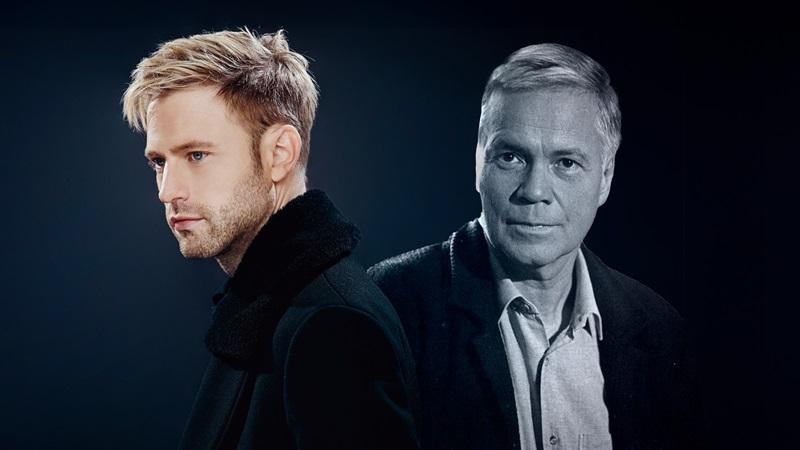


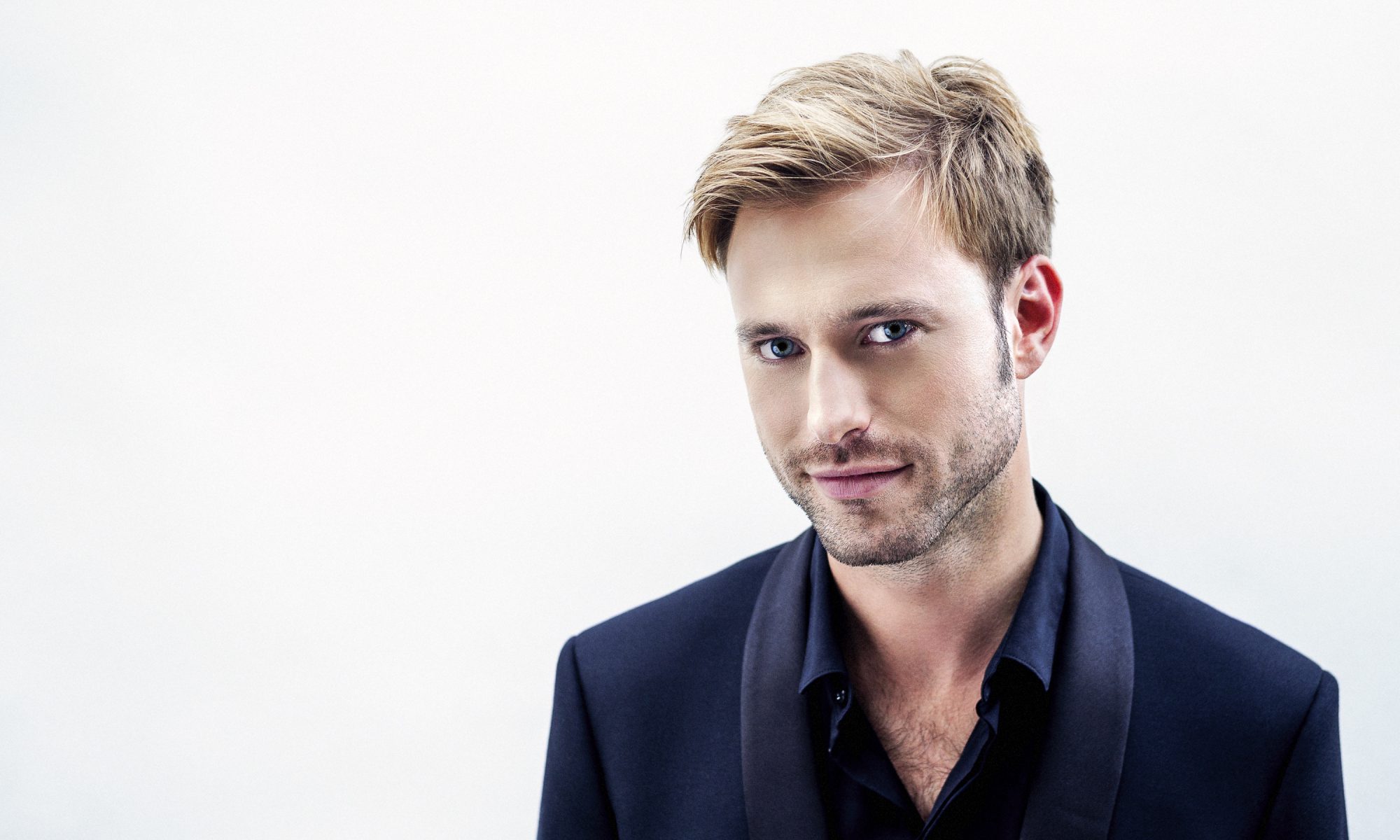

 Of the many fine young singers coming through in classical music currently, few have a voice quite as memorable as Benjamin Appl (above). The German baritone, a BBC New Generation Artists performer, has been making quite an impact on audiences worldwide, and more recently wowed the Gramophone awards with a rendition of Carl Millöcker’s aria Dunkelrote Rosen from Gasparone. In this chat with Arcana, which took place a few months back, he talked about his first album for Sony Classical, Heimat, and the influence of legendary singer Dietrich Fischer-Dieskau on his work. But first…

 Arcana.fm