In concert – St. John’s College Choir Cambridge / Christopher Gray – Christmas Carols @ Wigmore Hall

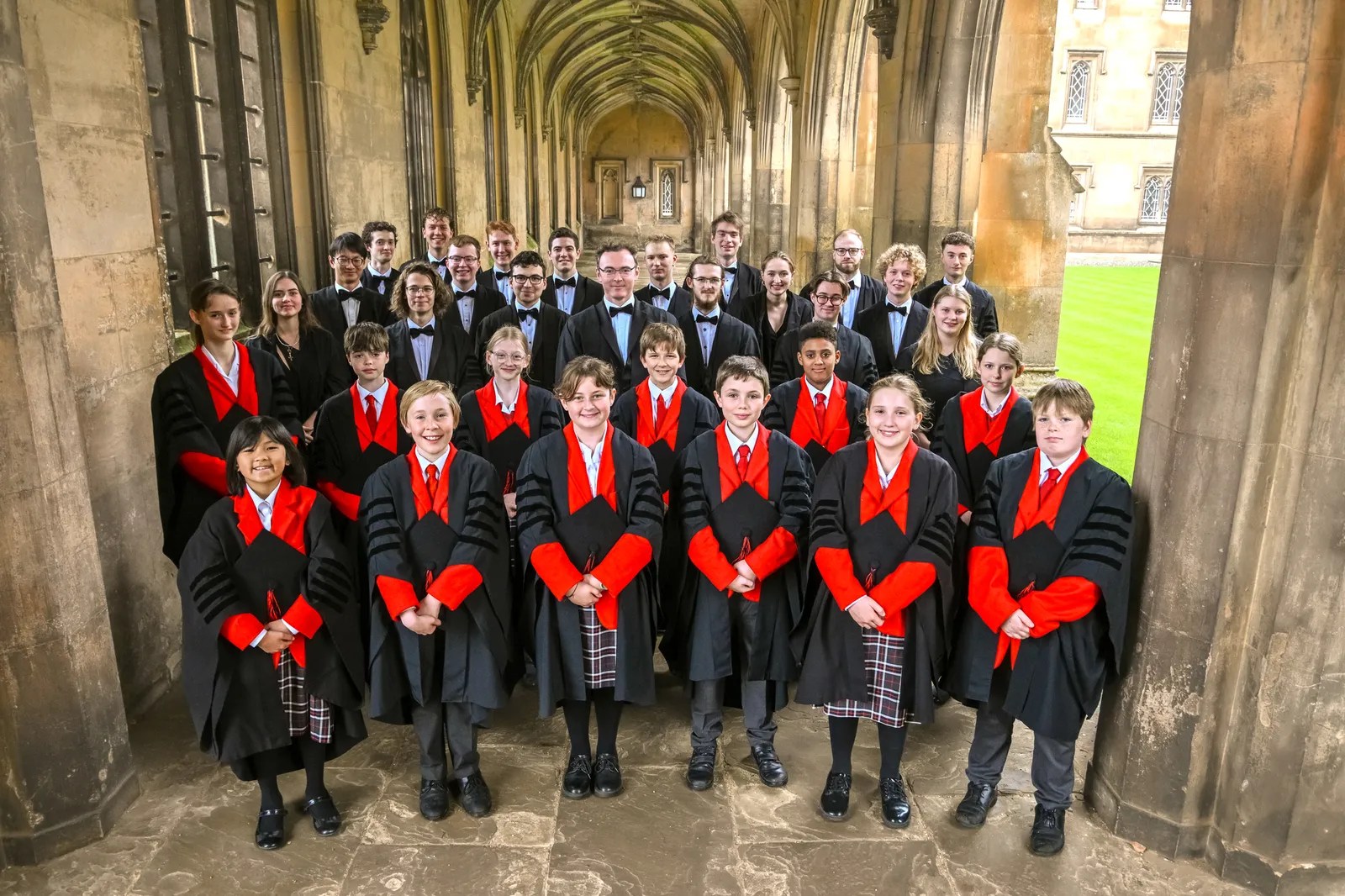
Choir of St. John’s College Cambridge / Christopher Gray

Beamish In the stillness (2007)
Rutter There is a flower (1986)
Parsons Ave Maria (c1560)
Hassler Verbum caro factum est (1591)
Britten A Hymn to the Virgin (1930, rev. 1934)
Walton All this time (1970)
Trad/German arr. Pearsall In dulci jubilo
Hieronymus Praetorius Magnificat quinti toni (pub. 1622)
Daley Love came down at Christmas (2004)
Poston Jesus Christ the Apple Tree (1967)
Kirbye Vox in Rama (c.1620)
Anon Coventry Carol
Dove The Three Kings (2000)

Wigmore Hall, London
Monday 15 December 2025

Reviewed by Ben Hogwood

What a lovely idea to bring a concert of Christmas Carols to the last of the BBC Radio 3 Lunchtime Concerts held in the Wigmore Hall in 2025. The Choir of St. John’s College Cambridge, suitably attired, were led in a stirring yet thought-provoking programme by their conductor Christopher Gray, who have just released O Holy Night, an album of Christmas carols, on Signum Classics.

Yet much of the selection here went beyond the album’s component parts, exploring responses old and new to specific parts of the Christmas story. In a curious twist, the oldest music heard proved to be the most adventurous and emotive.

The concert began with an account of Sally Beamish’s In the stillness which was notable for its crystal clear intonation and enunciation, features the choir would display throughout the concert. John Rutter’s There is a flower fared equally well, the anthem he wrote for the choir leading with a touching treble solo, before the complexities of Robert Parsons’ masterful Ave maria were aligned in commendable phrasing. Similar qualities befell the lively exchanges of counterpoint in Hans Leo Hassler’s Verbum caro factum est, before the remarkable invention of the teenage Britten was found in A Hymn to the Virgin, music that looks simultaneously forward and backward.

The choir performed these carols in carefully arranged sequences, ideally programmed for tonality and emotive impact. Walton’s exuberant All this time began the second sequence, the choir enjoying the push-pull rhythms, after which In dulci jubilo switched on its ever-beautiful light in the darkness, casting a spell in spite of a slightly ragged second verse. The clever text setting of Hieronymus Praetorius – not the normally performed Michael! – was especially enjoyable in his Magnificat setting, before the clarity of carols from Canadian composer Eleanor Daley and Brit Elizabeth Poston was beautifully achieved. The latter’s Jesus Christ The Apple Tree was particularly moving in the simplicity with which its paragraphs end.

The mood darkened appreciably for George Kirbye’s lament Vox in Rama, the inconsolable Rachel weeping for the loss of her children in the massacre ordered by King Herod, while the Coventry Carol too sounded sombre in this company. All the more reason to end with a characterful account of Jonathan Dove’s The Three Kings, brilliantly characterised by the trebles especially.

Two encores followed – a breathless and exciting arrangement of Adam lay ybounden by Laura Sheils, then a close-harmony version of We Wish You A Merry Christmas, channelling Cole Porter to show-stopping effect. It was the musical equivalent of a mince pie with extra brandy, the ideal way to send the Wigmore Hall audience humming into the afternoon!

You can listen to the concert on BBC Sounds here, and explore the choir’s recent discography at the Signum Classics website.

Published post no.2,750 – Tuesday 16 December 2025

News – 77th Aldeburgh Festival 2026 – Programme announced

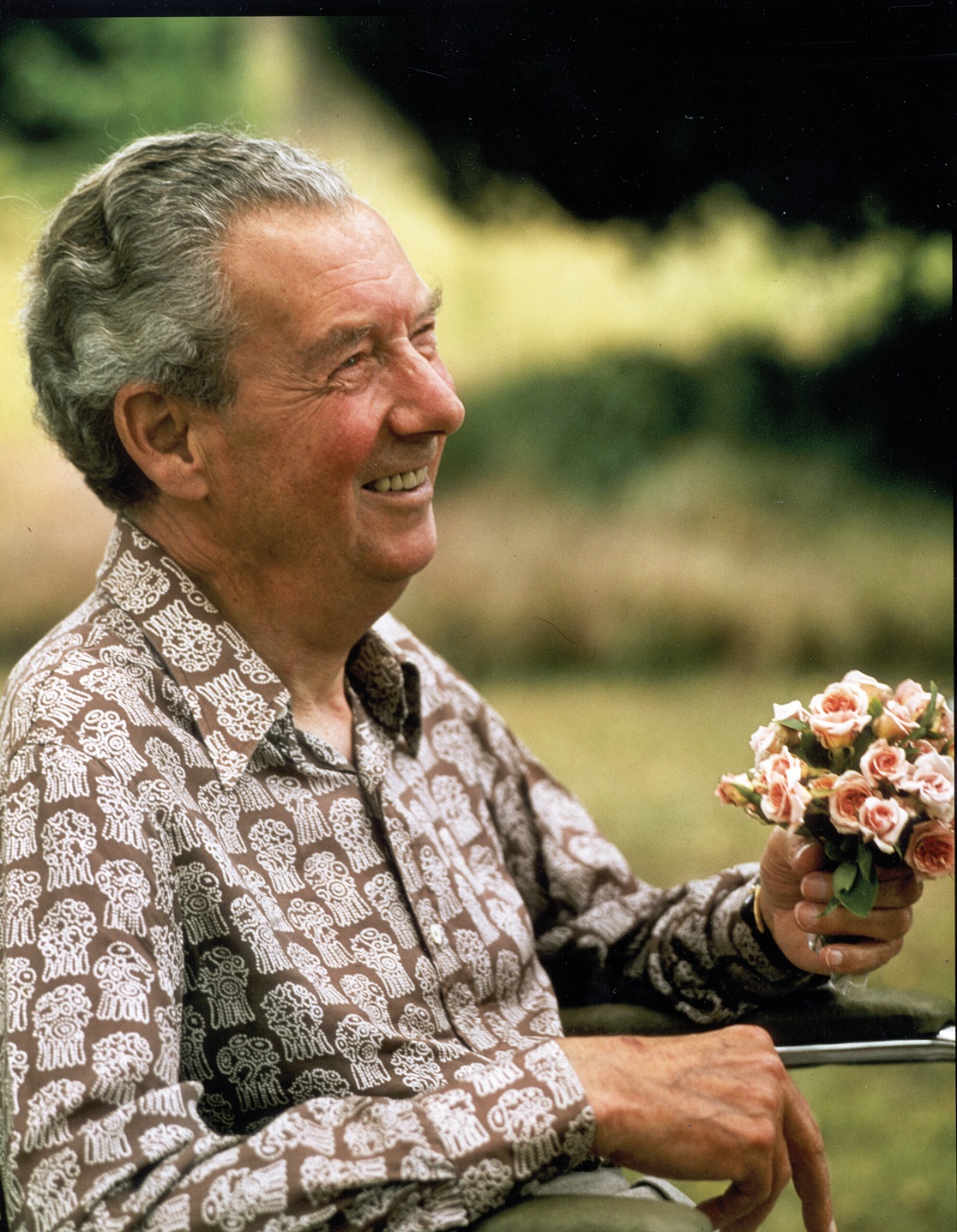
published by Ben Hogwood from the original press release. Photo above (c) unknown

The programme for the 77th Aldeburgh Festival takes place from Friday 12 to Sunday 28 June. Aldeburgh Festival has always been a place where music is made in full view of its past and its future; where composers, performers and audiences meet in the “holy triangle” Britten believed was essential to artistic life. In 2026, fifty years since Britten’s death, Britten Pears Arts reaffirms that principle as a living manifesto. 1976 marked an ending, but also a beginning: the moment the care, curiosity and exacting standards Britten and Pears brought to nurturing young artists became the enduring thread of the Festival and this organisation’s identity.

The 2026 Festival convenes artists who know one another’s work deeply—musicians who share a language of trust, risk and detail. Featured Artist Ryan Wigglesworth leads a circle of collaborators including Vilde Frang, Sophie Bevan, Steven Osborne, Lawrence Power and Nicolas Altstaedt. They come not simply to perform, but to pass on what they have learned: forming chamber groups, standing side by side with young players, and allowing music to reveal its meaning through shared attention.

In 2026 James Baillieu and Ryan Wigglesworth begin a 3-year tenure as Associate Directors of the Britten Pears Young Artist Programme. The aim is to build academies in which young, aspiring artists can flourish alongside their mentors and be celebrated in Aldeburgh Festival programmes, and to consider how important this venture is at a difficult time for the arts.

At the heart of this commitment is the new Festival Academy, directed by James Baillieu with Lise Davidsen, Caroline Dowdle, Julia Faulkner and Nicky Spence as faculty. Their work, and the Summer Academy that will follow it for instrumentalists and led by Ryan Wigglesworth, continues the legacy Britten and Pears established and marks a new way for the Young Artist Programme to work, enabling young artists to flourish when surrounded by the very best musicians, challenged, nurtured and invited to experience the generosity of audiences at Snape Maltings.

Pelléas et Mélisande, directed by Rory Kinnear with designs by Vicki Mortimer and lighting by Paule Constable, and performed by Sophie Bevan, Sarah Connolly, Jacques Imbrailo, Gordon Bintner, John Tomlinson and alumni of the Britten Pears Young Artist Programme, opens the festival with a work of delicacy and depth. Alongside Britten’s own late works, music by Feldman, Crumb, Kurtág and Henze sits beside 11 new works by Lera Auerbach, Tom Coult, Tansy Davies, Brett Dean, Lisa Illean, Natalie Joachim, Freya Waley-Cohen, Ryan Wigglesworth and others, maintaining Britten Pears Arts’ commitment to the composers of today and the artists who bring their work to life.

Andrew Comben, Chief Executive, Britten Pears Arts commented, ‘Aldeburgh Festival 2026 draws its joy from the energy of the musicians who gather here and the future they help reveal. At the heart of this is Ryan Wigglesworth, who I’m delighted to welcome as this year’s Featured Artist. His long association with the Festival will be reflected in performances as conductor, pianist and composer, joined by many of his closest artistic collaborators. 2026 marks fifty years since the death of our Founder, Benjamin Britten. His and Peter Pears’ commitment to supporting young artists remains central to our purpose, and the Festival and Summer Academies – led by James Baillieu and Ryan Wigglesworth – strengthen that legacy by placing outstanding young performers alongside world-class musicians as a core part of our programming. The Festival opens with a semi-staging of Debussy’s Pelléas et Mélisande, with an all-star cast and creative team, followed by a wide-ranging programme of opera, orchestras, choirs, chamber music, song, film, talks, walks and a fascinating visual arts programme featuring Ryan Gander, Ffiona Lewis and Kate Giles. Set across Snape Maltings, Aldeburgh and other Suffolk locations it continues to offer a beguiling combination of music, landscape and creative possibility. We really look forward to welcoming everyone in June.’

Ryan Wigglesworth this year’s Featured Artist commented, ‘Making music at Snape Maltings over the past 25 years has been one of the great pleasures of my life. From the start, it felt like home – a place where the most important friendships were forged, a place to grow and develop artistically. So, the invitation to be “Featured Artist” for the 2026 Aldeburgh Festival was a very special and joyous privilege. A strong sense of “family” has always been central to the spirit of the Aldeburgh Festival and accounts for why so many musicians feel drawn to put down artistic roots here. And what bliss it has been programming concerts involving so many of my dearest friends and colleagues:

Nicolas Altstaedt, Sophie Bevan (literally family!), Sarah Connolly, Jacques Imbrailo, Rory Kinnear, Vicki Mortimer, Steven Osborne, Lawrence Power, John Tomlinson, as well as all the members of the two orchestras I’m lucky to be associated with: the BBC Scottish Symphony Orchestra and the Knussen Chamber Orchestra. (the latter itself a legacy of my “thanks-to-Snape” friendship with the late, deeply missed Oliver Knussen). It allows me the rare opportunity to wear all my hats under one roof, as it were: playing chamber music and song, premiering my new piece for Lawrence Power and the KCO, and conducting works that mean a great deal to me personally – none more so than Debussy’s Pelléas et Mélisande. It really is a great honour.’

James Baillieu, Associate Director, Britten Pears Young Artist Programme commented, ‘I am deeply honoured and delighted to be appointed, alongside Ryan Wigglesworth, as Associate Directors of the Britten Pears Young Artist Programme for 2026–2028. The Britten Pears Programme played a formative role in my own development as a young artist, and it is a profound privilege to return in this new capacity to contribute to its future. This appointment represents a deeply meaningful opportunity to help nurture the next generation of musicians within the creative and inspiring context that Britten and Pears established. I am excited to bring my experience, connections, and ideas to the role, and to be part of an ambitious new chapter in the life of this distinguished programme.’

To read the complete listings, head to the Aldeburgh Festival website

Published post no.2,731 – Thursday 27 November 2025

News – Bertrand Chamayou residence @ Wigmore Hall, including Ravel’s complete piano music on Sunday 7 December

published by Ben Hogwood from the original press release

This December, Wigmore Hall focus in on a pianist famed for winning the prestigious Victoires de la Musique Classique award on five separate occasions, most recently in 2022. Described by the Guardian as ‘a remarkable musician, no question’, Chamayou caps off his short residency with an unmissable evening of the complete Ravel pianos works. Before that, the pianist joins forces with the thrilling Belcea Quartet and accompanies soprano Barbara Hannigan for her Wigmore Hall debut.

The programme with the Belcea Quartet on Thursday 4 December is of extra interest, for in addition to Chamayou’s appearance in the rarely-heard Piano Quintet in E major of Erich Korngold, the quartet will mark the 80th anniversary of the world première of Britten’s Second String Quartet at Wigmore Hall.

Chamayou’s programme with soprano Barbara Hannigan is typically adventurous, the pair reaffirming their Messiaen credentials with a performance of the Chants de terre et de ciel, before Chamayou looks at late Scriabin in the form of the Poème-nocturne Op. 61 and Vers la flamme Op. 72, before the two take on John Zorn’s song cycle Jumalattaret, written for Hannigan herself.

Chamayou’s third appearance will see him perform the complete works for solo piano by Maurice Ravel, whose birth in 1875 is being marked with 150th anniversary celebrations this year. The concert begins at 7pm, with the programme as follows:

1875-1937
Prélude
Miroirs
Menuet in C sharp minor
Sonatine
A la manière de Borodine
Gaspard de la nuit

Interval

A la manière de Chabrier
Valses nobles et sentimentales
Menuet sur le nom d’Haydn
Sérénade grotesque
Jeux d’eau
Menuet antique
Pavane pour une infante défunte
Le tombeau de Couperin

For more information on all the Wigmore Hall concerts, click on the links highlighted above.

Published post no.2,730 – Wednesday 26 November 2025

In concert – Laurence Kilsby, Christopher Parkes, Sinfonia of London / John Wilson: Serenade @ Barbican Hall, London

Laurence Kilsby (tenor), Christopher Parkes (horn), Sinfonia of London / John Wilson

Vaughan Williams Fantasia on a Theme by Thomas Tallis (1910)
Britten Serenade for Tenor, Horn and Strings Op.31 (1943)
Bliss Music for Strings B66 (1935)
Delius arr. Fenby Late Swallows (1916, arr. 1962)
Elgar Introduction and Allegro Op.47 (1904-05)

Barbican Hall, London
Wednesday 22 October 2025

Reviewed by Richard Whitehouse

One can only commend John Wilson and Sinfonia of London for, in addition to an ambitious recording schedule for Chandos, frequently taking its programmes on tour – as has been the case with this judicious selection of works for string orchestra tonight being heard in London.

There could hardly be an acoustic less suited to Vaughan Williams’s Tallis Fantasia than that of Barbican Hall, yet Wilson went a good deal of the way toward making it succeed by having the main string body – and solo quartet – to the front of the platform with the subsidiary group arrayed along its rear. The outer section were taken slowly and almost impassively, but there was no lack of impetus or fervency as the central phase built cumulatively towards its climax.

The relatively modest number of strings seemed ideally suited to Britten’s Serenade. Laurence Kilsby (who made a fine contribution to Bliss’s The Beatitudes at this year’s Proms) brought real tenderness to Pastorale and ardour to Nocturne, while Christopher Parkes was suitably plangent in Elegy and dextrousness itself in Dirge. Tenor and hornist joined delightfully in Hymn, then Wilson drew playing of fastidious poise in Sonnet. Just a little unsteady in the Prologue, Parkes excelled in the offstage Epilogue with its ethereal reprise of that opening music – so rounding off a performance that proved affecting and unaffected in equal measure.

Live and in the studio, Wilson has affirmed a commitment to the music of Bliss which could hardly have been more evident than in Music for Strings which formed the centrepiece of this concert. It had been written for the Vienna Philharmonic to premiere at the Salzburg Festival and, if its formidable technical demands no longer sound forbidding, there can have been few performances of this virtuosity or insight. Trenchant and impulsive, the opening Allegro was followed by an Andante whose sustained eloquence never excluded lightness of touch – with the speculative transition into the final Allegro as deftly handled as the Presto with which this work surges to its headlong close. Not merely a timely revival, this was no less a vindication.

Introducing this second half, Wilson had remarked how Delius’ music needs to be coaxed into yielding up its secrets as surely as it needs selling to the musicians. Late Swallows succeeded on both fronts. As arranged by Eric Fenby from the composer’s only mature string quartet, it takes its place among the latter’s most haunting evocations, and not least in a central section whose rapt intensity brought an emotional frisson that tangibly held its listeners spellbound.

Elgar’s Introduction and Allegro may, by contrast, be a piece that plays itself but it still calls for interpretive input of a high order. Wilson responded with an unusually swift reading such as emphasized its nervous intensity and often volatile changes of mood, though there was no lack of cohesion or underlying momentum in a performance that took such testing passages as the central fugato assuredly in its stride prior to a glowing apotheosis then decisive close.

A performance, moreover, as set the seal on a memorable evening’s music-making. All these pieces, save the Britten, have been recorded by Wilson and Sinfonia of London for Chandos, their advocacy of Bliss hopefully continuing well beyond this 50th anniversary of his death.

Click here to read Arcana’s review of English Music for Strings, the Chandos album containing the Bliss and Vaughan Williams works performed in this concert.

Click also on the links for more information on the Sinfonia of London and their conductor John Wilson, along with soloists Laurence Kilsby and Christopher Parkes. For more information on Bliss, you can visit the Arthur Bliss Society

Published post no.2,697 – Friday 24 October 2025

In concert – BBC Singers / Martyn Brabbins @ St Paul’s Knightsbridge – Holst, Britten, Garrard, Elgar & Pickard

BBC Singers, Elizabeth Bass (harp), Richard Pearce (piano), Andrew Barclay (percussion) / Martyn Brabbins

Holst Choral Hymns from the Rig Veda – Group 3, H90 (1910)
Britten The Ballad of Little Musgrave and Lady Barnard (1943)
Garrard Missa Brevis (2017-18)
Elgar Five Part-Songs from the Greek Anthology Op.45 (1902)
Pickard Elemental (2024-25) (BBC commission: World premiere)

St Paul’s, Knightsbridge, London
Friday 19 September 2025

Reviewed by Richard Whitehouse

The upsurge of interest in and performances by the BBC Singers in the wake of its intended demise shows little sign of abating, and there could be few vocal ensembles able to put on a programme as stylistically inclusive or as technically demanding as that heard this afternoon.

Nowhere more so than Elemental by John Pickard, its first performance occupying the second half. Never absent from the composer’s output, choral music came into own with the powerful Mass in Troubles Times (premiered nearby at St Peter’s, Eaton Square in 2019) and the present work can be heard as a continuation in terms of its underlying concept. A further collaboration with author and theologian Gavin D’Costa, its form is of a journey through the elements such as Pickard had favoured earlier in his output but here with its emphasis firmly on the spiritual arising out of human concerns. Whether individually or collectively, the writing for 18 voices could hardly be more varied and imaginative, while the obbligato roles for harp plus a single percussionist playing across the spectrum of instruments enhances these settings accordingly.

After the evocative Prologue with its Paracelsian take on living matter, Earth draws on the recollections of those in the Tham Luang Cave Rescue – notably teenagers of the Wild Boars football team – in music whose initial bravado gradually assumes a near metaphysical import. Fire integrates its Shakespeare quotations into consideration of this most transformative and cathartic of elements. Air centres on Bessie Coleman with her ambition, racially rather than personally motivated, to become the first professional pilot from African-American ancestry – her combative and ultimately ill-fated career depicted with often graphic immediacy. Water then illustrates the Biblical flood narrative from an oblique and even ambivalent perspective, before Epilogue returns to evocation of the numinous as it builds with a frisson of emotion.

Not that the first half was any mere preparation. Most intimate and alluring of four such sets, the third group of Holst’s Choral Hymns from the Rig Veda traverses the ethereal, the limpid, the hieratic then the questing in the company of female voices and harp. The former were no less attuned to the greater astringency of Sara Garrard’s Missa Brevis – its bracing inclusion of traditional Estonian music offset by the greater introspection elsewhere; these contrasted aspects finding at least a degree of release with the emotional immediacy of the Agnus Dei.

Heard in alternation, the male voices duly came into their own with Britten’s The Ballad of Little Musgrave and Lady Barnard – its folk melody (Matty Groves) stretched through this plangent wartime setting with piano of illicit love, innocent betrayal, desperate revenge and stark lament. Facets that barely feature in Elgar’s Five Part-Songs from the Greek Anthology yet these brief if characterful treatments of translations by Alma Strettell, no less typical than his major choral and orchestral works from this period, were dispatched here with due relish.

Whatever else, this showcase with substance was conducted with unfailing insight by Martyn Brabbins, whose prowess in choral repertoire needs hardly more reiterating than his advocacy of Pickard, and is absolutely worth hearing when broadcast by BBC Radio 3 this Wednesday.

You can hear the BBC Radio 3 broadcast on Wednesday 24 September by clicking here

For more information on the artists, click on the names: BBC Singers, Martyn Brabbins, Elizabeth Bass, Richard Pearce and Andrew Barclay, and composers John Pickard and Sara Garrard

Published post no.2,664 – Sunday 21 September 2025