published by Ben Hogwood from the original press release
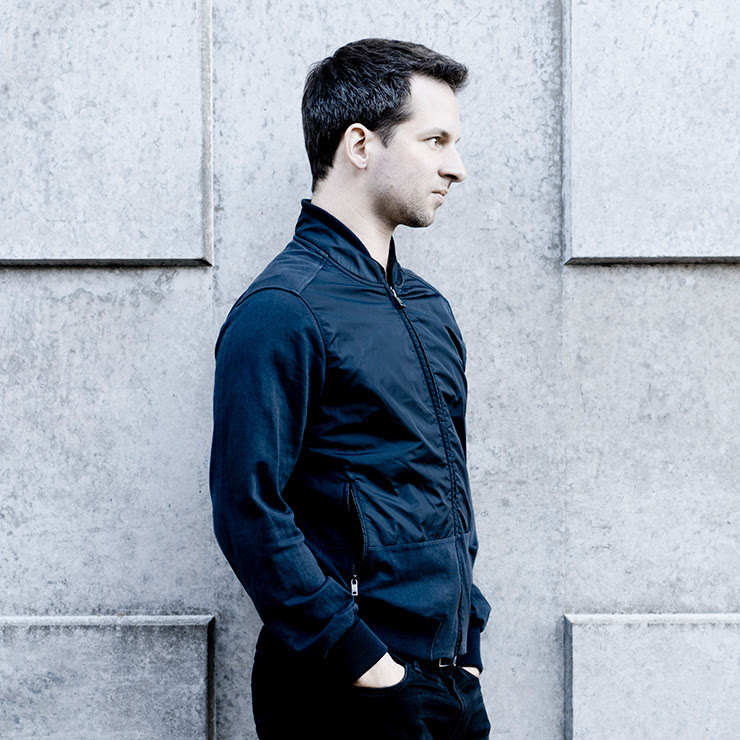
This December, Wigmore Hall focus in on a pianist famed for winning the prestigious Victoires de la Musique Classique award on five separate occasions, most recently in 2022. Described by the Guardian as ‘a remarkable musician, no question’, Chamayou caps off his short residency with an unmissable evening of the complete Ravel pianos works. Before that, the pianist joins forces with the thrilling Belcea Quartet and accompanies soprano Barbara Hannigan for her Wigmore Hall debut.
The programme with the Belcea Quartet on Thursday 4 December is of extra interest, for in addition to Chamayou’s appearance in the rarely-heard Piano Quintet in E major of Erich Korngold, the quartet will mark the 80th anniversary of the world première of Britten’s Second String Quartet at Wigmore Hall.
Chamayou’s programme with soprano Barbara Hannigan is typically adventurous, the pair reaffirming their Messiaen credentials with a performance of the Chants de terre et de ciel, before Chamayou looks at late Scriabin in the form of the Poème-nocturne Op. 61 and Vers la flamme Op. 72, before the two take on John Zorn’s song cycle Jumalattaret, written for Hannigan herself.
Chamayou’s third appearance will see him perform the complete works for solo piano by Maurice Ravel, whose birth in 1875 is being marked with 150th anniversary celebrations this year. The concert begins at 7pm, with the programme as follows:
1875-1937 Prélude Miroirs Menuet in C sharp minor Sonatine A la manière de Borodine Gaspard de la nuit
Interval
A la manière de Chabrier Valses nobles et sentimentales Menuet sur le nom d’Haydn Sérénade grotesque Jeux d’eau Menuet antique Pavane pour une infante défunte Le tombeau de Couperin
For more information on all the Wigmore Hall concerts, click on the links highlighted above.
Published post no.2,730 – Wednesday 26 November 2025
Laurence Kilsby (tenor), Christopher Parkes (horn), Sinfonia of London / John Wilson
Vaughan Williams Fantasia on a Theme by Thomas Tallis (1910) Britten Serenade for Tenor, Horn and Strings Op.31 (1943) Bliss Music for Strings B66 (1935) Delius arr. Fenby Late Swallows (1916, arr. 1962) Elgar Introduction and Allegro Op.47 (1904-05)
Barbican Hall, London Wednesday 22 October 2025
Reviewed by Richard Whitehouse
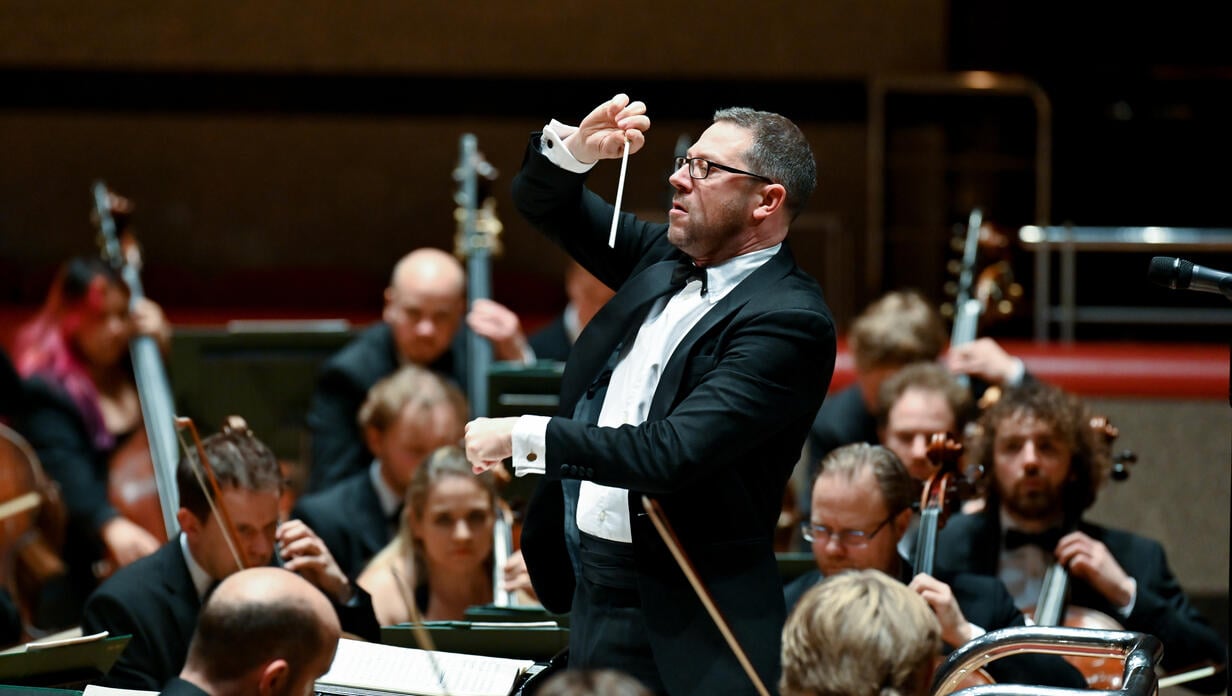
One can only commend John Wilson and Sinfonia of London for, in addition to an ambitious recording schedule for Chandos, frequently taking its programmes on tour – as has been the case with this judicious selection of works for string orchestra tonight being heard in London.
There could hardly be an acoustic less suited to Vaughan Williams’s Tallis Fantasia than that of Barbican Hall, yet Wilson went a good deal of the way toward making it succeed by having the main string body – and solo quartet – to the front of the platform with the subsidiary group arrayed along its rear. The outer section were taken slowly and almost impassively, but there was no lack of impetus or fervency as the central phase built cumulatively towards its climax.
The relatively modest number of strings seemed ideally suited to Britten’s Serenade. Laurence Kilsby (who made a fine contribution to Bliss’s The Beatitudes at this year’s Proms) brought real tenderness to Pastorale and ardour to Nocturne, while Christopher Parkes was suitably plangent in Elegy and dextrousness itself in Dirge. Tenor and hornist joined delightfully in Hymn, then Wilson drew playing of fastidious poise in Sonnet. Just a little unsteady in the Prologue, Parkes excelled in the offstage Epilogue with its ethereal reprise of that opening music – so rounding off a performance that proved affecting and unaffected in equal measure.
Live and in the studio, Wilson has affirmed a commitment to the music of Bliss which could hardly have been more evident than in Music for Strings which formed the centrepiece of this concert. It had been written for the Vienna Philharmonic to premiere at the Salzburg Festival and, if its formidable technical demands no longer sound forbidding, there can have been few performances of this virtuosity or insight. Trenchant and impulsive, the opening Allegro was followed by an Andante whose sustained eloquence never excluded lightness of touch – with the speculative transition into the final Allegro as deftly handled as the Presto with which this work surges to its headlong close. Not merely a timely revival, this was no less a vindication.
Introducing this second half, Wilson had remarked how Delius’ music needs to be coaxed into yielding up its secrets as surely as it needs selling to the musicians. Late Swallows succeeded on both fronts. As arranged by Eric Fenby from the composer’s only mature string quartet, it takes its place among the latter’s most haunting evocations, and not least in a central section whose rapt intensity brought an emotional frisson that tangibly held its listeners spellbound.
Elgar’s Introduction and Allegro may, by contrast, be a piece that plays itself but it still calls for interpretive input of a high order. Wilson responded with an unusually swift reading such as emphasized its nervous intensity and often volatile changes of mood, though there was no lack of cohesion or underlying momentum in a performance that took such testing passages as the central fugato assuredly in its stride prior to a glowing apotheosis then decisive close.
A performance, moreover, as set the seal on a memorable evening’s music-making. All these pieces, save the Britten, have been recorded by Wilson and Sinfonia of London for Chandos, their advocacy of Bliss hopefully continuing well beyond this 50th anniversary of his death.
Click here to read Arcana’s review of English Music for Strings, the Chandos album containing the Bliss and Vaughan Williams works performed in this concert.
BBC Singers, Elizabeth Bass (harp), Richard Pearce (piano), Andrew Barclay (percussion) / Martyn Brabbins
Holst Choral Hymns from the Rig Veda – Group 3, H90 (1910) Britten The Ballad of Little Musgrave and Lady Barnard (1943) Garrard Missa Brevis (2017-18) Elgar Five Part-Songs from the Greek Anthology Op.45 (1902) Pickard Elemental (2024-25) (BBC commission: World premiere)
St Paul’s, Knightsbridge, London Friday 19 September 2025
Reviewed by Richard Whitehouse
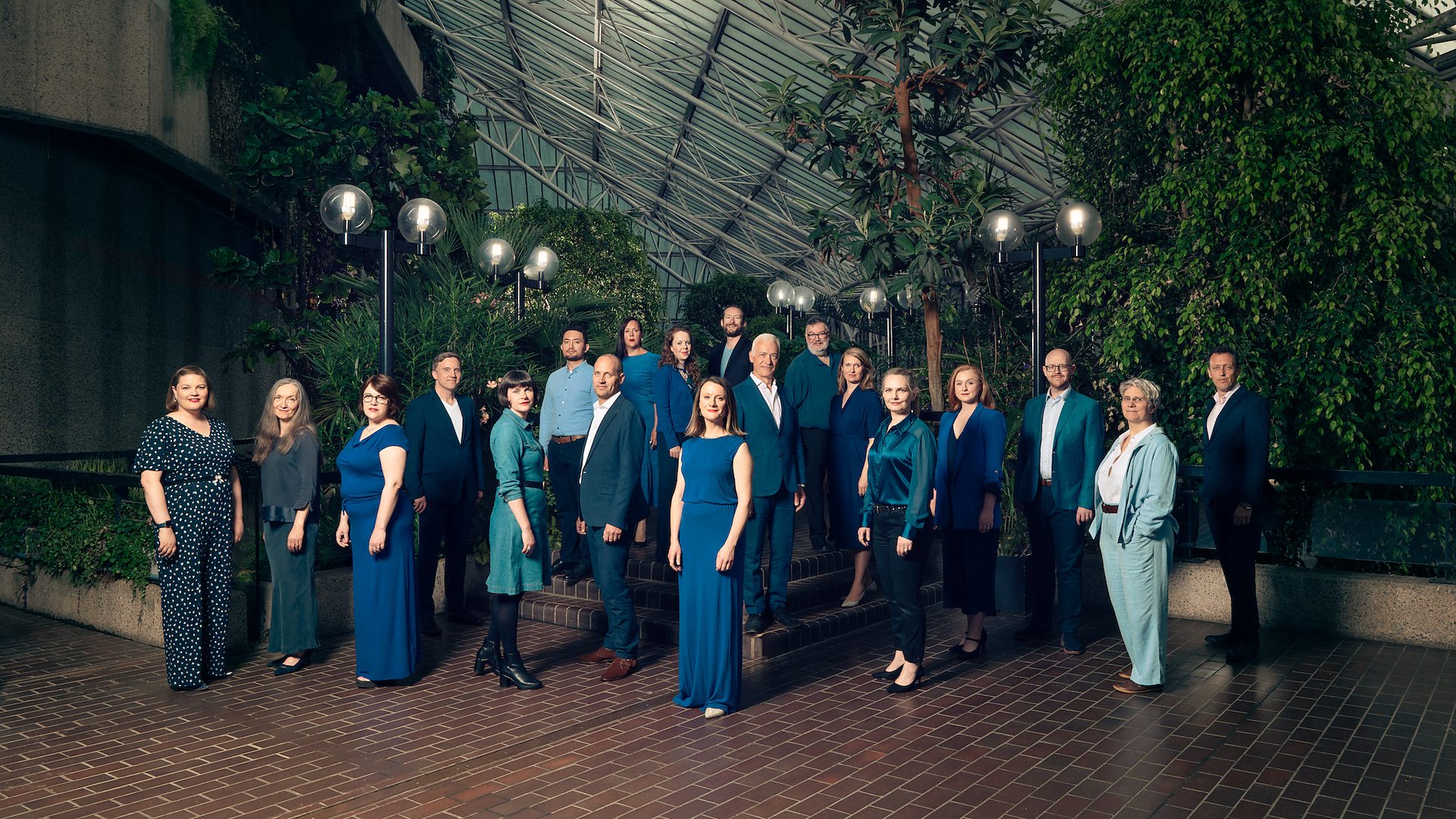
The upsurge of interest in and performances by the BBC Singers in the wake of its intended demise shows little sign of abating, and there could be few vocal ensembles able to put on a programme as stylistically inclusive or as technically demanding as that heard this afternoon.
Nowhere more so than Elemental by John Pickard, its first performance occupying the second half. Never absent from the composer’s output, choral music came into own with the powerful Mass in Troubles Times (premiered nearby at St Peter’s, Eaton Square in 2019) and the present work can be heard as a continuation in terms of its underlying concept. A further collaboration with author and theologian Gavin D’Costa, its form is of a journey through the elements such as Pickard had favoured earlier in his output but here with its emphasis firmly on the spiritual arising out of human concerns. Whether individually or collectively, the writing for 18 voices could hardly be more varied and imaginative, while the obbligato roles for harp plus a single percussionist playing across the spectrum of instruments enhances these settings accordingly.
After the evocative Prologue with its Paracelsian take on living matter, Earth draws on the recollections of those in the Tham Luang Cave Rescue – notably teenagers of the Wild Boars football team – in music whose initial bravado gradually assumes a near metaphysical import. Fire integrates its Shakespeare quotations into consideration of this most transformative and cathartic of elements. Air centres on Bessie Coleman with her ambition, racially rather than personally motivated, to become the first professional pilot from African-American ancestry – her combative and ultimately ill-fated career depicted with often graphic immediacy. Water then illustrates the Biblical flood narrative from an oblique and even ambivalent perspective, before Epilogue returns to evocation of the numinous as it builds with a frisson of emotion.
Not that the first half was any mere preparation. Most intimate and alluring of four such sets, the third group of Holst’s Choral Hymns from the Rig Veda traverses the ethereal, the limpid, the hieratic then the questing in the company of female voices and harp. The former were no less attuned to the greater astringency of Sara Garrard’s Missa Brevis – its bracing inclusion of traditional Estonian music offset by the greater introspection elsewhere; these contrasted aspects finding at least a degree of release with the emotional immediacy of the Agnus Dei.
Heard in alternation, the male voices duly came into their own with Britten’s The Ballad of Little Musgrave and Lady Barnard – its folk melody (Matty Groves) stretched through this plangent wartime setting with piano of illicit love, innocent betrayal, desperate revenge and stark lament. Facets that barely feature in Elgar’s Five Part-Songs from the Greek Anthology yet these brief if characterful treatments of translations by Alma Strettell, no less typical than his major choral and orchestral works from this period, were dispatched here with due relish.
Whatever else, this showcase with substance was conducted with unfailing insight by Martyn Brabbins, whose prowess in choral repertoire needs hardly more reiterating than his advocacy of Pickard, and is absolutely worth hearing when broadcast by BBC Radio 3 this Wednesday.
You can hear the BBC Radio 3 broadcast on Wednesday 24 September by clicking here
With his 1692 ‘Segelman, ex hart’ Stradivarius Cello, loaned to him from a private sponsor through the Beare’s International Violin Society, Guy Johnston embarks on a British cello odyssey, including the world premiere of a new cello concerto by Joseph Phibbs in January 2026.
To mark Bliss’ 50th anniversary, Johnston’s recording of Arthur Bliss’ Cello Concerto with the Royal Liverpool Philharmonic Orchestra conducted by Andrew Manze is released digitally on 25 July, 2025 on Onyx Classics. It will form a later album release with the Britten Cello Symphony.
Following a performance at the 2025 Hatfield Music Festival on 12 October 2025, Johnston will record The Protecting Veil with the Britten Sinfonia directed and led by Thomas Gould in live concerts on 28 and 29 October, 2025 at St. Sophia’s Greek Orthodox Church in London. The album will be released on Signum in the summer of 2026.
Completed in 1988, Tavener’s The Protecting Veil was begun in response to a request from cellist Steven Isserlis for a short piece. It developed into a more substantial work, and was subsequently commissioned by the BBC for the 1989 Proms season. Like many of Tavener’s compositions, this work reflects the composer’s Orthodox religious faith. The inspiration for the piece comes from the Orthodox feast of the Protecting Veil of the Mother of God, which commemorates the apparition of Mary the Theotokos in the early 10th century at the Blachernae Palace church in Constantinople in grave danger from a Saracen invasion.
As Tavener explained, “the cello representers the Mother of God and never stops singing throughout. One can think of the stings as a gigantic extension of her unending song…the first and last sections relate to her cosmic beauty and power over a shattered world.”
Johnston met Tavener on a number of occasions and was touched to be asked by Britten Sinfonia to perform The Protecting Veil last year on the occasion of what would have been the composer’s 80th anniversary. Johnston was keen to record The Protecting Veil at St Sophia’s, where Tavener used to attend mass.
On 16 January 2026, Johnston will give the world premiere of Joseph Phibbs’ Cello Concerto at the Barbican with the BBC Symphony Orchestra conducted by Clemens Schuldt. In 2021, Johnston previously premiered Joseph Phibbs’ Cello Sonata, partly based on an Elizabethan pavane found in the archive of Hatfield House.
Phibbs, who is a huge admirer of Britten, commented,
“The main focus of this concerto is on melody, and how this might be explored in various ways over the uniquely wide range of the cello. The work is symphonic in structure, adopting a multi-movement form as opposed to the traditional three, and ends with a short ‘Vocalise’ (song) for cello and strings which soars to the very top of the cello’s high register. Elsewhere, a dramatic opposition between soloist and orchestra is emphasized. At the forefront of my mind while composing this work has been the wonderfully varied facets of Guy’s playing, which I have admired for many years. It’s been a huge privilege and excitement to write for such a special performer”
In September 2026, Johnston will record Britten’s Cello Symphony with the RLPO conducted by Andrew Manze for Onyx Classics to coincide with the composer’s 50th anniversary (Britten d. on 4 December 1976). The album will include the Bliss Cello Concerto (previously released digitally).
The 2025-2026 season coincides with Johnston’s returns to the Royal Academy of Music as a Professor of Cello. This role will see him offer bespoke tuition to cello students throughout the year. Johnston started out as a professor at the Academy in 2011, later becoming visiting professor. The appointment follows Johnston’s recent relocation back to the UK following his tenure at the Eastman School of Music in Rochester, NY, from 2018 to 2024.
Johnston commented,
“I’m thrilled to have returned last year to the UK with my family for this exciting series of recordings, commissions and performances.”
Ruby Hughes (soprano), Natalie Clein (cello), Julius Drake (piano)
Schubert arr. Jones Der Hirt auf dem Felsen (The Shepherd on the Rock) D965 (1828) Kodály Sonatina for cello & piano (1922) Tavener Akhmatova Songs: Dante, Boris Pasternak, Dvustishie (Couplet) (1993) Brahms 2 Songs Op.91 (1884) Trad arr. Britten I wonder as I wander (1940-41), At the mid hour of night (Molly, my dear), How sweet the answer (The Wren) (both 1957) Deborah Pritchard Storm Song (2017) Janáček Pohádka (Fairy tale) (1910, revised 1923) Ravel Kaddisch from 2 Mélodies hébraïques (1914) Bloch From Jewish Life (1924) Schubert Auf dem Strom (On the river) D943 (1828) (Encore) Berlioz La Captive
Queen Elizabeth Hall, London, 27 June 2025
by John Earls. Photo credits (c) Philip Sharp (above), John Earls (below)
Two of the most affecting sections of Ruby Hughes’ excellent 2024 album with the Manchester Collective End of My Days are three of John Tavener’s Akhmatova Songs (Dante, Boris Pasternak and Couplet) and Maurice Ravel’s Kaddish (from 2 Mélodies hébraïques).
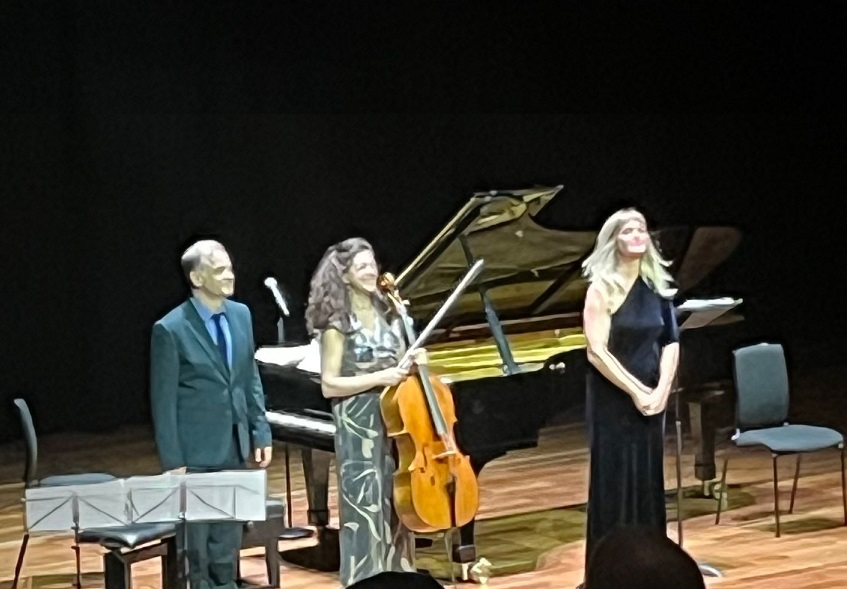
These also featured to dramatic effect in this fascinating concert programme of Schubert and Other Folksongs spanning two centuries, where Hughes was joined by Natalie Clein (cello) and Julius Drake (piano).
In this performance the Tavener song miniatures were performed for voice and cello and were at turns powerful, beautiful and urgent across their nine-minute duration. The prolonged silence from the audience afterwards was noticeable. Ravel’s lament-like Kaddish, this time for voice and (sparse) piano, was similarly respectfully performed and observed.
There were non-vocal pieces for cello and piano where Clein and Drake displayed what a well matched duo they are. Zoltán Kodály’s Sonatina was luminescent, Leoš Janáček’s Pohádka absorbing (not least the cello bowing and pizzicato) and Ernest Bloch’s From Jewish Life was both lovely and mournful.
But this was a concert where Ruby Hughes’ amazing voice was to the fore but often in an understated, but no less impactful way. The captivating trio of Benjamin Britten folksong arrangements with their minimal piano trills were a case in point.
The trio performances were also impressive in their delivery and range. Brahms’ 2 Songs (Op.91) were both gorgeous, while Deborah Pritchard’s Storm Song (from 2017, the most recently written piece) was powerfully unnerving between its haunting start and end (the composer was in the audience to take a well deserved bow).
The concert was bookended by two songs written by Franz Schubert shortly before his death in 1828 at the age of just 31. As David Kettle remarks in his excellent programme notes, to call them simply songs is to do them a disservice. Der Hirt auf dem Felsen (The Shepherd on the rock), arranged by Peter Jones for voice, cello (replacing the clarinet) and piano, traversed a journey of yearning and joy that was both delicate and impassioned. The closing Auf dem Strom (On the river) saw Hughes capturing the drama convincingly throughout.
An encore of Berlioz’s La Captive concluded this concert that combined fascinating and thoughtful programming with performances of beautifully judged expression.



 Arcana.fm