published by Ben Hogwood from the original press release
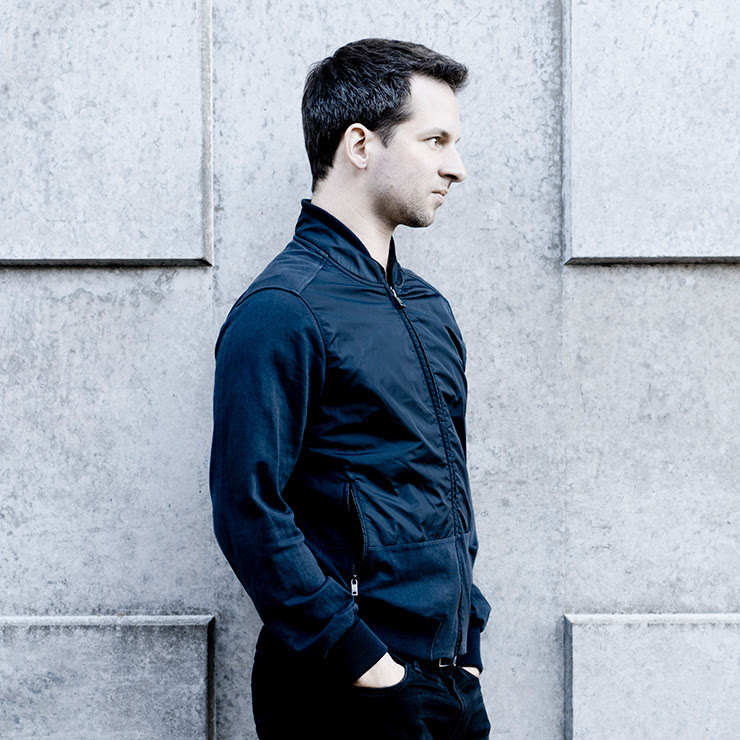
This December, Wigmore Hall focus in on a pianist famed for winning the prestigious Victoires de la Musique Classique award on five separate occasions, most recently in 2022. Described by the Guardian as ‘a remarkable musician, no question’, Chamayou caps off his short residency with an unmissable evening of the complete Ravel pianos works. Before that, the pianist joins forces with the thrilling Belcea Quartet and accompanies soprano Barbara Hannigan for her Wigmore Hall debut.
The programme with the Belcea Quartet on Thursday 4 December is of extra interest, for in addition to Chamayou’s appearance in the rarely-heard Piano Quintet in E major of Erich Korngold, the quartet will mark the 80th anniversary of the world première of Britten’s Second String Quartet at Wigmore Hall.
Chamayou’s programme with soprano Barbara Hannigan is typically adventurous, the pair reaffirming their Messiaen credentials with a performance of the Chants de terre et de ciel, before Chamayou looks at late Scriabin in the form of the Poème-nocturne Op. 61 and Vers la flamme Op. 72, before the two take on John Zorn’s song cycle Jumalattaret, written for Hannigan herself.
Chamayou’s third appearance will see him perform the complete works for solo piano by Maurice Ravel, whose birth in 1875 is being marked with 150th anniversary celebrations this year. The concert begins at 7pm, with the programme as follows:
1875-1937 Prélude Miroirs Menuet in C sharp minor Sonatine A la manière de Borodine Gaspard de la nuit
Interval
A la manière de Chabrier Valses nobles et sentimentales Menuet sur le nom d’Haydn Sérénade grotesque Jeux d’eau Menuet antique Pavane pour une infante défunte Le tombeau de Couperin
For more information on all the Wigmore Hall concerts, click on the links highlighted above.
Published post no.2,730 – Wednesday 26 November 2025
There is a famous, unattributed quote that ‘writing about music is like dancing about architecture’. How, then, to interpret a concert in celebration of a magazine? The conclusion, when that magazine is 100 years old, is that surely its writers are doing something right!
The magazine is the esteemed Gramophone, formed in 1923 and reaching its centenary without a break, not even an issue missed during the Second World War. Gramophone has reflected the growth of the classical record industry, proving something of a bible for classical music listeners and buyers, with its recommendations of recordings and interviews / thought pieces to put them in context. Music old and new is covered, and not all of it classical – indeed, as we found out during James Jolly’s revealing and entertaining narration, the magazine reviewed pop music in the 1960s.
Jolly is the magazine’s Editor in Chief, and has been with the magazine since starting as editorial assistant in 1985. He gave a debt of gratitude to the Gramophone founder Sir Compton Mackenzie and the Pollard family, where the large part of the night’s story lay. Modestly, the magazine did not dwell on their current state, which would have been easy – for Gramophone is one of those rare things, a publication where subscription is done without the bat of an eyelid, and each issue read cover to cover – either physically or online, where you can enjoy the entirety of its archive in digital form.
How to celebrate such a publication in a concert? Choosing the Wigmore Hall was a smart move, honing resources and ensuring the celebrations were done with quality as well as quantity. The move did of course eliminate larger scale forms – opera and orchestral – but it retained the magazine’s sense of musical exploration through five centuries of music.
Violinist Alina Ibragimova and pianist Cédric Tiberghien began with a concentrated performance of Debussy’s Violin Sonata, completed just six years before the magazine’s first edition. This was a thoughtful and virtuosic performance, Ibragimova fully inhabiting each phrase while Tiberghien successfully harnessed Debussy’s coloristic effects and sleights of harmony. The spectre of war was close at hand – as it was in Gramophone’s early years.
Next up was countertenor Iestyn Davies, a late replacement for soprano Fatma Said. It was a privilege to hear his Purcell, refracted through the eyes of modern composers, showing how access to the composer’s music has boomed since Gramophone started. Davies had a particularly arresting delivery for Britten’s Lord, what is man, before a deeply passionate vocal in the Thomas Adès setting By beauteous softness, Malcolm Martineau phrasing its postlude with exquisite shaping. Britten reappeared for a jubilant I’ll sail upon the Dog Star.
In Gramophone’s tenure the guitar has established itself as a central part of the classical repertoire. We heard two very different soloists – Milos in Mathias Duplessy’s bluesy Amor Fati, which though originating in France seemed to be looking over the Spanish border on occasion. Its full bodied chords were brilliantly declaimed. Sean Shibe, meanwhile, cast his eyes further east as partner for tenor Karim Sulayman in three songs of Arabic origins. Here was a striking alliance, Shibe’s exquisitely quiet playing a match for the tenor’s husky delivery. The two finished each other’s sentences, reflecting a musical chemistry of unusual quality found on their recent album Broken Branches.
We also heard three very different pianists, dazzling with virtuosity but also showing impeccable control. Nearest to the edge was Jean-Efflam Bavouzet, whose compelling excerpts from Ravel‘s suite Miroirs revealed rougher contours. These suited the storm of Une barque sur l’océan, while Alborada del gracioso was rustic and danced at quite a pace, the pianist relishing its whirling figurations.
Martin James Bartlett showed a painter’s touch to a pair of Liszt arrangements – the composer’s keyboard paraphrase of his son-in-law Wagner’s Liebestod especially fine. Bartlett’s phrasing was immaculate, each tune clear as a bell in spite of the myriad accompanying colours. The Schumann transcription Widmung also retained a songful air, powerful at its climactic passages.
Bisecting the keyboard soloists was soprano Carolyn Sampson and regular partner Joseph Middleton. Sampson will shortly reach her 100th album release, a remarkable achievement in a discography adorned with Gramophone accolades. We heard a well-chosen and varied selection taking us from Purcell and Britten to Saariaho via Poulenc and Régine Poldowski, the latter composer indicative of record companies’ efforts to include more female composers at last. Daughter of Polish composer Henryk Wieniawski, Poldowski made a very strong impression with L’heure exquise, while Sampson gave a ringing endorsement for Saariaho’s Parfum de l’instant, due in a future recording. Here she was aided by a fountain of cascading treble notes from Middleton.
Finally we heard Bernard Chamayou in a tour de force account of Liszt’s Venezia e Napoli, an apt choice in its inclusion of the city of Naples, looking out to a former home of Sir Compton Mackenzie on the island of Capri. Liszt added the Venezia e Napoli triptych as a footnote to the second book of his cycle Années de Pèlerinage, reflecting the impact of his travels around Europe as a virtuoso pianist. Its music is far from trivial and Chamayou, who recorded the complete cycle in 2010 brought unusually clear definition to the undulating figures of Gondoleria. The Rossini-themed Canzone was deeply intoned, majestically voiced with a sense of wonder projecting right to the back of the hall. Finally the Tarantella was a virtuoso affair, but Chamayou never lost sight of the thematic material in the tempestuous surroundings.
It was the ideal way to conclude a high-quality concert, though an encore saw the assembled artists sing ‘Happy birthday’ to the publication that has served them so well. Here’s to another 100 years, Gramophone!
Purcell, realised Britten Lord, what is man (1945); Purcell, realised Adès By beauteous softness (2017); Purcell, realised Britten I’ll sail upon the Dog Star (1943)
Ravel Miroirs: Une barque sur l’océan; Alborada del gracioso (1904-5)
Jean-Efflam Bavouzet (piano)
Trad arr. Sulayman & Shibe La prima vez; Arab-Andalusian Muwashsha arr. Shibe Lamma Bada Yatathanna; Sayed Darwish arr. Shibe & Sulayman after Ronnie Malley El helwa di
Karim Sulayman (tenor), Sean Shibe (guitar)
Wagner arr. Liszt Isoldens Liebestod (1867); Schumann arr. Liszt Widmung (1848)
Martin James Bartlett (piano)
Purcell realised Britten Sweeter than roses (c1945); Britten Fancie (1965); Poulenc Fancy (1959); Régine Poldowski L’heure exquise (1917); Saariaho Parfum de l’instant (from Quatre Instants) (2002)
Carolyn Sampson (soprano), Joseph Middleton (piano)
Prom 8: Bertrand Chamayou (piano), BBC National Orchestra of Wales / Thomas Søndergård
Lili Boulanger D’un matin de printemps; D’un soir triste (1917-8)
Mendelssohn Piano Concerto no.1 in G minor Op.25 (1831)
Morfydd Owen Nocturne (1913)
Schumann Symphony no.4 in D minor Op.120 (original 1841 version)
Royal Albert Hall, Friday 20 July 2018
Reviewed by Ben Hogwood
You can watch this Prom on BBC4 on Sunday 22 July here
Debussy and Bernstein may be the blockbuster anniversary composers this Proms year, but there are several composers whose cause is arguably more important. We heard two of them in this intriguing Prom from the BBC National Orchestra of Wales and their outgoing chief conductor, Thomas Søndergård.
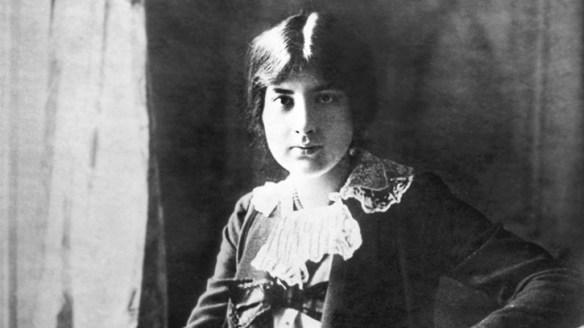
Lili Boulanger and Morfydd Owen died far too early, in their twenties, but both left works telling of an original style that should have been heard far more often than they have – which sadly is the case for all female composers. Happily the BBC has made a commitment to start putting that right, and this Prom went back to the second decade of the 20th century with two short pieces from Boulanger (below).
D’un matin de printemps (Of A Spring Morning) caught the ear immediately. Completed in 1918, it was slightly furtive at times, as though describing flowers shyly poking their heads into the fresh morning air. The transparent orchestration drew parallels with Debussy, and the colourful textures and positive harmonies made for an ideal, descriptive curtain raiser.
By contrast D’un soir triste (Of A Sad Evening) wore a troubled frown. Here the music was more ominous but also more exotic, its use of modal melodies extending its reach towards the East. Again Boulanger’s orchestration was exquisite, with a lovely rasp to the bass clarinet in the texture, and some powerfully wrought climaxes strengthened the intensity of feeling but failed to shake off the preoccupied state of mind. Both pieces made a lasting impact.
Morfydd Owen’s Nocturne began the second half. Written just before the First World War, this was an intriguing piece that was livelier than you might expect from a piece bearing that name. Initially the shady textures found the orchestra depicting the half light of the evening, but as well as atmospheric pictures there were attractive dance episodes, Owen breaking towards lighter music with a twinkle in her eye. She returned to this music on several occasions, each time casting the tune in a slightly different setting, before the piece finished with a silvery harp, sweeping us away into the night.
Complementing the anniversary composers was music from Mendelssohn and Schumann. The former’s Piano Concerto no.1 in G minor was brilliantly dispatched by Bertrand Chamayou, whose stylish playing emphasised Mendelssohn’s precocious writing for the instrument at the age of 22. Initially the speed of the music was a bit too fast, and the Royal Albert Hall acoustic didn’t help here, but soon pianist and orchestra were aligned in a performance light on its feet and, in the Andante slow movement, tender at its heart. As a well chosen encore Chamayou, popular with the Prommers, gave Liszt’s arrangement of Mendelssohn’s On Wings of Song.
Finally Schumann, and the original 1841 version of his Symphony no.4. Søndergård connected the four movements into a satisfying whole, bursting with melody, but here again made sure the slow movement had plenty of air. There can be a foreboding atmosphere to this symphony, mindful of the mental struggles that dogged the composer throughout his life, but here the BBC NoW, energetically led by Lesley Hatfield, found the positive mood running through its core. The most dramatic music of the night came in the transition between the obdurate scherzo and the triumphant finale, Sondergard stripping back the textures to a cold, hollow sound before surging forward to the rousing finish.



 Arcana.fm