In concert – Peter Donohoe, RPO / Brabbins: Elgar ‘Enigma’ Variations; Bliss Piano Concerto; Vaughan Williams @ Cadogan Hall

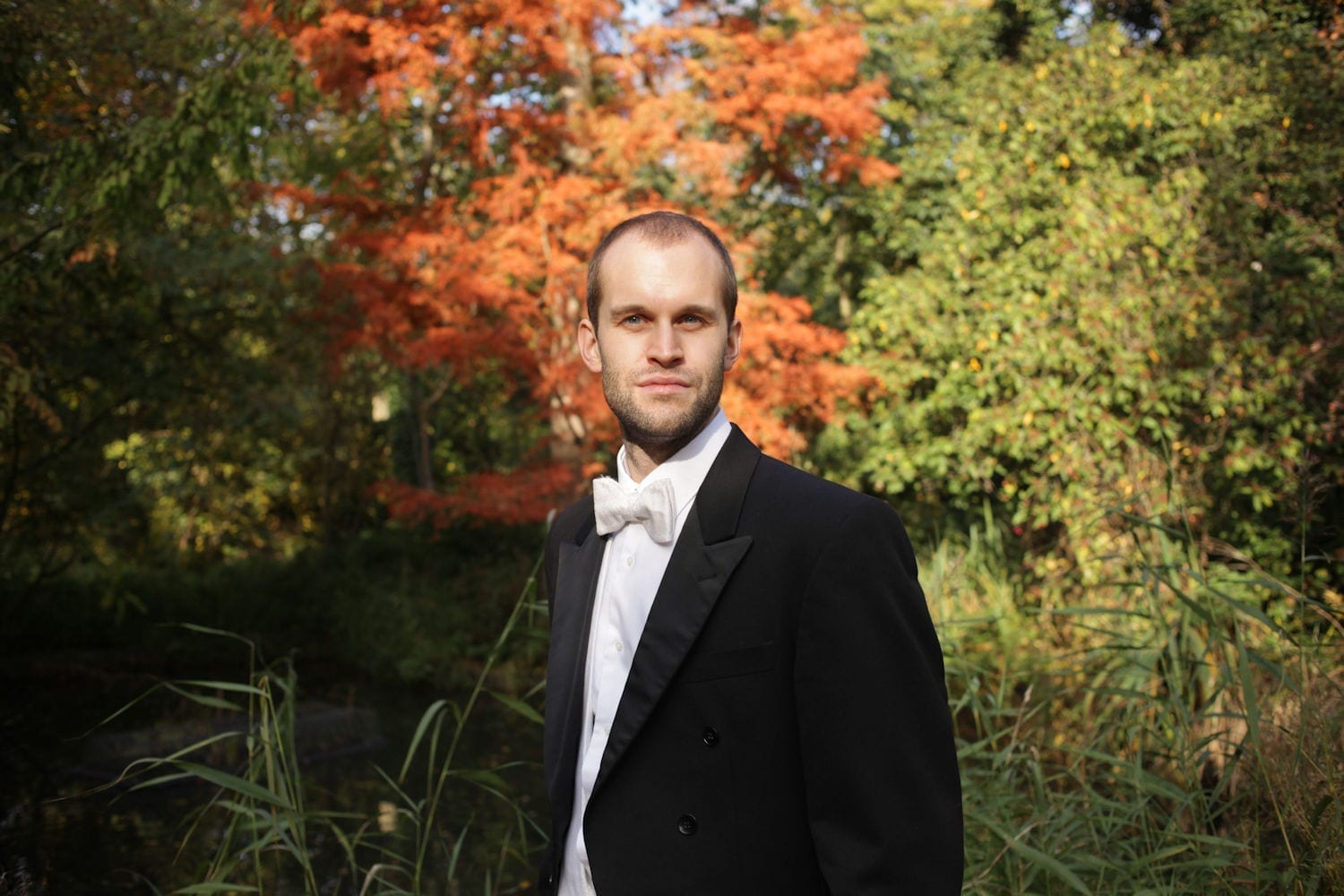
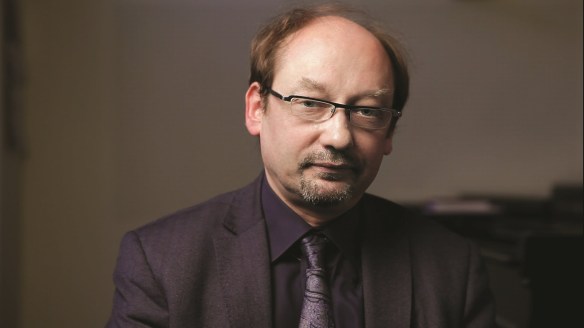
Peter Donohoe (piano, above), Royal Philharmonic Orchestra / Martyn Brabbins (below)

Vaughan Williams Five Variants of Dives and Lazarus (1939)
Bliss Piano Concerto in B flat major Op.58 (1938-9)
Elgar Variations on an Original Theme Op.36 ‘Enigma’ (1898-9)

Cadogan Hall, London
Wednesday 16 April 2025

Reviewed by Richard Whitehouse Pictures (c) Andy Paradise

June 1939 saw one of the more memorable occasions for British music with several premieres at the World’s Fair of New York, this multi-day festival with its theme of ‘Building the World of Tomorrow’ thrown into ironic relief given the outbreak of war in Europe three months later.

The first half of tonight’s concert by the Royal Philharmonic Orchestra duly replicated that on June 10th, beginning with Five Variants of Dives and Lazarus which Vaughan Williams wrote for the event. One of the few non-symphonic orchestral works from his later years, its scoring for divided strings and harp gives a warmly evocative context to this succession of paraphrases whose steadily unforced evolution is rounded off by one of its composer’s most radiant codas. Various solo passages provided the RPO’s section-leaders with their moment in the spotlight.

That concert 85 years ago continued with the Piano Concerto that Arthur Bliss had written for Solomon which enjoyed frequent revival over the next quarter-century. This 50th anniversary of its composer’s death provided an ideal opportunity to reassess a work conceived within the late-Romantic lineage, notably an opening movement whose thunderous initial gestures set in motion this large-scale sonata design whose overt rhetoric is tempered by an expressive poise and more ambivalent asides which make it anything but the epigone of an already bygone era.

Among a few present-day pianists to have this piece in his repertoire, Peter Donohoe tackled its many technical challenges head-on; the RPO and Martyn Brabbins (who had never before conducted it) overcoming some occasional moments of mis-coordination so as to present it to best advantage. He brought a lighter touch and no little emotional poise to bear on the central Adagietto, its inwardness carried over into a finale whose probing introduction was a perfect foil to the bravura that followed. Whatever qualms Bliss may have had regarding the ‘world situation’, there was little sense of doubt as the music surged to its emphatic and affirmative close – thereby setting the seal on this memorable performance and a work which, whatever it lacks in distinctive invention, vindicates Bliss’s overall ambition to an impressive degree.

A pity that logistics (and economics!) made revival of Bax’s Seventh Symphony, which had originally featured in those New York concerts, impracticable but hearing Brabbins direct so perceptive an account of Elgar’s Enigma Variations was no hardship. Perhaps because of the immediacy of the Cadogan Hall acoustic, it was also one in which the relatively brief livelier variations came into their own – hence the unbridled impetus of the fourth (W.M.B), seventh (Troyte) or 11th (G.R.S) variations, though there was no lack of eloquence in the first (C.A.E) and fifth (R.P.A) variations, or suffused fervour in the ninth (Nimrod). The 10th (Dorabella) variation was made into an intermezzo halting if whimsical, and the 13th became a romanza such as opened out this work’s expressive remit onto an altogether more metaphysical plane.

Those having heard Brabbins conduct this work in the Royal Albert Hall quite likely missed that organ-reinforced opulence afforded the 14th (E.D.U) variation yet, as this finale built to its triumphal conclusion, the unfailing conviction of this performance could hardly be denied.

For details on their 2024-25 season, head to the Royal Philharmonic Orchestra website. Click on the artist names to read more about pianist Peter Donohoe and conductor Martyn Brabbins, and also to discover more on The Arthur Bliss Society

Published post no.2,509 – Monday 21 April 2025

In Concert – Soloists, City of London Choir, Royal Philharmonic Orchestra – Hilary Davan Wetton: Vaughan Williams & Ravel

Anita Watson (soprano), Maya Colwell (mezzo-soprano), John Cuthbert (tenor), Ashley Riches (bass-baritone), City of London Choir, Royal Philharmonic Orchestra / Hilary Davan Wetton

Ravel Menuet antique (1895, orch. 1929)
Vaughan Williams Serenade to Music (1938)
Ravel Le Tombeau de Couperin (1914-17, orch. 1919)
Vaughan Williams Dona nobis pacem (1936)

Cadogan Hall, London
Thursday 10 November 2022

Reviewed by Ben Hogwood

This concert deftly assembled a number of threads to bring the Royal Philharmonic Orchestra’s celebration of RWV150 – the handy abbreviation for Vaughan Williams‘ birth anniversary year – to a close.

Vaughan Williams studied with Ravel in Paris in 1908. Just over a decade later, the lives of both men had been altered forever by the First World War. It affected both of them deeply – Ravel in a brief stint as a lorry driver and Vaughan Williams as an ambulance driver and artillery officer in France.

Both Le Tombeau de Couperin and Donna nobis pacem are affected by their experiences, but first we heard another act of musical remembrance in Ravel’s charming Menuet antique. Written in memory of Chabrier, this bittersweet work presents a winsome smile while it dances, but darker thoughts lurk in the middle ground, expressed through the gruff voices of lower woodwind. Hilary Davan Wetton conducted a sprightly reading, though it took a little while for the RPO to settle. After a soft-centred middle section, the second reading of the Menuet itself was on much firmer ground.

Le Tombeau de Couperin is both a commemoration and celebration of French baroque music, but its deeply personal connections mark the passing of Ravel’s mother in 1917 as well as close friends lost to the First World War. Originally written for piano, the suite comprises six movements, four of which the composer arranged for orchestra, his painterly touch evident at every turn.

This was a touching performance, led by a fine contribution from RPO oboist Timothy Watts, who led off the Prélude with beautifully flowing phrases. The orchestra responded with silvery strings and harp, the music shimmering but shivering too. The personal reverberations were close to hand in the underlying sadness of the Forlane, which nonetheless danced with poise and grace. The Menuet, taken relatively quickly, found time to express its innermost feelings in the thoughtful trio section, while the Rigaudon gained a spring in its step, bouncing along but soon checked by the sparse textures of its central section. This was a fine performance, earning the RPO woodwind a deserved curtain call of their own.

Vaughan Williams’ Serenade to Music is a softly voiced tribute to Sir Henry Wood’s Golden Jubilee as a conductor. In recognition, the composer sets the scene between Lorenzo and Jessica from Act Five of Shakespeare’s The Merchant of Venice. It is a versatile piece, written initially for 16 selected soloists but performed here by four singers and the sensitively controlled voices of the City of London Choir, who revelled in the cushioned carpet of sound Vaughan Williams creates. This was established by an affectionate solo from orchestra leader Duncan Riddell, establishing the serenity of D major under Davan Wetton’s watchful eye.

The balance between choir and orchestra, tricky to achieve in the Cadogan Hall, felt just right – as did the poise of soprano Anita Watson (above), floating up to the high ‘A’s with impressive control. She was aided by fine contributions from Maya Colwell, John Cuthbert and Ashley Riches, whose bass-baritone had a particularly attractive, rounded quality.

Two years prior to the Serenade, Vaughan Williams completed Dona nobis pacem, whose very different outlook reflects the worrisome mood in Britain and Europe in the mid-1930s. The composer’s dread of war, heightened by his experiences 20 years hence, was palpable in the central setting of Dirge For Two Veterans, using part of Walt Whitman’s poem Drum Taps in music that ironically dates from 1911.

Dona nobis pacem brings together texts from both sacred and secular sources, anticipating Benjamin Britten’s War Requiem some 26 years later, which used a similar tactic to startling effect. Here Vaughan Williams’ ‘catharsis’ – as Hilary Davan Wetton eloquently referred to it – received a heartfelt performance, anchored by Anita Watson’s recurring pleas for peace as the soprano soloist. The choir echoed these sentiments, but in a more fretful manner as they reflected on previous losses through Whitman’s poetry.

The music was remarkably prescient for our times, and the cautionary snare drum strokes bringing in the Dirge held a Mahlerian tension that stayed long in the memory. So, too, did the setting of Beat! Beat! Drums! (from the same Whitman poem), which was reached through a dramatic turn of the page from the full Agnus Dei plea. There was exultation from the choir, but also a constant ache beneath the surface.

Watson and Ashley Riches (above) were surefooted and expressive soloists, while Davan Wetton ensured the combination of choir and orchestra captured that wonderful sheen that Vaughan Williams can achieve when writing for the combined forces. The percussion, awkwardly hidden beneath the Cadogan Hall balcony with the organ, made a telling contribution as the dreaded ammunition, which was finally silenced as the peace for which we all surely strive came to pass at the end. The rapt closing bars were pure in their sincerity, soprano and acapella choir achieving an ideal balance and fade.

Before the Dona nobis pacem, Hilary Davan Wetton spoke briefly to the audience on the importance of the arts in the wake of a slew of funding cuts and falling attendances. As he so subtly reminded us, how lucky we are that in times of war in Europe and further afield we can still attend and enjoy concerts in person. It is a privilege never to be taken for granted, particularly on nights of Remembrance such as this.

In concert – Marija Vidović, Tamsin Waley-Cohen, Zagreb Philharmonic Orchestra / Jan Latham-Koenig – Pejačević, Sibelius & Mahler

tamsin-waley-cohen-c-patrick-allen

Pejačević Verwandlung, Op. 37b (1915), Liebeslied, Op. 39 (1915), Zwei Schmetterlingslieder, Op. 52 (1920)
Sibelius Violin Concerto in D minor Op. 47 (1903-04, rev. 1905)
Mahler Symphony no. 1 in D major (1899 version)

Marija Vidović (soprano), Tamsin Waley-Cohen (violin), Zagreb Philharmonic Orchestra / Jan Latham-Koenig

Cadogan Hall, London
Thursday 13 April 2022

Written by Richard Whitehouse. Photos (c) Patrick Allen (Tamsin Waley-Cohen), Paul Persky (Jan Latham-Koenig)

Visits from overseas orchestras are only now getting into their stride following the abeyance caused by the pandemic, so credit to the Zagreb Philharmonic for having undertaken its first UK tour in over half a century with a programme whose challenges were not to be gainsaid.

A recent BBC performance of her Symphony confirmed the significance of Dora Pejačević (1885-1923) in European music of the early 20th century, and it was a pleasure to encounter these four orchestral songs from her maturity. A setting of Karl Kraus’s Transformation won grudging admiration of Schoenberg; here, even more so in that of Rainer Maria Rilke’s Love Song with its winsome violin solo and fervent orchestral interlude, the influence of Strauss is directed towards audibly personal ends. Marija Vidović (above) gave them with no mean eloquence and did comparable justice to those charms of Karl Henckell’s verse in Two Butterfly Songs – the elegance of ‘Golden stars, little bluebells’ then the poise of ‘Flutter by, butterfly, flutter away’, each of them benefiting from especially deft contributions by the Zagreb musicians.

Tamsin Waley-Cohen duly joined the orchestra for Sibelius’s Violin Concerto – likely more popular than ever these days, here receiving a confident and forthright account that was at its most persuasive in a trenchant and cumulative take on the developmental cadenza toward the centre of the first movement, then an Adagio more than usually restive and even ominous as it unfolded. The soloist’s astringent tone might not be to all tastes, but it effectively banished any risk of expressive blandness while maintaining an impulsive interplay with the orchestra – not least in that opening Allegro’s combative coda or a finale which, while its Allegro was not ideally ‘non tanto’, generated an impressive momentum which carried through to a truly visceral close. Some solo Bach enabled Waley-Cohen to demonstrate a more inward touch.

A pity Jan Latham-Koenig (above) rarely appears in the UK, as his engagements seldom disappoint. For all its rawness and passing inelegances, this was as gripping an account of Mahler’s First Symphony as one is likely to encounter. Its opening movement was evocatively launched, the sounds of nature gradually admitting of a human presence such as filters through in its lilting exposition (not repeated) then comes to the fore with joyous immediacy in the coda. Robust and forthright, the scherzo’s outer sections found contrast in the ingratiating charm of its trio.

A symphony with a complex gestation (admirably set out in Timothy Dowling’s programme notes), its ensuing fantasy on a well-known children’s song is shot through with elements of klezmer and art-song in a portrayal of a huntsman’s funeral vividly ironic in its tragicomedy. Latham-Koenig was almost as persuasive in the lengthy finale – its Dante-esque contrasts of violence and supplication channelled convincingly to the spellbinding recollection of earlier motifs which made way for a chorale-dominated apotheosis of notably unsparing immediacy.

Few countries have yet had a composer for president, but Ivo Josipović served Croatia during 2010-15 and the encore of his Prelude to the Millenium sounded redolent of early Ligeti or Lutosławski in its uninhibited verve. The Zagreb musicians gave their collective all – to his evident pleasure.

For further information on the Zagreb Philharmonic Orchestra, click here – and for information on the artists, click on the names to find out more about Marija Vidović, Tamsin Waley-Cohen and Jan Latham-Koenig. Meanwhile for more on composer Dora Pejačević, click here

Proms at … Cadogan Hall 8: Knussen Chamber Orchestra / Ryan Wigglesworth – A Tribute to Oliver Knussen

Knussen Chamber Orchestra / Ryan Wigglesworth (above)

Knussen …upon one note – Fantasia after Purcell (1995) (from 2:15 on the broadcast link below)
Birtwistle Fantasia upon all the notes (2011) (9:29)
Freya Waley-Cohen Naiad (2019, world premiere) (20:14)
Knussen Study for ‘Metamorphosis’ (1972, rev, 2018) (30:54)
Abrahamsen Herbstlied (1992, rev. 2009) (38:58)
Alastair Putt Halazuni (2012) (47:36)
Knussen Songs without Voices (1991-2) (tbc)

Cadogan Hall, Monday 9 September 2019

Reviewed by Ben Hogwood

You can listen to this Prom on BBC Sounds here

The BBC Proms’ 800-year odyssey of music over eight weeks at the Cadogan Hall reached the present day in the company of the UK’s newest orchestra.

The Knussen Chamber Orchestra took its bow at the Aldeburgh Festival this year. Created specifically in memory and celebration of Oliver Knussen (above), it is an ensemble for commission and festival appearances, unrestricted in the repertoire it will perform – in that way very much reflecting the approach of its dedicatee. Comprising orchestral principals and budding young talent, it also reflects Knussen’s ability to communicate with musicians regardless of their standing.

Knussen is still greatly missed, a towering figure in British music in the latter part of the 20th century and the 21st until now. Tales have emerged not just of his mentoring of young composers and influence on the established writers, but of a sparkling personality and wit, a dinner companion par excellence. As a conductor he made several richly inventive programmes for the Proms with the BBC Symphony Orchestra and the Birmingham Contemporary Music Ensemble, and as a composer his small but perfectly formed catalogue is required listening for any budding contemporary composer of today. Like the composers he adored, particularly Stravinsky and Webern, his is a musical language that speaks directly through an economy of means.

That much was immediately evident in the three and a half minutes of …upon one note – Fantasia after Purcell, which used the colours of clarinet, violin, cello and piano to lasting effect. Knussen moved the omnipresent middle ‘C’ – the ‘one note’ – around the parts effortlessly, enjoying the harmonic diversions possible around it and alternating solemnity with mischief. The piece proved both a homage to Purcell and a brief spark of invention, and was ideally weighted by the soloists.

Birtwistle’s Fantasia upon all the notes has potential for mischief in its title but is in effect a typically serious piece. Written for an ensemble of seven players this was led with authority by harpist Céline Saout, who effectively drove the piece through its initial jagged outlines. The colours available to Birtwistle were exploited through music of stern countenance, its few tender asides to be cherished as the exception rather than the rule. Only at the end, with little points of pitch from solo instruments, did the mood lighten.

In a charming conversation with BBC Radio 3 host Petroc Trelawny, Freya Waley-Cohen revealed Knussen’s qualities as a tutor and a ‘wonderful person’. Naiad (20:14 on the broadcast) was a fitting tribute, fulfilling Cohen’s description of reflections from the scales of fish and dew on a spider’s web with music that cast a rarefied light, such as the sun does this time of year. The attractive melodic cells rippled with a slight chill, piercing moments of clarity from the woodwind contrasted by fuzzier asides from the strings. Although Cohen’s description of a slow piece and a fast piece rubbing up together was more difficult to follow, that did not mar in the slightest an enjoyable and meaningful piece, whose last few bars had a lilting four-note melody that hung on the air, leaving an enchanted atmosphere in its wake.

Bassoonist Jonathan Davies then stepped forward for Knussen’s highly virtuosic Study for Metamorphosis (30:54), based on Kafka. There were some extraordinary sounds here, the composer exploiting the cartoon-like persona the bassoon can elicit but also reminding us of the instrument’s versatility, its ability to paint pictures both happy and sad. Davies was superb and clearly enjoyed the experience.

Hans Abrahamsen’s Herbstlied followed (from 38:58), an extended arrangement and combination of a Danish song and two J.S. Bach subjects from The Art of Fugue. This instrumental version was unexpectedly moving, its picture painting of leaves ‘falling as from far…’ most apt for the time of year and given a vivid account by the five players. The cor anglais of Tom Blomfield added a unique sourness to the tone, and the downward motion of the melodies indicated sorrow, but there was still a sweeter melancholy here that stayed with the listener long afterwards.

We moved into Alastair Putt’s wind quintet Halazuni (47:36) without a break. This was a less affecting piece, more calculated in its depiction of a spiral (its title is the Persian word for spiral) The colours of the instruments – flute, oboe, clarinet, horn and bassoon – were frequently attractive, and while the music did on occasion feel predetermined, there was a clear end goal.

The best was saved until last in the form of Knussen’s Songs Without Voices (not yet linked to the broadcast on BBC Sounds). A group of four pieces for an ensemble of eight players, the Songs use vivid colour combinations which bring the composer’s imagery to life. The melodies, though short, are incredibly meaningful.

The first three Songs are wordless settings of texts by Walt Whitman, starting with Winter’s Foil, which was alive with bird calls and blustery winds. As elsewhere Wigglesworth secured playing of great poise and personality, led with characteristic authority by violinist Clio Gould. Prairie Sunset showed off the colours of the ensemble both separately and in combination, before the delicate outlines of First Dandelion were revealed. ‘simple and fresh and fair’.

Finally we heard Elegiac Arabesques, Knussen’s tribute to Polish-English composer Andrezj Panufnik. This wove an incredibly poignant thread, suitable in its own way as a memorial to the composer-conductor commemorated with such grace and feeling here.

Listen

The music in this concert can be heard on Spotify below:

A playlist featuring works both composed and conducted by Oliver Knussen can be heard below. It includes …upon one note from this concert, though not the Songs Without Voices – which are in fact available on the Erato label:

Proms at … Cadogan Hall 7: Wojciech Świtała & the Silesian String Quartet play Weinberg & Bacewicz

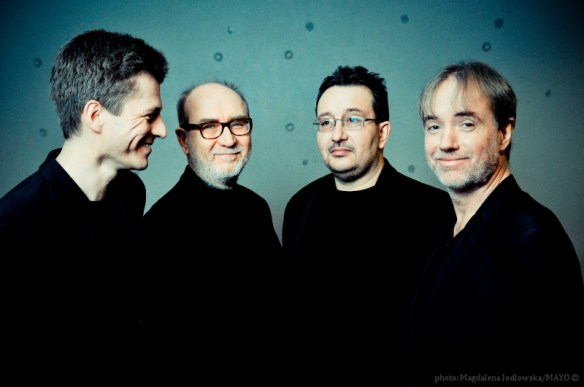
Silesian String Quartet [(Szymon Krzeszowiec, Arkadiusz Kubica (violins), Łukasz Syrnicki (viola), Piotr Janosik (cello) (above)], Wojciech Świtała (piano, below)

Weinberg String Quartet no.7 (1959) (2:47 – 26:49 on the broadcast link below)

Bacewicz Piano Quintet no.1 (1952) (30:36 – 53:10)

Cadogan Hall, Monday 2 September 2019

Reviewed by Ben Hogwood

Photo credit Magdalena Jodłowska (Silesian String Quartet)

You can listen to this Prom on BBC Sounds here

For this listener at least, it has taken a while for the Proms At…Cadogan Hall theme to catch on this season. However the BBC’s traversal of 800 years of musical history has turned out to be both original and interesting, touching on areas of music not often heard or given top billing. By grouping these two anniversary composers together a cogent and thought provoking program was the result; a concert subdued in delivery but high on musical and emotional substance.

Both Polish composers featured are not thought of as front rank examples of their country’s classical music tradition, but on this evidence both should be brought forward. There are past reasons for that relative neglect, in the relative unavailability of Weinberg’s music to western ears, and the effective suppression of his and Grażyna Bacewicz’s music, but as classical music looks to remove boundaries and stereotypes, these are exactly the type of musical figures that should benefit from such a move.

We heard Weinberg first, and the seventh of his impressive output of seventeen string quartets (from 2:47 on the broadcast link above). It is perhaps the one that sails closest to the style of his friend and protector Shostakovich, especially in the second movement where it quotes from his String Quartet no.3. As the Adagio first movement (2:47 on the broadcast) shows, the two composers have much in common in mood if not execution. Weinberg’s bittersweet lyricism is to the fore here, the radiance of pure C major at the very beginning reminiscent of Shostakovich’s own first string quartet in the same key from 20 years later.

As the music progresses however there are more troubled offshoots and episodes, the players digging deeper and the music lost in thought. Weinberg does still keep his audience in mind of the brighter sound of the opening material, which returns at 8:18.

The second movement (marked Allegretto, 9:24) has shadowy outlines from the cello, the music again wary but prone to quick and nimble outbursts from second violin (the excellent Arkadiusz Kubica) – very much in the vein of a Shostakovich scherzo, but with less bite to its execution.

The third and final movement (15:24), a substantial set of 23 variations on a theme, feels like the emotional crux of the work, and was performed as such here by the Silesians. Passionate solos from first violinist Szymon Krzeszowiec and viola player Łukasz Syrnicki (an extended dialogue from 24:20) took place in the Adagio sections, and were complemented by some really concentrated and increasingly fraught quartet episodes in the Allegro, the melodies compressed and tense. In keeping with the movement’s arch structure this tension built towards the viola solo, which marked the passionate final section and a resolution in C major. The feeling was that of a battle won, but at a cost.

Bacewicz contributed two piano quintets to her sizeable chamber music output, and both are works of originality and style. While many piano-led works such as these go for volume and bluster in the keyboard part there is more poise and reserve here, the piano and strings complementing each other on an equal footing.

There is a light touch to the music too, especially in the dance music of the second movement. Before then the first movement (initially marked Moderato by the composer) sets a relatively austere scene, though the string glints at the edges. A faster central section hints at a dance and certainly gains more energy before falling back to the slower approach, albeit with more depth this time, certainly as performed here.

The second movement (marked Presto, 37:47) takes the Polish oberek dance as its inspiration, the forthright piano melody supported by lilting, syncopated strings before summoning itself for a dramatic finish. The slow movement (Grave, 42:09) is every bit as powerful, though here the steps are very slow and steady to a stern, full-bodied climax.

The finale (48:35) had great purpose and originality of texture, the quartet busying their musical arguments against an increasingly outspoken piano part. A set of quick fire exchanges and bustling figures among the strings were harnessed for a full bodied closing statement.

Both pieces were superbly played in this concert, the commitment of the Silesian String Quartet beyond contention – as was also the case for pianist Wojciech Świtała. If the music itself was a little straight faced, it was a timely reminder that only 80 years ago (to the week) the Second World War had begun. The music therefore served as a warning for lessons that appear not to have been heeded!

Listen

The music in this concert can be heard on Spotify below:

The Silesian String Quartet have also recorded a good deal of Weinberg’s chamber output. Here is a disc of the composer’s String Quartets nos. 9 & 10:

They have also recorded all seven string quartets by Bacewicz, in an award winning double album for Chandos which you can hear below: