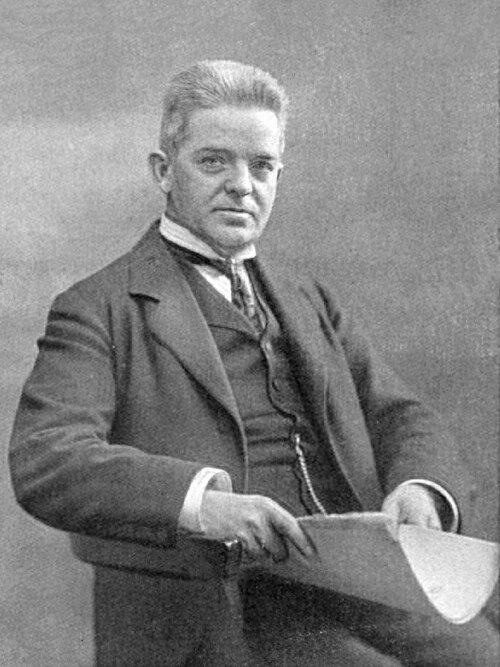
by Ben Hogwood. Image of Carl Nielsen in 1917 – unknown credit, used courtesy of Wikipedia
On this day 100 years ago – the first performance of Carl Nielsen’s Symphony no.6, the Sinfonia Semplice, took place in Copenhagen.
To mark the anniversary, Linn Records made a very intriguing release in September of a special version of the symphony. As the page for the album states, “conductor Ryan Wigglesworth joins Royal Academy of Music’s outstanding young musicians to revisit the composer’s later period. This recording showcases two works by Nielsen in two spellbinding arrangements by fellow-Dane Hans Abrahamsen. The No 6 ‘Sinfonia semplice’, written during a period of declining health, is viewed by some as a strongly ironic work. However, its lightness is also deeply sincere. With its crystalline weightlessness, Abrahamsen’s chamber arrangement reclaims both the quizzical spirit and sense of fragility in the original.
You can hear the album on Tidal by following the link below:
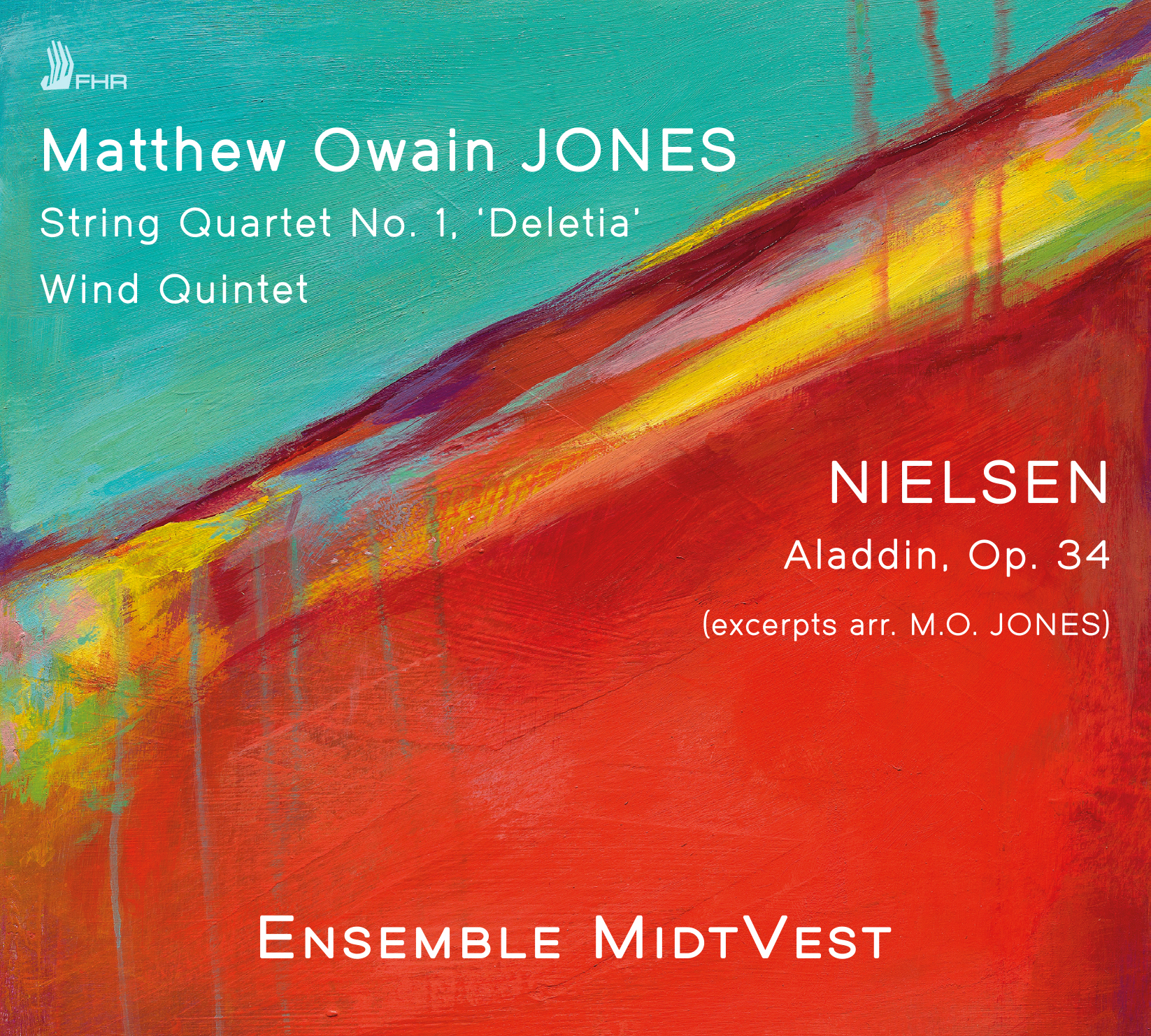
Matthew Owain Jones String Quartet no.1 ‘Deletia’ (1993, rev. 2012) Wind Quintet (2016) Nielsen arr. Jones Aladdin, FS89: Nine Pieces for wind quintet, string quartet and piano (1917-19, arr. 2018)
Ensemble MidtVest [Charlotte Norholt (flute), Peter Kirstein (oboe), Tommaso Lonquich (clarinet), Yavor Petkov (bassoon), Neil Page (horn); Matthew Owain Jones, Karolina Weltrowska, Ana Feitosa (violins), Sanna Ripatti (viola), Jonathan Slaatto (cello), Martin Qvist Hansen (piano)]
First Hand Records FHR163 [63’53’’] All world premiere recordings Producers / Engineers Michael Ponder (String Quartet, Wind Quintet), Morten Mogenson (Aladdin)
Recorded 6 December 2017 (String Quartet), 11 January 2018 (Wind Quintet), 29-31 August 2018 (Aladdin) at Den Jyske Sangskole, Herning, Denmark
Reviewed by Richard Whitehouse
What’s the story?
First Hand Records makes a welcome addition to its contemporary catalogue with this release of music or arrangements by Matthew Owain Jones, all performed by the extended outfit that is Ensemble MidtVest and among whose varied personal the composer himself can be found.
What’s the music like?
Fifty last year, Jones has had a diverse career as a musician as is recounted in his personable booklet notes. Composing has often taken a back seat in his activities, the works here written almost a quarter-century apart, yet there can be no doubting the idiomatic nature of his music.
Composed when barely out of his teens, the First String Quartet is evidently the product of a gifted if unfocussed musical talent. Jones admits as much by appending the subtitle ‘Deletia’ to its revision almost two decades on – the original four movements having been reduced to just two, albeit substantial entities. These duly complement each other in almost all respects – the initial Andante exuding a warmth and fervency that is questioned, without being denied outright, by the ensuing Allegro whose ‘minaccioso’ marking underlines its capricious while sometimes ominous nature. The result is uneven yet engaging – making it a pity that, after a musical co-written with his sister, Jones should have left composing somewhat in abeyance.
It was the positive reception accorded that revision of his quartet which encouraged Jones to return to composition in earnest, and among the first fruits of this resumption was his Wind Quintet. Its substantial single movement falls into four continuous sections such as outline a relatively Classical design (albeit with an intermezzo-like section placed second), and Jones cannily exploits those incremental changes in timbre or texture without recourse to extremes of tempo and mood. The outcome is music demonstrably within the lineage of a genre more extensive than often supposed and, though its content breaks little new ground, this is never less than expertly conceived for the medium and affords a pleasurable listen in its own right.
The locus classicus of wind quintets has to be that written just over a century ago by Nielsen, music by which composer ends this collection. Although its suite is periodically revived, the lavish incidental music (not a ballet, as is referenced several times in the notes, though there is a notable element of dance) for Adam Oehlenschlager’s play Aladdin proved too ambitious even at its Copenhagen premiere. Surprising, perhaps, that the nine numbers included here translate so well into the medium of a mixed decet – preserving the distinctive nature of music from Nielsen’s maturity (it comes mid-way between his Fourth and Fifth Symphonies) and thus making it freely available to practitioners for the very different context of the recital room.
Does it all work?
Pretty much. Much of the attraction of this collection lies in the respect which the members of Ensemble MidtVest have for Jones and his music, thereby making for performances that could scarcely be improved upon in terms of technical refinement or interpretative insight.
Is it recommended?
It is, not least as the sound conveys the immediacy but also delicacy of this music with ideal clarity and perspective. Jones must feel vindicated by the enterprise, as indeed he should, and one looks forward to more releases of both his compositions and arrangements in due course.
Yesterday we marvelled in the wonder of John Cage’s writing for choir, as highlighted in the Gramophone Awards on Wednesday. At the ceremony the magazine also named its Recording Of The Year, choosing Nielsen’s Symphony no.4 (the Inextinguishable) and no.5, as played by the Danish National Symphony Orchestra conducted by Fabio Luisi.
The choice is further evidence that Nielsen’s symphony cycle is acknowledged as one of the finest of the 20th century, having perhaps taken longer to reach its standing than other more immediate successes. You can listen to the recording below – while reading Richard Whitehouse’s verdict on all six symphonies, recorded by the same forces and reviewed on these pages.
Brahms Tragic Overture Op. 81 (1880) Nielsen Violin Concerto DF61 (1911) Shostakovich Symphony no.5 in D minor Op.47 (1937)
Eugene Tzikindelean (violin), City of Birmingham Symphony Orchestra / Alpesh Chauhan
Symphony Hall, Birmingham Wednesday 7 December 2022 [2.15pm]
Reviewed by Richard Whitehouse
A gratifyingly large house greeted this afternoon concert given by the City of Birmingham Symphony Orchestra with its former assistant conductor Alpesh Chauhan, taking in works long established in the repertoire and a concerto which remains on or about its periphery.
Tackling Brahms’s Tragic Overture depends on whether one sees it as an overture pure if not so simple, or as a tone poem with its ‘programme’ subsumed into the music’s inner workings. Chauhan favoured a viable mid-way course, his steady if never flaccid approach keeping its sonata design firmly in view but with enough expressive license to bring out the pathos in its second main theme and, especially, that spellbinding transition to its reprise when a wistful vulnerability steals over the music as if denying the implacable fatalism otherwise dominant.
CBSO leader Eugene Tzikindelean then took the stage as soloist. A bold if unexpected choice for such an appearance, Nielsen’s Violin Concerto has never quite received its due outside of Denmark but that it makes a cogent impression was never in doubt in a reading as insightful as this. Its Praeludium keenly yet sensitively rendered, Tzikindelean despatched the ensuing Allegro with the right chivalrousness and suavity. A broken string in the development caused only minimal delay as he produced its replacement then restrung his instrument with alacrity.
Its self-sufficient halves make sustaining an overall trajectory the crucial factor in this piece and Tzikindelean succeeded admirably, drawing inward rapture from the second movement’s lengthy Poco adagio before steering a never too hasty course through its lightly ironic Rondo. Tzikindelean responded to the enthusiastic response with the opening ‘Country Musicians’ section from Enescu’s Impressions d’Enfance as a delectable encore: maybe we can expect that composer’s Caprice Roumain or Pascal Bentoiu’s Violin Concerto on a future occasion?
Throughout this performance, Chauhan proved steadfast and attentive in support, then came into his own after the interval with an impressive take on Shostakovich’s Fifth Symphony. If the earlier stages of the Moderato seemed a little reined-in, the development accumulated the requisite intensity on the way to a powerfully conceived reprise, then a coda of aching regret. Steadier and less capricious than usual, the ensuing Allegretto yielded a keen impetus and, in its trio, a deftly ‘knowing’ contribution from Tzikindelean having retaken the leader’s chair.
It was the Largo that proved the highlight of this performance. Chauhan sustained its heartfelt interplay of themes with unforced rightness, CBSO woodwind heard to advantage in its rapt central episode before a climax of wrenching eloquence that subsided into expectant stillness. Launched (almost) attacca, the final Allegro unfolded with due emphasis on its ‘non troppo’ marking; its calculated aggression pointedly undercut by musing circumspection, before the heady ascent towards an apotheosis which was more than usually defiant in its equivocation.
A performance that provided ample indication of Chauhan’s emergence as a conductor of the front rank. Hopefully he will be returning to the CBSO soon, the latter’s activities continuing with the customary Christmas and Viennese New Year concerts with which to see out 2022
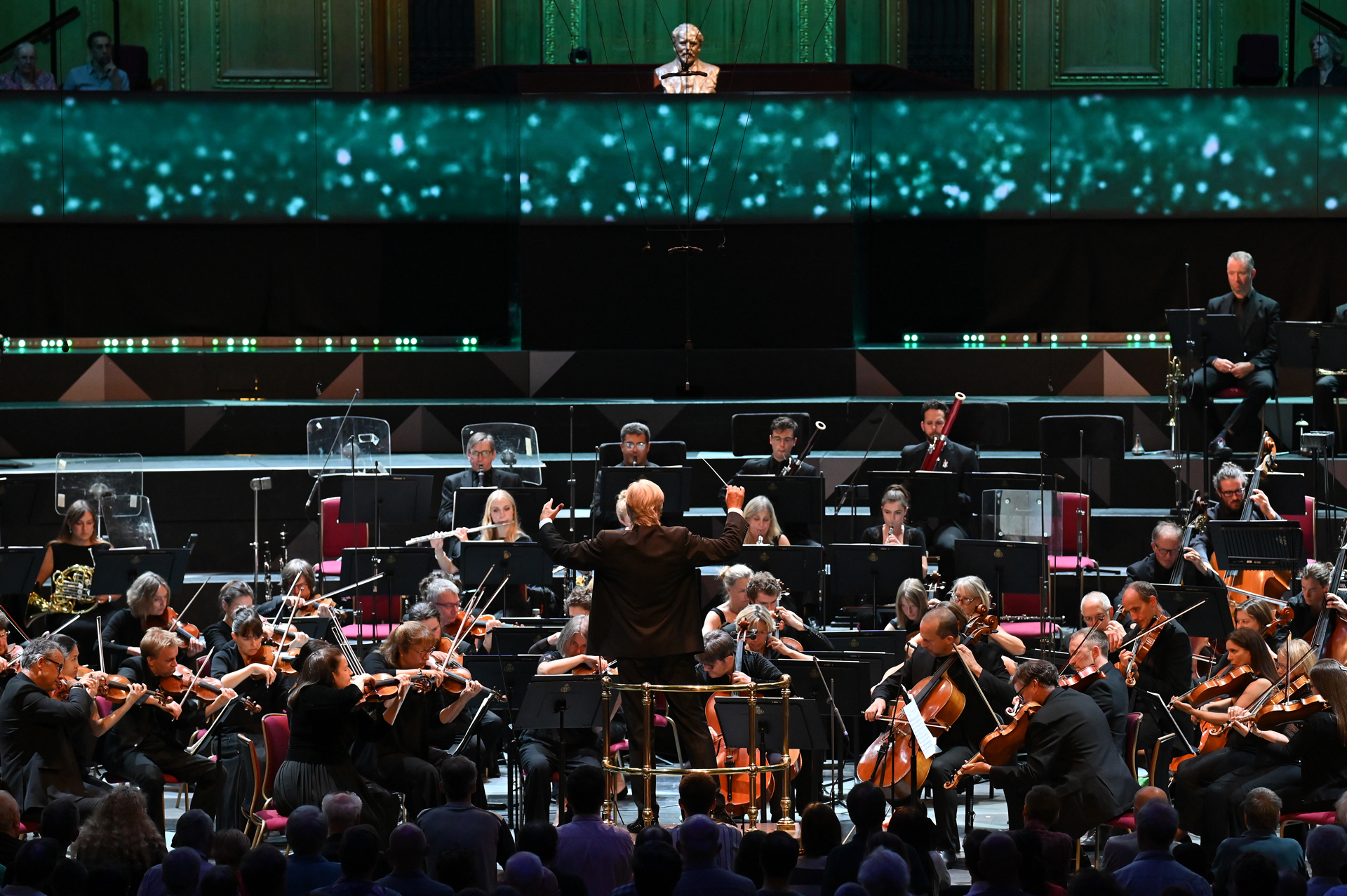
Prom 42 – Jan Lisiecki (piano), BBC Scottish Symphony Orchestra / Thomas Dausgaard
Sibelius Symphony no.7 in C major Op.105 (1924) Beethoven Piano Concerto no.4 in G major Op.58 (1804-6) Nielsen Symphony no.4 FS76 ‘The Inextinguishable’ (1914-16)
Royal Albert Hall, London Thursday 18 August 2022
Reviewed by Richard Whitehouse Photos (c) Chris Christodoulou
Ending his tenure as Chief Conductor of the BBC Scottish SymphonyOrchestra, Thomas Dausgaard directed this programme which once again played to both his and the orchestra’s strengths – in the process underlining just what they have achieved together over the past six seasons.
He might not have scheduled Sibelius quite so assiduously as his one-time predecessor Osmo Vänskä, but Dausgaard is hardly less perceptive in this composer as was proven with his take on the Seventh Symphony. If not a tale of two parts, the first half that resonated more deeply – an introduction shot through with expectancy that preceded a powerful build-up to the first emergence of the trombone theme, and an effortlessly accelerating ‘scherzo’ as made feasible a central climax of rare intensity. From here tension dropped a little over the course of a lucid yet (in this context) over-extended ‘intermezzo’, and if the approach to the final return of the trombone theme had the right inexorability, the strings’ climactic response was a little reined-in emotionally. Nor did the fraught cadence into the home-key have the desired inevitability.
Whether or not the Sibelius should open a concert, Beethoven’s Fourth Piano Concerto made for an ideal continuation. Stepping in at the eleventh hour, Jan Lisiecki is no stranger to this music such that his lightly articulated if rarely insubstantial tone complemented Dausgaard’s incisive but never headlong accompaniment. Just occasionally in the opening movement this jewel-like pianism felt a little self-defeating, though not with a lucid rendering of the (more familiar) cadenza or transition from the Andante into the finale of heart-stopping eloquence. The latter movement had the necessary vigour but also an appealing intimacy, as in the lower strings’ transition towards the final return of the rondo theme or those ruminative woodwind asides before the decisive coda. Chopin’s C minor Nocturne (1838) made for a limpid encore.
Keen to get on with proceedings, Dausgaard launched Nielsen’s Fourth Symphony after the interval before applause had subsided. Often a conductor willing to modify his approach, he might have steered the opening Allegro less forcefully given the textural detail that was lost in the Albert Hall’s ample expanse, but the twofold appearances of the ‘motto’ theme were magisterially rendered – the shocked transition into the intermezzo proving as mesmeric as this latter movement was affecting through its deft combination of winsomeness and pathos.
Equally memorable was Dausgaard’s handling of the slow movement, here exuding fervency without undue histrionics both in the searching string threnodies and the confiding passages either side – the latter of which provided a stealthy transition into the final Allegro. Here the placing of a second timpani set front-left in the arena made stretched the antiphonal contrast a little too obviously, but the music’s overall intent came across unscathed as the ‘motto’ made its climactic final appearance then those closing bars hit the ground as they should – running. Whether or not Dausgaard intended ‘Inextinguishable’ to sum up his music-making with the BBCSSO, or whether anything might be read into his wearing a Covid mask throughout, this concert was a worthy leave-taking. Hopefully he will not be absent from the UK for too long.
Click on the artist names for more information on Jan Lisiecki and Thomas Dausgaard, and for more information on the BBC Scottish Symphony Orchestra head to their website



 Arcana.fm