Stewart Goodyear (piano), City of Birmingham Symphony Orchestra / Ilan Volkov (above)
Ives Three Places in New England (1911-14, rev. 1929) Zappa Bob in Dacron and Sad Jane (1982-3) Lewis Memex (2014) Gershwin orch. Grofé Rhapsody in Blue (1924, rev. 1942)
Symphony Hall, Birmingham Wednesday 27 March 2024
Reviewed by Richard Whitehouse
Ilan Volkov is always a welcome presence on the Symphony Hall podium, and this evening he conducted the City of Birmingham Symphony Orchestra in a fascinating programme of works by American composers – three of them established in music notably removed from classical.
The concert was framed by what have now become repertoire pieces, but Ives’s Three Places in New England had to wait over half a century to be accorded this status. Using what sounded to be the most recent edition, Volkov stressed its late-Romantic impulsiveness and rhetorical eloquence, though some over-emphatic pauses or phrasing slightly undersold the cumulative majesty of The Saint Gaudens and coursing energy of Putnam’s Camp – which latter still teetered (rightly) on chaos at its close. If the build-up in The Housatonic at Stockbridge felt unduly precipitate, Rachel Pankhurst’s rendering of its cor anglais melody had ideal pathos.
The three decades since Frank Zappa’s untimely death have brought into focus his sheer range of musical preoccupations, though his pair of early 1980s albums with the London Symphony Orchestra made plain that being one of rock music’s finest guitarists and leading provocateurs was never enough. Despite their linkage via a ballet with its somewhat dubious scenario, Bob in Dacron and Sad Jane are individual entities and their respective two movements underline Zappa’s concern for musical and expressive diversity – whether in the reckless overkill of the male protagonist or halting fatalism of the female. Volkov secured dedicated playing from the CBSO as brought out Zappa’s debt to ‘third stream’ jazz as much as his modernist forebears.
George Lewis is another figure whose creativity ranges over multiple media – not least that of the orchestra which, thanks not least to Volkov’s advocacy, has gained some familiarity in the UK. Its title referring to a theoretical device for establishing connections across an otherwise unregulated body of information, Memex is typical of the composer through its complexity of textures which affords a heady virtuosity but also a measure of subtlety and inwardness, not least in those final stages when the earlier volatility gradually coalesces into something akin to resolution; as if all that information was, if not dispersed, at least finding discipline. Such, at least, was the impression left by this committed reading of a striking and absorbing piece.
It might have been a conceptual leap too far from here to Gershwin’s galvanizing of the ‘jazz age’ aesthetic almost a century earlier, though Rhapsody in Blue has lost relatively little of its edge during the interim – especially when Stewart Goodyear projected the steely spontaneity of its solo part with such gusto. Admittedly the large orchestral forces (a feature of each work heard tonight) lacked a degree of co-ordination in tutti sections, but Volkov was at one with his pianist in conveying the breezy and often brittle excitement of music which sounded as if evolving in real-time – not least the final stages that emerged as a high-octane apotheosis.
No little excitement, then, was generated over the course of this performance as of this concert overall: just the sort of event the CBSO should be putting on each season, which latter would certainly be the poorer were artists such as Volkov not encouraged to follow their convictions.
Ives Set no.1 Set no.2 Set no.3 Set no.4: Three Poets and Human Nature Set no.5: The Other Side of Pioneering, or Side Lights on American Enterprise Set no.6: From the Side Hill Set no.7: Water Colors Set no.8: Songs without Voices Set no.9 of Three Pieces Set no.10 of Three Pieces Set for Theatre Orchestra
Naxos American Classics 8.559917 [68’17”]
Producer Kenneth Singleton Engineers Benjamin Schwartz, Jonathan Galle
Recorded 8-9 March 2022 at Colony Hall and Choate Rosemary Hall, Wallingford CT
Written by Ben Hogwood
What’s the story?
James Sinclair here continues his long-term Naxos project devoted to Charles Ives with this first complete release of the sets for chamber orchestra that the composer put together across two decades and several of which are only now receiving their first recordings in this guise.
What’s the music like?
While his contribution to such major genres as the symphony, piano sonata and string quartet can hardly be gainsaid, Ives was no less committed to the miniature – whether in terms of his c130 songs, or nearly 40 evocative vignettes that are collated here. As Sinclair points out, the first three of these sets emerged during the First World War so pre-date the songs which were derived from them, whereas those other seven drew retrospectively on Ives’s songs as well as revising numerous of the composer’s shorter pieces – including his most famous single work.
Those relatively familiar with Ives’s output will be aware of many of the pieces through other media, not least the still excellent When the moon collection which Richard Bernas recorded with Music Projects in the 1990s (Decca) and which remains available for download. The 16 items which became songs are included thus in estimable readings by soprano Susan Narucki or baritone Sanford Sylvian with pianist Alan Feinberg, though the merit in having these sets as an integral series is self-evident as to make it surprising this had not earlier been attempted.
That the first three sets are relatively well-known does not lessen the arresting quality of such items as Ives’ quirky take on a Yale processional which is Calcium Light Night (Set 1/No 5), sardonic elision of (in)famous people in Gyp the Blood’ or Hearst!? Which is Worst?! (2/2), or his stark directive to embrace the future in Premonitions (3/3) with its subsequent setting of Robert Underwood Johnson. The ensuing five sets (Nos. 4 and 8 are recorded here for the first time) each has a descriptive title with which to characterise its content, while the last two sets (again in their first recordings) emerged nearly a decade after Ives had effectively ceased original composition – but inclusion of a (definitive?) version of The Unanswered Question (9/3) and reappearance of Like a Sick Eagle (1/4 & 10/1) thereby brings the series full circle.
Also featured here is the Set for Theatre Orchestra that Ives assembled around the same time as the First Set, and whose individual items between them encapsulate three distinct facets of his mature idiom – being respectively ominous, uproarious and nostalgic in their expression.
Does it all work?
It does indeed. Taken overall this collection might be felt to represent the essential Ives – its diversity of contents allied to its economy of means comparable to the orchestral miniatures which Webern composed some years earlier, not least by their exuding comparable intensity of expression. It helps to have so attuned an Ivesian as Sinclair at the helm, who directs with precision and insight these pieces – many of which he, Kenneth Singleton and David Porter realized for performance. Both sound and annotations are fully on a par with these readings.
Is it recommended?
Very much so. This is the fifth volume of Ives which Sinclair has now recorded for Naxos and, whether the series is slated to run to eight or nine volumes, it is building into the most inclusive and reliable edition of the composer’s orchestral output that has so far been made.
Stream
Buy
For more information on this release and purchasing options, visit Naxos Direct. For more information on the conductor’s Ives discography, visit the James Sinclair page on the Naxos website
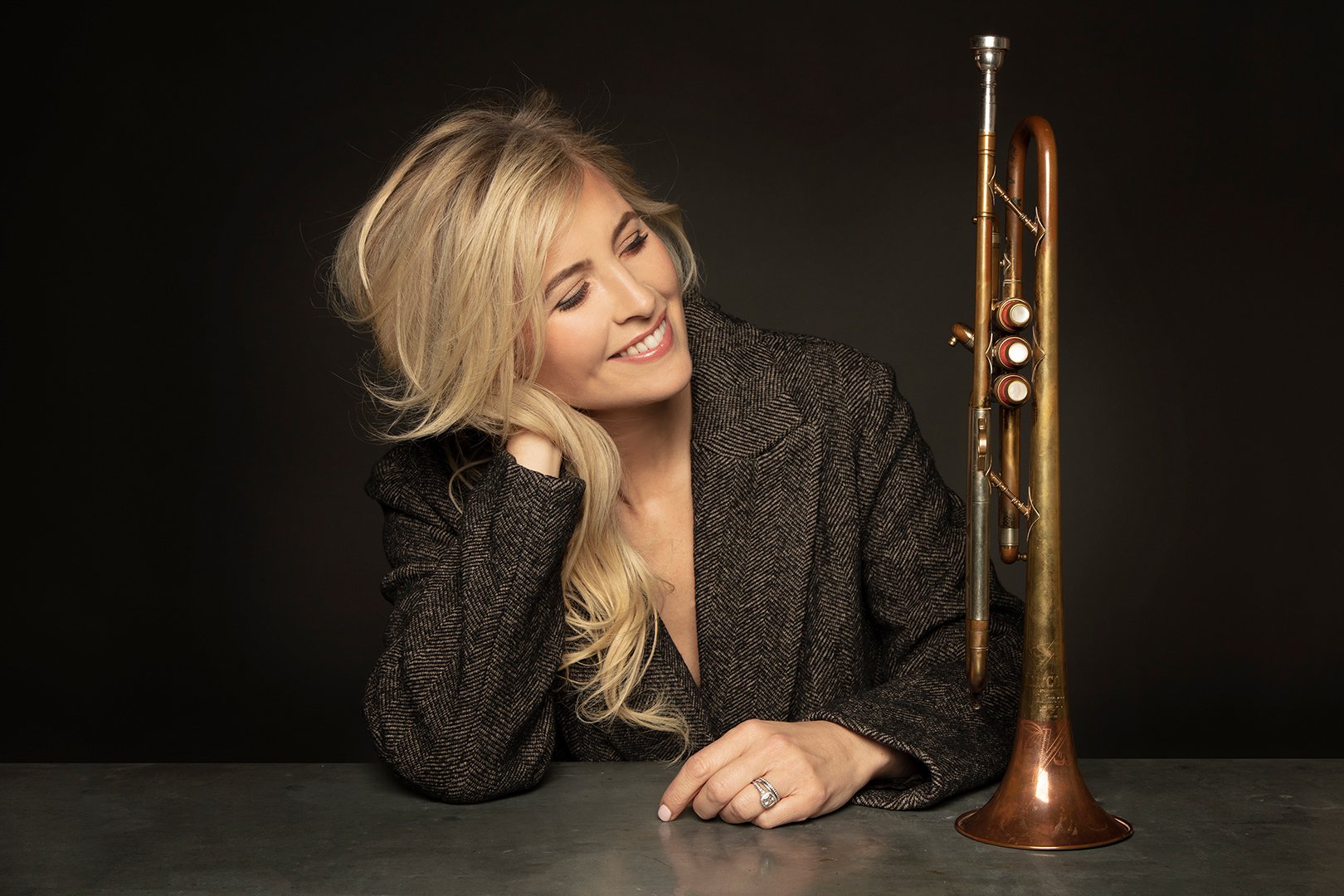
We still think of Alison Balsom as a new artist, a breath of fresh air for the trumpet in and around classical music. Yet all of a sudden it is nearly 25 years since she burst onto the scene, winning the Brass Final of the BBC’s Young Musician competition in 1998. Since then her recording career has yielded no fewer than 15 albums, for EMI Classics and latterly Warner Classics.
Quiet City will be her 16th – and in many ways it is her most personal album yet, as Arcana found when we sat down for a chat with the trumpeter. Balsom has poured herself a cup of tea, and the chat is punctuated with comfortable silences as she sips tea and I write. An extremely affable presence, she clearly has as much enthusiasm for the music now as she did in 1998, if not more.
Quiet City, as you may have guessed, is named after the Copland composition for trumpet, cor anglais and string orchestra of 1939. A forward-looking piece, it became a popular pick for online concerts during lockdown, its scoring favouring smaller orchestras and its mood wholly redolent of the times. It has held a very significant place in Balsom’s life, too. “I didn’t know I was going to make an album like this”, she confesses. “Quiet City is one of the very first pieces that I fell in love with to a deeper level when playing the trumpet. Copland understands the trumpet’s qualities, the melancholy aspects of the instrument and how it could sing. It is a relatively short work, so it was interesting to think about what it should be programmed with. I don’t think of myself as a jazz trumpeter, yet there is a really interesting point where in America composers were writing ‘in the gap’, letting themselves experiment. It didn’t matter that it was classical or jazz, they were taking from both realms. I found that this made a coherent journey, and found the nuggets growing to album ideas.”
She recognises the relevance of Quiet City to the pandemic. “Copland was a visionary with what we needed. We made this recording in November 2021, when we were just coming out of lockdown. We all had an intense feeling of gratitude to be able to play this music live with a feeling of stillness in the concert hall, a voice that said, “Aren’t we lucky to be here?!” It is such a powerful vision, evoking the atmosphere from the first section, looking between building in New York like an Edward Hopper painting. Even working with a piano reduction I was in a melancholy mood. With this music I think of a film like Lost In Translation, and of two people with a luxury life, going to very different places. There is an isolated melancholy but beauty too, like a friend. As a piece, though, it is technically and physically challenging to play.”
She elaborates further. “Sustaining the notes can be a physical struggle, but you need command of the sound, the articulated notes – and you somehow need to make them tentative and nervous. You want to convey someone practising in an apartment block or something, being wonderfully balanced with the cor anglais and communicating with your audience or listeners.”
The cor anglais part on this recording is taken by Nicholas Daniel, who Balsom professes undying admiration for. “He is such a great musician, and has such a strong feeling about that piece. It was inspiring working with him and getting his insight and thoughts. It was incredible working with the Britten Sinfonia as well, they have great integrity and are always minded for collaboration. I worked with them in 2017, when we did the Barbican’s Sound Unbound festival. We did Miles Davis and Gil Evans’ Sketches Of Spain, using transcriptions from the original studio recordings. I didn’t realise about the manuscripts, and there was a trumpet part revealed to me. He knew exactly what he wanted! I felt privileged to hear the players as at home playing jazz as they do classical.”
Also featured in the Sound Unbound concert was Gershwin’s Rhapsody In Blue, which appears on Balsom’s album in a very different guise – tastefully rejigged to bring the trumpet forward as a second soloist, alongside childhood friend Tom Poster on the piano. “I had a different hat on for this one!” she confesses. “I respect Tom so much, I think he’s the greatest pianist to play with. We met when I was ten, so we know each other really well. With the arrangement I phoned him up and suggested it, and he thought it was nuts but a good idea. We found that Rhapsody in Blue was out of copyright, but not in the Grofé arrangement. This made the job an enormous one for Simon Wright, who orchestrated it from scratch. Any coincidences in the new version are Simon coming to the same conclusion as Grofé, and I think it is an amazing achievement. The piano part didn’t have to be set in stone, which gave Tom the opportunity to express himself even more. We did a concert in Norwich, when everything was closed, and we only had to get it right once to get it in the can.”
She may be 15 albums in, but Alison is keenly aware of how much the format has changed in that time, and how consumption habits are so different with streaming. “The greatest challenge has been finding my muse, making something that the world might want to hear”, she says, “and yet there is an amazing opportunity to pioneer. We put Quiet City with some things that we’re OK with, and some things that are more challenging, such as the Charles Ives piece The Unanswered Question, which I love, but Warner let me go for it. It’s a lucky situation to be in.”
Asking Balsom to cast her thoughts back, I ask who has been an influence on her career to date? “In terms of my teachers, I would say John Miller – an amazing teacher and trumpet guru. With him we focussed on sound, as the trumpet is all about the production of technique. I would compare him to Mr. Miyagi from Karate Kid, he wouldn’t let me do the cool stuff but I’m so glad he did that! I then went on to work with Håkan Hardenberger, who taught me how to teach myself. Physically the trumpet is so challenging, but that’s not how you master it. Getting to Grade 8 is just the start! It has this incredible, multifaceted personality, it reflects who you are. We play our personalities through our instruments!”
Balsom’s husband, film director Sam Mendes, had a small hand in the album’s running order. “He suggested the use of Leonard Bernstein‘s Lonely Town”, she says, and was a good soundboard for how the album was fitting together.” Has she returned the compliment on any of his film scoring? “I have made a few suggestions!” – she smiles – “and of course he has got to know a lot of trumpet repertoire through me.”
She recognises a change of focus in the musical landscape since the pandemic, with much more emphasis on recorded music. In spite of that there are a couple of concerts planned for the rest of the year. “There was the launch concert at Snape, with full bells and whistles, which is quite a complicated affair but the only live version of the album we will be doing. After that it gets quite random, but on October I’ll be doing a recital with Anna Lapwood, the organist, and a lighting designer, at a school in Tonbridge. It’s going to be an immersive trumpet and organ recital. We know the music is amazing but how can we present it and immerse people in the music? I’m really looking forward to doing that, she’s a real force for good! I wanted an amazing acoustic and organ, and there will be a few new pieces for that one.”
Plans are afoot for a seventeenth album, too. “I have had a good chat with Trevor Pinnock about my next project. Over the pandemic we had to re-evaluate travelling and what we have a desire to do – and there are some exciting plans on the horizon!”
You can discover more on Alison Balsom by visiting her website – and you can hear more of Quiet City and purchase the album on the Presto website. Meanwhile for more information on her recital with Anna Lapwood, and to buy tickets, go to the Tonbridge Music Club website
Ives (orch. Schuman) Variations on ‘America’ (1891/1962) Bernstein (orch. Ramin & Kostal) Symphonic Dances from ‘West Side Story’ (1957/61) Dett The Ordering of Moses (1937) [UK premiere]
Nadine Benjamin (soprano), Chrystal E Williams (mezzo-soprano), Rodrick Dixon (tenor), Eric Greene (baritone), CBSO Chorus, City of Birmingham Symphony Orchestra / Joshua Weilerstein
Symphony Hall, Birmingham Wednesday 23 February 2022
Written by Richard Whitehouse
This evening’s concert by the City of Birmingham Symphony Orchestra was an all-American programme, centred as it was upon the first performance in this country for what is likely the most ambitious work by the African/American composer Robert Nathaniel Dett (1882-1943).
Although he gained prominence as a choral conductor (his Hampton Choir having performed for President Hoover and Britain’s Prime Minister Ramsay MacDonald), Canadian-born Dett failed to make a lasting breakthrough as composer – his death when barely 61 confining him to a footnote in American cultural history. The ‘sacred cantata’ The Ordering of Moses was a statement of intent when submitted for his MMus in June 1932. Adapted from Exodus and Lamentations, its text describes the Hebrews escaping slavery in Egypt by the parting of the Red Sea over the course of 55 eventful minutes. The brooding prelude is rich in atmospheric writing for lower woodwind and brass, while the climactic sequence draws wordless chorus and orchestra into a graphic depiction of the ‘crossing’; after which, thanks is rendered unto God in suitably festive terms – Walton’s Belshazzar’s Feast an audible precedent. Much has been made of the use of spirituals but, apart from the rallying presence of ‘Go down, Moses’, they serve more a textural and harmonic role in heightening the music’s expressive potency.
A potency owing in no small part to its vocal and choral forces. Eric Greene was predictably sonorous in his eloquence when setting the scene as ‘The Word’, while Chrystal E Williams made the most of her small if crucial part as ‘The Voice of Israel’. Most memorable, though, were those contributions of Rodrick Dixon as the impulsive and ardent Moses, then Nadine Benjamin whose Miriam exuded poignancy and fervour in equal measure. The CBSO Chorus represented ‘The Children of Israel’ in suitably implacable and ultimately affirmative terms.
The whole performance was ably handled by Joshua Weilerstein, who ensured certain more discursive episodes in the cantata’s earlier stages never hung fire and drew a lusty response from the CBSO. Astute programming, moreover, in preceding a still little-known work with staples from the American repertoire. It might not encapsulate the whole of the musical, but Bernstein’s Symphonic Dances from ‘West Side Story’ captures its essence via orchestration (with judicious assistance from Sid Ramin and Irwin Kostal) as made a suitable impact here.
Surprising that William Schuman’s bracing orchestration of the teenage Charles Ives’s bravura organ piece Variations on ‘America’ does not enjoy more regular performance this side of the pond, or perhaps the quirky and increasingly uproarious incarnations of what Weilerstein pointedly referred to as the National Anthem of Lichtenstein still rankles with home-grown listeners? Whatever the case, the conductor made a persuasive case for this engaging and effervescent music to be heard more frequently – the CBSO players remaining straight-faced throughout.
It certainly provided an irreverent curtain-raiser to an engrossing programme as may yet have blazed a trail. More little-known American music on Sunday when Weilerstein directs only a second UK outing for Florence Price’s Piano Concerto, alongside Korngold and Tchaikovsky.
It is with great pleasure that we welcome pianist Clare Hammond to the Arcana playlist section.
Clare has just released a new solo album, Variations. It is a typically thoughtful and inventive program of works from the 20th and 21st-centuries, ranging from Adams to Birtwistle, Copland to Gubaidulina.
We invited Clare to complement her new album with a selection of her own favourite sets of variations, and she has obliged with some new discoveries. We begin with one of the greatest of all, the towering Passacaglia for organ by Bach, via Leopold Stokowski‘s colourful orchestration. Then we downsize for Louise Farrenc‘s Variations concertantes sur mélodie suisse, for violin and piano, before we hear from George Walker, the first African American to have won the Pulitzer Prize for Music, and only recently getting more exposure as a composer. Polish composer Grażyna Bacewicz, with her Theme with Variations, offers a strong contrast to the Farrenc, again for violin and piano.
A Decca recording from 1993 follows, an early bit of recognition for the craft of Coleridge-Taylor and his substantial Variations on an African Air for orchestra. We go to piano for Lili Boulanger‘s typically concise and expressive contribution, before the wonderfully humourous, wacky and brilliant Variations on America by Charles Ives, in the orchestration by William Schuman.
Make sure you have a listen to this as well as Clare’s album, to be reviewed on Arcana soon. Our grateful thanks to her for an invigorating hour of music:
You can read more about Clare Hammond’s Variations album on theBIS website, and to hear clips and purchase from Presto Classical, click here