Charles Villiers Stanford by William Orpen Image Credit: Trinity College, University of Cambridge
As part of Arcana’s 10th birthday celebrations, we invited our readers to contribute with some of their ‘watershed’ musical moments from the last 10 years.
Celia Lister writes:
“My musical discovery from the last decade is Charles Villiers Stanford’s Magnificat and Nunc Dimittis in G.
As an oboist specialising in solo and baroque ensemble performance, I was until recently hugely ignorant of vast swathes of church music. That all changed when my children became old enough to be church choristers, a hobby which my husband (an ex-lay clerk) was keen for them to pursue. As a result, over the last few years, I have been exposed to a huge quantity of music which was new to me, ranging from the early Spanish polyphony of Tomás Luís de Victoria to the anthems of Howard Goodall. A firm favourite genre in our house is liturgical Victoriana – Stanford, Wesley, Parry, Wood and Elgar to name but a few. Choral evensong is a highlight of the calendar, and a one of the most wonderful new pieces was Stanford’s ‘Mag & Nunc’ in G.
My daughters are lucky to have inherited my husband’s dulcet tones rather than my mezzo squawking, and my eldest recently had the pleasure of singing the not inconsiderable soprano solo in this wonderful work, with her siblings and parents on sop 2, alto and tenor respectively. Hearing her voice soaring to the rafters was undeniably special, as a parent and as someone who loves music, and was the culmination of hours of church practises, services and RSCM study sessions. It makes the seemingly endless taxi service I perform to shuttle my daughters to and from innumerable rehearsals worth it.
So in a way, it’s not that Stanford in G is a single piece which I can’t do without; it’s that for me it represents the pinnacle of a genre of music which I’d hitherto largely ignored. Liturgical music – not only, but largely Victorian – now affords me great pleasure for both musical and personal reasons. Now all I need to do is wait a few more years until they are trained up for the Passions…
Elgar Overture ‘Cockaigne’ (In London Town) Op.40 (1901) Holst Hammersmith (Prelude and Scherzo) Op.52 (1930) Stanford Songs of Faith Op. 97 (1906): no.4 (To the Soul), no.5 (Tears), no.6 (Joy, ship-mate, joy); An Irish Idyll in Six Miniatures Op.72 (1901): no.2 (The Fairy Lough) Vaughan Williams A London Symphony (Symphony no.2) (1912-13, rev. 1918-20)
Christopher Maltman (baritone), BBC Symphony Orchestra / Martyn Brabbins
Royal Albert Hall, London Friday 9 August 2024, 6pm
reviewed by Richard Whitehouse
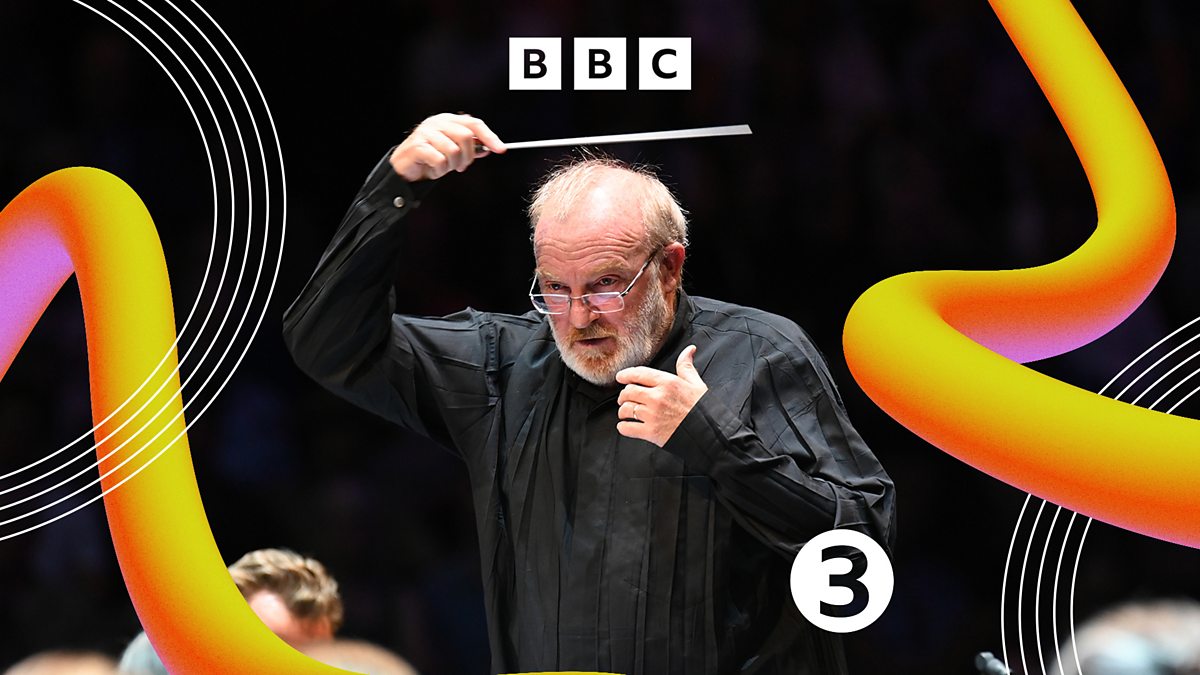
Concerts devoted to British music are by no means an unknown quantity at the Proms, but to have one as judiciously planned as that featuring Martyn Brabbins with the BBC Symphony Orchestra, on the conductor’s 65th birthday, was as unexpected as its realization ‘on the night’ proved consistently impressive.
Whether or not this account of Elgar’s Cockaigne ranked among the best of the previous 70 or so hearings at these concerts, it assuredly did the piece justice. Not its least attraction was Brabbins integrating this evocation of London on the cusp of Victorian and Edwardian eras with due perception of its ingenious sonata design, resulting in a reading as characterful as it was cohesive. Such as the emergence of the marching band at its centre and final peroration (Richard Pearce making his presence felt at the organ console) were the highpoints intended.
Whereas Elgar conveys London in its midst, Holst renders Hammersmith at a remove – his Prelude and Scherzo evoking those sights and sounds where the latter long made his home with a poise and precision no less involving for its objectivity. The orchestral version might be less often revived than its wind-band original but it yields little, if anything, in terms of expressive immediacy; not least with Brabbins mindful to underline how its two sections do not just succeed each other but are juxtaposed, even superimposed, prior to the rapt ending.
In the centenary of Stanford’s death, this selection of songs provided a welcome reminder of its composer’s prowess in the genre. The final three Songs of Faith denote an appreciation of Walt Whitman comparable to that of the next generation – whether in the eloquent musing of To the Soul, surging anguish of Tears or effervescence of Joy, shipmate, joy. Christopher Maltman then brought his burnished tone and clarity of diction to an affecting take on Moira O’Neill’s The Fairy Lough – proof Stanford could do ‘lightness of touch’ where necessary.
Whereas Stanford’s songs have barely featured here for almost a century, Vaughan Williams’s A London Symphony has accrued 36 performances, but what might be thought its ‘intermediate version’ had not been heard in nine decades. Actually, this is much closer formally to the final version of 1933 than the original – its main differences centring on those more extensive codas in the Lento and finale which, by aligning them more audibly with the introduction to the first movement, arguably ensures a more thematically close-knit trajectory across the work overall.
The performance was very much in accord with Brabbins’ recording (Hyperion). An unforced traversal of the opening Allegro, impetuous in its outer sections and affecting in that rapturous passage for solo strings at its centre, then a slow movement whose brooding introspection did not omit a sustained fervency at its climax. Nor did the Scherzo lack those ambivalent asides that find focus in its sombre close, while the nominally discursive finale built purposefully to a seismic culmination then an epilogue which drew solace from the aftermath of catastrophe.
‘‘The river passes – London passes – England passes’’. Whether the closing words from H.G. Wells’ Tono-Bungay determined or even influenced it, a sense of renewal was palpable as the music faded towards silence at the end of this persuasive performance and memorable concert.
In the last week we heard the sad news of the death of the great Cornish baritone Benjamin Luxon, at the age of 87.
A much-loved singer, Luxon excelled in the opera house and the recital room – not to mention as a soloist in many important recordings of choral and vocal works. The playlist compiled below is packed with English music, with cycles from Vaughan Williams (Songs of Travel) and Stanford (Songs of the Sea).
Luxon took on the title role in the first recording of Benjamin Britten‘s TV opera Owen Wingrave in 1971, an excerpt of which you can also hear below:
You can also hear Benjamin Luxon’s Desert Island Discs on BBC Radio 4
Michael Collins (clarinet), BBC Concert Orchestra / Martin Yates
Carwithen Suffolk Suite (1964) Delius Idyll de Printemps, RTVI/5 (1889) Stanford Clarinet Concerto in A minor Op.80 (1902) Vaughan Williams Richard II: A Concert Fantasy (1944) [World Premiere Performance] Holst Symphony in F major H47 ‘The Cotswolds’ (1899-1900)
The Abbey, Dorchester-on-Thames Friday 25 May 2024
Reviewed by Richard Whitehouse
This latest edition of the English Music Festival, also the first to take place entirely within the spacious ambience of the Abbey at Dorchester-on-Thames, began with the customary concert from the BBC Concert Orchestra and Martin Yates. As conceived for amateur players, Suffolk Suite by Doreen Carwithen feels nothing if not resourceful – whether in the regal opulence of Prelude, evocative poise of Orford Ness then the alternately rumbustious or genial humour of Suffolk Morris; the martial tread of Framlingham Castle bringing about a resolute close.
Recent years have seen renewed interest in Delius’ early orchestral work, Idylle de Primtemps an appealing instance of the composer harnessing Nordic influences to the impressionist style then emerging in his adopted home of Paris – resulting in this short yet atmospheric tone poem.
It was enticingly given by the BBCCO, which then partnered Michael Collins (above) for a revival of the Clarinet Concerto by Stanford. As with numerous concertante works from the period, this is a three-movements-in-one design. The preludial Allegro introduces two main themes, their development continued (albeit understatedly) in a central Andante that unfolds with mounting eloquence, before the final Allegro brings a transformed reprise of the initial themes on route to its decisive ending. As with the First Cello Concerto of Saint-Saëns or the Violin Concerto of Glazunov, this is a piece the accessibility of whose idiom belies the ingenuity of its formal thinking or appeal of its ideas, and Collins (who evidently last played the piece four decades ago) brought subtlety and insight to music which ultimately delivers more than it promises.
These EMF opening concerts regularly feature first performances, and this evening brought that of the ‘Concert Fantasy’ as adapted by Yates (above) from Vaughan Williams’ incidental music to a production of Richard II for a BBC radio production and subsequently shelved. As might be expected, this abounds in allusions to earlier VW works from the period (notably Job and the Fifth Symphony), but the skill by which the composer reflects salient events in Shakespeare’s play and ease with which these fuse into a relatively continuous whole is its own justification.
It made sense to feature a major work by Holst in this, the 150th anniversary-year of his birth as well as the 90th of his death, with his Cotswolds Symphony certainly a welcome inclusion. If the weight and intensity of its second movement, Elegy (In Memoriam William Morris), rather dwarfs those other three, this is less an issue when the overall sequence was as astutely balanced as here. Yates secured a keen response in the opening Allegro, the personality of its ideas here outweighing any short-windedness, while there was no lack of verve and grace in the Scherzo or of animation in the Finale. That Elegy, though, is the real highpoint and the BBCCO did not disappoint with the sustained plangency of its playing. Numerous of Holst’s early pieces qualify as his primary achievement pre-Planets and this is arguably the greatest.
It duly rounded-off a fine opening to this year’s EMF. Maybe a future such occasion could see the revival of Stanford’s once popular Third ‘Irish’ Symphony or, even more pressingly, the first hearing for over a century of Holst’s doubtless unfairly derided suite Phantastes?
Here is a nod in the direction of the English Music Festival, returning next month for 2024. For the first time, all festival events will be held in Dorchester-on-Thames. The concerts will take place in Dorchester Abbey, while the talks will be held in the historic Village Hall. The details, copied from the press release, are below:
The seventeenth annual English Music Festival (EMF) returns to Dorchester Abbey, Oxfordshire from Friday 24 May until Bank Holiday Monday 27 May 2024. Celebrating anniversaries of two of Britain’s greatest composers across the event, the opening concert, given by the BBC Concert Orchestra and conductor Martin Yates, features Stanford‘s Clarinet Concerto with soloist Michael Collins, and Holst‘s ‘Cotswold’ Symphony. Vaughan Williams’s ‘Richard II’ Concert Fantasy is given a World Premiere, alongside works by Doreen Carwithen and Frederick Delius. Orchestral, chamber and choral concerts continue throughout the weekend.
The English Music Festival celebrates the brilliance, innovation, beauty and richmusical heritage of Britain with a strong focus on unearthing overlooked or forgottenmasterpieces of the late-nineteenth to mid-twentieth century.
“Each year audience feedback proclaims the latest EMF the best yet and we are delighted to be able to continue developing and improving our now much-loved Festival”, says Em Marshall-Luck, Festival Founder-Director. “This year’s is typical EMF programming, in the range from solo piano recitals to full orchestra and choral concerts, and from early music through to contemporary, while we retain our focus on the EMF’s raison d’etre, those overlooked and forgotten works by British composers of the Golden Renaissance.
“We are delighted to have been able to attract top performers from abroad, with musicologist, tenor and English-music expert Brian Thorsett joining us from the USA and brilliant pianist Peter Cartwright from South Africa, where the EMF has a collaboration with the University of Witswatersrand in Johannesburg. I am particularly looking forward to their concerts, as well as-in particular-the Vaughan Williams premiere with the BBC Concert Orchestra, and the first modern performance of a gorgeous work by Sir Thomas Armstrong, as well as pianist and Radio 3 presenter, Paul Guinery‘s late-night recital, which celebrates the release of his third disc of Light Piano Music for the Festival’s own record label, EM Records.” The works of Gustav Holst (1874-1934) have been at the heart of Founder-Director Em Marshall-Luck’s programming at the EMF and remain a perennial favourite amongst audiences, with many memorable performances of the composer’s often overlooked major works having been given, as well as recorded by the Festival’s independent recording arm, E M Records. This year, the composer’s early Symphony, ‘The Cotswolds’, takes centre stage.
One of the leading musicians of his generation – as performer, conductor, composer, teacher and writer, Charles Villiers Stanford (1852-1924) had a profound effect on the development and history of English music. In addition to the Directorship of the Royal College of Music, amongst other august musical establishments, and his influence on several generations of composition students who went on to became household names, Stanford was a prolific composer, completing seven symphonies, eight string quartets, nine operas, more than 300 songs, 30 large scale choral works and a large body of chamber music.
The centenary of his death this year provides an opportunity for evaluation of some works from the large canon that have fallen under the radar. For the EMF’s opening concert, there will be a rare performance of Stanford’s Clarinet Concerto featuring one of today’s leading exponents of the instrument, Michael Collins.
WORLD PREMIERES
First performances include the World Premiere of Ralph Vaughan Williams’s ‘Richard II’ Concert Fantasy; the complete incidental music the composer was commissioned to write for Frank Benson’s 1912-13 production at Stratford, which will be performed by the BBC Concert Orchestra under Conductor, Martin Yates.
Vaughan Williams first discovered Shakespeare as a child when he was given the complete edition by his relative, Caroline Darwin, and ‘Richard II’ become a favourite. The composer took Shakespeare’s many references to English folk-ballads as supporting his own ‘national’ approach to music, saying “Shakespeare makes an international appeal for the very reason that he is so national and English in his outlook.” He went on to set and write over 20 Shakespeare texts and incidental music, often using folk-songs and ballads, and the well-known ‘Greensleeves’ appears in ‘Richard II’.
CHORAL CELEBRATIONS
The EMF regularly showcase live choral music. This year The Godwine Choir and Holst Orchestra conducted by Hilary Davan Wetton bring a programme of popular favourites to Dorchester Abbey, including a first modern performance of Edward Elgar’s ‘Give Unto the Lord’, and Excalibur Voices perform works by Coleridge-Taylor, Milford, Dyson, Bainton, Walford Davies and others.
INTERNATIONAL APPEAL
Returning to the EMF is South African pianist Peter Cartwright, who joins violinist Rupert Marshall-Luck in recital to perform works by Holst, Farrar, Stanford, Bliss and Howells.
American tenor Brian Thorsett and pianist Richard Masters, who enjoy a particular association with British music, are making their first appearance at the EMF with a programme of Finzi, Ireland, Frank Tours and Somervell.
RELAXED LISTENING
John Andrews raises the baton for the English Symphony Orchestra in a programme of works by Finzi, Delius, Howells, Milford, Dyson and Warlock, while Piano Trio, Ensemble Kopernikus, performs Delius, Holst, Rebecca Clarke, John Ireland and Percy Hilder Miles. Pianist and British music specialist, Phillip Leslie, performs works by Rawsthorne, Bowen, Dyson, Leighton, and John Ireland’s masterpiece, ‘Sarnia’.
Rosalind Ventris and Richard Uttley will be performing works for viola and piano including Rebecca Clarke’s Viola Sonata. Rosalind’s album ‘Sola’ is currently nominated for a BBC Music Magazine award in the 2024 ‘Premiere’ category.
Always a popular fixture, late-evening recitals are a special feature of the EMF, with the ancient warmth of Dorchester Abbey providing the perfect setting for audiences to relax in and enjoy a performance from The Flutes & Frets Duo – Beth Stone (historical flutes) and Daniel Murphy (lute; theorbo and guitar), and for a discovery of the lighter side of British composers when pianist Paul Guinery returns to the keyboard. Informative talks include those on anniversary composers, Stanford and Holst, as well as Farrar and Bliss.
This year, the Festival is remaining in Dorchester-on-Thames for the duration of the long weekend.
FURTHER INFORMATION
Further information including the full programme is available on the EMF’s website
Tickets go on sale via the website from 22 March (8 March to Festival Friends) and by means of a postal booking form. Full Festival and Day Passes are also available. Tickets for individual concerts will be available on the door, subject to availability




 Arcana.fm