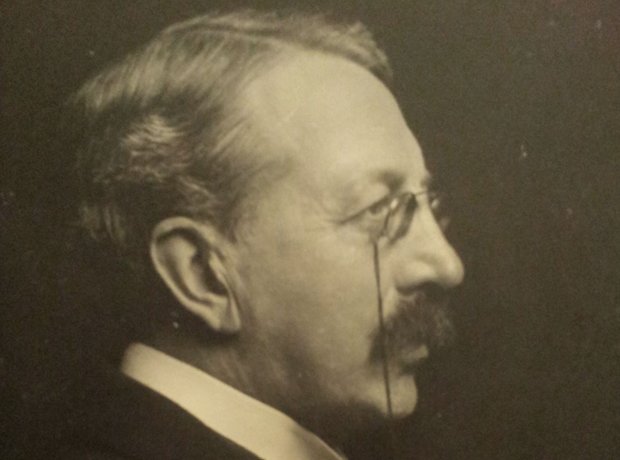
Playlist – Charles Villiers Stanford (died 29 March 1824)

by Ben Hogwood

This is a playlist to mark the contribution to classical music of the Irish composer Charles Villiers Stanford, who died on 29 March 1924.

If you are a first-time listener to Stanford, the playlist gives a first indication of the strength of his output – though there is much more to enjoy should you wish to go further!

The Irish Rhapsodies have a lot of melodic charm…while the Piano Concerto no.2 is a fine work that is a late Romantic equivalent to Rachmaninov. Stanford was a fine choral and vocal composer, too – there are glimpses of that here – while for sheer positivity and generosity of melody, his Symphony no.6 takes some beating

You can enjoy all of those below! Arcana intends to return to Stanford’s music in more detail later in the year…

Published post no.2,135 – Monday 1 April 2024

In recognition of Stanford – Piano Concerto no.2 & Symphony no.6

A recent survey by the BBC Music Magazine invited 167 performers and composers to choose their five favourite British composers – resulting in a very interesting feature titled The 25 Greatest British Composers of all time.

The results were perhaps inevitable, with a top five comprising (not in order to avoid spoilers!) Elgar, Purcell, Britten, Vaughan Williams and Byrd.

Accompanying this was a gracious paragraph where the magazine included ‘some surprising non-appearances’ – headed by Sullivan, Finzi, Delius and Bax.

However, there were no mentions – at all – for the music of Charles Villiers Stanford. This might have been on account of his birth in Ireland, but Stanford is regarded as one of the key figures in the evolution of British music as we know it today. While none but his fiercest protagonists would expect him to make a top five, I thought it would be nice to recognise his compositional craft, so below are two of his finest works, the heroic Piano Concerto no.2 and the bright sunshine of the Symphony no.6:

On Record – David Quigley – The Fair Hills of Éire: Irish Airs and Dances (Heritage Records)

david-quigley

David Quigley (piano)

Beach The Fair Hills of Éire Op.91 (1922)
Esposito Two Irish Melodies Op.39 (1883)
Field Go to the Devil and Shake Yourself (1798)
Hammond Miniatures and Modulations (2011) – No. 5, Old Truagh; No. 21, The Beardless Boy
Hennessy Variations sur un air Irlandais ancien Op.28 (1908)
Hough Londonderry Air (2014)
Martin Sionna – Spirit of the Shannon (2018)
Moeran Irish Love Song (1926); The White Mountain (1929)
Smith Paraphrase on ‘The Last Rose of Summer’ Op.173 (1883)
Stanford arr. Grainger Four Irish Dances Op.89 (1916) – no.1: Maguire’s Kick; no.4: A Reel

Heritage Records HTGCD152 [62’39”]
Producer / Engineer David Marshalsea

Recorded 9 & 11 April 2022 at Elgar Concert Hall, The Bramall, University of Birmingham

Reviewed by Richard Whitehouse

What’s the story?

The enterprising Heritage label continues its association with David Quigley in this recital   of Irish piano works as cover over two centuries, reminding listeners of the wealth of folk or traditional music from that island and its influence on successive generations of composers.

What’s the music like?

Published as Favorite (sic) Irish Dance Arranged as a Rondo for the Piano Forte, the first item is not unreasonably attributed to the teenage John Field and make for a breezy recital-opener – following which, pianist Stephen Hough demonstrated his prowess as an arranger with what is surely the most famous of all Irish melodies. Two pieces by the Italian émigré Michele Esposito – the trenchant Avenging and Bright, followed by the pensive Though the Last Glimpse of Erin – complement each other ideally, whereas the first from a set of dances by Charles Villers Stanford exudes bracing humour most likely accentuated in this idiomatic arrangement by no less than Percy Grainger. By some distance the longest piece here is from Swan Hennessy, an Irish/American later resident in France – his 12 variations on an (unidentified) theme in the lineage of various such works from the 19th century but diverting in its ingenuity. Best known as an inquiring pianist, Philip Martin the composer is represented by this evocative set of ‘rhapsodic variations’ written for the present artist.

Sidney Smith’s Paraphrase de concert on another Irish staple is the most virtuosic music and would make a dashing encore even today. Philip Hammond is the other contemporary composer featured – the present brace, part of a sequence of 21 drawn from the Edward Bunting collection and likewise written for Quigley, respectively searching and animated     in their emotional profile. From among her many mood-pieces, that by Amy Beach yields       a limpid poetry that more than deserves to provide the title for this collection overall. An English composer with direct Irish ancestry, Ernest Moeran’s predilection for all-things Celtic is made plain by the two pieces heard here, their recourse to traditional melodies enhanced by an idiomatic pianism which adds greatly to the winsomeness of their appeal. Back, finally, to those Stanford/Grainger dances with the fourth from this set a reminder that the former, whatever his formidable reputation as a pedagogue, was never averse to indulging his Irish roots in the writing of music as scintillating as it remains appealing.

Does it all work?

Admirably. Quigley is as committed to the music of his homeland as have been numerous of his predecessors, not only with performing these pieces in recital but also by finding ways of integrating them into a cohesive overall programme. Only one achieves (just) the 10-minute mark and another is almost eight minutes, making them ideal for combining into a judicious sequence – one which, at little more than an hour’s length, can be enjoyed at a single hearing. Quigley will hopefully have the chance to mine the ‘Irish piano-book’ further in due course.

Is it recommended?

Indeed. Quigley is a perceptive exponent of this repertoire, his Kawai Shigeru SK-EX heard to advantage in the spacious yet detailed acoustic of the Elgar Concert Hall. With succinctly informative notes from Andrew H. King, this recital warrants the warmest recommendation.

For further information on this release, and to purchase, visit the Heritage Records website, and for more on David Quigley click here

In concert – Soloists, University of Birmingham Voices & CBSO / Martyn Brabbins: Stanford: Requiem

stanford-requiem

Stanford Requiem Op.63 (1896)

Carolyn Sampson (soprano), Marta Fontanals-Simmons (mezzo-soprano), James Way (tenor), Ross Ramgobin (baritone), University of Birmingham Voices, City of Birmingham Symphony Orchestra / Martyn Brabbins

Symphony Hall, Birmingham
Saturday 25 July 2022

Written by Richard Whitehouse

Its official season may have ended over a week before, but the City of Birmingham Symphony Orchestra was heard this evening in a rare revival of a work whose premiere it gave 125 years ago at the Birmingham Triennial Festival – that of the Requiem by Charles Villiers Stanford.

As historian Paul Rodmell recounted in his programme note, this Festival saw the launching of a host of major choral works during its 128 years of existence – notably Mendelssohn’s Elijah in 1846 and Elgar’s The Dream of Gerontius in 1900. That the latter piece was soon regarded as trailblazing despite a largely unsuccessful premiere might be thought ironic given that, just three years earlier, Stanford’s Requiem had been received with some acclaim only to fall into obscurity along with the greater part of his sizable output in the wake of the First World War.

Not unexpectedly, Brahms instead of Berlioz or Verdi is the main presence – thus the Introit with its understated opening theme that recurs often in the work, while its distinction between sombre choral and aspiring vocal music is further emphasized by those expressive contrasts in the Kyrie. The vocalists come into their own in a Gradual whose orchestral textures find this composer at his most felicitous. A telling foil, moreover, to the Sequence with its menacing Dies irae or proclamatory Tuba mirum, then what follows bringing the soloists into individual focus: hence the heightened fervour of Carolyn Sampson, the more circumspect eloquence of Marta Fontanals-Simmons, slightly hectoring impulsiveness of James Way, and the brooding power of Ross Ramgobin; though the sequence overall exudes an almost symphonic cohesion.

Arguably the finest portion, however, comprises the final three movements. The Offertorium makes much of the contrast between warmly martial and intensively fugal sections, while the Sanctus has an ethereal radiance which carries through the ruminative Benedictus and into deftly resounding Hosannas. The funereal orchestral music preceding the Agnus Dei affords the darkest emotion of the whole work, but this only enhances the ensuing Lux aeterna with its serene fatalism that Frederic Leighton – artist and friend of Stanford, whose death early in 1896 was the catalyst – would doubtless have appreciated. Throughout this performance, the University of Birmingham Voices responded with alacrity to choral writing whose poise and translucency were always in evidence – not least in the most earnestly contrapuntal passages.

Special praise for Martyn Brabbins who, whether or not he considers it a masterpiece, directed this work with unwavering conviction. The balance between soloists or chorus and orchestra might largely take care of itself, but orchestral textures need astute handling if these are not to risk uniformity or even monotony and Brabbins drew a committed response from the CBSO such that the autumnal hues of Stanford’s writing came through unimpeded. Good to hear this performance is being released commercially, as it did full justice to a largely neglected work.

A last thought. One of Stanford’s earlier choral pieces is The Resurrection, a setting of the ode by Friedrich Klopstock. Maybe when the CBSO performs Mahler’s Second Symphony in a future season, it would be worth programming these assuredly very different works together?

For more information on the CBSO visit their website. For more information on Charles Stanford, meanwhile, visit the website of The Stanford Society

In Appreciation – David Lloyd-Jones

by Ben Hogwood

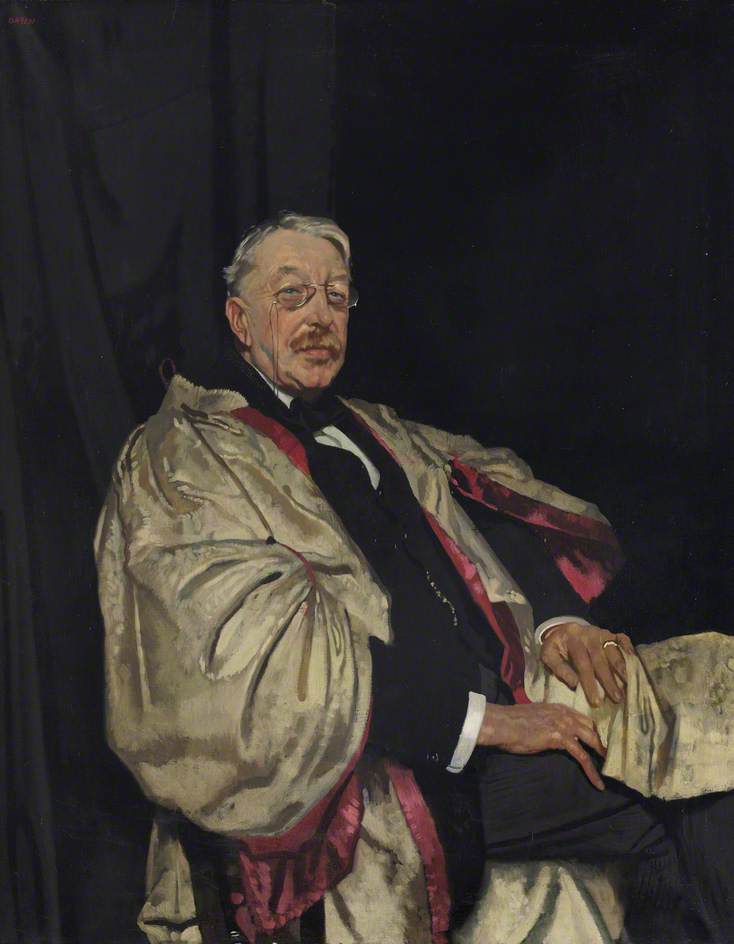
This week we have learned the sad news of the death of conductor David Lloyd-Jones, at the age of 87. David was instrumental in founding Opera North in 1978, and there is a heartfelt tribute on their website in his honour.

While Lloyd-Jones was a highly respected opera conductor, I have chosen to focus on his many and pioneering recordings of English music by way of a tribute. These include extensive surveys of the orchestral music of Stanford (including a symphony cycle), Alwyn, Bliss, Rawsthorne and Arnold Bax, including another survey of his symphonies, and Holst – with an important disc of his orchestral music released in 1998. Here is just a hint of his discography for Naxos, with highlights from some very impressive recordings: