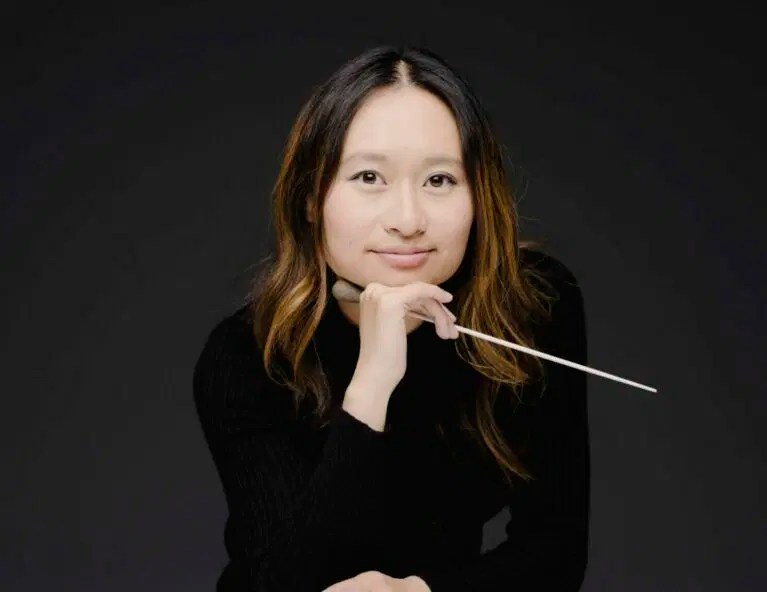
In concert – Jonathan Kelly, CBSO / Kazuki Yamada: Richard Strauss – Tod und Verklärung, Oboe Concerto, Also sprach Zarathustra

Jonathan Kelly (oboe), City of Birmingham Symphony Orchestra / Kazuki Yamada

Richard Strauss
Tod und Verklärung Op.24 (1888-9)
Oboe Concerto in D major AV144 (1945)
Also sprach Zarathustra, Op.30 (1896)

Symphony Hall, Birmingham
Wednesday 10 December 2025

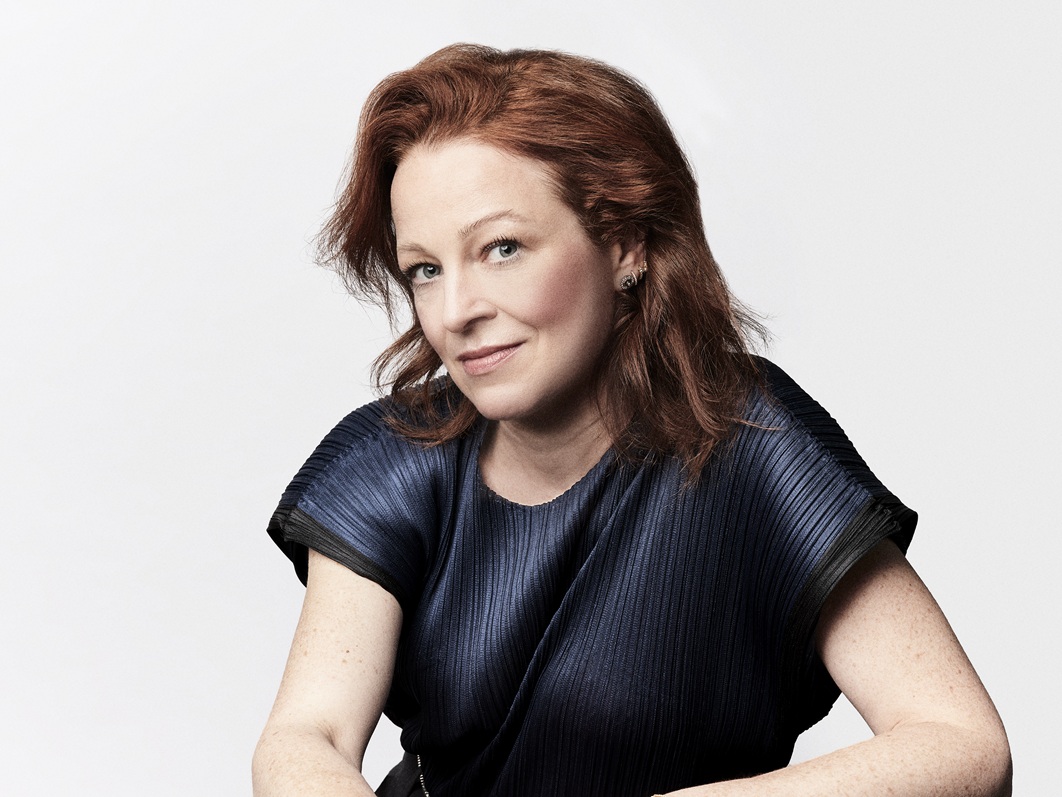
Reviewed by Richard Whitehouse Picture of Jonathan Kelly (c) Stefan Hoederath

Richard Strauss is among a relatively select number of composers, the range and breadth of whose output makes it suitable for a whole programme – as was evident from this evening’s concert by the City of Birmingham Symphony Orchestra and music director Kazuki Yamada.

Never one to miss such an opportunity, Strauss had evidently conceived his tone poem Death and Transfiguration in the wake of illness only to extend its remit accordingly. Yamada duly had its measure: whether in the not so stark fatalism of its opening pages, the tussle with his approaching demise audibly relished by the protagonist then emergence of that transfiguring state which, after the brief and rather jarring interjection of earlier angst (no more convincing here than almost any other performance) sees this work through to a fervent culmination then on to its beatific close. Not consistently more than the sum of its best parts, and with internal detail sometimes obscured in the onslaught of its vehement tuttis, this was still an involving account – lessened not a jot by its underlining Strauss’s enjoyment of his emotional strivings.

Onward 46 years to the Oboe Concerto the ageing composer wrote at the promptings of US army corporal and professional oboist John de Lancie. Much the finest of those concertante pieces from Strauss’s ‘Indian summer’, its three movements merge into the finely balanced continuity that Jonathan Kelly (above) – making a welcome return to the orchestra of which he was solo oboist during 1993-2003 – relished throughout. The elegance of its initial Allegro here abetted by a degree of nonchalance, as was the poise of its Andante with deftest pathos, his reading came into its own in a Vivace whose cadenza passages were as eloquent as the coda that Strauss duly extended to make this movement an unerring fusion of scherzo and finale. Kelly understandably offered no encore, but he returned to join the CBSO after the interval.

That second half consisted of Thus spake Zarathustra – if not the most ambitious of Strauss’ tone poems in size then surely in scope, whether or not the depths of Nietzsche’s existential musings are really plumbed. The indelible ‘Sunrise’ treading a fine line between profundity and portentousness, Yamada charted its idiosyncratic journey toward spiritual enlightenment with a sure sense of where this music was headed – no matter that the outcome felt as much   a glorification of orchestral power and opulence as of anything more intrinsically humane.

Highlights during its course included the sustained emotional force in ‘Of Joys and Passions’, the textural unanimity of the strings across their fugal writing in ‘Of Science and Learning’, and suavity then mounting animation of ‘The Dance Song’ with leader Eugene Tzikindelean in his element – before ‘Song of the Night Wanderer’ brought proceedings down from their orgiastic heights into that sombre repose whose tonal inconclusiveness may be an indicator  of Strauss’s own perspective; the certainly of those opening bars left pointedly unresolved.

Its pizzicato chords on lower strings made a telling farewell for Eduardo Vassallo, principal cellist throughout much of the past 36 seasons. His broad sympathies including Argentinian tango, and a characterful Don Quixote to boot, leaves players and listeners alike in his debt.

Published post no.2,747 – Saturday 13 December 2025

For more on the CBSO’s season for 2025/26, head to the CBSO website – and for more on the artists in this programme, click on the names to visit the websites of conductor Kazuki Yamada, oboist Jonathan Kelly and principal cellist Eduardo Vassallo

In concert – Ryan Wang, CBSO / Pierre Bleuse: Ravel, Liszt & Bartók

Ryan Wang (piano), City of Birmingham Symphony Orchestra / Pierre Bleuse

Ravel Ma mère l’Oye – ballet (1910-11); Rapsodie Espagole ((1907-08)
Liszt Piano Concerto no.1 in E flat major S124 (1849, rev. 1855)
Bartók The Miraculous Mandarin BB82 – suite (1918-24)

Symphony Hall, Birmingham
Thursday 4 December 2025

Reviewed by Richard Whitehouse Photo of Pierre Bleuse (c) Marine Pierrot Detry

His marking the centenaries of Berio and Boulez at this year’s Proms confirmed Pierre Bleuse (music director of the Ensemble Intercontemporain) as a conducting force to be reckoned with, duly reaffirmed by this afternoon’s concert with the City of Birmingham Symphony Orchestra.

The CBSO has an association with the ballet incarnation of Ravel’s Mother Goose stretching to Simon Rattle and beyond to Louis Frémaux. After an evocative Prelude then a winningly nonchalant Spinning-Wheel Dance, Bleuse (above) brought out the plaintiveness in Pavane of the Sleeping Beauty’ then the subtly nuanced humour in Conversation of Beauty and the Beast; pointing up the piquancy of Tom Thumb then the whimsicality of Laideronnette, Empress of the Pagodas. Interpretively as well as musically, the best was saved until last – the deftest of transitions leading into a Fairy Garden of artless eloquence. Throughout this memorable performance, woodwind playing was consistently beguiling – not least during that approach to an apotheosis such as benefitted from Bleuse’s refusal to overstate its emotional rhetoric.

Nothing wrong with an all-Ravel first half, even if Rapsodie Espagnole may not have been the ideal continuation. Yet that sultry aura exuded by Prélude à la nuit felt almost tangible, as was the ominous unease of Malagueña and the rarefied elegance of Habanera, before the mounting excitement of Feria carried all before it. Bleuse successfully brought out the nostalgic resonances at the centre of this finale, and even if the closing bars lacked a degree of visceral excitement, the sense of a cohesive or cumulative whole could hardly be denied.

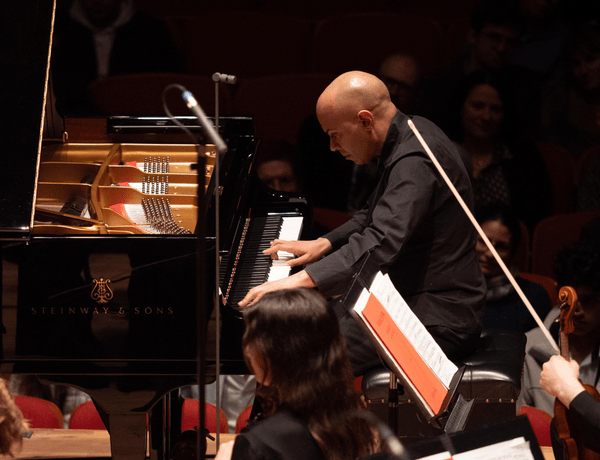
After the interval, a welcome hearing (less frequent these days than might be imagined) for Liszt’s First Piano Concerto. Executed with the right panache and an absence of histrionics, its formal succinctness and cyclical ingenuity are its own justification; not least as rendered with such attention to detail or expressive impetus by Ryan Wang (above). The winner of last year’s BBC Young Musician competition, he evidently has technique to spare while being equally capable of a delicacy and understatement ideally suited to the pensive ‘slow movement’ or the teasingly playful ‘scherzo’. The opening section was enhanced by a poetic contribution from clarinettist Oliver Janes, while the ‘finale’ headed to an exhilarating peroration. Wang duly acknowledged the applause with his leonine rendering of Chopin’s ‘Heroic’ Polonaise.

The programme ended with the suite from Bartók’s pantomime The Miraculous Mandarin. This is music which all too easily descends into overkill, but Bleuse kept a firm grip on its progress from the frenetic opening evocation of urban traffic, via its mounting anticipation with the arrival of the three ‘clients’, through to a bewitchingly shaped encounter between the mandarin and the woman. Nor was there any absence of virtuosity in a climactic chase-sequence, even while the emphasis on its rallentando markings proved a little too intrusive.

Most surprising, however, was a relatively prolonged silence after its explosive ending. Was the audience nonplussed by its once-infamous scenario, or was it unaware of this supposedly familiar music? Whatever, the performance assuredly seal the seal on an impressive concert.

For more information on the 2025-26 season head to the City of Birmingham Symphony Orchestra website. Click on the names to read more about soloist Ryan Wang and conductor Pierre Bleuse

Published post no.2,740 – Sunday 7 December 2025

In concert – Helena Juntunen, CBSO / Osmo Vänskä: Sibelius & Shostakovich

Helena Juntunen (soprano), City of Birmingham Symphony Orchestra / Osmo Vänskä (above)

Sibelius
Karelia Suite Op.11 (1893)
Songs – Höstkväll Op.38/1 (1903, orch. 1904); Hertig Magnus Op.57/6 (1909, orch. 1912); Våren flyktar hastigt Op.13/4 (1891, orch. 1913)
The Bard Op.64 (1913)
Luonnotar Op.70 (1913)
Shostakovich
Symphony no.15 in A major Op.141 (1970-71)

Symphony Hall, Birmingham
Wednesday 19 November 2025

Reviewed by Richard Whitehouse Pictures (c) Jonathan Ferro

Finnish conductor Osmo Vänskä makes relatively UK appearances these days such that this evening’s concert with the City of Birmingham Symphony Orchestra was to be anticipated, given the never less than intriguing juxtaposition of works from Sibelius and Shostakovich.

It now appears less frequently on programmes than half a century ago, but Karelia Suite finds Sibelius at his most uninhibited and Vänskä responded accordingly – whether the simmering motion of its Intermezzo or the pulsating activity of its Alla Marcia; its Ballade distilling the keenest atmosphere with Rachel Pankhurst making the most of her plaintive solo. Harpist Karherine Thomas was similarly attuned to her almost obligato role in The Bard, a tone poem whose sombre understatement hardly prepares one for the surging emotion towards its climax.

Elsewhere in this half it was Helena Juntunen (above) who stole the show with her judicious selection of Sibelius songs. That almost all these are settings of Swedish texts reflects an introspective Romanticism often overlooked in his output and Juntunen brought out the stark imagining of Autumn Evening then restless aspiration of Baron Magnus as potently as the ecstatic yearning of Spring is Flying. Her swapping sophisticated gown for traditional dress may have pointed up stylistic differences with Luonnotar, but it also underlined the inimitability of this setting from Finnish national epic the Kalevala. Birmingham audiences had been spoiled by hearing Anu Komsi in the piece, but Juntunen was no less inside music whose extremes of timbre or texture result in as heady a culmination then as spellbinding a conclusion as any in Sibelius.

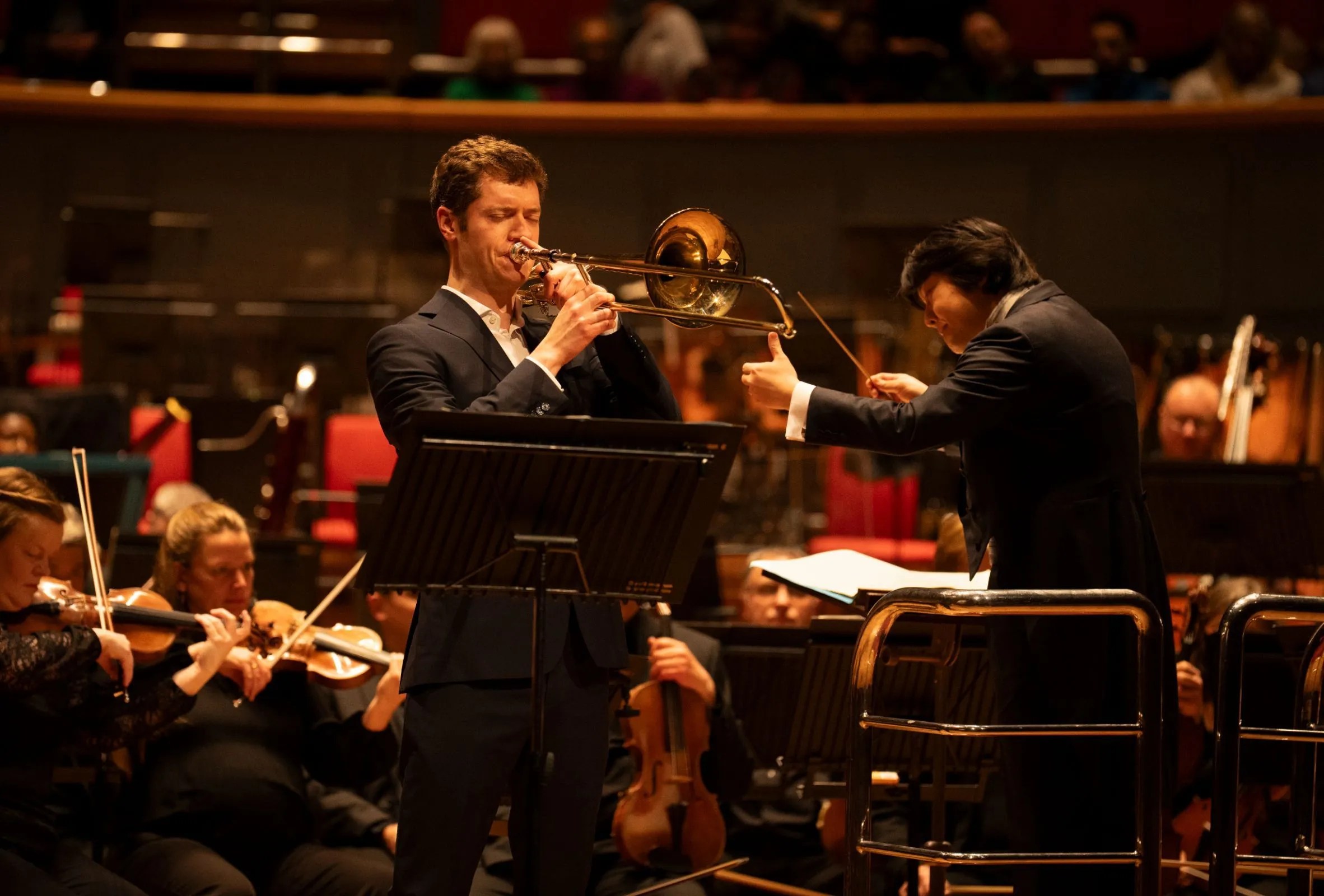
Hard now to recall a time when Shostakovich’s 15th Symphony was believed too inscrutable for wider appreciation, rather than that masterly reassessment of Classical symphonism it is. Vänskä brooked no compromise in an initial Allegretto not without its technical mishaps, for all its sardonic and even scabrous humour came over unimpeded, but it was with the Adagio this performance wholly found its stride. As enhanced by eloquent contributions from cellist Eduardo Vassallo then trombonist Richard Watkin, this was palpably well sustained through to a climax shot through with a defiance borne of desperation, before retreating back into its initial numbness. Continuing directly, the ensuing Allegretto was an intermezzo no less acute in its expression and not least for the way solo instruments melded so deftly with percussion.

Vänskä did not make the mistake of rendering the finale an Adagio, such as holds good only with its portentous introduction. The main Allegretto was persuasively handled – broadening marginally for a central passacaglia builds stealthily if inevitably to a climax corrosive in its dissonance, before retracing its thematic steps towards a coda which evokes the notion of the ‘unbearable lightness of being’ more completely than any other music. Here, also, there was no mistaking the CBSO’s collective focus in bringing this totemic work to its deathless close.

Shostakovich 15 does not lack for probing or memorable readings these days and, if tonight’s did not answer all its questions, Vänskä nevertheless ensured this piece left its mark on what was a commendably full house, and which set the seal on a flawed while memorable concert.

For more information on the 2025-26 season head to the City of Birmingham Symphony Orchestra website. Click on the names to read more about soloist Helena Juntunen and conductor Osmo Vänskä

Published post no.2,727 – Sunday 23 November 2025

News – the CBSO are Bringing The Light

published by Ben Hogwood from the original press release

This winter, the City of Birmingham Symphony Orchestra will illuminate Birmingham’s Symphony Hall with Bringing the Light – a remarkable celebration of music, culture and community, featuring three brand-new pieces by Roxanna Panufnik, Joan Armatrading and Cassie Kinoshi alongside A.R. Rahman’s Slumdog Millionaire Suite arranged by Matt Dunkley.

Taking place on Sunday 7 December at 5pm, this uplifting afternoon of music and storytelling harnesses the full strength of the CBSO, the CBSO Chorus, CBSO Youth and Children’s Choruses, alongside presenter Satnam Rana, conductor Michael Seal and sitar soloist Akash Parekar. The programme blends orchestral and choral brilliance, contemporary composition and global influences, promising an unforgettable celebration of togetherness and creativity.

Emma Stenning, Chief Executive of the CBSO said: “This concert shines a light on Birmingham’s extraordinary diversity and creativity. ‘Bringing the Light’ will fill Symphony Hall with music that uplifts, connects and inspires – a true celebration of what makes this city so special. After a year that has been characterised by so much division and polarisation, this concert will do a great deal to remind us of what we as people all have in common – and the power of music as a force to unite us all.

“At the CBSO, we’re passionate about creating experiences that feel both rooted in our home city and open to the world. This concert brings together voices from different traditions, faiths and generations to reflect the vibrancy of Birmingham today.”

At the heart of the concert is Aurora a new work by composer Roxanna Panufnik and writer and librettist Jessica Duchen, co-commissioned by the CBSO, Royal Choral Society and the Arktisk Filharmoni. It is a powerful piece that explores the power of light as a universal symbol of hope, connection and unity – drawing inspiration from festivals of light from around the world. Developed in close collaboration with 14 UK faith leaders and devotional musicians, the text of each movement represents a different faith: Christian Christmas; Muslim Milad un Nabi; Sikh, Jain and Hindu Diwali; Jewish Hanukkah; Tibetan Buddhist Gaden Ngamchoe and ending with a beautiful, musical depiction of the Aurora Borealis for those of all faiths and none.

Roxanna Panufnik said: “When we hear about different faiths in the media it’s too often about conflict between them and very rarely about their respective beauty and the common themes we all share. We have planned this work over the past 10 years, and it has been hugely inspirational collaborating with our phenomenal consultants: 14 UK Faith leaders and their respective devotional musicians. The CBSO is perfectly placed, in a city with a fabulous and dynamic diversity of cultures and faiths, to premiere this work. Our 270 singers will be of multiple ages and faiths – so will, we hope, our audience. This is a piece for EVERYONE.”

Jessica Duchen adds: “The overarching image of Aurora: Faith in Harmony is the Northern Lights, a miracle of nature that can inspire the kind of awe in us all that some people find in faith. Embracing the secular community alongside a range of world faiths that have festivals of light in the depths of winter, the piece celebrates the virtually universal human longing for light in darkness, which we hope can help to bring people of all cultures together. It has been an incredible journey for us both – and Roxanna has excelled herself in writing music of extraordinary beauty.”

The performance opens with a world premiere of Homeland by singer-songwriter Joan Armatrading CBE– which she describes as her “love letter” to Birmingham.

Joan Armatrading comments: “Homeland is a piece that highlights the city of Birmingham and its people, reflecting their strong sense of community, resilience and warmth. It is a tribute to a place to which I am bonded, and one I will always hold with affection and pride. Through both words and music, the piece weaves together the sounds, energy, and rhythms of the city while reaching out into its vast surrounding countryside. This is Birmingham not simply as a backdrop, but as a living, breathing presence – an often-underrated landscape where industry and nature exist side by side in quiet beauty.”

The concert also includes a new commission by Mercury Prize-nominated and Ivors Academy Award-winning composer and saxophonist Cassie Kinoshi with lyrics by poet Lydia Luke.

Cassie Kinoshi said: “I was in the state of mind to stay centres on how nature grounds and steadies us within the constant movement of city life. It captures the ways young people find calm and connection in fleeting everyday moments; rain against a bus window; flowers at a market stall; or the scent of trees through an open window; and celebrates the beauty of finding stillness amid the noise. Created with input from the Southwark Playhouse Youth Company, the piece offers a portrait of the city through young people’s eyes: a place where nature and metropolitan life coexist. It is about recognising how these small, tender moments can bring comfort, belonging, and a sense of balance in an increasingly hectic world. Rather than portraying nature as something distant or idealised, the piece treats it as part of daily life: a source of connection to oneself, and a reminder that even in the most built-up places, the natural world remains ever-present.”

The CBSO acknowledges the generous gift from Frances and Barry Kirkham, whose support helped ​make Aurora and i was in the state of mind to stay possible.

Leading up to the performance, there will be lantern-making workshops in partnership with the Canal and River Trust and Crafting Community. As well as a beautiful lantern walk along Birmingham’s canals, accompanied by narrowboats decorated by light artist Sophie Handy and featuring local musicians, which begins at Roundhouse Birmingham and ends at the ICC with a performance by the CBSO’s community choir SO Vocal.

Audiences are warmly invited to this vibrant celebration of culture and light which unites communities from across the city and beyond to share a moment of joy, hope and reflection.

Full details can be found on the CBSO’s website

Published post no.2,721 – Monday 17 November 2025

CBSO in the City 2025: Birmingham Comes Alive with a Week of Free Orchestral Events in Unexpected Places

The CBSO performing in the Bullring, Birmingham.

From the press release:

The City of Birmingham Symphony Orchestra (CBSO) returns this summer with its acclaimed week-long musical takeover, CBSO in the City. Running from Wednesday 23 to Monday 28 July 2025, this much-anticipated second edition reaffirms the CBSO’s commitment to reach new audiences across the West Midlands and develop deeper connections with the city it calls home.

Building on the success of 2024’s inaugural CBSO in the City, which saw over 25 free performances in iconic and everyday locations across Birmingham, the 2025 programme blends rich musical experiences with moments of joyful spontaneity – taking the orchestra out of the concert hall and into the heart of the community.

This year’s festival offers an exciting series of free, un-ticketed performances right across the city, bringing CBSO musicians to some of Birmingham’s most recognisable venues. Highlights include:

New Street Station: pop-up performances for commuters

Library of Birmingham: including a space-themed family concert & string quintet with sitar in their wellbeing space

Ikon Gallery and RBSA Gallery: showcasing chamber groups in gallery settings

Birmingham Museum & Art Gallery: featuring flute and harp duets

Birmingham Botanical Gardens: string quartets & wind quintets in serene garden surroundings

Black Country Living Museum: brass quintets adding musical flair to the historic setting

West Midlands Metro: a clarinet trio bringing music on the move

Each performance is designed to meet audiences where they are – whether in transit, at leisure, or exploring with family – while showcasing the full diversity of the orchestra. From Star Wars and Brahms in New Street Station, to strings & winds among the blooms at Birmingham’s Botanical Gardens, a string quartet at the Ikon Gallery, and even a clarinet trio riding the West Midlands Metro.

As part of the celebrations, the orchestra is calling on Birmingham residents to nominate their street for the chance to host an unforgettable pop-up performance later this year.

CBSO Music Director Kazuki Yamada (above) leads the spirit of this initiative. He says: “For me, music is about connection. Taking the orchestra outside the concert hall helps us meet people where they are – and share something powerful, beautiful and unexpected.”

CBSO Chief Executive Emma Stenning adds: “CBSO in the City promises to once again fill Birmingham with incredible music, reimagining the city’s spaces as stages for celebration and musical discovery. From familiar faces to new friends, we’re excited to delight audiences, share special moments, and celebrate the vibrant spirit of our city. We believe music is for everyone – and this is one of the most joyful ways we bring it to life.”

CBSO in the City is generously supported by John Osborn CBE and NBB Law.

While all events are free and unticketed, standard admission applies at the Birmingham Botanical Gardens, RBSA Gallery, and Black Country Living Museum.

Full event listings and times can be found at the CBSO website

Published post no.2,591 – Thursday 10 July 2025