In concert – CBSO Centre Stage: CBSO strings play Kodály & Korngold

CBSO-Strings

Kodály Serenade, Op. 12 (1919-20)
Korngold
String Sextet in D major, Op. 10 (1914-16)

CBSO Strings: Kate Suthers & Charlotte Skinner (violins), Adam Römer & Jessica Tickle (violas), Miguel Fernandes & Helen Edgar (cellos)

CBSO Centre, Birmingham
Thursday 27 January 2022 2pm

Written by Richard Whitehouse

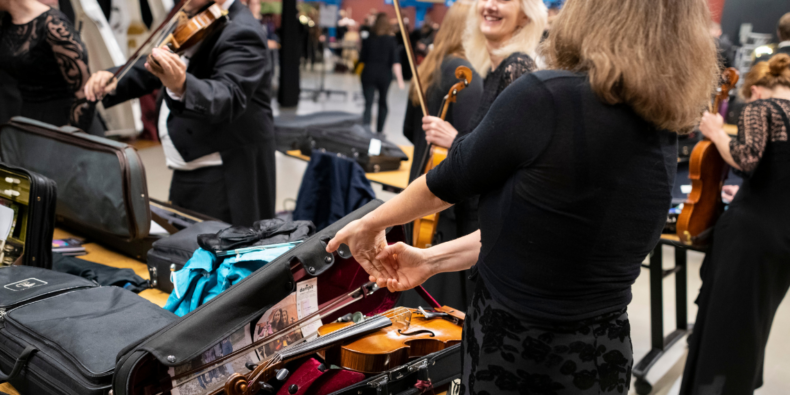
Two unfamiliar while appealing works were featured in this afternoon’s Centre Stage recital given by string players from the City of Birmingham Symphony Orchestra, written during the early stages and in the aftermath of the First World War at a pivotal time in European culture.

The focus on choral and pedagogic music of Kodály’s later years makes his earlier chamber works the more valuable, and while the Serenade for two violins and viola is by no means the most imposing, its deftness and finesse of writing for this unusual line-up cannot be gainsaid. The lively outer movements abound in those allusions to and inflections of folk melodies that Kodály explored extensively in his maturity, with the central Lento touching upon a vein of ‘night music’ less inwardly intense than if equally evocative to that found in the music of his contemporary Bartók. Its relatively extended formal trajectory can make the final Vivo seem unduly prolix, yet in so buoyant and finely integrated a performance, there was no likelihood of this movement forgoing any sense of direction on its way to a decidedly nonchalant close.

Kodály was around 30 when writing this piece, whereas Korngold was barely out of his teens when he finished the Sextet as draws equally on very different (if by no means incompatible) stylistic traits evident in works for this medium by Tchaikovsky and Schoenberg. If the latter composer is to the fore in the lengthy initial Moderato with its intricate thematic interplay and frequent density of texture, the Adagio exudes a melodic eloquence denoting those operas or film-scores to come. The ensuing Intermezzo is arguably the most characteristic movement in its suavity and teasingly coy charm, while the Finale looks back to Brahms and even Dvořák (whose Sextet would be a welcome inclusion in these recitals) for its underlying vitality and easy-going humour as makes the coda’s rush to the finish the more unexpected and engaging.

Such was the impression left by a finely prepared reading by no means lacking in spontaneity or those flights of fancy such as denote the ‘confidence of youth’. Quintets are the order of the day for the next Centre Stage recital, which features contrasting works by Mozart and Brahms.

You can read more about that next Centre Stage recital, and book tickets, on the CBSO website

In concert – CBSO Centre Stage: Poulenc Chamber music

cbso-centre-stage

Poulenc Sonata for Clarinet and Bassoon, FP32 (1922); Trio for Oboe, Bassoon and Piano, FP43 (1924-6); Sextet for Wind Quintet and Piano, FP100 (1931-2, rev. 1939-40)

City of Birmingham Symphony Orchestra Members: Marie-Christine Zupancic (flute),Emmet Byrne (oboe), Oliver Janes (clarinet), Nikolaj Henriques (bassoon), Elspeth Dutch (horn), Robert Markham (piano)

CBSO Centre, Birmingham
Friday 21 January 2022 2pm

Written by Richard Whitehouse

It made sense to devote a programme in the Centre Stage series – put on by musicians of the City of Birmingham Symphony Orchestra – to the chamber music of Poulenc, which is hardly less representative than those vocal and choral pieces that likewise run throughout his output.

Increasing in size and substance, the three works this afternoon were also a viable overview of the composer’s evolution during the interwar period. The Sonata for Clarinet and Bassoon finds Poulenc teasing out the expressive potential of Stravinsky’s often inscrutable chamber music from the previous decade; its Allegro and Final movements pursuing an agile dialogue whose harmonic astringency is offset by the wistful insouciance of its central ‘Romance’, in which the interplay between Oliver Janes and Nikolaj Henriques was at its most persuasive.

Stravinsky evidently had a direct output into the composition of the Trio for Oboe, Bassoon and Piano which, cut from similar stylistic cloth to the earlier piece, reveals greater emotional range. Not least in the opening movement’s pointed contrast between its wistful introduction and headlong Presto, or the Andante’s haunted charm – here emphasized by plaintive oboe playing from Emmet Byrne – whose ‘vulnerability behind the façade’ is duly swept away by a finale in which the breezy humour of the ballet Les biches comes unmistakably to the fore.

The Sextet cost Poulenc fair effort before reaching definitive form at the start of the Second World War but is arguably his most representative work at that stage. Not least in the way its animated opening Allegro makes a virtue of any imbalance between piano and wind quintet – Robert Markham keeping matters securely grounded – or sheer timbral and textural variety of the Divertissement with piquant contributions from flautist Marie-Christine Zupancic and horn player Elspeth Dutch. Nor was there any lack of verve in a Finale whose recollection of the work’s opening, now suffused with greater pathos, must surely be a comment on the times.

Eloquently realized, it brought to an end an admirable showcase for both music and musicians. Next week sees a no less engaging programme of Kodály and Korngold by the CBSO strings.

Further information on future CBSO Stage concerts can be found here

In concert – Fatma Said, CBSO / Kazuki Yamada – Mozart, Mahler & Richard Strauss

fatma-said

Richard Strauss Don Juan, Op. 20 (1888)
Mozart
Vado, ma dove?, K583 (1789)
Mozart
La Clemenza di Tito, K621 (1791) – Non più di fiori
Mahler
Symphony No. 4 in G major (1899-1900)

Fatma Said (soprano), City of Birmingham Symphony Orchestra / Kazuki Yamada

Symphony Hall, Birmingham
Wednesday 19 January 2022

Written by Richard Whitehouse

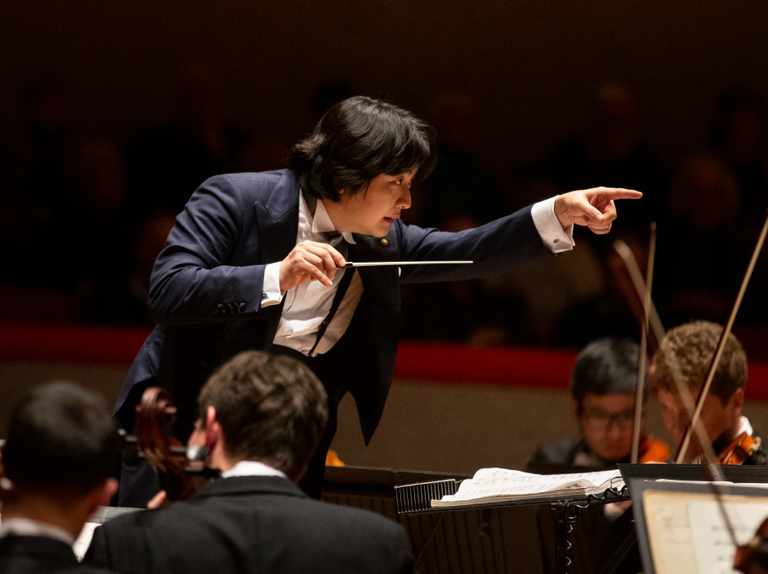
It may still be over a year before Kazuki Yamada becomes chief conductor and artistic advisor of the City of Birmingham Symphony Orchestra, but concerts such as tonight’s afford ample indication of just what can be expected from this already engaged and productive partnership.

If there any ongoing theme to this programme, it was one of transcendence – admittedly, one of negation in Richard Strauss’s Don Juan, though Yamada relished those encounters chivalrous and amorous during its course. The ‘carnival’ episode drew some especially incisive playing from woodwind and brass, and while the climactic restatement of the horns’ aspiring theme lacked nothing in grandiloquence, it did not detract from the starkness of a coda whose fatalism was to be encountered within this composer’s tone poems more regularly than might be supposed.

Strauss’s lifelong devotion to Mozart made two of the latter’s arias an appealing complement. Written as a replacement number for a long-forgotten opera by Vicente Martín y Soler, Vado, me dove? enjoys frequent revival as a standalone aria and, when elegantly rendered by Fatma Said, it was not hard to hear why. One of the (relatively few) highpoints from Mozart’s final opera La Clemenza di Tito, Vitellia’s aria makes greater expressive challenges to which Said rose accordingly – the trajectory of its ‘Ecco il punto’ recitative subsiding from anguish into that resignation from where the aria itself proceeds unerringly to the resolve at its close. All of which was eloquently conveyed, and while a further aria – the mellifluous Nehmt meinen Dank? – would have been welcome, there was more to come from this impressive singer.

Namely the finale of Mahler’s Fourth Symphony – hardly the rarity it was when Adrian Boult introduced it to Birmingham audiences 95 years ago, but easy to underestimate in the context of this composer’s overall output. As ‘unhurried’ as its heading indicates, the first movement exuded no little ambiguity – Yamada pointing up those myriad timbral and textural shadings that permeate the development and so make possible the heightened equanimity of the reprise. Sardonic but not unduly malevolent, the scherzo was tangibly evocative (Eugene Tzkindelean switching adeptly from his violin to its retuned doppelganger) – with breath-taking change of tonal perspective at the arcadian vision near its end. Visionary was no less apt to describe the slow movement, its variations alternating between fervour and anguish with seamless accord.

Felicitous playing from CBSO woodwind informed its progress on the way to its climax, with ‘heaven’s door’ briefly yet thunderously ajar prior to the transfigured calm of the closing bars. Stealing in just before, Fatma Said was an appealing guide to the setting of ‘Das himmlische Leben’ with its not always blissful recounting of the joys awaiting those who arrive there. Of particular note was the easefulness that spread across the final pages, when the singing ceases and the orchestra withdraws stealthily while raptly to leave just the harp’s pulsing resonance.

A lucid, often captivating performance of a work whose enticements Yamada realized in full measure. Anyone who can make it along to Symphony Hall for tomorrow afternoon’s repeat should certainly do so, while Kazuki Yamada will be back with the CBSO during this spring.

For more information on this concert visit the CBSO website. Meanwhile click on the links for information on the artists Fatma Said and Kazuki Yamada.

In concert – Caroline Sheen, Louise Dearman, Nadim Naaman, Jeremy Secomb, CBSO / Martin Yates – Sondheim: Broadway Baby

Follies Overture
Company Company; Being Alive
Anyone Can Whistle Anyone Can Whistle
Follies Could I Leave You; Broadway Baby
Sondheim Three Sondheim Waltzes
Sweeney Todd A Little Priest; Johanna
Gypsy Some People
Merrily We Roll Along Old Friends

A Funny Thing Happened On The Way To The Forum Overture
Company The Little Things You Do Together
West Side Story Something’s Coming; Balcony Scene; A Boy Like That
Passion Loving You
A Little Night Music Send In The Clowns
Into The Woods Giants In The Sky; Agony
Company Getting Married Today
A Funny Thing Happened On The Way To The Forum Comedy Tonight

Louise Dearman, Nadim Naaman, Jeremy Secomb and Caroline Sheen (vocalists), City of Birmingham Symphony Orchestra / Martin Yates

Symphony Hall, Birmingham
Friday 14 January 2022

Written by Richard Whitehouse photos (c) Beki Smith (above) and Florian Wende (below)

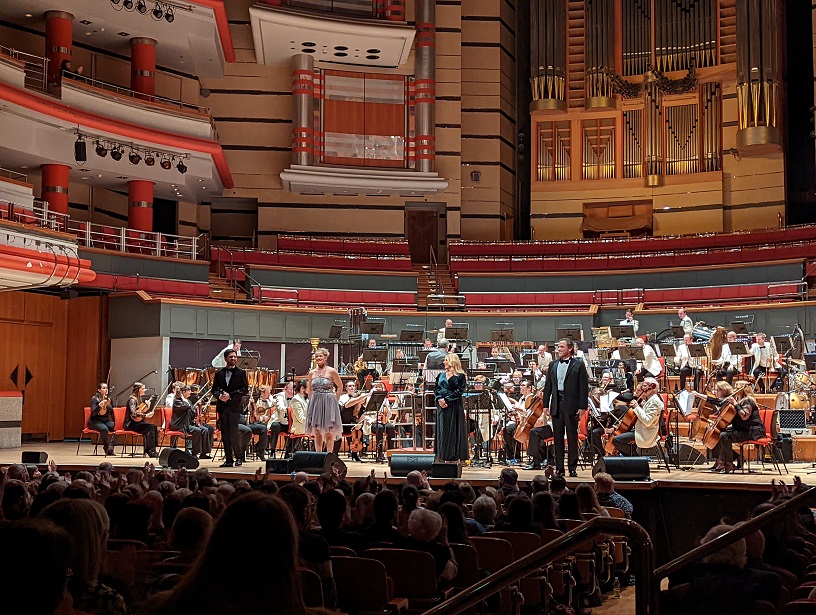
This overview of Stephen Sondheim was inevitably leant poignancy by the composer’s death in November but this, in turn, only served to emphasize the extent of his achievement across more than half a century and at least 16 stage-works; across the course of which, he brought the American musical to a new level of sophistication. The present selection further provided a reminder of that additional depth and richness made possible when the instrumental writing is allotted to full orchestra, of which the City of Birmingham Symphony Orchestra was a keen advocate.

A versatile conductor, Martin Yates launched the evening via a bustling take on the Overture to Follies, Sondheim’s double-edged homage to Broadway’s ‘golden age’, before all four of tonight’s vocalists took the stage for the title-song from Company – its edgy expectancy offset by the fervency of that musical’s ‘Being Alive’ rendered by Nadim Naaman. Jeremy Secomb brought real poise to the title-song of initially ill-fated Anyone Can Whistle; Louise Dearman was defiance itself in ‘Could I Leave You?’, while Caroline Sheen teased out the insouciance of a further Follies song ‘Broadway Baby’. The CBSO duly gave its all in the lively and not-a little sardonic waltzes as taken from Anyone Can Whistle, then Dearman and Secomb proved well complemented as scheming barber and piemaker in ‘A Little Priest’ from Sweeney Todd; Naaman’s pathos in ‘Johanna’ a reminder of this musical’s compassionate side. Sheen sassily projected Sondheim’s lyrics to Jule Styne’s music in ‘Some People’ from Gypsy, then all four singers rounded-off the first half with the barbed ‘Old Friends’ from Merrily We Roll Along.

broadway-baby

A lively traversal of the Overture to A Funny Thing Happened On The Way To The Forum set up the second half in suitably racy fashion, with Dearman and Secomb bringing real piquancy to Company’s edgy duet ‘The Little Things You Do Together’. Three numbers from West Side Story reminded one of Sondheim’s peerless lyrics to Leonard Bernstein’s music – Naaman’s inquiring take on ‘Something’s Coming’ followed by his and Sheen’s rapturous showing for the ‘Balcony Scene’ (a.k.a. ‘Tonight’), the latter joining Dearman for the searing medley ‘A Boy Like That / I Have A Love’ as forms this musical’s emotional apex. Not that Secomb’s unforced eloquence in ‘Loving You’ from Passion proved an emotional come-down; neither did Dearman in conveying the bittersweet soul of ‘Send In The Clowns’ from A Little Night Music – Sondheim’s most recognizable melody. Two numbers now from multi-layered Into The Woods – Naaman suitably astounded in ‘Giants In The Sky’; he and Secomb pointing up the fanciful imagery of ‘Agony’. Dearman and Sheen joined him for the heady triple-take of ‘Getting Married’ from Company, then the advertised programme concluded with the quartet in the uproarious ‘Comedy Tonight’ such as unerringly sets the tone for Forum as a whole.

Those who might have been bemoaning the absence of Sunday In The Park With George (its first act arguably Sondheim’s most perfect achievement) would have been reassured with the ecstatic ‘Sunday’ that brought the evening to its close; one in which the contribution from the CBSO played no small part in conveying the sheer range of Sondheim’s enduring creativity.

For more information on this concert you can visit the CBSO website. Meanwhile click on the artist names for information on Martin Yates, Louise Dearman, Nadim Naaman, Jeremy Secomb and Caroline Sheen. To read more about Stephen Sondheim himself, visit the Stephen Sondheim Society

In concert – Clara-Jumi Kang, CBSO / Ryan Bancroft – Coleridge-Taylor, Mendelssohn & Sibelius

clara-jumi-kang

Coleridge-Taylor Solemn Prelude in B minor, Op. 40 (1899)
Mendelssohn Violin Concerto in E minor, Op. 64 (1844)
Sibelius Symphony No. 2 in D, Op. 43 (1901-2)

Clara-Jumi Kang (violin), City of Birmingham Symphony Orchestra / Ryan Bancroft

Symphony Hall, Birmingham
Thursday 13 January 2022

Written by Richard Whitehouse Ryan Bancroft picture (c) Benjamin Ealovega

Having seen in the new year in customary Viennese-style, the City of Birmingham Symphony Orchestra continued its season with this programme of repertoire staples along with what was (probably) only the third performance of a relatively early orchestral work by Samuel Coleridge-Taylor.

The recent revival of interest in Coleridge-Taylor hopefully means such enticing pieces as his Violin Concerto and Clarinet Quintet will be heard more frequently at concert hall and recital rooms. If the Solemn Prelude is not quite on their level, it certainly deserved more than total neglect following its premiere at Worcester Cathedral in 1899; a further hearing last July only made possible after the manuscript was relocated at the British Library. Combining Elgarian nobility with Brucknerian grandeur, its outer sections exude a portentousness complemented by the expressive immediacy at its centre; abetted here by Ryan Bancroft’s flexible handling of tempo so a welcome melodic spontaneity came to the fore. No undiscovered masterpiece, but an appealing work that doubtless fulfilled its remit back then and could do so again today.

Mendelssohn’s Violin Concerto has never lacked for performances during the 177 years of its existence such that familiarity can breed, if not contempt, then at least a certain predictability. Credit to Clara-Jumi Kang for reminding one how (to quote David Kettle’s apt description in the programme) ‘‘quietly innovative’’ the piece is as to formal continuity and motivic fluidity. Not that this was a low-key or understated reading – Kang bringing out the combative side of the opening Allegro (‘appassionato’ it duly was), not least her impetuous take on the central cadenza whose developmental function was tellingly underlined. The Andante melded warm lyricism and plaintive regret to a bewitching effect then, after its teasing entrée, the animated repartee of the finale was deftly rendered through to a vivacious coda and decisive conclusion.

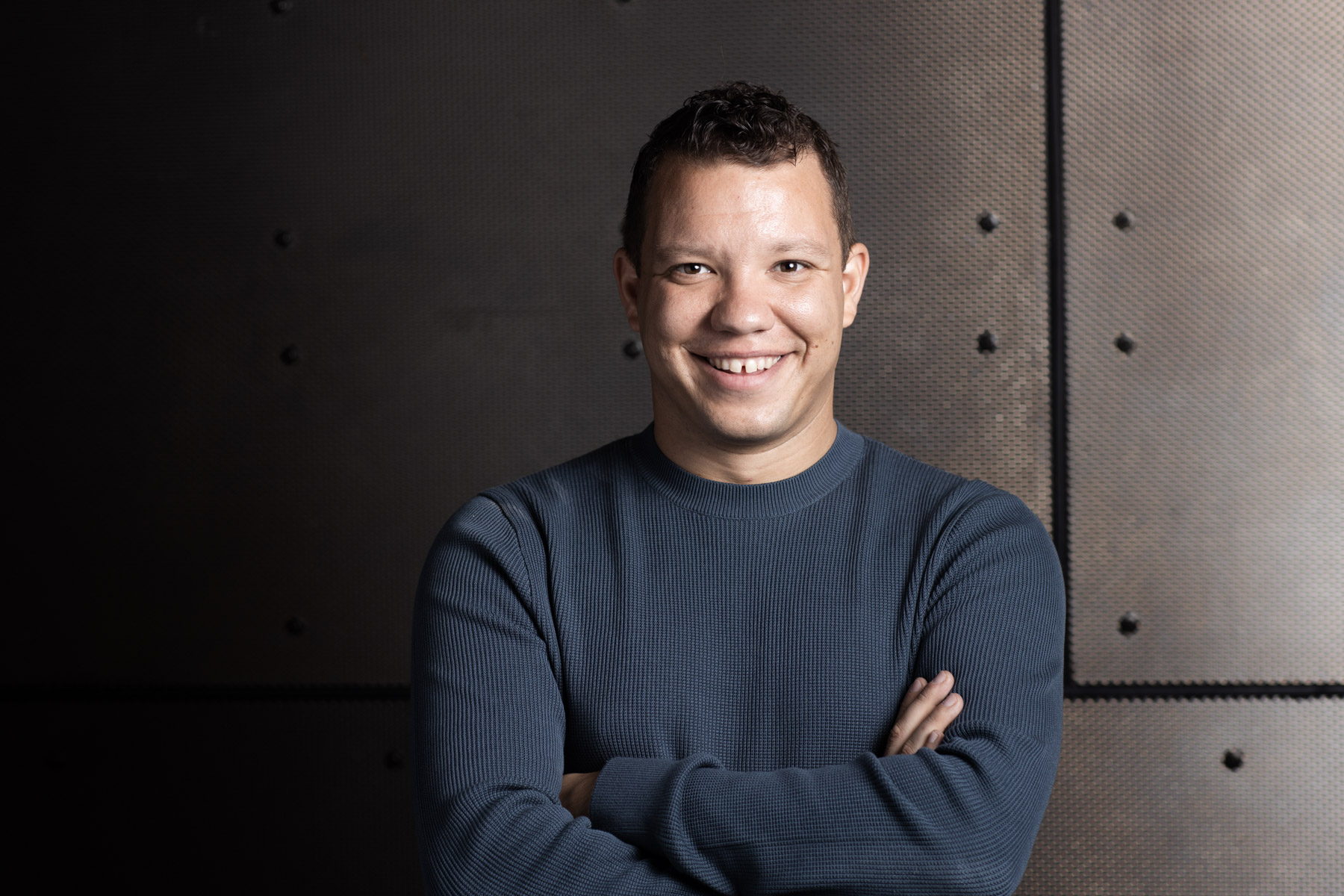
Now in his early thirties, Bancroft (above) is into his second season as principal conductor of the BBC National Orchestra of Wales and takes up a similar post with Royal Stockholm Philharmonic in 2023. This account of Sibelius’s Second Symphony left little doubt as to his interpretative credentials, not least with a finely proportioned yet impulsive reading of the initial Allegretto, then an Andante as lacked in little in that formal focus essential if its fervour is not to become histrionic. To which, an attacca from one movement to the other might have been beneficial.

The latter movements run continuously in any case – and, after a scherzo by turns tensile and tender, the transition was unerringly handled such that the finale hit the ground running. This can easily become discursive or even sprawl but, with its ‘big tune’ kept in check and starkly modal second theme keenly ominous, it built purposefully and with some inevitability to an apotheosis that, while it evinced more in the way of triumph than catharsis, none the less set the seal on an idiomatic performance with the CBSO woodwind and brass often at their best.

After an evening of Stephen Sondheim (now the more poignant following his death last November), then chief conductor designate Kazudi Yamada returns on Wednesday 19 and Thursday 20 January in a programme of Strauss, Mozart and Mahler.

For more information on the next concerts with Kazudi Yamada you can visit the orchestra’s website. Meanwhile click on the links for information on Clara Jumi-Kang and Ryan Bancroft.