
In concert – Ning Feng, CBSO / John Wilson: Rachmaninoff Symphony no.3, Glazunov Violin Concerto & Gershwin’s symphonic Porgy & Bess

rachmaninoff-wilson

Gershwin (arr. Bennett) Porgy and Bess: A Symphonic Picture (1942)
Glazunov Violin Concerto in A minor Op.82 (1904)
Rachmaninoff Symphony no.3 in A minor Op.44 (1935-6)

Ning Feng (violin), City of Birmingham Symphony Orchestra / John Wilson

Symphony Hall, Birmingham
Wednesday 1 December 2021 (2.15pm)

Written by Richard Whitehouse. Photo of Ning Feng (c) Felix Broede

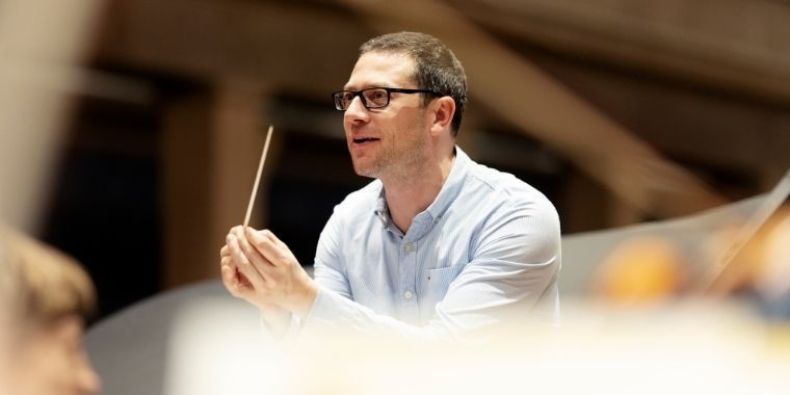
John Wilson may have been taken by surprise when asked to introduce this afternoon concert from the City of Birmingham Symphony Orchestra, but there was nothing left to chance as to the performances in what proved to be a judiciously planned and finely realized programme.

Gershwin’s Porgy and Bess is now well-established as an opera as much as a musical (hybrid or otherwise), not least through Wilson’s advocacy at English National Opera’s staging three seasons ago, but there is still a place for the ‘Symphonic Picture’ as posthumously realized by Robert Russell Bennett. The pre-eminent arranger and orchestrator from Broadway’s ‘golden age’, Bennett may have regarded Gershwin’s masterpiece as essentially a sequence of classy showtunes, but the finesse with which these were fashioned into a cumulative overview of the drama cannot be gainsaid. Wilson drew sumptuous playing from the CBSO in an arrangement by no means dismissive of Gershwin’s orchestration. Perhaps another time he could schedule the far more arresting Catfish Row suite, but so fine a reading of the Bennett was no hardship.
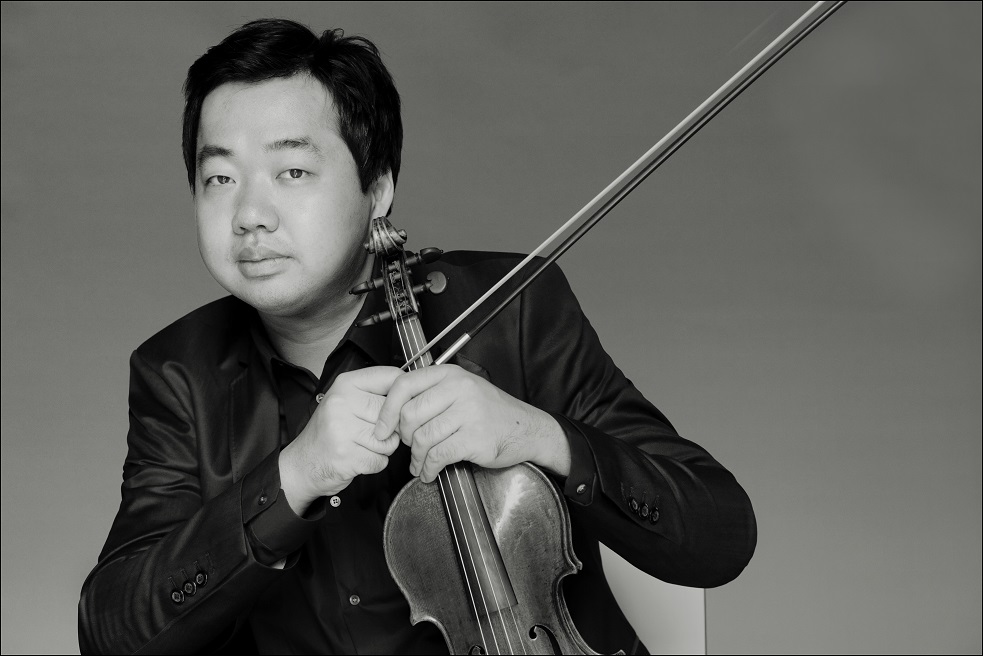
If Glazunov refused Gershwin’s request for tuition, he surely realized no amount of technique could compensate for – in the former’s case – limited or erratic inspiration. Not that his Violin Concerto is an unalloyed masterpiece, but its expressive elegance allied to a formal ingenuity have deservedly kept it in the repertoire and Ning Feng (above) audibly believed in every bar. Maybe the presentation of its main themes in the brief opening section was a little too matter-of-fact, but the central ‘slow movement’ then ensuing development and scherzo were rendered with the right deftness and incisiveness; nor did a relatively lengthy cadenza hang fire on the way to a ‘finale’ that ensured a scintillating close. A sympathetic accompanist, Wilson judged the orchestra’s contribution to a nicety, with some especially felicitous playing from woodwind.

It was Glazunov’s disastrous conducting that had sunk Rachmaninoff’s First Symphony but, four decades later, the Third Symphony finds the latter near the height of his creative powers – its pithy melodic content harnessed to an orchestral astringency that underlines the exiled composer’s confrontation with though not embracing of the musical present. Right from its haunting ‘motto’, through its contrasted themes (with exposition repeat) then a development that culminates in graphic anguish, Wilson had the measure of this masterly first movement.

What ensued was almost as fine, not least the seamlessness with which the slow movement’s scherzo emerged out of then back into the main Adagio – the playing off the acerbic against the bittersweet its own justification. If the finale felt a little too sectional in overall unfolding, there was no lack of characterization – not least the strings’ superb articulation in the central fugato as this headed towards the reprise, though a more continuous acceleration might have imbued the coda with even greater conclusiveness in what is a QED of unequivocal defiance.

Even so, this was a confident and, for the most part, insightful performance of a work whose true emotions are barely concealed beneath the enticing surface. The CBSO, which gave its all, will be back at Symphony Hall next Thursday in a major new work from Jonathan Dove.

For more information on the CBSO’s autumn season visit the orchestra’s website. For more on the artists, click here for John Wilson and here for Ning Feng

In concert – CBSO Centre Stage: CBSO Percussion Ensemble

Daugherty Lounge Lizards (1994)
Mazzoli
Volume (2006)
Reich
Dance Patterns (2002)
John Luther Adams
Qilyaun (1998)

City of Birmingham Symphony Orchestra Percussion Ensemble [James Keefe, Clíodna Shanahan (pianos), Adrian Spillett, Toby Hearney, Andrew Herbert, Matthew Hardy, RBC Students (percussion)

CBSO Centre, Birmingham
Friday 3 December 2021

Written by Richard Whitehouse

This last Centre Stage recital for 2021 brought a welcome return from the CBSO Percussion Ensemble for a programme such as demonstrated the sheer variety possible in the percussion medium even with the relatively small number of musicians required in most of these pieces.

Although he has written extensively for larger forces, Michael Daugherty is often at his best with chamber groupings as the two pianos and two percussion of Lounge Lizards, whose four sections keenly evoke the composer’s student years playing jazz piano – whether Sip ‘N’ Stir at Cedar Rapids, Dennis Swing Club at Hamburg, Ramada Inn on the New Jersey Turnpike and Bamboo Bar in Amsterdam. A range of ‘cool jazz’ idioms and practitioners is alluded to, with the deadpan humour as has long been a Daugherty hallmark never far below the surface.

Those who heard Missy Mazzoli’s Violent, Violent Sea at a CBSO concert in May will know of her vivid timbral sense, and Volume is no exception. Inspired by the inventive and highly charismatic playing of musicians from Trinidad, it can be performed (as here) with a second vibraphone replacing steel drum and which, heard alongside intricate exchanges for two kick drums and five bottles of water is, to quote the composer, ‘‘a raucous and joyful … homage to the … spirit of innovative music-making’’ – this performance certainly being no exception.

As Adrian Spillett remarked during a platform change, the music of Steve Reich has never been absent from a Centre Stage programme by this group – and Dance Patterns finds this composer at his most dextrous. Written for pairs of pianos, vibraphones and xylophones as part of the Dutch dance-film Counterphrases, its content does no more while no less than is indicated by its title, though such is the deftness and understatement of its interplay that the six-minute duration passes as though in an instant and all too soon dissolves into the ether.

‘Understatement’ is hardly apposite to describe Qilyaun by John Luther Adams – the Iñupiaq word for ‘shaman’s drum’ also ‘device of power’ graphically evoked in this visceral workout for four bass drums. Its gradual deceleration of activity to a midpoint of isolated strokes then reverse acceleration back to the initial rhythmic continuum was executed with a formidable unanimity by Royal Birmingham Conservatoire students, even if the need to keep listeners at a remove from the drums at the rear of the auditorium rather compromised social distancing.

That said, the piece was likely a revelation to those who know JLA only through his recent (and rightly acclaimed) orchestral works and concluded this recital in unequivocal fashion. Centre Stage resumes on January 21st with an all-Poulenc programme including the Sextet.

Further information on future CBSO Stage concerts can be found here

In concert – CBSO Centre Stage: Trios for flute, viola and harp (Marie-Christine Zupancic, David BaMaung & Katherine Thomas)

Instrument-detail-Neil-Pugh

Bax Elegiac Trio GP178 (1916)
Weinberg
Trio Op.127 (1979)
Debussy
Sonata for flute, viola and harp L137 (1915)

Members of the City of Birmingham Symphony Orchestra [Marie-Christine Zupancic (flute), David BaMaung (viola), Katherine Thomas (harp)]

CBSO Centre, Birmingham
Thursday 18 November 2021

Written by Richard Whitehouse

Although little more than a century old, the enticing combination of flute, viola and harp has since given rise to a host of stylistically varied pieces – three of which were featured in this Centre Stage lunchtime recital by members of the City of Birmingham Symphony Orchestra.

If not the most elaborate of his numerous works for mixed ensemble, Arnold Bax’s Elegiac Trio is surely among his most affecting as a (deliberately?) understated ‘in memoriam’ for those friends who had died as a result of the ill-fated Easter Uprising in Ireland. While the underlying mood rarely moves too far from that implied by the title, the close-knit motivic writing and subtly shifting emotions which are filtered through the textural ‘weave’ prove    as subtle as they are elusive – not least in a performance as focussed or as assured as this.

His extensive chamber output might be dominated by his 17 string quartets, but Mieczysław Weinberg wrote numerous pieces for sundry combinations – of which the present Trio could be considered typical of his spare and elusive later idiom. As in other works from this period, descriptions are replaced by metronome markings, endowing the music with an inscrutability as leaves the musicians to convey more tangible expression – whether in an initial movement that uncovers its formal trajectory as it brings these instruments into play, a central movement whose fragmentary textures never quite evolve into cohesive exchanges, then a finale whose vigorous rhythmic motion is tersely curtailed almost out of spite. An insightful account of an absorbing piece, especially when not given in its alternative version with piano replacing harp.

A recital such as this almost had to close with the Sonata by Debussy that will likely remain the template for this ensemble. Here, the opening Pastorale seemed a little too restive fully to convey this music’s ethereal emotion, but the Interlude found an ideal balance between incisiveness and elegance whose minuet-like gait belies its almost intuitive unfolding, while the Finale drew all three instruments into an inexorable motion through to the decisive close – the composer asserting his credentials as ‘musicien français’ with pointed understatement.

An appealing and not a little thought-provoking recital for which Marie-Christine Zupancic, David BaMaung and Katherine Thomas placed those present in their debt. The Centre Stage series continues on December 3rd, with a programme from the CBSO Percussion Ensemble.

Further information on future CBSO Stage concerts can be found here

In concert – Soloists, CBSO Chorus & City of Birmingham Symphony Orchestra: Mirga conducts The Cunning Little Vixen

mirga-cunning-vixen

The Cunning Little Vixen

Opera in Three Acts
Music and Libretto by Leoš Janáček (revised edition by Jiří Zahrádka)
Sung in Czech (English surtitles by Paula Kennedy)

Elena Tsallagova, soprano – Vixen Sharp Ears
Roland Wood, baritone – The Forester
Angela Brower, mezzo – The Fox
Robert Murray, tenor – Schoolmaster / Mosquito / Pásek
Kitty Whately, mezzo – Dog / Forester’s Wife / Woodpecker / Owl
Elizabeth Cragg, soprano – Chief Hen / Jay
William Thomas, bass – Badger / Parson / Harašta
Ella Taylor, soprano – Mrs Pesak / Cock

Thomas Henderson, stage director
Laura Pearse, designer
Jonathan Burton, surtitle operator
Sarah Playfair, casting

Children from Trinity Boys Choir and Old Palace School, CBSO Chorus, City of Birmingham Symphony Orchestra / Mirga Gražinytė-Tyla

Symphony Hall, Birmingham
Tuesday 16 November 2021

Written by Richard Whitehouse

There could have been no more appropriate an opera for performing at the end of a year like this than Janáček’s The Cunning Little Vixen, given its acutely life-affirming message in the wake of that apathy which threatens to overrun society during a time of continued uncertainty.

Although his Glagolitic Mass was a decisive marker in its early association with Sir Simon Rattle, the City of Birmingham Symphony Orchestra has given relatively little Janáček such that this account of his most approachable stage-work was timely in any event. Despite the early start, there was no interval to interrupt the course of its 95-minute trajectory, with those illustrative elements of Thomas Henderson’s stage direction largely restricted to the menagerie gathering around the Forester at his first and last appearances. Here, some deft acting from the children involved and Laura Pearse’s piquant stage-design created an enticingly whimsical basis from which to project those often equivocal and increasingly raw emotions that give this opera its unwavering provocation and, as a consequence, the profundity arising out of its very naivety.

The cast was a strong one and fronted, as it needed to be, by Elena Tsallagova’s rendering of Vixen Sharp Ears – as witty, sensual and as galvanizing a presence as any in recent memory. Not least her interplay with The Fox – to which role Angela Brower brought warmth and not a little empathy, even if her vocal timbre was not ideally contrasted with that of the Vixen. In the role of The Forester, Roland Wood took a secure course from angry cynicism to wisdom born of maturity – exactly the kind of persona Janáček himself would love to have embodied.

The remaining singers all brought a variety of virtues to their multiple roles – not least Kitty Whatley, her put-upon Dog and irascible Forester’s Wife conveyed with precision as well as elegance. Robert Murray was astute casting as the hapless and lovelorn Schoolmaster, while Elizabeth Cragg gave a winning cameo as the feckless Chief Hen – not least in her fractious confrontation with Ella Taylor’s vainglorious Cock. Credit, also, to William Thomas for his poignant world weariness as the Parson or studied incomprehension as the poacher Harašta.

The CBSO Chorus and children’s voices acquitted themselves ably during their limited but pertinent contributions, while the CBSO gave of something approaching its collective best over the course of a score that abounds in the quirks and deceptive non-sequiturs typical of Janáček’s maturity. No other opera of his evinces such characterful or felicitous writing for woodwind, the sheer dexterity of these musicians enhanced by their being on the platform rather than in the pit. Nor were the strings, notably violins, at all fazed by the often cruelly exposed passagework. Mirga Gražinytė-Tyla conducted with a sure sense of where each of the three acts was headed, and if the final scene felt initially a little temperate, the tangible fervour and all-enveloping eloquence generated towards its apotheosis was never in doubt.

Lucky audiences in Dortmund, Hamburg and Paris who will hear this performance when the CBSO takes it on tour during the next week. Hopefully further Janáček operas will feature in MGT’s ongoing association with this orchestra – the omens could hardly be more favourable.

Further information on European performances can be found here. The CBSO’s January to July 2022 season can be found at the orchestra’s website

In concert – City of Birmingham Symphony Orchestra: A Covid Requiem

mirga-grazinyte-tyla

Adès O Albion (1994, arr. 2019)
Pärt
Fratres (1977, arr. 1991)
Purcell (arr. Britten)
Chacony in G minor Z730 (c1680, arr. 1948)
Barber
Adagio in B flat minor Op.11 (1935, arr. 1936)
interspersed with poetry readings by Casey Bailey
Fauré
Requiem in D minor Op.48 (1887-90, rev. 1893)

James Platt (bass), Casey Bailey (poet), CBSO Children’s Chorus, CBSO Youth Chorus, CBSO Chorus, City of Birmingham Symphony Orchestra / Tomo Keller (violin/director), Mirga Gražinytė-Tyla (conductor)

Symphony Hall, Birmingham
Saturday 6 November 2021

Written by Richard Whitehouse

Even if live music-making has gradually been returning to how it was, the (ongoing) legacy of Coronavirus could hardly be overlooked, thus a concert such as that given this evening by the City of Birmingham Symphony Orchestra was a necessary act of remembrance for all the many concertgoers to have been affected by the pandemic. As befitted such an occasion, no speeches or prefatory remarks were needed, with the darkening of the auditorium during the performance a simple but effective gesture which helped focus musicians and listeners alike.

Strings only were onstage in the first half – Tomo Keller directing a sequence as began with O Albion, Thomas Adès’s arrangement of the sixth movement from his quartet Arcadiana, whose gentle pathos made for the ideal entrée. Arvo Pärt has written numerous memorials and while Cantus might have been more appropriate in this context than Fratres, the latter’s sparing deployment of percussion as to underline its ritualistic emergence then withdrawal conveyed no mean eloquence. Surprising, perhaps, that Britten’s arrangement of Purcell’s Chacony is not heard more frequently on such occasions, its expressive intensification here informed by an acute rhythmic clarity. Barber’s Adagio is, of course, a staple at these times – the visceral emotion of its climax and subdued fatalism that ensues audibly conveyed here.

Interspersed between these pieces were poems by Casey Bailey, currently Birmingham Poet Laureate and whose readings were undeniably affecting in their sincerity – whether the heady reportage of 23.03.21 (a date no-one in the UK could hope to forget), the intimate evocation of Weight or graphic remembrance of Once. His appearances on stage were precisely judged as to segue into then out of the music either side and it was a pity when he did not take a call at the end of this first half, alongside the CBSO strings, given his contribution to proceedings.

Tomo Keller remained for the second half – adding ethereal counter-melodies to two of the sections in Fauré’s Requiem, whose 1893 version is without violins but with divided violas and cellos along with reduced woodwind and brass to make for a reading closer to the initial conception and certainly more apposite tonight. Her credentials in the choral repertoire well established, Mirga Gražinytė-Tyla conducted with a real sense of this work’s essential poise but without neglecting any deeper emotions. James Platt brought a ruminative warmth to the Hostias and Libera me, and it was an inspired touch to have the Pie Jesu sung in unison by the Children’s Chorus; its plaintiveness offsetting those richer tones of the Youth Chorus and CBSO Chorus, while opening-out the music’s textural and expressive range accordingly.

In one sense it would have been better had this concert not had to take place, given the legacy it commemorated (as was witnessed by the personal recollections occupying five pages of the programme) and yet, as those ethereal strains of the In Paradisum receded beyond earshot, a feeling of the Covid crisis having been recognized then overcome was palpable on the part of those present. Moreover, the CBSO’s next event is a performance of Janáček’s The Cunning Little Vixen – surely as transcendent and life-affirming an experience as could be hoped for.

Further information on the CBSO’s current season can be found at the orchestra’s website. For more on Casey Bailey, click here, for James Platt click here, and for Tomo Kellner here