In concert – Khatia Buniatishvili, Melbourne Symphony Orchestra / Jaime Martin @ BBC Proms: Sutherland, Dvořák & Tchaikovsky

Khatia Buniatishvili (piano), Melbourne Symphony Orchestra / Jaime Martin

Sutherland Haunted Hills (1950) [Proms premiere]
Tchaikovsky Piano Concerto no.1 in B flat minor Op.23 (1874-5)
Dvořák Symphony no.6 in D major Op.60 (1880)

Royal Albert Hall, London
Friday 29 August 2025

Reviewed by Richard Whitehouse Photos (c) BBC / Chris Christodoulou

Eleven years after its well-received debut at these concerts under the late Sir Andrew Davis, the Melbourne Symphony Orchestra made its unintentionally eventful return with current chief conductor Jaime Martin and a programme which, for the most part, played to this orchestra’s strengths.

A significant presence in Australian music throughout the mid-twentieth century, Margaret Sutherland has yet to receive her due in live or recorded terms; making this performance of Haunted Hills the more timely. Inspired by the Dandenong Ranges, just outside Melbourne, her symphonic poem evokes the timelessness of its environment as surely as the fate of the Aboriginals who came there. Its starkly dissonant opening then granitic opening paragraph recall that Vaughan Williams’ Sixth Symphony had been unleashed barely two years earlier, and while much of what follows is notable more for its judicious orchestration than formal cohesion, the musical persona that finally emerges is distinctive enough to warrant further hearings of this piece within the context of Sutherland’s not inconsiderable output overall.

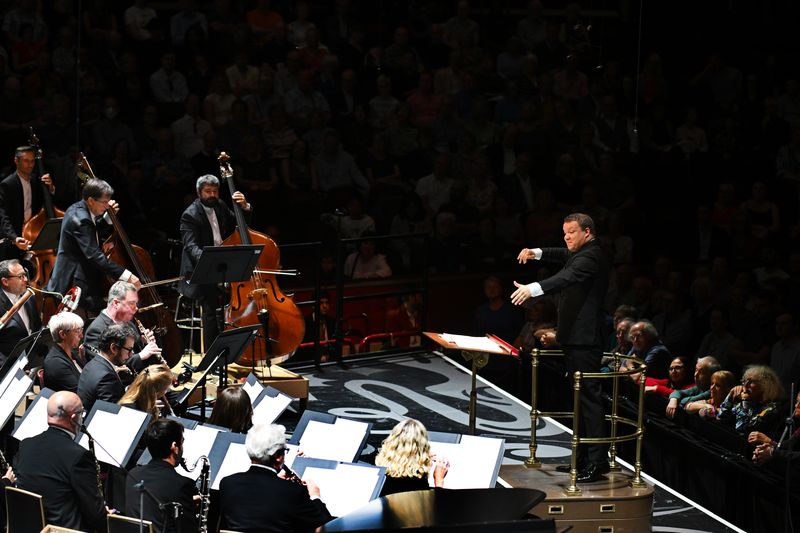
Logistical factors necessitated a reordering such that Dvořák’s Sixth Symphony came before the interval. Not a stranger to these concerts (tonight’s being its ninth hearing in 72 years), it responded well to Martin’s interventionist if rarely intrusive approach – not least an opening Allegro (its non tanto duly observed albeit with no exposition repeat) at its most persuasive in a development whose seeming discursiveness was purposefully reined in, and on to a coda whose heightened sense of arrival was mitigated only by those slightly tentative closing bars.

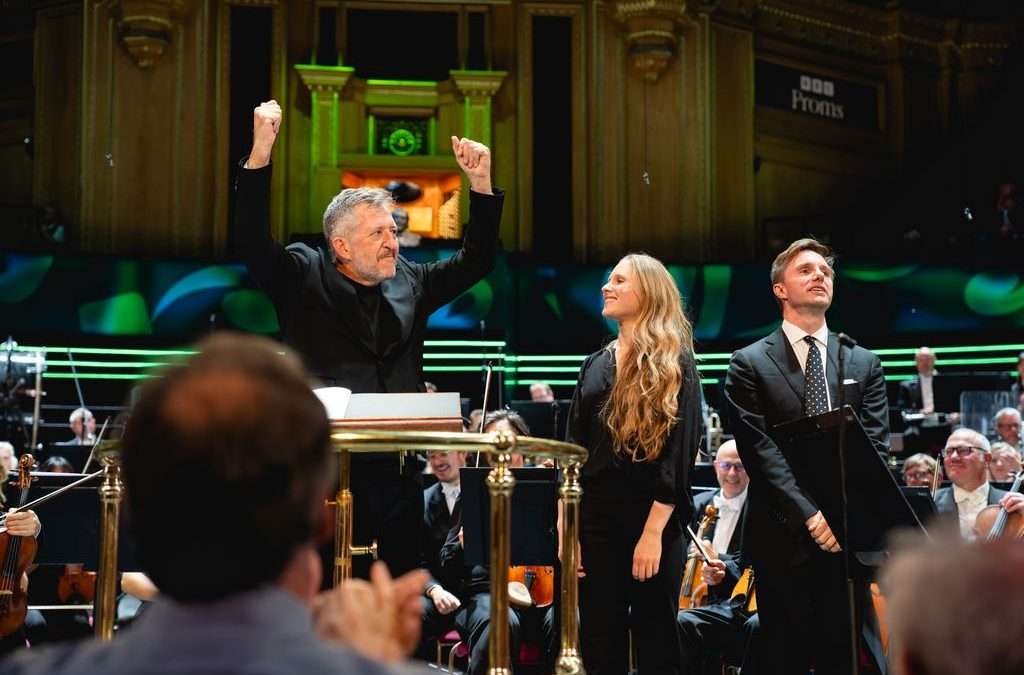
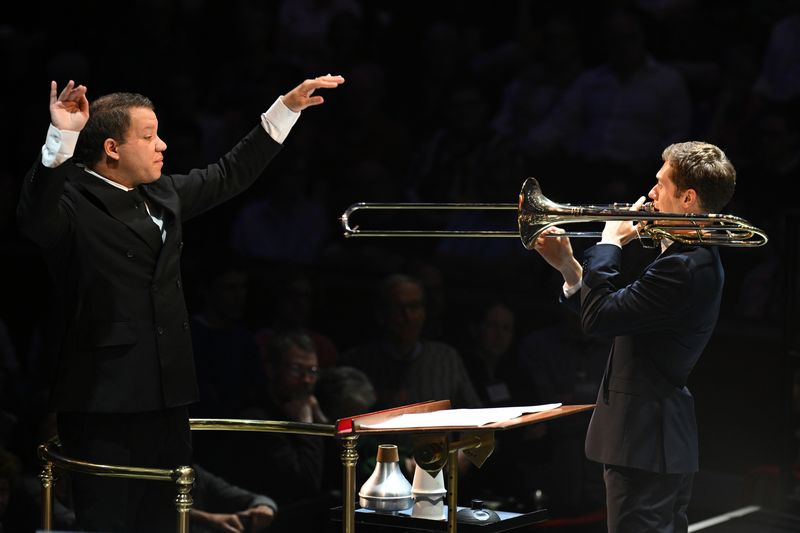
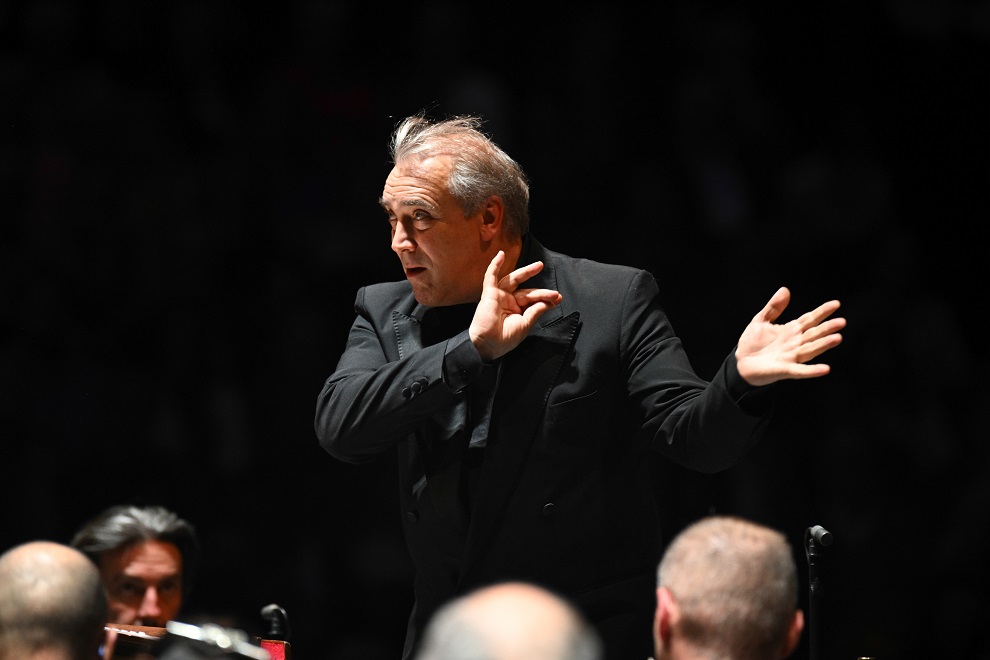
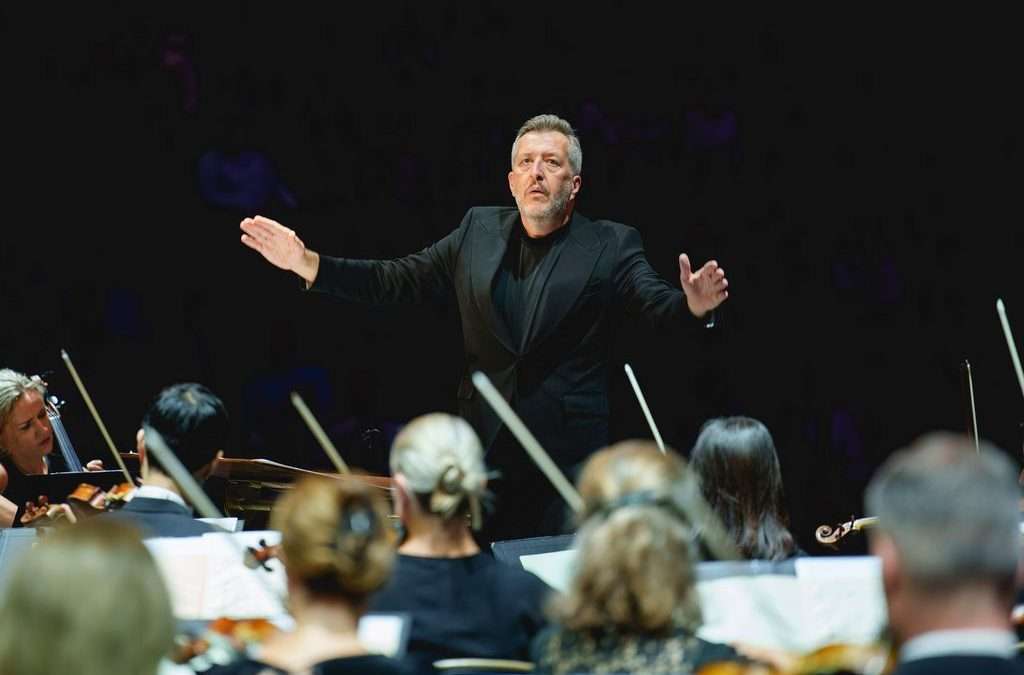
Not the deepest among Dvořák’s symphonic slow movements, the Adagio is surely his most felicitous in its expressive shadings and emotional understatement. Martin made the most of these, as too the contrast between the Scherzo’s impetuous outer sections and its ingratiating trio. The surging acceleration at its close prepared unerringly, moreover, for a Finale as finds Dvořák at his most Brahmsian though, here again, Martin (above), steered a forthright course through its overly rhetorical development before he infused its coda with an exhilarating affirmation.

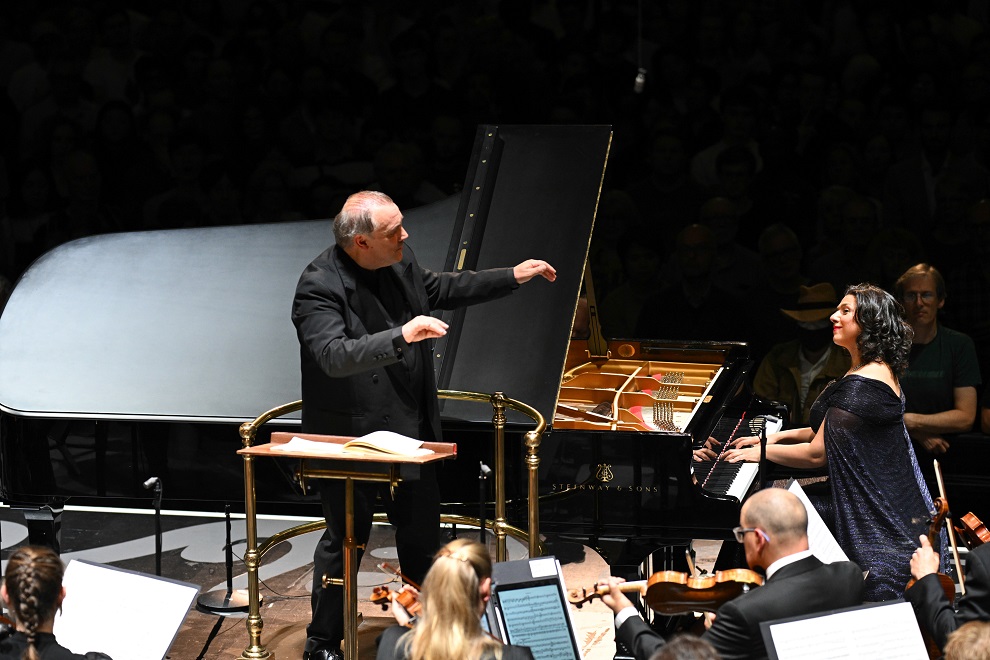
Tchaikovsky’s First Piano Concerto cannot often have occupied the second half of a concert, though Khatia Buniatishvili made the most of her delayed appearance. Most striking was the amount of hushed playing during a lengthy opening movement whose indelible introduction was kept well within emotional limits. If coordination between soloist and orchestra was not all it might have been, the latter’s entry after a suitably dextrous cadenza was an undoubted highpoint, though not a rather blowsy coda. A melting take on the Andantino was enhanced with poetic contributions from flautist Prudence Davis and cellist David Berlin – while if, in the final Allegro, Buniatishvili’s passagework could seem unnecessarily skittish, she and the Melbourne players came together admirably in a surging but not unduly bathetic peroration.

As to extra-musical occurrences at this concert (for a full BBC account, read here), these artists responded simply by focussing on the music. As an envoi, Buniatishvili’s elegant rendering of the Adagio from Alessandro Marcello’s Oboe Concerto in D minor, arranged by Johann Sebastian Bach, could not have been more fitting.

Click on the artist names to read more about pianist Khatia Buniatishvili, the Melbourne Symphony Orchestra and conductor Jaime Martin. Click also for more on composer Margaret Sutherland, and the BBC Proms

Published post no.2,643 – Sunday 31 August 2025

In concert – Soloists, Danish National Concert Choir & Symphony Orchestra / Fabio Luisi @ BBC Proms: Beethoven 9th Symphony, Bent Sørensen & Anna Clyne

Clara Cecile Thomsen (soprano), Jasmin White (contralto), Issachah Savage (tenor), Adam Palka (bass), Danish National Concert Choir, Danish National Symphony Orchestra / Fabio Luisi

Bent Sørensen Evening Land (2017)
Anna Clyne The Years (2021)
Beethoven Symphony no.9 in D minor Op.125 ‘Choral’ (1811-24)

Royal Albert Hall, London
Thursday 21 August 2025

Reviewed by Ben Hogwood Photos (c) BBC / Chris Christodoulou, Ben Hogwood (soloists)

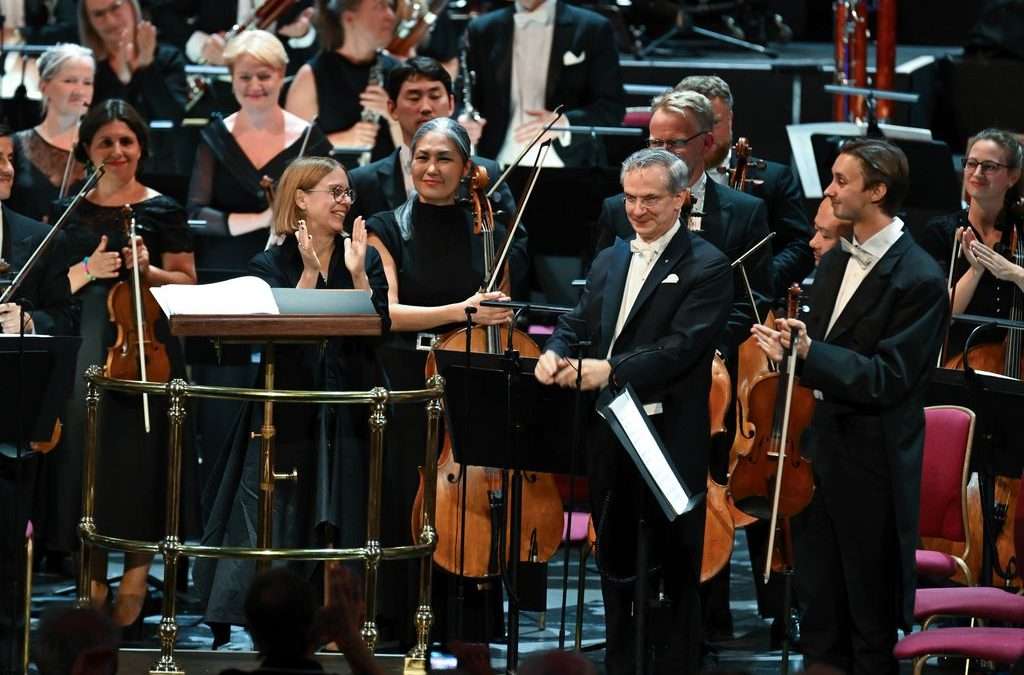
Celebrating their centenary this year, the Danish National Symphony Orchestra and chief conductor Fabio Luisi led us from the quiet of evening to the blazing light of a sunny morning in the course of this concert.

The challenge facing any concert programmer containing Beethoven’s Choral Symphony is how to lead up to it. This Prom approached from a contemporary angle, beginning in near silence with Bent Sørensen’s contemplative Evening Land. The Danish composer’s imaginative orchestration was key to the success of his picture painting, beautifully rendered by Luisi, as was the threadbare violin solo with which leader Christina Åstrand began. Childhood reminiscences of the Danish island Zealand took place in the half-light, contrasting with visions of nocturnal Manhattan that came through in bursts of technicolour, honouring Leonard Bernstein. Making a lasting impression, however, was the beautiful oboe solo from Kristine Vestergaard that marked the illness and subsequent passing of Sørensen’s father.

Having eavesdropped on this intimate opening piece, the Danish National Concert Choir rose for Anna Clyne’s musical account of the Covid pandemic – already consigned to history, it seems. Few people would like to revisit those days in a concert experience, but Clyne’s message – channelling the text of Stephanie Fleischmann – was one of underlying resilience. The choir began in stasis, occupying an added note chord which somehow drew parallels with the Björk song Possibly Maybe for this correspondent, before the piece flourished. A dreamlike mood was enhanced by a pure, almost complete lack of vibrato from both choir and orchestra, while the harmonic language drew strong parallels with the latter stages of Holst’s suite The PlanetsSaturn and Neptune in particular. An autumnal chill was evident in spite of increasingly frenetic activity in the orchestra, and the piece ended in an uneasy acceptance of events passed, rather like our own emergence from lockdown.

Beethoven’s Ninth Symphony is the ultimate hymn to freedom, though it does of course go through a titanic struggle before that release, in the form of Schiller’s Ode To Joy, can be attained. Luisi led us through the dark, pre-twilight moments in an account notable for its poise and guile. Using relatively fast speeds, the first movement took a little while to light the touch paper, but once ignited the music powered forward with increasing determination. The scherzo was quick, quite matter of fact with its timpani interventions, and balanced by a bucolic trio where the wind kept pace heroically with Luisi’s quick baton. Their attractive textures and warm melodic phrasing were a key feature of both this and the Adagio, again on the quick side, but managing its fanfare interventions impeccably.

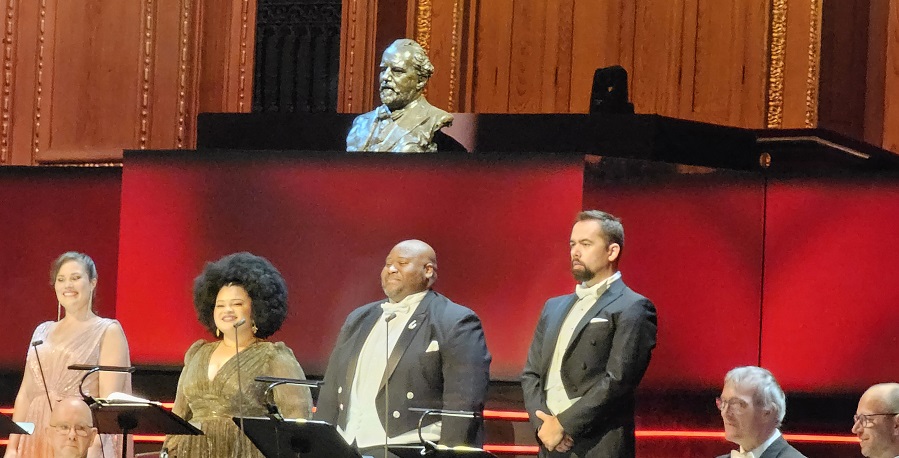
Left to right: Clara Cecile Thomsen (soprano), Jasmin White (contralto), Issachah Savage (tenor), Adam Palka (bass), beneath the bust of Sir Henry Wood @ BBC Proms

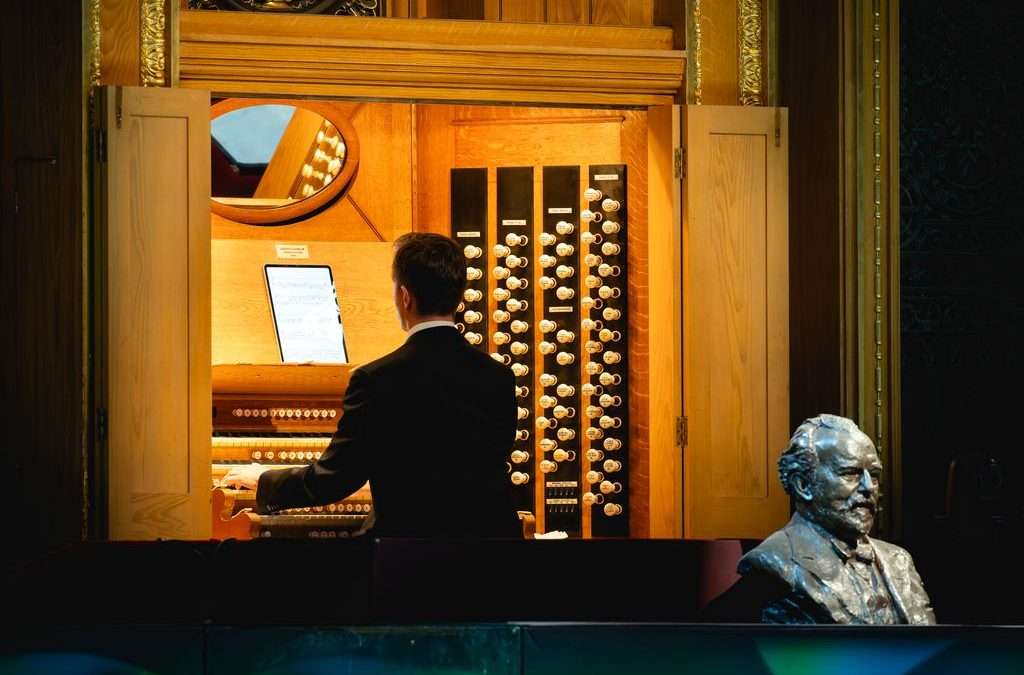
And so to the finale, with a memorable exposition for the Ode to Joy theme from sotto voce cellos and basses, the Royal Albert Hall hushed in anticipation. The choral passages were suitably exultant, the 75-strong choir drilled to perfection if cooler in temperature than the orchestra. The four soloists (above) were led by impressive bass Adam Palka, whose authoritative recitative “O Freunde, nicht diese Töne!” was a highlight, and while the quartet’s ensemble pieces wavered a little in tuning the sense of release and elation was keenly felt and clearly relished. The smile on the face of the music spread to the audience in the exhilarating closing bars as the orchestra took flight, completing an impeccably controlled interpretation on the part of Luisi that came to the boil at just the right time.

You can listen back to this Prom concert on BBC Sounds until Sunday 12 October.

Click to read more about the BBC Proms

Published post no.2,634 – Friday 22 August 2025

On Record – The Definitive Eric Coates (Lyrita)

Various soloists and orchestras / Eric Coates
Lyrita REAM.2146 [seven discs, 8h 53m 13s]
Compilation, Audio Restoration and Remastering Alan Bunting

You can find the full definitive track listing on the Presto website

Reviewed by Richard Whitehouse

What’s the story?

Lyrita reissues the set collating all those extent recordings by Eric Coates of his own music, ranging over the greater part of a career when he was established among the leading British composers of his generation, heard here in consistently excellent transfers by Alan Bunting.

What are the performances like?

Even at the height of his acclaim, Coates was often dismissed as a purveyor of ‘light music’ at a time when such populism was frowned upon by the classical establishment, though the fact no less an eminence than Elgar had Coates’ recordings of his own music on permanent order confirms the latter’s success was by no means restricted to the record-buying layman. As did Billy Mayerl in the piano domain, it was Coates’ ability to pick up on current trends and render them with an ageless ‘middle of the road’ stylishness that ensured his popularity.

Although his earlier reputation came through his numerous songs (comparatively neglected today), Coates gradually achieved recognition for orchestral music – notably his suites that, grouped according to descriptive title, attracted informed musicians for their compositional finesse as much as more casual listeners for their melodic immediacy. Such success was by no means restricted to the inter-war era – Coates finding a ready outlet for his newer pieces through to the advent of a New Elizabethan Age, just four years prior to his death. Nor was this standing necessarily diminished with the rise of a new popular music during the 1960s as, unlike that of his contemporaries, his music continued to be played such that, at the turn of this century, almost all his major works were available on recordings other than his own.

The present set was manifestly a labour of love on the part of Alan Bunting – who not only supervised its remastering from a disparate range of sources, but has also arranged the order of tracks on each volume. As he himself notes, a strictly chronological ordering would have been more suited to the afficionado, but the present sequencing avoids duplication of works recorded more than once and so enables listeners to enjoy a varied cross-section on each of the initial five volumes. The sixth volume collates all those recordings made in the acoustic process (up until 1926) and inevitably of more specialist appeal, then the seventh features a selection of recordings by other musicians that, in itself, constitutes a true roll-call of artists from the ‘golden age’ of light music and is an essential supplement to Coates’s own legacy.

Does it all work?

Indeed. The remastering has been expertly carried out so the sound across almost all of the electrical recordings exudes clarity and perspective without sacrificing that ambience which came with the actual acoustic. The set comes with two booklets: one that gives an inclusive track-listing for each of the seven volumes while the other, even more substantial, consists of an extensive contextual essay Eric Coates and the Gramophone by Michael Payne; his detailed study about the composer’s life and music (Ashgate: 2012) being required reading.

Is it recommended?

Very much so. The only proviso would be this edition having been issued as two separate sets rather than as a more economical card-box – thereby saving space and plastic! Note also that a two-disc compilation Coates Conducts Coates (REAM.2146) is available from this source.

Listen / Buy

You can explore purchase options at the Wyastone website

Published post no.2,633 – Thursday 21 August 2025

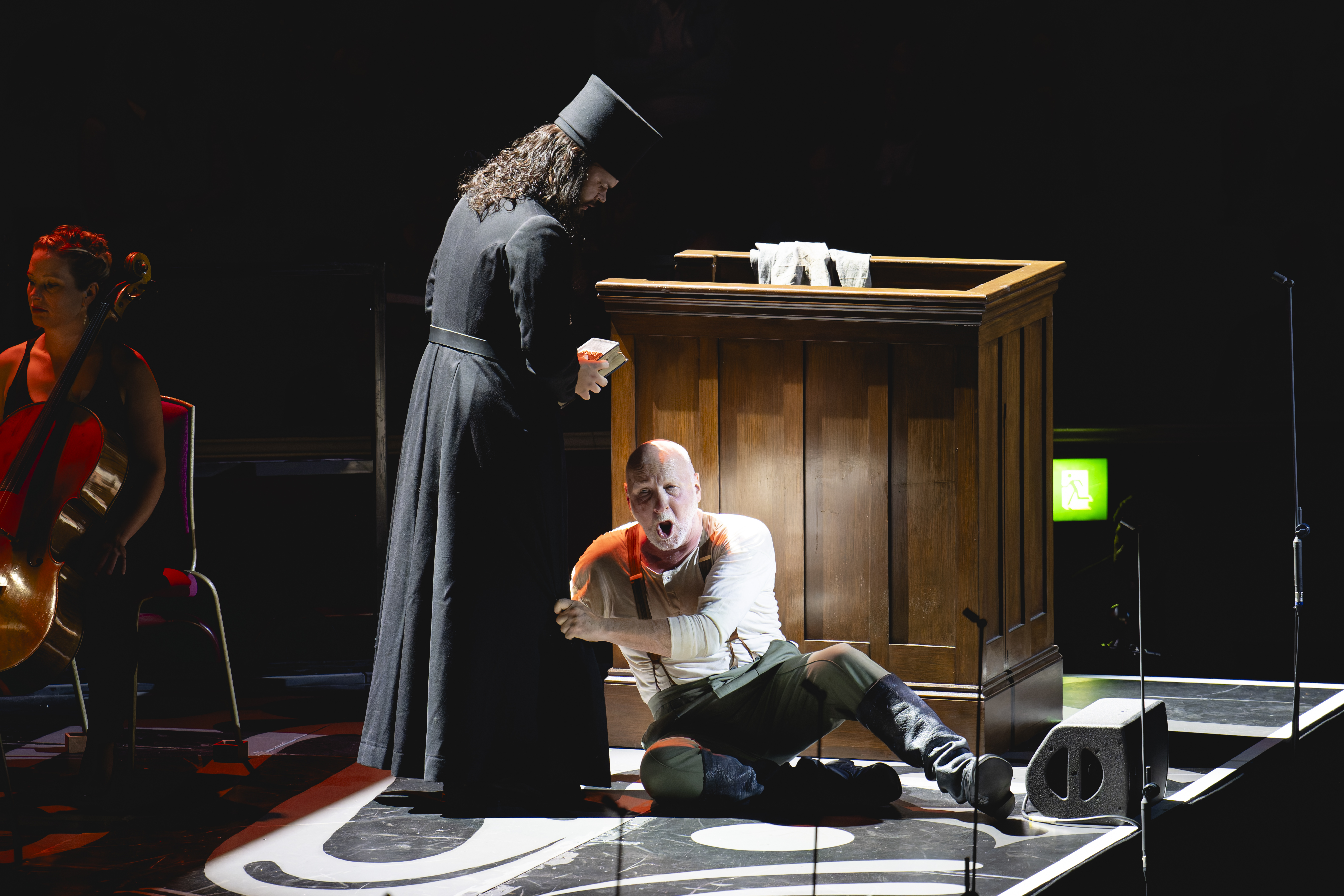
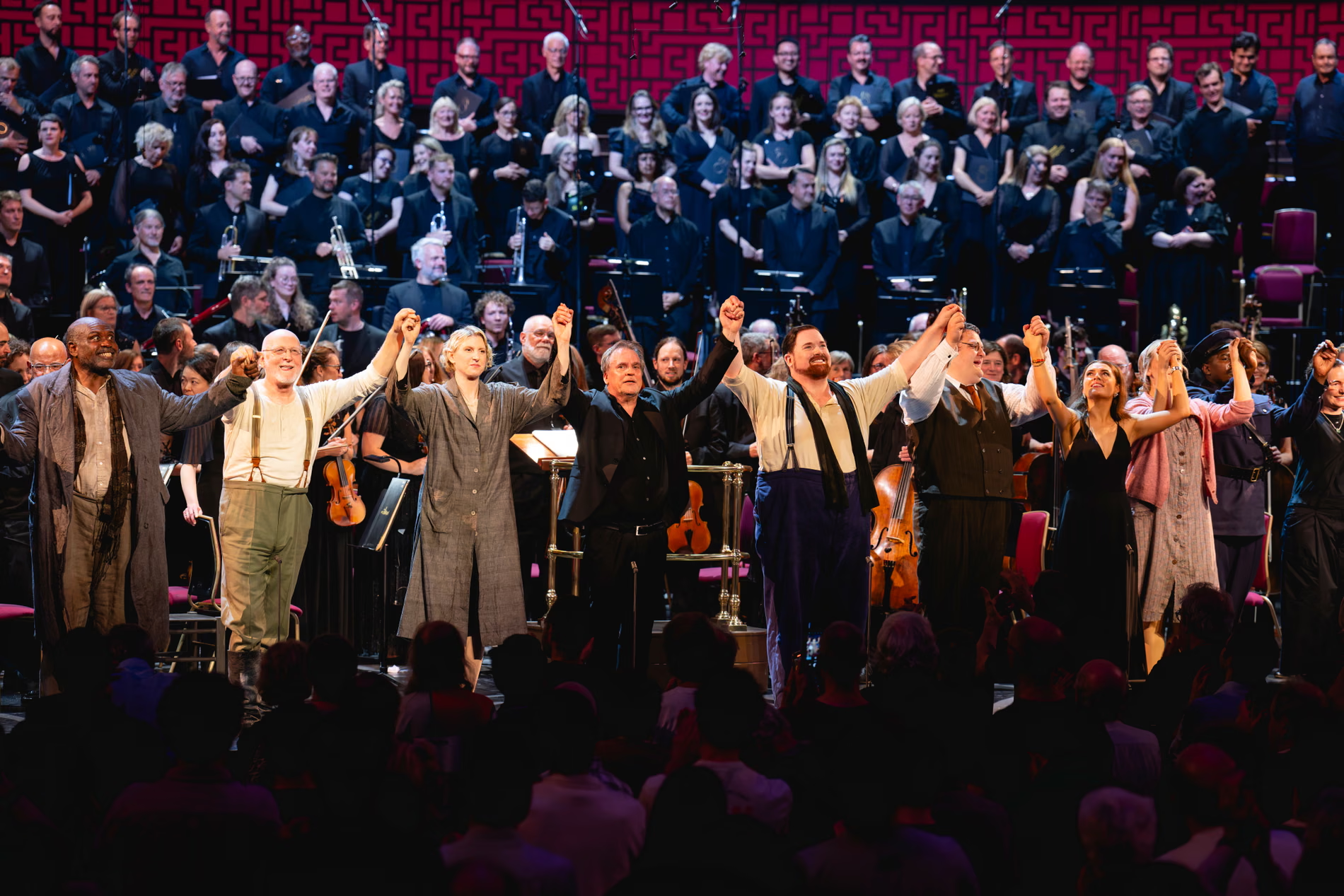
In concert – Soloists, London Philharmonic Choir, BBC Symphony Chorus & Orchestra / Sir Mark Elder @ BBC Proms: Delius: A Mass of Life

Jennifer Davis (soprano), Claudia Huckle (mezzo-soprano), David Butt Philip (tenor), Roderick Williams (baritone), BBC Symphony Chorus, London Philharmonic Choir, BBC Symphony Orchestra / Sir Mark Elder

Delius Eine Messe des Lebens (A Mass of Life) (1898; 1904-05)

Royal Albert Hall, London
Monday 18 August 2025

Reviewed by Richard Whitehouse Photos (c) BBC / Chris Christodoulou

There could be few venues better suited to Delius’s A Mass of Life, in its conceptual ambition and emotional opulence, than the Royal Albert Hall and this evening’s performance, only the third at these concerts and the first in 37 years, undoubtedly made the most of these qualities.

Despite the tragedy of his ultimate breakdown and ensuing incapacitation, Friedrich Nietzsche was considered a liberator in terms of a guiding philosophy with its emphasis on free will and rejection of conventional mores. Such appeal could hardly have been greater than on Frederick Delius, his largest concert work setting substantial extracts from Also sprach Zarathustra in a way that feels never judgemental and is only rarely overreaching. Much of the time its music has a detached and meditative aura whose inward intensity needs to be sustained accordingly.

That this account did so was owing to Sir Mark Elder, his advocacy already manifest in the finest modern recording (LAWO) as came across just as strongly and often more so here. Certainly, the longest sections were effortlessly paced – whether that beguiling interplay of longing and anticipation in In dein Auge which becomes the still (while never static) centre of Part One, or that extended sequence of Part Two taking in the scenic evocation as is Lasst vom Tanzen ab then the pantheist contemplation of Heisser Mittag schläft which is surely the expressive highpoint. Not that the dramatic openings of each part were under-characterized – the driving energy of O du mein Wille! setting the course for one as vividly as did the rousing Herauf! Nun herauf, with its orchestral prelude Auf den Bergen meltingly rendered, for the other.

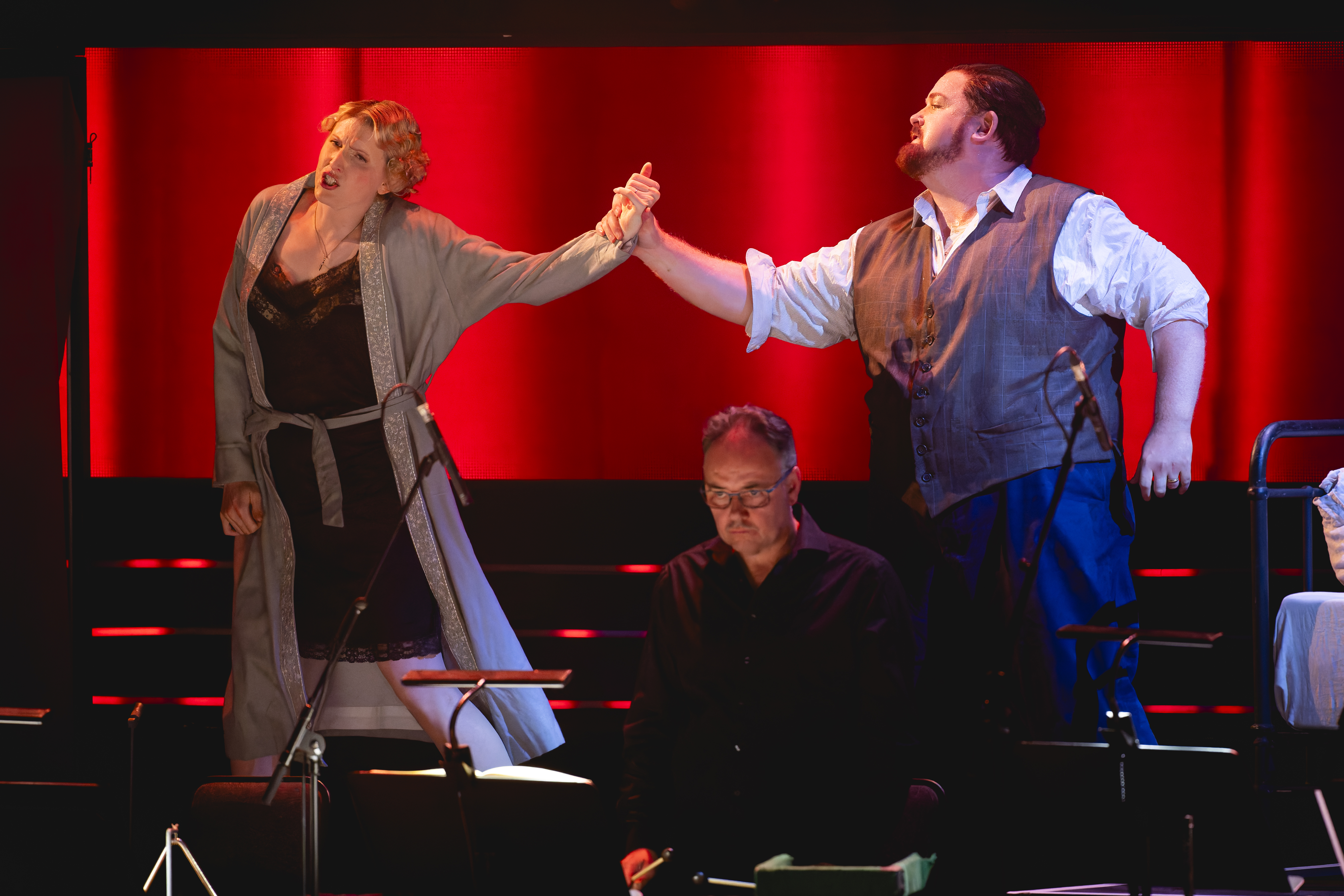
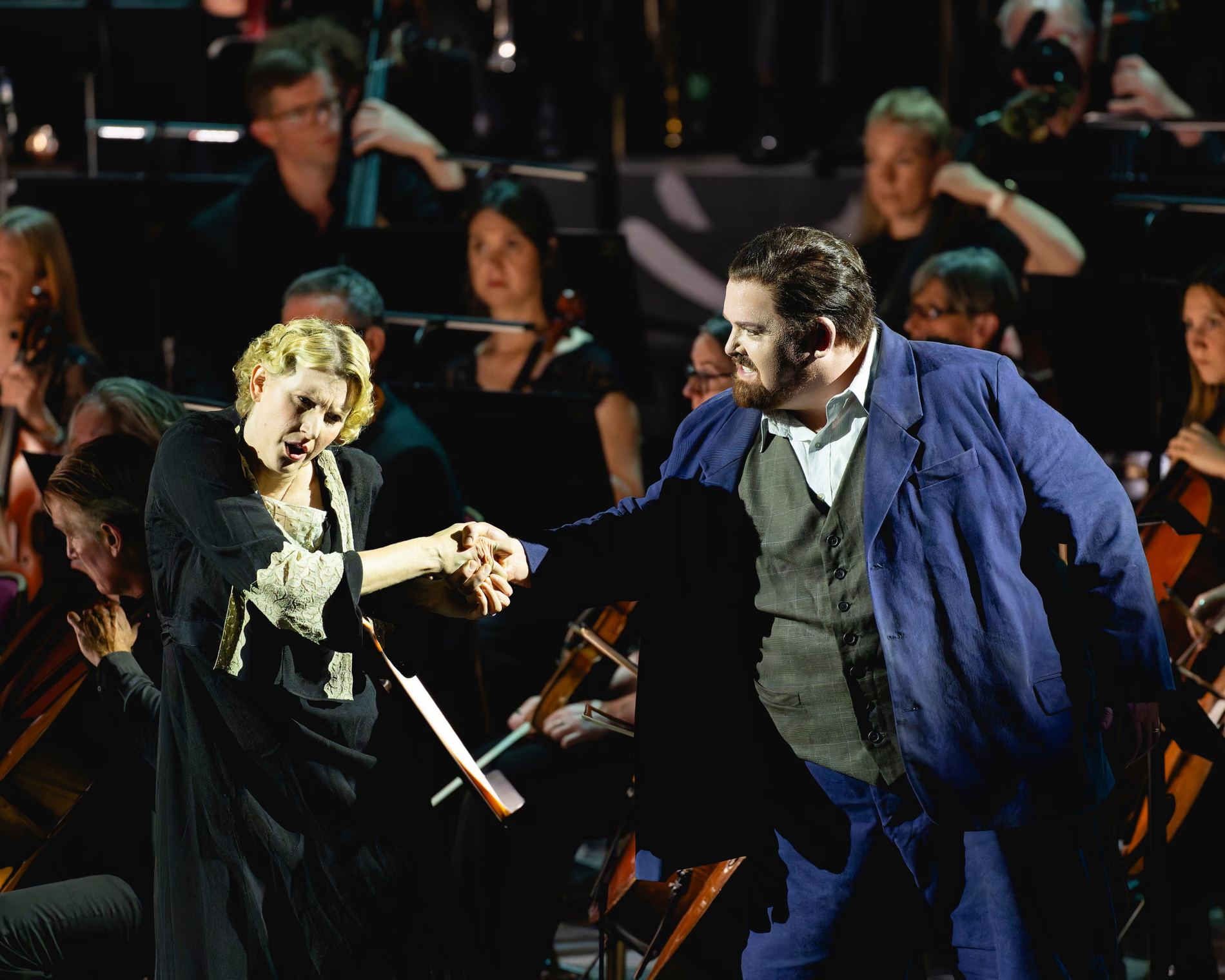
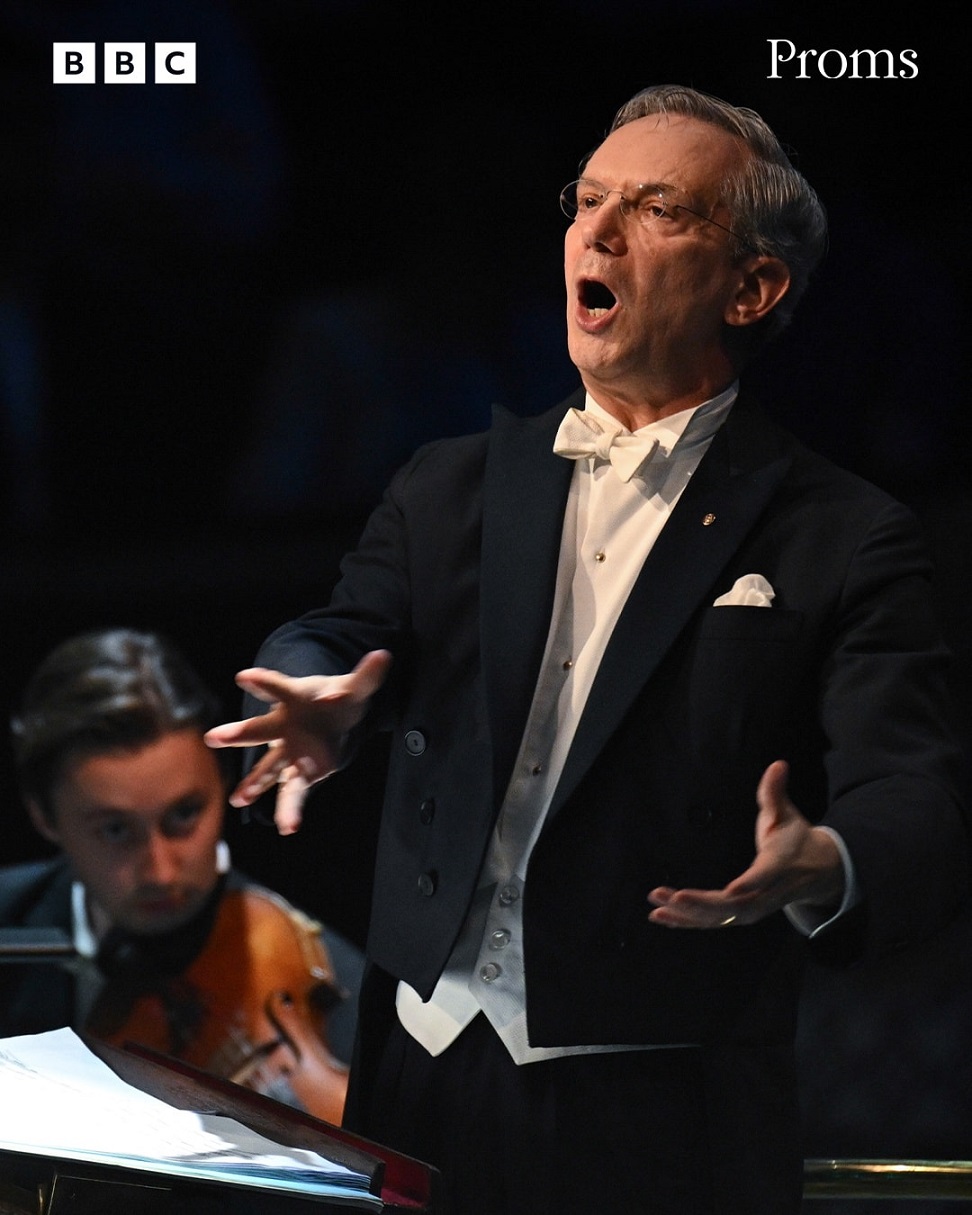
This may be regarded mainly as a choral work, but the importance of its vocal parts is never to be gainsaid. Above all, that of the baritone who assumes the role of Zarathustra in his gradual incline to enlightenment and in which Roderick Williams (above) was consistently at his best – hence the infectious Erhebt eure Herzen and assertive Wehe mir! then, subsequently, the alluring eloquence of Süsse Leier! and will to action of Gottes Weh ist tiefer. If this is the solo role as brings focus or unity to the whole, the others afford textural and expressive enhancements aplenty – Jennifer Davis as capricious and Claudia Huckle as confiding as David Butt Philip was assertive in their respective contributions. All three singers brought out the youthfulness or naivety which are crucial to this work’s underlying journey from innocence to experience.

Any doubt a relative disparity in numbers of female and male singers would be detrimental to choral balance was groundless – Elder drawing a vividness but also delicacy of response from those combined BBC Symphony and London Philharmonic forces, while the BBC Symphony Orchestra was rarely less than galvanized whether in complex tuttis or the artless writing for solo woodwind that informs the latter stages. Delius’s orchestration rarely ‘plays itself’ but it conveys a lustre and translucency which could not be mistaken for that of another composer.

A near-capacity audience seemed as attentive to this as it was affected by the final Kommt! Lasst uns jetzt wandeln!, with its build-up to an ecstatic apotheosis then swift dispersal into silence: setting the seal on a memorable interpretation of this all-encompassing masterpiece.

You can listen back to this Prom concert on BBC Sounds until Sunday 12 October – or listen to the recent recording from Sir Mark Elder, with soloists, the Collegium Musicum Choir, Edvard Grieg Kor, Bergen Philharmonic Choir and Orchestra on Tidal below:

Click on the artist names to read more about soloists Jennifer Davis, Claude Huckle, David Butt Philip and Roderick Williams, the London Philharmonic Choir, BBC Symphony Chorus and BBC Symphony Orchestra, and conductor Sir Mark Elder. Click also for more on the Delius Society and the BBC Proms

Published post no.2,632 – Wednesday 20 August 2025

On Record – Sarah Leonard, Xue Wei, BBCSO & BBCSSO / Martyn Brabbins – Naresh Sohal: Lila & Violin Concerto (Heritage Records)

Naresh Sohal
Lila (1996)
Violin Concerto (1986)

Sarah Leonard (soprano), BBC Symphony Orchestra / Martyn Brabbins (Lila)
Xue Wei (violin), BBC Scottish Symphony Orchestra / Martyn Brabbins (Violin Concerto)

Heritage HTGCD133 78’40”
Remastering Paul Arden-Taylor

Live performances at BBC Broadcasting House, Glasgow on 24th October 1992 (Violin Concerto); Royal Festival Hall, London on 13th October 1996 (Lila)

Reviewed by Richard Whitehouse

What’s the story?

Heritage follows up its earlier release of Naresh Sohal with this coupling of major orchestral works, both of them heard in their premiere performances.

What’s the music like?

By the 1990s, Sohal was a well-respected if not regularly played figure. Both these works demonstrate his compositional versatility while being wholly characteristic of his maturity. They were also written before and after his move from Edinburgh to London; having spent more than a decade in the Scottish capital, during which period he embarked on numerous multi-media pieces, he subsequently found himself drawn anew to the Punjabi and Bengali writers whose work frequently informed his compositions over the ensuing quarter-century.

Written a decade apart, these works could hardly be more different in their nominal concerns. At just under half an hour, the Violin Concerto may appear to be firmly within the lineage of such pieces from the Classical and early Romantic eras yet its three movements are hardly, if at all, beholden to precedent. That each is faster as to its underlying pulse than the one before, what one might loosely call an ‘Andante-Allegretto-Allegro’ progression, is less notable than the transformation of ideas and texture from one to the other; resulting in an overall sequence as convinces in its formal discipline and beguiles in its expressive immediacy. Its inhabiting a neo-Romantic world (with significant precursors by David Blake and H. K. Gruber) does not detract from the individuality and sheer attractiveness of Sohal’s contribution to this medium.

By contrast Lila, it title a Sanskrit term for the play of Nature, is the representation in music of the seven stages of development, in yogic philosophy, from the earthbound to the cosmic. That each of these can be linked to a specific colour, sound and elemental force might imply a multi-media presentation, and one as integrated music with dance and lighting was initially planned, but the work succeeds admirably on its own terms as it traverses seven continuous while increasingly shorter sections with its transformation of salient motifs never less than audible. There is no ultimate climax, yet the passing from ‘Consciousness’ to ‘Yoga’ could   be heard as a culmination; after which – this final section is graced with a soaring vocalise, here the late Sarah Leonard in what was a no doubt unintentional but appropriate memorial.

Does it all work?

Yes, once one has grasped the basis of Sohal’s compositional thinking via the essence of what   he was seeking to convey. It helps that both these performances are fully attuned to his idiom – Xue Wei evincing no indecision or uncertainty in the Violin Concerto, and Martyn Brabbins (who replaced an indisposed Andrew Davis for the first rendition of Lila) securing committed playing from the BBC Symphony and the BBC Scottish Symphony orchestras. Any future performances could hardly hope for more persuasive guides when approaching these pieces.

Is it recommended?

Very much so. Paul Arden-Taylor has once again done a fine job in remastering the original broadcasts while Suddhaseel Sen’s annotations, with a biographical note by Janet Swinney, provide all the relevant background. Further releases from this source will hopefully follow.

Listen / Buy

You can explore purchase options at the Heritage Records website

For more on the artists featured, click on the names to read more about Sarah Leonard, Xue Wei, the BBC Symphony Orchestra, BBC Scottish Symphony Orchestra and conductor Martyn Brabbins, and composer Naresh Sohal

Published post no.2,630 – Monday 18 August 2025