On Record – Hallé / Thomas Adès: Adès, Leith, Marsey

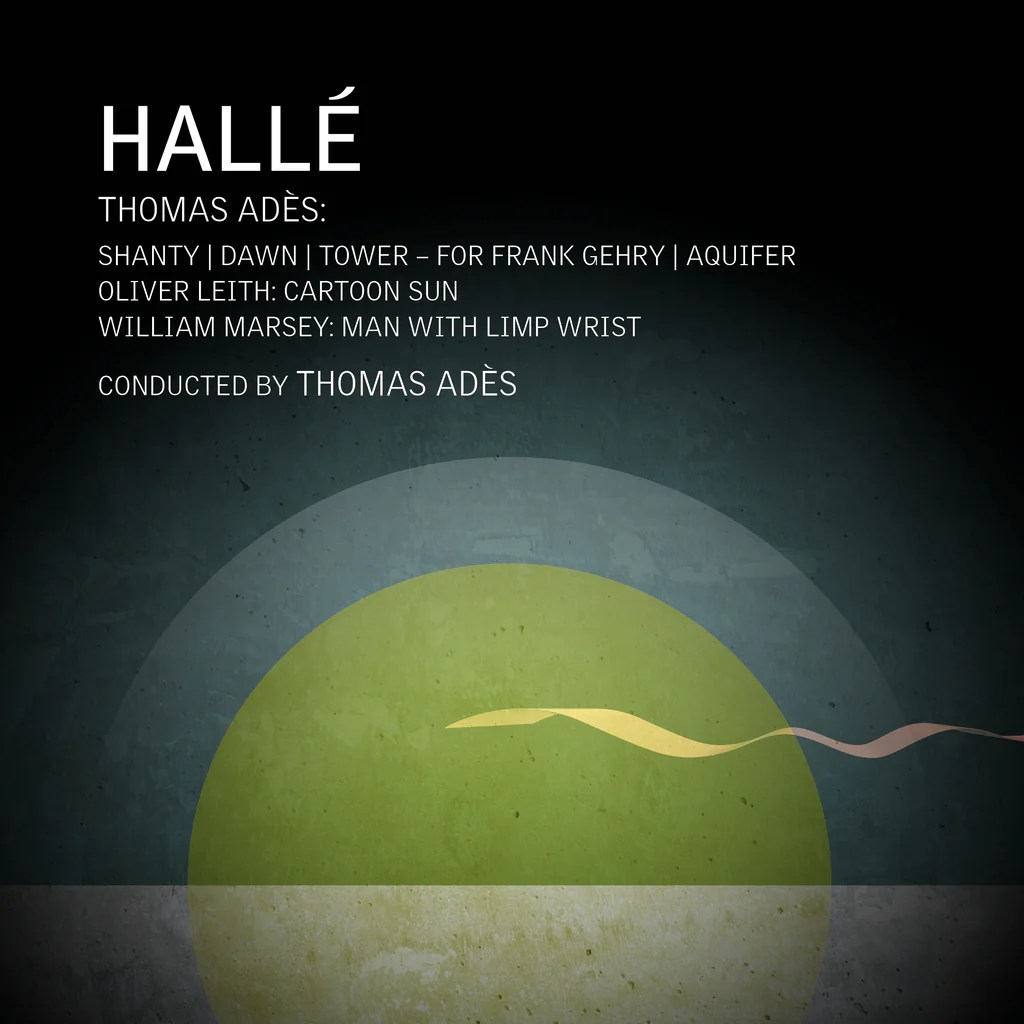
Thomas Adès Shanty (2020); Dawn (2020); Tower (2021); Aquifer (2024)
Oliver Leith Cartoon Sun (2024)
William Marsey Man with Limp Wrist (2023)

Hallé / Thomas Adès

Hallé CDHLL7567 68’20”
Producer Jeremy Hayes Engineers Steve Portnoi, Niall Gault, Edward Cittanova

Live performances at Bridgewater Hall, Manchester, 21-24 November 2024

Reviewed by Richard Whitehouse

What’s the story?

This latest release on the Hallé’s label focusses on music by or conducted by Thomas Adès during his 2023-25 residency with this orchestra, with works by two younger composers he has championed heard alongside several of his own pieces – including a major UK premiere.

What’s the music like?

Of the three shorter pieces by Adès, Shanty – Over the Sea unfolds as cumulative variants on an archetypal-sounding sea-shanty, with all this may imply in terms of transcending captivity and longing for freedom. Subtitled ‘Chacony for Orchestra at Any Distance’, Dawn conveys in spatial terms a concentric evolution toward a likely epiphany that yet remains out of reach. By contrast, Tower – For Frank Geary envisages a building near Arles by the Canadian-born American architect in terms of a bracing and increasingly effervescent fanfare for 14 trumpets.

Of those works by younger composers, Man with Limp Wrist finds William Marsey drawing on paintings by Salman Toor for a sequence of eight ‘scenes’; the first seven of which are as succinctly descriptive as the titles that inspired them. The eighth piece, which takes its name from the titular canvas, brings culmination of sorts through its collision of old tunes (mainly hymns) in music as feels arresting if curiously uninvolving. Much the same could be said of Cartoon Sun by Oliver Leith, a detailed evocation of which is provided by the composer and whose premise that ‘‘Everything looks different under the sun’’ is related over three sections – the first two relatively brief and primarily gestural, the lengthier third building cumulative intensity which dissipates towards the end as if to confirm that nothing is ever what it seems.

Premiered in Munich by the Bavarian Radio Symphony Orchestra, Aquifer is Simon Rattle’s third major commission from Adès (after Asyla for the City of Birmingham Symphony then Tevot for the Berlin Philharmonic). Its title referring to ‘‘a geological structure which can transmit water’’, the piece unfolds across seven continuous sections, though the outline of a sonata design can be sensed not as the dynamic means of change but rather (and more appropriately) as a fluid construct from which ideas emerge and mutate – as might water as it passes between different vessels. In terms of content, it ranges widely over styles and allusions before culminating in a vivid while hardly epiphanic coda, yet its overall cohesion along with its assured handling of sizable orchestral forces ensures an impact which audibly commended it to all those present.

Does it all work?

Whether or not it does so is much of the fascination. The works by Marsey and Leith offer no mean indication in terms of where these composers (in their mid-30s) are headed, while those by Adès afford intrigues aplenty. Neither is there any doubt as to the commitment of the Hallé in presenting these pieces to best advantage, nor of Adès’s ability to get the most out of these players. If a sense persists of his music having an essence that beguiles more than it conceals in intrinsic substance, no living composer has reinvented the wheel quite so skilfully as Adès.

Is it recommended?

Yes, not least as the programme makes for a cohesive and engaging listen throughout. Sound makes the most of Bridgewater Hall’s evident clarity and spaciousness, with annotations as informative as usual from this source. Adès is undeniably a defining presence in new music.

Listen / Buy

You can explore purchase options at the Hallé online shop

For more on the artists featured, click on the names to read more about The Hallé and album conductor Thomas Adès – and click on the names for Thomas Adès as a composer, Oliver Leith and William Marsey

Published post no.2,629 – Sunday 17 August 2025
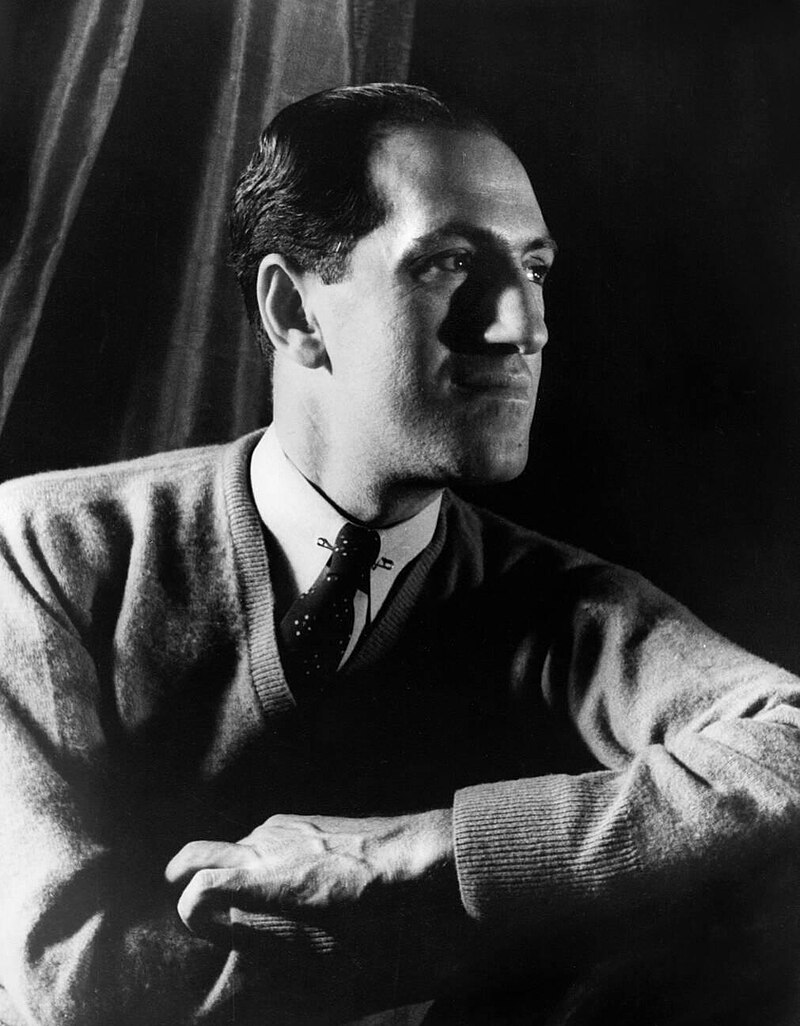
On this day – first performance of Gershwin’s Cuban Overture in 1932

by Ben Hogwood Photo by By Carl Van Vechten – Library of Congress

On this day in 1932, the first performance of Gershwin’s Cuban Overture took place in New York’s Lewisohn Stadium. Originally titled Rumba, its premiere with the New York Philharmonic conducted by Albert Coates was a success – and the work was renamed soon after. You can hear it below in a performance from the Orchestre national de France, conducted by Dalia Stasevska:

Published post no.2,628 – Saturday 16 August 2025

On Record – Havergal Brian: Symphonies nos. 29 – 32 (Heritage Records)

Havergal Brian
Symphony no.29 in E flat major (1967)
Symphony no.30 in B flat minor (1967)
Symphony no.31 (1968)
Symphony no.32 in A flat major (1968)

Philharmonia Orchestra / Myer Fredman (nos.29 & 32), Sir Charles Mackerras (no.31), BBC Symphony Orchestra / Lionel Friend (no.30)

Heritage HTGCD130 73’20”
Recorded 12 March 1979 (nos.29 & 32) and 16 March 1989 at Maida Vale Studio One, London (no.30), 9 January 1979 at Henry Wood Hall, London (no.31)

Reviewed by Richard Whitehouse

What’s the story?

The enterprising Heritage label continues its coverage of Havergal Brian with this volume featuring the last four of his 32 symphonies, three of them in pioneering studio broadcasts that were organized by Robert Simpson during his last years as music producer at the BBC.

What’s the music like?

The 29th Symphony is the culmination of a classicizing tendency Brian pursued throughout the 1960s, falling into four continuous if clearly demarcated sections whose formal poise is matched by their lucidity of expression. Thus, a ruminative Lento then genial Allegretto are balanced by the rumbustious though not unduly truculent Allegros either side but it is those framing Adagio sections, launching the piece before bringing it full circle in a mood of rapt contemplation, which leave the deepest impression and so set the seal on an eloquent work.

Barely four months later, the 30th Symphony inhabits a wholly different and fractious world. Likely drawing on material for an abandoned opera on Sophocles’ Oedipus Coloneus, its two continuous parts unfold from a restive, increasingly ominous Lento into the most disjunctive of Brian’s numerous Passacaglia movements; its inherent logic countered at every stage with a visceral and even assaultive impetus prior to the suitably implacable apotheosis. Definitely a work for all times, and among a select handful of orchestral masterpieces from this period.

Five months later and the 31st Symphony emerges as among its composer’s most enigmatic statements, abetted by its single movement being the most seamless of Brian’s symphonies and the one whose key-centre is most difficult to discern. Evolving almost intuitively from casual gestures, it builds with unsparing focus towards a climax whose dynamism is thrown into relief by the inevitability of those final bars. Easy to underestimate in context, it might be considered a rule-book for Brian’s late maturity did it not break those rules at every turn.

Completed six months later, the 32nd Symphony is the longest work here – pursuing a sustained evolution across its four movements divided into two parts. Its thoughtful while not untroubled Allegretto is followed by an Adagio of keen inner strength, its seriousness of purpose subtly offset by a leisurely, often capricious scherzo then finale whose contrapuntal ingenuity underpins the determined onward course to a coda defiant in its resignation. Brian was to finish no further works, so leaving this symphony to stand as an inimitable testament.

Does it all work?

Yes, once the essence, recalcitrant but never intractable, of Brian’s symphonism in this final creative decade is grasped. It helps when performances of the 29th and 32nd were entrusted to Myer Fredman, his appreciation of Brian’s music evident elsewhere in this Heritage series, and the 31st to Sir Charles Mackerras who made a fine studio recording eight years on. The 30th is heard in a reading by Lionel Friend far more assured than its premiere by Harry Newstone, but it was not until Martyn Brabbins’s 2010 studio account that this work came into its own.

Is it recommended?

It is. The sound of the older performances has been cleaned up and opened out, much to their advantage, and that of the 30th offsets the dryness of the Maida Vale acoustic. John Pickard’s insightful booklet notes are further incentive to acquiring this welcome and necessary release.

Listen / Buy

Published post no.2,627 – Friday 15 August 2025

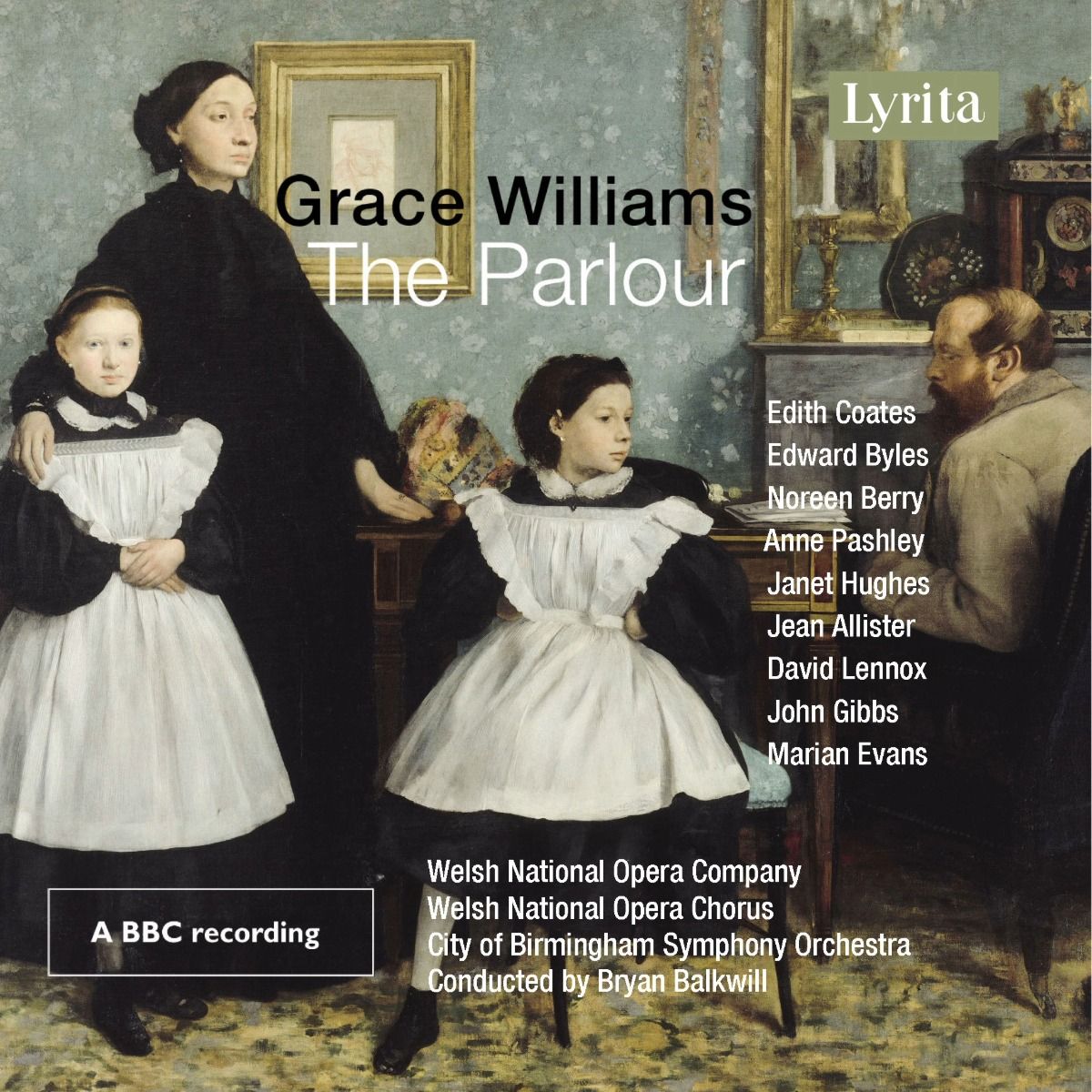
On Record – Grace Williams: The Parlour (Lyrita)

The Parlour (1960-61)

Comic Opera in One Act (two scenes)
Libretto and music by Grace Williams, after En Famille by Guy de Maupassant

Grandmama – Edith Coates (contralto)
Papa – Edward Byles (tenor)
Mama – Noreen Berry (mezzo-soprano)
Louisa – Anne Pashley (soprano)
Augusta – Janet Hughes (soprano)
Aunt Genevieve – Jean Allister (mezzo-soprano)
Uncle Steve – David Lennox (tenor)
Doctor Charlton – John Gibbs (baritone)
Rosalie – Marian Evans (soprano)
Welsh National Opera Company, Welsh National Opera Chorus, City of Birmingham Symphony Orchestra / Bryan Balkwill

Lyrita REAM.1147 [79’32”, Mono/ADD] Producer John Moody
Broadcast performance from Odeon Theatre, Llandudno on 18 August 1966

Reviewed by Richard Whitehouse

What’s the story?

Lyrita continues its coverage of Grace Williams with this first commercial release of her only opera, taken from its first run by Welsh National Opera and so adding another major work to the discography of one who, almost half a century after her death, is finally receiving her due.

What’s the music like?

Although she was, by her own admission, brought up in a ‘singing tradition’ and experienced opera from an early age, it was only in 1959 that Williams was approached with a commission for one. Written to her own libretto, after the short story by Guy de Maupassant, The Parlour was completed two years later but not premiered until May 1966 – a subsequent performance being broadcast and heard here. There have since been semi-professional stagings in London (1974) and Cardiff (1993), but no further production from one of the main British companies.

Relocating this story away from Paris to an unspecified Victorian seaside town, Williams was mindful to maintain the petit-bourgeois conservatism and mendacity from that original setting. As a narrative it makes for pretty dispiriting reading, but the liveliness and wit of her libretto is rarely less than engaging, while her music hardly falters in bringing out the essence of the situation at hand. Eight out of nine singing roles get a turn in the spotlight, and though their profiles might not be sharply drawn, the interplay of characters as of voice-types is astutely managed. Orchestrally the score may lack the intensity of Williams’ other large-scale works, but its dextrousness and intricacy seem ideally suited to a domestic drama; with that pathos which frequently surfaces in her music being no less evident during the opera’s final stages.

Vocally there are strong contributions by Edith Coates as the implacable grandmother, from Edward Byles as her always put-upon son and from Noreen Berry as her perennially hapless (and luckless!) daughter-in-law. Anne Pashley and Janet Hughes become one as her witless grand-daughters, with Jean Allister and David Lennox ideally cast as her favoured daughter and her wheedling son-in-law. John Gibbs makes the most of her doctor in all his contrived bluffness or feigned disinterest, and Marian Evans chips in as the dim-witted family servant. The Welsh National Opera Company and Chorus betray occasional tentativeness, but swift-moving passages for the neighbours lack little of focus or discipline – from a time when this organization was in the process of making its transition from amateur to professional status.

Does it all work?

It does, not least owing to the excellence of this performance. WNO did not then have its own orchestra, but the City of Birmingham Symphony Orchestra is more than equal to the task of projecting Williams’s eventful score with the necessary clarity and verve, while it responds with alacrity to the direction of the company’s then music director Bryan Balkwill. The mono broadcast has come up more than adequately in its remastering, and this set comes with the full libretto and insightful annotations from Paul Conway in what is a typically excellent Lyrita presentation.

Is it recommended?

It is. The Parlour is unlikely to have a professional staging any time soon, making this release of more than archival interest. Could Lyrita acquire the 1963 broadcast of Daniel Jones’s The Knife, intended to be staged with the Williams in what would have been a weighty double-bill.

Listen / Buy

Published post no.2,626 – Thursday 14 August 2025

On Record – English Symphony Orchestra / Kenneth Woods – Sibelius: Symphonies 6 & 7, Tapiola (ESO Records)

Jean Sibelius
Symphony no.6 in D minor Op. 104 (1918-23)
Symphony no.7 in C major Op. 105 (1923-4)
Tapiola, Op, 112 (1926)

English Symphony Orchestra / Kenneth Woods

ESO Records ESO2502 [67’16”]
Producers Phil Rowlands, Michael Young Engineer Tim Burton

Recorded 1-2 March 2022 (Symphony no.6 & Tapiola); 2 May 2023 (Symphony no.7) at Wyastone Concert Hall, Monmouth

Reviewed by Richard Whitehouse

What’s the story?

Good to find the English Symphony Orchestra issuing the follow-up release on its own label (after Elgar’s First Symphony and In the South), launching an ambitious project to record all seven symphonies and Tapiola by Sibelius prior to the 70th anniversary of his death in 2027.

What are the performances like?

Only if the Sixth Symphony is considered neo-classical does it feel elusive, rather than a deft reformulation of Classical precepts as here. Hence the first movement unfolds as a seamless evolution whose emotional contrasts are incidental – Kenneth Woods ensuring its purposeful course complements the circling repetitions of the following intermezzo, with its speculative variations on those almost casual opening gestures. Ideally paced, the scherzo projects a more incisive tone which the finale then pursues in a refracted sonata design that gains intensity up to its climactic mid-point. Tension drops momentarily here, quickly restored for a disarming reprise of its opening and coda whose evanescence is well conveyed; a reminder that Sibelius Six is as much about the eschewal of beginnings and endings in its seeking a new coherence.

A decisive factor in the Seventh Symphony is how its overall trajectory is sensed – the ending implicit within the beginning, as Sibelius fuses form and content with an inevitability always evident here. After an expectant if not unduly tense introduction, Woods builds the first main section with unforced eloquence to a first statement of the trombone chorale that provides the formal backbone. His transition into the ‘scherzo’ is less abrupt than many, picking up energy as the chorale’s re-emergence generates requisite momentum to sustain a relatively extended ‘intermezzo’. If his approach to the chorale’s last appearance is a little restrained, the latter’s intensity carries over into a searing string threnody that subsides into pensive uncertainty; the music gathering itself for a magisterial crescendo which does not so much end as cease to be.

Tapiola was Sibelius’s last completed major work, and one whose prefatory quatrain implies an elemental aspect rendered here through the almost total absence of transition in this music of incessant evolution. A quality to the fore in a perceptive reading where Woods secures just the right balance between formal unity and expressive diversity across its underlying course. Occasionally there seems a marginal lack of that ‘otherness’ such as endows this music with its uniquely disquieting aura, but steadily accumulating momentum is rarely in doubt on the approach to the seething climax, or a string threnody whose anguish bestows only the most tenuous of benedictions. A reminder, also, that not the least reason Sibelius may have failed to realize an ‘Eighth Symphony’ was because he had already done so with the present work.

Does it all work?

Pretty much throughout. Whether or not the cycle unfolds consistently in reverse order (with a coupling of the Fourth and Fifth Symphonies having already been announced), this opening instalment is the more pertinent for focussing on Sibelius’s last years of sustained creativity.

Is it recommended?

Indeed. The ESO is heard to advantage in the spacious ambience of Wyastone Hall, and there are detailed booklet notes by Guy Rickards. Make no mistake, these are deeply thoughtful and superbly realized performances which launch the ESO’s Sibelius cycle in impressive fashion.

Listen / Buy

You can read more about this release and explore purchase options at the Ulysees Arts website. Click on the names to read more about the English Symphony Orchestra and conductor Kenneth Woods, and for the Ernest Bloch Society

Published post no.2,622 – Sunday 10 August 2025