
Wigmore Mondays – Pavel Kolesnikov plays Debussy

pavel-kolesnikov

Pavel Kolesnikov (piano) plays Debussy’s first book of Préludes

Wigmore Hall, London

Monday, 11 January 2016

written by Ben Hogwood

Audio (open in a new window)

http://www.bbc.co.uk/programmes/b06tx85v

Available until 10 February

What’s the music?

Debussy (1862-1918): Préludes, Book 1 (1909-1910); L’isle joyeuse (1904)

Spotify

Pavel Kolesnikov has not yet recorded any of this repertoire, but a reproduction of his program using available versions can be accessed below, for listeners who cannot hear the BBC broadcast:

About the music

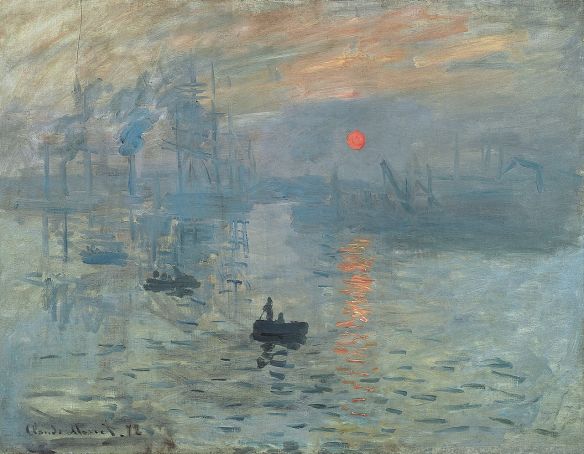
Debussy wrote 24 Préludes for piano, collected in two books but did not approach them in the same way as Chopin, who wrote one in each key. Instead he looked for character pieces, and the first book of Préludes are a fine example of what is often called the composer’s ‘impressionist’ style. By that we mean Debussy would often shade his music in a form that matches the paintings of artists such as Monet and Renoir, leaving them less defined.
impression-sunrise

Impression: Sunrise by Claude Monet (1872)

Perhaps because he wanted the listener to form their own pictures in their mind’s eye, Debussy left the title of each Prélude until the end of the piece – and even then was not at all conclusive in his naming. La cathédrale engloutie (The submerged cathedral), Ce qu’a vu le vent d’ouest (What the West Wind has seen), Danseuses de Delphes (Dancers of Delphi) – all are subject matters that need an active imagination to complete the picture.

L’isle joyeuse is a little more defined but not much, being a homage to Jersey, where Debussy holidayed with his new love in the summer of 1904.

These pieces make great technical demands on the pianist but also allow freedom of interpretation, both for player and listener.

Performance verdict

Having already established a reputation as a Debussy interpreter in his Wigmore Hall debut in 2014, BBC New Generation artist Pavel Kolesnikov returned to dazzle with more of the composer’s music.

Yet his approach was not obviously virtuosic, and he often took sensitive liberties with his tempo choices in the Préludes, drawing out the slow pieces especially effectively. These approaches were shown to be completely valid, setting an atmosphere of quiet intensity where I found myself subconsciously leaning forward on several occasions, literally hanging on Kolesnikov’s next note.

Les collines d’Anacapri (The Hills of Anacapri) was especially convincing, as was a totally unhurried Des pas sur la neige (Footsteps in the Snow). La danze de Puck was brilliantly done, an irresistible glint in the jester’s eye, while the stumbling rhythm of Minstrels was expertly controlled. Kolesnikov opened up the detail of Debussy’s inner part writing but never at the expense of his overall impression of each piece, and in L’isle joyeuse this led to painstakingly produced trills, part of an incredibly secure performance that still created a vivid picture of the island.

Full marks to the pianist, too, for overcoming the considerable distraction of latecomers arriving directly in his eye line after a poised account of Danseuses de Delphes. All that was required was a pertinent pause, and he was back in the zone.

What should I listen out for?

1:35 – Danseuses de Delphes (Dancers of Delphi) – immediately a sultry atmosphere is cast, the slow moving music rather mysterious but at the same time oddly enchanting. The block chords create an essence of calm.

There is then a pause while the latecomers are admitted…before…

5:41 – Voiles (Veils) – if anything the heady atmosphere is heightened by this deeply intimate impression, with suggestively chromatic lines in the right hand over a sustained held note in the left. The boundaries are blurred here, the ‘impressionism’ all too evident.

9:31 – Le vent dans la plaine (The Wind in the Plain) – a blustery outlook is set by the left hand oscillations, though this piece proves just as elusive as the wind. Debussy once again uses melodies in a ‘pentatonic’ form (if you played C-Eb-F-G-Bb ascending on the piano those are the notes of the pentatonic scale). Sudden gusts of wind threaten to knock the music off course but it stays true to form, just.

11:47 – Les sons et les parfums tournent dans l’air du soir (The sounds and fragrances swirl through the evening air) This is an enchanted piece, and indeed is heavily perfumed, as though at the end of a very hot summer’s day. The sustain on the piano means notes can blur together in the listeners’ mind, but there is still a distinct four note theme heard at the start. Kolesnikov really draws out the tension at the end of this piece.

16:20 – Les collines d’Anacapri (The Hills of Anacapri) After a short, nervy start this piece bursts from its cover, with melodies exchanged between the top and bottom of the piano, with sustained but energetic chords in the middle. Then the music gradually ascends to a thrilling end which seems to be in mid-air, with a massive set of five notes high up on the piano at 19:09.

19:21 – Des pas sur la neige (Footsteps in the Snow) Debussy paints some incredibly vivid images on the piano, and the depiction of snow here is cold in the extreme! The quiet dynamic aids this, and the very slow tempo, though the melody does have a forlorn nature, as though in memorial or loss.

24:36 – Ce qu’a vu le vent d’ouest (What the West Wind has seen) – again Debussy mobilises the piano to portray the unpredictable gusts of the West Wind, through suddenly loud figures in the right hand and rumblings in the bass. Soon we hear crashing octaves high in the right hand, then a rush of notes, leading to a snappy end at 28:21.

28:23 – La fille aux cheveux de lin (The Girl with the Flaxen Hair) – one of Debussy’s best-loved pieces, this charming portrait uses the pentatonic scale as a basis for its melody (see above) – which sounds rather folk-like in nature. It is an affectionate picture.

30:38 – La sérénade interrompue (Interrupted Serenade) – from simplicity it’s back to a stop-start affair, as though Debussy were portraying the wind again. The whole piece seems to have a short attention span, moving through its thoughts very quickly as though on edge, but ends quietly.

33:13 – La cathédrale engloutie (The Submerged Cathedral) – one of the most famous Préludes, and certainly one of the most mysterious, with blurred imagery in the sustained left hand notes of the piano and a clear melody in the right hand. It is based on an ancient Breton myth in which a cathedral, submerged underwater off the coast of the Island of Ys, rises up from the sea on clear mornings when the water is transparent. Debussy catches the shimmering water as well as the ghostly outlines of the building – and there are suggestions of plainchant too. Eventually a massive toll of bells is reached (35:38) There is some magical quiet playing when this music reappears at 38:26.

39:49 – La danse de Puck (Puck’s Dance) – pure impudence in this piece of music, darting about elusively and never sitting still anywhere. There are some cheeky melodies but also some brief and profound asides.

42:31 – Minstrels – another stop start piece, but one where the melody is very clearly defined. It is as though the performers are slightly drunk and moving from side to side! After several runs at getting a long-lasting theme, the piece ends crisply and emphatically at 44:52.

45:34 – L’isle joyeuse – this character piece starts with extended trills in the right hand, creating a watery atmosphere but also one with latent energy. By 47:26 the open-air mood has been set and we hear another distinctive melody at 47:32. From 49:44 the music takes on the character of a march, becoming faster and louder until a final joyous theme at 50:15. The piece ends on the lowest end of the piano at 50:56.

Encore

52:08 For an encore Pavel Kolesnikov goes back two centuries to give Debussy’s compatriot – and one of his greatest influences – Jean-Philippe Rameau. The piece in question is L’Egyptienne, from the Nouvelles suites de pièces de clavecin (New Suites of Harpsichord Pieces) Suite in G major.

Further listening

A natural next port of call for listening is the second book of the Préludes, for they follow on naturally from the first. On this album the French pianist Pierre-Laurent Aimard plays both books:
Wigmore Mondays – Adrian Brendel and Aleksandar Maksar

brendel-madzar

Adrian Brendel (cello), Aleksandar Maksar (piano) – Wigmore Hall, London, live on BBC Radio 3, 7 December 2015

Listening link (open in a new window):

http://www.bbc.co.uk/programmes/b06r5dhh

on the iPlayer until 6 January 2016

Spotify

In case you cannot hear the broadcast, here is a Spotify playlist of some of the music in this concert. The Birtwistle is not on Spotify, and Adrian Brendel has not yet recorded either of the Debussy or Chopin Cello Sonatas, so alternative versions have been chosen:

What’s the music?

Debussy: Cello Sonata in D minor (1915) (11 minutes)

Birtwistle: Variations for cello and piano (2007) (6 minutes)

Chopin: Cello Sonata in G minor (1846) (31 minutes)

Every piece of music that Chopin published features the piano in some way. Most of his output is for piano solo but there are a couple of exceptions – two piano concertos and some works for piano and orchestra, the Polish Songs, the Piano Trio and this, Chopin’s only Cello Sonata.

It is a substantial piece, written late on in its composer’s career, and has a curious structure of four movements where the first is as long as the other three put together. It is a substantial piece of work, deeply felt in the slower music especially, but is also restless, the cello and piano playing closely together in melodies of unusual rhythm and contour. Chopin achieves the difficult task of honing his instincts for the piano to play as a solo instrument, balancing the two forces extremely well.

Debussy’s Cello Sonata is much shorter, a third of the length of the Chopin, but is equally concentrated in feeling. The work was to be the first in a series of six sonatas for different instrumental combinations from the composer, but sadly ill health determined he would not be able to get any further than three (the others are for violin and piano, and flute, viola and harp). The Cello Sonata is a sultry piece, particularly in the second movement Sérénade, which features plucking on the cello.

Bisecting these is one of Sir Harrison Birtwistle’s several pieces for cello and piano. The Variations are very closely linked to the Brendel family, and although they were commissioned by Adrian they take as their theme a piece written by Birtwistle for father Alfred. The theme is taken from another piece for the same combination, the Lied, and Birtwistle complemented that with this piece and several more to make a continuous sequence for cello, baritone and piano lasting just over half an hour.

Performance verdict

Adrian Brendel and Aleksandar Madzar gave highly accomplished performances of these three works, the result an extremely satisfying concert of contrasting musical language. The Debussy is a perennial favourite but sounded very fresh here, Brendel enjoying the almost complete freedom of the improvised second movement.

The Birtwistle, a gritty, concentrated piece, was very well done also, with characterisation of each of the short variations and some really vivid shades of colour from Brendel in particular.

The Chopin exploited the cellist’s singing tone beautifully, especially in the soaring second theme of the second movement. The duo stressed the uncertainty of much of this piece, and in particular the sizeable first movement, which here seemed to have just as many intriguing questions as it had answers. Brendel took everything in his stride technically, and the rapport and ensemble between the two performers – Madzar employing plenty of light and shade with the piano – was a real asset throughout.

What should I listen out for?

Debussy

2:04 – the first movement, a Prologue, begins with an opening statement from the piano, before the cello comes in expansively. The mood evokes to me a late summer evening. Debussy impresses with his economical use of form here, packing a lot of musical incident into a short movement before it finishing thoughtfully.

6:29 – the Sérénade is a nocturnal movement, and sounds like an improvisation, the plucked cello leading the piano in a stuttering series of musical gestures, showing off a more obvious Spanish influence. Gradually Debussy brings both instruments into line, and the cello uses the bow a lot more, building the tension and moving straight into…

9:50… the Finale, which starts with urgent piano and soaring cello before a vivacious theme makes itself known from the cello (10:08). This becomes the main focus of the movement, though the sultry mood of the Sérénade is not entirely forgotten.

Birtwistle

15:27 – the piece begins with a mysterious sound world on show, the cello playing two notes at once and the piano sounding very uncertain. The variations unfold in wildly differing moods, and without following the score it is relatively difficult to say where one ends and the next begins. After a tense beginning the piano stabs out two penetrating notes and then the music becomes faster – though the performers seem much more at odds. The end, when it comes, is slight.

Chopin

23:28 – the very substantial first movement (16 minutes) starts on the piano, with a solemn introduction. It doesn’t take long for Chopin to show off the pianist’s technique, but he is careful not to write a part that impinges on the cello once it appears with the theme. After a slow start the pace picks up a little, the mood intensifying – until Chopin works around to a repeat of the whole first section (from 28:42)

39:54 – a short scherzo that flits about without seeming to settle. The instruments are very closely linked in their musical discussion, both sharing the distinctive rhythm that Chopin gives to the main theme. The second theme () has a soaring quality very unusual to Chopin (in that he wrote so many melodies for the piano) and it has a penetrating beauty in this concert.

45:10 – a soft but warm-hearted slow movement, with a songful melody first aired on the cello but then repeated on piano. This is a surprisingly short movement, profound but giving the sonata a slightly lopsided form.

48:40 – the finale takes us back to the sonata’s ‘home’ key of G minor and finds an impressive urgency, with cello and piano working very closely together. Chopin employs a number of extremely catchy hooks but the form is relatively compressed…and soon the music moves into the major key and a thoroughly affirmative finish at 54:30.

Further listening

The Spotify playlist containing the music for this concert has been enhanced to include Chopin’s other large-scale chamber work, the Piano Trio. After this you can enjoy some music for cello and piano by a composer best known for his piano music, Franz Liszt – and played by the great Hungarian cellist Miklós Perényi:

Wigmore Mondays – Elizabeth Watts and Julius Drake

Elizabeth Watts, Photo : Marco Borggreve

Elizabeth Watts, Photo : Marco Borggreve

Elizabeth Watts (soprano), Julius Drake (piano) – Wigmore Hall, London, live on BBC Radio 3, 26 October 2015

Listening link (open in a new window):

http://www.bbc.co.uk/programmes/b06kb0f0

on the iPlayer until 25 November

Spotify

In case you cannot hear the broadcast, here is a Spotify playlist of the music in this concert, from available versions on Spotify (which do not include the Liszt song Quand tu chantes bercée).

What’s the music?

Liszt: 6 settings of poetry by Victor Hugo (dates are for first versions only): Enfant, si j’étais roi (1849); S’il est un charmant gazon (1844); Comment, disaient-ils (1842); La tombe et la rose (1844); Quand tu chantes bercée (c1844-45); Oh! quand je dors (1842) (21 minutes)

Debussy: Ariettes oubliées (1885-1887) (17 minutes)

Hahn: 4 Hugo settings: Rêverie (1888); Si mes vers avaient des ailes (1888); L’Incrédule (1893); Fêtes galantes (1892) (9 minutes)

What about the music?

A recital bringing together some richly varied settings of two French poets, Victor Hugo and Paul Verlaine.

It also gives us the opportunity to listen to some of the large output of Franz Liszt, who is best known for his piano music but whose songs have enjoyed greater prominence in recent years. He and the poet Victor Hugo were friends, meeting in Paris in the 1830s, and Liszt went on to set a number of his poems to music.

Debussy’s Ariettes oubliées (Forgotten Songs) is a cycle of six songs for voice and piano, based on a poem written by Paul Verlaine, who the composer knew and whose verse was a profound influence throughout the composer’s career.

We return to Victor Hugo for several settings by the Venezuelan-born French composer Reynaldo Hahn, who is best known for his song settings. This group of four includes Si mes vers avaient des ailes, the song that really brought Hahn to public attention and which, in the words of Graham Johnson, ‘has become his motto song’.

Performance verdict

A note first of all to say Arcana did not attend this concert, so the review is directly from the radio performance.

What is abundantly clear is that Elizabeth Watts is becoming a soloist of real repute, and one who has a very impressive and diverse repertoire. It was especially gratifying to hear her accounts of the Hugo settings by Liszt, not heard much in the concert hall but invested with real passion here, Watts floating effortlessly through the high notes as Julius Drake set the scene. Drake is an experienced pianist in Liszt songs, and is in the process of recording his output for Hyperion – and his ability to find the detail to point up alongside the vocal line was a real asset.

The Debussy had an essential mystique that Drake was quick to create in his piano part, Watts controlling her voice wonderfully well in the tricky melodic intervals. Meanwhile the Hahn selection sparkled, showing off this composer’s flair for word setting as well as the natural chemistry between Watts and Drake.

What should I listen out for?

Liszt

1:57 Enfant, si j’étais roi (Child, if I were king) translation here – a typically grand setting from Liszt, with a big piano part, while the soprano sings boldly above. A brave piece with which to start a recital! In the second verse the piano adopts a more threatening bass line as the soprano extols the virtue of a kiss from her lover.

5:13 S’il est un charmant gazon (If there’s a lovely grassy plot) translation here – a more gentle and loving song, this, with a similar mood to the opening of Brahms’ Violin Sonata no.2. The music flows with a mood of relative contentment.

7:41 Comment, disaient-ils (How then, asked he) translation here a nervy piano accompaniment immediately puts this song on each, though the floated higher vocal counters that somewhat. This is a short song but the high note at the end from the soprano carries a lasting impact.

9:49 La tombe et la rose (The tomb says to the rose) translation here This time we hear the soprano in a much lower range and with a fuller voice as Liszt takes on the much heavier text. There is weight in the piano part, too, though here as with a couple of the other songs it feels like Liszt has a short attention span.

13:44 Quand tu chantes bercée (When you sing in the evening) translation here This song has much softer contours, with a restful piano part and a relatively smooth vocal line for the soprano. That is not to say passion is lacking though, especially when the soprano sings ‘Chantez, ma belle’ (‘Sing, my pretty one’)

16:17 Oh! quand je dors (Oh! When I sleep) translation here As the title suggests here is a lullaby, though this one doubles as a love song. Again the soprano has to sing high, especially given the passion of Hugo’s text. The piano immediately sets the scene of rapture.

Debussy

The words for Ariettes oubliées are here

24:12 – C’est l’extase langoureuse (It is ecstasy) A heady song as you might expect from the title, which hangs on the air heavily. This whole impression is helped by Debussy’s chromatic writing, with soprano and piano right hand often in unison. The rich harmonies and melodies might sound awkward in isolation but, in a performance such as this, they are totally natural.

27:28 – Il pleure dans mon cœur…(It weeps in my heart) One of Debussy’s most celebrated early songs, delighting – or finding sorrow, rather – in the sound of the rain ‘on the ground and on the roofs’. A wide range is called for on the part of the soprano, not to mention the restless yet easily flowing piano part.

30:28 – L’ombre de arbres (The shadow of the trees) ‘The shadow of the trees, in the mist-covered river’ find the soprano beginning in a lower range, the air thick with humidity. This is a more sorrowful lament, the piano essentially standing by while the singer emotes – nowhere more so than the high note of 32:06.

33:14 – Chevaux de bois (Merry-go-round) A brilliant evocation of the fairground, the merry-go-round burling around dizzily on the piano, over which the soprano sings of the hurrying horses. Debussy’s quick moving harmonies are ideally suited to this sort of setting. The song ends quietly.

36:31 – Green A love song. The soprano has to travel quite a way in the course of this song, from low asides to higher outpourings of intense feeling. The twinkling of the piano’s right hand provides an effective counterpoint.

38:36 – Spleen A downcast song, reflecting on how ‘all my despair is reborn’. This does still take place over some exotic harmony on the part of the composer, the song moving far and wide in its melodic and harmonic reach.

Hahn

43:09 – Rêverie – translation here A halting figure on the piano feels like an offbeat waltz, accompanying the soprano as she sings, lingering on the word ‘kiss’. The song is relatively conventional in its structure.

45:11 – Si mes vers avaient des ailes (If my verses had wings) – translation here – a bright and positive love song, the singer clearly lost in thoughts of her beloved – and reaching some beautifully spun high notes along the way, with twinkling piano account. The last notes need particularly impressive control as the music slows.

47:52 L’Incrédule (The Sceptic) – translation here – a softly coloured but rather moving song, which has its conviction in the last lines, where the singer declares ‘And my faith is so deep in all that I believe in that I live for you alone’

50:11 Fêtes galantes – translation here – one of Hahn’s most endearing songs to close, the sparkling piano introduction keeping a detached feel as the singer spins higher notes above. The ‘shivering breeze’ is brilliantly evoked in the piano.

Encores

53:32 An encore of a Victor Hugo setting, L’Attente, (1840) from Richard Wagner. As Elizabeth Watts says to the audience, it’s not exactly easy – whether it’s the full bodied, high register vocal or the heavily congested piano part!


Further listening

Something completely different to complement Elizabeth Watts’ artistry, and also to show just how versatile she is. This is a recently released album of vocal works by the Baroque composer Alessandro Scarlatti, given with The English Concert and Laurence Cummings:

https://open.spotify.com/album/1Crx7DHWHCAqV7za0K80oX


Stephen Kovacevich 75th birthday concert with Martha Argerich

kovacevich

Stephen Kovacevich 75th birthday concert, Wigmore Hall, London Monday 2 November

How to review a concert where two genuine piano legends quite literally collide on stage? Well since this was a celebration, it seems only right to celebrate the main protagonist first.

Stephen Kovacevich, who has recently celebrated his 75th birthday, was honoured with this concert by the Wigmore Hall, where he made his debut over fifty years ago. He chose to include two-piano works with Martha Argerich, herself a celebrated pianist whose public appearances, if on occasion irregular, are as greatly revered as ever – and with whom he has a daughter. For the two to be together in a musical sense, performing relatively unfamiliar repertoire – for the birthday boy at least – made an opportunity too good to miss.

It was perhaps just a bridge too far in the case of Debussy’s En blanc et noir, however. Not because the performance was bad, but because the necessarily short rehearsal time meant the use of two page turners. This unfortunately relegated the modest Kovacevich to the back of the stage, rendering him only partly visible. The musical chemistry was pronounced between the two, especially in the second movement where Debussy hauntingly evokes the sounds of First World War bugle calls and gunfire against the slow, stately movement of a Bach chorale, which Argerich solemnly intoned. Yet the outer movements were tense, partly because of page turning quirks (no fault of the turners themselves) and the sense of two players not yet fully in gear.

They were emphatically in the zone for Rachmaninov’s Symphonic Dances, a terrific performance of the two-piano arrangement by the composer who is currently Kovacevich’s first love. The first movement punched at a considerable weight, with sharp ensemble and crisp rhythms, the speed a little slower than orchestras tend to take. Kovacevich himself clearly enjoyed the great second theme, usually assigned to the saxophone but beautifully phrased here.

The second movement was similarly fine, Argerich closely watching her partner, who was now nearest to the audience. This was his first public performance of a piece she has been performing for decades with friends, so it was natural she would want to ‘drive’ – but Kovacevich was very much her equal here and in the last dance, where rhythmic precision was key, they cut through the complexity of Rachmaninov’s writing to secure a powerful finish.

The second half of the concert immediately felt more relaxed, without the tension of page turning or multiple pianos to worry about. Instead Kovacevich gave from memory a lovely performance of Schubert’s final Piano Sonata in B flat, D960, one that flew in the face of the approach many pianists bring to this work. Rather than make it a final dying breath, he seemed to be saying this was music with plenty of life still to give. He made it so with faster tempo choices, a lack of repeats and phrasing that was at times unfussy but always affectionate.

Because of this the fabled slow movement was lovely, like a slow motion dance of contentment, coming after the first movement and its serenity – compromised by the rumblings of the lower left hand, though here they did not present too much threat. Kovacevich was keen to press on, each movement running into the next, and while there were a couple of choppy moments in the third movement, the intensity never let up. The feeling was of each of us being allowed into his own private recital room.

For an encore there was more Rachmaninov, Kovacevich beckoning the violinist Alina Ibragimova to join him from the audience for the Vocalise. This was a special moment, the pianist still discovering new music to perform even in his 76th year. He has made an incredibly good recovery from the stroke that threatened to end his career a few years back, and his disposition on stage is inspiring – modest but also affectionate. He is a musical treasure we should continue to nurture.

Wigmore Mondays – Dreams in the night with Sandrine Piau and Susan Manoff

sandrine-piau

Sandrine Piau (soprano), Susan Manoff (piano) – Wigmore Hall, London, live on BBC Radio 3, 5 October 2015

Listening link (open in a new window):

http://www.bbc.co.uk/programmes/b06fljk4

on the iPlayer until 4 November

Spotify

In case you cannot hear the broadcast, here is a playlist of the music in this concert, from available versions on Spotify. Where possible the versions used are those recorded by Sandrine and Susan themselves.

https://open.spotify.com/user/arcana.fm/playlist/4cTJZxw7IZDoP2W2Mrs3H5

What’s the music?

Mendelssohn: Neue Liebe (1834); Nachtlied (1847); Hexenlied (1827) (8 minutes)

Vincent Bouchot: Galgenlieder (1991-92) (9 minutes)

Richard Strauss: Die Nacht (1885); Morgen! (1894); Ständchen (1888) (10 minutes)

Debussy: Chansons de Bilitis (1898) (9 minutes)

Trad, arr. Britten: The Salley Gardens (1940); There’s none to soothe (1945); I wonder as I wander (c1940-41) (9 minutes)

What about the music?

Sandrine Piau and Susan Manoff begin with songs by Mendelssohn, an area of his output that doesn’t get a great deal of exposure in the concert hall, especially when you consider he wrote dozens of them! However the first song, Neue Liebe, shows an instance where the poetry of Heinrich Heine bought out the best in him.

Equally intriguing is the inclusion of music by Vincent Bouchot. Galgenlieder means ‘gallows songs’, dedicated to ‘the child that is within the man’, and Bouchot here uses some curious poems by Christian Morgentern, who appears to be writing about visions of hanged kings. They are strange and expressionist in nature, on occasion sounding like something the Second Viennese School of composers (especially Schoenberg) might write.

Debussy’s Chansons Bilitis are a relatively early work, setting the Sapphic poetry of Pierre Louys, who claimed these texts were adapted from the Greek – but Debussy knew otherwise. The flute of Pan was a topic that was particularly close to the composer at this time, and he used it as a basis for the famous orchestral piece Prélude a l’après-midi d’un faune.

Like Mendelssohn, Richard Strauss wrote a good number of songs, but apart from a few celebrated examples many of them lie undeservedly in the doldrums where the concert hall is concerned. Happily the recent celebrations of 150 years since the composer’s birth have brought many of the songs, which are highly original in form, back into the spotlight. Piau and Manoff give three of the most popular examples here, tending towards Strauss’s earlier work.

Britten amassed some 65 folksong arrangements for voice and piano so that he could perform them with his partner Sir Peter Pears. Often the piano parts are reinvented, casting the original melody into a very different light. The three examples in this concert are some of the very best.

Performance verdict

A note first of all to say Arcana arrived late due to a prior engagement, and so took in the Mendelssohn and Bouchot from the BBC iPlayer link above.

However even in half a concert Sandrine Piau showed just why she is one of the finest sopranos around today. While we often hear her in 18th century repertoire (Baroque operas, mostly) she has a voice perfectly suited to the recital hall.

What really shone through about this concert was that she had clearly taken time to get to know the resonance of the Wigmore Hall, for in Britten’s setting of I wonder as I wander, where she is largely unaccompanied, the high notes found an echo from the roof perfectly. This completed a spellbinding trio of Britten folksong arrangements, Piau sitting at the piano with Susan Manoff for There’s none to soothe.

Manoff, despite apparently not feeling her best, clearly enjoyed the Richard Strauss selection, where her full bodied piano parts were beautifully shaded in their portrayal of nocturnal scenes. The Debussy Chansons de Bilitis were heady, perfumed songs that spoke of sultry nights of passion.

Beginning the concert were the Mendelssohn songs, showing a natural writer at work and enjoying the unhinged Hexenlied especially. The Bouchard was intriguing, for although the text was very strange indeed at times, there was much to commend the musical language of this little known composer. Piau and Manoff brought out the expressive elements of his work.

What should I listen out for?

Mendelssohn

1:53 – a challenging start for any singer, Neue Liebe is full of big leaps, high notes and jumpy chords from the piano.

4:15 – a much calmer scene is set for Nachtlied, though this reaches a peak of intensity and a rapturous high note, as the singer beckons the Nightingale to strike up.

7:09 – there is no mistaking the devilish edge to Hexenlied (Witches’ Song) as the piano begins with an urgent figure that the singer takes up. Hers is an unhinged vocal, while the piano depicts the lightning and wind that whisk the witch away ‘through the howling gale to the Brocken’.

Bouchot

10:06 Mondendinge (Moon things) – quite a spooky intro from the piano, and an otherworldly atmosphere even when the singer comes in.

12:20 – Der Hecht (The Pike) – another surreal story, one that finds the singer leaping about like a distressed fish at the start. Seemingly random movements but an effective finish

13:40 – Die Mitternachtsmaus (The Midnightmouse) – another eerie song of the night time, the scene set by the higher right hand of the piano, which seems to be enacting the midnight chimes. The singer’s voice is also high and quite tense.

16:45 – Das Wasser (Water) – Bouchot’s style is loosely tonal, and even here where the rippling textures of the piano obscure pure harmony there is a clear centre. Again the soprano voice is high and pretty tense, but it is arguably the piano that is the more descriptive of the two here.

17:51 – Galgenkindes Wiegenlied (Gallows child’s lullaby) – this is a song with much less movement, but the piano part still suggests the darkness of the night with the odd beam of moonlight.

Richard Strauss

22:34 – Die Nacht – Strauss immediately captures the rarefied atmosphere of the night. At 24:22 the mood darkens as Strauss turns the music towards the minor key – though this mood does not prevail, with soaring notes from the soprano before a soft close from the piano.

25:44 – Morgen! – Possibly Strauss’s most famous song, this begins with an extended prelude. Here the twilight hours are exquisitely rendered by the piano, before the hushed voice enters at 26:56. The song is totally unrushed, reaching the utmost serenity when the piano adds a postlude from 29:02, fading into stillness.

29:48 – Ständchen – here the piano is much more active, portraying the rustling wind Highest note reached at 31:42 before a jubilant postlude.

Debussy

32:51 – La flûte de Pan – the piano immediately casts the spell of this poem through an enchanted and elaborate melody in the right hand. It is a beautiful intro and the mystery deepens with the soprano’s entry.

35:21 – La Chevelure – a sensual and heady poem, and the music wanders in a distracted state, almost falling under its own spell as the senses take hold.

38:39 – Le Tombeau des naiads – whereas the previous song was all about the sensuality of long hair, this song has icy tendrils and spreads a wintry chill, thanks to Debussy’s piano writing. There is however a more optimistic upturn near the end.

Trad, arr Britten

42:44 – The Salley Gardens – the first and one of the most popular of Britten’s folksong settings, The Salley Gardens has a powerful pull through its harmonies, which lie at the heart of the song, sitting underneath the simple melody.

45:18 – There’s none to soothe – Britten is one of the masters of economy, and that is clear in this simple yet deeply affecting setting, set in triple time but with an unusual stress on the second beat of the three. Piau’s voice soars beautifully above.

46:51 – I wonder as I wander – talking of economy, Britten splits the voice and piano for this incredibly powerful setting, keeping the purity of the melody on its own without accompaniment. You may be able to hear on headphones how Sandrine Piau moves around the stage while singing it, delivering the last verse with her back to the audience.

Encores

53:10 – Fantoches by Debussy, from the first book of Fêtes galantes. A lively, blustery encore lasting just a minute and a half.

55:47 – Le secret by Fauré, a lovely song whose two minutes are both intimate and serene.

Further listening

With such a variety of music in the concert it is difficult to know what to suggest next. Perhaps a good next move is to hear Sandrine in her ‘day job’, as a soprano of real class in earlier music. Even the music of Mozart is quite late for her – but here is a link to her Desperate Heroines release, featuring high voice arias by the composer:

https://open.spotify.com/album/3beRQIuFsm82SecRUz8GyY

To go back a little further, here she is in an album from 2012 of music by J.S. Bach:

https://open.spotify.com/album/1eqvWZu0VVPszG1PGXXQoC